20 escudos 1976
About This Note
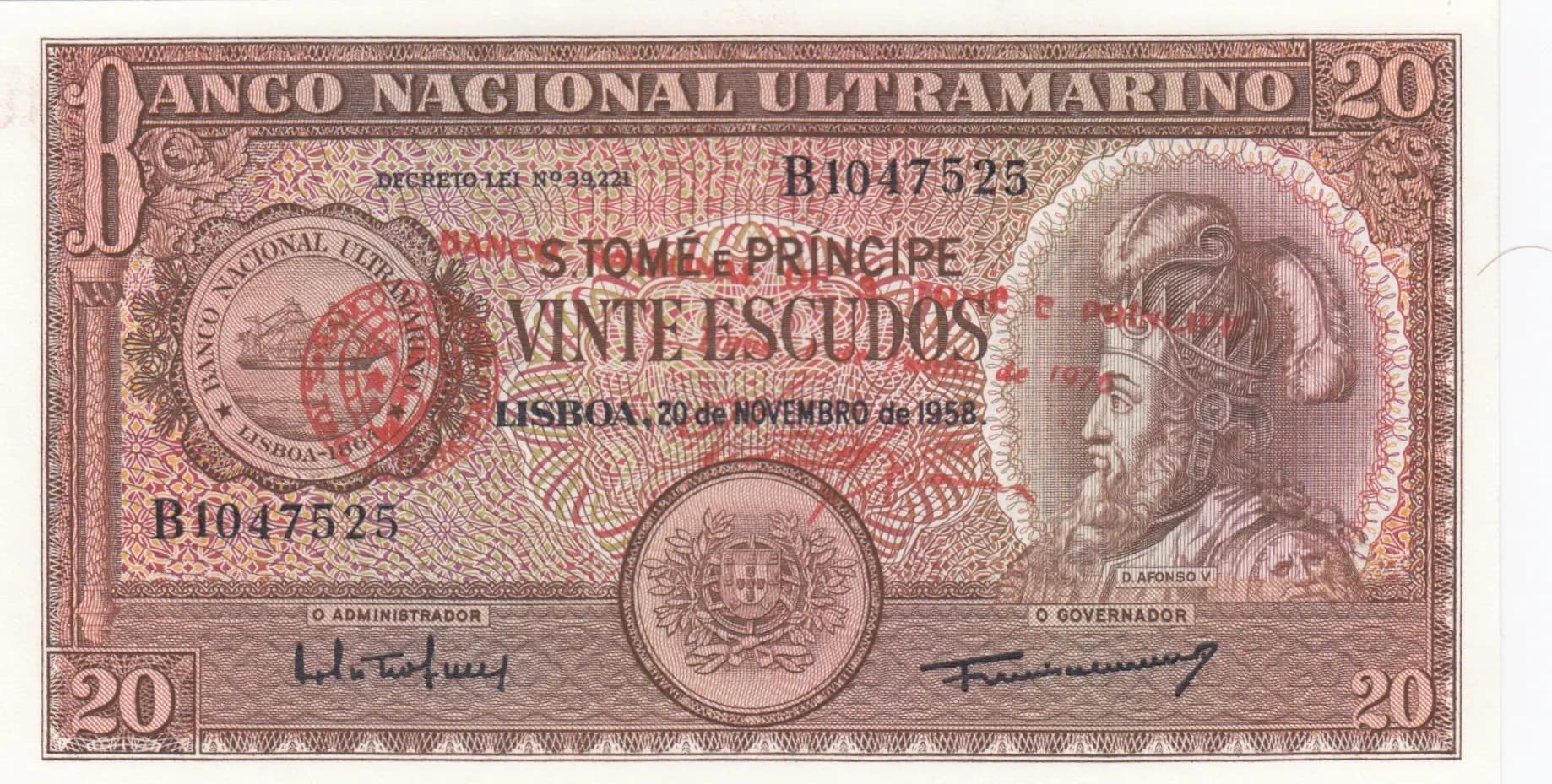
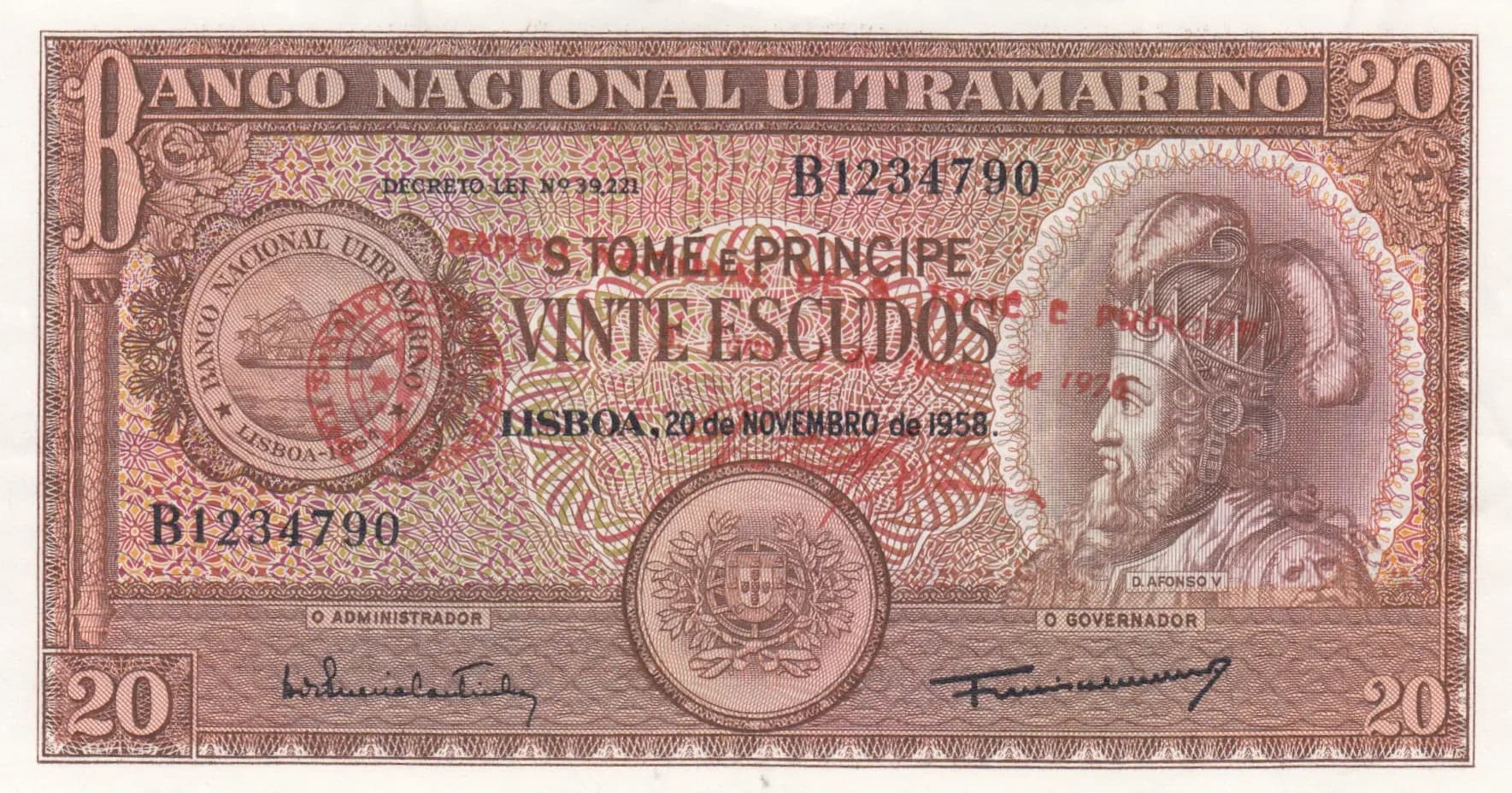
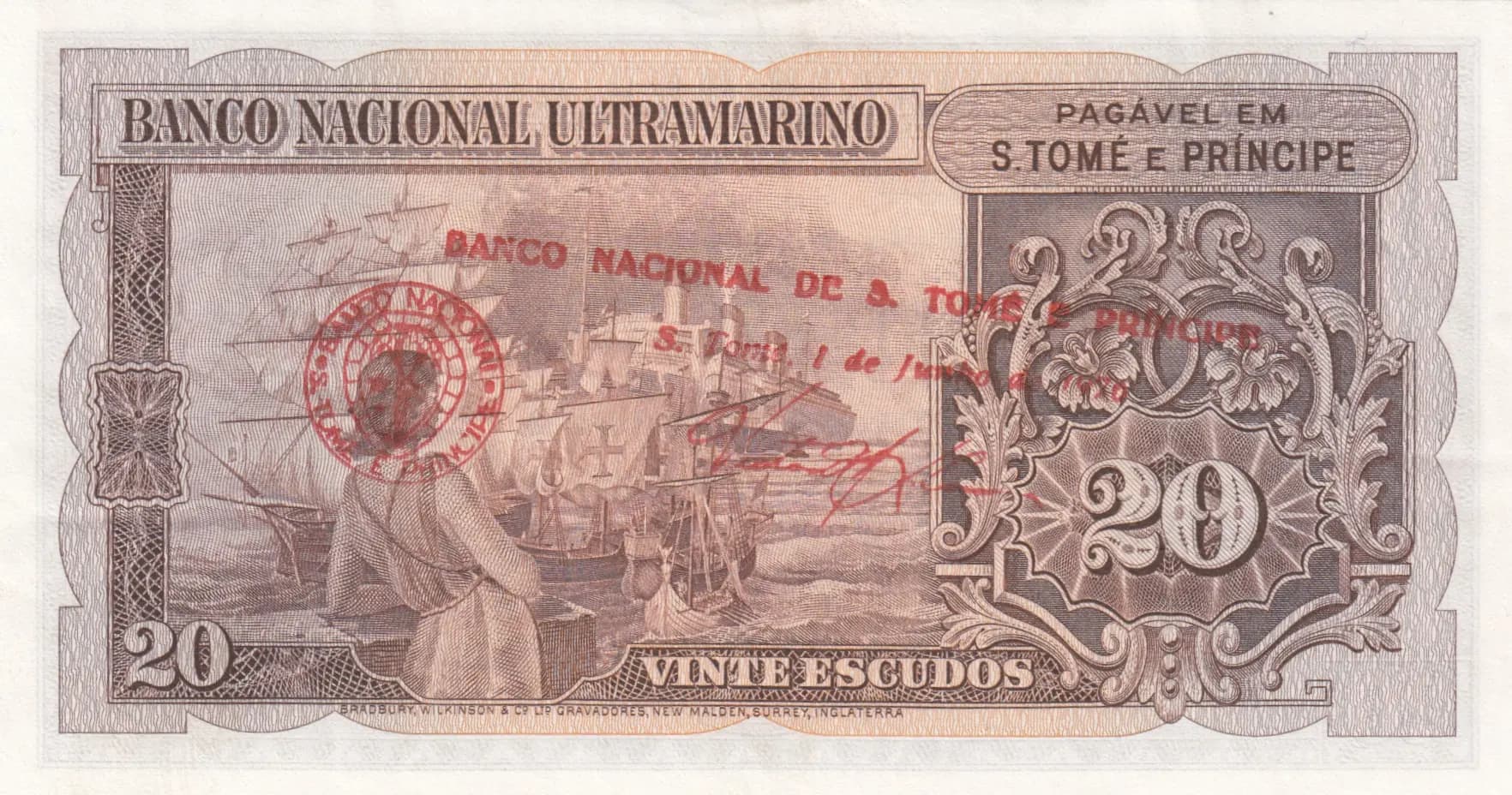
This is a VF-grade 20 Escudos note from São Tomé and Príncipe issued in 1976 by the Banco Nacional de S. Tomé e Príncipe, featuring exceptional engraved detail characteristic of Bradbury Wilkinson & Co. production. The note displays a bearded historical portrait on the obverse and an allegorical female figure with maritime symbolism on the reverse, both rendered in the fine intaglio style typical of high-quality Portuguese colonial currency. Visible red official stamps and moderate handling marks are consistent with circulation-grade notes from this era.
Common. The 20 Escudos denomination from this series represents standard circulating currency from São Tomé and Príncipe's early post-independence period, with no documented evidence of limited print runs or recall. While the issuing nation is small, the note was produced by an established security printer (Bradbury Wilkinson) and circulated during a stable period of the banking system. The VF condition grade observed here reflects typical wear from circulation rather than rarity. Such notes from this period are readily available in the collector market at modest valuations.
Issued in 1976, this note represents currency from the early independence period of São Tomé and Príncipe, which had just achieved independence from Portugal in 1975. The continued reference to 'Banco Nacional Ultramarino' on the obverse reflects the transitional nature of the currency system during the changeover from Portuguese colonial administration to the newly independent nation's own banking authority. The allegorical maritime imagery on the reverse—featuring a classical female figure with a sailing ship—reflects the colonial-era artistic conventions and the islands' maritime trading heritage that characterized Portuguese overseas territories.
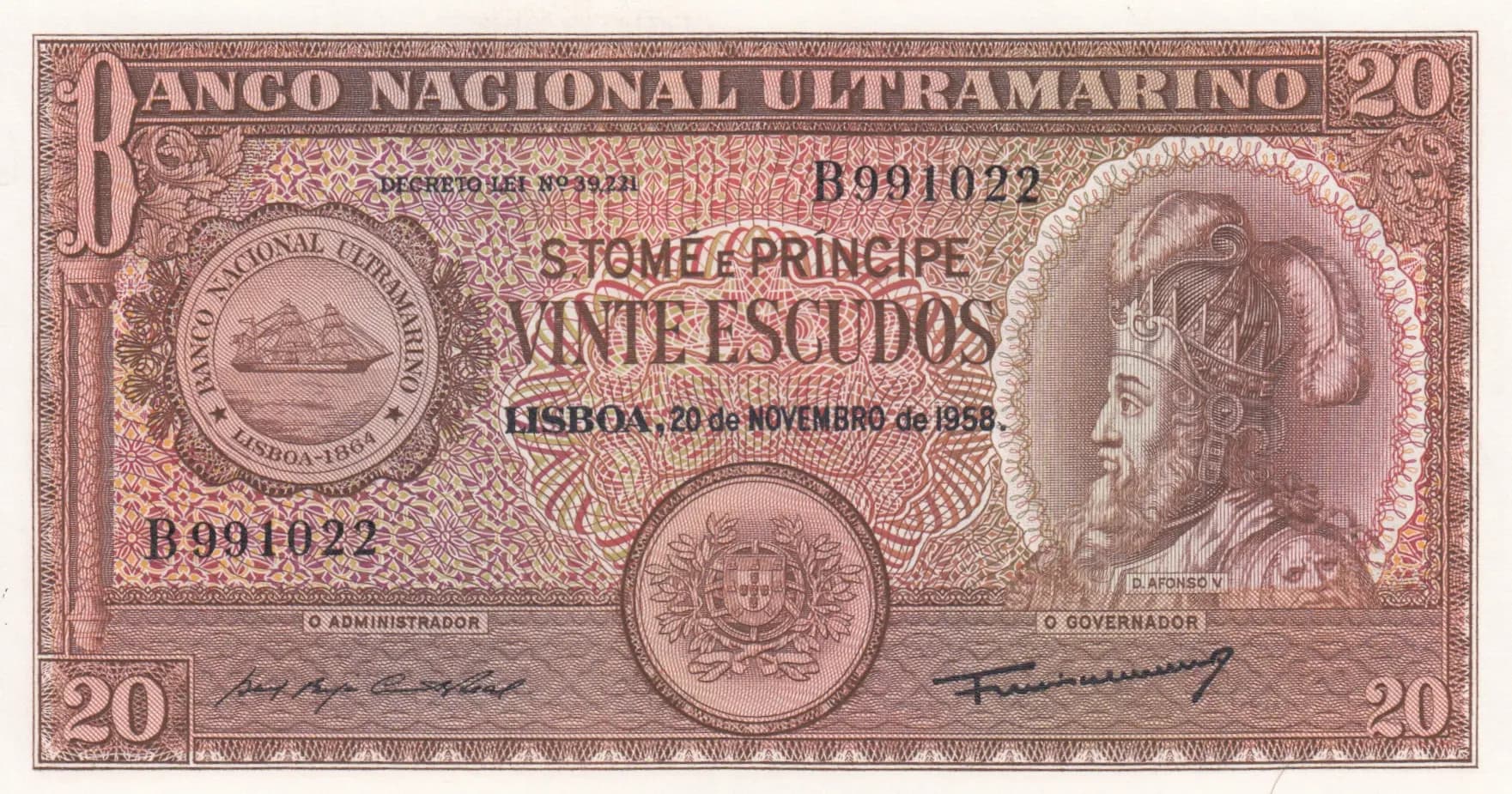
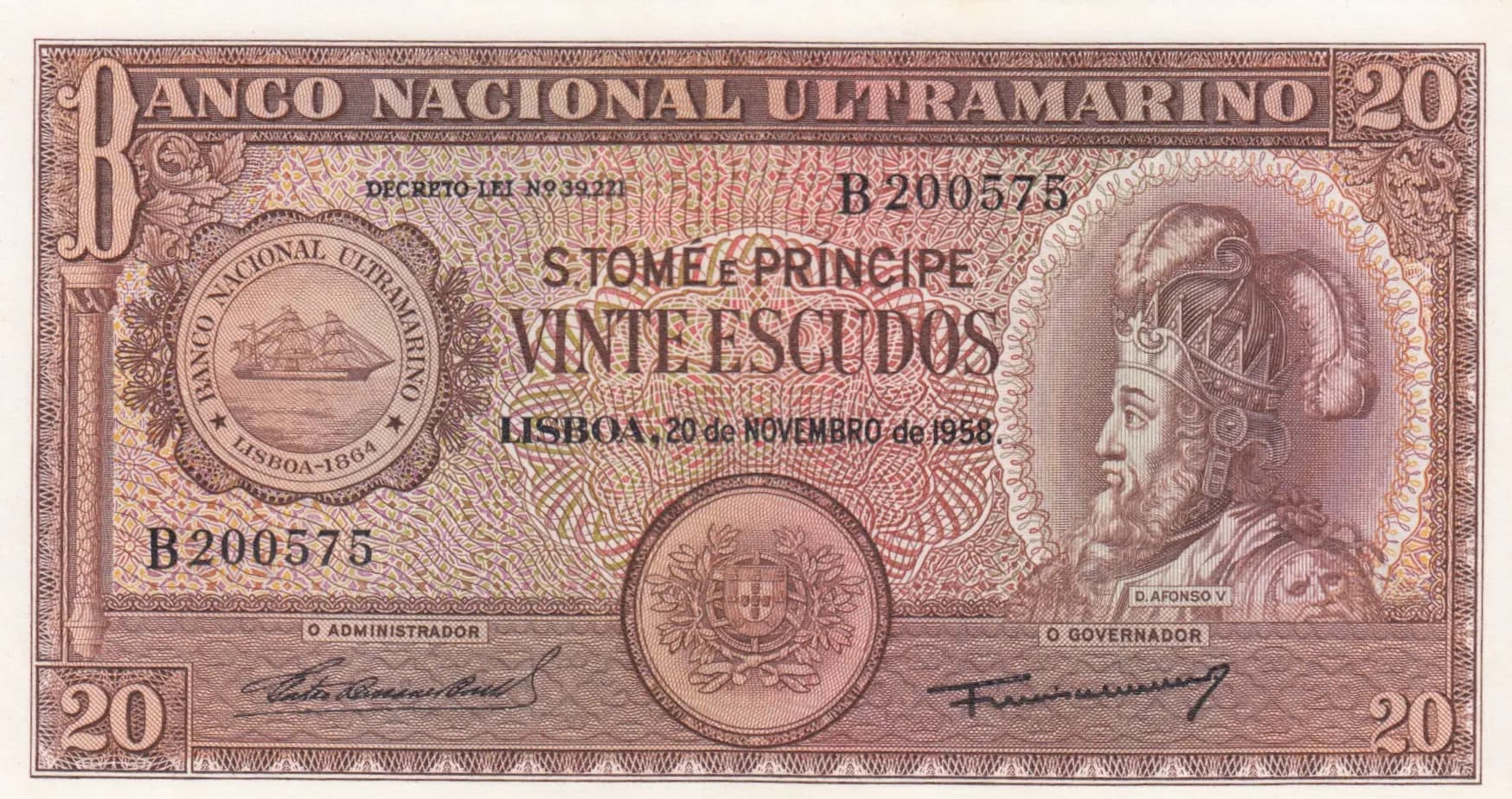
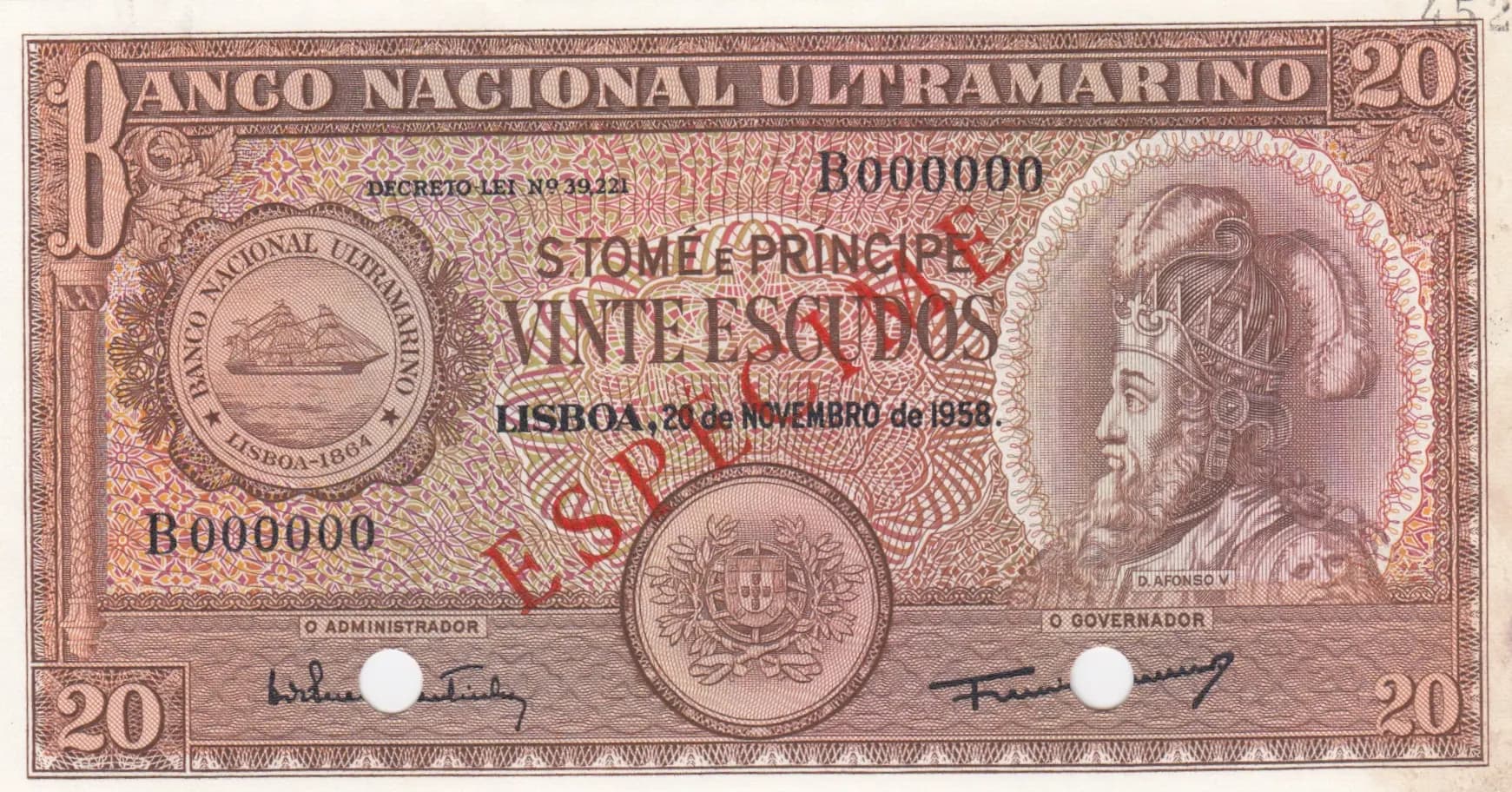
The obverse features a right-facing bearded male portrait in profile, likely representing a Portuguese historical or political figure significant to the colonial administration, positioned on the right side of the note. The portrait is framed by ornate geometric and floral decorative borders in brown and tan tones. A circular seal or coat of arms appears in the center-lower portion, with additional emblematic devices in circular borders on the left side. The reverse displays an allegorical female figure in classical Greco-Roman style robes, positioned on the left, representing maritime prosperity or colonial commerce. Behind this figure is a detailed ship with full sails, emphasizing the maritime and trading themes central to São Tomé and Príncipe's colonial economy. The right side of the reverse features an elaborate baroque-style ornamental cartouche with scrollwork framing the denomination numeral 20. Throughout both sides, the design employs intricate engraved line work with careful shading, typical of high-security currency design from this period.
FRONT: 'Banco Nacional Ultramarino' (National Overseas Bank); 'Decreto Lei Nº 324-H' (Decree Law No. 324-H); 'S. Tomé-Príncipe' (São Tomé-Príncipe); 'Vinte Escudos' (Twenty Escudos); 'Lisboa, 20 de Novembro de 1958' (Lisbon, November 20, 1958); 'O Administrador' (The Administrator); 'O Governador' (The Governor); '20' (denomination). BACK: 'Banco Nacional Ultramarino' (National Overseas Bank); 'Pagável em S. Tomé e Príncipe' (Payable in São Tomé and Príncipe); 'Banco Nacional de S. Tomé e Príncipe' (National Bank of São Tomé and Príncipe); 'Vinte Escudos' (Twenty Escudos); '20' (denomination); 'Bradbury Wilkinson & Co. Ltd., Engravers, New Malden, Surrey, Inglaterra' (Bradbury Wilkinson & Co. Ltd., Engravers, New Malden, Surrey, England).
Intaglio (engraved line) printing executed by Bradbury Wilkinson & Co. Ltd., the renowned British security printer based in New Malden, Surrey. The note employs multiple color printing with brown, tan, red, and gray tones applied through successive press runs. The visual analysis confirms the characteristic fine line work, detailed shading, and dimensional quality produced by intaglio engraving, combined with overprinted red official stamps and text additions applied post-printing.
This note corresponds to Pick-44a (printer: BWC/Bradbury Wilkinson & Co.) based on the engraver attribution clearly visible on the reverse. The PMG population data indicates two catalogued variants (P-44a and P-44cts); this specimen exhibits the characteristics of P-44a. The serial number visible (B123-47-90 format) and the red official stamp overprint are consistent with standard production of this variety. No signature varieties or notable overprint anomalies are evident in the visual analysis that would suggest a distinct sub-variety within P-44a.