20 escudos 1976
About This Note
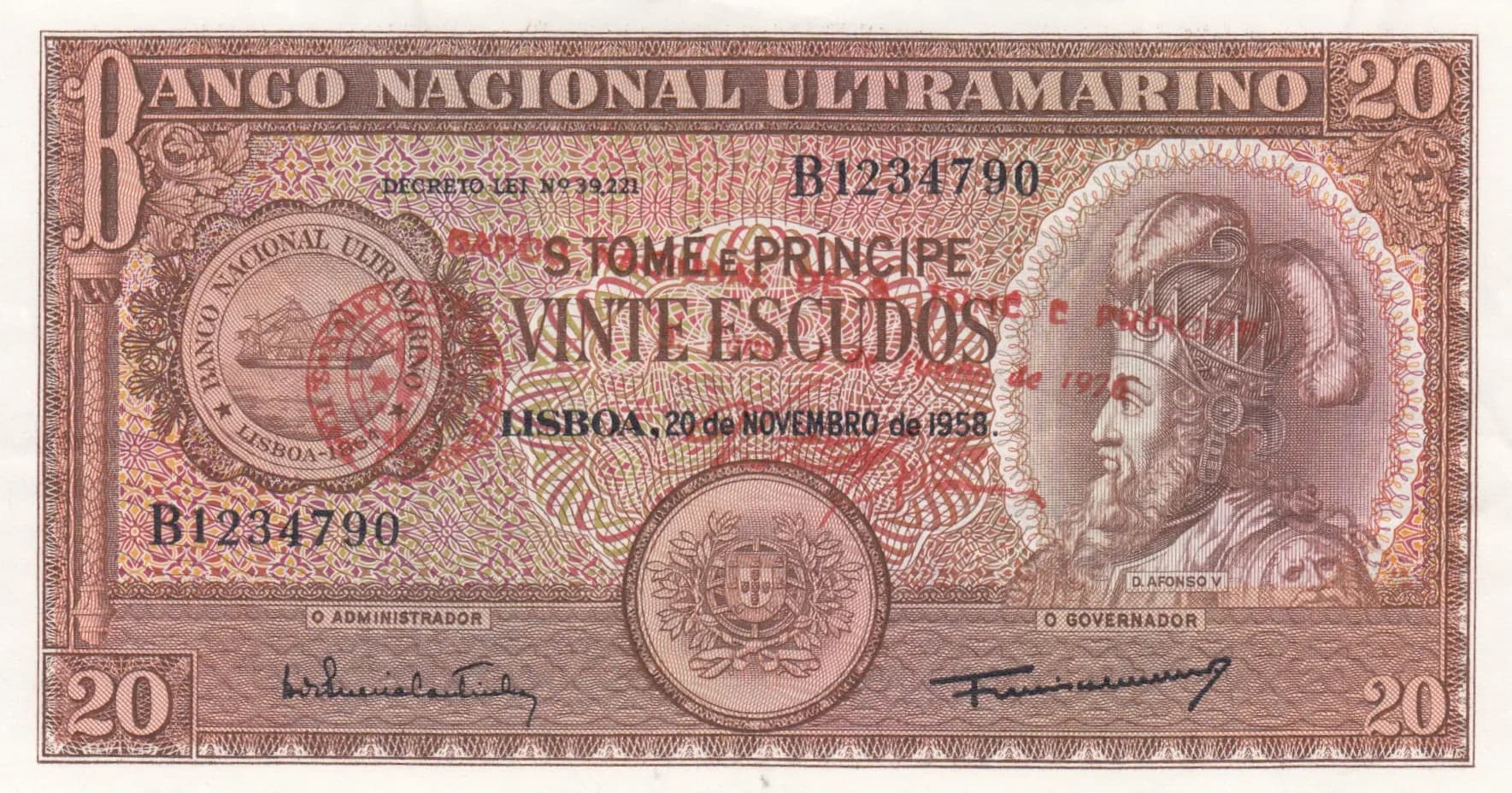
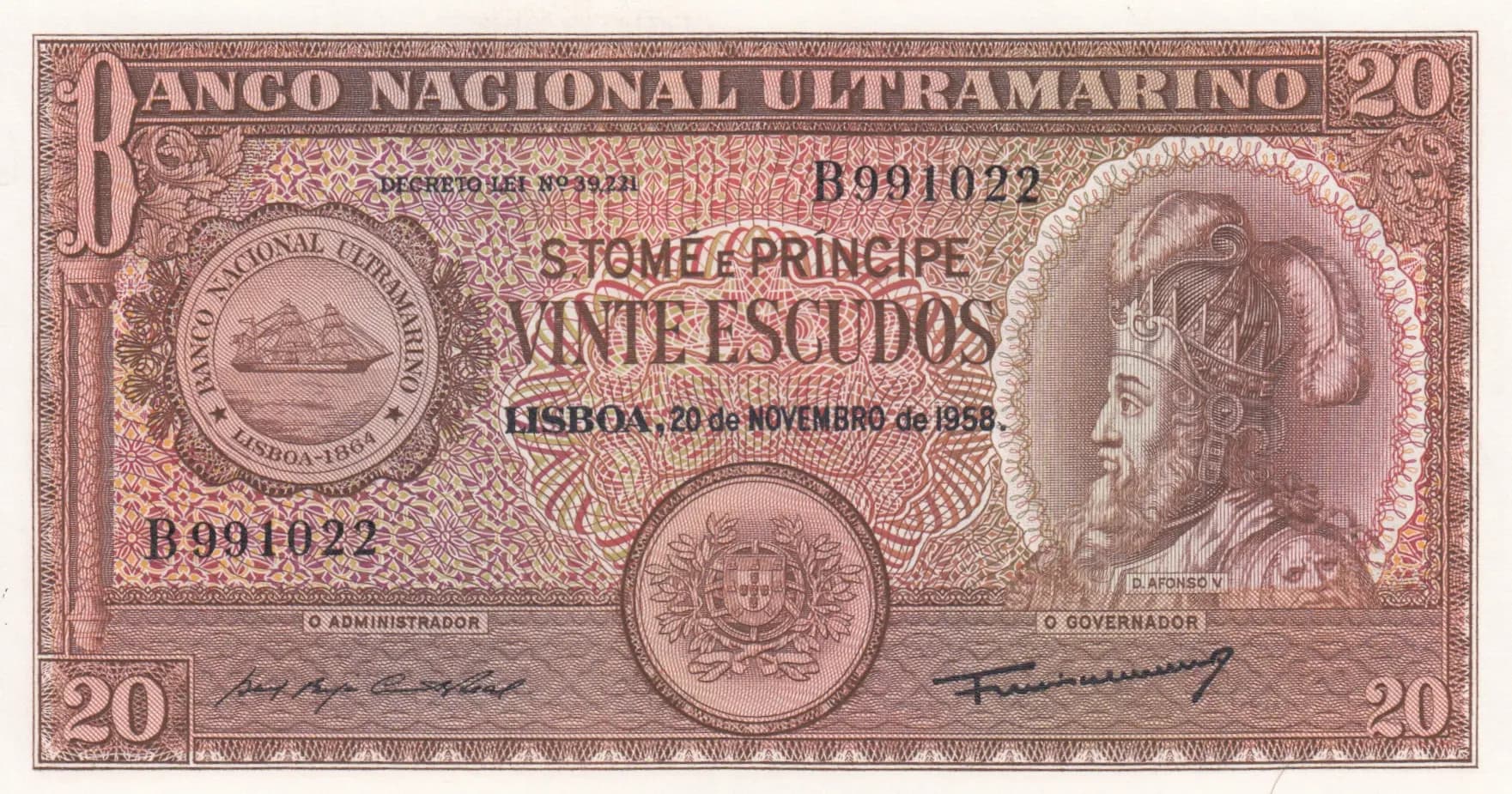
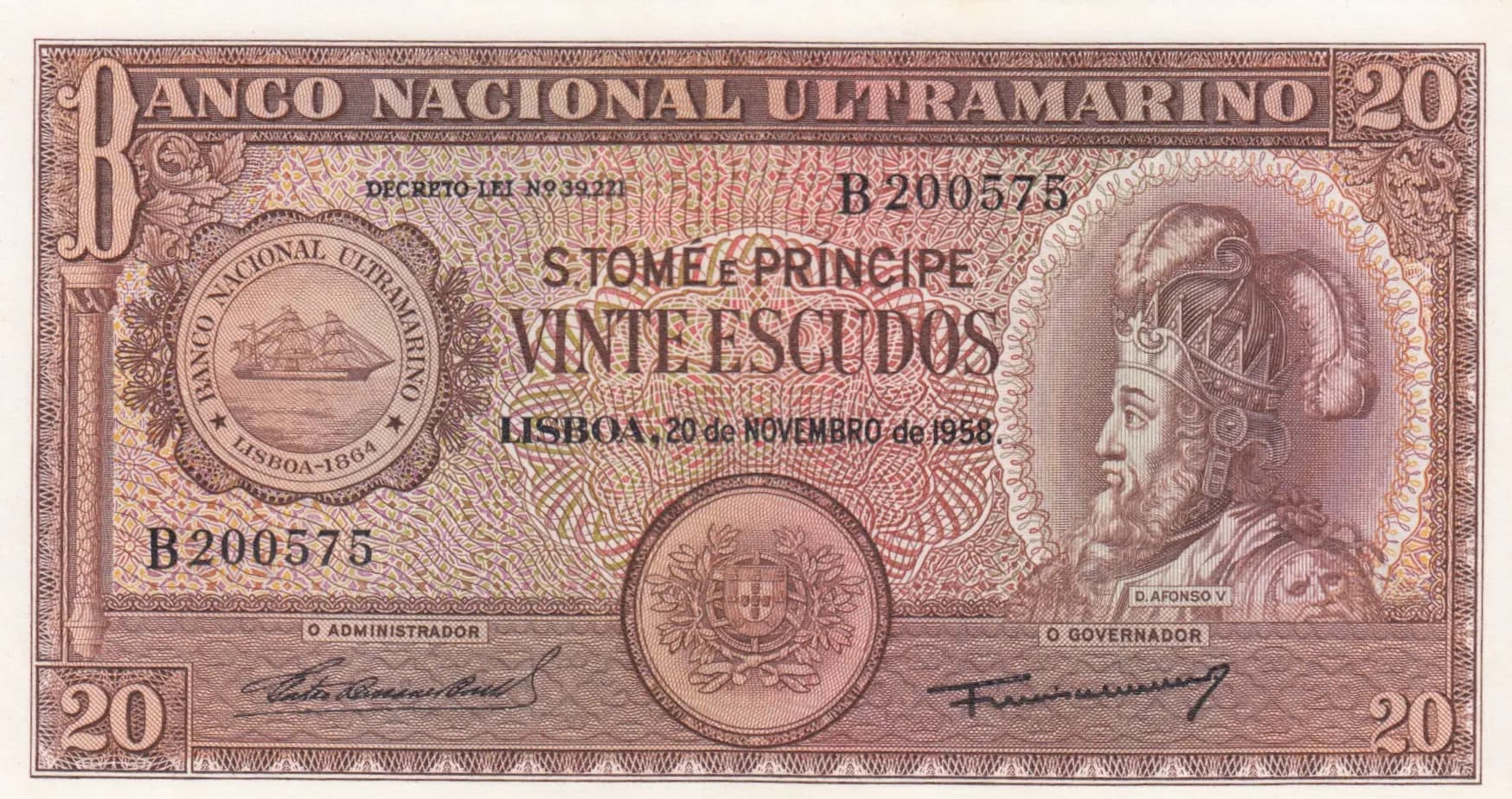
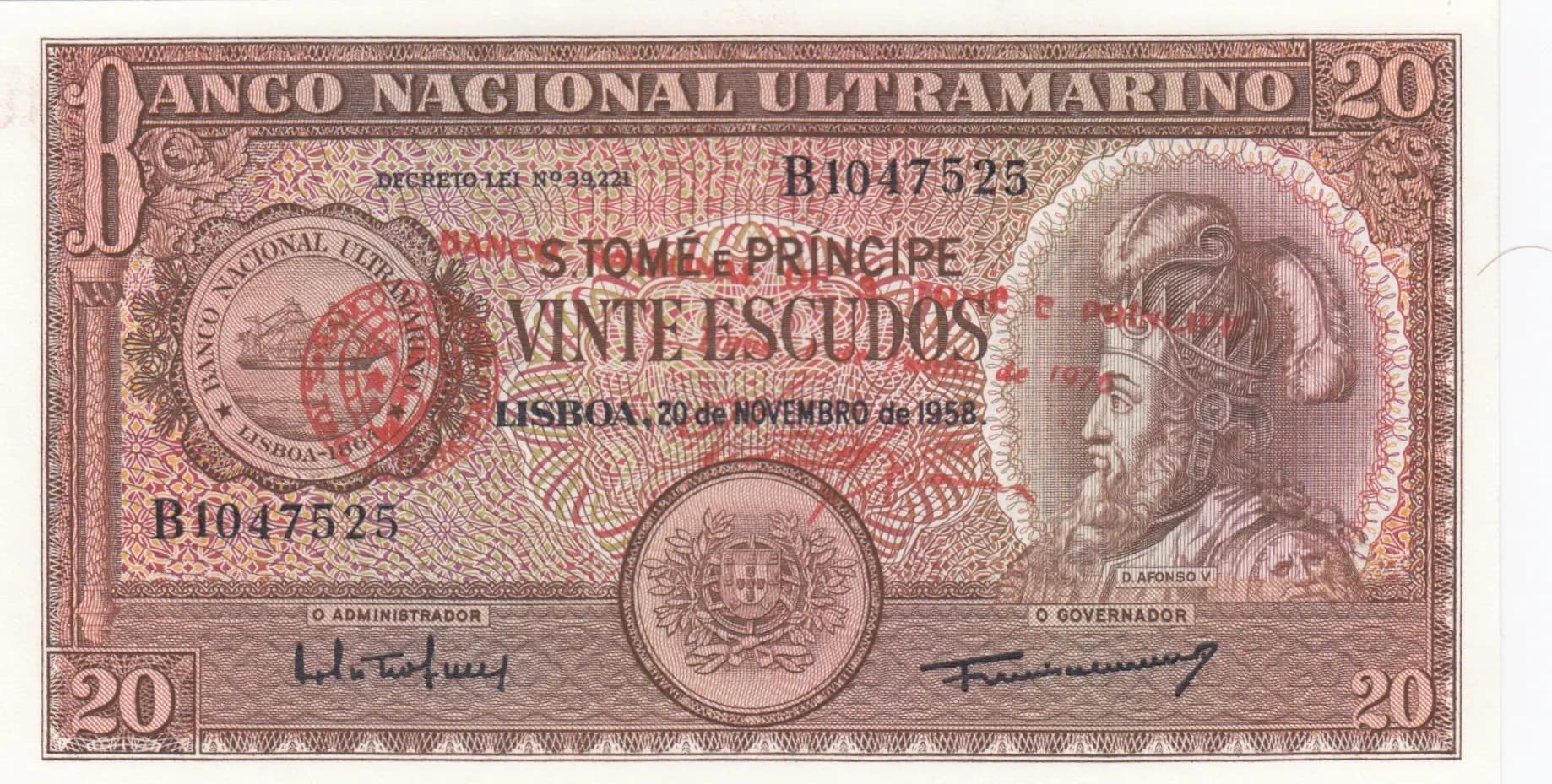
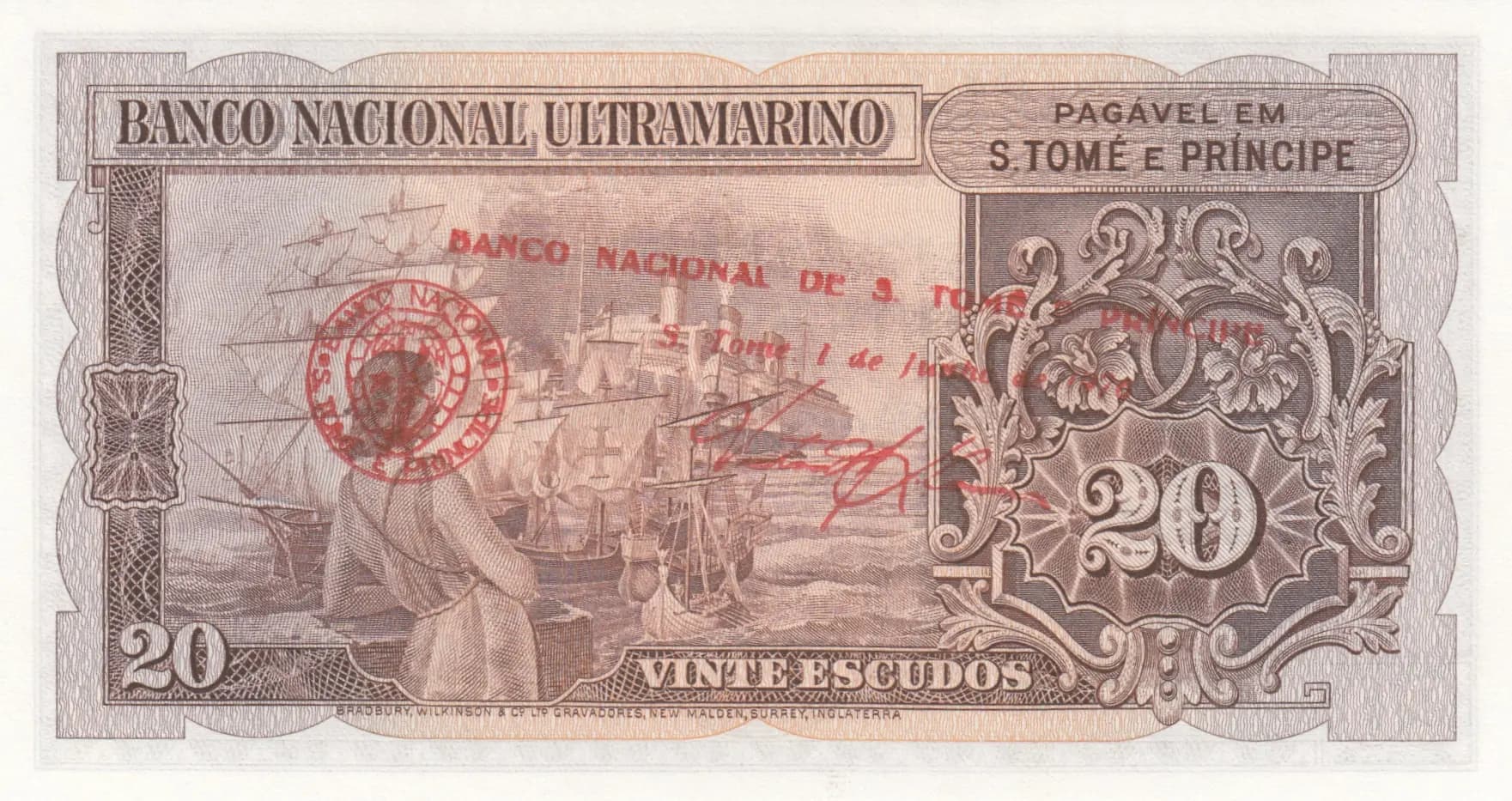
This is a 20 Escudos banknote from 1976 issued by the Banco Nacional de S. Tomé e Príncipe, representing the transition period following the nation's independence from Portugal. The note features a portrait of a bearded man in profile on the front with intricate geometric and floral patterns in brown and red tones, while the reverse displays a detailed maritime scene with a sailing ship—reflecting the island nation's seafaring heritage. The note shows significant circulation wear with multiple red administrative stamps and handwritten annotations, indicating it passed through banking systems, though it retains the UNC grade designation.
Common. This note is from a standard circulation issue of the Banco Nacional de S. Tomé e Príncipe from 1976. While it represents an early post-independence emission, the 20 Escudos denomination was a standard mid-range note likely produced in substantial quantities to support the newly independent nation's economy. The presence of significant administrative stamps and wear patterns on this specimen indicates it circulated widely. No evidence of a limited print run, recall, or extraordinary scarcity exists for this Pick number.
This 1976 note marks the early years of São Tomé and Príncipe's independence (achieved in 1975), when the newly sovereign nation was establishing its own monetary authority under the Banco Nacional de S. Tomé e Príncipe. The design retains Portuguese colonial-era engraving traditions, as evidenced by the Bradbury Wilkinson printer attribution and the elegant maritime imagery reflecting the islands' historical importance as Portuguese trading posts. The overprints and administrative stamps visible on this specimen document its use during the nation's post-independence economic consolidation period.
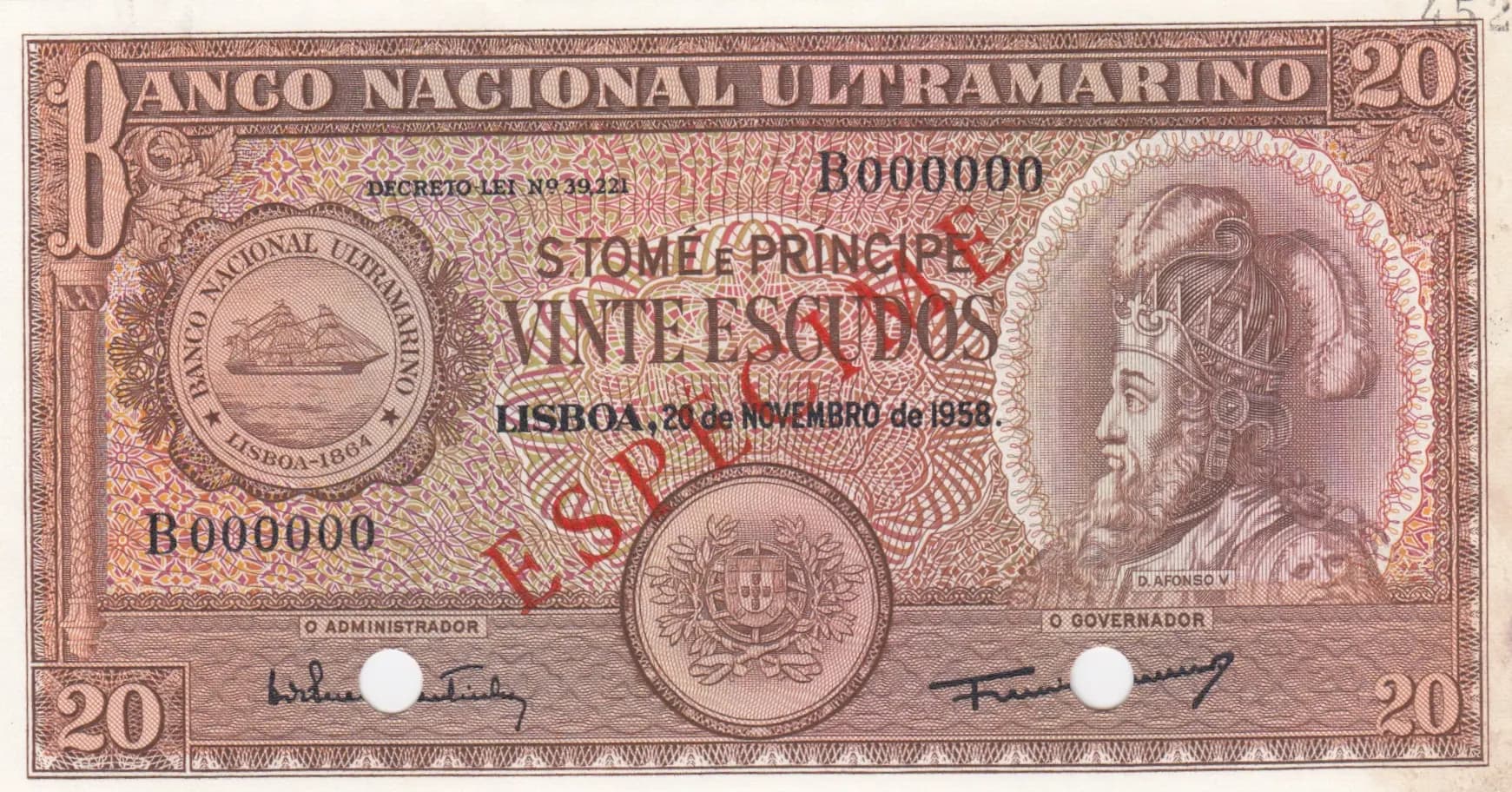
The obverse features a classical engraved portrait of a bearded man in profile facing left, positioned on the right side of the note, surrounded by intricate geometric and floral patterns in brown and red tones that serve both aesthetic and security purposes. A circular heraldic seal with coat of arms appears in the center-lower portion. The reverse displays a detailed maritime scene with a multi-masted sailing ship on the left, symbolizing the nation's island geography and colonial trading heritage, paired with ornate decorative panels featuring scrollwork and the prominent denomination '20' in an elaborate frame. The color palette of brown, sepia, cream, and red creates a dignified, classical appearance consistent with Portuguese colonial-era banknote design conventions. The fine line engraving throughout demonstrates the high-quality security printing standards of the Bradbury Wilkinson establishment.
FRONT SIDE: 'Banco Nacional Ultramarino' (National Ultramarino Bank) / '20' (denomination) / 'Decreto Lei Nº29171' (Decree Law No. 29171) / 'Vinte Escudos' (Twenty Escudos) / 'Lisboa 20 de Novembro de 1932' (Lisbon, November 20th, 1932 [original decree date]) / 'O Administrador' (The Administrator) / 'O Governador' (The Governor) / 'D. Afonso V' (King Afonso V [historical reference]) / Serial numbers: B1047523 and B1047525. BACK SIDE: 'Banco Nacional Ultramarino' (National Ultramarino Bank) / 'Pagável em S. Tomé e Príncipe' (Payable in São Tomé and Príncipe) / 'Vinte Escudos' (Twenty Escudos) / '20' (denomination) / 'Bradbury Wilkinson & Co Ltd, Gravadores, New Malden, Surrey, Inglaterra' (Bradbury Wilkinson & Co Ltd, Engravers, New Malden, Surrey, England) / 'Banco Nacional de S. Thomé' (National Bank of S. Thomé).
Intaglio (engraved line printing) executed by Bradbury Wilkinson & Co Ltd of New Malden, Surrey, England—one of the world's premier security printers. The fine line engraving is evident in the detailed portrait, intricate geometric and floral background patterns, the maritime scene with sailing ship, and the decorative scrollwork. This represents the traditional banknote security printing method combining multiple engraved plates for different color applications (brown and red overprints visible on the specimen).
Per PMG cataloging, this Pick number has two recorded variants: P-44a (Printer: BWC - Bradbury Wilkinson & Co) and P-44cts. The visual analysis confirms this specimen matches the P-44a variety by Bradbury Wilkinson, as evidenced by the printer attribution 'Bradbury Wilkinson & Co Ltd' clearly inscribed on the reverse. The serial number prefix 'B' and the administrative overprints are consistent with standard circulation varieties from this print run.