60 rublei 1919
About This Note
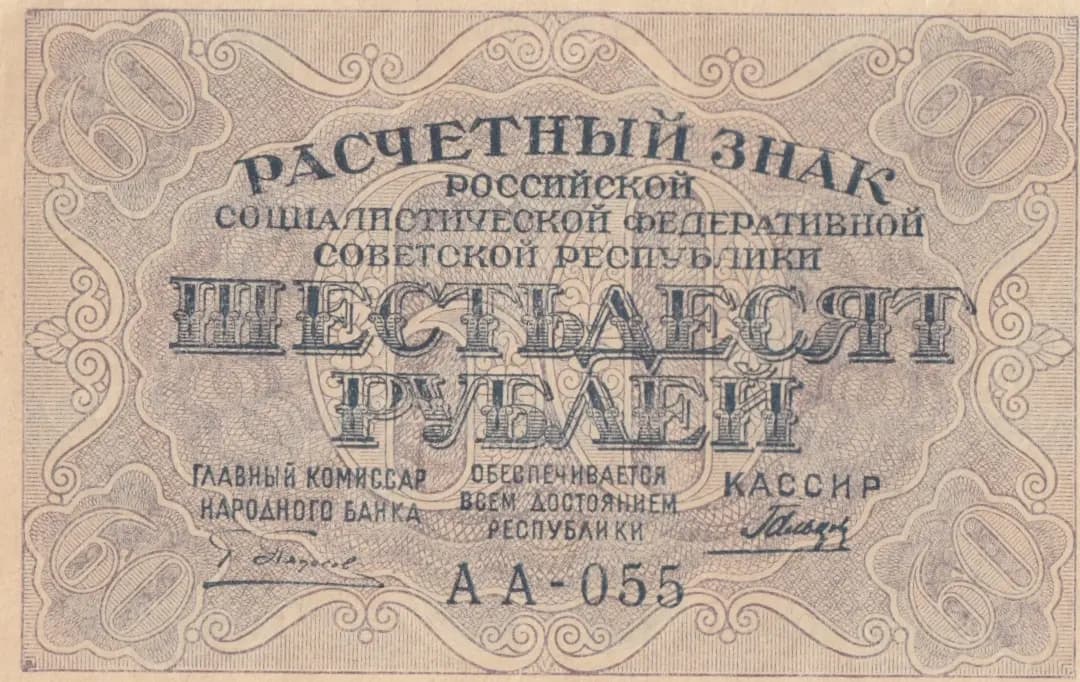
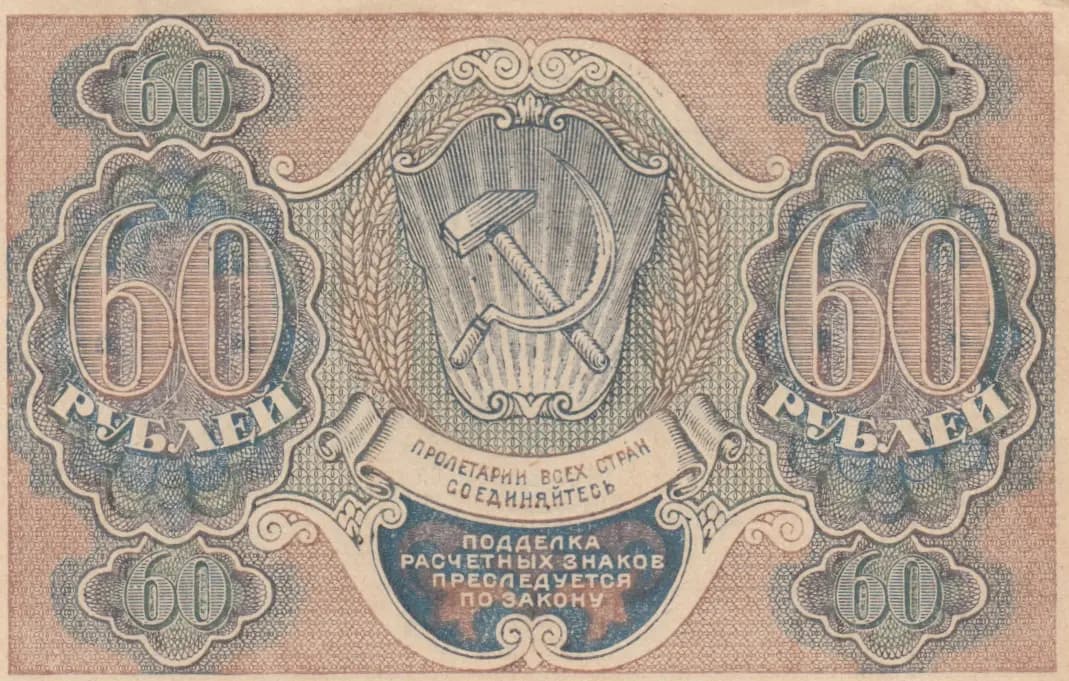
A striking 60 Ruble settlement note from the Russian Socialist Federative Soviet Republic, issued in 1919 during the tumultuous early Soviet period. This AU-graded example exhibits exceptional preservation with minimal wear, crisp ornate borders, and vibrant multi-color printing in cream, blue, rust, and blue-green tones. The note features the iconic hammer and sickle surrounded by wheat stalks on the reverse, making it a compelling artifact of revolutionary-era currency design.
Common. The 60 Ruble denomination from 1919 was issued in significant quantities as part of the settlement note series during the Russian Civil War. While individual notes in AU condition represent better-than-average preservation, the note itself is not scarce. 1919 Soviet currency circulated widely and many examples survive, particularly of higher denominations like the 60 Ruble note. No evidence suggests a limited print run, early recall, or exceptional rarity for this Pick number.
This 1919 60 Ruble note was issued during the Russian Civil War by the People's Bank of the nascent Soviet state, representing an attempt to establish financial authority during a period of extreme political upheaval. The inscriptions emphasize proletarian solidarity ('Workers of all countries unite') and the revolutionary claim that the currency was 'secured by all the wealth of the Republic'—reflecting the Bolshevik ideology of collective ownership. The prominent hammer and sickle imagery on the reverse exemplifies the early Soviet aesthetic that would define Soviet currency design for decades to come.
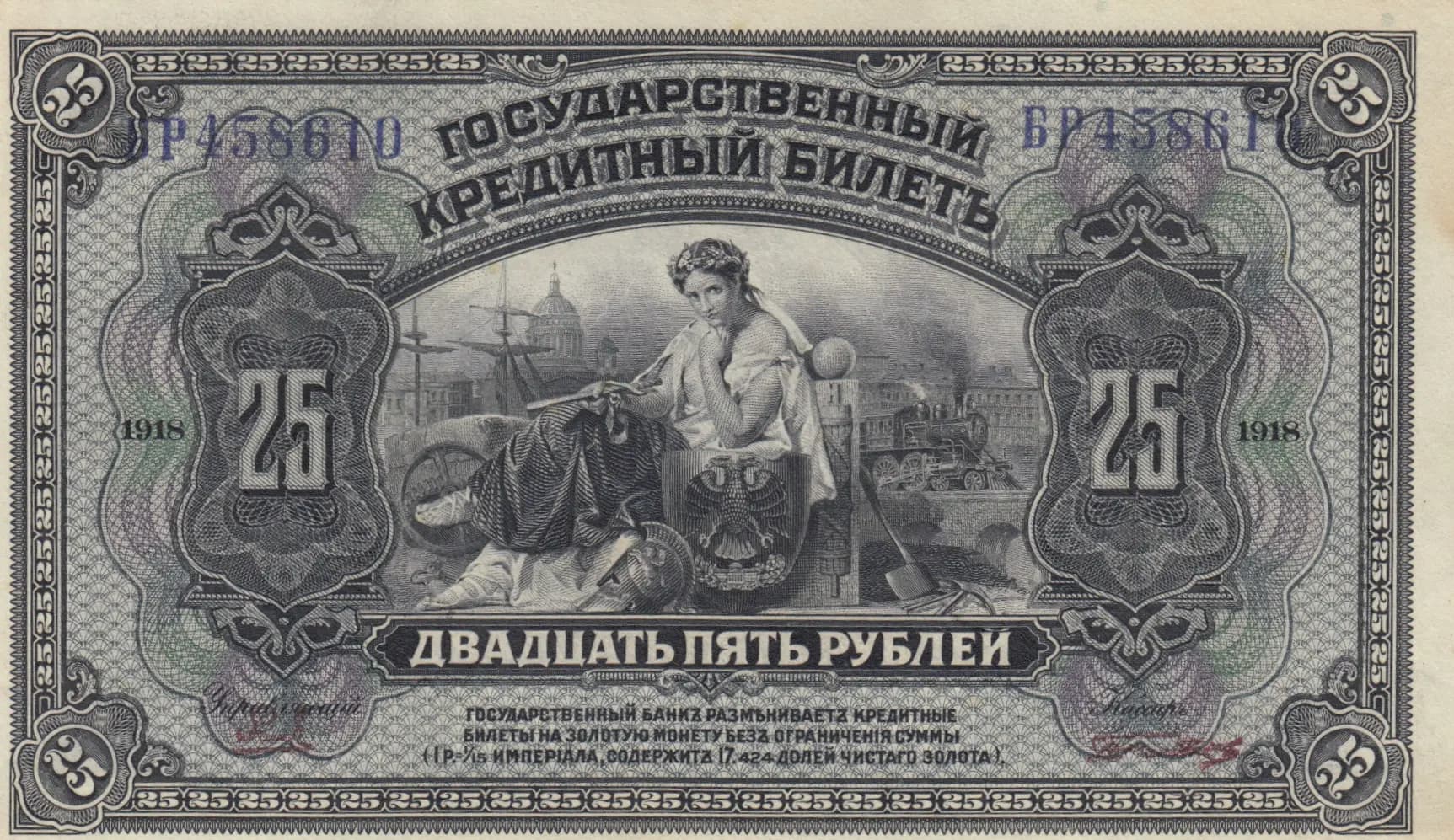
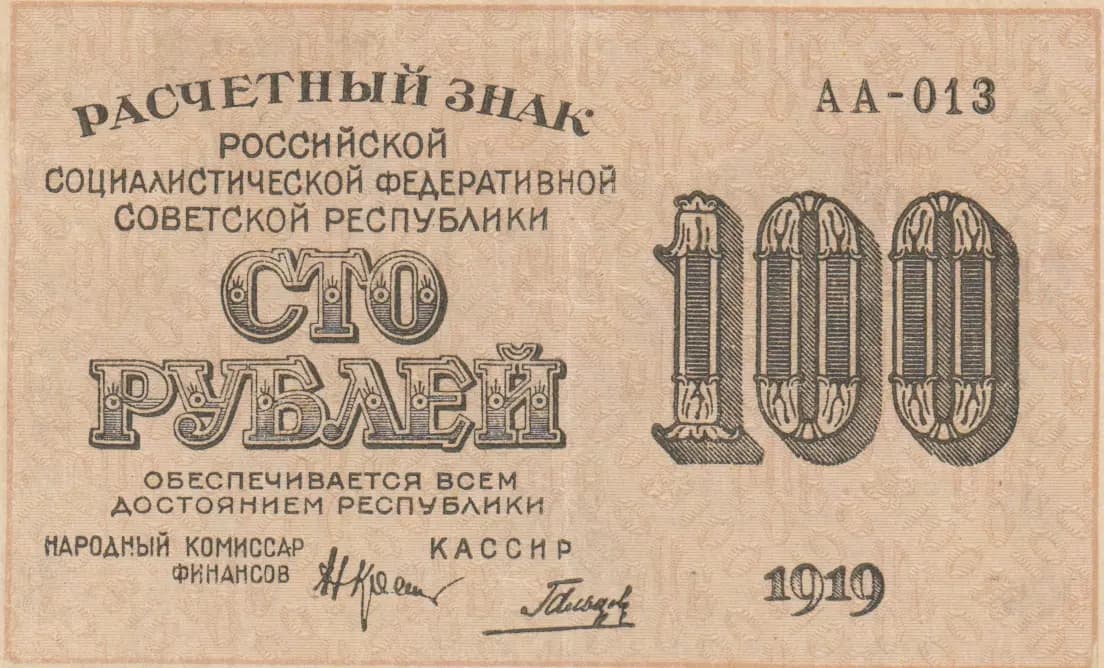
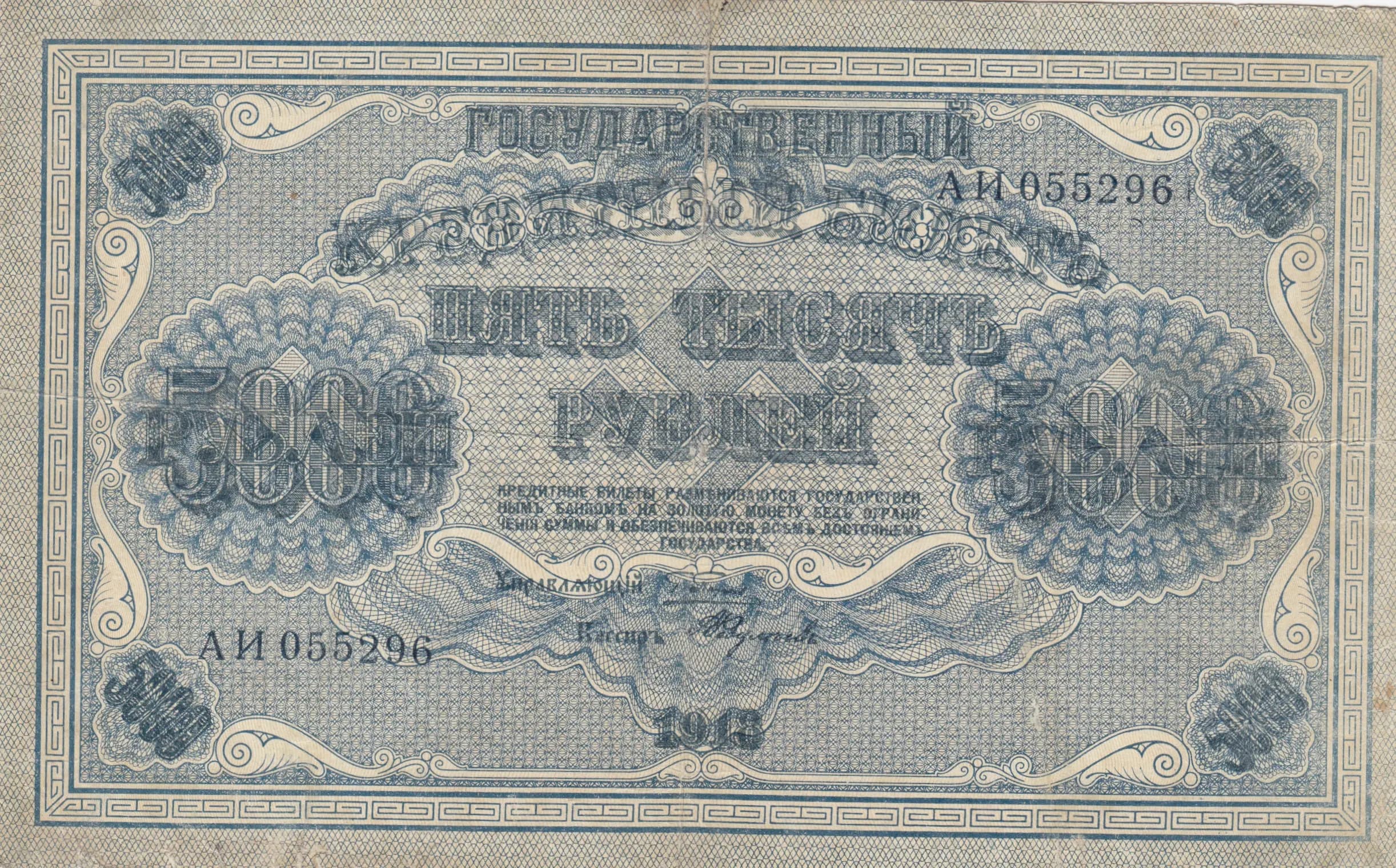
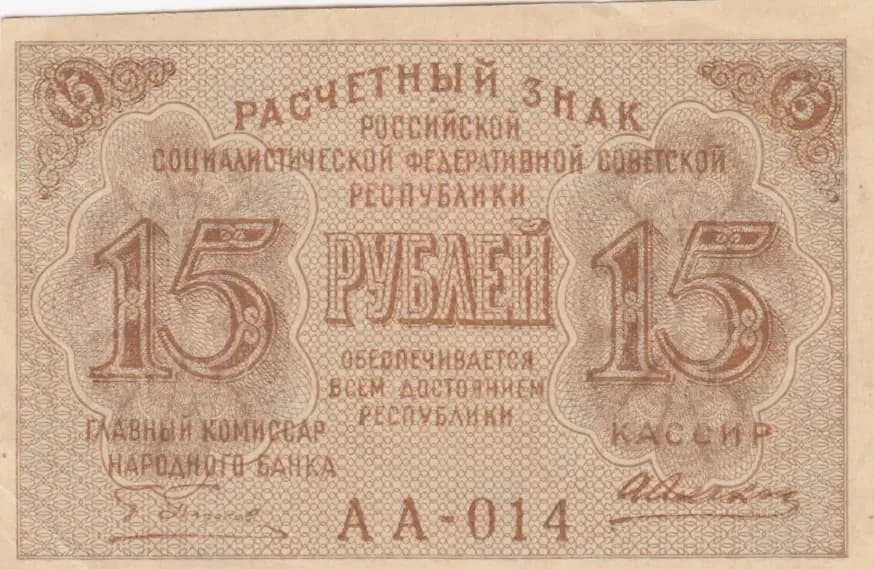
This banknote exemplifies early Soviet graphic design with its dichotomous color schemes front and back. The obverse features an elegant cream and blue palette with ornate scrollwork borders and corner cartouches, presenting a more classical aesthetic suited to conveying financial authority. The reverse shifts dramatically to rust-brown and blue-green tones, centering on a detailed medallion design featuring the hammer and sickle—the primary symbol of Soviet power—encircled by wheat stalks representing agricultural productivity and workers' bounty. Denomination numerals '60' are positioned prominently in all four corners within elaborate ornamental frames. The fine line engraving throughout, combined with cross-hatching background patterns, demonstrates the sophisticated security printing standards employed even during the chaotic Civil War period. No portraits are depicted; instead, the design relies on symbolic imagery and revolutionary slogans to convey state authority.
FRONT SIDE: 'Расчетный знак' (Settlement Note) / 'Российской социалистической федеративной советской республики' (of the Russian Socialist Federative Soviet Republic) / 'Шестьдесят рублей' (Sixty Rubles) / 'Главный комиссар народного банка' (Chief Commissar of the People's Bank) / 'Обеспечивается всем достоянием республики' (Secured by all the wealth of the Republic) / 'Кассир' (Cashier) / Serial number: AA·055. REVERSE SIDE: '60 Рублей' (60 Rubles—appears in all four corners) / 'Пролетарии всех стран соединяйтесь' (Workers of all countries unite) / 'Поддержка расчетных знаков пролетариатом по закону' (Support of settlement notes by the proletariat according to law).
Intaglio engraving (line engraving) with multicolor relief printing, utilizing fine line work and cross-hatching techniques for background security patterns. The note exhibits characteristics consistent with German-influenced Russian security printing of the period. While the specific security printer for Pick P-100(3) is not definitively documented in standard catalogs, such Soviet notes of 1919 were typically produced under supervision of the People's Commissariat of Finance using available printing facilities in Moscow or Petrograd.
The observed example exhibits serial number prefix 'AA' with number 055, indicating this is from an early printing batch. The note's specific designation as Pick P-100(3) denotes it as the third variety or state of this denomination. Variations in 1919 Soviet settlement notes can include differing serial number prefixes, signature variations of the Chief Commissar and Cashier (though legibility in this image is limited), and minor design adjustments between early and later printings. The AU condition grade suggests this particular specimen has retained original color vibrancy better than most circulated examples.