5000 rublei 1918
About This Note
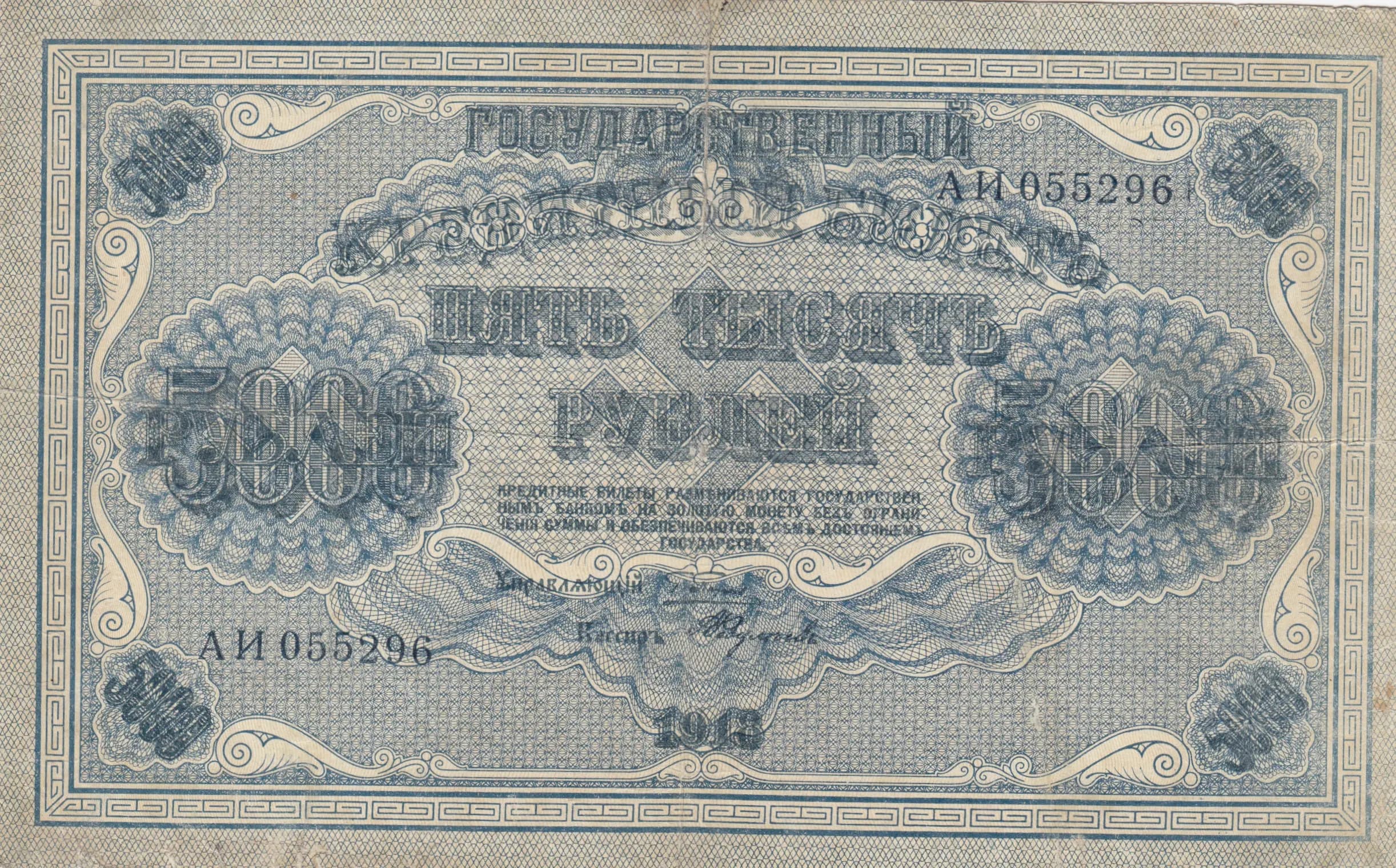
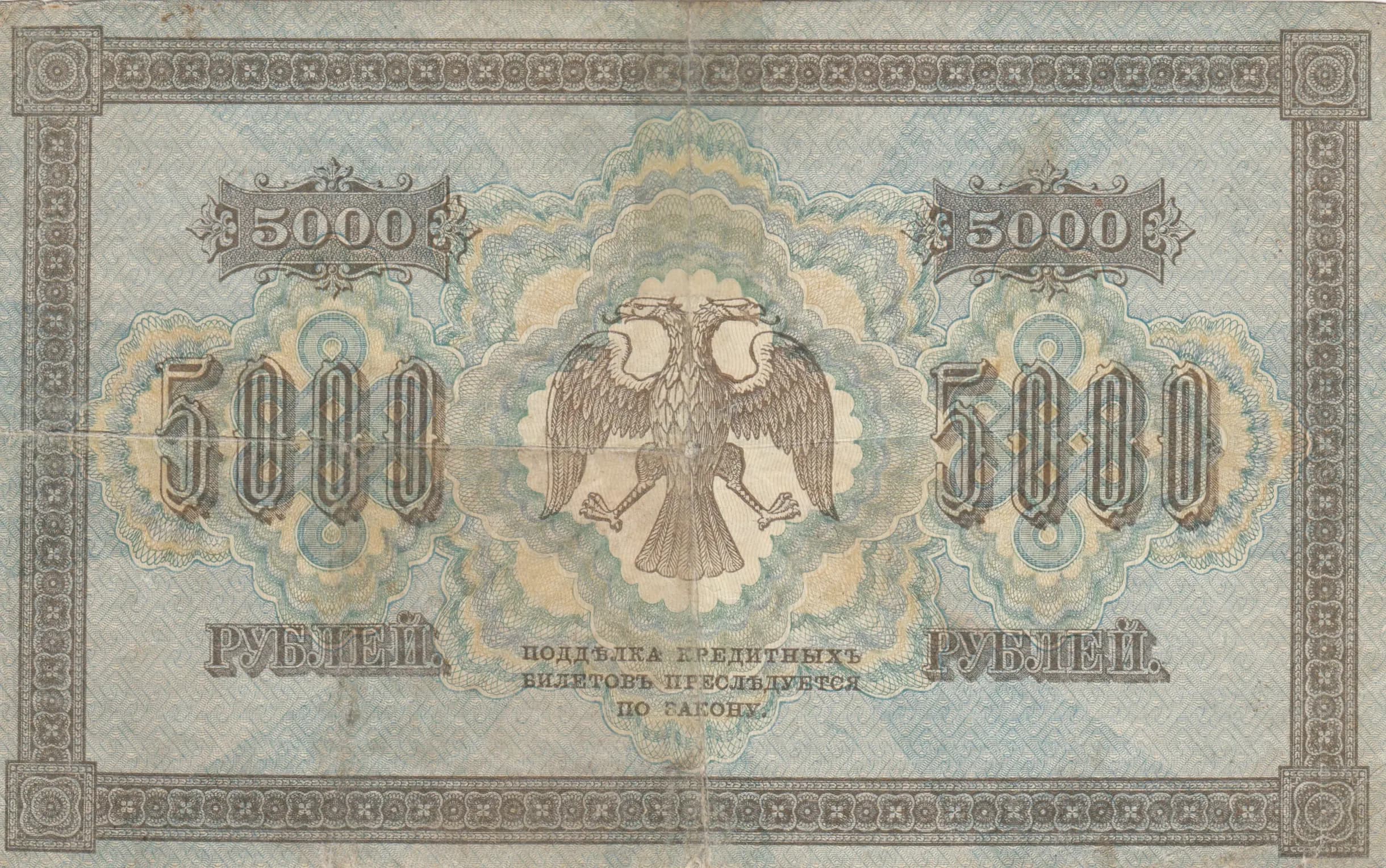
This is a striking Russian 5000 Rublei note from 1918, issued by the State Treasury during the tumultuous early Soviet period. The note displays exceptional preservation in VF condition with crisp printing, clear serial numbers (А И 1055296), and minimal wear despite its age of over a century. The elaborate ornamental design featuring Greek key patterns, rosettes, and the iconic double-headed eagle symbolizes the transitional period between Imperial and Soviet governance, making this a historically significant artifact of the Russian Revolution era.
Common. The 5000 Rublei denomination from 1918 was issued in substantial quantities by the Russian State Treasury and appears regularly in numismatic commerce and collections. While these notes are historically significant, they were produced in large print runs to meet monetary demand during the early Soviet period. Notes in VF condition are readily available in the collector market at moderate prices, indicating strong supply relative to collector demand.
This 5000 Rublei note was issued in 1918 under the authority of the Workers' and Peasants' Soviet Government, as explicitly stated in the front inscription. The retention of the Imperial double-headed eagle on the reverse, despite the revolutionary government's anti-monarchical stance, reflects the practical necessity and design continuity during the chaotic early Soviet period. The denomination and ornate security features demonstrate the state's attempt to establish monetary credibility and prevent counterfeiting during a period of severe economic and political upheaval.
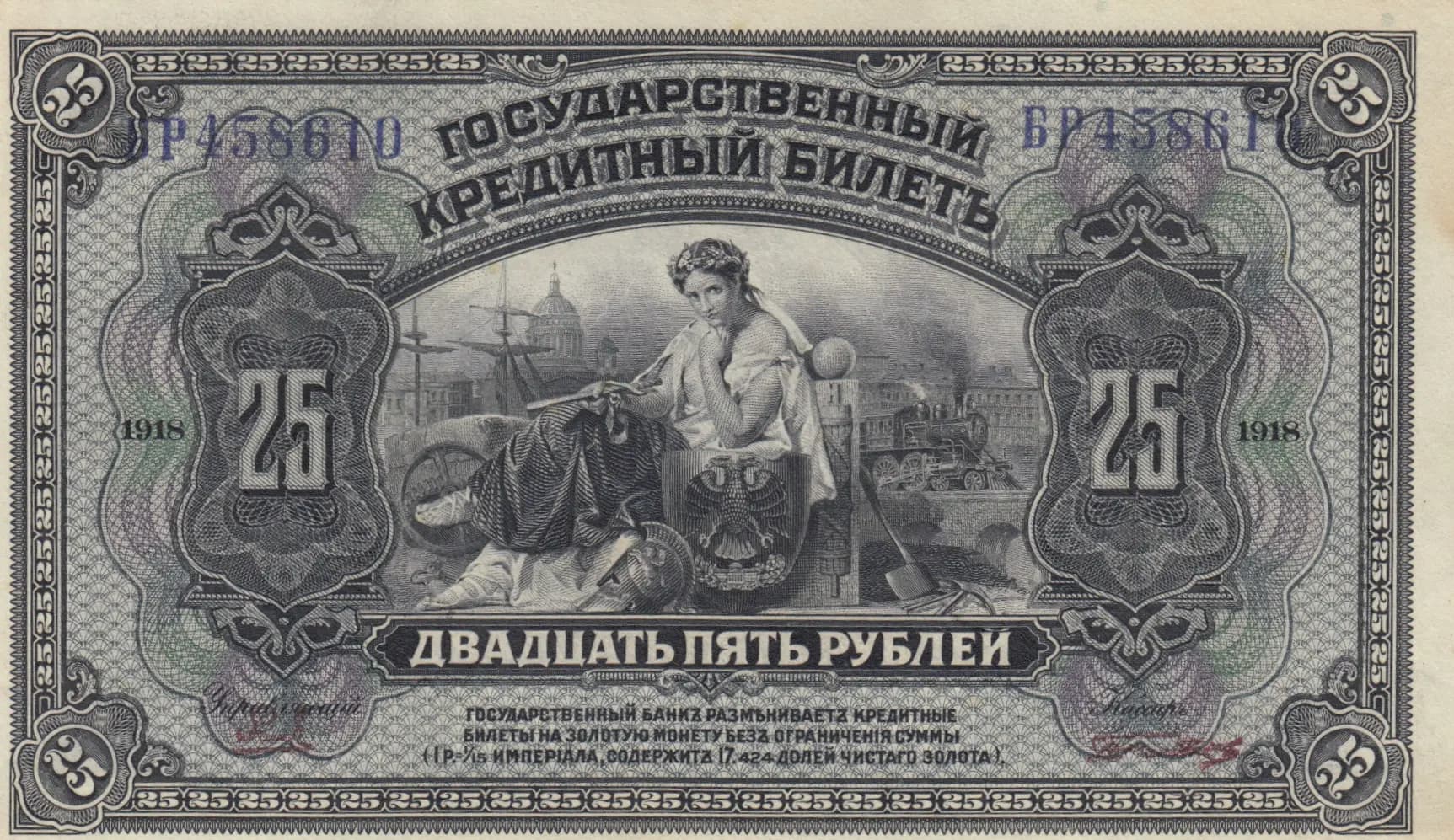
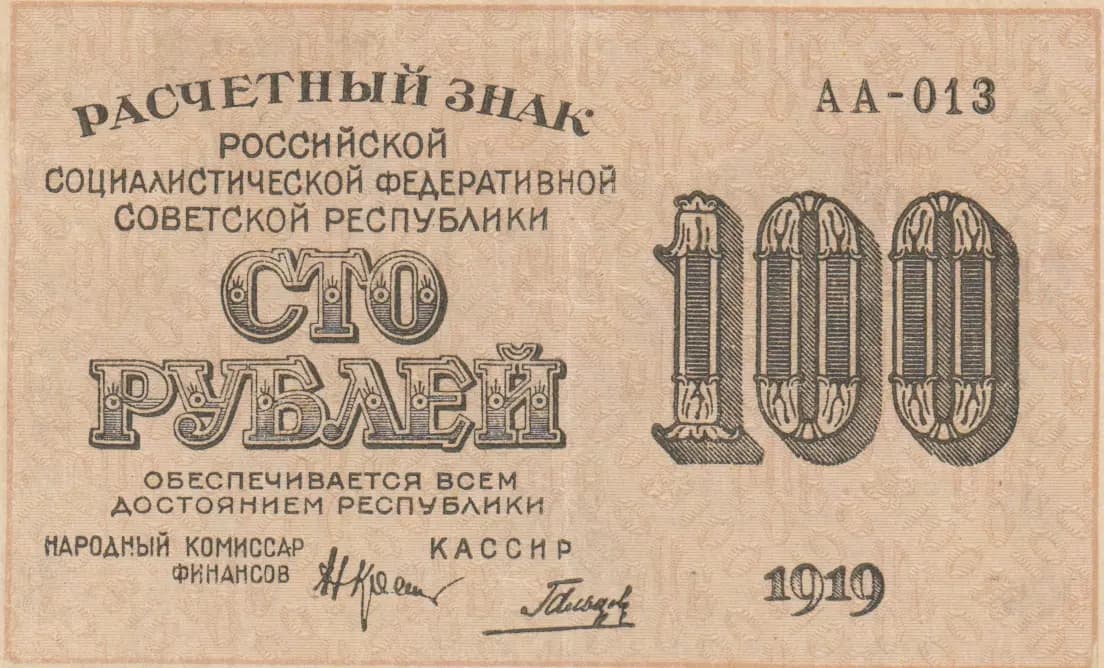
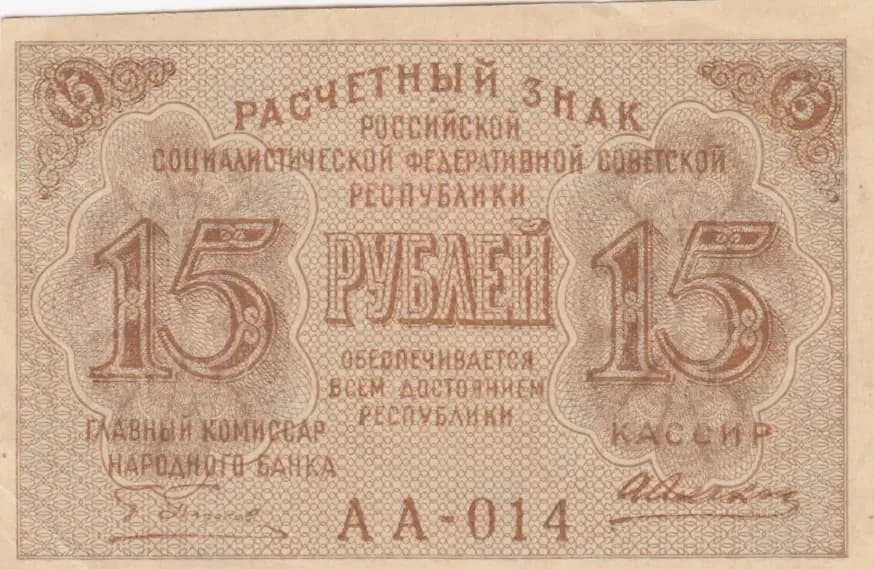
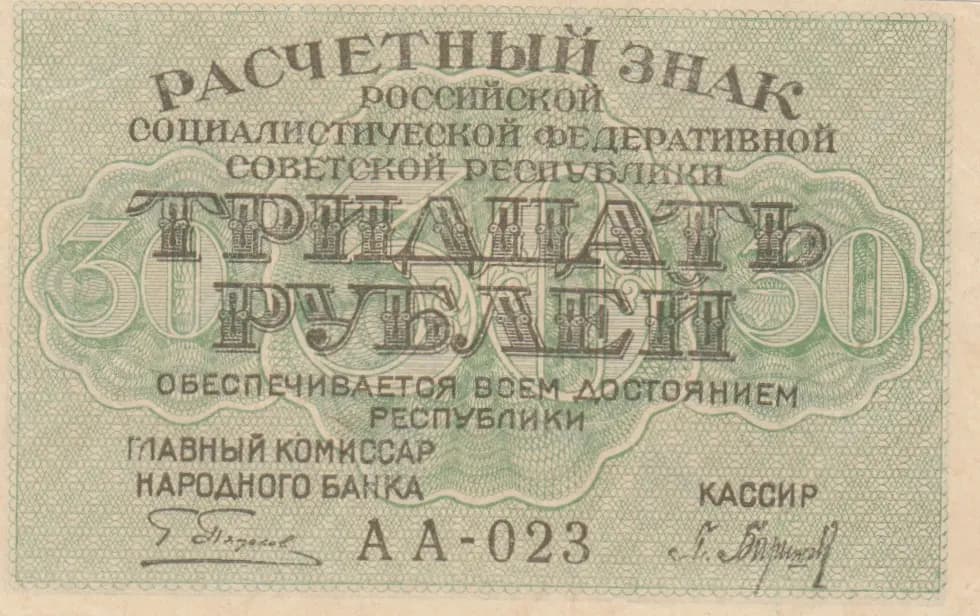
The front features an ornate design centered on elaborate scrollwork and cloud motifs framed by Greek key borders, with large decorative rosettes containing the denomination on both left and right margins. The back is dominated by a heraldic double-headed eagle with outstretched wings, rendered in fine detail within an ornate cloud-like cartouche. This Imperial symbol was retained from pre-revolutionary Russian currency design. Denomination numerals appear in decorative style in the upper corners of the reverse. The entire note employs intricate geometric and floral patterning as an anti-counterfeiting measure. The blue-gray and tan color scheme creates strong contrast between obverse and reverse.
FRONT: 'ГОСУДАРСТВЕННЫЙ' (State) appears in the top banner. 'ПЯТЬ ТЫСЯЧ РУБЛЕЙ' (Five Thousand Rubles) is displayed prominently. The main text reads: 'КРЕДИТНЫЕ БИЛЕТЫ РАЗШИРЯЮТСЯ ГОСУДАРСТВОМ НА ОСНОВАНИИ ДЕКРЕТА РАБОЧЕГО И КРЕСТЬЯНСКОГО СОВЕТСКОГО ПРАВИТЕЛЬСТВА' (Credit notes are issued by the state on the basis of a decree of the Workers' and Peasants' Soviet Government). Serial number: 'А И 1055296' appears twice. BACK: '5000' (denomination in numerals) appears twice in ornate form. 'РУБЛЕЙ' (Rubles) appears twice. Additional text: 'ПОДДЕРЖКА КРЕДИТНЫХ БИЛЕТОВ ПОСЛЕДУЕТ ПО ЗАБОРНУ' (Support of credit notes will follow by decree/border authority).
This note was produced using traditional intaglio (engraved) printing, evidenced by the sharp, fine line-work visible in the borders, the crisp rendering of the double-headed eagle, and the intricate micropattern geometric backgrounds. The complex ornamental design and multiple color application (blue-gray/tan palette with gray-brown accents) are characteristic of high-security banknote production of the 1918 period. Russian State Treasury notes of this era were typically printed at the St. Petersburg (Petrograd) State Printing Works, though specific printer attribution for Pick 96a(8) would require documentary confirmation.
This note is identified as Pick 96a(8), indicating it is a specific variety within the 1918 5000 Rublei series. The serial number prefix 'А И' (Cyrillic A and I) and the sequential numbering pattern are consistent with this variety designation. The Pick 96a designation indicates this is the primary type, with the (8) suffix denoting this specific cataloged variety. No overprints or additional security markings beyond the standard design are visible. Collectors should note that numerous varieties of this denomination exist based on printer location, series marks, and serial number prefixes, making careful variety attribution important for accurate cataloging.