30 rublei 1919
About This Note
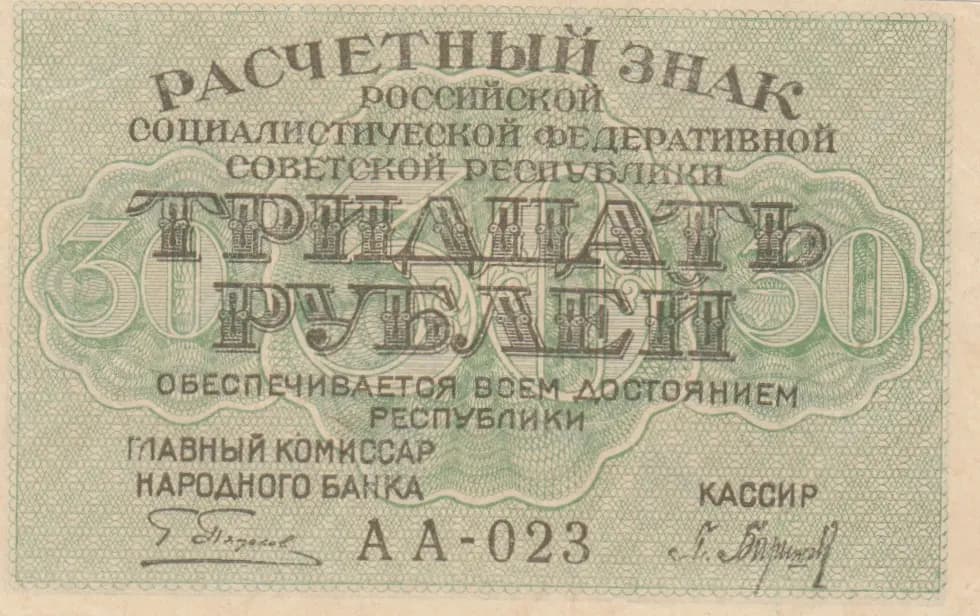
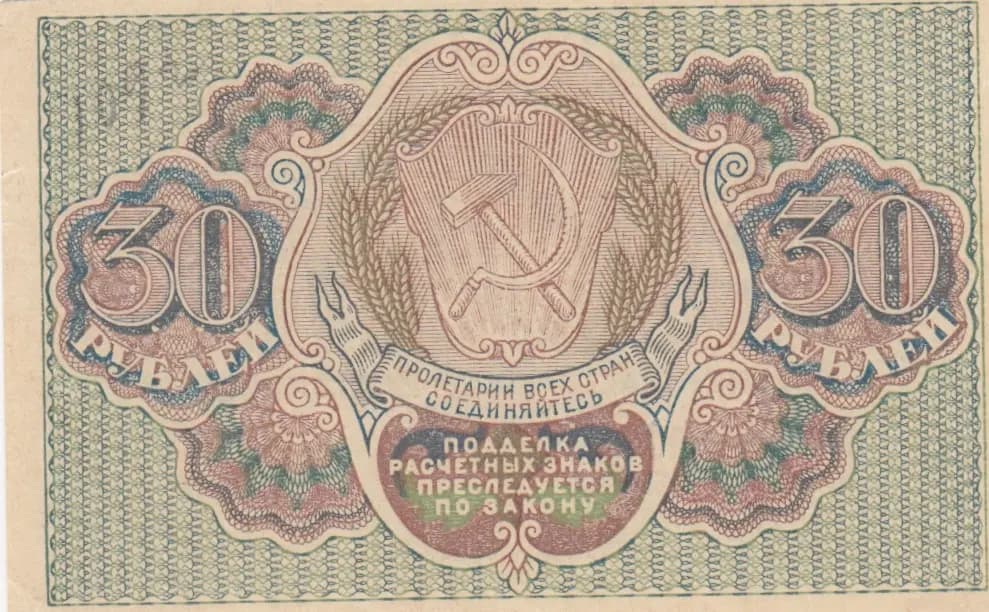
An exceptional example of the Russian SFSR 30 rublei from 1919, graded AU, displaying pristine uncirculated condition with vibrant color preservation and sharp detail throughout. This early Soviet-era note features distinctive ornamental borders, dual-sided denomination displays in decorative ovals, and the iconic hammer-and-sickle emblem on the reverse, representing the nascent communist state's monetary authority. The note's excellent preservation and crisp printing make it a desirable specimen from a historically significant transitional period in Russian monetary history.
common. The 1919 30 rublei (Pick P-99a varieties) was produced in substantial quantities by the Russian SFSR State Treasury during the Civil War period as part of a broad emergency currency issue. While early Soviet notes from 1919-1923 can vary in availability depending on specific series and signatures, the 30 rublei denomination in P-99a(2) variety remains regularly encountered in numismatic commerce. AU-grade examples are desirable for their preservation but do not command premiums suggesting scarcity; market pricing for comparable specimens typically reflects collector demand rather than rarity-driven valuation.
Issued during the Russian Civil War by the State Treasury of the Russian Socialist Federative Soviet Republic, this 30 rublei represents the early monetary attempts of the Bolshevik government between imperial collapse and Soviet consolidation. The prominent hammer-and-sickle symbol, wheat stalks, and revolutionary slogans including 'Workers of all countries, unite' reflect the ideological commitments of the nascent Soviet state and its assertion of proletarian authority over monetary instruments. The inscription declaring the note 'secured by all the property of the Republic' exemplifies the radical reimagining of currency backing under communist economic theory.
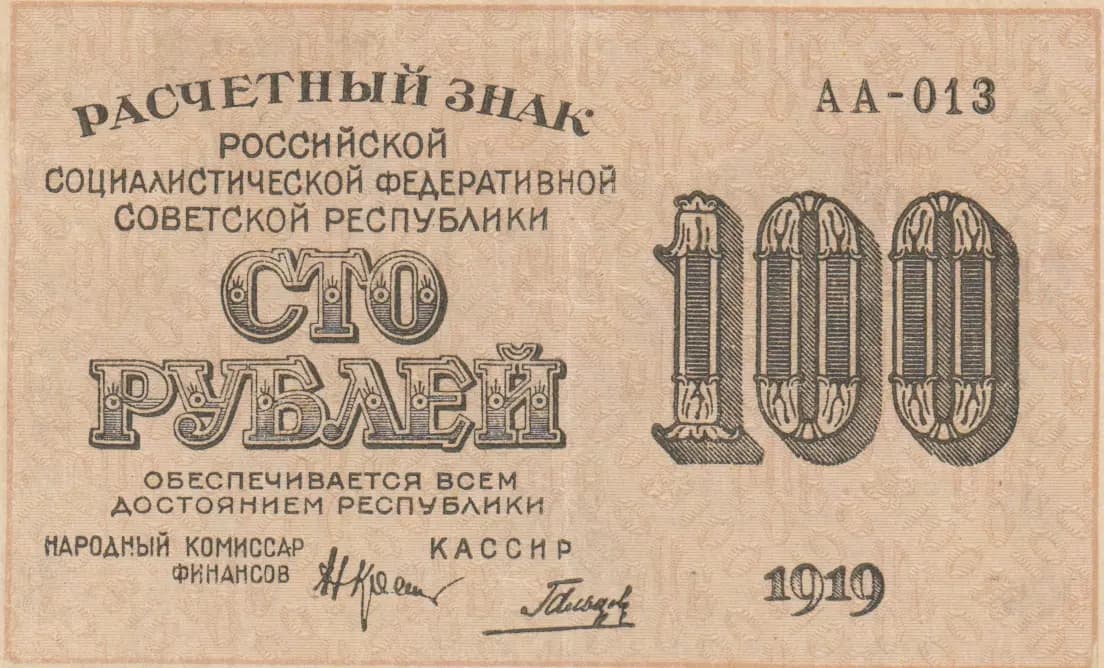
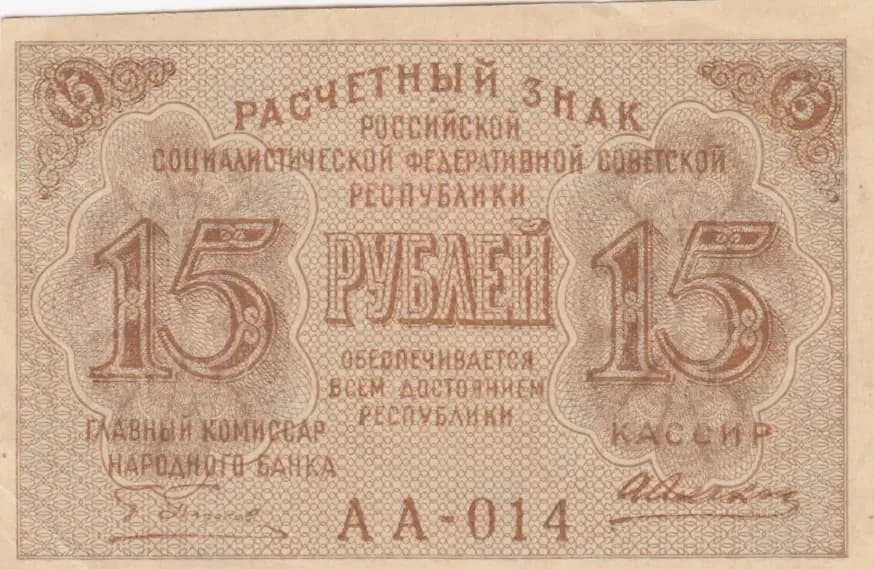
This 30 rublei displays a classical Soviet early-period design aesthetic featuring symmetrical composition and nationalist/revolutionary iconography. The obverse (front) employs an elaborate ornamental border framework with geometric patterns and presents the denomination '30' within decorative oval cartouches on both left and right margins, flanked by Cyrillic text asserting state monetary authority and backing. The reverse (back) centers on the hammer-and-sickle emblem—the defining symbol of Soviet communism—enclosed within an ornamental shield or medallion and flanked by wheat or grain stalks symbolizing agricultural collectivization and workers' productivity. Both sides employ fine line engraving in the background with consistent geometric patterning, creating visual security and artistic sophistication. The multi-color printing (green, beige, tan on front; green, pink, red, beige, tan on back) demonstrates careful chromatic separation typical of State Treasury production.
FRONT SIDE: 'РАСЧЁТНЫЙ ЗНАК РОССИЙСКОЙ СОЦИАЛИСТИЧЕСКОЙ ФЕДЕРАТИВНОЙ СОВЕТСКОЙ РЕСПУБЛИКИ' (Calculation sign of the Russian Socialist Federative Soviet Republic) / 'ТРИДЦАТЬ РУБЛЕЙ' (Thirty rubles) / 'ОБЕСПЕЧИВАЕТСЯ ВСЕМ ДОСТОЯНИЕМ РЕСПУБЛИКИ' (Is secured by all the property of the Republic) / 'ГЛАВНЫЙ КОМИССАР НАРОДНОГО БАНКА' (Chief Commissar of the People's Bank) / 'КАССИР' (Cashier) / Serial number 'АА-023'. BACK SIDE: '30' and 'РУБЛЕЙ' (30 Rubles) / 'ПРОЛЕТАРИЙ ВСЕХ СТРАН, СОЕДИНЯЙТЕСЬ' (Workers of all countries, unite [Marx/Communist Manifesto slogan]) / 'ПОДДЕЛКА РАСЧЕТНЫХ ЗНАКОВ ПРЕСЛЕДУЕТСЯ ПО ЗАКОНУ' (Counterfeiting of calculation signs is prosecuted by law).
Intaglio (engraved) printing with multi-color lithographic or chromolithographic application, characteristic of early Soviet Treasury notes. The fine line work visible in borders, background patterns, and ornamental elements indicates traditional engraving dies, while the distinct color separation and vibrancy suggest secondary color application via lithographic stones or plates. The sharp detail preservation in the AU specimen confirms high-quality production standards typical of State Treasury operations during this period.
This specimen is identified as Pick P-99a(2), indicating it represents the second known cataloged variety of the 1919 30 rublei issue. The serial number prefix 'АА-023' and the specific signature/authorization blocks visible on the note may indicate a particular printer's run or administrative batch. Collectors should note that P-99a varieties can include minor signature variations and color tone differences; this example's vibrant green/pink/red coloration and pristine condition suggest first-quality production. The specific variety P-99a(2) may denote differences in signature authority or subtle design elements from the P-99a(1) version, though definitive variety attribution may require direct comparison with cataloged reference specimens.