25 rublei 1918
About This Note
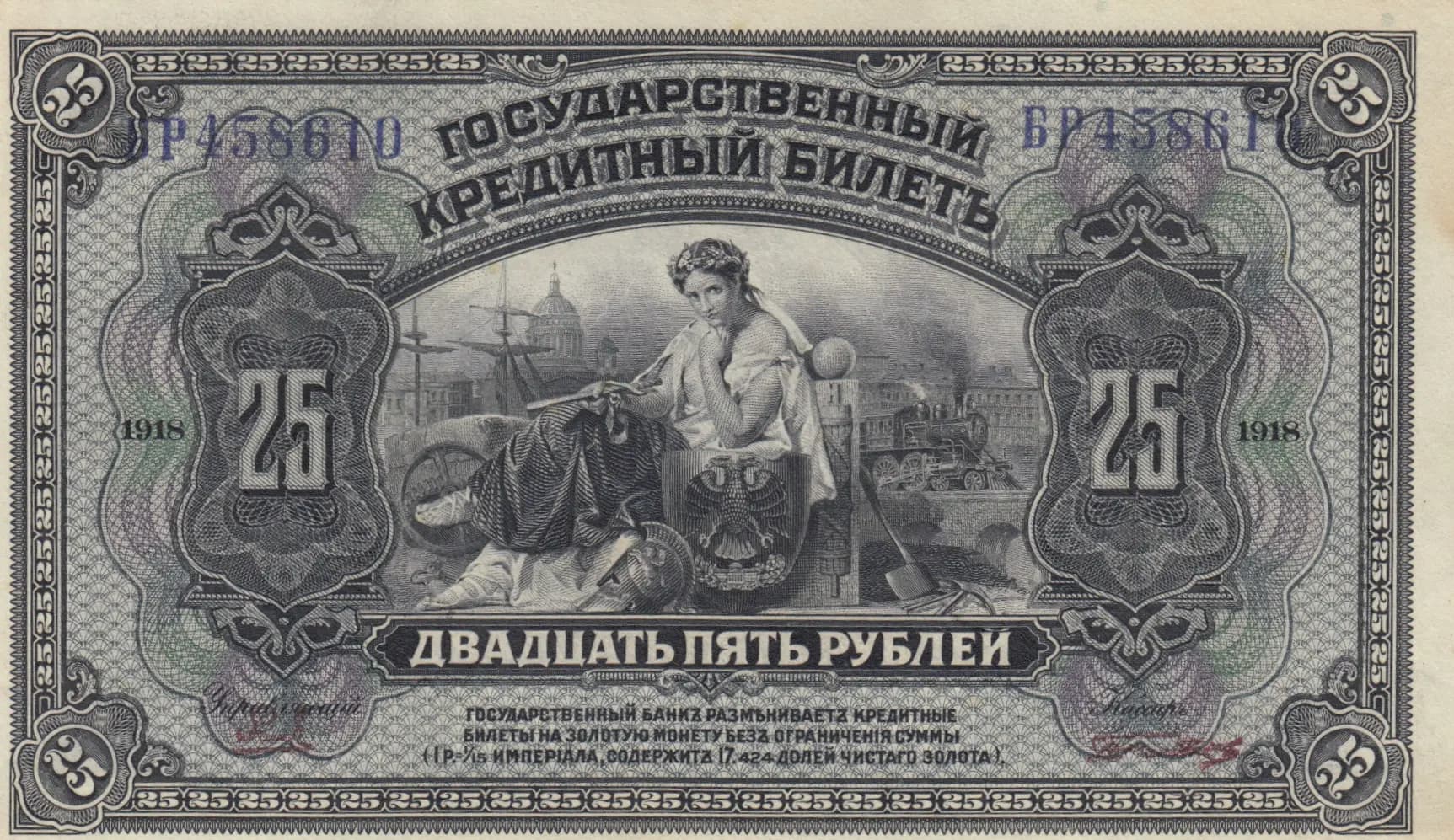
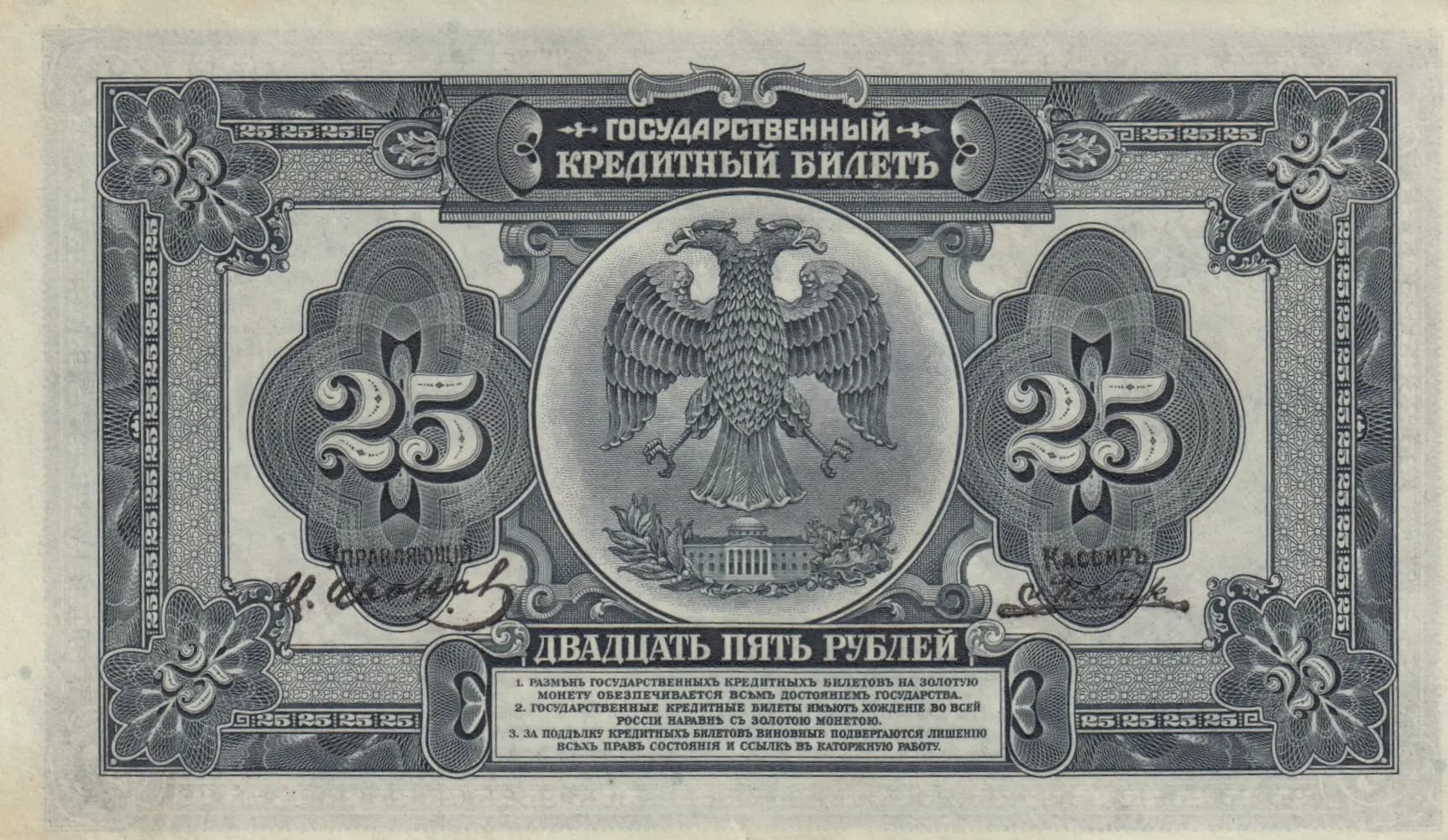
This is an AU-graded 25 rublei from the Russian Provisional Government's 1918 issue (Pick P-39A), displaying the classic allegorical design characteristic of Imperial Russian currency. The obverse features an elegant classical female figure symbolizing commerce or state authority amid a harbor cityscape with ships and cathedral, while the reverse showcases the double-headed eagle within a circular frame—iconic symbols of Russian imperial power. The note shows appropriate age-related patina with minor creasing and foxing on the obverse, while the reverse remains crisp and well-preserved, indicating moderate circulation typical of this historically significant issue from the final year of Tsarist-era currency production.
Common. The 1918 25 rublei (Pick P-39A) was issued in substantial quantities during its brief circulation period and remains relatively abundant in the numismatic market. Notes from this series, even in AU condition, typically trade at moderate prices ($15-40 range depending on specific variety and serial number). High-denomination Russian Imperial notes from 1918 are historically significant but not scarce in collector hands, as many survived the post-revolutionary period. The AU grade and clear impressions indicate careful preservation rather than exceptional rarity.
This banknote was issued during the final tumultuous year of the Russian Empire's official currency system, just months before the Bolshevik Revolution would render such 'gold-backed' State Credit Tickets obsolete. The inscriptions prominently reference the State Bank's guarantee to exchange notes for gold coins without limitation—a promise that would become impossible within months as the Russian Civil War erupted. The allegorical harbor scene with commercial vessels and architectural monuments represents the pre-revolutionary vision of a stable, prosperous Russian state, making this note a poignant artifact of the Imperial system's collapse.
The obverse features a classical allegorical female figure—representing Commerce, Trade, or State Authority—rendered in the neoclassical style typical of Russian Imperial currency design. She is depicted semi-draped in classical garments, holding a staff or scepter and gesturing toward a panoramic harbor cityscape dominated by a prominent domed cathedral or church (likely representing a major Russian city such as St. Petersburg or Moscow) with multiple sailing vessels in the harbor. Large ornamental numerals '25' appear in shield-shaped cartouches on both left and right margins. The reverse displays the Imperial double-headed eagle, fully displayed with spread wings within a circular heraldic frame, beneath which sits a classical temple or state building flanked by laurel or palm branches. Large ornamental '25' numerals again flank the central eagle. Both sides employ extensive ornate borders with repeating floral, scrollwork, and botanical motifs in the corners. The entire design employs fine line engraving with varying densities to create depth and security features.
FRONT: 'ГОСУДАРСТВЕННЫЙ КРЕДИТНЫЙ БИЛЕТ' (State Credit Ticket/Banknote); 'ДВАДЦАТЬ ПЯТЬ РУБЛЕЙ' (Twenty-Five Rubles); '1918' (year); 'ГОСУДАРСТВЕННЫЙ БАНКЪ РАЗМѢНИВАЕТ КРЕДИТНЫЕ БИЛЕТЫ НА ЗОЛОТУЮ МОНЕТУ БЕЗ ОГРАНИЧЕНИЯ СУММЫ (ИР. ДОЛ ИМПЕРИАЛА, СОДЕРЖИТА 17.424 ДОЛЕЙ ЧИСТАГО ЗОЛОТА)' (The State Bank exchanges credit tickets for gold coins without limitation of sum [containing 17.424 parts of pure gold per Imperial]); Serial number 'ПТ168010' and identifier 'БРЗ8Е'. BACK: 'ГОСУДАРСТВЕННЫЙ КРЕДИТНЫЙ БИЛЕТ' (State Credit Ticket); 'ДВАДЦАТЬ ПЯТЬ РУБЛЕЙ' (Twenty-Five Rubles); '1. РАЗМѢНЬ ГОСУДАРСТВЕННЫХЪ КРЕДИТНЫХЪ БИЛЕТОВЪ НА ЗОЛОТУЮ МОНЕТУ ОБЕЗПЕЧИВАЕТСЯ ВСѢМИ ДОСТОЯНІЕМЪ ГОСУДАРСТВА.' (1. The exchange of state credit tickets for gold coins is secured by all the property of the state.); '2. ГОСУДАРСТВЕННЫЕ КРЕДИТНЫЕ БИЛЕТЫ ИМЕЮТ ХОЖДЕНИЕ ВО ВСЕЙ РОССИИ НАРАВНЕ С ЗОЛОТОЮ МОНЕТОЮ.' (2. State credit tickets circulate throughout all Russia equally with gold coins.); '3. ЗА ПОДДЕЛКУ КРЕДИТНЫХЪ БИЛЕТОВЪ ВИНОВНЫЕ ПОДВЕРГАЮТСЯ ЛИШЕНИЮ ВСѢХЪ ПРАВЪ СОСТОЯНИЯ И ССЫЛКѢ ВЪ КАТОРЖНУЮ РАБОТУ.' (3. For counterfeiting credit tickets, those guilty are subject to deprivation of all civil rights and exile to hard labor.)
Steel plate intaglio engraving (copperplate printing), the standard technique for Russian Imperial banknotes of this period. The fine line work, complex cross-hatching, ornamental borders, and varying line densities observed throughout both sides are characteristic of high-quality intaglio production. The printer for the 1918 Provisional Government issues was the Russian State Printing Works (Государственный печатный двор), continuing the tradition of Imperial currency production despite the political upheaval of the era.
The observed serial number prefix 'ПТ' (Cyrillic 'PT') and secondary marking 'БРЗ8Е' indicate this note's position within the printing sequence. No overprints or date variations are visible, suggesting this is the standard variety of Pick P-39A without the modifications that appeared on some later emergency or regional issues. The absence of any signatures on this particular example is consistent with the unsigned 1918 Provisional Government issues, distinguishing it from Imperial-era signed notes. Collectors should note that letter prefixes on Russian notes of this period can indicate different printings or batches, though this does not typically create significant variety premiums.