100 rublei 1922
About This Note
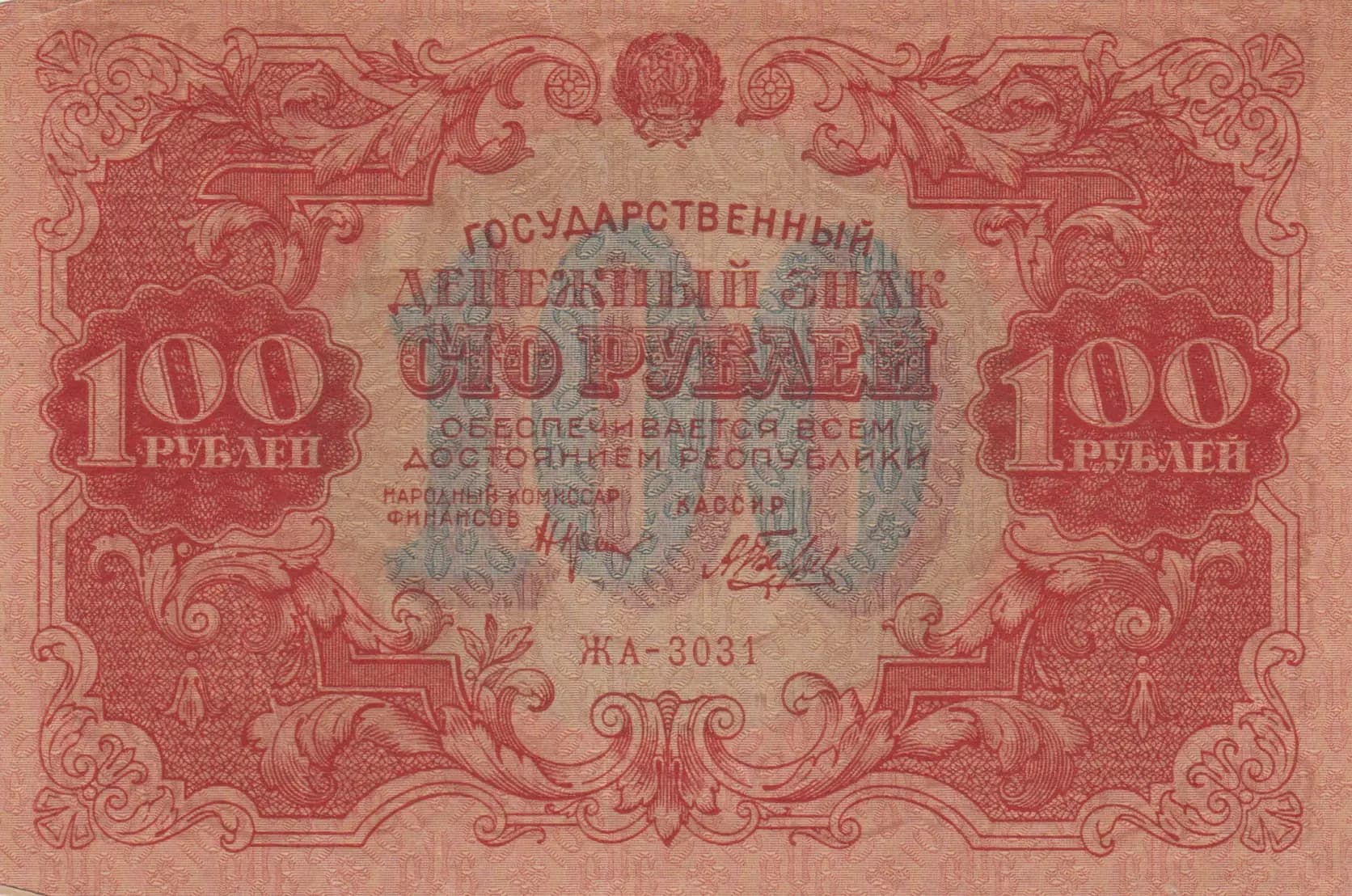
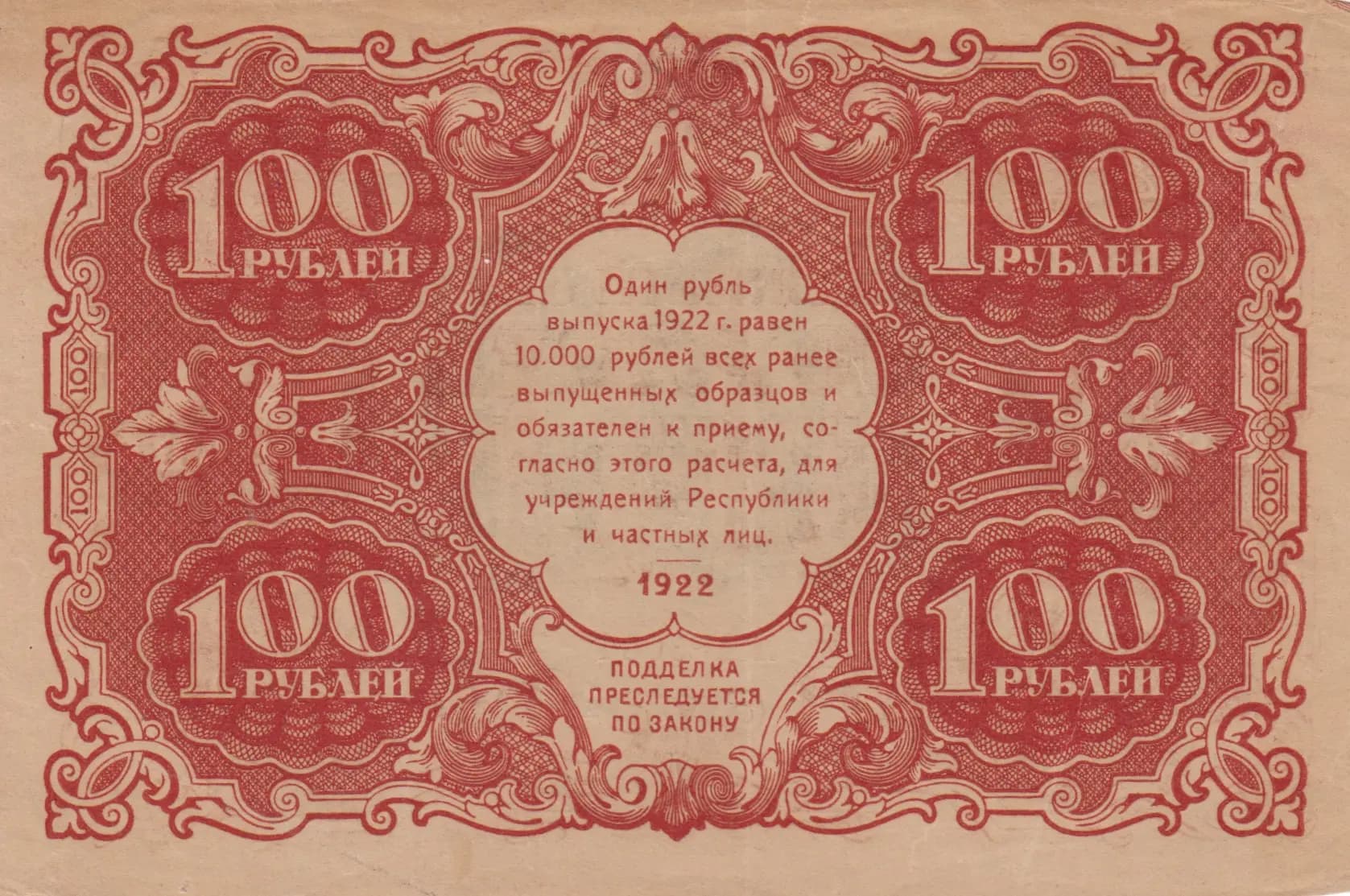
This 1922 Russian RSFSR 100 Rublei note (Pick P-133(1)) presents an exceptional example of early Soviet currency design, featuring an ornate crimson and beige color scheme with elaborate Art Nouveau-influenced scrollwork and floral border patterns. The note exhibits honest VF condition with expected age-related foxing, discoloration, and creasing consistent with post-WWI circulation, while maintaining clear legibility of all inscriptions and security features. This denomination represents a fascinating monetary reform artifact, as the back explicitly states that one 1922 ruble equals 10,000 pre-reform rubles—a striking testament to the hyperinflation experienced during the Russian Civil War and early Soviet period.
Common. The 1922 RSFSR 100 Rublei note (Pick P-133(1)) was issued in substantial quantities as part of the post-civil-war monetary stabilization program and remains readily available in the collector market. The denomination of 100 was a mid-range note designed for everyday commercial transactions during the reform period, resulting in large print runs that ensured widespread circulation. While condition quality varies significantly due to the note's age and circulation history, examples in VF condition like this specimen are neither scarce nor particularly valuable, typically trading for modest sums in the $15-40 range depending on serial number and collector demand.
Issued by the RSFSR State Treasury (Stare Treasury) in 1922, this note emerged during the Soviet monetary stabilization period following years of hyperinflation and currency chaos. The 1922 reform, which introduced the stable 'gold ruble,' was a critical economic turning point for the young Soviet state, and the prominent declaration that new rubles held a 10,000:1 exchange rate with previous issues underscores the severity of the devaluation. The 'State Deposit Note' (Государственный Депозитный Знак) designation and references to being 'secured by all property of the Republic' reflect the ideological framing of Soviet currency as backed by collective state resources rather than precious metals or foreign reserves.
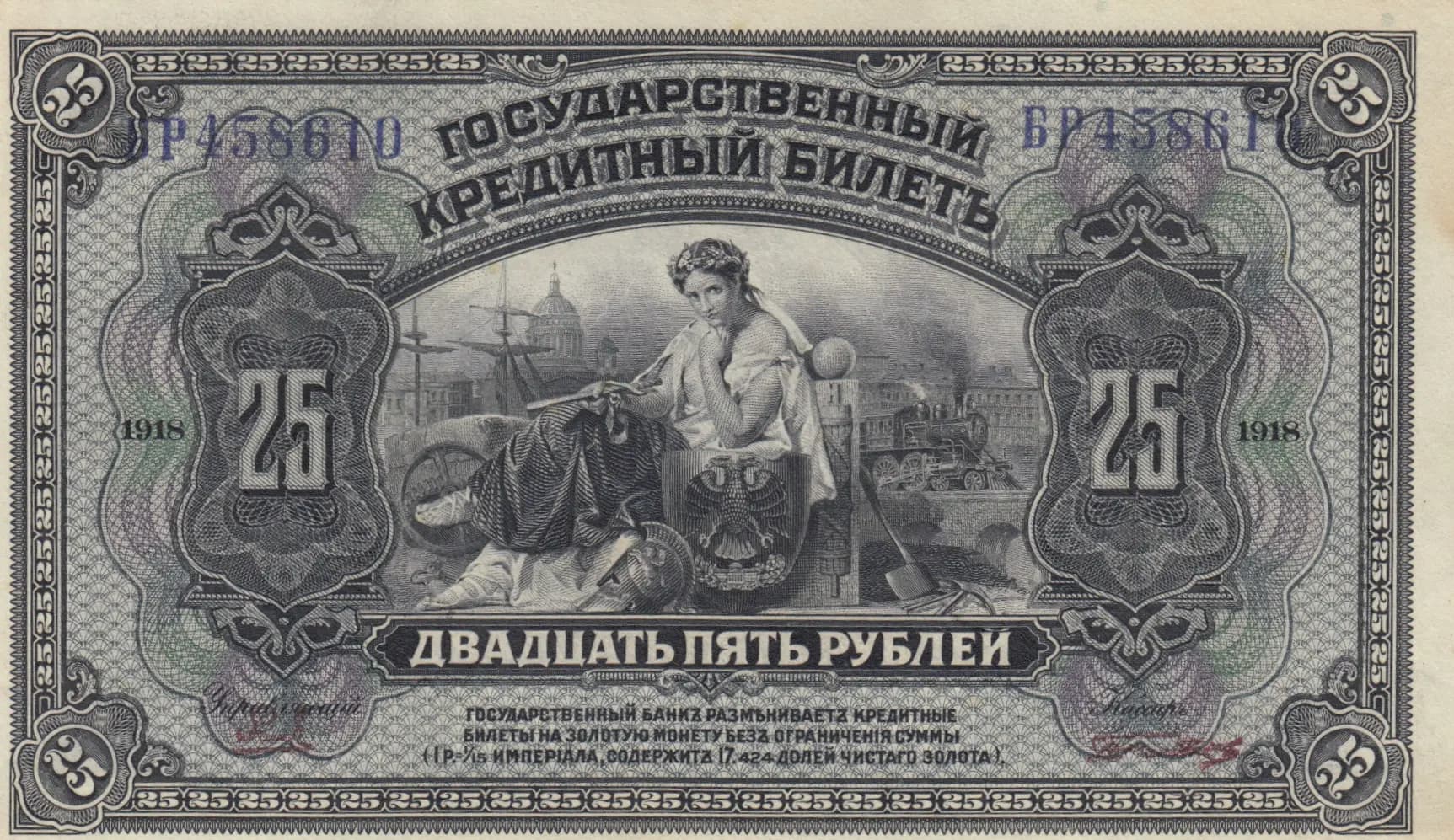
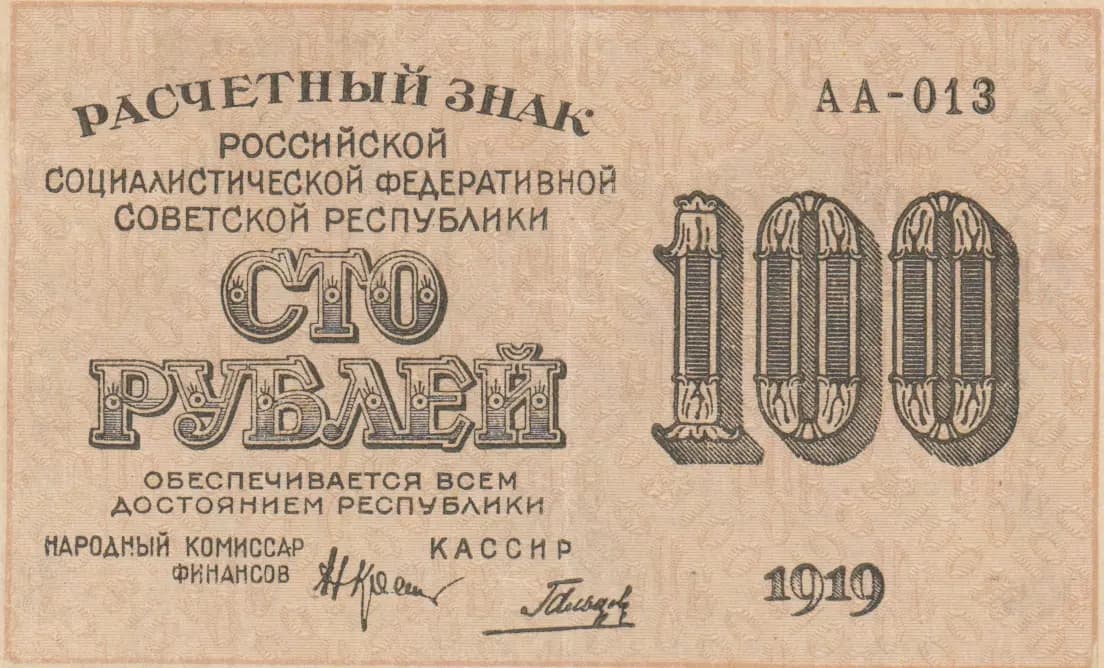
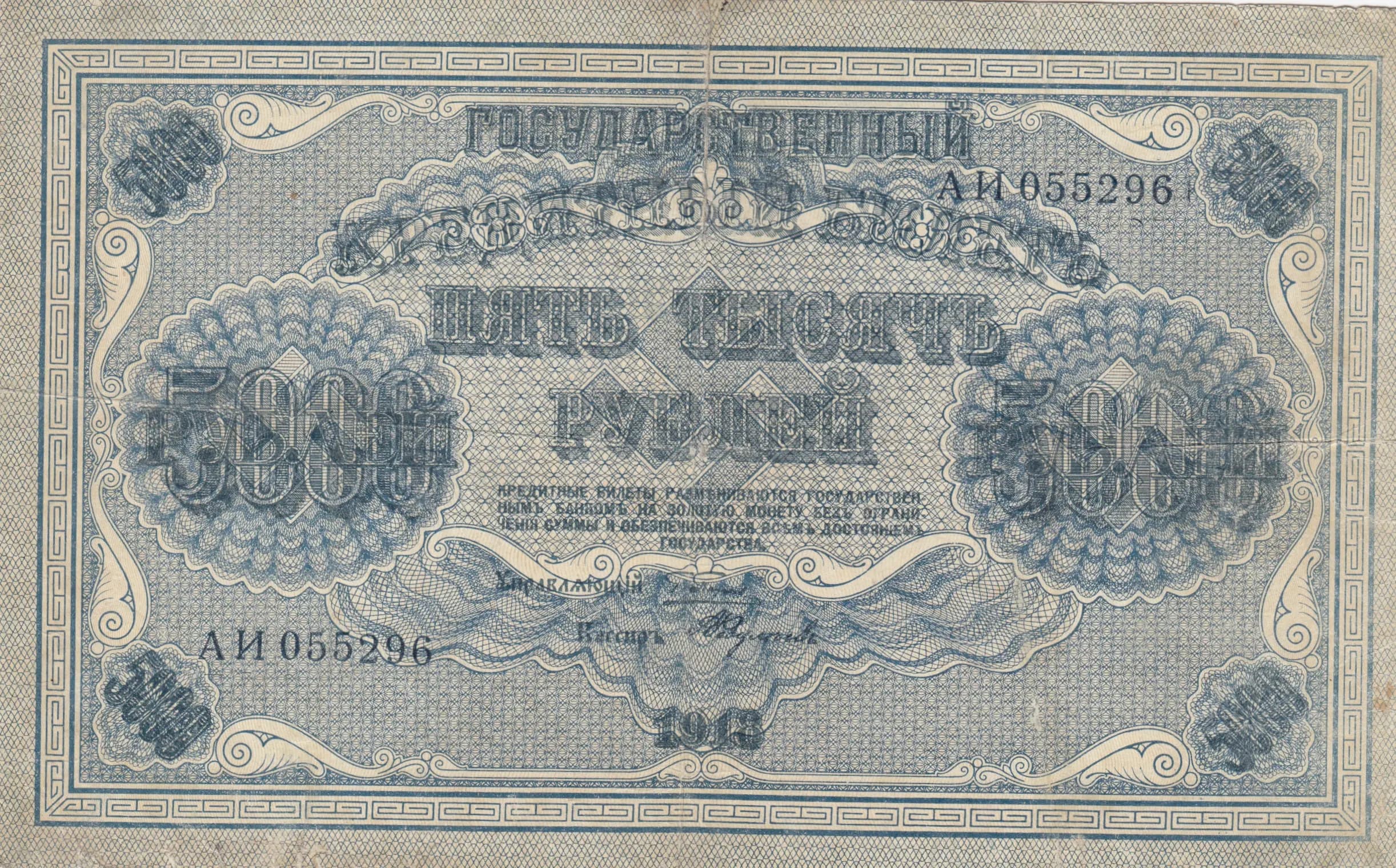
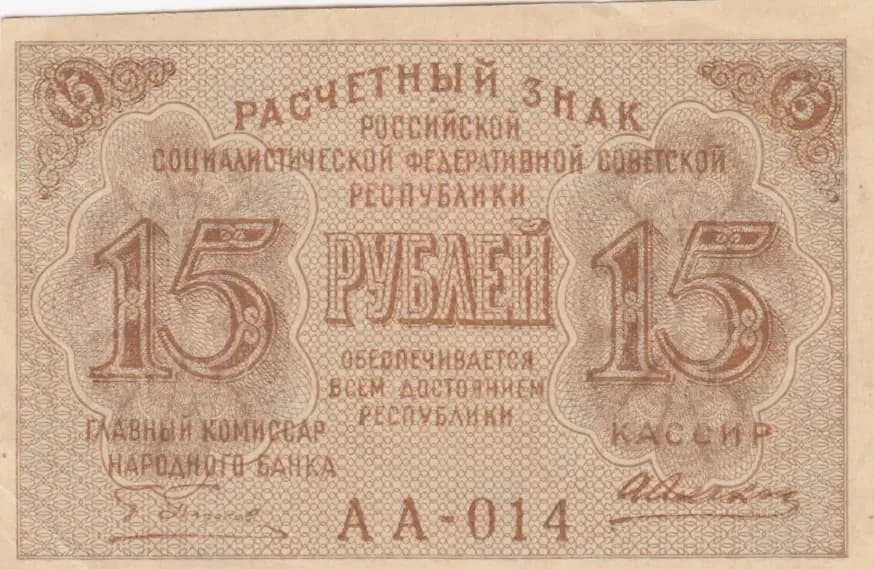
This note exemplifies the ornamental style characteristic of early RSFSR currency, employing a sophisticated Art Nouveau aesthetic rather than representational imagery. The design centers on an elaborate system of engraved borders featuring symmetrical scrollwork, floral motifs, and geometric patterns in crimsons and blacks against a cream-colored security paper base. The denomination appears in four cartouches (one in each corner on the reverse, and prominently on the obverse), each surrounded by decorative wreath-like ornamental frames. The central authorities on both sides utilize large ornamental cartouches to frame the legal text, with the most significant statement on the reverse declaring the exchange rate vis-à-vis pre-reform currency. No portraits or landmark imagery appear on this note; instead, security relies entirely on the complexity of the engraved border patterns and the sophisticated typography of the Cyrillic inscriptions. The note's security architecture depends on the difficulty of reproducing the fine-line engraving and multiple color printing.
FRONT SIDE: 'ГОСУДАРСТВЕННЫЙ ДЕПОЗИТНЫЙ ЗНАК' (State Deposit Note); 'СТОРУБЛЕЙ' (One Hundred Rubles); 'ОБЕСПЕЧЕННОЕ ВСЕМИ ДОСТОЯНИЕМ РЕСПУБЛИКИ' (Secured by all Property of the Republic); 'НАРОДНЫЙ КОМИССАР ФИНАНСОВ' (People's Commissar of Finance); Serial number 'ЖА-3031'; Denomination '100 РУБЛЕЙ' (100 Rubles). BACK SIDE: '100 РУБЛЕЙ' (100 Rubles) in four corner cartouches; Central text: 'Один рубль выпуска 1922 г. равен 10,000 рублей всех ранее выпущенных образцов и обязателен к приему, согласно этого расчета, для учреждений Республики и частных лиц.' (One ruble of the 1922 issue equals 10,000 rubles of all previously issued editions and is obligatory for acceptance, according to this calculation, by institutions of the Republic and private individuals); '1922'; Warning text: 'ПОДДЕЛКА ПРЕСЛЕДУЕТСЯ ПО ЗАКОНУ' (Counterfeiting is prosecuted by law).
This note was produced using intaglio (engraving) printing, evidenced by the fine detail, sharp line work, and three-dimensional quality visible in the border ornaments and cartouches. The multi-color printing (red, black, and cream) suggests either sequential intaglio runs or a form of chromatic intaglio process. The precision of the geometric and floral patterns, combined with the crisp serif typography visible in the inscriptions, is characteristic of security printing from this era. Based on Pick catalog records for this series, production likely occurred at a Soviet state printing facility; the State Treasury notes of this period were typically printed by the facilities under the People's Commissariat of Finance.
The observed serial number 'ЖА-3031' indicates this is from the standard issue run with Cyrillic letter prefixes. The specific variety designation follows the catalog notation P-133(1), which distinguishes this from other subtypes that may include overprints or signature variations. The 'ЖА' prefix suggests this note falls within a mid-range production batch; collectors of Soviet currency often track serial number prefixes as indicators of printing dates and production facilities, though no specific premium is associated with this particular prefix. No overprints or secondary markings are visible on the examined specimen.