5 rublei 1918
About This Note
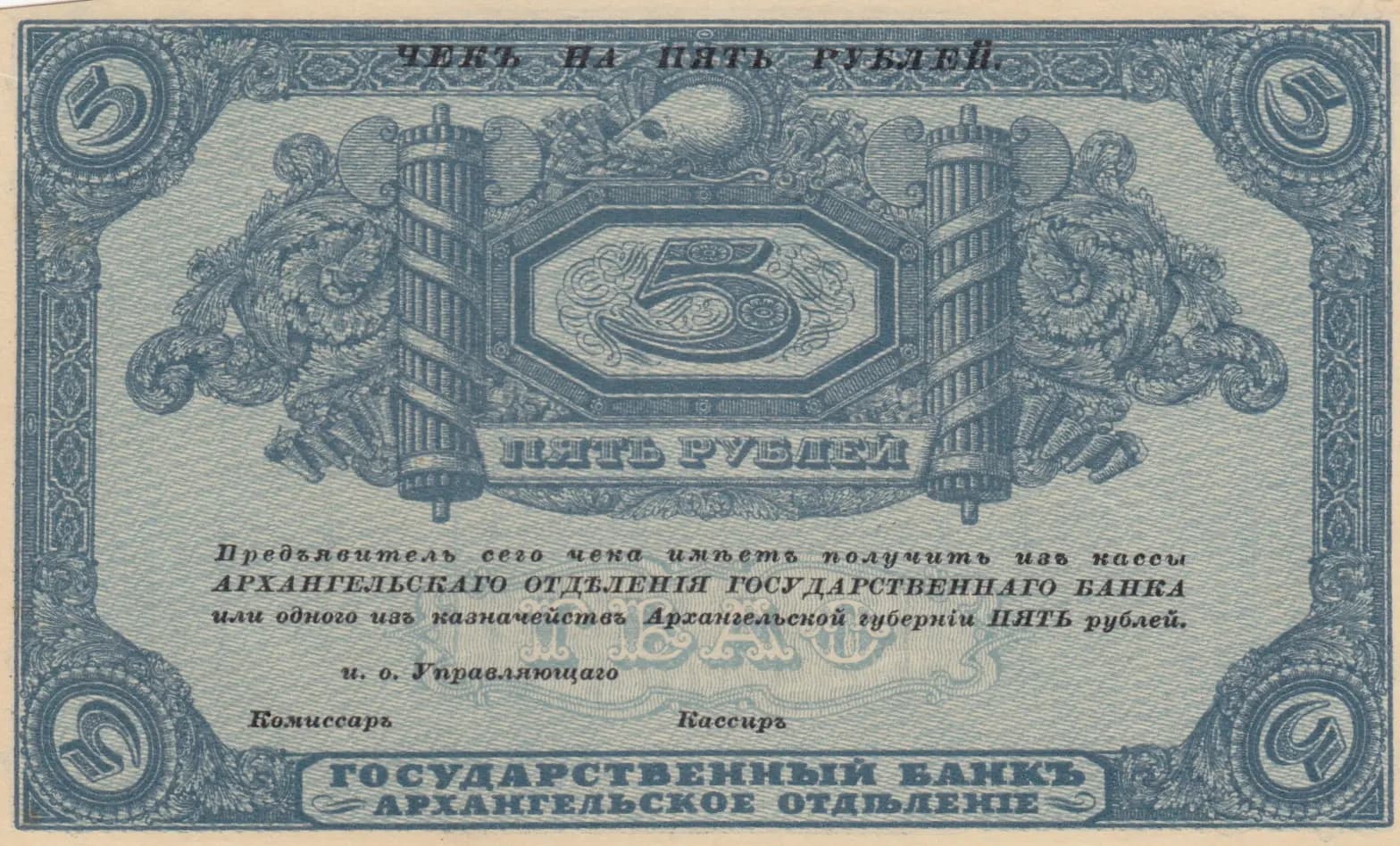
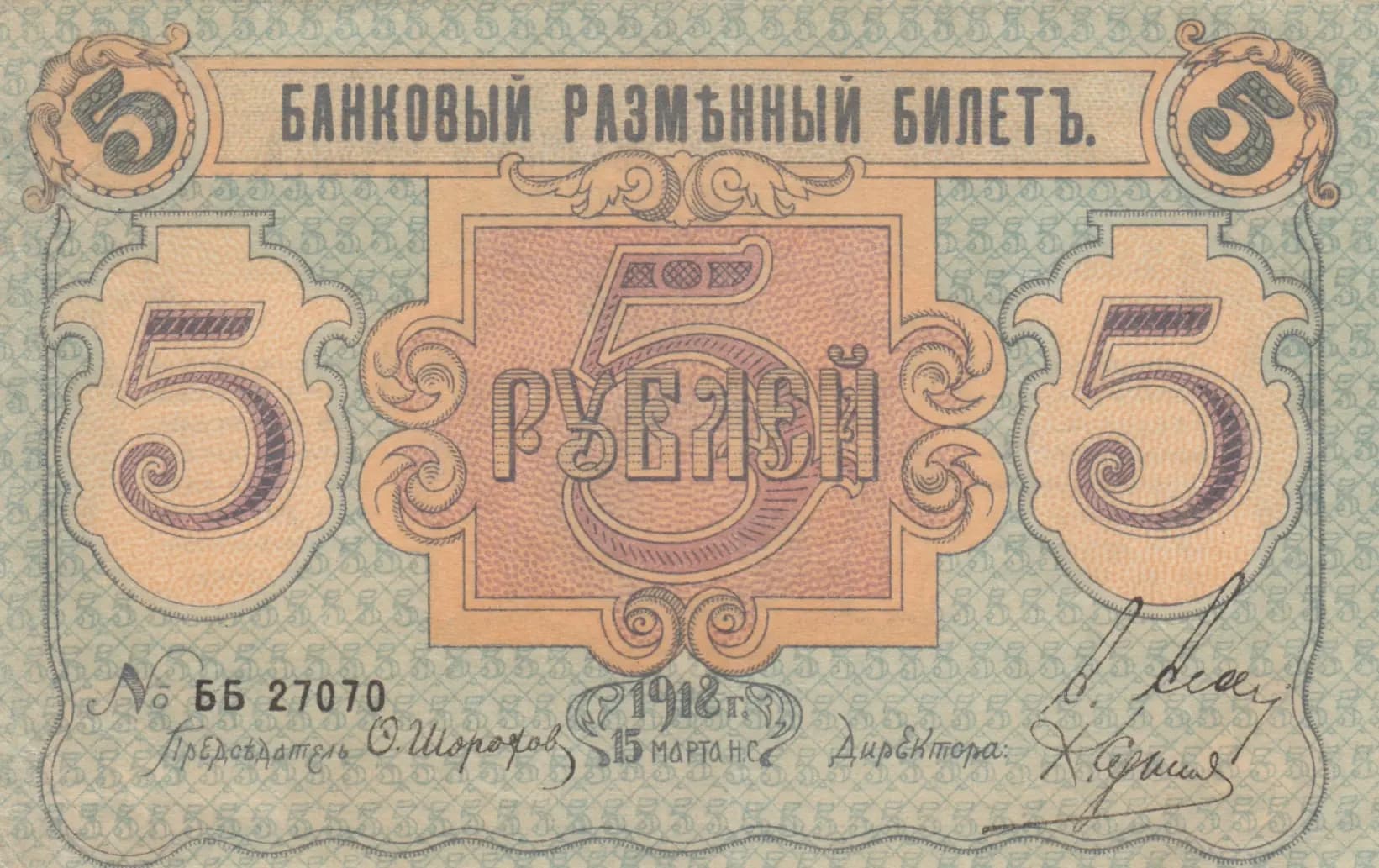
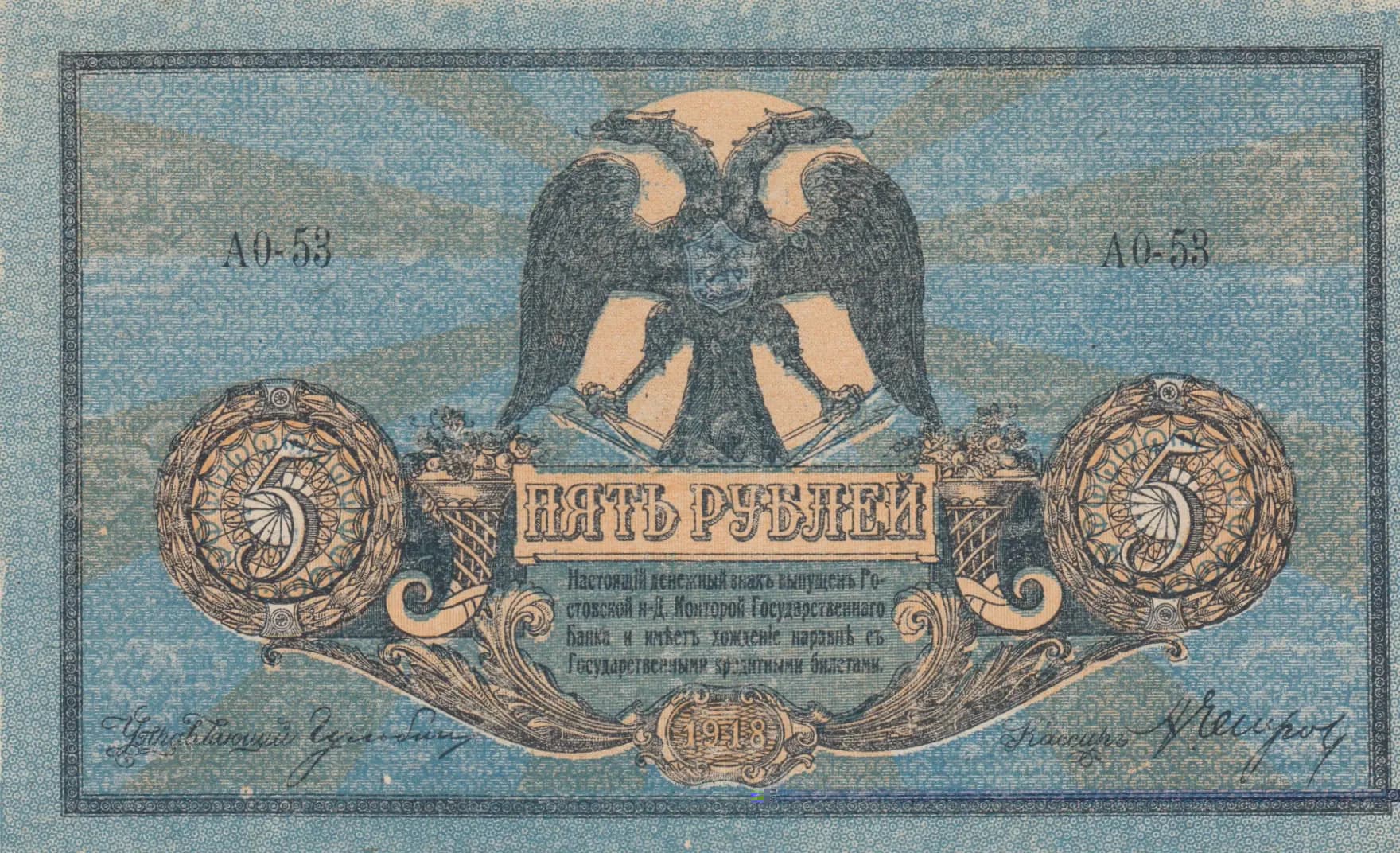
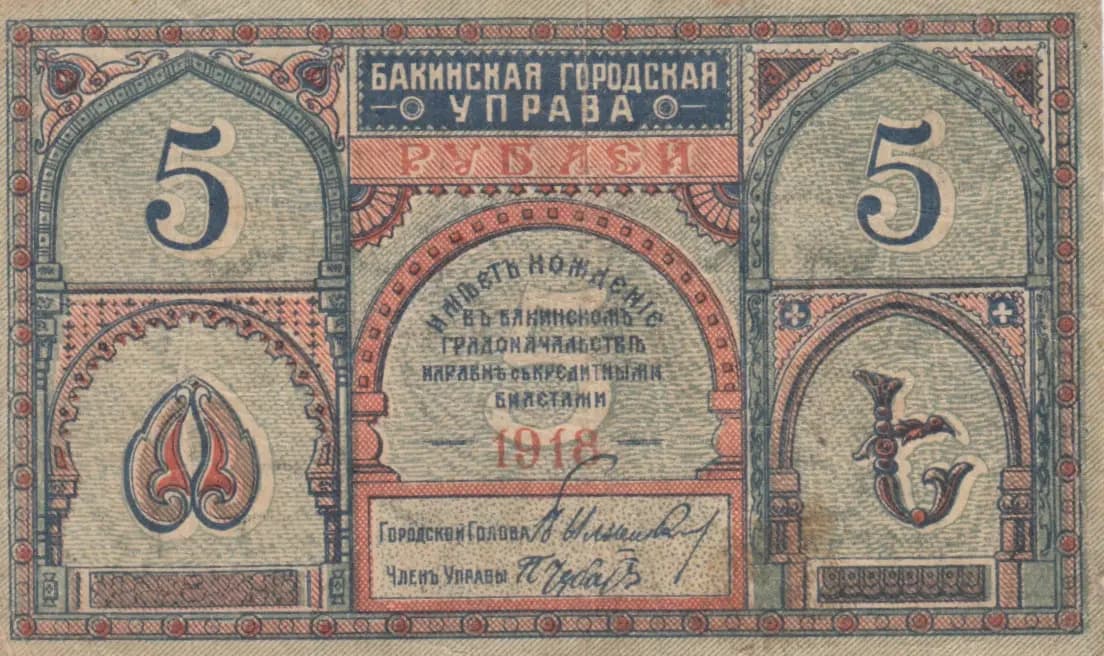
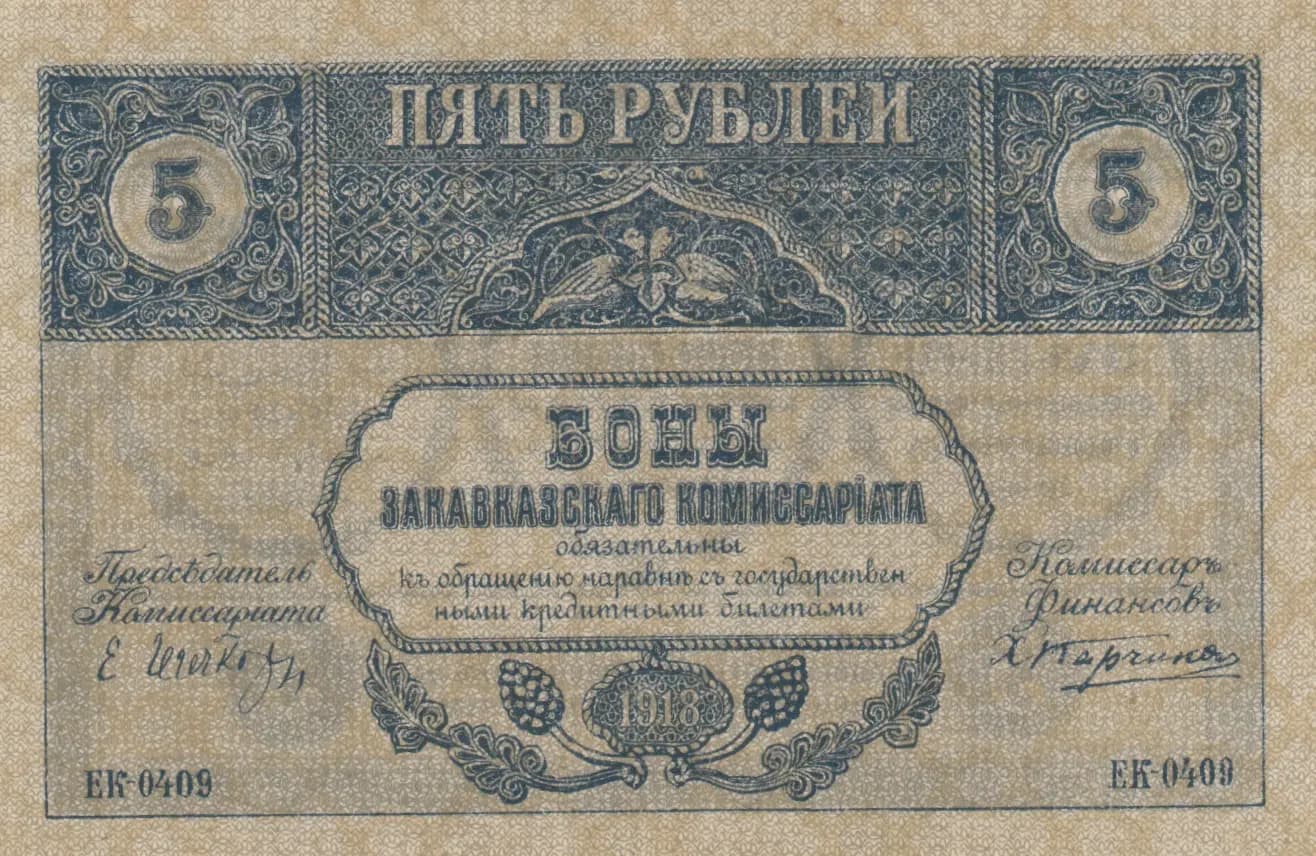
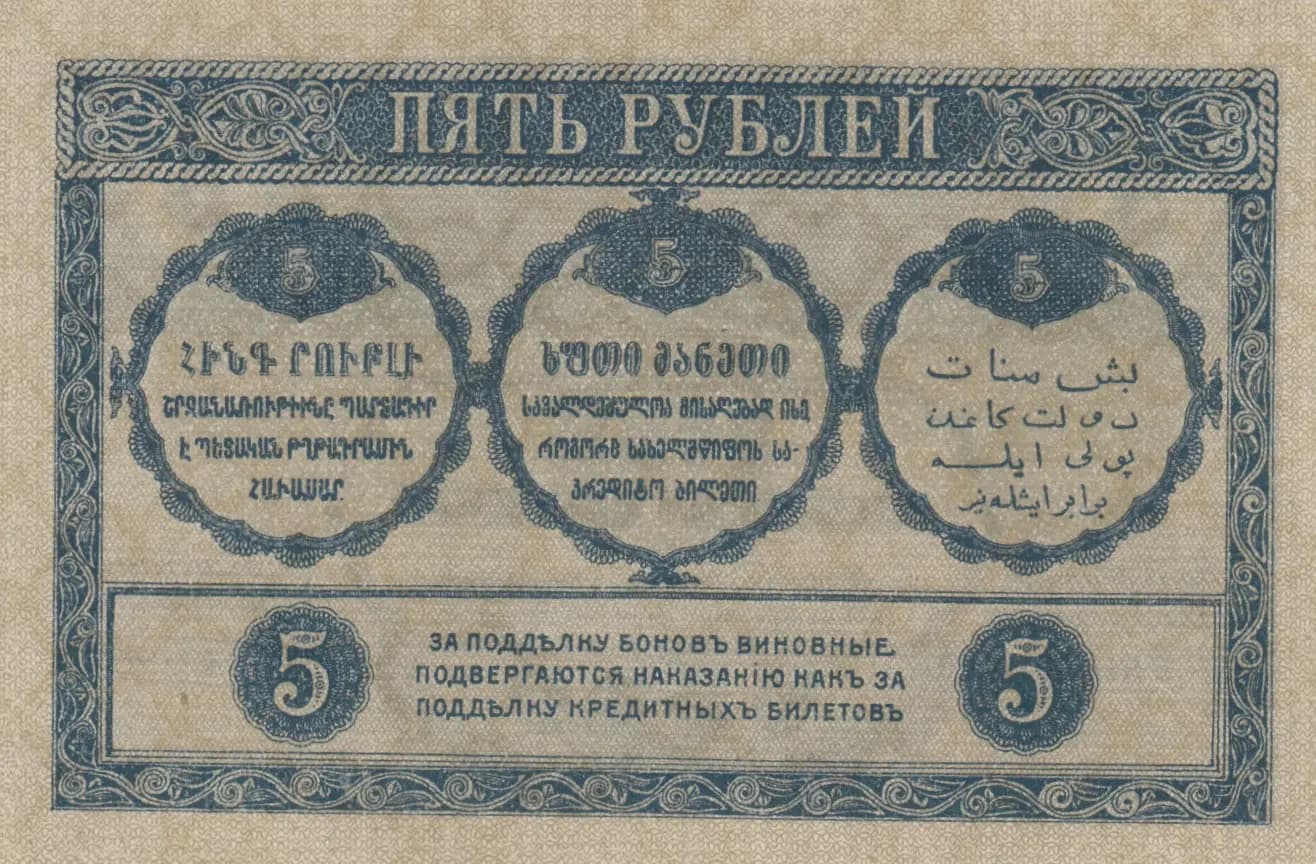
An exceptional uncirculated example of the rare 1918 Transcaucasian Commissariat 5 rublei (Pick S603), featuring elaborate Art Nouveau-style ornamental borders in blue and tan. The note is distinguished by its multilingual inscriptions in Armenian, Georgian, and Arabic/Persian scripts on the reverse, reflecting the diverse populations under Transcaucasian authority during the Russian Civil War period. The pristine condition with crisp paper, sharp engraving detail, and absence of wear makes this an outstanding specimen of this short-lived regional currency.
Uncommon to scarce. The Transcaucasian Commissariat's currency issues were produced for a geographically limited and politically volatile region during the Russian Civil War (1918-1921), with relatively small print runs compared to central Russian issues. This particular denomination and issuer combination (Pick S603) saw limited circulation before the region fragmented into separate Soviet republics. UNC examples are significantly rarer than circulated specimens, as most surviving notes from this period show heavy wear. The multilingual design and short-lived issuing authority make this a specialist's note rather than mainstream currency.
Issued by the Transcaucasian Commissariat in 1918 during the tumultuous Russian Civil War, this banknote represents an attempt by Soviet authorities to establish currency control over the ethnically diverse Caucasus region. The deliberate inclusion of Armenian, Georgian, and Arabic/Persian language text on the reverse—alongside Russian—served both practical and propaganda purposes, demonstrating Soviet acknowledgment of the region's multilingual population while asserting centralized state authority. This note's existence reflects the brief window (1918-1921) when Bolshevik control extended into Transcaucasia before the establishment of separate Soviet republics.
This banknote exemplifies the ornamental security printing standards of early Soviet currency design. The obverse features an elaborate central cartouche with decorative scrollwork and what appears to be an imperial Russian coat of arms (double-headed eagle) or state emblem in classical Art Nouveau style, flanked by circular denomination markers bearing the numeral '5'. The reverse reverses this compositional scheme, prominently displaying three ethnographic medallions representing the three major scripts of the Transcaucasus region (Armenian, Georgian, and Persian/Arabic), symbolizing the multinational character of Soviet authority. Throughout both sides, intricate engraved ornamental borders with floral and scrollwork motifs provide security through complexity. The color scheme of blue and tan on white paper creates strong contrast for authentication purposes. Handwritten elements and printed serial numbers suggest this was a manually-processed security banknote with administrative signatures.
FRONT SIDE: Main text reads 'ПЯТЬ РУБЛЕЙ' (Five Rubles) at top. Central cartouche contains 'БОНЫ ЗАНАБВЯЗСЛАГО КОМИССАРИАТА' (Bonds of the Far Eastern Commissariat) with reference to 'кредитными билетами' (credit notes/tickets). Handwritten inscriptions include 'Председателю' (To the Chairman) and 'Финансового' (Financial [Department]). Serial reference 'БК 0409' appears in corners. BACK SIDE: Heading repeats 'ПЯТЬ РУБЛЕЙ' (Five Rubles). Three circular medallions contain: Armenian script '(State Bank note inscription)', Georgian script 'ხუთი რუბლი სახელმწიფო ბანკის ბილეთი' (Five rubles state bank note), and Persian/Arabic script 'پنج روبل دولتی بانک نوٹ' (Five rubles state bank note). Bottom text: 'ЗА ПОДДЪЛНУ БОНОБЬ ВИНОВНЫЕ, ПОДВЕРГАЮТСЯ НАКАЗАНИЮ НА КАК ЗА ПОДДЪЛНУ КРЕДИТНЫХ БИЛЕТОБЬ' (For counterfeiting these bonds, the guilty are subject to punishment as for counterfeiting credit bills).
Intaglio engraving (copperplate or steel plate relief printing), characteristic of high-security banknote production in the early Soviet period. The sharp, crisp borders, fine line work in ornamental elements, and the depth visible in the multi-layered decorative patterns are consistent with professional security printing, likely produced by a state security printer in Moscow or Petrograd. The precision of the text rendering and ornamental detail indicates use of finely engraved printing plates rather than lithography.
This specimen exhibits the standard design for Pick S603 with printed serial number 'БК 0409' and handwritten administrative notations. No overprints are visible. Signature varieties and specific serial number ranges for this issue are not fully documented in standard references; collectors should note individual serial numbers and signature variations as potential varieties. The presence of handwritten elements suggests potential variety in manuscript notations across the series.