25 rublei 1918
“Baikal”
About This Note
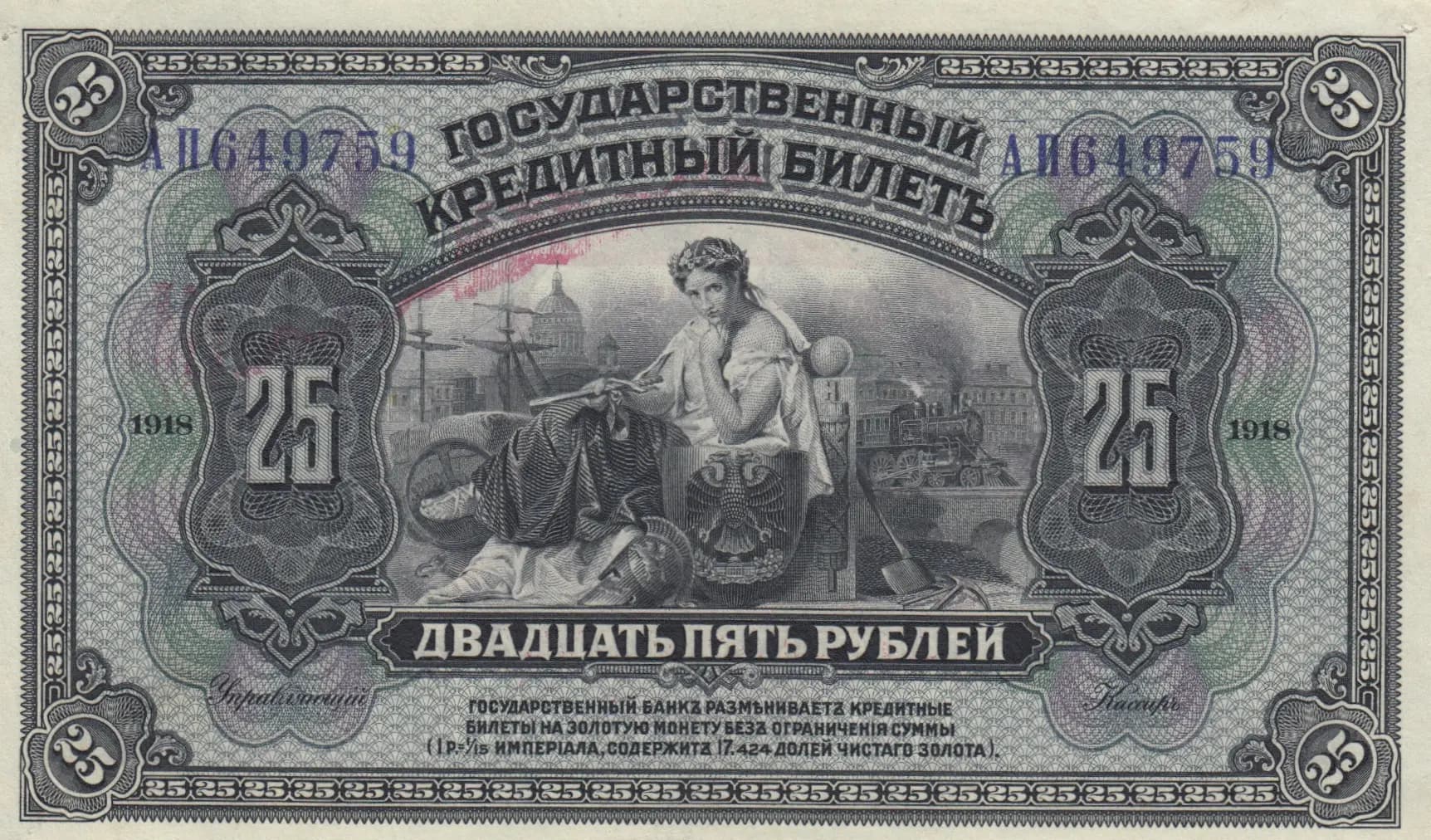
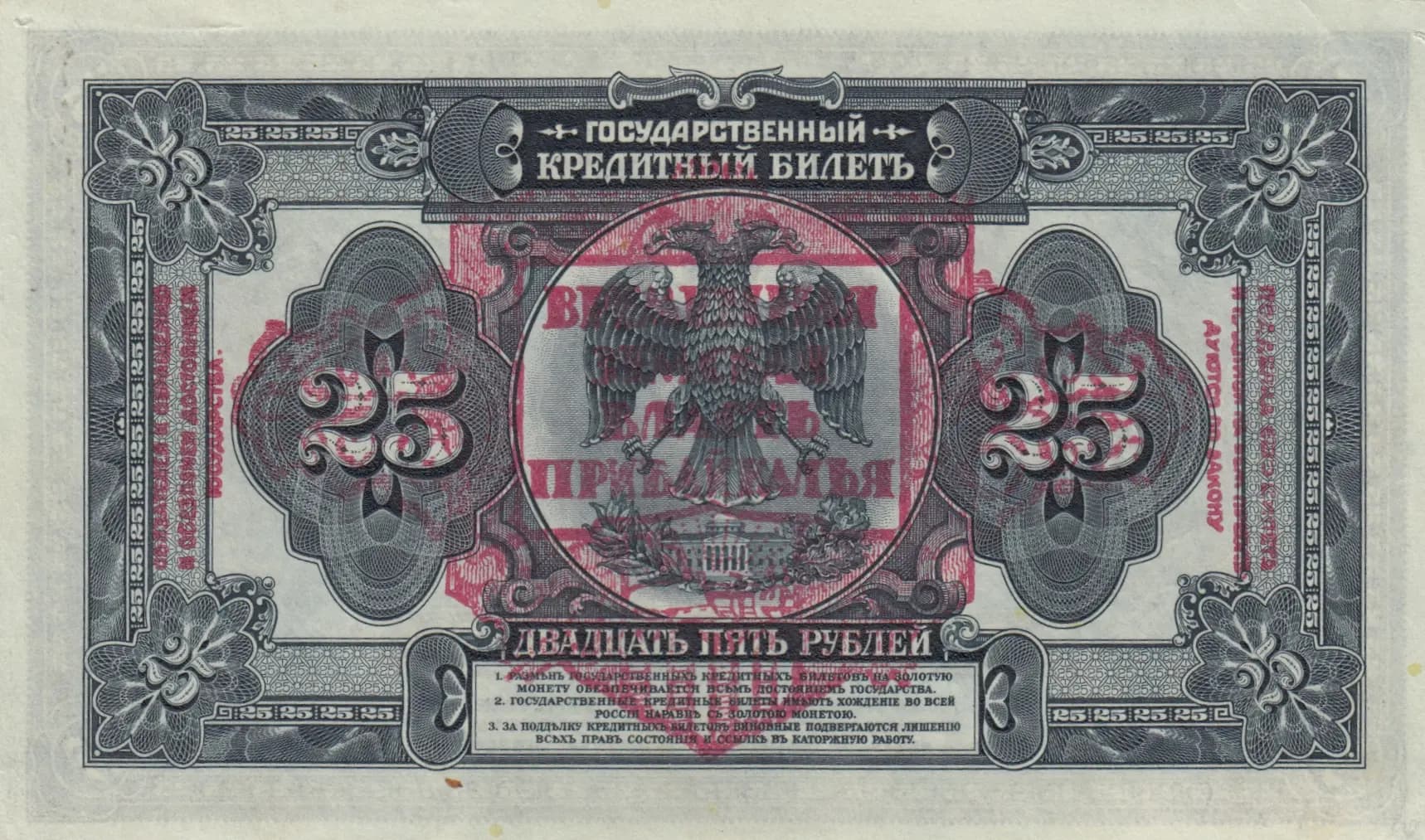
This is a 25 rublei note from 1918 issued by the Provisional Power of the Pribaikal Region, graded AU with visible evidence of circulation. The obverse features an allegorical female figure in classical dress against a cityscape with Orthodox church domes, while the reverse displays the double-headed imperial eagle in a central medallion. Despite moderate wear, creasing, and aging discoloration, the fine engraving remains legible and the note retains strong eye appeal characteristic of AU-grade early Soviet currency.
Common. Regional provisional issues from the Russian Civil War period, while historically significant, were produced in substantial quantities by their respective issuing authorities to meet local circulation needs. The Pribaikal Regional authority issued multiple denominations during 1918, and 25-ruble notes in this series appear regularly in the market. No evidence suggests an unusually small print run or subsequent recall that would elevate scarcity. AU-grade examples are moderately available in the collector market.
This note was issued during the Russian Civil War period (1918) by a regional provisional authority in the Baikal region, representing the transitional chaos when various local governments issued currency independent of central control. The inscription emphasizing State Bank redemption for gold and the prominent double-headed imperial eagle reflect the continued use of imperial imagery even as the Bolsheviks consolidated power. The three-point legal warning on the reverse (regarding counterfeiting penalties and equal status to gold coin) underscores attempts to maintain currency credibility during a period of severe monetary instability.
The obverse features an allegorical female figure (likely representing Russia or State) in classical dress, seated with one arm raised in a gesture of authority or blessing, positioned against a detailed urban landscape with multiple Orthodox churches displaying characteristic onion domes—a symbolic representation of Russian cultural and religious identity. The composition is framed by an ornate border in black and green featuring geometric and floral patterns with heraldic emblems in the four corners. Large denomination numerals '25' appear on both left and right sides. The reverse centers on the double-headed imperial coat of arms rendered in black against a red/pink circular medallion, the eagle depicted with intricate heraldic detail including multiple crosses and ornamentation typical of Tsarist insignia. Decorative rosette designs and floral corner ornaments surround the medallion. The color palette of black, green, and red with white background creates strong contrast for security purposes.
FRONT: 'ГОСУДАРСТВЕННЫЙ КРЕДИТНЫЙ БИЛЕТ' (State Credit Note) and 'ДВАДЦАТЬ ПЯТЬ РУБЛЕЙ' (Twenty-Five Rubles) with '1918' printed on both sides. Extended text states: 'ГОСУДАРСТВЕННЫЙ БАНК РАЗМЕНИВАЕТЬ КРЕДИТНЫЕ БИЛЕТЫ НА ЗОЛОТУЮ МОНЕТУ БЕЗ ОГРАНИЧЕНИЯ СУММЫ (1 РУБ. ИМПЕР. СОДЕРЖИТ 17,424 ДОЛЕЙ ЧИСТОГО ЗОЛОТА)' (The State Bank exchanges credit notes for gold coin without limit on sum; 1 imperial ruble contains 17.424 parts of pure gold). BACK: 'ГОСУДАРСТВЕННЫЙ КРЕДИТНЫЙ БИЛЕТ' and 'ДВАДЦАТЬ ПЯТЬ РУБЛЕЙ' repeated. Three numbered legal clauses: '1. ХОДИТЬ ГОСУДАРСТВЕННЫХ КРЕДИТНЫХ БИЛЕТОВ НА ЗОЛОТУЮ МОНЕТУ ОБЕСПЕЧИВАЕТСЯ ВСЕМИ ДОСТОЯНИЯМИ ГОСУДАРСТВА' (The circulation of State credit notes for gold coin is secured by all the property of the State); '2. ГОСУДАРСТВЕННЫЕ КРЕДИТНЫЕ БИЛЕТЫ ИМЕЮТ ХОЖДЕНИЕ ВО ВСЕЙ РОССИИ НАРАВНЕ С ЗОЛОТОЮ МОНЕТОЮ' (State credit notes are current throughout Russia on equal terms with gold coin); '3. ЗА ПОДДЕЛКУ КРЕДИТНЫХ БИЛЕТОВ ПОЛОЖЕНЫ ЛИШЕНИЕМ ВСЕХ ПРАВ СОСТОЯНИЯ И ССЫЛКА НА КАТОРЖНУЮ РАБОТУ' (For counterfeiting credit notes, punishment is deprivation of all rights and exile to hard labor).
Intaglio engraving (steel plate engraving), the standard security printing method for Russian Imperial and early Soviet banknotes. The fine line work, cross-hatching, intricate border patterns, and detailed heraldic rendering visible throughout are characteristic of hand-engraved plates. The high level of detail in the allegorical figure, church domes, and double-headed eagle, combined with the ornamental geometric patterns, indicates production by skilled engravers typical of Russian Imperial printing works, likely the State Printing House (Государственная типография) or contracted security printers of the period.
No specific variety information is evident from the visual analysis provided. However, regional provisional notes of this era may exhibit varieties in serial number ranges, signature variations, or overprint states. The Pick catalog number P-S1196 should be consulted for documented varieties specific to this 25-ruble Pribaikal issue. The note should be examined for any control marks, serial number prefixes, or signature variants that distinguish printings.