100 000 rublei 1922
About This Note
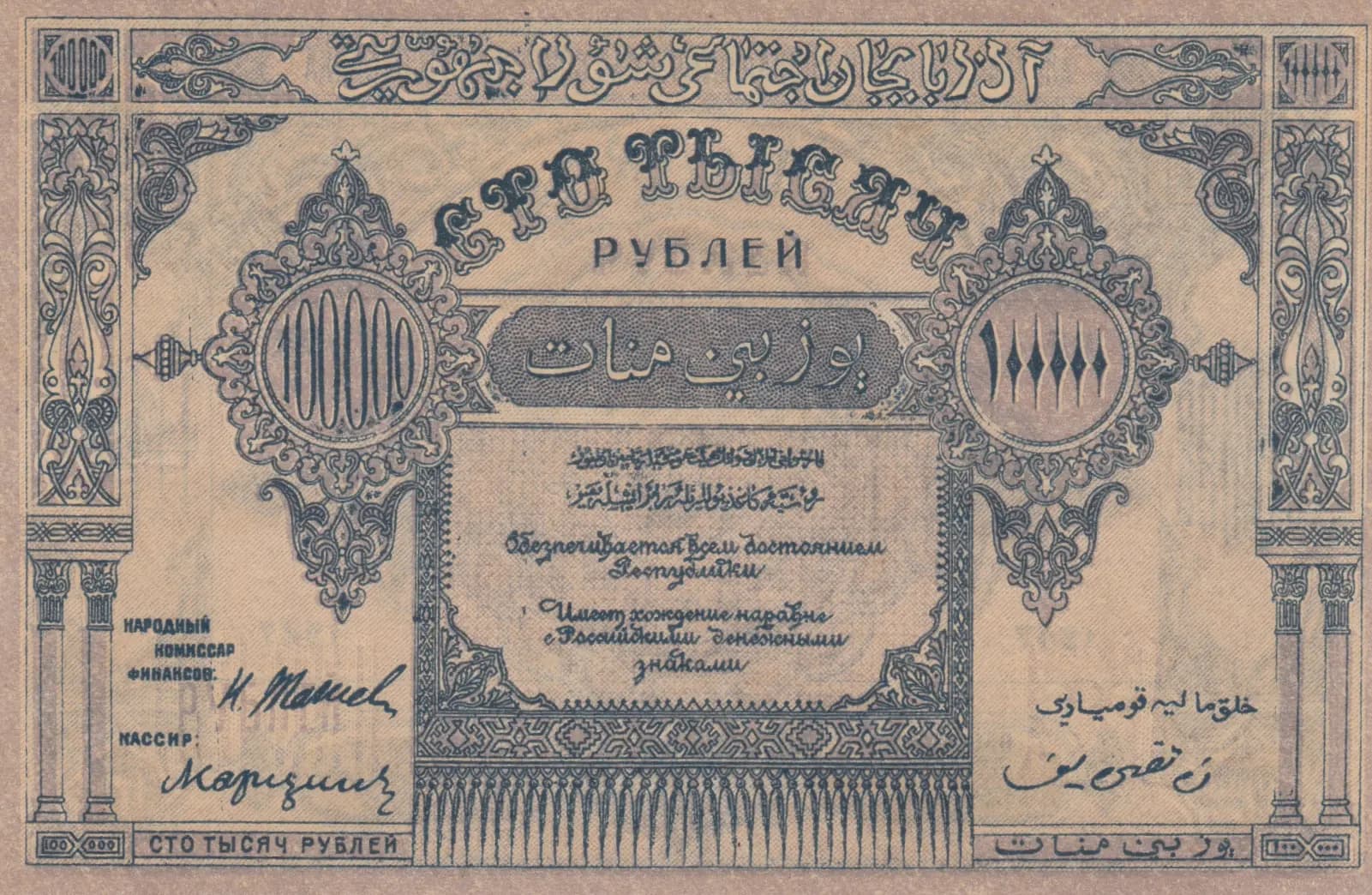
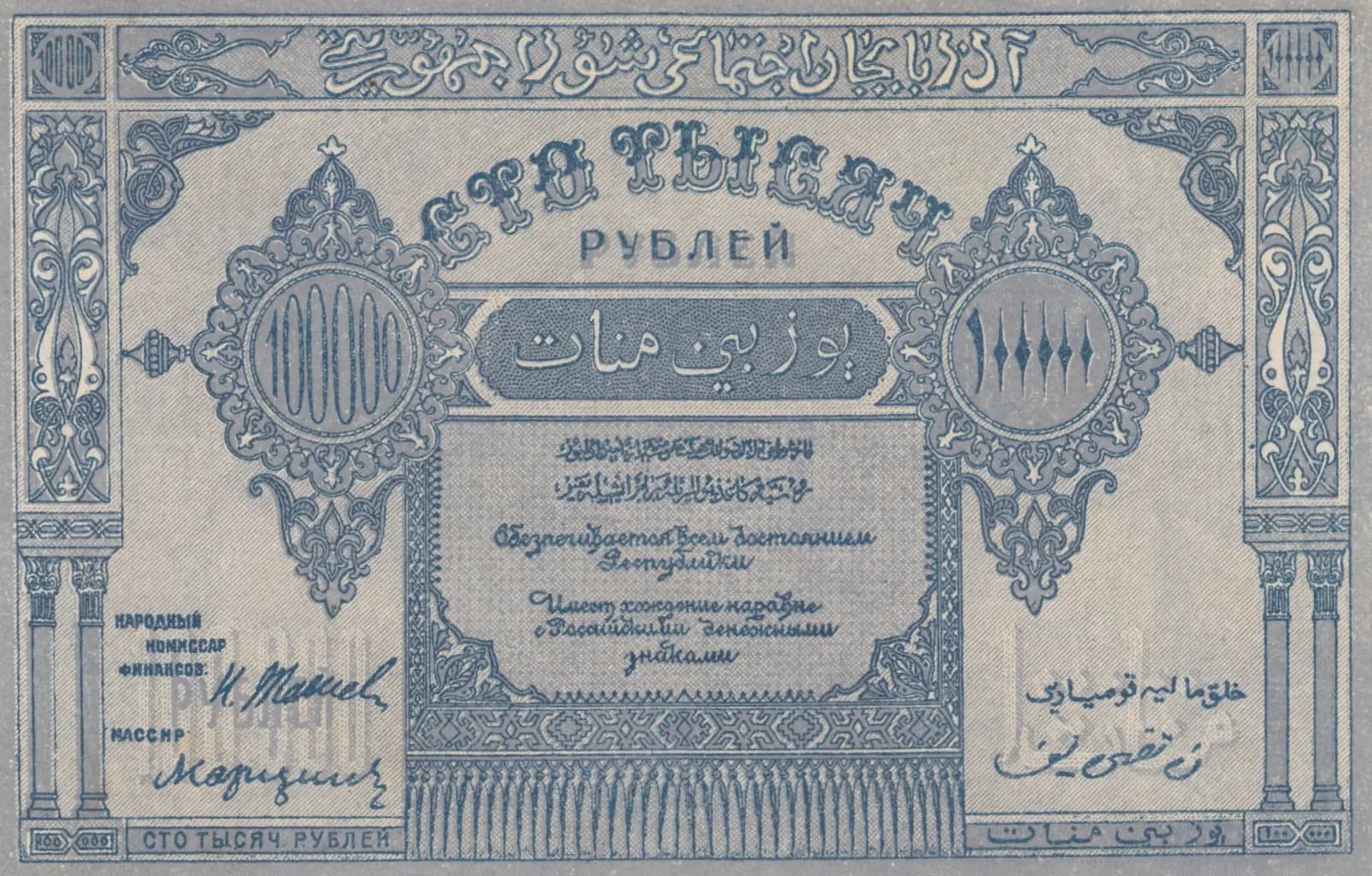
This is an exceptionally well-preserved Azerbaijan SSR 100,000 ruble note from 1922, graded UNC. The note displays exquisite Islamic geometric and floral ornamentation characteristic of Caucasian design traditions, with ornate decorative borders, circular medallions with radiating patterns, and fine line engraving throughout. The pristine condition with sharp print quality and minimal age-related discoloration makes this an excellent example of early Soviet Central Asian currency design.
Common. While this note is from a short-lived and regionalized issuer (Azerbaijan SSR, 1922), the Pick catalog designation P-S717b suggests it is a catalogued variety with sufficient surviving examples to warrant documentation. Early Soviet notes from the Caucasus, though historically interesting, were produced in quantities sufficient to make most denominations and varieties available to collectors. The UNC grade indicates exceptional preservation rather than extreme scarcity.
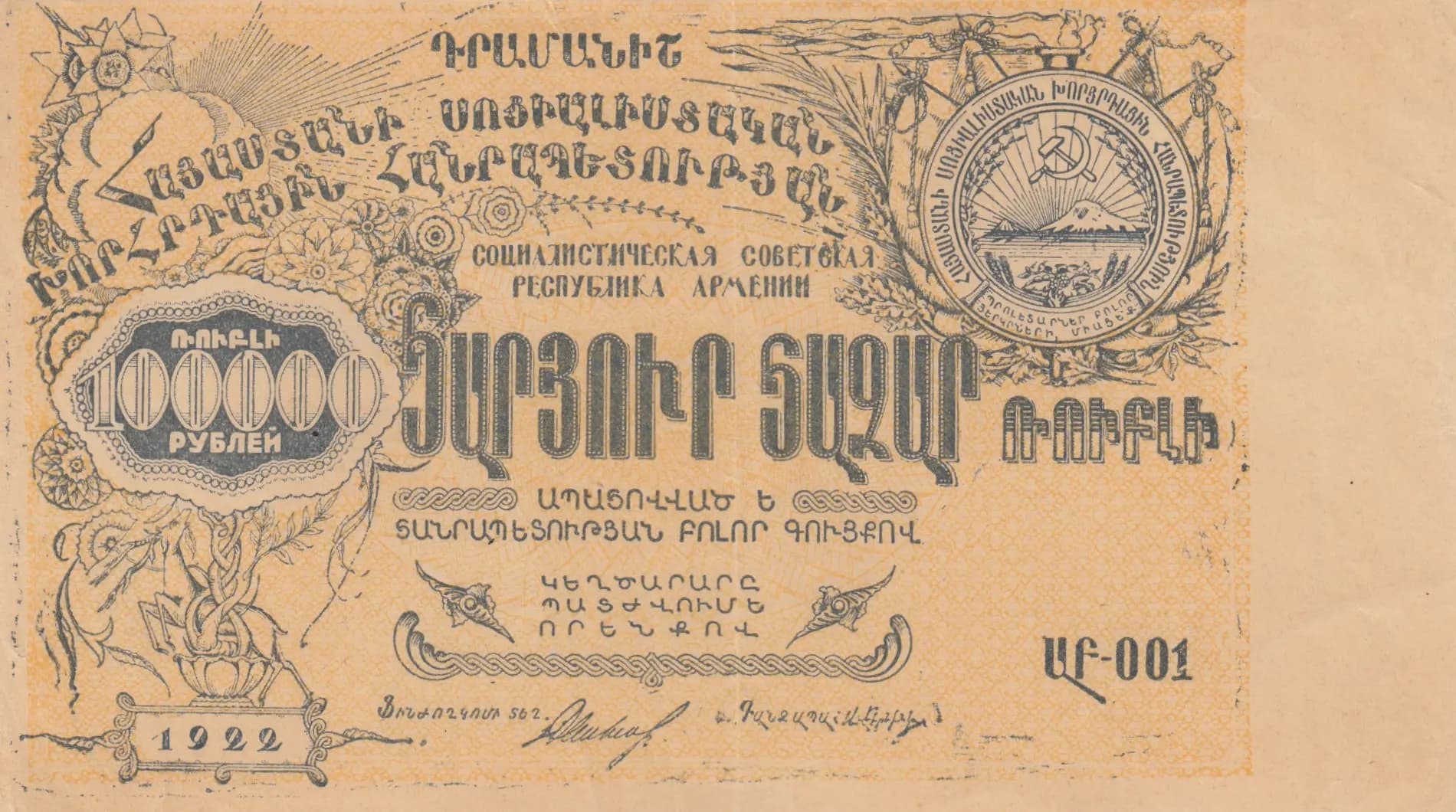
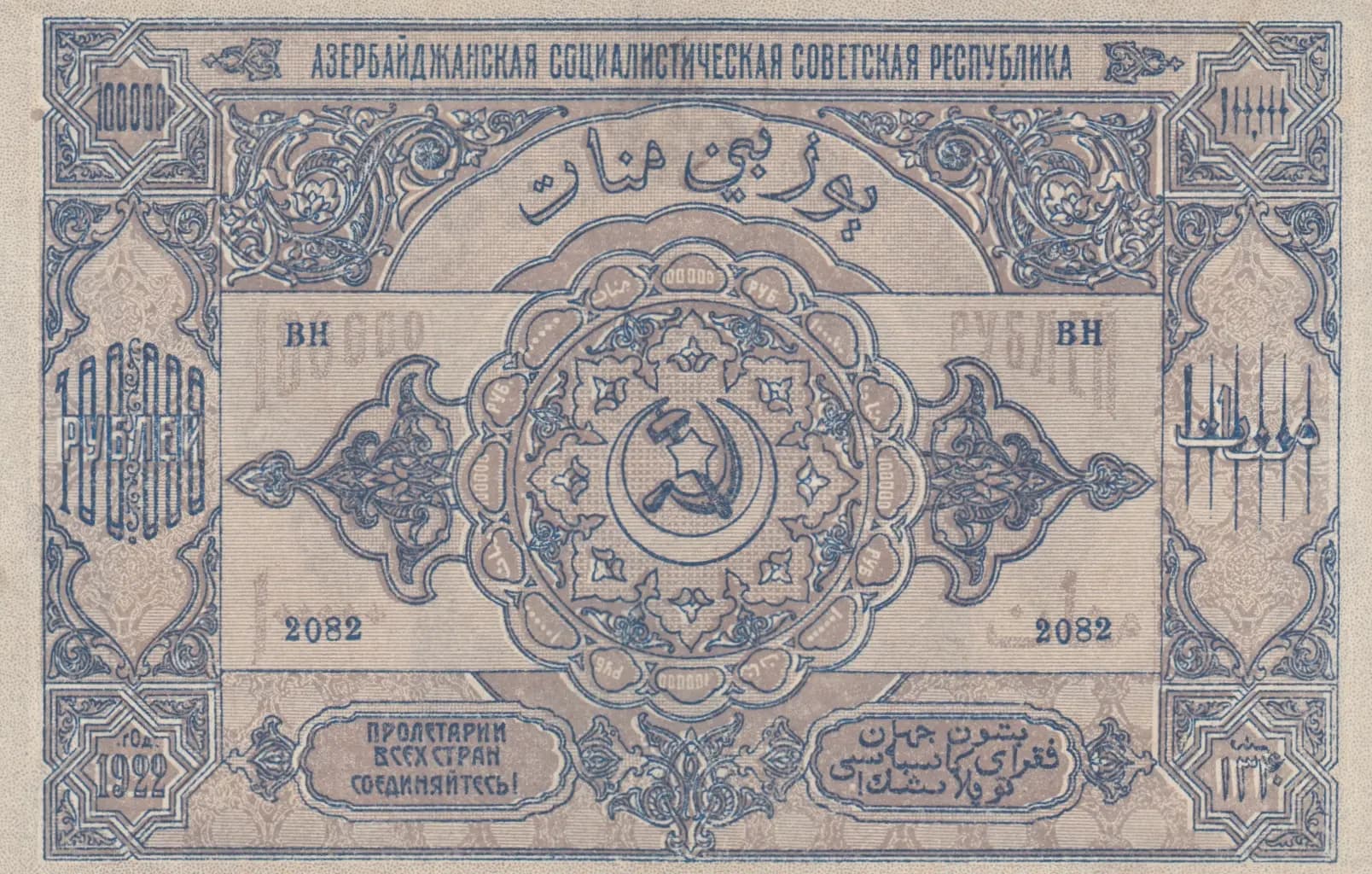
This banknote was issued during a transitional period when the Azerbaijan Socialist Soviet Republic was establishing its monetary sovereignty within the early Soviet system. The design deliberately blends Soviet symbolism—prominently featuring the hammer and sickle emblem on the reverse within a decorative circular medallion—with Islamic geometric patterns and bilingual Russian-Persian inscriptions, reflecting the cultural synthesis of a newly Sovietized Muslim region in the Caucasus.
The note features a sophisticated dual-cultural aesthetic combining Soviet revolutionary imagery with Caucasian Islamic artistic traditions. The obverse displays elaborate ornamental borders with geometric patterns, floral rosettes in corner squares, and two symmetrical circular medallions with radiating line patterns flanking a central rectangular panel. The reverse centers on the Soviet state emblem—a hammer and sickle symbol within a decorative circular medallion—surrounded by ornamental geometric Islamic design elements, star symbols, and a crescent moon motif integrated into the overall composition. The color scheme predominantly employs blue on light tan/beige and gray backgrounds. The bilingual presentation in Russian Cyrillic and Persian/Arabic script reflects Azerbaijan's unique position as a Caucasian Islamic region incorporated into the Soviet state, making this a significant cultural artifact of early Bolshevik internationalism and local accommodation policies.
FRONT SIDE: 'СТО ТЫСЯЧ РУБЛЕЙ' (One Hundred Thousand Rubles); 'РУБЛЕЙ' (Rubles); 'НАРОДНЫЙ КОМИССАР ФИНАНСОВ' (People's Commissar of Finance); Signatures of 'Д. Манцев' (D. Mantsev) and 'Кулышев' (Kulyshev); 'НАССЕР' (Nasser); Persian/Arabic text inscriptions. REVERSE SIDE: 'АЗЕРБАЙДЖАНСКАЯ СОЦИАЛИСТИЧЕСКАЯ СОВЕТСКАЯ РЕСПУБЛИКА' (Azerbaijan Socialist Soviet Republic); 'ПРОЛЕТАРИ ВСЕХ СТРАН СОЕДИНЯЙТЕСЬ' (Workers of the World, Unite!); Serial number and denomination indicators 'ВН 2082' and '1000'; Persian/Arabic text 'فراتر شریف' (Fraternal/Brothers); Cyrillic abbreviations 'ВН' appearing twice.
This note was produced using intaglio engraving (line engraving) and letterpress printing, as evidenced by the intricate fine line work, complex guilloche patterns, and ornamental detail work visible throughout the design. The sharp, crisp impression and fine detail preservation indicate professional security printing typical of early Soviet state currency production, likely executed by the Soviet State Printing Works or a specialized security printer in the Caucasus region.
This note is identified as Pick P-S717b, indicating it is a specific catalogued variety of the 100,000 ruble Azerbaijan issue. The signatures of D. Mantsev (Народный Комиссар Финансов) and Kulyshev are consistent with authorized signatories of the Azerbaijan SSR finance ministry during 1922. The serial number prefix 'ВН' (Cyrillic initials) and the number '2082' visible on the reverse provide specific identification. The bilingual Russian-Persian inscription presentation is distinctive to Azerbaijan SSR issues and distinguishes this from contemporary Russian RSFSR notes.