100 000 rublei 1922
About This Note
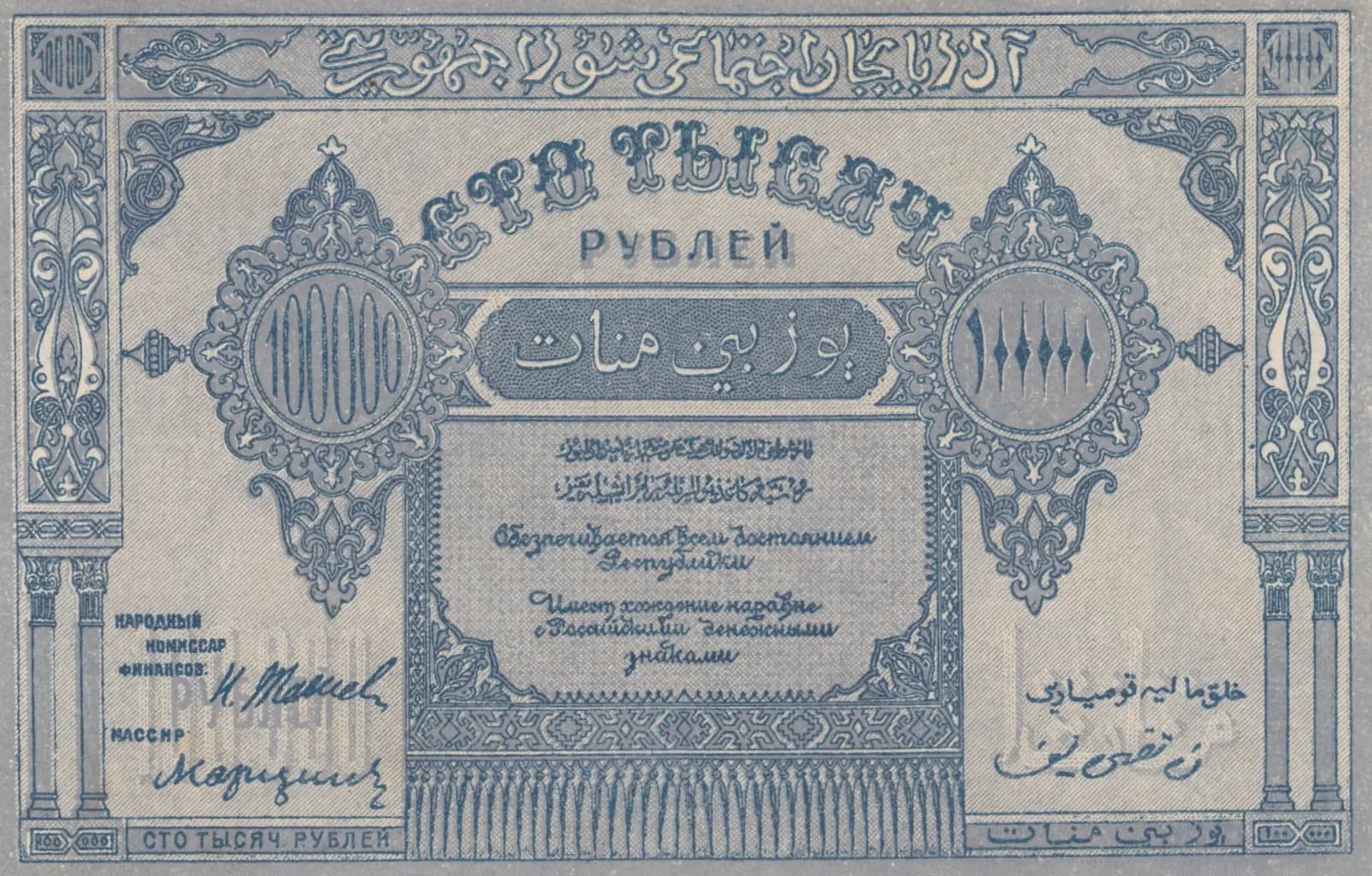
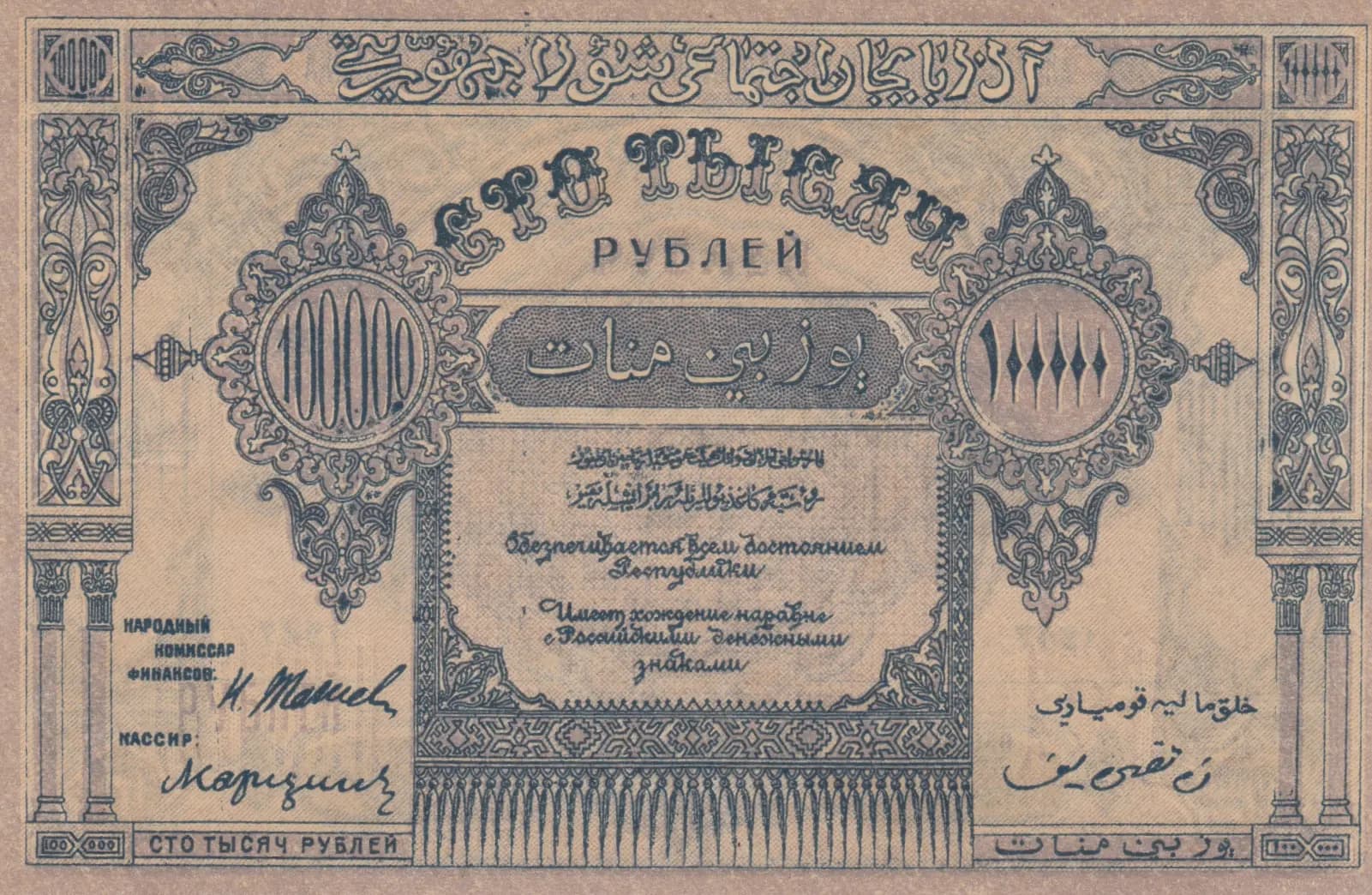
This is an exceptional example of the Azerbaijan S.S.R. 100,000 rublei from 1922, a visually striking banknote that synthesizes Soviet and Islamic design traditions during the early Soviet period. The note features ornate Islamic geometric and floral patterns throughout, with bilingual Cyrillic and Arabic inscriptions reflecting Azerbaijan's cultural identity within the nascent Soviet state. Despite visible signs of age including foxing, creasing, and handling wear consistent with its century-old provenance, the note retains intact margins and the fine engraved detail characteristic of early Soviet currency production.
Common. The Azerbaijan S.S.R. 100,000 rublei of 1922 was part of a high-denomination series issued during the hyperinflationary period of the early Soviet era, when large quantities of banknotes were printed to meet currency demands. While the note shows age-appropriate wear and foxing, these characteristics are normal for 102-year-old currency in circulation. No documented evidence of limited print runs, recalls, or short-lived issuance exists for this Pick number. Notes from this series regularly appear in collector markets and general circulation finds.
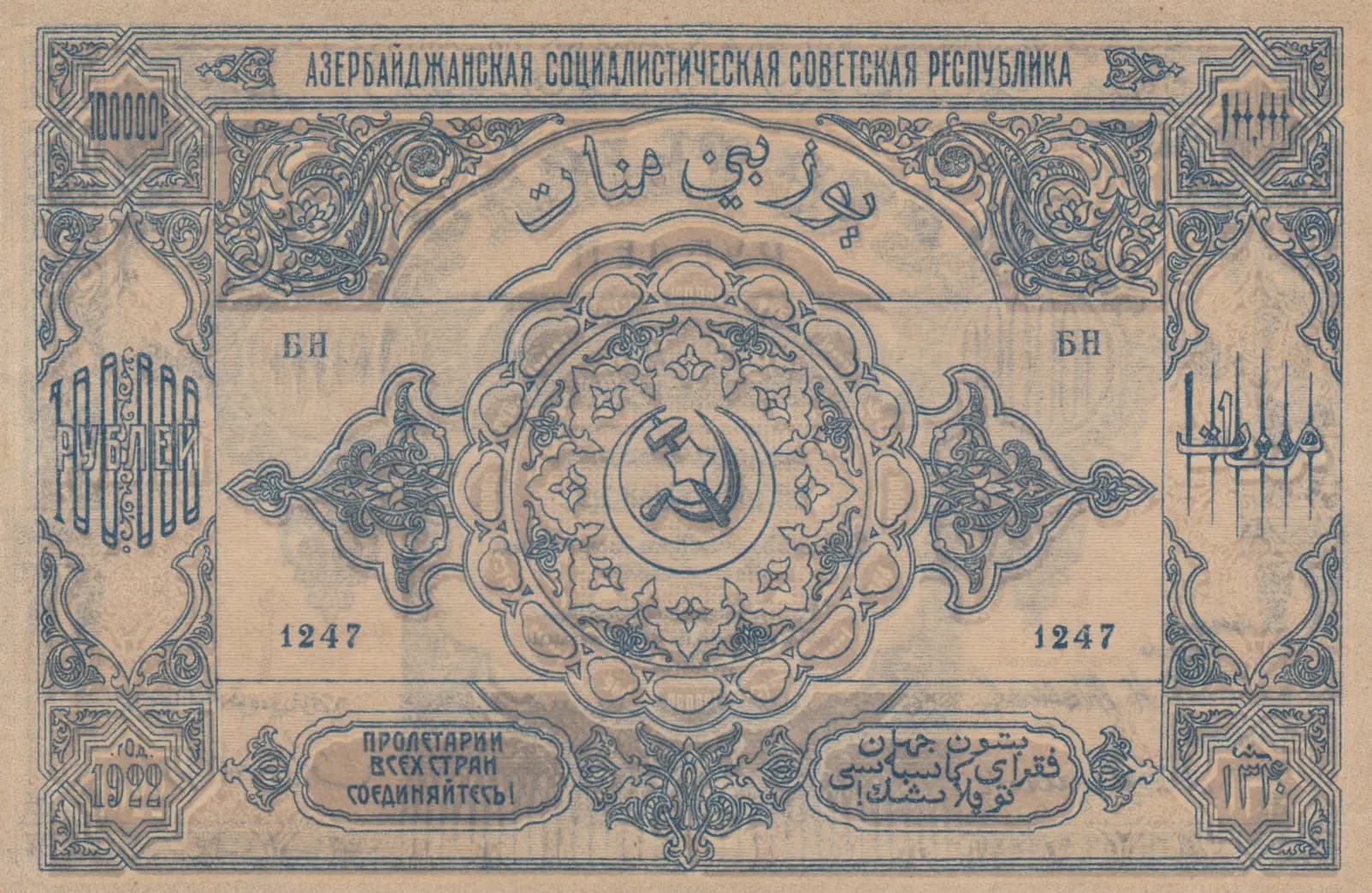
This note was issued during a critical period of Soviet consolidation following the 1917 Revolution and the establishment of the Azerbaijan S.S.R. in 1920. The prominence of the hammer and sickle symbol on the reverse, surrounded by stars and framed within an ornate medallion, represents the revolutionary iconography that replaced imperial imagery. The inclusion of both Cyrillic and Arabic scripts, along with the Islamic geometric patterning throughout, reflects the Soviet Union's early attempts to accommodate regional identities and appeal to Muslim populations in the Caucasus, even as centralized Soviet control was being imposed.
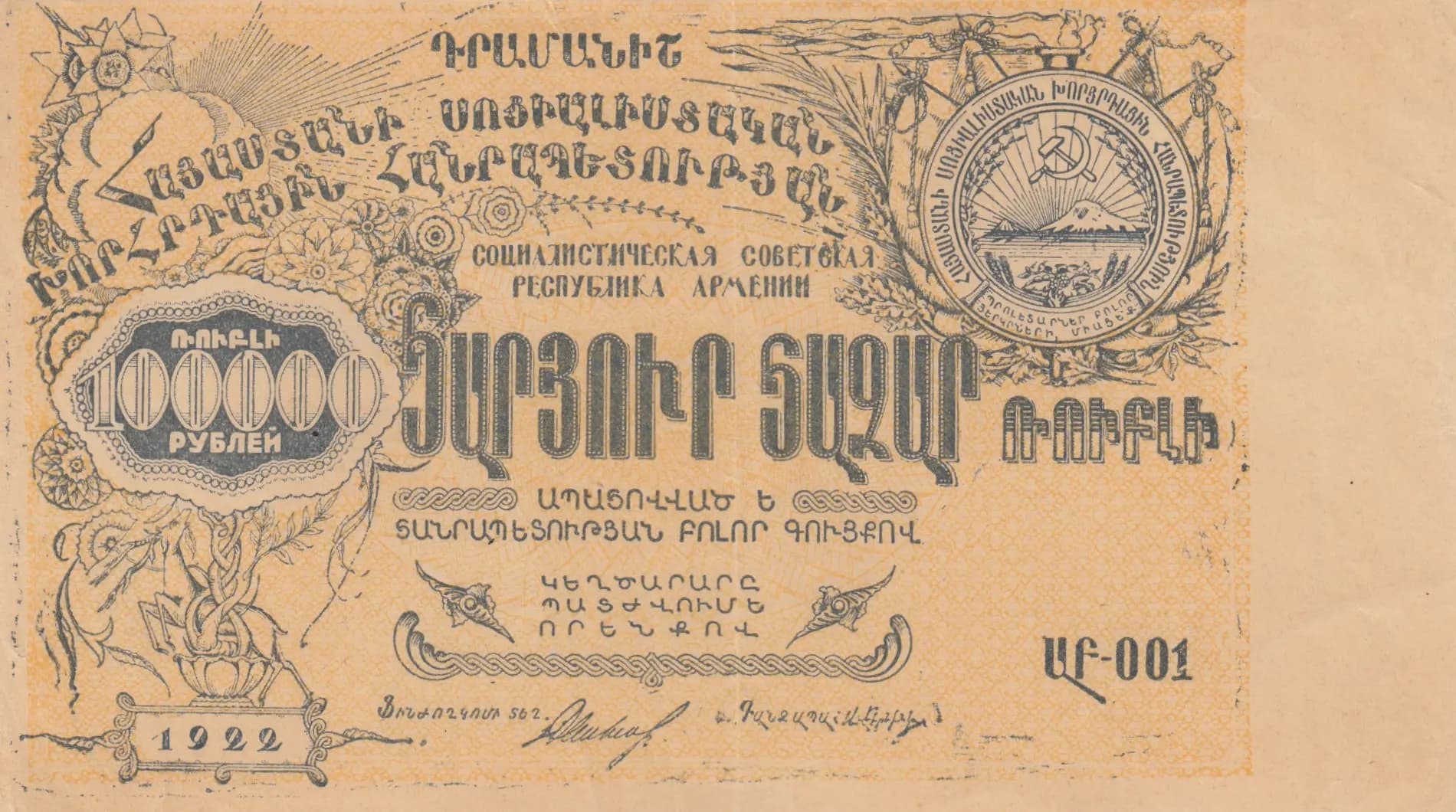
The obverse features an elaborate symmetrical design with two large circular ornamental medallions flanking a central rectangular panel containing bilingual text. Decorative Islamic-style geometric patterns and floral motifs create an ornate border treatment, with architectural columns suggested on the left and right edges. The reverse is dominated by a large central circular medallion containing the hammer and sickle symbol—the emblem of the Soviet state—surrounded by five-pointed stars and enclosed within intricate geometric patterns. This medallion is itself set within concentric decorative frames of Islamic geometric design. The entire note employs fine line engraving work to create the ornamental patterns, corner designs, and architectural elements. The color scheme throughout is monochromatic in tan/beige with dark blue-black ink, typical of the period. No portraits or geographical landmarks are depicted; instead, the design philosophy emphasizes abstract revolutionary symbolism combined with regional cultural aesthetics.
{"front":{"primary_denomination":"СТО ТЫСЯЧ РУБЛЕЙ / One Hundred Thousand Rubles","authority_1":"НАРОДНЫЙ КОМИССАР ФИНАНСОВ / People's Commissar of Finance","authority_2":"КАССИР / Cashier","authority_3":"ПРЕДСЕДАТЕЛЬ ВСЕРОССИЙСКОЙ РЕСПУБЛИКИ / Chairman of the All-Russian Republic","note":"Имущественное население Азербайджанской Советской Республики / [Property/Wealth of the Azerbaijani Soviet Republic]","additional":"РУБЛЕЙ / Rubles"},"back":{"issuer":"АЗЕРБАЙДЖАНСКАЯ СОЦИАЛИСТИЧЕСКАЯ СОВЕТСКАЯ РЕСПУБЛИКА / Azerbaijani Socialist Soviet Republic","date":"1922","series":"БН (series designation)","sequence":"1247","rallying_cry":"ПРОЛЕТАРИЙ ВСЕХ СТРАН СОЕДИНЯЙТЕСЬ / Workers of all countries, unite!","arabic_equivalent":"[Arabic translation of rallying cry present]","numerical_marking":"1000"}}
Steel plate engraving (intaglio printing). The fine line work visible in the decorative geometric patterns, the detailed rendering of the ornamental medallions, and the precise execution of the architectural elements are characteristic of high-quality engraved banknote production. The security features including the ornate engraved patterns throughout and the complex geometric pattern work indicate professional banknote security printing of the early Soviet period. The specific printer for Azerbaijan S.S.R. issues of this era is not definitively known from catalog data alone, though early Soviet notes were often produced at centralized printing facilities in Moscow or Petrograd, with some regional production facilities also operating.
Series designation 'БН' visible on reverse. The date 1922 and sequence number 1247 are recorded. Signatures appear present though specific names require expert paleographic analysis of the Cyrillic handwriting (possibly including a cashier's mark resembling 'К.Малыш' or similar). Early Soviet notes from this period frequently exist with signature variations due to manual signing during production. No overprints are visible in the analyzed images. Further detailed comparison with reference collections would be needed to identify whether this represents a known cataloged variety within Pick S717a.