100 000 rublei 1922
“Armenian SSR”
About This Note
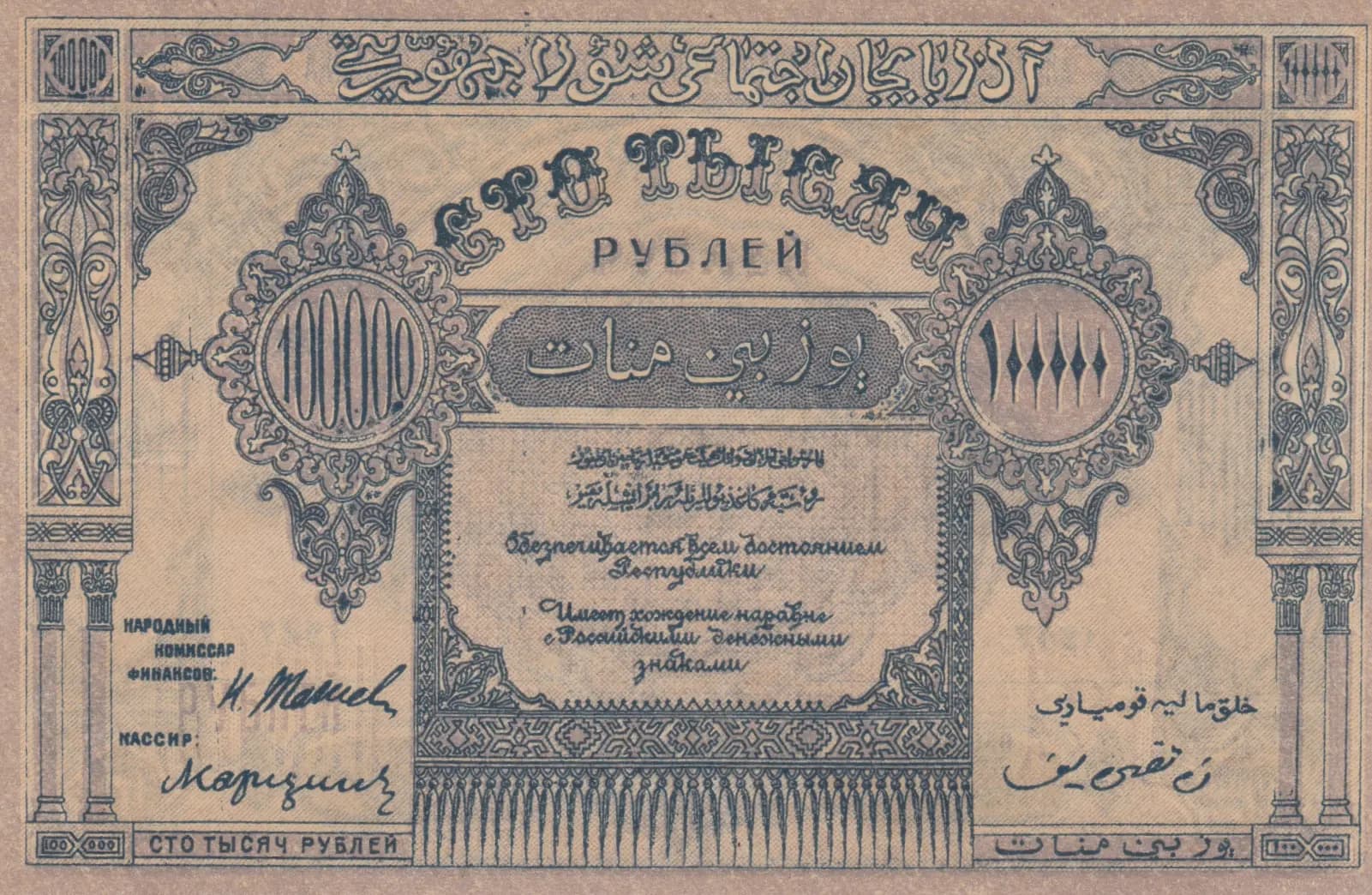
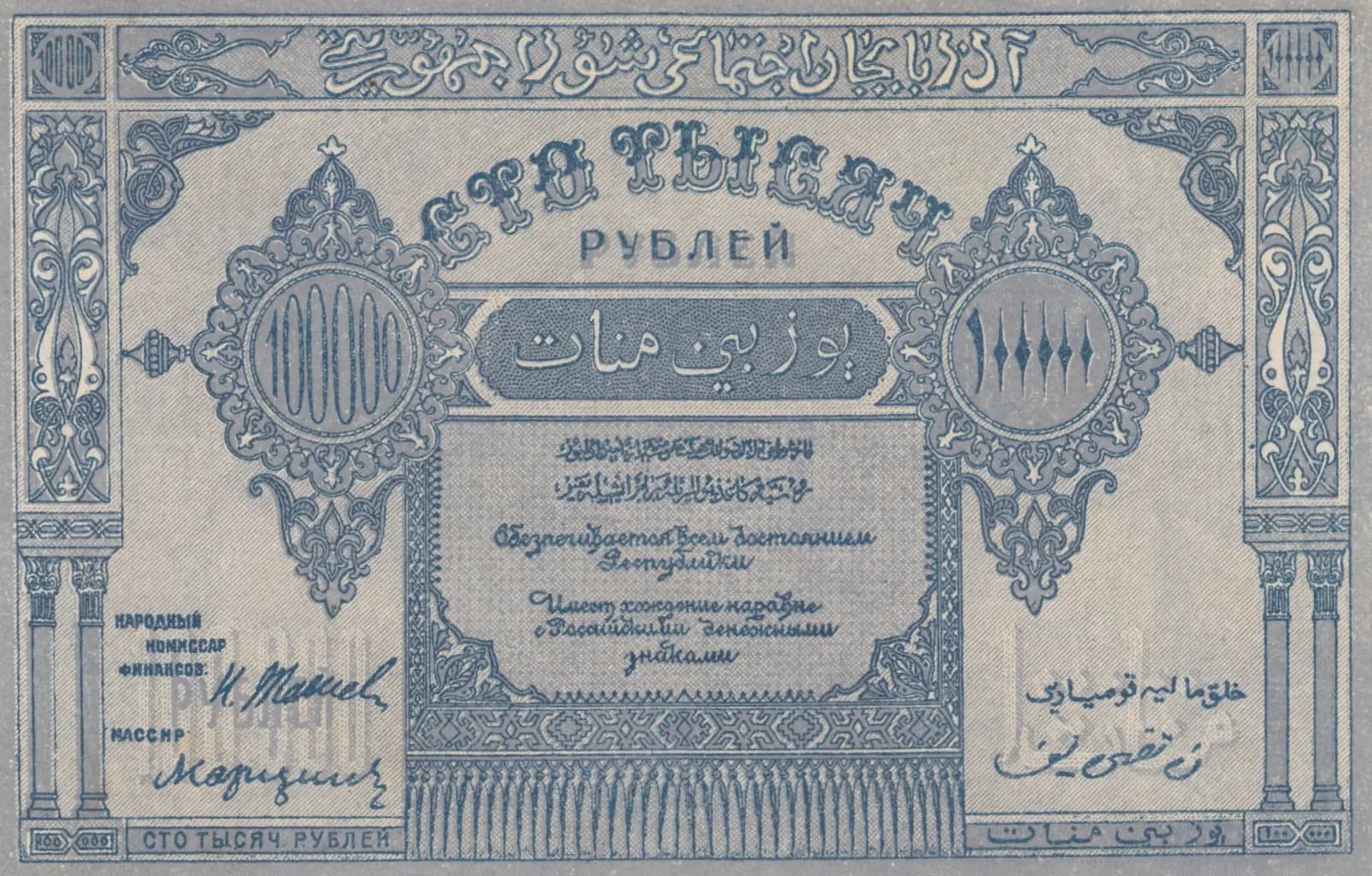
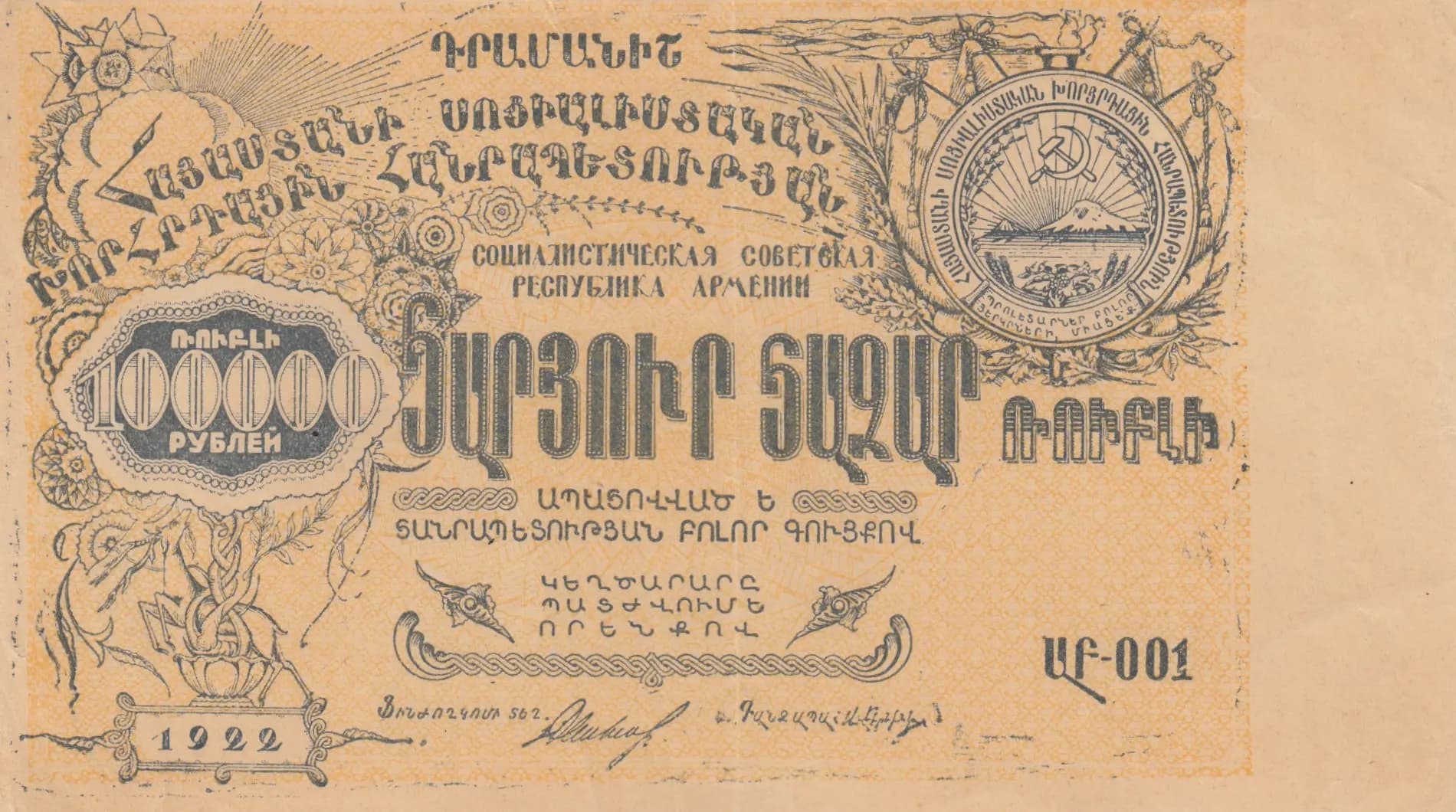
This 100,000 ruble note from the Erevan State Bank Branch (1922) represents a fascinating artifact of early Soviet Armenia, featuring bilingual Armenian and Russian text throughout. The note displays excellent condition (EF grade) with age-appropriate patina, minimal wear, and all design elements remaining crisp and legible despite over a century of existence. The elaborate ornamental borders, Armenian SSR state seal, and dual-language inscriptions make this a particularly desirable example for collectors of Soviet currency and Armenian numismatic history.
Common. The 100,000 ruble denomination from the Erevan State Bank Branch (P-S682) was produced in substantial quantities as a circulating denomination during the early Soviet period. While notes from this era and region have certainly become scarcer over the past century due to attrition and destruction, this particular note type does not appear in standard numismatic references as a rare or limited-print variety. EF-grade examples command modest collector premiums reflecting their age and condition rather than intrinsic scarcity.
Issued during the establishment of the Armenian Soviet Socialist Republic in 1922, this banknote reflects the early Soviet period's emphasis on regional autonomy through bilingual currency design. The prominent Armenian SSR circular seal with radiating sunburst pattern and the conspicuous use of Armenian script alongside Russian Cyrillic demonstrate the Soviet state's initial acknowledgment of national republics' cultural identity, a policy that would later shift toward greater Russification. This note documents a brief window in Armenian monetary independence before centralization of Soviet currency control.
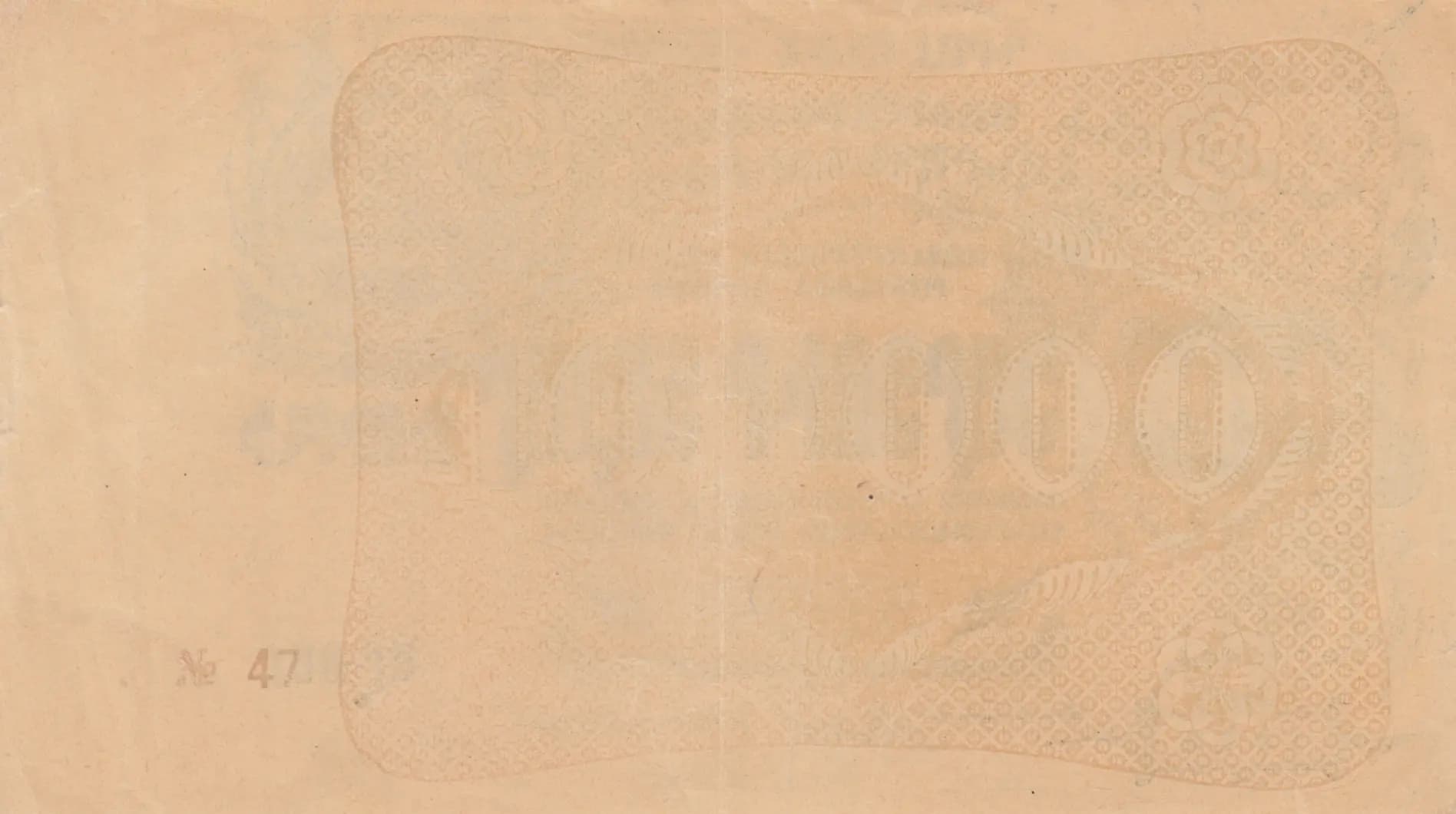
The obverse features a richly ornamental design characteristic of early Soviet regional banknotes. The left side contains a large oval denomination cartouche with '100000' and 'РУБЛЕЙ' in Russian text, while the center displays the equivalent denomination in prominent Armenian numerals and script. The right side is anchored by the official circular seal of the Armenian SSR, rendered with a radiating sunburst pattern representing Soviet socialist ideology. Decorative vignettes in the upper left corner display stylized sun/star motifs with floral elements, reflecting both traditional Armenian and Soviet modernist design aesthetics. The entire note is bordered by intricate geometric and floral ornamental patterns executed in fine line work, creating a security feature through design complexity. The reverse is largely blank with minimal inscriptions, a common practice for Soviet notes of this era. The tan/beige and brown color palette reflects the paper stock and printing inks of early 1920s Soviet security printing.
FRONT SIDE: 'ՀԱՅԱՍՏԱՆԻ ՍՈՑԻԱԼԻՍՏԱԿԱՆ ԺԱՄԱՆԱԿԱՃԱՐ ՏԱՐԱԾ ԴՐԱՄ ԱՆՎ' (Armenian) = 'Armenian Socialist Era Currency Denomination'; 'СОЦИАЛИСТИЧЕСКАЯ СОВЕТСКАЯ РЕСПУБЛИКА АРМЕНИИ' (Russian) = 'Socialist Soviet Republic of Armenia'; '100000' / 'РУБЛЕЙ' (Russian) = 'One Hundred Thousand Rubles'; 'ՀԱՐՅՈՒՐ ՀԱԶԱՐ ՌՈՒԲԼԻ' (Armenian) = 'One Hundred Thousand Rubles'; '1922' = Year of issue; 'ЦК-001' (Russian) = Serial number designation; 'ԱՔՍՈՐԴԱԿԱՆ ԹԱՂ' (Armenian) = Treasury/Financial Institution designation. BACK SIDE: '№ 47' = Note number/reference identifier.
Letterpress/Relief printing combined with intaglio engraving, typical of Soviet state security printers of the early 1920s. The fine ornamental borders and detailed vignettes indicate professional engraved plates, likely produced by the Soviet State Printing Works (Гознак) or an authorized republican branch facility. The crisp impressions visible in the EF-grade example demonstrate the quality of the original printing and the durability of the engraved design elements.
The observed serial number designation 'ЦК-001' with the '№ 47' notation on the reverse suggests this may be from an early printing batch. Known varieties for P-S682 include differences in serial number prefixes and printing runs; collectors should note specific serial number ranges and batch designations. The bilingual text configuration and seal design appear consistent with the standard issued type, with no known major overprint varieties recorded for this particular Pick number.