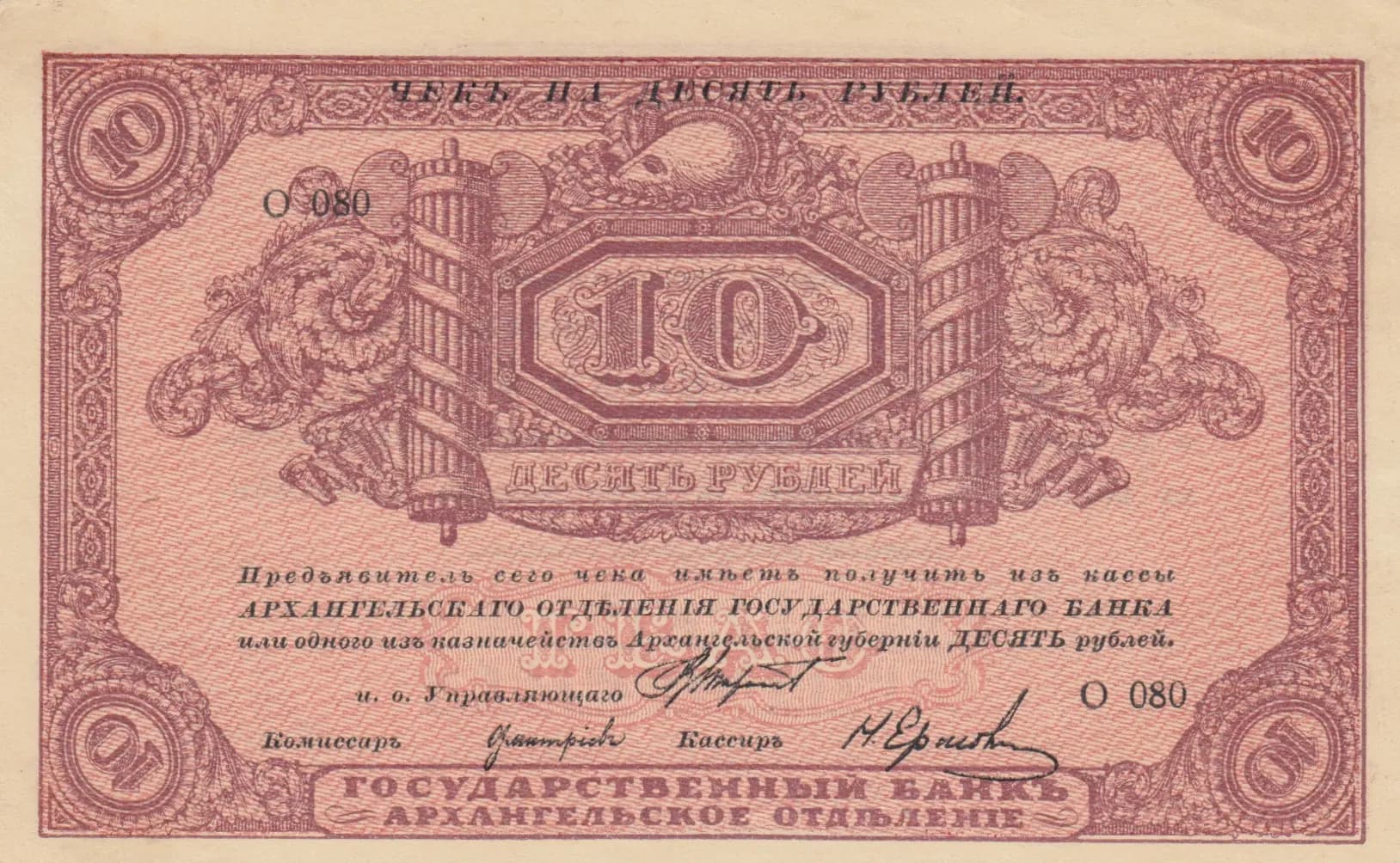
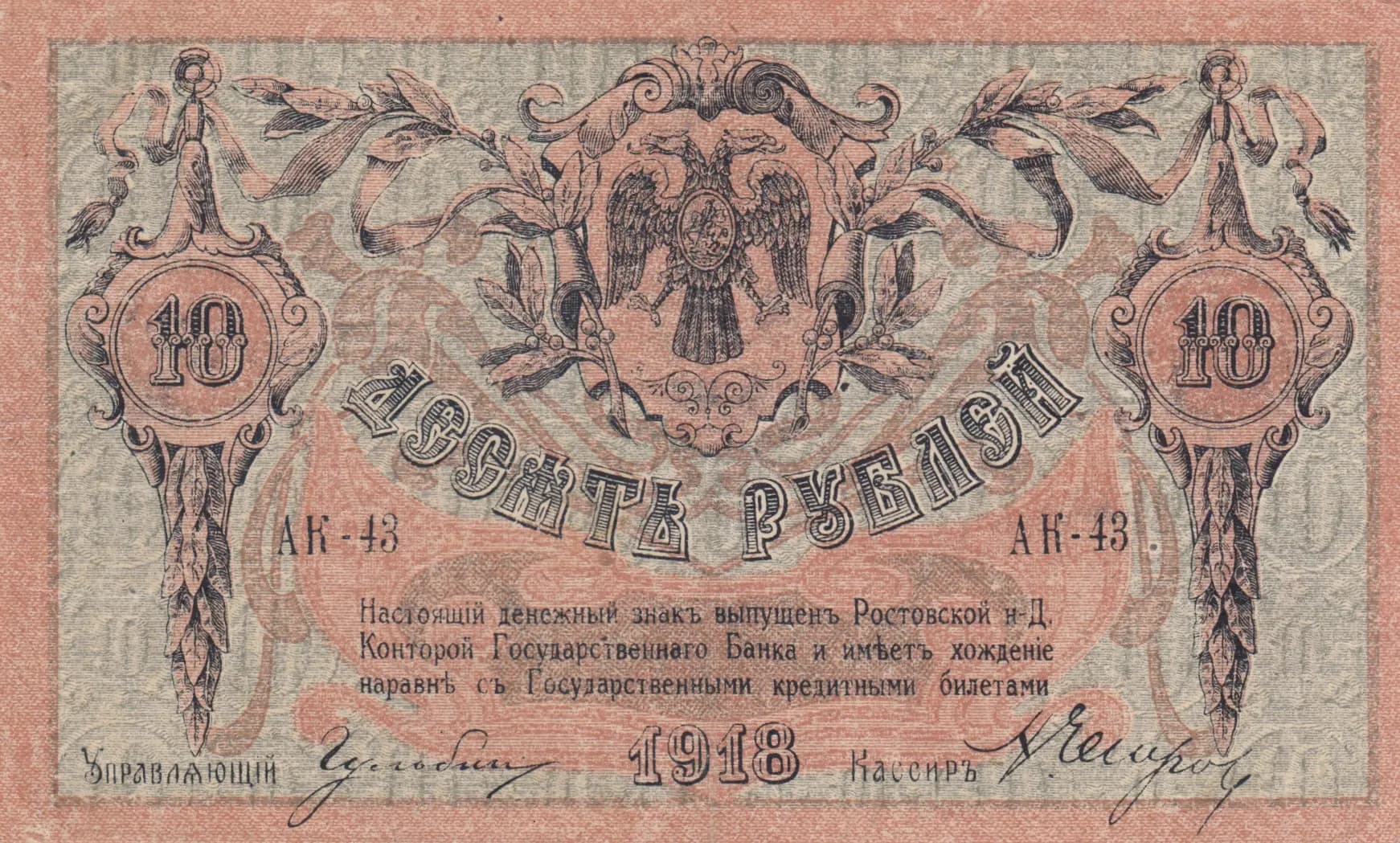
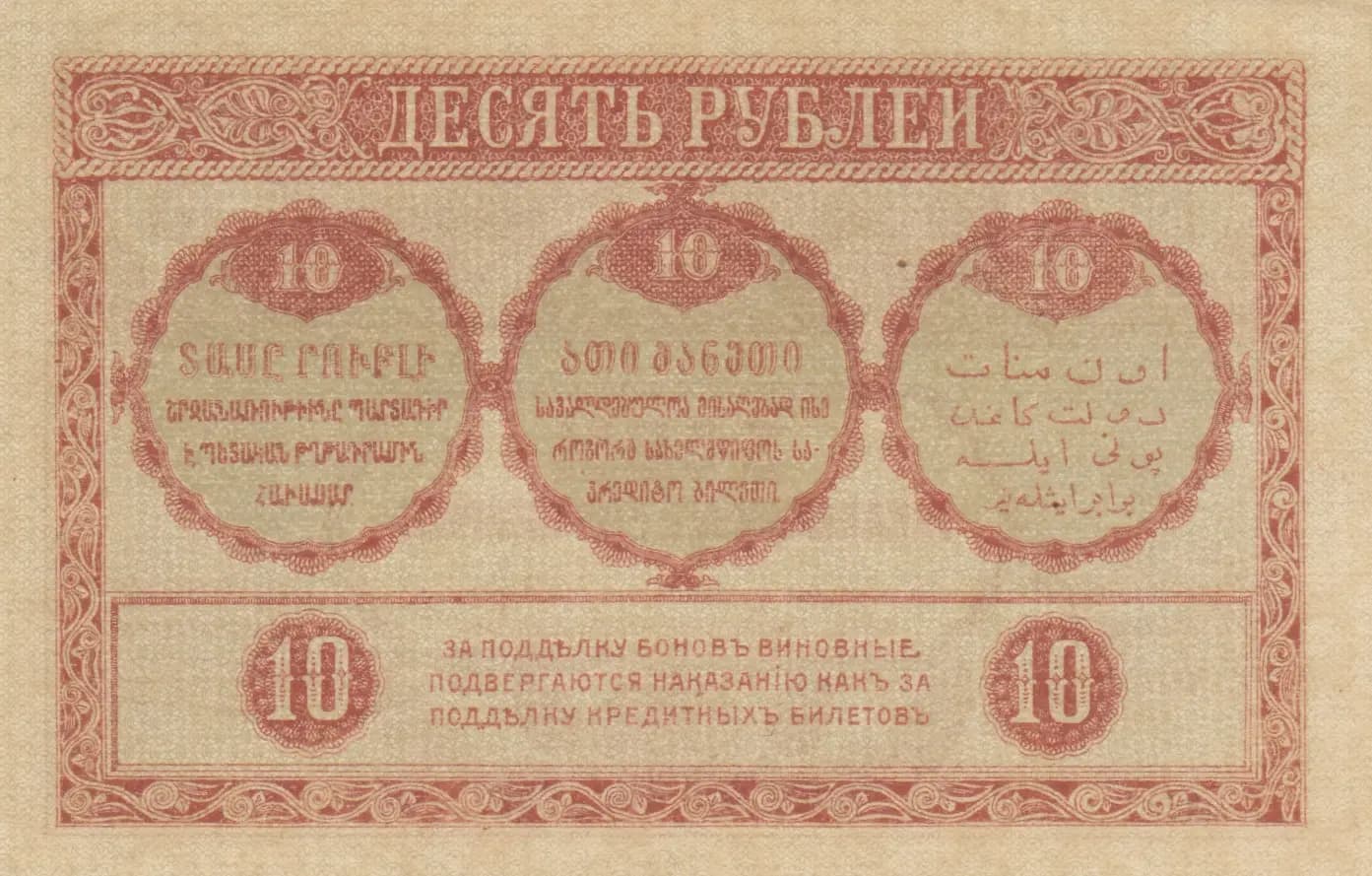
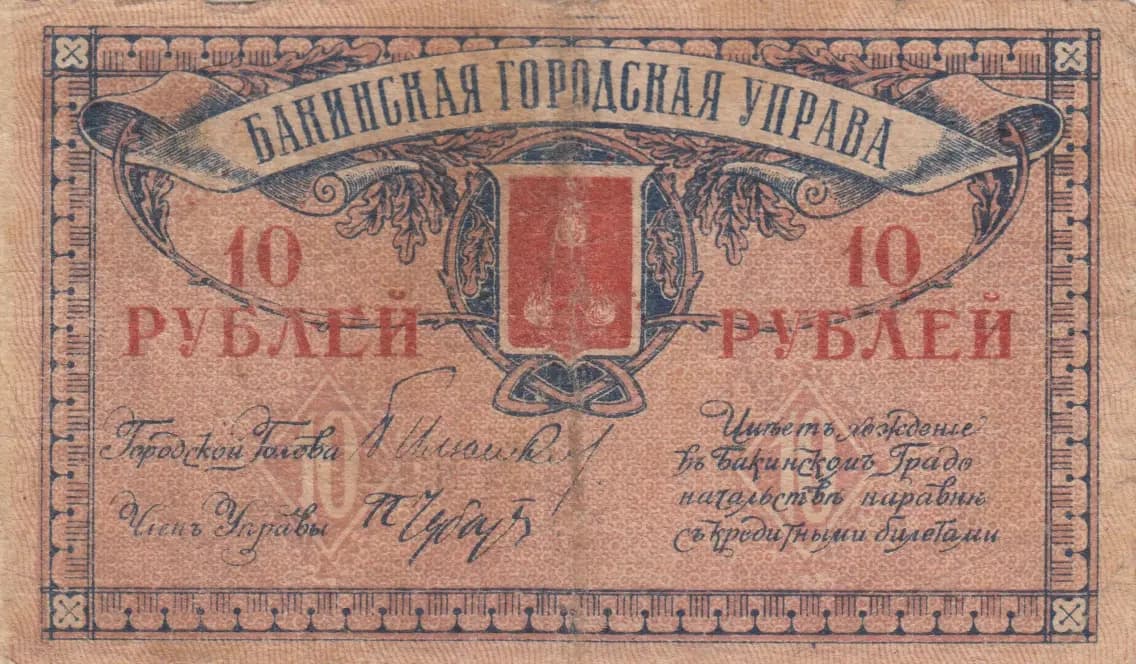
10 rublei 1918
“Baku”
About This Note
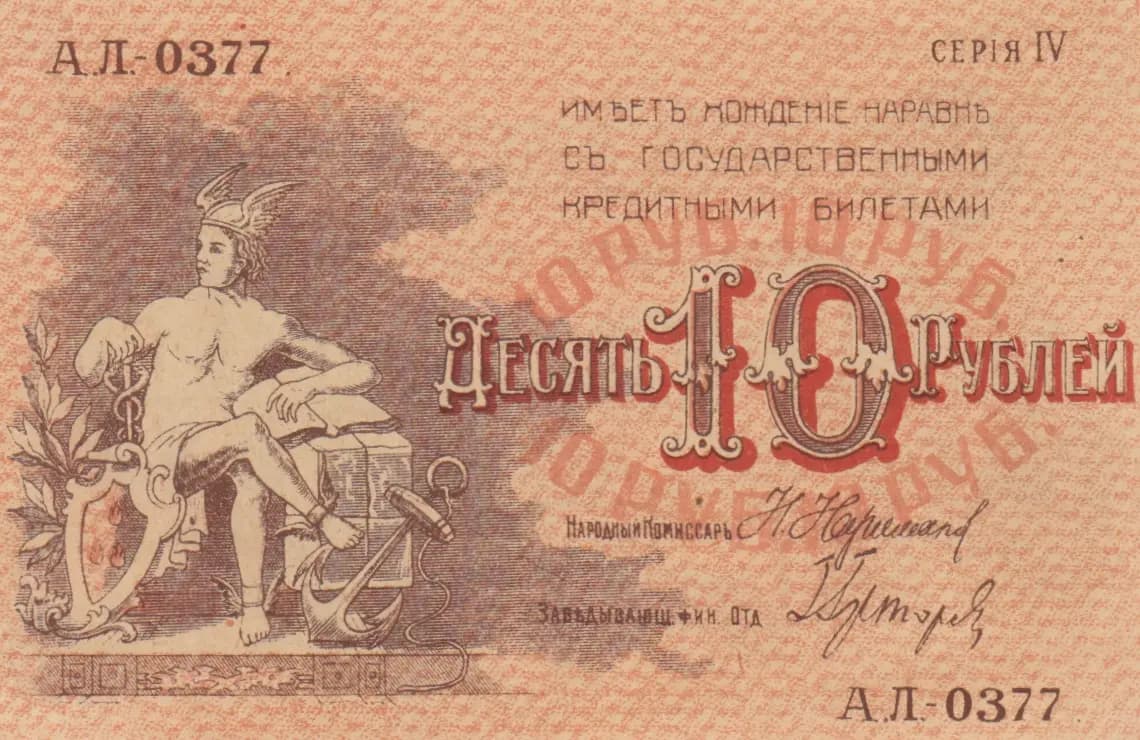
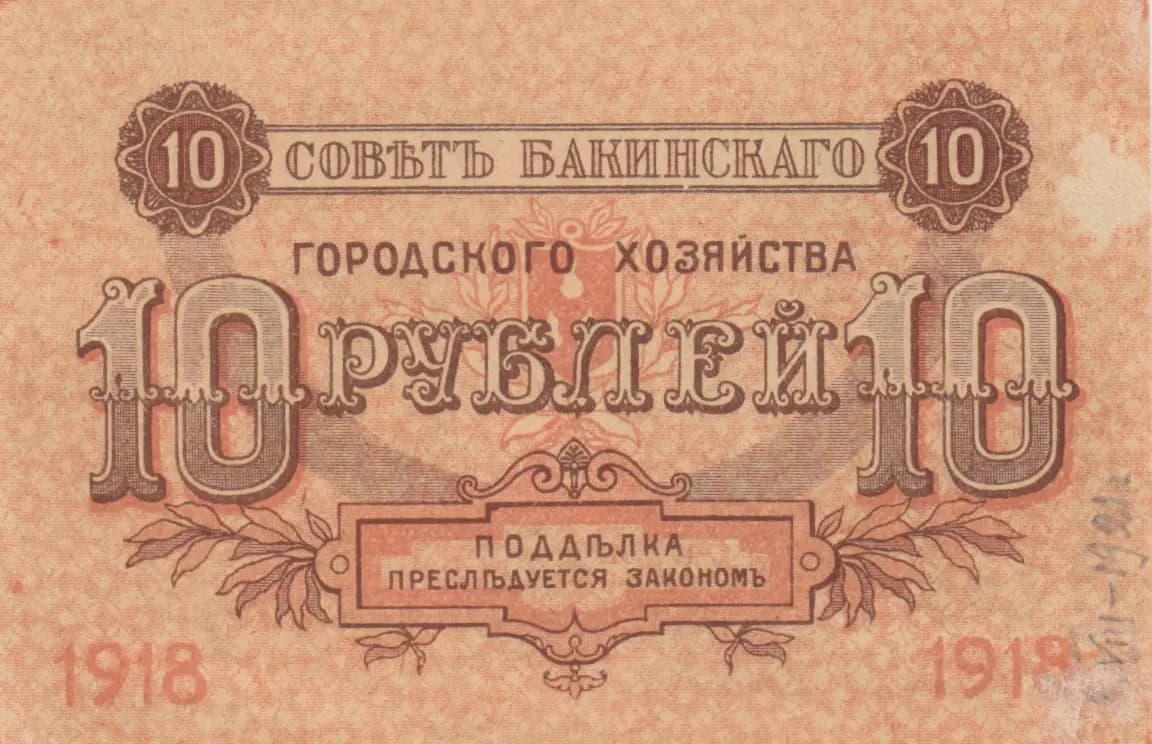
This 1918 10 Rublei note from the Soviet Baku City Administration represents a fascinating transitional piece from the Russian Civil War period, issued during the brief Menshevik-controlled Democratic Republic of Azerbaijan. The note is in AU condition with well-preserved peachy-salmon coloring and crisp engraving; the allegorical Mercury figure and intricate guilloche work remain sharp and clearly defined. The serial number AL-0377, Series IV designation, and the explicit statement that this currency holds equal standing with State Credit Notes make this a significant example of emergency local currency from a pivotal historical moment.
Uncommon. While not extremely rare, Pick S731 Baku City Administration notes from 1918 were issued in limited quantities compared to central Soviet issues, and surviving examples in AU condition are less frequently encountered than common Soviet notes. The specific Series IV designation and the AL serial number range suggest a controlled print run typical of local authority emergency currency. These notes saw actual circulation in Baku during 1918-1920 and faced significant attrition. AU condition examples represent notes that saw minimal handling, making this specimen somewhat above average scarcity for the type. However, this is not a 'rare' note in the sense of extreme scarcity; it remains obtainable for serious collectors of Russian Civil War currency.
This note was issued by the Council of Baku City Economy in 1918, during the chaotic period following the Russian Revolution when central authority collapsed and regional administrations issued their own currency. Baku, as the center of the Caucasian oil industry, held strategic importance, and this local issue reflects the city's brief autonomy under the Democratic Republic of Azerbaijan (1918-1920) before Soviet consolidation. The declaration that these notes have circulation 'equal to State Credit Notes' and the anti-counterfeiting warning underscore the monetary instability of the period and the authority's attempt to establish credibility for emergency local currency.
The obverse features a classical allegorical female figure representing Mercury (or possibly Commerce/Trade), rendered in elegant engraving style. She is seated in profile facing left, wearing a distinctive winged headdress (petasos) and holding the caduceus—the traditional staff of Mercury wound with two serpents—symbolizing commerce, negotiation, and economic authority. This classical imagery was deliberately chosen to represent Baku's commercial importance during the industrial era. The reverse displays the denomination prominently in ornate frames on both sides, with the issuing authority's name centrally placed, flanked by decorative rosette medallions at the top and laurel garland wreaths at the bottom, all rendered in the same sophisticated engraving style. The entire note employs intricate guilloche patterns and ornamental borders characteristic of high-security banknote production.
FRONT SIDE: 'АЛ-0377' (Serial Number AL-0377); 'СЕРИЯ IV' (Series IV); 'ИМЕТЬ ХОЖДЕНИЕ НАРАВНЬ СЬ ГОСУДАРСТВЕННЫМИ КРЕДИТНЫМИ БИЛЕТАМИ' (Having circulation equal to State Credit Notes); 'ДЕСЯТЬ РУБЛЕЙ' (Ten Rubles); 'Народный Комиссариат' (People's Commissariat). BACK SIDE: 'СОВѢТЬ БАКИНСКАГО ГОРОДСКОГО ХОЗЯЙСТВА' (Council of Baku City Economy); '10 РУБЛЕЙ' (10 Rubles - appears twice); 'ПОДДЪЛКА ПРЕСЛЕДУЕТСЯ ЗАКОНОМ' (Counterfeiting is prosecuted by law); '1918' (Year - appears twice).
This note was produced using intaglio engraving (copperplate printing), the standard security printing method for banknotes of this era. The fine detail work visible in the allegorical figure, the caduceus staff, the intricate guilloche patterns, and the precise line work of the ornamental borders are characteristic of master engraving. The consistent depth and crispness of the impressions across both sides indicate professional security printing equipment. For Pick S731 Baku issues, the likely printer was a facility operating in Baku or transferred from Russian Imperial operations, though specific attribution requires additional research. The sophisticated security features including layered ornamental frames and detailed portraiture reflect an attempt to prevent counterfeiting despite the emergency circumstances.
This specimen is identified as Series IV (СЕРИЯ IV) with serial number AL-0377. The prefix 'AL' and the series designation help identify this within the print run. Pick S731(2) designation indicates this is from the second cataloged variety of the 10 Rublei Baku issue. Variations in this issue include different series numbers and serial prefixes; the Series IV designation with AL prefix is one of the documented varieties. The two-digit year (1918) appears on both obverse and reverse, which is consistent across the Baku series. Notes from this issue show variations in series designations (I through IV are documented), making series identification important for variety collectors.