10 rublei 1918
“Baku”
About This Note
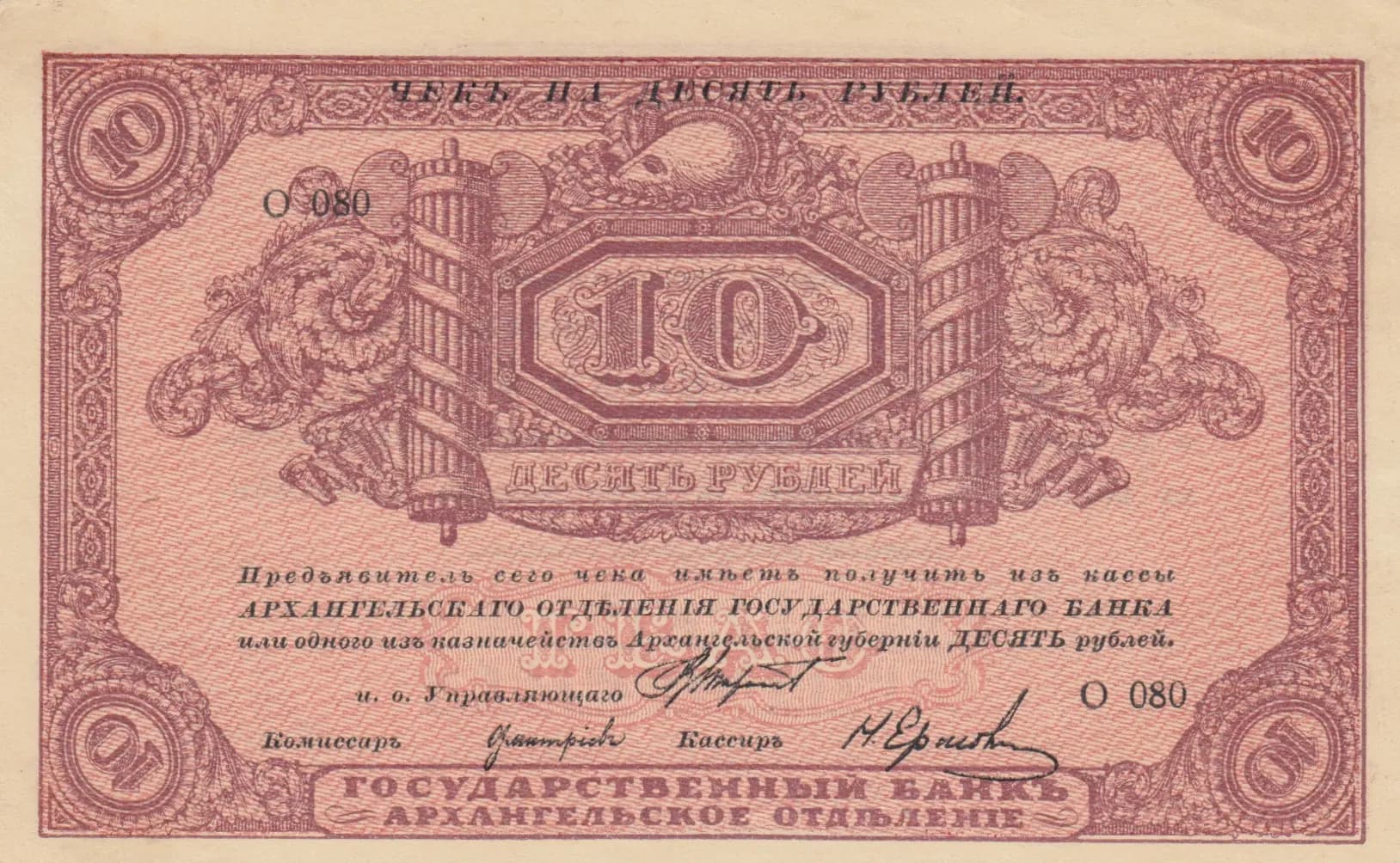
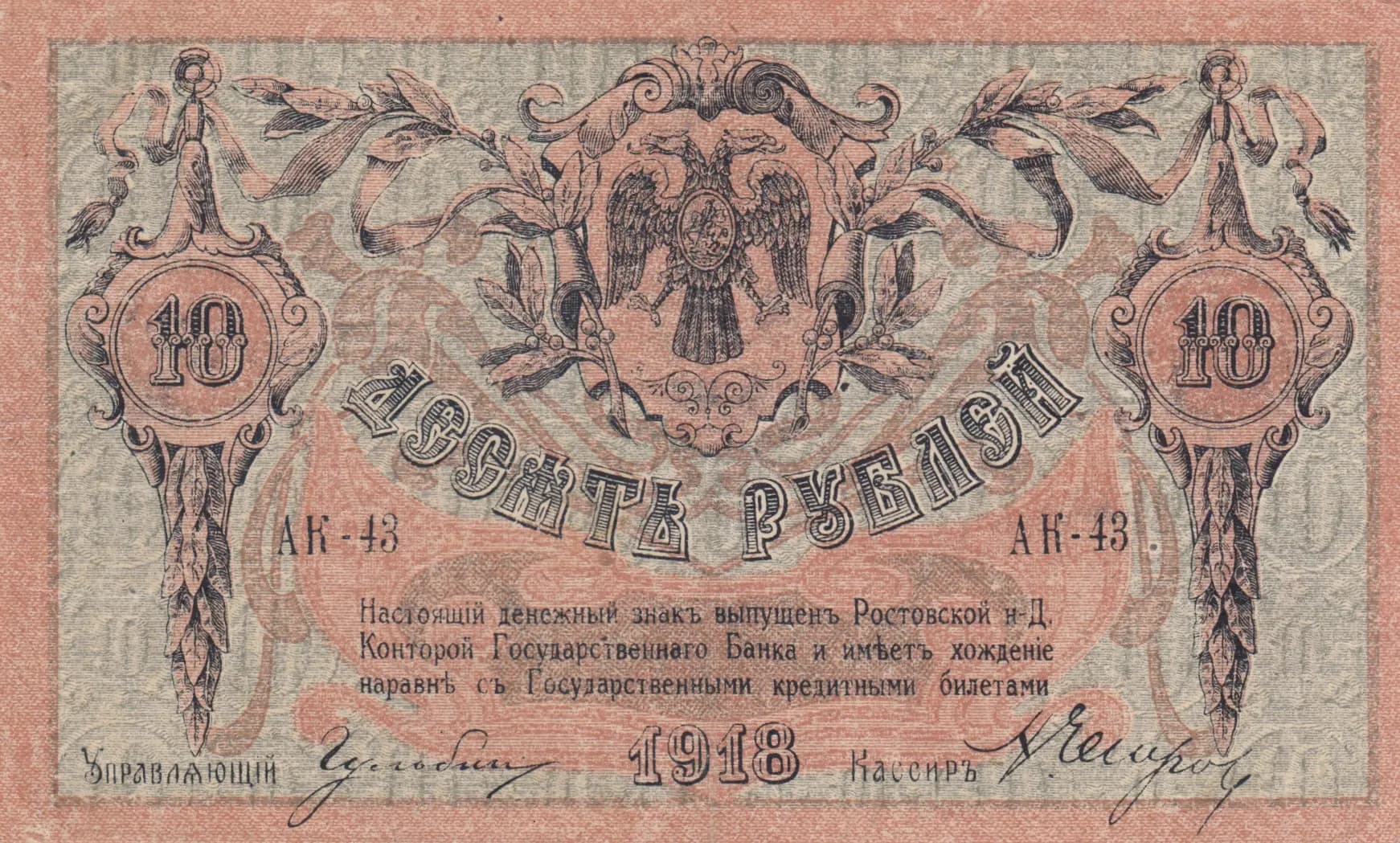
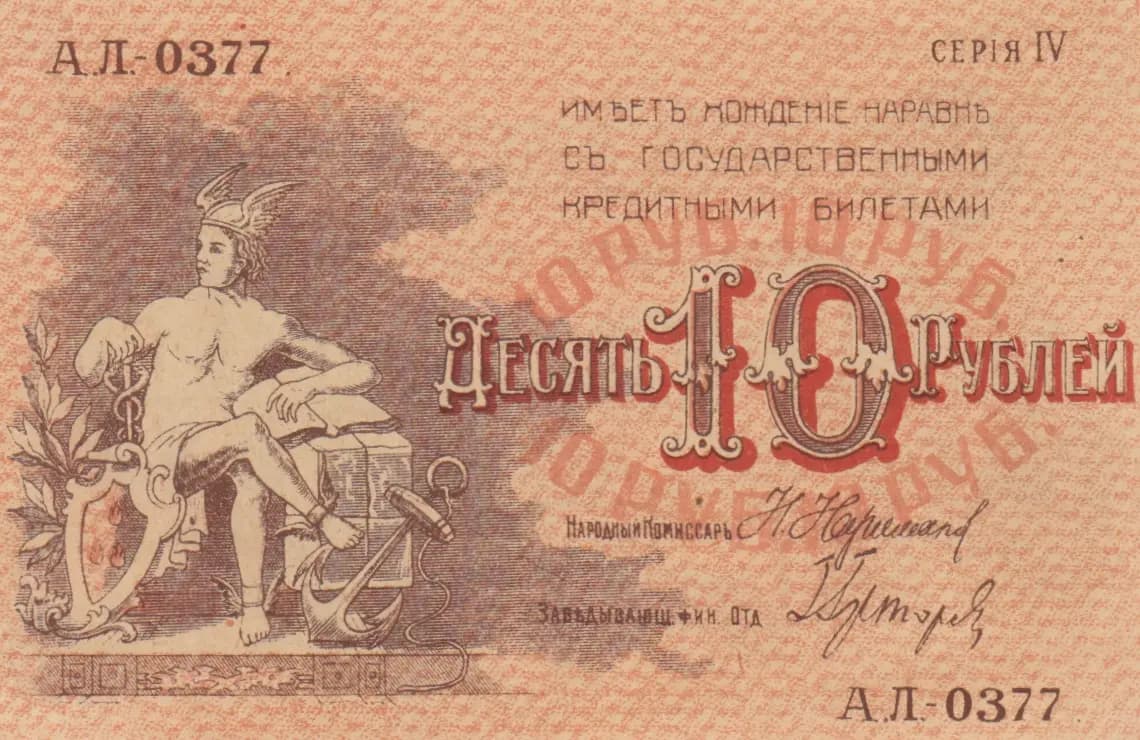
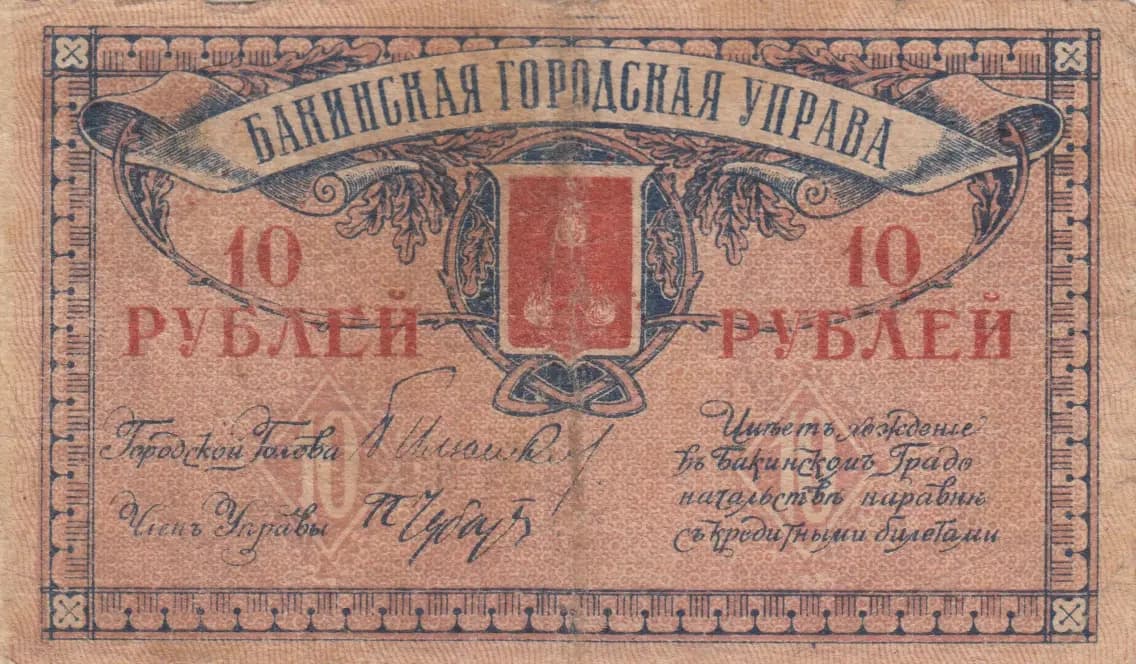
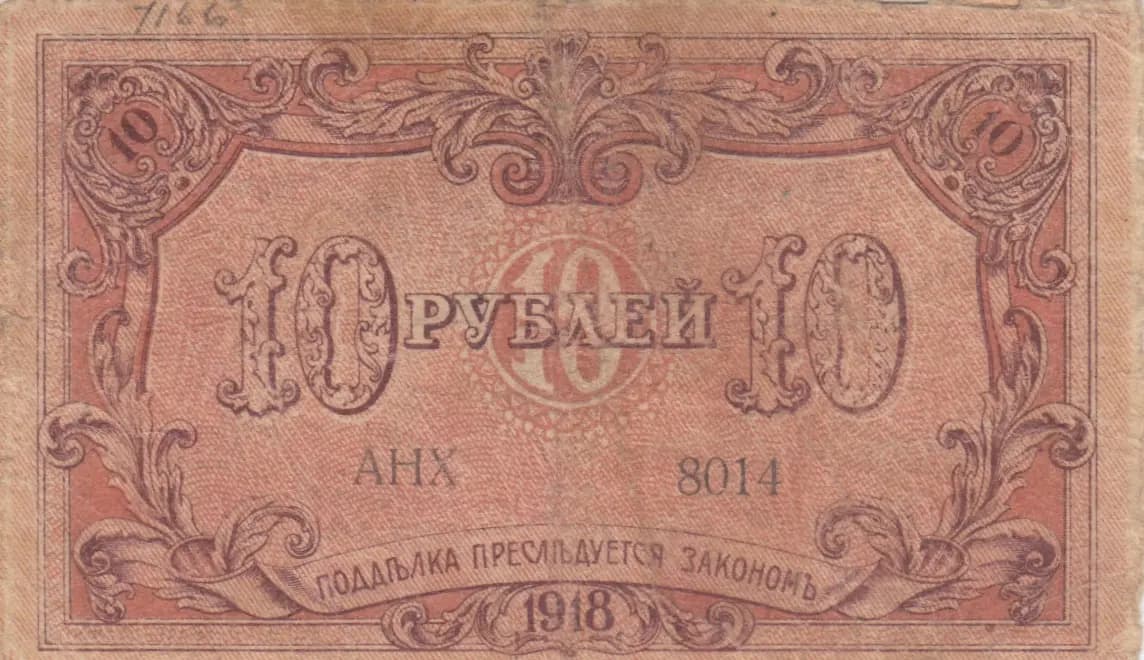
This is a 10 rublei banknote issued by the Baku City Government (Baku Administration) in 1918, during the tumultuous period of Russian Revolution and civil war. The note features an ornate Art Nouveau-style decorative design with elaborate scrollwork borders, a central red security cartouche, and handwritten signatures of two administrative officials (P. Shmakov and P. Bobor). In Fair condition, the note shows expected aging with fading, discoloration, and circulation wear, but remains clearly legible with all major design elements intact.
uncommon
This emergency issue from Baku reflects the chaos of 1918, when the Caucasus region experienced rapid political upheaval during the Russian Civil War and the brief existence of the Azerbaijani Democratic Republic. The Baku City Government's issuance of its own currency demonstrates the breakdown of central authority and the need for local monetary substitutes during this period of transition. The handwritten signatures of administrative officials on the note underscore the makeshift nature of these emergency emissions, which served as local means of exchange when officially sanctioned currency was unavailable or untrustworthy.
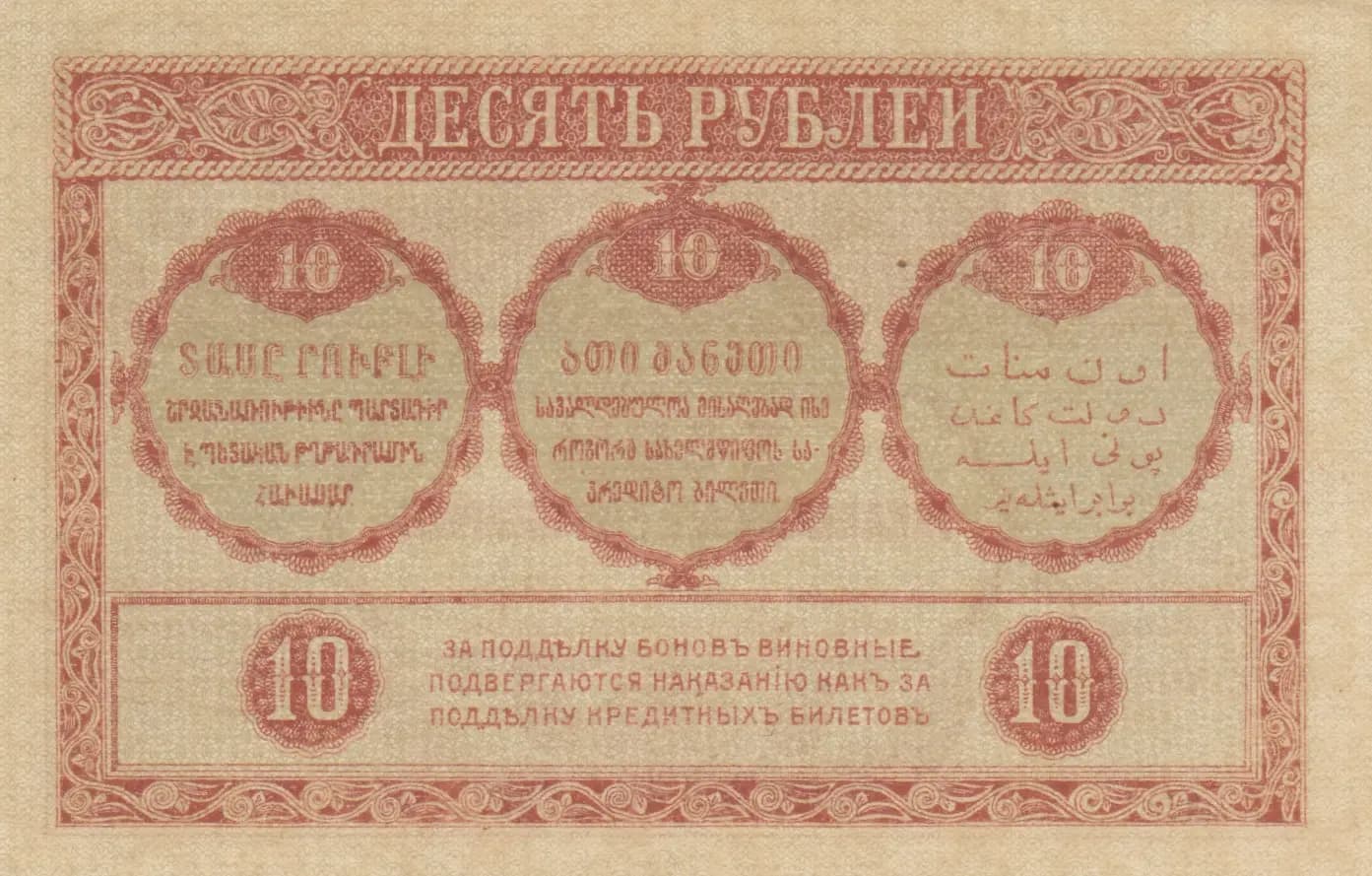
The note employs a classical ornamental design scheme typical of Russian emergency issues of the 1918 period. The front features a symmetrical layout with an elaborate decorative coat of arms or administrative emblem centered at the top, flanked by ornamental scrollwork and corner flourishes in the Art Nouveau style. A prominent red rectangular cartouche in the center-top area serves as a security and design element. The denomination '10 РУБЛЕЙ' is displayed prominently, and handwritten signatures of two officials occupy the lower portion, personalizing this local issue. The reverse side mirrors the elaborate decorative approach with ornate corner designs, floral and scrollwork motifs, and a central decorative circular medallion containing the denomination. The color palette of tan/beige paper with dark blue/black ornamental printing and red accents creates a formal, official appearance despite the note's emergency nature.
FRONT SIDE: 'БАНИНСКАЯ ТОРПАСНАЯ УПРАВА' (Baku/Bakinsk Town Administration); '10 РУБЛЕЙ' (10 rubles - appears twice); 'Арбодской голоса П.Шмаков' (Voice/Representative of the [district] P. Shmakov); 'Членъ Управы П.Боборь' (Member of Administration P. Bobor); additional handwritten text present but largely illegible. BACK SIDE: '10 РУБЛЕЙ' (10 rubles); 'АНХ' (likely printer's mark or abbreviation); '8014' (serial or reference number); 'ПОДПОЛЬНКА ПРЕЗИДУЕТ ЗАКОНОМ' (Underground Presidency by Law - or similar governmental phrase); '1918' (year of issue).
Letterpress printing on colored paper stock, a common method for Russian emergency municipal issues of 1918. The bold, crisp lines of the ornamental borders and the clear rendering of the Cyrillic text are consistent with hand-set type or engraved printing plates. The addition of handwritten signatures suggests manual completion of the notes, with each example potentially being unique or part of limited signature varieties. No security features beyond the ornamental design and red cartouche are evident.
This note represents a specific variety identifiable by the signatures of P. Shmakov and P. Bobor, whose positions are explicitly noted on the note itself. The serial or reference number '8014' visible on the reverse may indicate this as a specific printing run or batch. Variations in this issue would likely exist based on different signatory combinations, as was common with emergency municipal currency where different officials would authorize different batches of notes. The handwritten elements make each note potentially unique within its variety category.