10 rublei 1909
“Sig.Metz”
About This Note
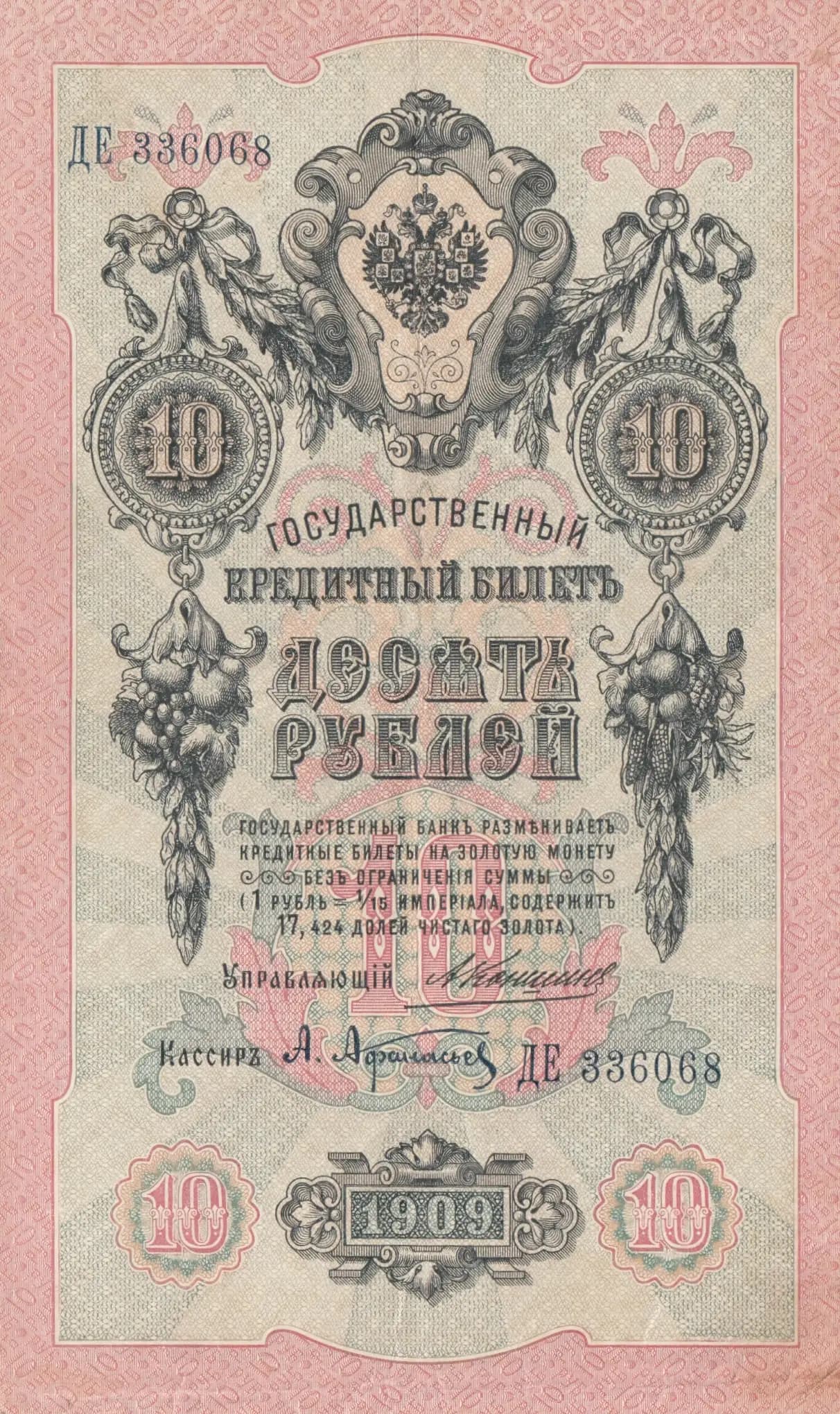
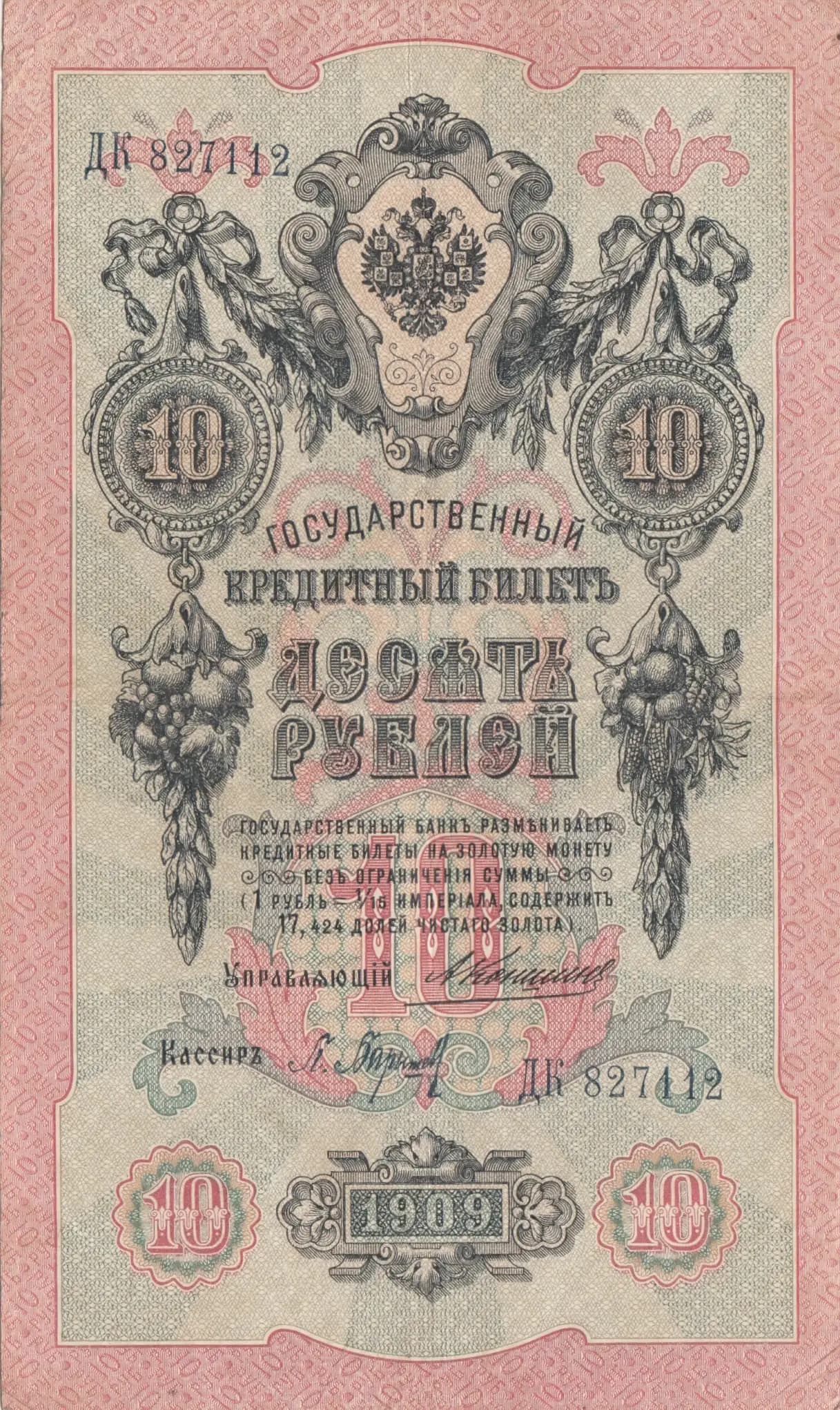
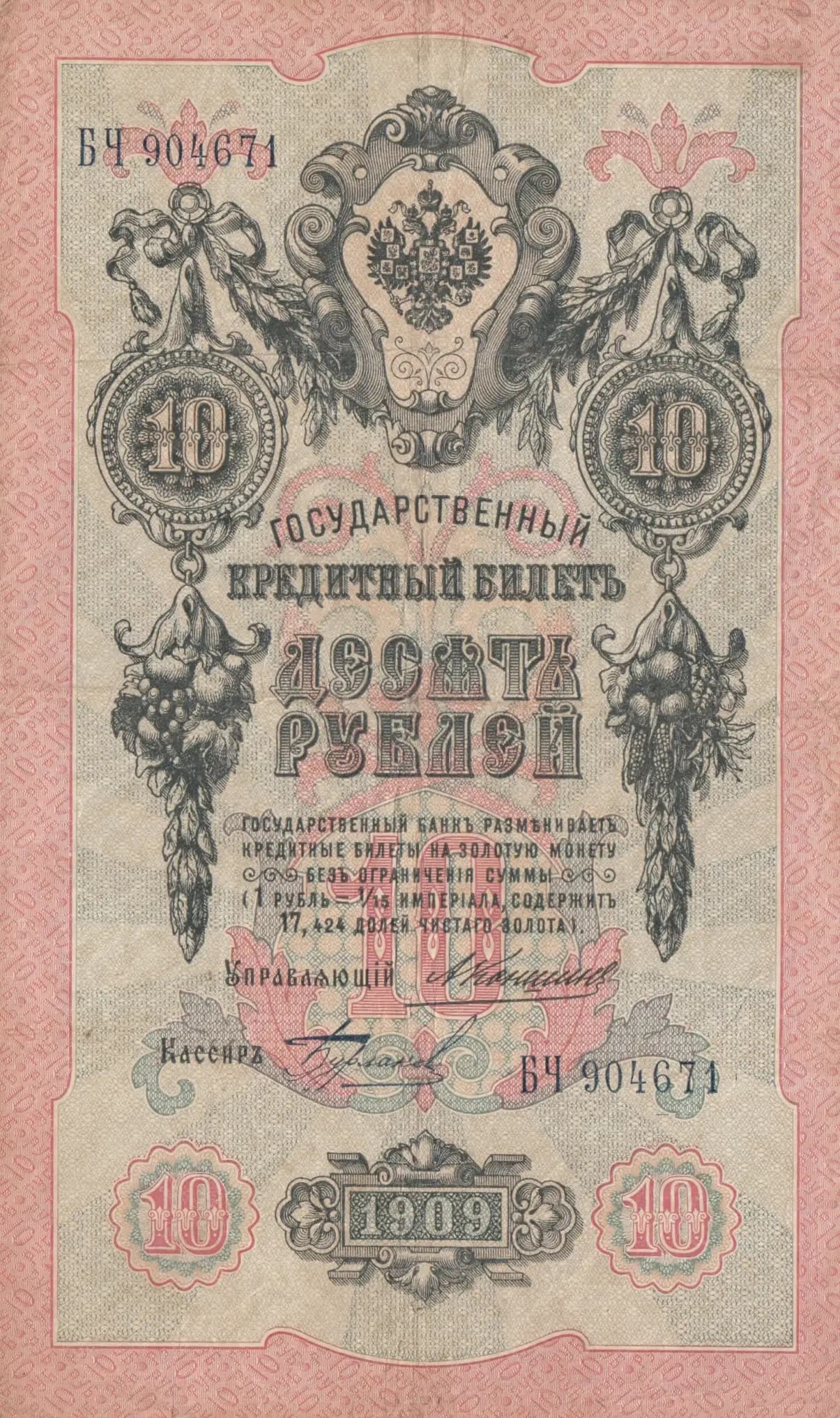
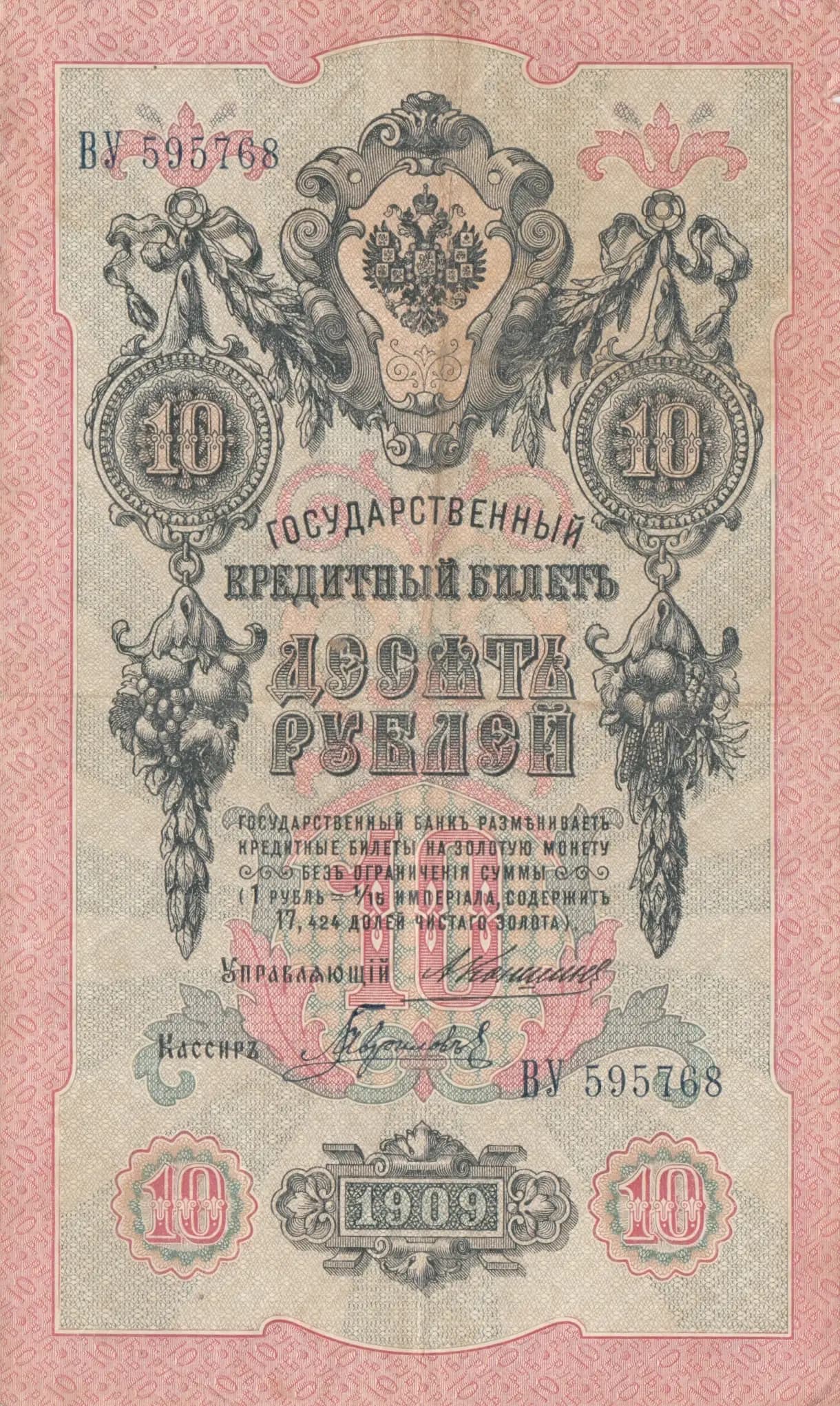
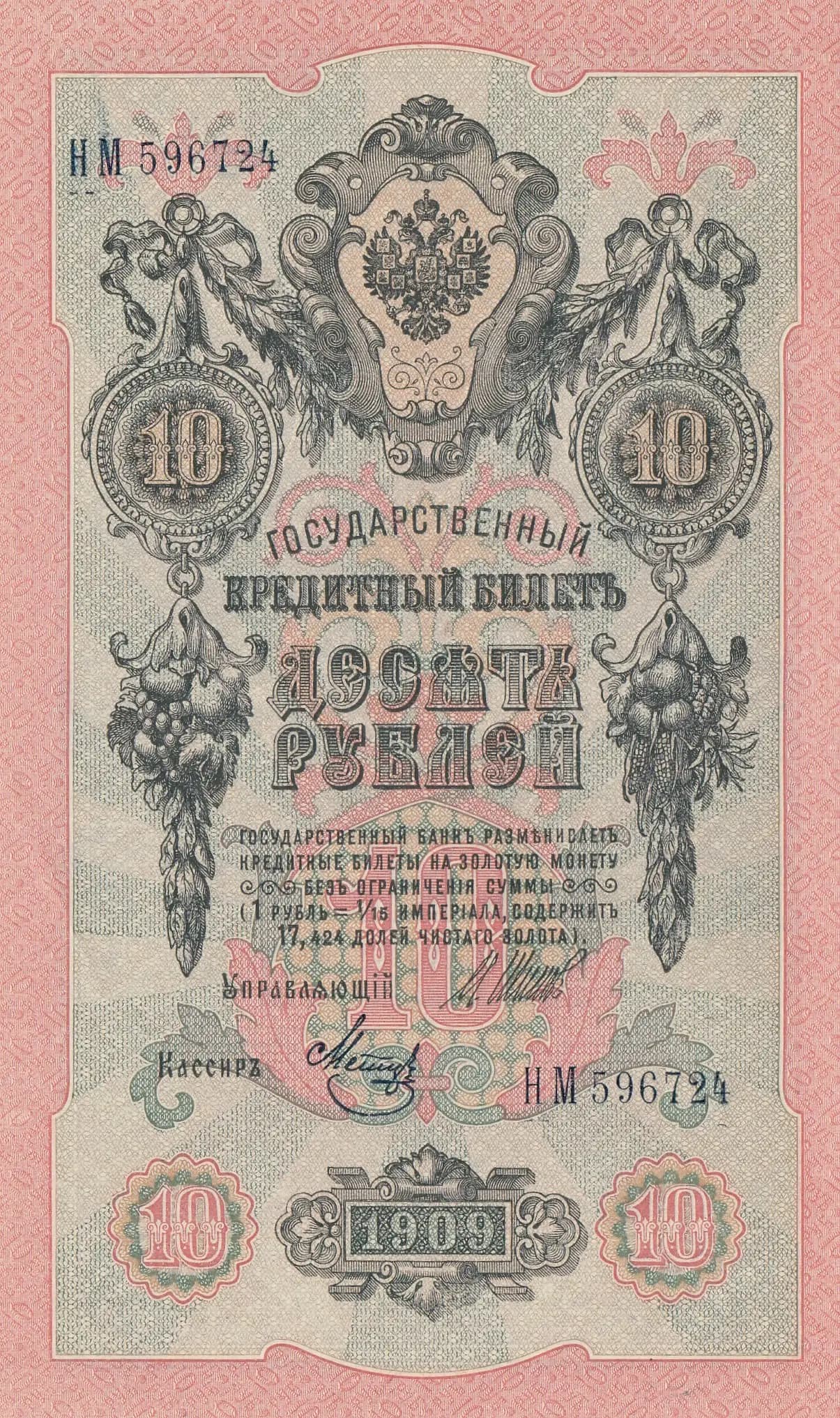
An exceptional example of the 1909 Russian Imperial 10 ruble credit note (Pick P-11c(9)), presented in uncirculated condition with sharp engraving and vibrant pink-cream coloration. The note features an impressive baroque design centered on the double-headed eagle imperial coat of arms flanked by allegorical winged victory figures, with excellent eye appeal and all security details crisp and well-defined. This signature Metz specimen exemplifies the high artistry of Russian Imperial banknote design during the pre-Revolutionary period.
Common. The 1909 10 ruble notes from the main series were issued in substantial quantities throughout the Russian Empire during the final years of Tsarist rule. While uncirculated specimens command premiums over circulated examples, the Pick P-11c(9) designation indicates this is a standard variety within the larger 10 ruble series. No evidence suggests limited print runs, recalls, or other scarcity factors for this particular Pick number. The catalog designation reflects technical variety distinctions rather than rarity of issue.
Issued during the final decade of Tsarist Russia under the gold standard monetary system, this 10 ruble note represents the State Credit Notes (Государственные кредитные билеты) backed by the imperial treasury's gold reserves. The inscriptions explicitly state the note's equivalence to gold coin and the gold content standard (1 ruble = 1/15 Imperial, containing 17.424 parts of pure gold), reflecting Russia's commitment to the gold standard prior to World War I's monetary disruptions. The imperial double-headed eagle and allegorical figures of victory emphasize state authority and legitimacy during a period of significant political and social tension.
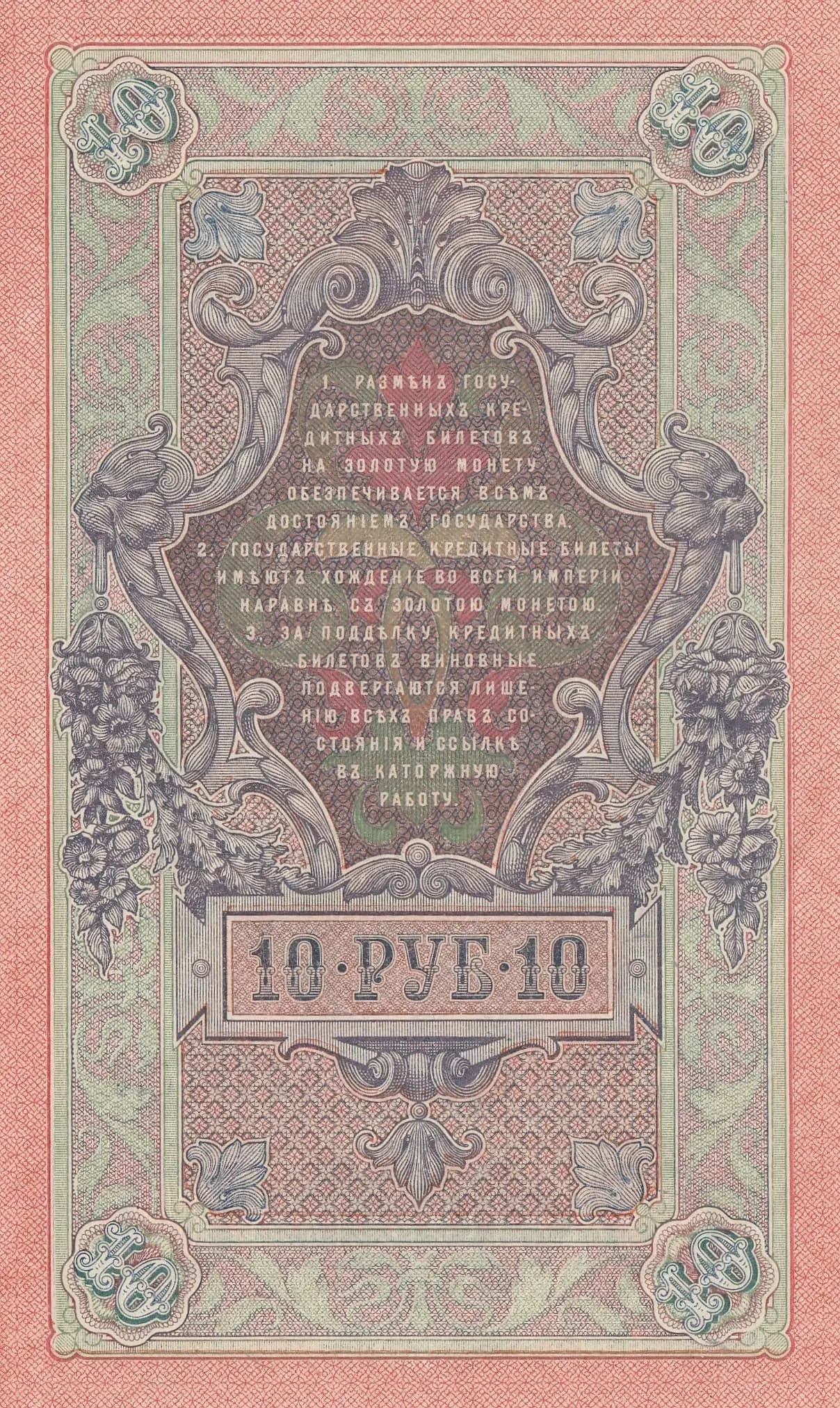
This 10 ruble note exemplifies Imperial Russian banknote artistry of the pre-Revolutionary era. The obverse features a symmetrical baroque composition with the double-headed eagle of the Russian Imperial coat of arms positioned centrally within an ornate cartouche. Flanking the heraldic eagle are two allegorical female figures representing Victory or Fame (Nike-type allegorical figures), each winged and draped, holding wreaths and displaying classical drapery. Below these figures hang grape vine bunches symbolizing prosperity and imperial abundance. Large circular medallions containing the numeral '10' occupy both left and right sides of the note. The entire design is framed by elaborate scrollwork, floral motifs, and baroque ornamental borders rendered in fine line engraving. The reverse presents a more abstract ornamental design with corner medallions, elaborate cartouches, and the full legal text of the note's backing and circulation authority, maintaining the baroque aesthetic with symmetrical scrollwork and architectural framing elements. The color scheme of pink and cream (with greenish-grey tones on reverse) was characteristic of Russian Imperial credit notes from this period.
FRONT SIDE: Header reads 'ГОСУДАРСТВЕННЫЙ КРЕДИТНЫЙ БИЛЕТ' (State Credit Note). Serial number 'HM 596724' appears in top left and bottom right. The note identifies itself as 'КРЕДИТНЫЕ БИЛЕТЫ НА ЗОЛОТУЮ МОНЕТУ' (Credit Notes for Gold Coin) with the specification '(1 РУБЛЬ = 1/15 ИМПЕРИАЛА, СОДЕРЖАТЬ 17,424 ДОЛЕЙ ЧИСТОГО ЗОЛОТА.)' translating to '(1 RUBLE = 1/15 IMPERIAL, CONTAINS 17.424 PARTS OF PURE GOLD.)' Signature lines include 'Кассира' (Cashier) and 'Управляющий' (Manager). Denomination marked as '10' and '10 РУБЛЕЙ' (10 Rubles). BACK SIDE: Contains three legal provisions: '1. ГОСУДАРСТВЕННЫЕ КРЕДИТНЫЕ БИЛЕТЫ НА ЗОЛОТУЮ МОНЕТУ ОБЕСПЕЧИВАЮТСЯ ВСЕМИ ДОСТОЯНИЯМИ ГОСУДАРСТВА' (1. Government Credit Notes for Gold Coin are secured by all assets of the State); '2. ГОСУДАРСТВЕННЫЕ КРЕДИТНЫЕ БИЛЕТЫ ИМЕЮТ ХОЖДЕНИЕ ВО ВСЕЙ ИМПЕРИИ НАРАВНЕ С ЗОЛОТОЮ МОНЕТОЮ' (2. Government Credit Notes circulate throughout the entire Empire equal to gold coin); '3. ЗА ПОДДЕРЖКУ КРЕДИТНЫХ БИЛЕТОВ ВИНОВНЫЕ ПОДВЕРГАЮТСЯ ЛИШЕНИЮ ВСЕХ ПРАВ СОСТОЯНИЯ И ССЫЛКЕ В КАТОРЖНУЮ РАБОТУ' (3. Those responsible for counterfeiting credit notes are subject to loss of all civil rights and exile to hard labor). Denomination '10.РУБ.10' (10 Rubles) appears at bottom center.
This note was produced using steel engraving (intaglio printing), the standard security printing method for Russian Imperial banknotes of the period. The fine line work visible throughout, the crisp detail in the allegorical figures and eagle coat of arms, the complex scrollwork, and the sharp impressions of all text elements are consistent with steel plate engraving. The dual serial numbers, multiple signature lines, and security cartouches reflect the multi-stage printing process typical of State Security Printers. The note was most likely produced by the Imperial Russian State Printing Office (Государственная типография) or contracted security printers authorized by the Ministry of Finance.
This note is cataloged as Pick P-11c(9), placing it within the 1909 series of State Credit Notes. The serial number 'HM 596724' with the 'HM' prefix may indicate a specific printing batch or security printer authorization mark. The signature lines for 'Кассира' (Cashier) and 'Управляющий' (Manager) would have been hand-signed or stamped by specific officials, making each note's signatures a minor variety marker. The collector attribution 'Sig.Metz' suggests this specimen carries provenance from the Metz collection, which may have historical significance for collectors tracking pedigreed examples. Without access to the reverse serial number or additional signature details, this represents a standard variety within the P-11c series, though uncirculated examples with sharp impressions and original coloration would be considered premium examples within the type.