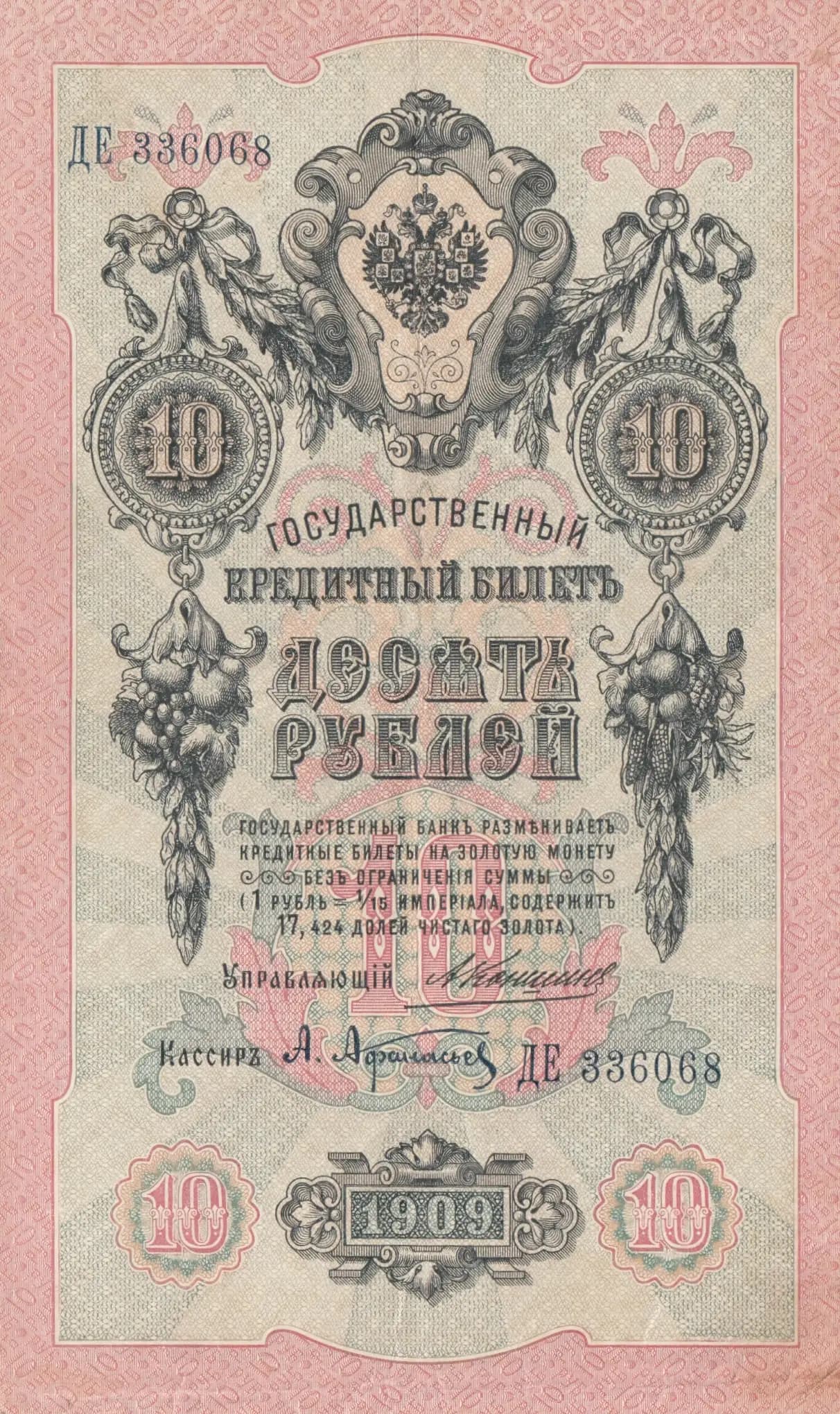
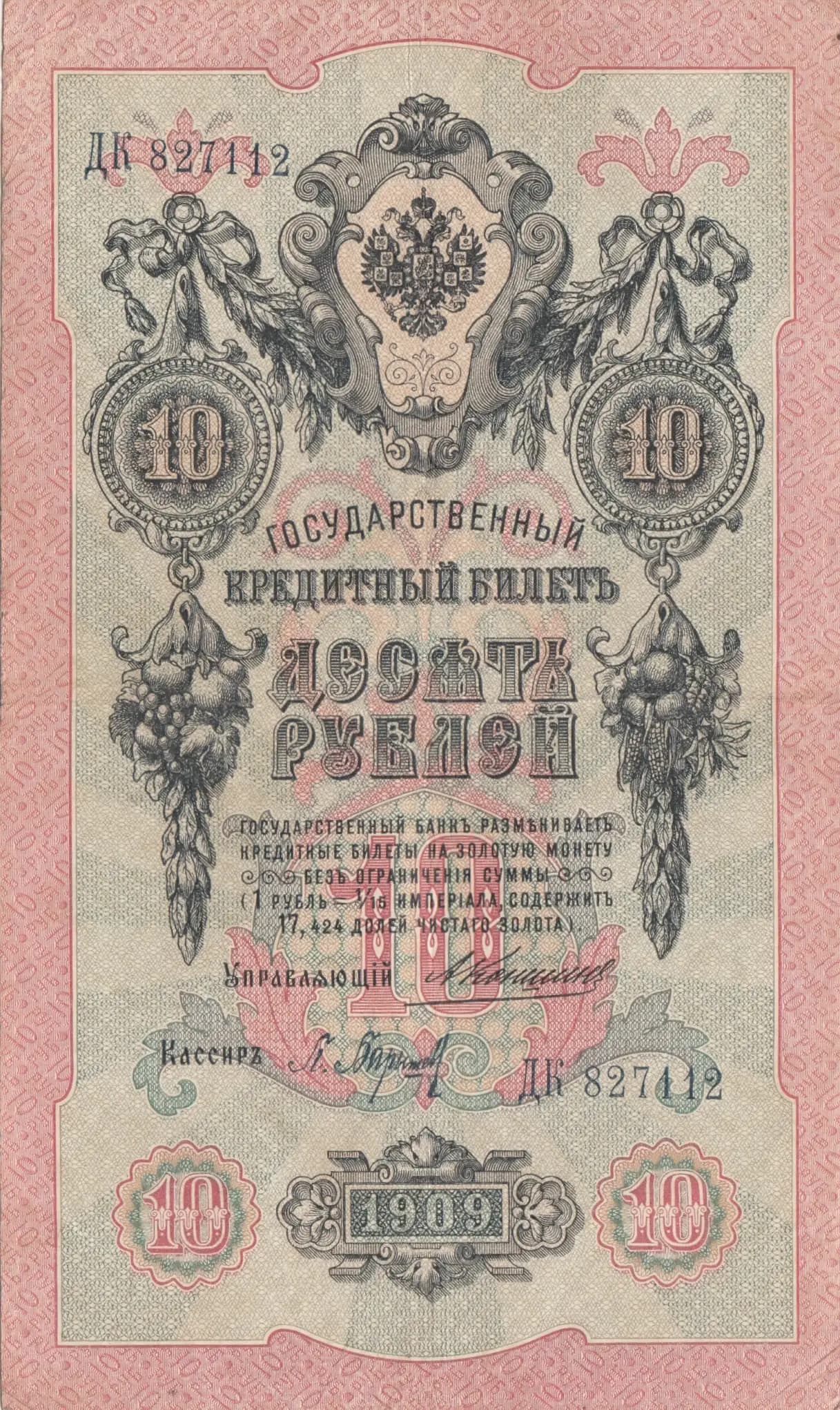
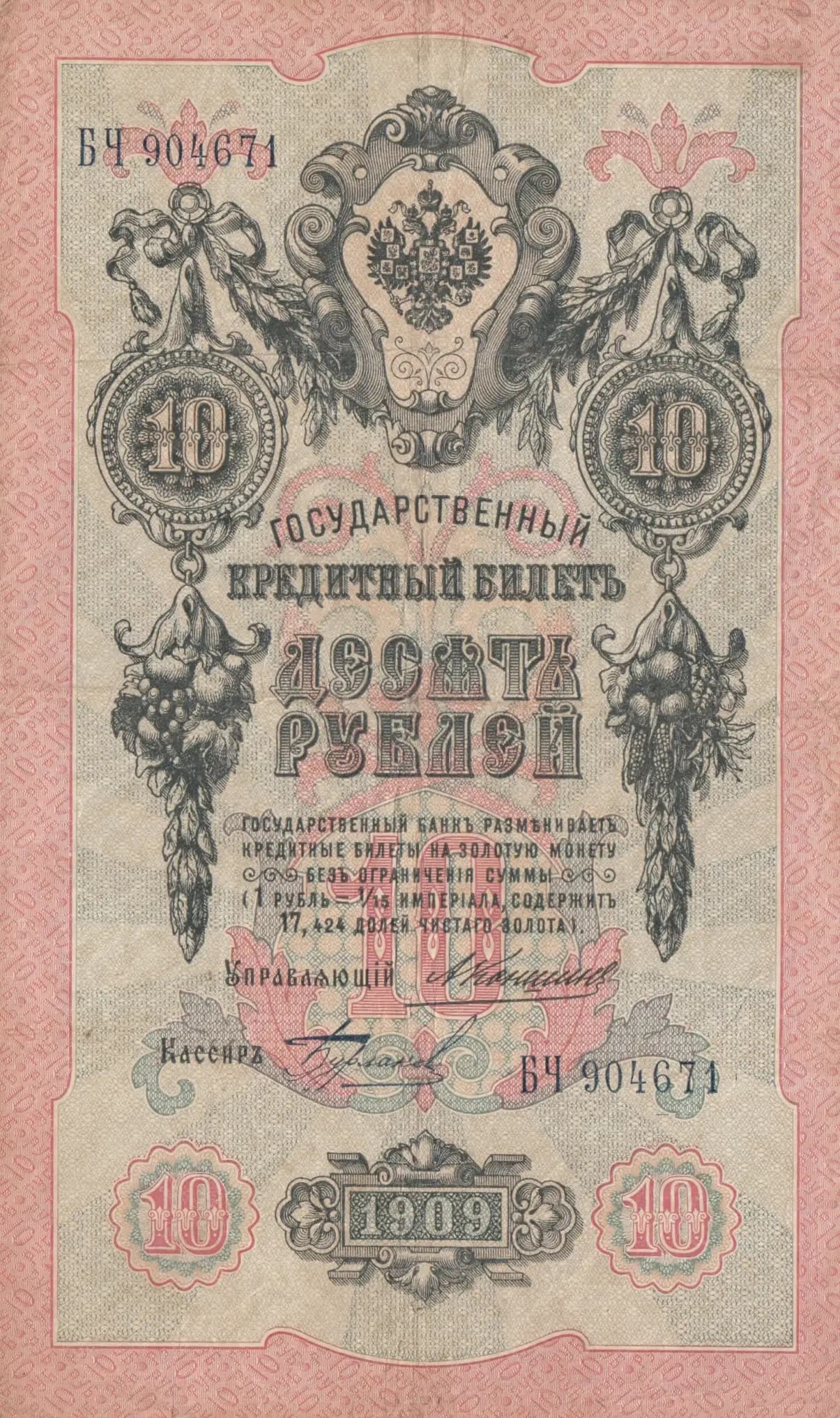
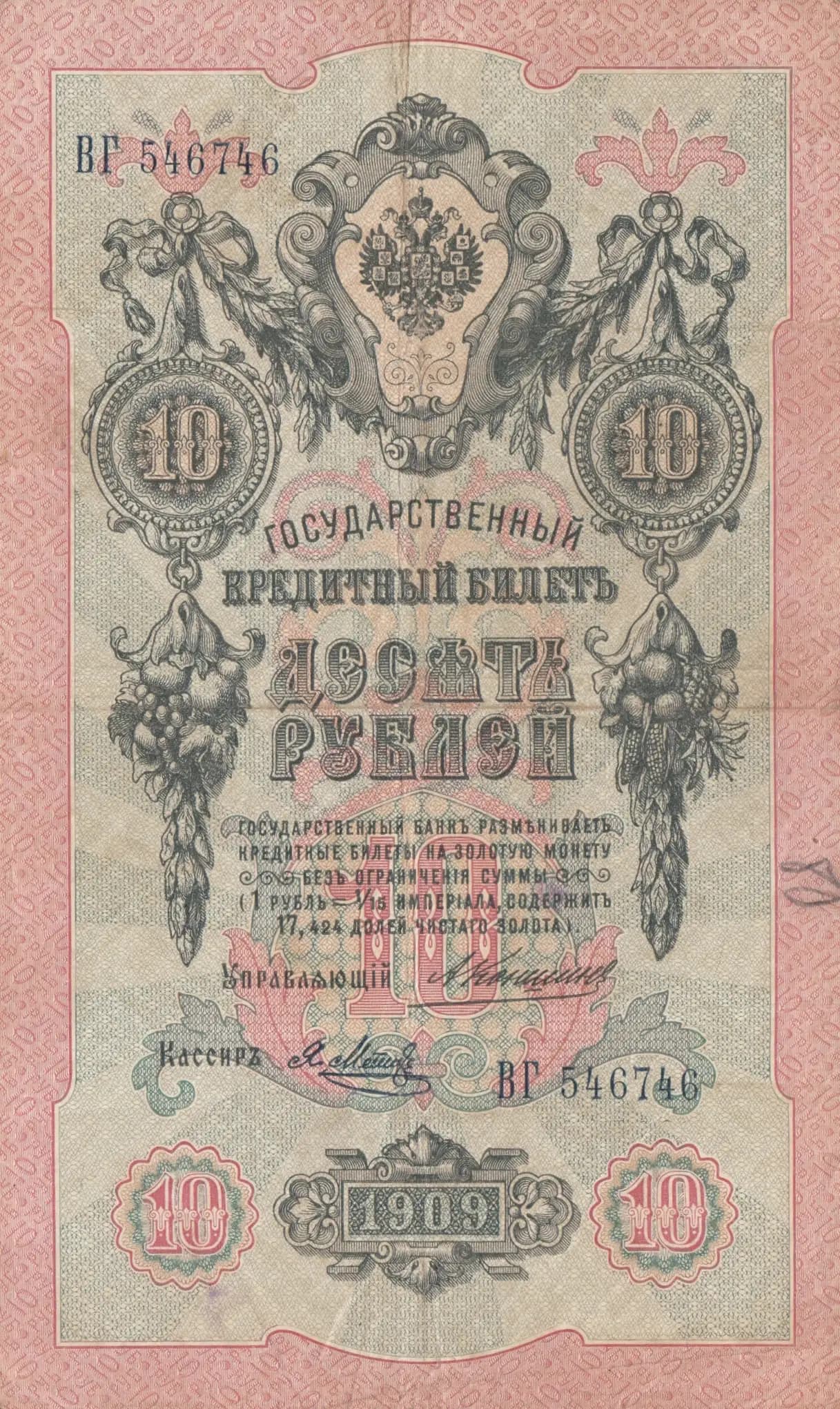
10 rublei 1909
“Sig.Gavrilov”
About This Note
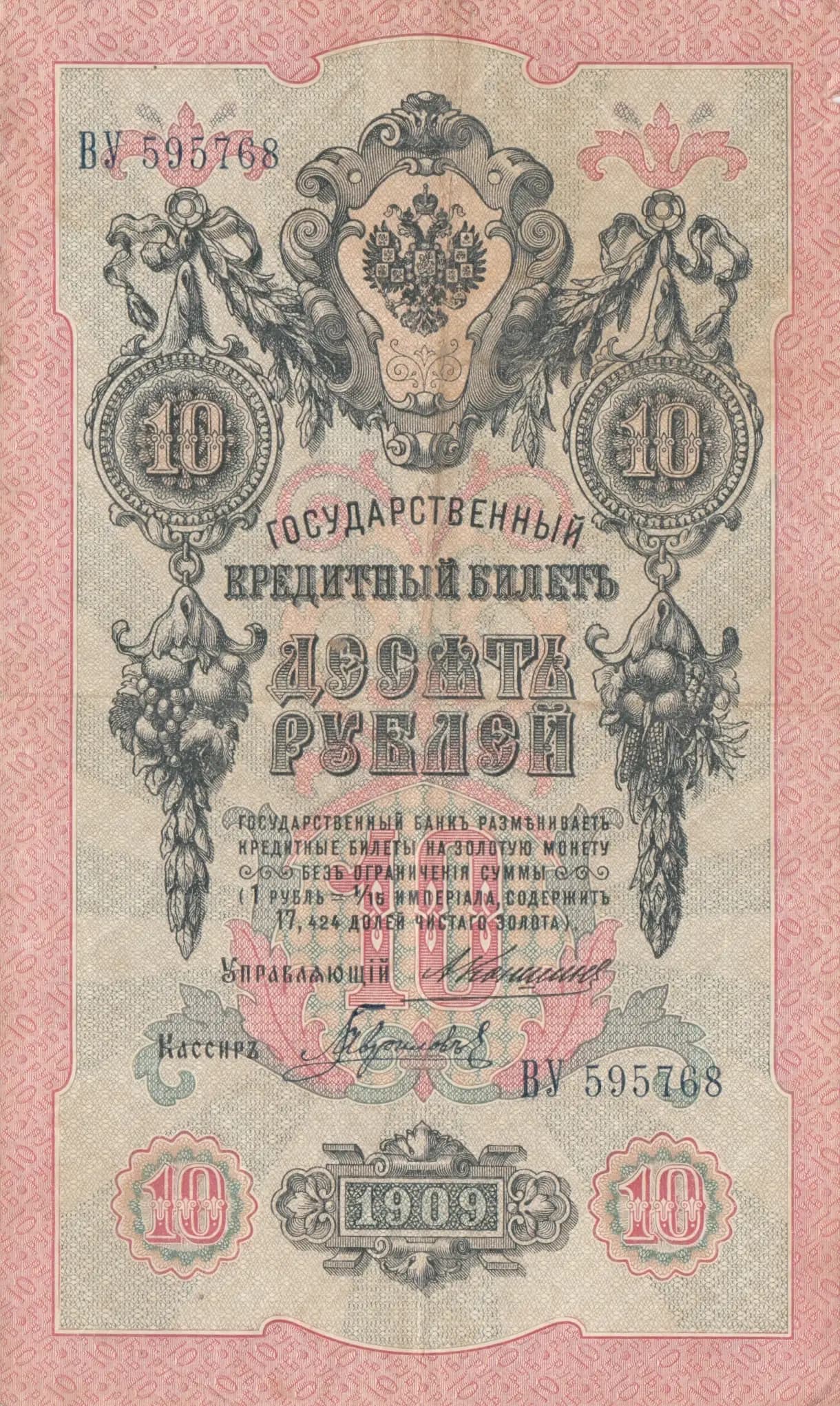
This is a VF-grade 10 Rublei banknote from the Russian Empire's 1909 issue, featuring the characteristic elaborate baroque design of early 20th-century Imperial currency. The note displays excellent condition with minimal wear, light age-related foxing, and the fine engraved ornamentation typical of this series. The presence of signature Gavrilov and serial number BV 595768 indicates this is a documented specimen from a recognized collector provenance.
Common. The 1909 10 Rublei (Pick 11b) was issued in large quantities by the Russian State Bank and remained in circulation until the 1917 Revolution and subsequent currency reforms. Millions of specimens were produced across multiple signature varieties. While VF examples are desirable to collectors, they are regularly available in the numismatic market at modest prices. The presence of a documented signature variant (Gavrilov) does not significantly increase scarcity for this well-documented issue.
Issued during the twilight of the Russian Empire under the gold standard system, this 10 Rublei note represents the peak of Imperial Russian banknote design artistry. The central double-headed eagle with crown and the inscriptions promising gold redemption reflect the Empire's monetary stability during the pre-revolutionary period, while the baroque scrollwork and cherub motifs exemplify the sophisticated engraving techniques employed by the State Bank between 1909 and the 1917 Revolution.
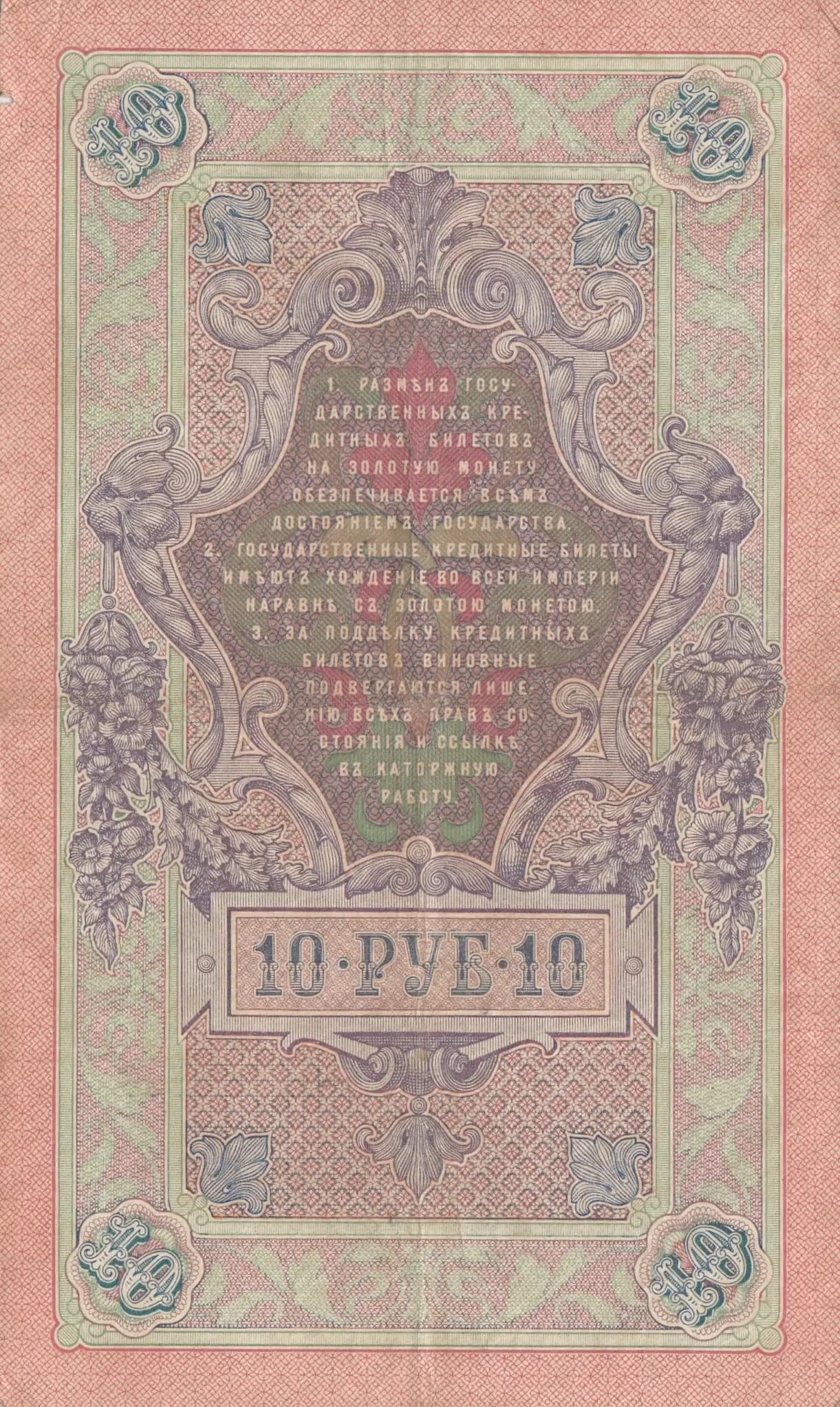
This note features a symmetrical baroque design centered on the Imperial coat of arms—the double-headed eagle with imperial crown in an ornate oval cartouche. Flanking the central emblem on both sides are winged allegorical figures (cherubs or angels) representing state authority and prosperity. The corners contain circular ornamental frames displaying the numeral '10' in Roman and Arabic numerals. Grape vine garlands and elaborate scrollwork border the entire composition in a repeating pattern, particularly prominent at the bottom corners. The front displays the primary design in pink and cream tones with black engraving, while the back employs green, pink, and cream tones for the legal text sections and ornamental frames. The serial number BV 595768 appears twice, following standard Russian Imperial practice.
FRONT: 'ГОСУДАРСТВЕННЫЙ КРЕДИТНЫЙ БИЛЕТ' (State Credit Note); 'ДЕСЯТЬ РУБЛЕЙ' (Ten Rubles); '1909' (year); 'ГОСУДАРСТВЕННЫЙ БАНК РАЗМЕНИВАЕТ КРЕДИТНЫЕ БИЛЕТЫ НА ЗОЛОТУЮ МОНЕТУ СВЕРХ ОГРАНИЧЕНИЯ СУММЫ...' (The State Bank exchanges credit notes for gold coin beyond sum limitation...); 'Кассир' (Cashier); 'Управляющий' (Director); Serial number 'BV 595768' (repeated in upper left and lower right). BACK: '10·РУБ·10' (10 Rubles); 'РАЗДЕЛ 1: ГОСУДАРСТВЕННЫЕ КРЕДИТНЫЕ БИЛЕТЫ НА ЗОЛОТУЮ МОНЕТУ ОБЕСПЕЧИВАЮТСЯ ВСЕМ ДОСТОЯНИЕМ ГОСУДАРСТВА' (Section 1: State Credit Billets backed by gold coin are secured by all the wealth of the State); 'РАЗДЕЛ 2: ГОСУДАРСТВЕННЫЕ КРЕДИТНЫЕ БИЛЕТЫ ИМЕЮТ ХОЖДЕНИЕ ВО ВСЕЙ ИМПЕРИИ НАРАВНЕ СО ЗОЛОТОЮ МОНЕТОЮ' (Section 2: State Credit Billets circulate throughout the Empire on equal footing with gold coin); 'РАЗДЕЛ 3' (Section 3 - legal text regarding counterfeiting penalties).
Intaglio engraving (steel engraving) on watermarked paper. The fine line work, intricate filigree scrollwork, and deeply engraved security details are characteristic of Imperial Russian State Bank notes produced by the St. Petersburg security printing facilities. The complexity of the ornamental borders and the precision of the text indicate master-level engraving work typical of the Czarist monetary production standards.
This specimen represents the P-11b(5) variety, identified by signature combination including Gavrilov. The 1909 10 Rublei issue is known in multiple signature varieties corresponding to different years of issue and ministerial appointments. The serial number prefix 'BV' indicates this note's position within the regular production sequence. No overprints or unusual printings are evident on this example.