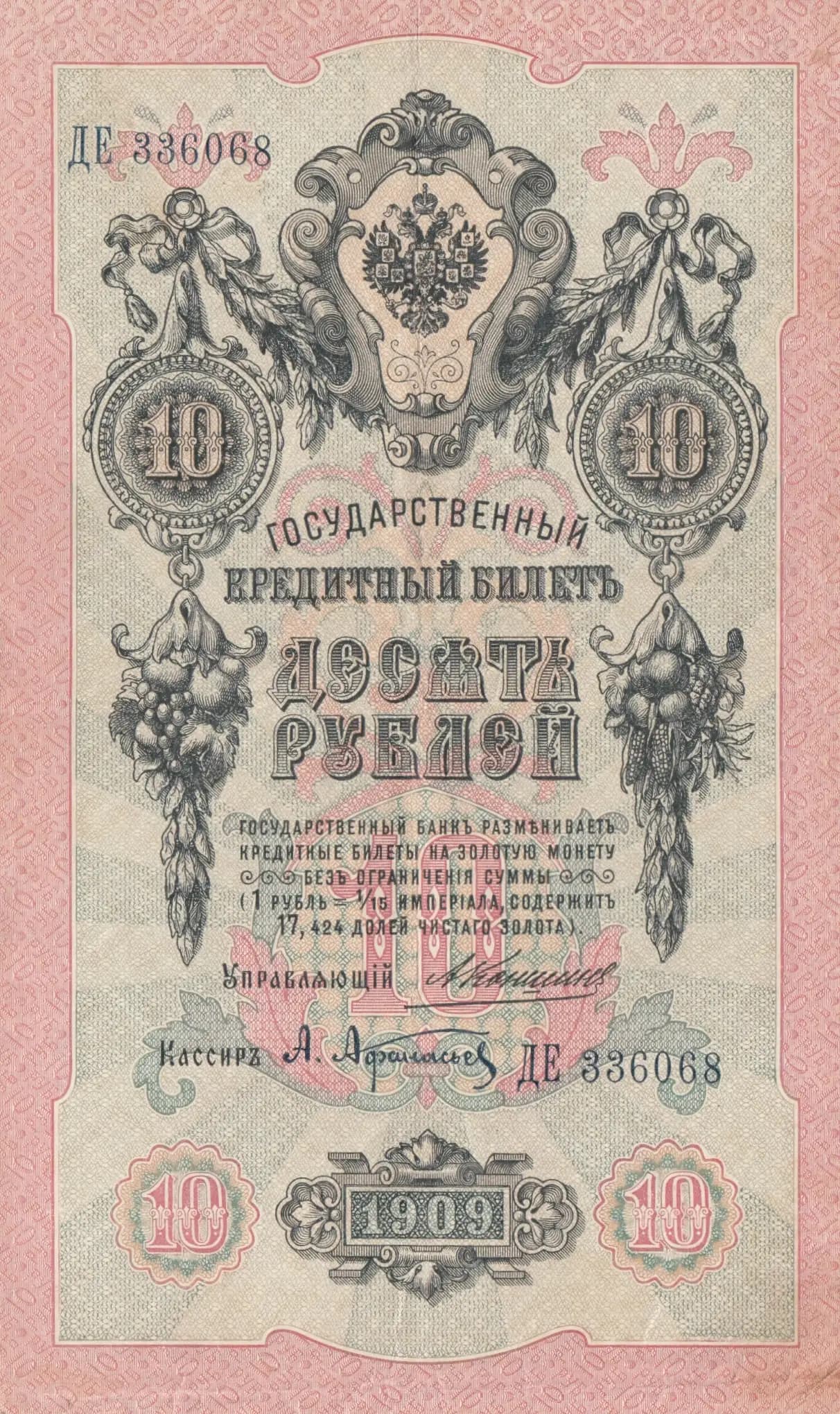
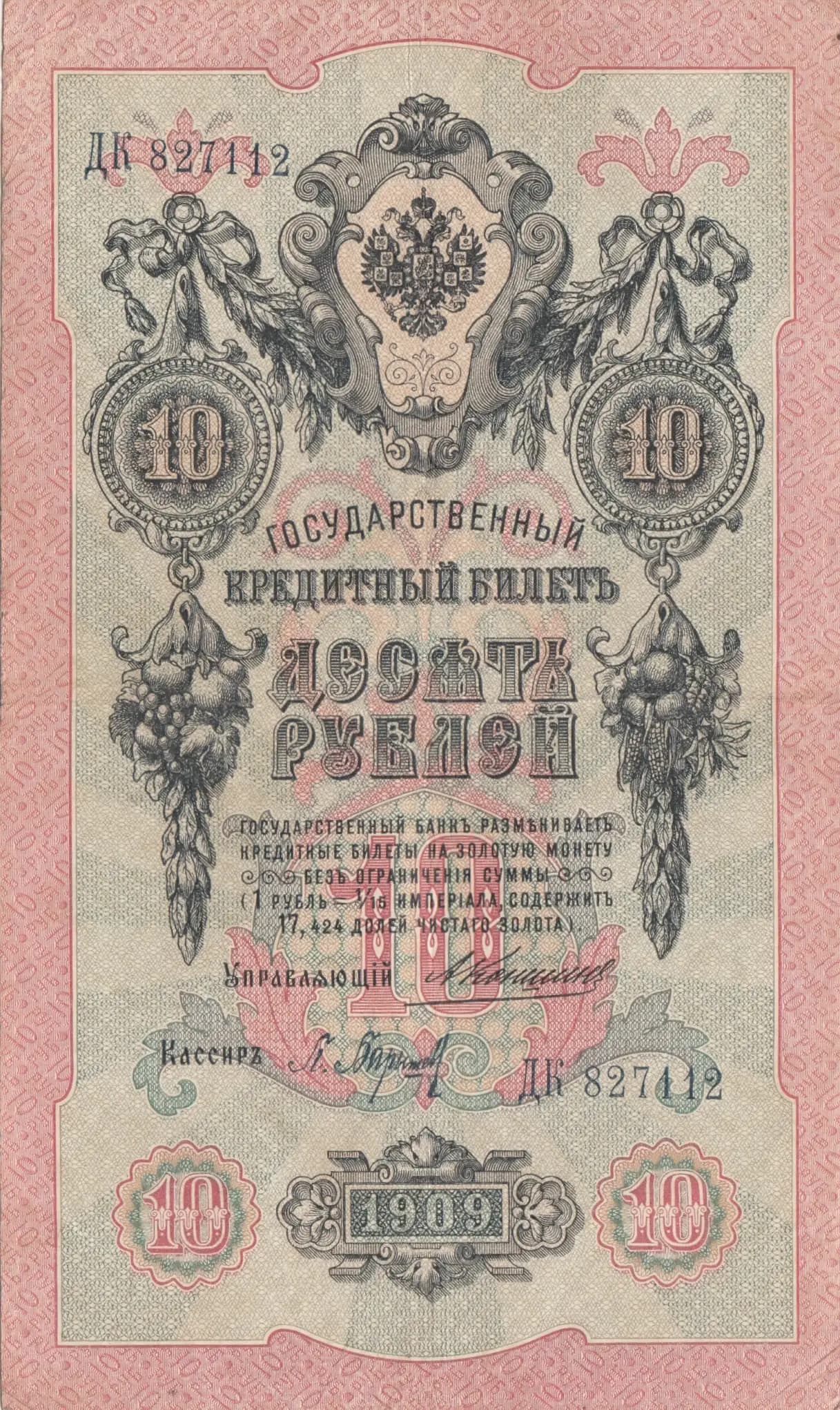
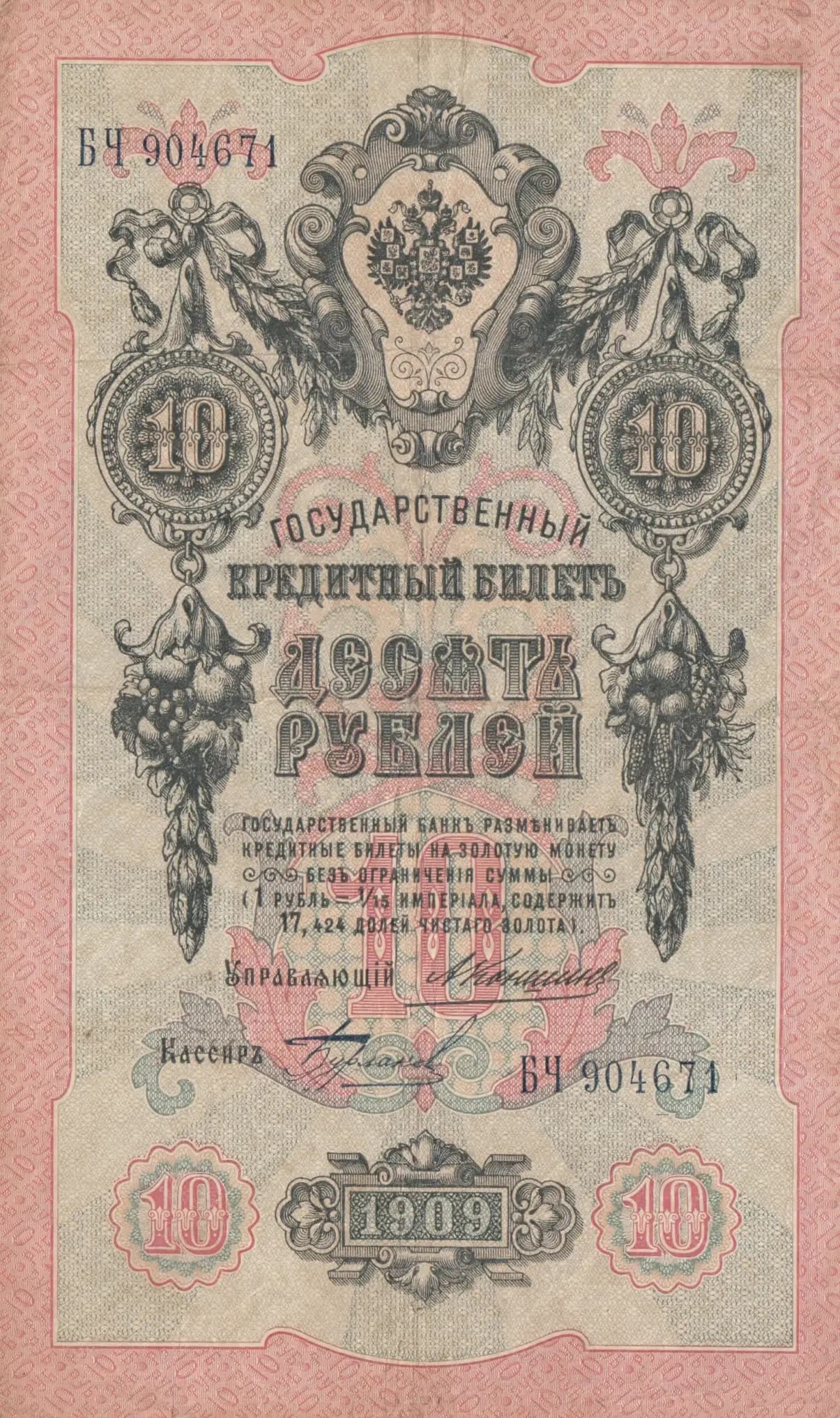
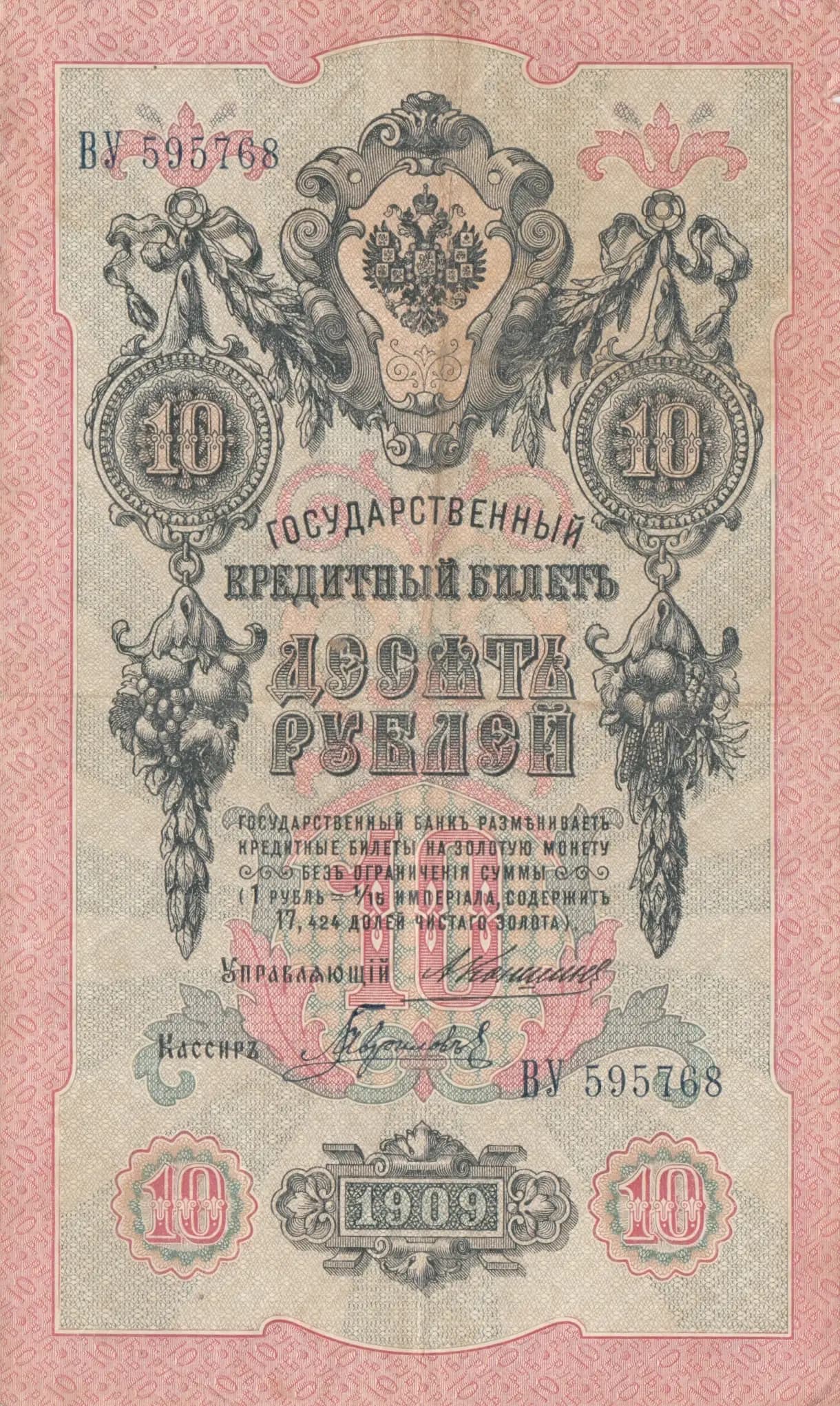
10 rublei 1909
“Sig.Ivanov”
About This Note
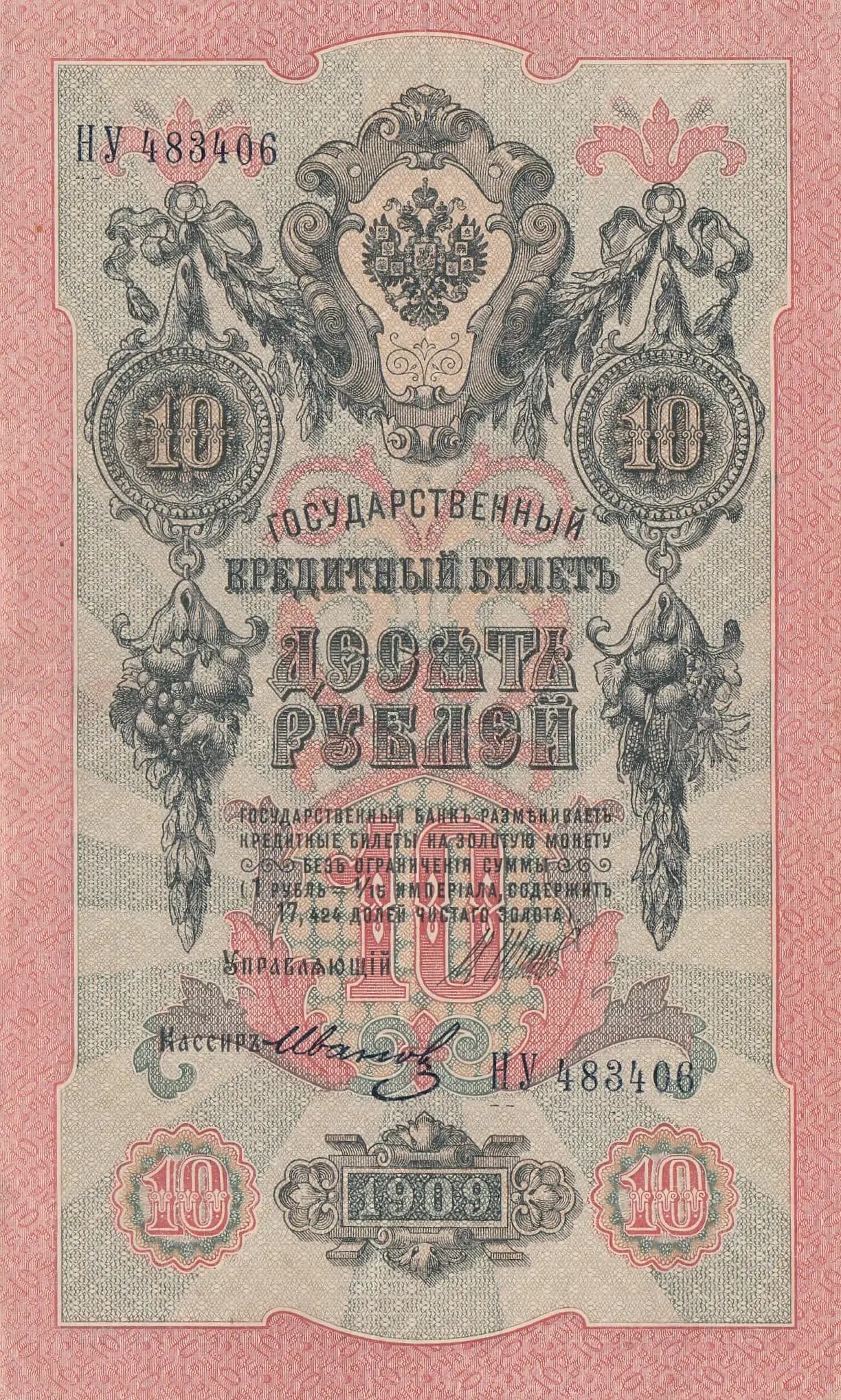
A splendid example of the 1909 Russian Imperial 10 ruble note (Pick-11c(8)), presented in VF condition with vibrant pink/salmon and cream coloring on the obverse. The note showcases exceptional clarity in its baroque ornamental design, featuring allegorical winged female figures flanking the double-headed imperial eagle, with crisp serial numbering and well-preserved fine line engraving throughout. This signature variant represents the mature design period of Russian Imperial credit notes, with excellent color saturation and sharp impression indicating light circulation or careful preservation.
Common. The 1909 10 ruble note was part of the Russian Imperial State Credit Note series issued in large quantities for general circulation throughout the empire. While the Pick-11c(8) designation indicates a specific signature variety, the note itself shows no characteristics of limited distribution or rarity—the print run was substantial, circulation was empire-wide, and surviving examples in various conditions remain readily available to collectors. VF condition examples are moderately desirable but not scarce.
Issued during the final decade of the Russian Empire under the gold standard system, this 1909 note reflects the Tsarist government's commitment to backing its currency with precious metal reserves—a point emphasized by the inscriptions referencing '17,896 days of pure gold' and guaranteed redemption. The Imperial double-headed eagle and elaborate baroque ornamentation symbolized state authority and financial stability during a period of relative economic strength, before the empire's collapse during World War I and the 1917 revolution. The 'Государственный кредитный билет' (State Credit Note) designation underscores the centralized control of currency by the Russian State Bank.
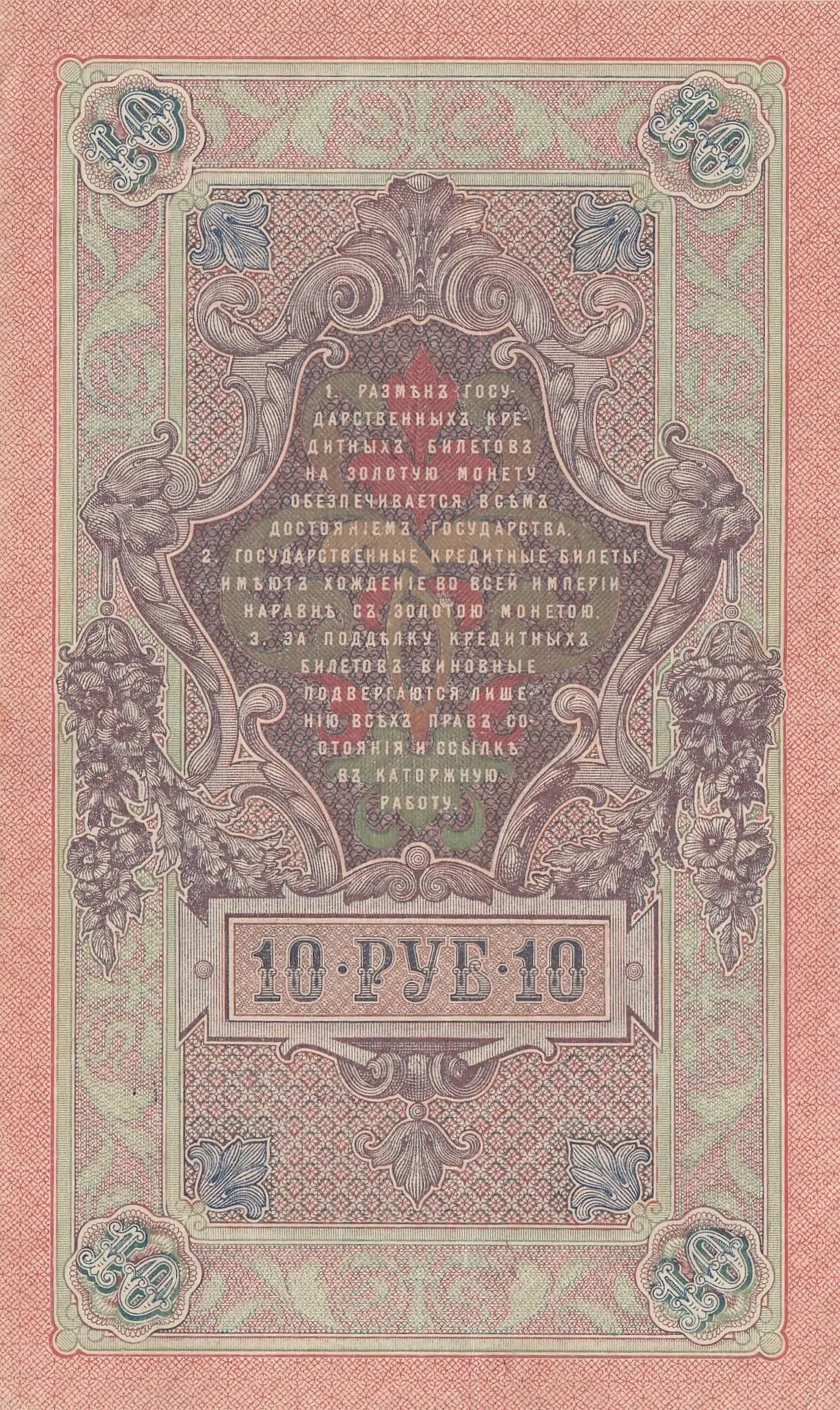
The obverse features a symmetrical baroque composition dominated by the Imperial Russian double-headed eagle (coat of arms) in the center, flanked by allegorical female figures representing Liberty or Commerce, rendered as winged angels in classical style—a common motif in 19th-century European currency design symbolizing state virtues and prosperity. The denomination appears in two prominent circular medallions marked '10' on either side of the central coat of arms. Elaborate ornamental framing includes scrollwork, floral rosettes in pink at top and bottom, and cornucopia designs with grape clusters and fruit in the lower corners, all rendered in fine engraved line work characteristic of high-security banknote production. The reverse continues the ornamental theme with a pale green and pink background, maintaining baroque symmetry with additional cornucopia and scrollwork elements framing a central text cartouche containing the denomination '10 РУБ.' The cream-colored central panel on both sides contrasts with the colored backgrounds to enhance security and visual impact.
FRONT SIDE: 'Государственный кредитный билет' (State Credit Note); 'Десять рублей' (Ten rubles); 'Государственный банк размещает кредитные билеты на золотую монету' (The State Bank places credit notes backed by gold coin); 'Обеспечивается всеми достояние государства' (Guaranteed by all the property of the state); 'Государственные кредитные билеты имеют хождение во всей территории государства Российского' (State credit notes circulate throughout the entire territory of the Russian State); '17,896 дней чистого золота' (17,896 days of pure gold); Serial number: 'НУ 483406' (appears twice); Signature designation: 'Справляющий' (Acting/Managing official); 'Ока 2' (signature marker). BACK SIDE: 'Разменяемых государственных кредитных билетов на золотую монету' (Exchangeable state credit notes for gold coin); 'Обеспечивается всеми достояние государства' (Guaranteed by all the property of the state); 'Государственные кредитные билеты имеют хождение во всей территории государства Российского' (State credit notes circulate throughout the entire territory of the Russian State); '10 РУБ.' (10 rubles, abbreviated).
Steel engraving (intaglio/copperplate printing), the dominant security printing method for Russian Imperial banknotes of this period. The intricate baroque patterns, fine line work in background designs, sharp serial numbering, and detailed floral engravings are consistent with high-quality intaglio production. The multiple color pass printing (requiring separate plates for pink/salmon, green, cream, and black elements) indicates the use of specialized security printers serving the Russian State Bank—likely the St. Petersburg or Moscow state printing facilities that produced Imperial currency during this era.
The Pick-11c(8) designation indicates this is the '(8)' signature variety of the 11c type. The signature designation 'Справляющий' (Acting Managing official) and the marker 'Ока 2' indicate a specific signing official variant. Russian Imperial notes of this period show multiple signature varieties as different officials cycled through roles; collectors distinguish these by signature blocks, location, and official titles. The serial number prefix 'НУ' (NU in Cyrillic) may indicate a specific printing batch or series number, which can be relevant for variety classification among knowledgeable collectors, though this is not universally cataloged. The 1909 date and this design remained in circulation and production into the early 1910s with signature variations.