10 rublei 1909
“Sig.Bubyakin”
About This Note
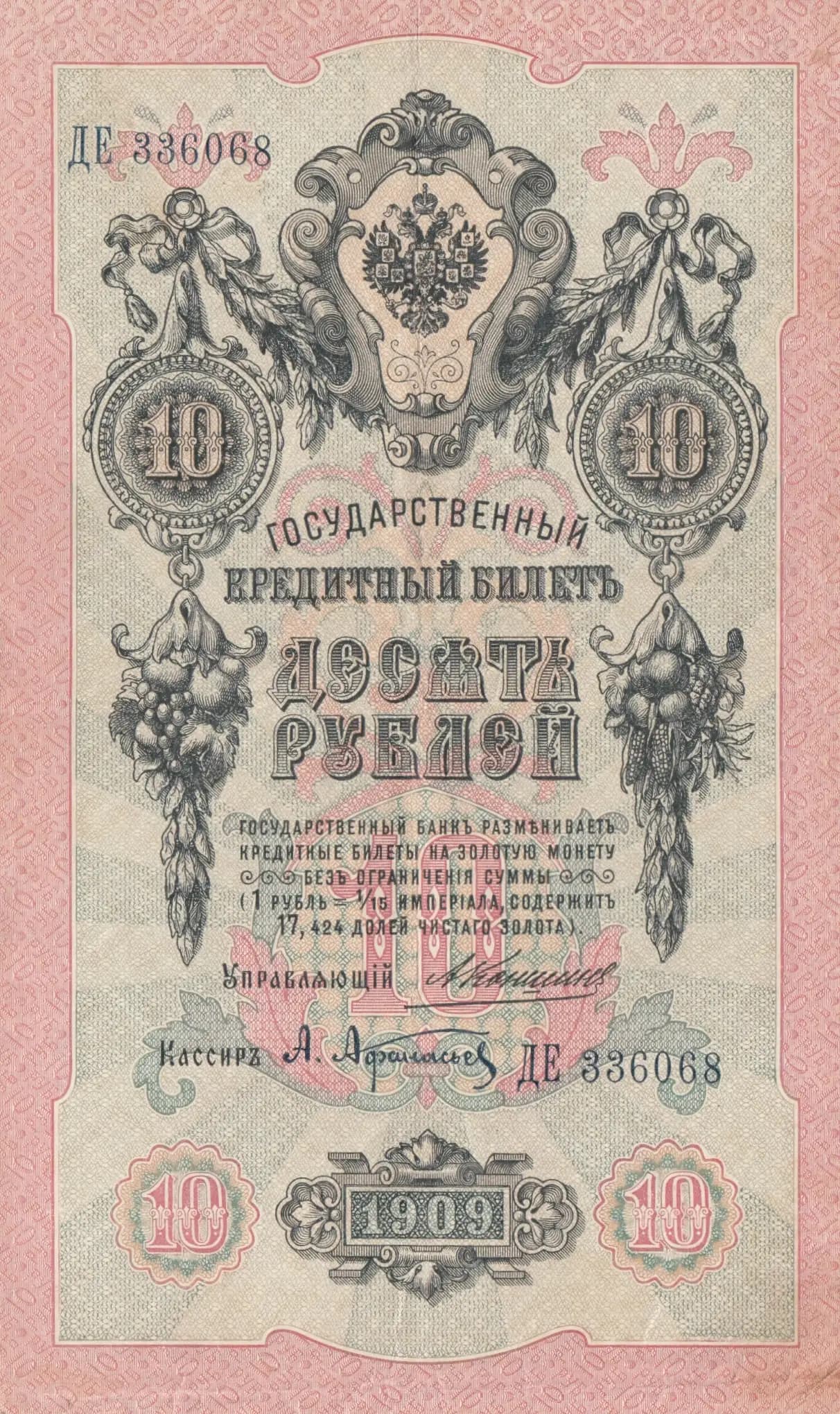
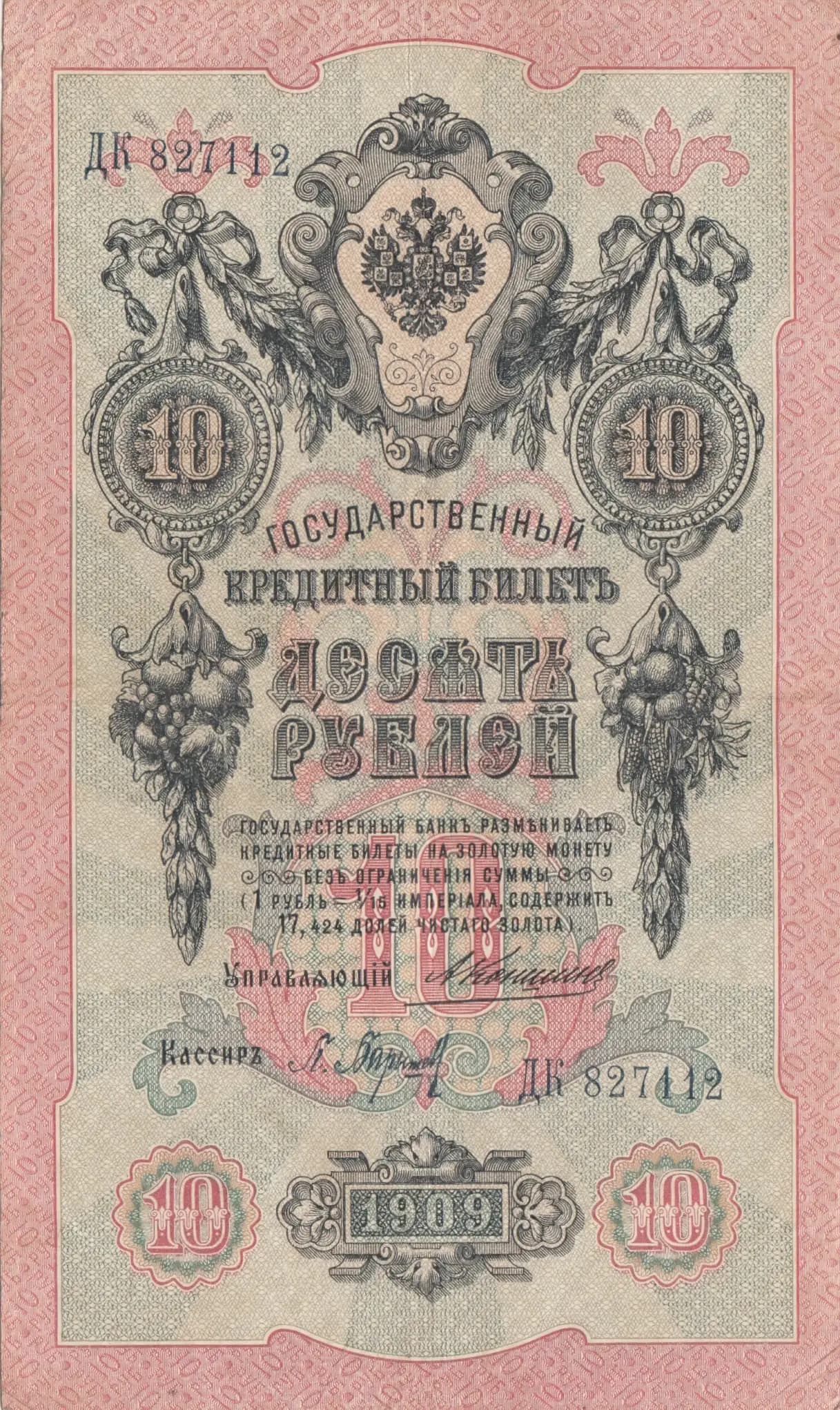
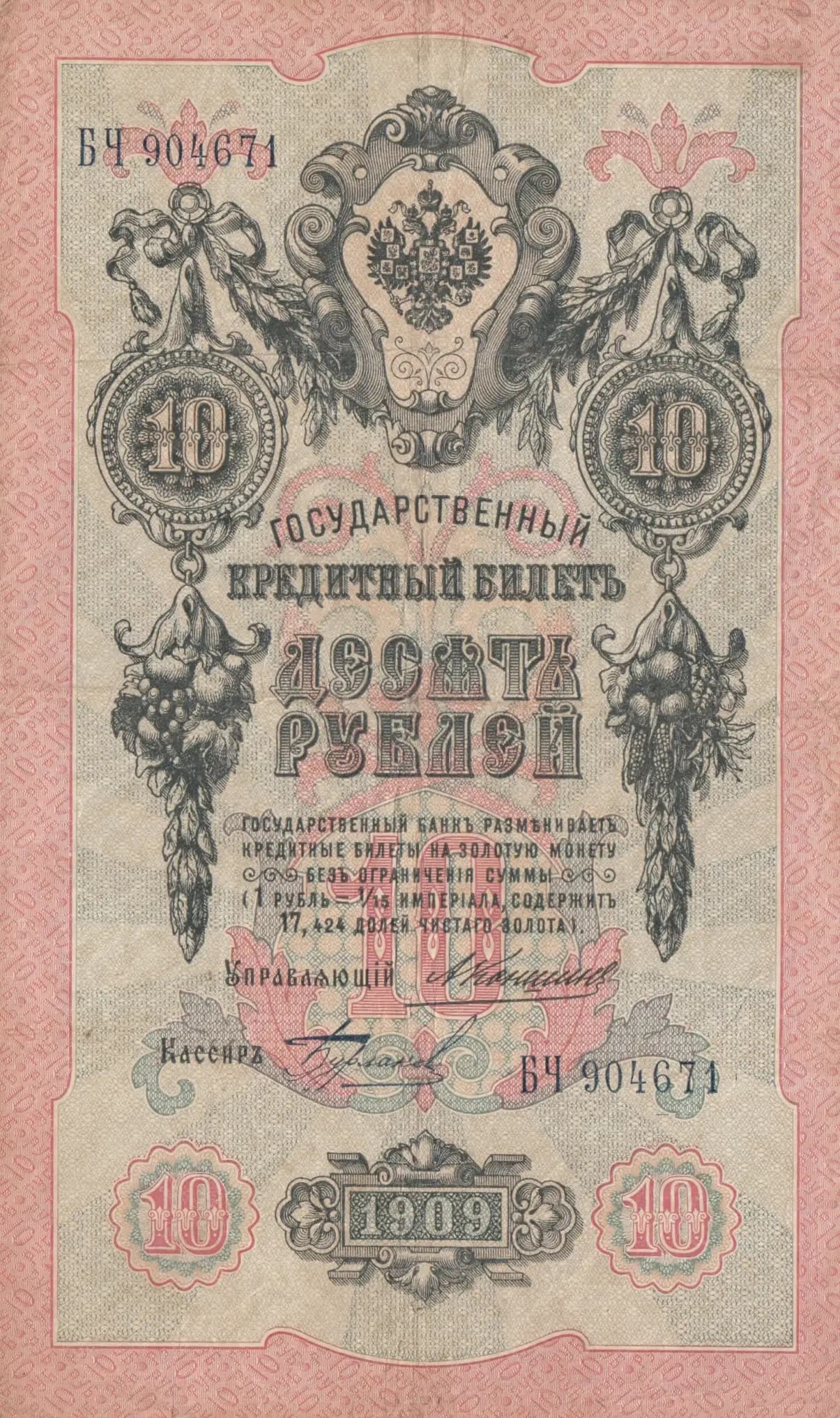
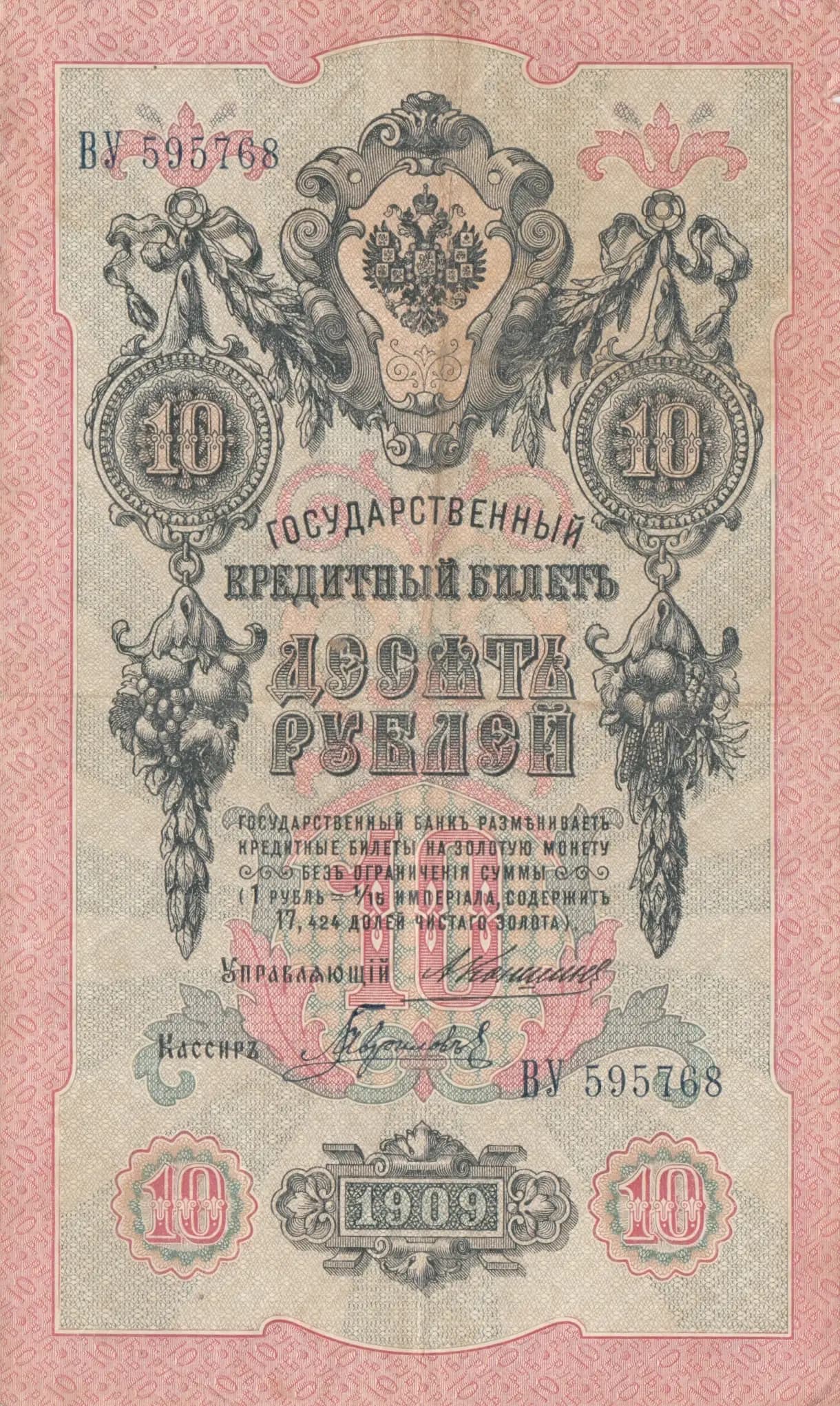
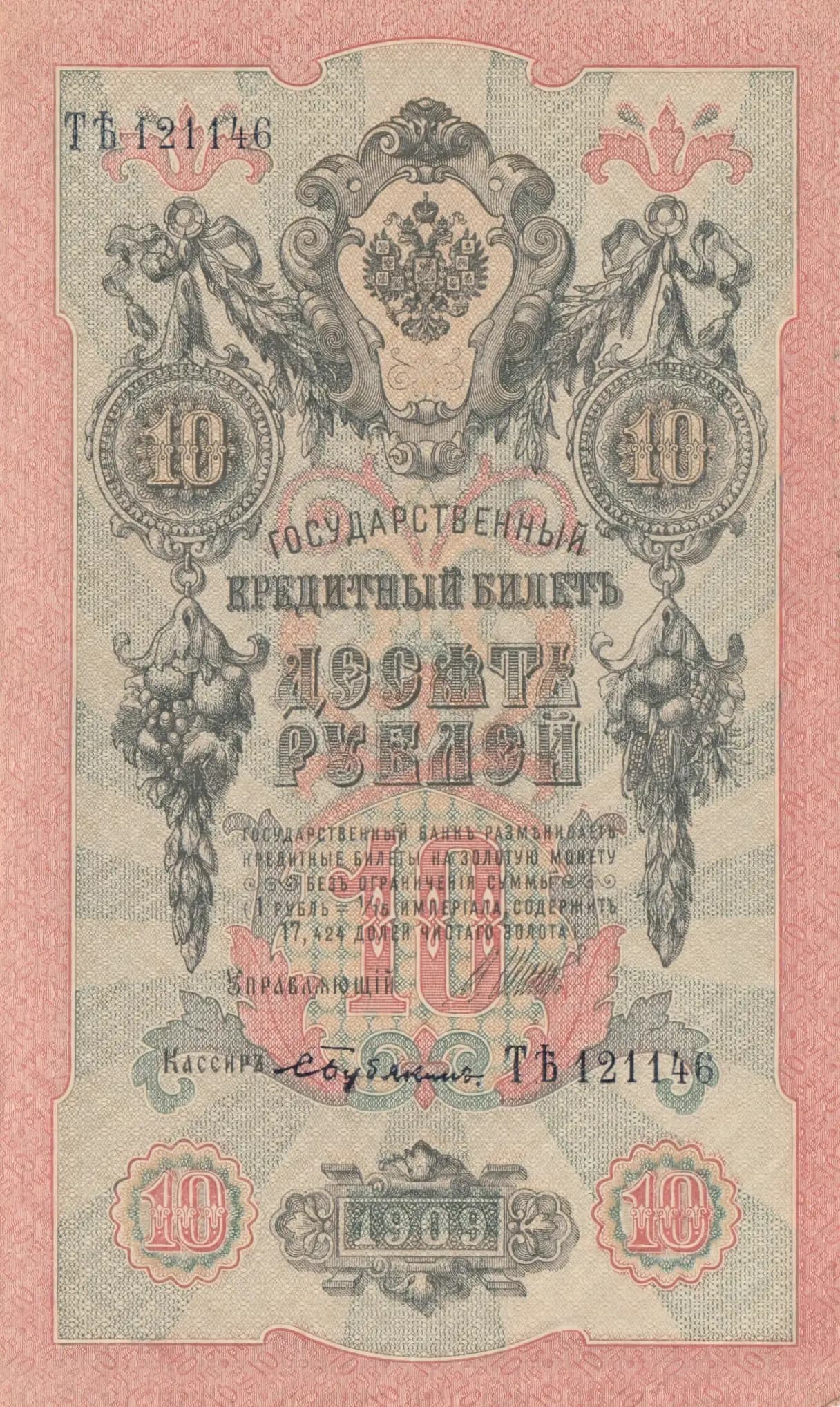
This is an AU-graded 10 Rubles note from the 1909 Imperial Russian State Credit Note series, cataloged as Pick P-11c(4). The note displays the characteristic ornate baroque design of the Russian Empire's early 20th-century currency, featuring allegorical winged female figures flanking the Imperial double-headed eagle, rendered in pink/rose and cream tones with fine engraving detail. While showing natural aging consistent with circulated early-20th-century currency—including foxing and some creasing—the note retains strong visual clarity and fine detail that validates its AU grade, making it a desirable example of Russian Imperial monetary history.
Common. The 1909 Imperial Russian 10 Rubles notes (Pick P-11c and variants) were issued in substantial quantities during a period of monetary stability in the Russian Empire, prior to the disruptions of World War I and the Revolution. While individual notes from this series survive in various conditions, AU-graded examples are regularly encountered in the numismatic market. No short print runs, special recalls, or extreme scarcity factors apply to this Pick number. The Pick P-11c(4) designation indicates a known variant within a series that was not limited in production.
This 1909 credit note was issued during the reign of Tsar Nicholas II, following the monetary reforms of 1897 that established the gold standard for the Russian Empire. The inscription 'ГОСУДАРСТВЕННЫЙ КРЕДИТНЫЙ БИЛЕТ' (State Credit Note) and the promise of exchange for gold coin reflect the monetary system established under Finance Minister Sergei Witte, which aimed to stabilize the ruble and integrate Russia into the international gold standard system. The note's elaborate allegorical imagery—featuring winged muses or representations of national virtue—was typical of Imperial Russian design philosophy, presenting the state's financial authority through classical and artistic symbolism.
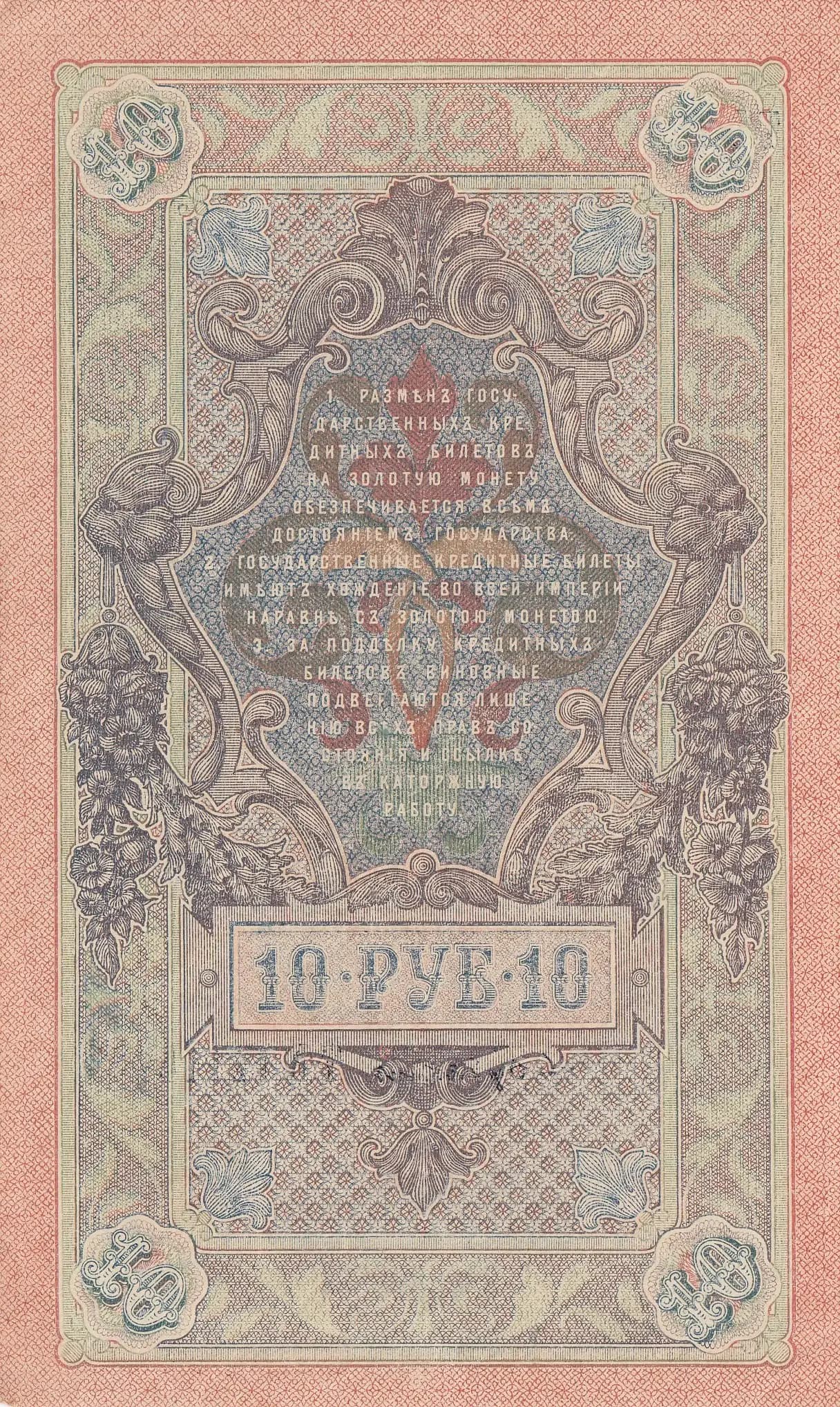
The front of this 10 Rubles note features a classical allegorical composition centered on the Imperial Russian double-headed eagle coat of arms. On either side of the eagle stand two winged female figures in flowing classical robes—representations of Liberty, Justice, or other state virtues in the allegorical tradition of European currency design. The composition is framed by ornamental baroque scrollwork with grape bunch motifs positioned in the lower corners, symbolizing prosperity and abundance. Circular denomination cartouches bearing '10' are positioned on the left and right margins. The back features a large ornate rectangular frame enclosing the statutory text regarding gold redemption and legal tender status, also decorated with scrollwork and grape motifs. The color scheme of pink/rose background with cream central vignettes was characteristic of the 1909 Imperial Russian series.
FRONT SIDE: 'ГОСУДАРСТВЕННЫЙ КРЕДИТНЫЙ БИЛЕТ' = State Credit Note; 'ДЕСЯТЬ РУБЛЕЙ' = Ten Rubles; 'ГОСУДАРСТВЕННЫЙ БАНК РАЗМЕНИВАЕТ КРЕДИТНЫЕ БИЛЕТЫ НА ЗОЛОТУЮ МОНЕТУ' = The State Bank exchanges credit notes for gold coin; 'Касса' = Cashier/Treasury; Serial numbers visible: 'Th-121146' and 'Тб 121146'. BACK SIDE: '10 РУБЛЕЙ' = 10 Rubles; Legal text: 'РАЗМЕНА 1 СОТ. ГОСУДАРСТВЕННЫХ КРЕДИТНЫХ БИЛЕТОВ НА ЗОЛОТУЮ МОНЕТУ ОБЕСПЕЧИВАЕТСЯ ДЕНЕЖНЫМИ СРЕДСТВАМИ ГОСУДАРСТВА. ГОСУДАРСТВЕННЫЕ КРЕДИТНЫЕ БИЛЕТЫ ИМЕЮТ ХОЖДЕНИЕ ВО ВСЕЙ ИМПЕРИИ НАРАВНЕ СО ЗОЛОТОЮ МОНЕТОЮ И ЗА ПОДЛЕЖАТ ВЗЫСКАНИЮ СИНЕЕ ПОЛОВ. ВКЛАДВ 1908 Г.' = The exchange of one hundred state credit notes for gold coin is guaranteed by the monetary resources of the state. State credit notes are legal tender throughout the entire empire on equal terms with gold coin and are not subject to collection. Blue series. Issue of 1908.
This note was produced using fine-line steel engraving (intaglio printing), the standard security printing method for Imperial Russian credit notes of this period. The extremely fine detail visible in the ornamental backgrounds, the allegorical figures, and the baroque scrollwork demonstrates the high-security engraving standards employed by the Russian Imperial State Printing works. The complexity of the interlocking lines and the precision of the portrait work are characteristic of intaglio production. The printer for this series was the Russian Imperial State Printing Office (Государственная типография), located in St. Petersburg.
The catalog designation P-11c(4) indicates this is the fourth identified variety of the P-11c type. Varieties in this series typically relate to signature combinations (visible signature 'Соуленко' or similar appears in the lower center area), serial number prefixes, or minor design revisions. The serial number 'Th-121146' and its Cyrillic variant 'Тб 121146' suggest this note belongs to a specific printing block. Collector notation references 'Sig.Bubyakin,' which may relate to a signature variant or collection provenance rather than a distinct rarity marker. The 1908/1909 dating in the inscriptions relates to the legislative authorization and issue date sequence of the Imperial note series.