10 rublei 1909
“Sig.Y.Metz”
About This Note
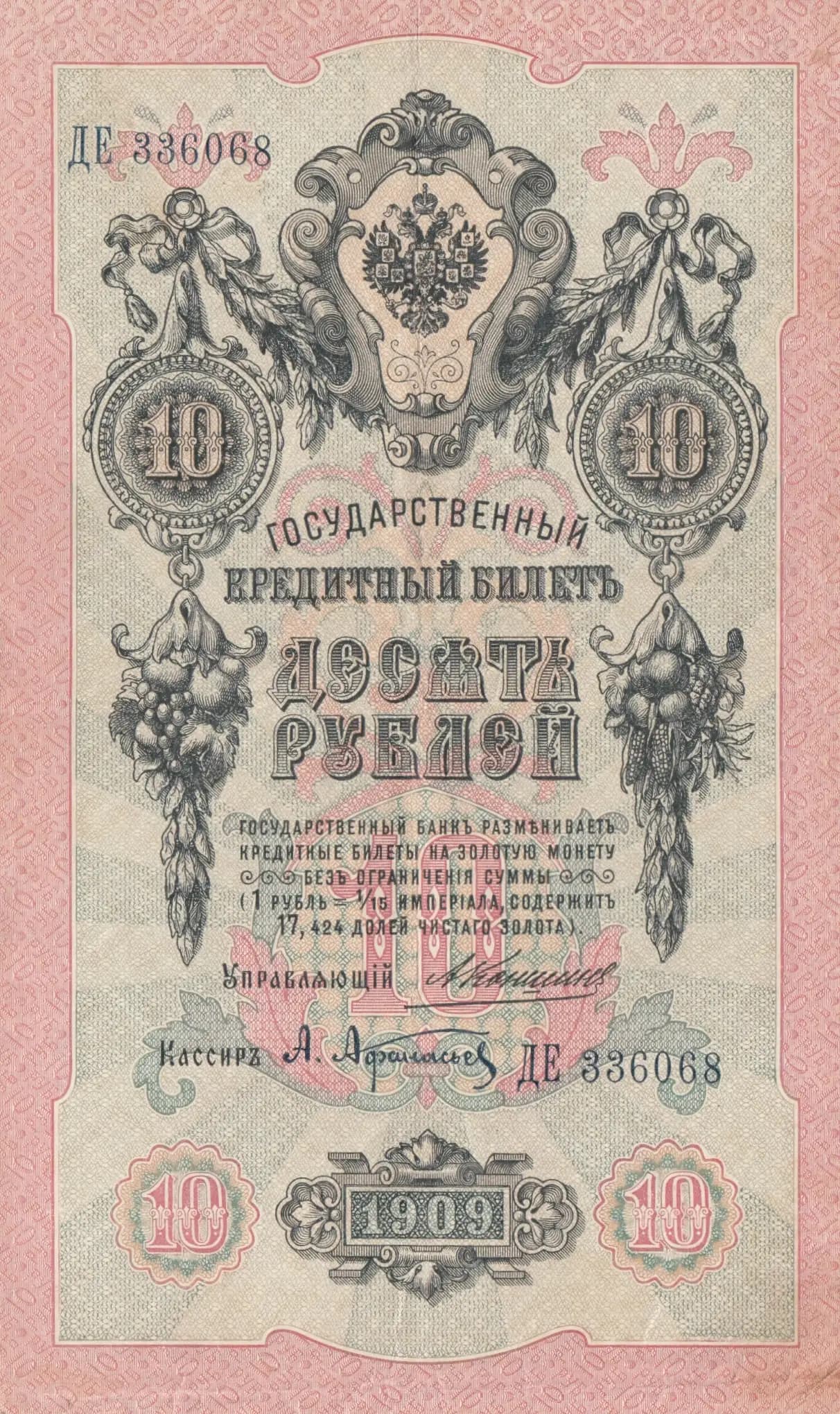
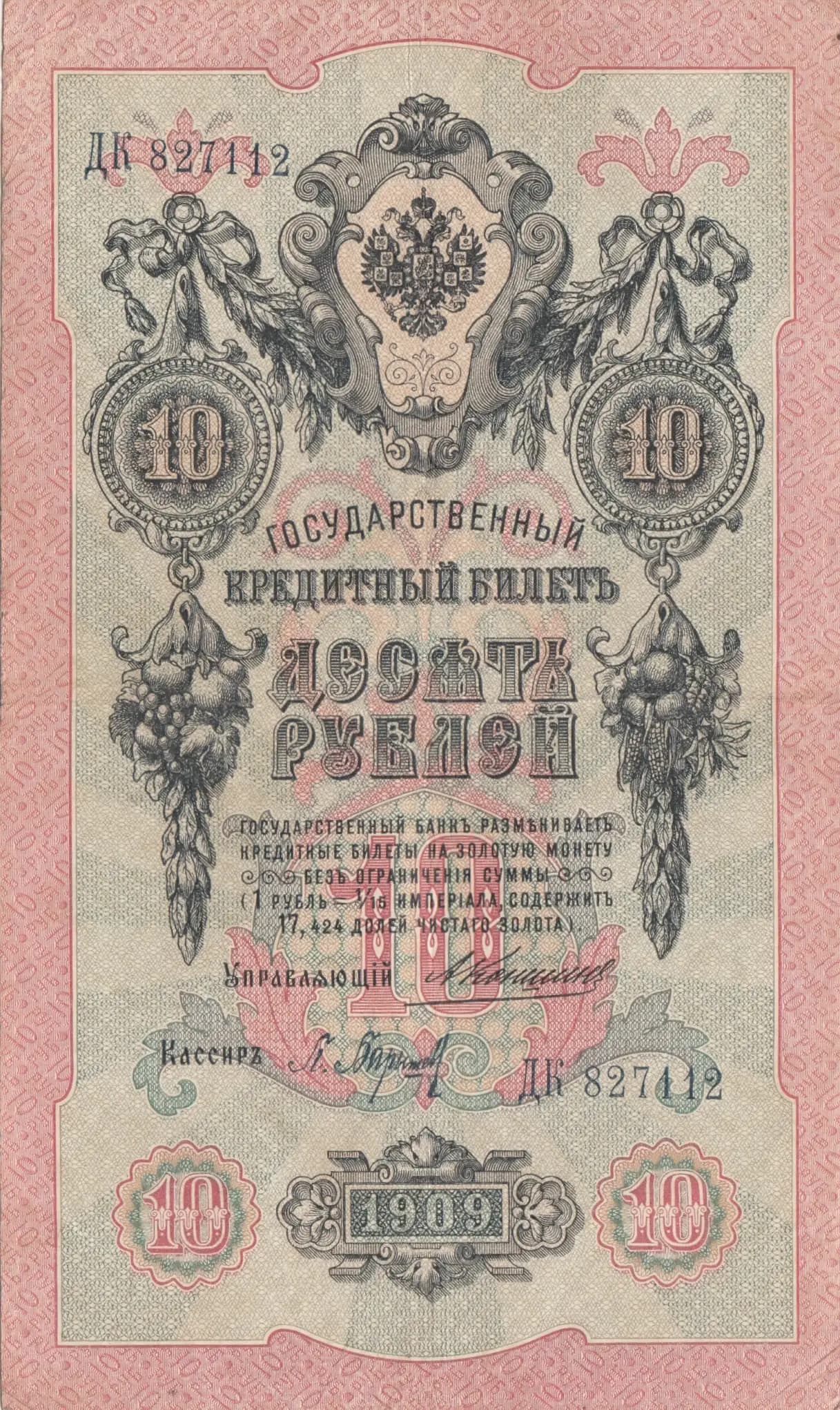
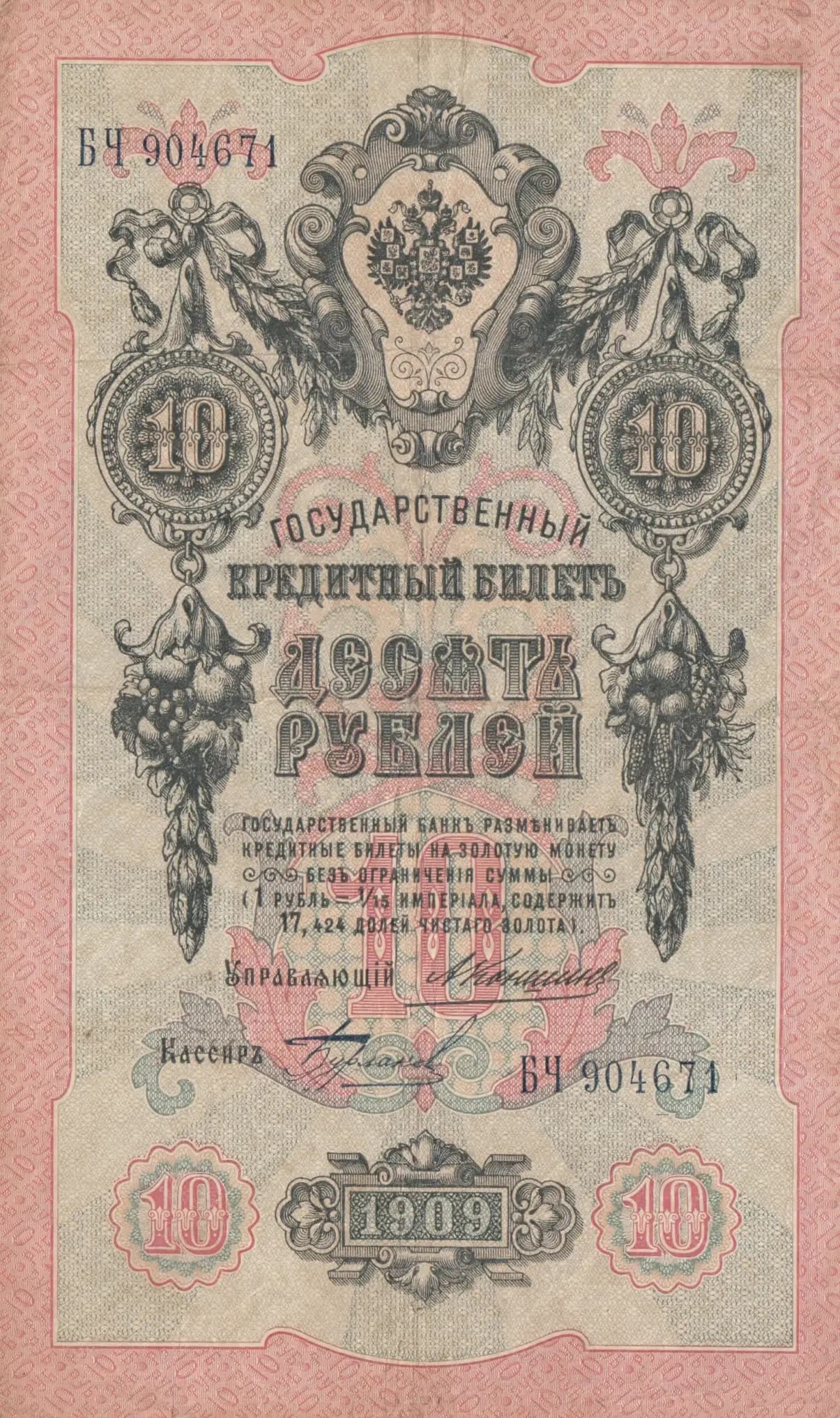
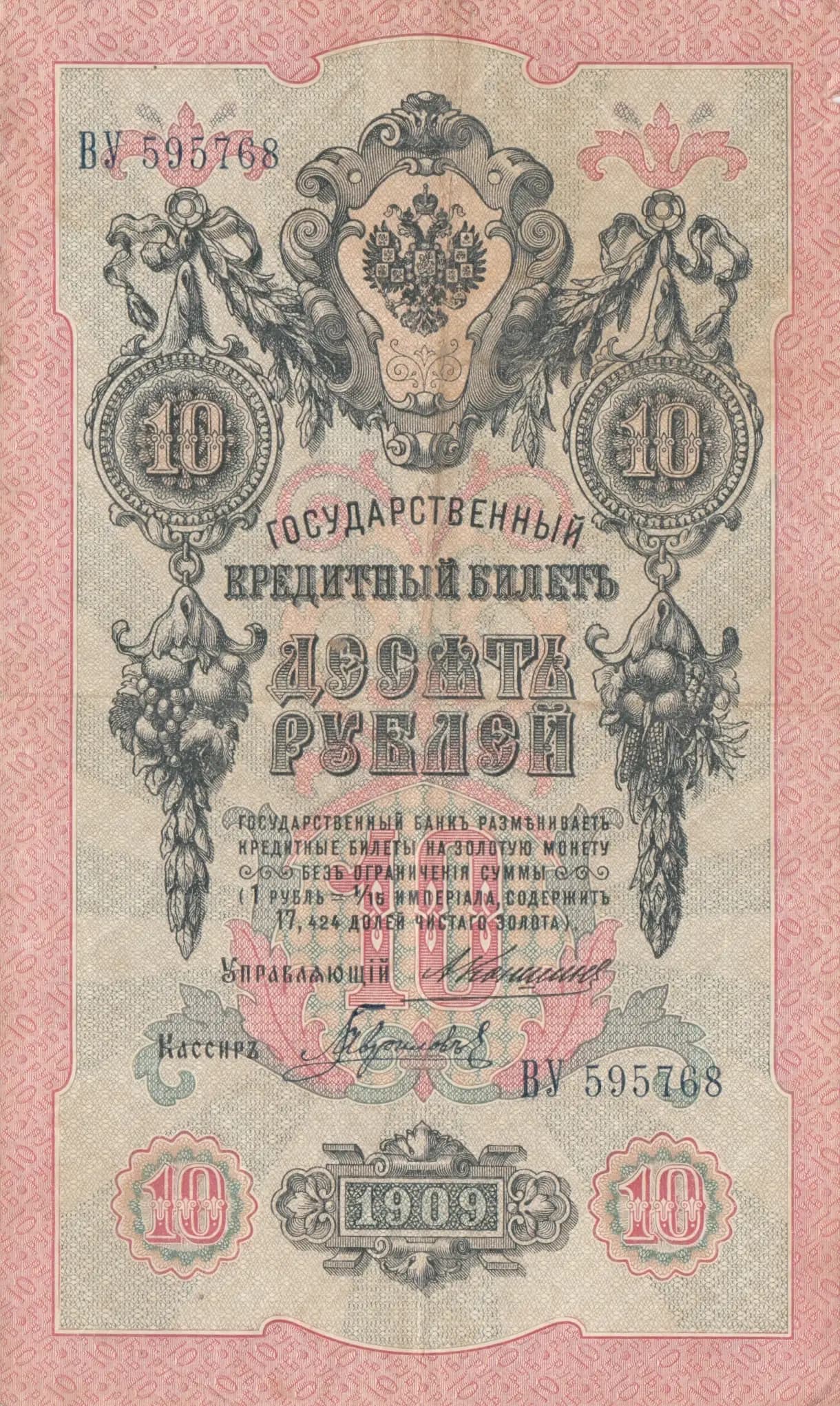
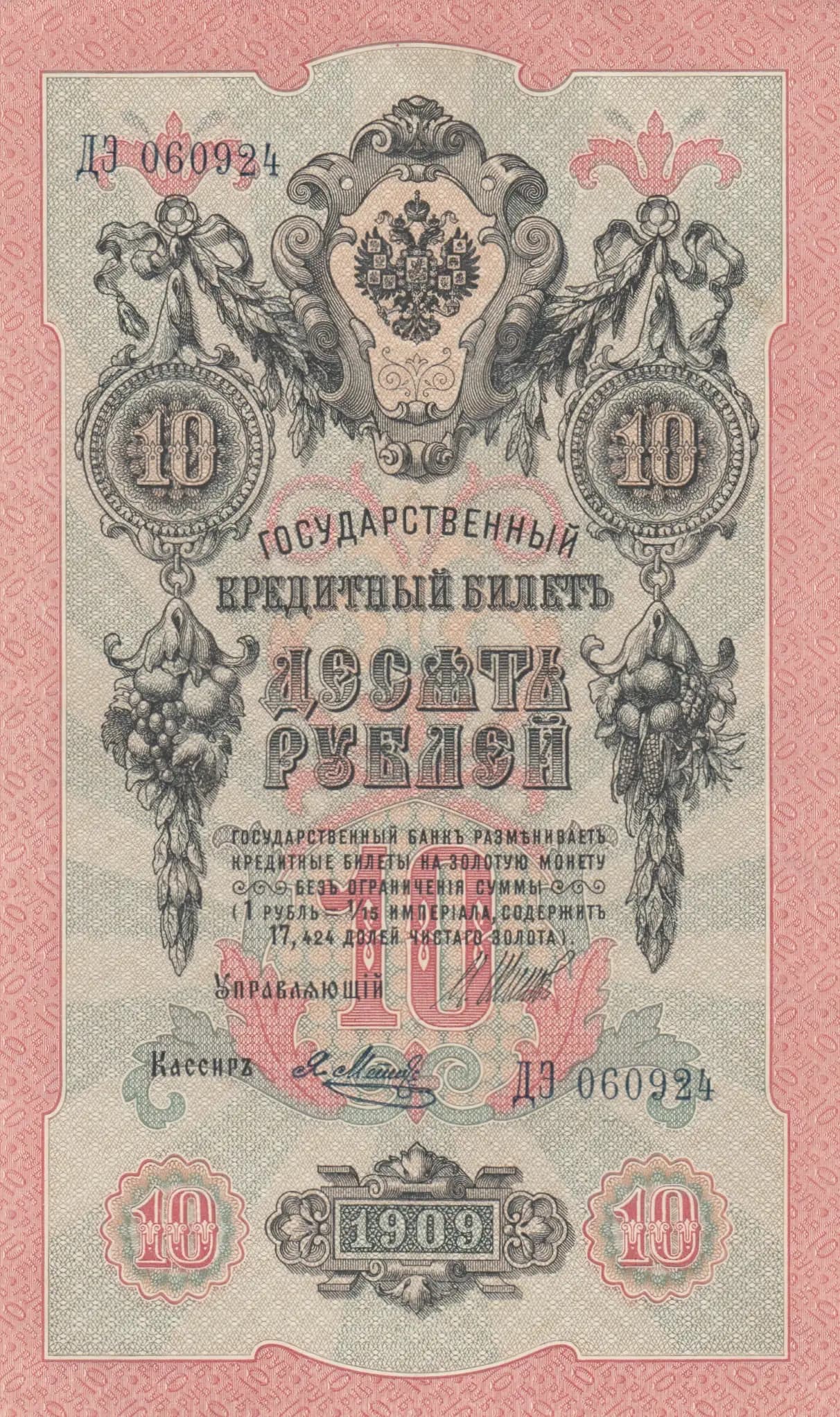
An exceptionally well-preserved example of the Russian Empire's 1909 10 ruble State Credit Note (Pick P-11c(17)), graded AU with no visible wear, creasing, or circulation damage. The note exemplifies Imperial Russian banknote design at its finest, featuring ornate Art Nouveau styling with a symmetrical layout, imperial coat of arms, cherub figures, and cornucopias rendered in pink and cream tones through masterful intaglio engraving. The vibrant colors, crisp inscriptions, and pristine margins make this an outstanding specimen for collectors of pre-revolutionary Russian currency.
Common. The 10 ruble denomination of 1909 was one of the standard circulating denominations of the Russian Empire's State Credit Note series and was produced in large quantities to meet everyday banking needs. While pre-revolutionary Russian banknotes have become harder to find as a category due to historical upheaval and loss, the 1909 10 ruble note remains one of the most frequently encountered denominations from this series in the collector market. The Pick P-11c(17) variety is a standard catalog listing without special scarcity indicators. Specimens in AU condition command modest premiums over lower grades, but this note is not rare—rather, it represents a common denomination that has survived in better-than-average condition.
Issued during the twilight of Tsarist Russia under the gold standard system, this 1909 banknote represents the Russian Empire's attempt to maintain monetary stability and international credibility through explicit gold backing guarantees. The front inscription prominently declares the State Bank's commitment to exchange these credit notes for gold coins without limit, establishing the 1 ruble = 1/15 Imperial gold content standard. The elaborate imperial imagery—including the double-headed eagle coat of arms and ornamental cartouches—served both as security features and as symbols of state authority in the final decade before the 1917 Revolution.
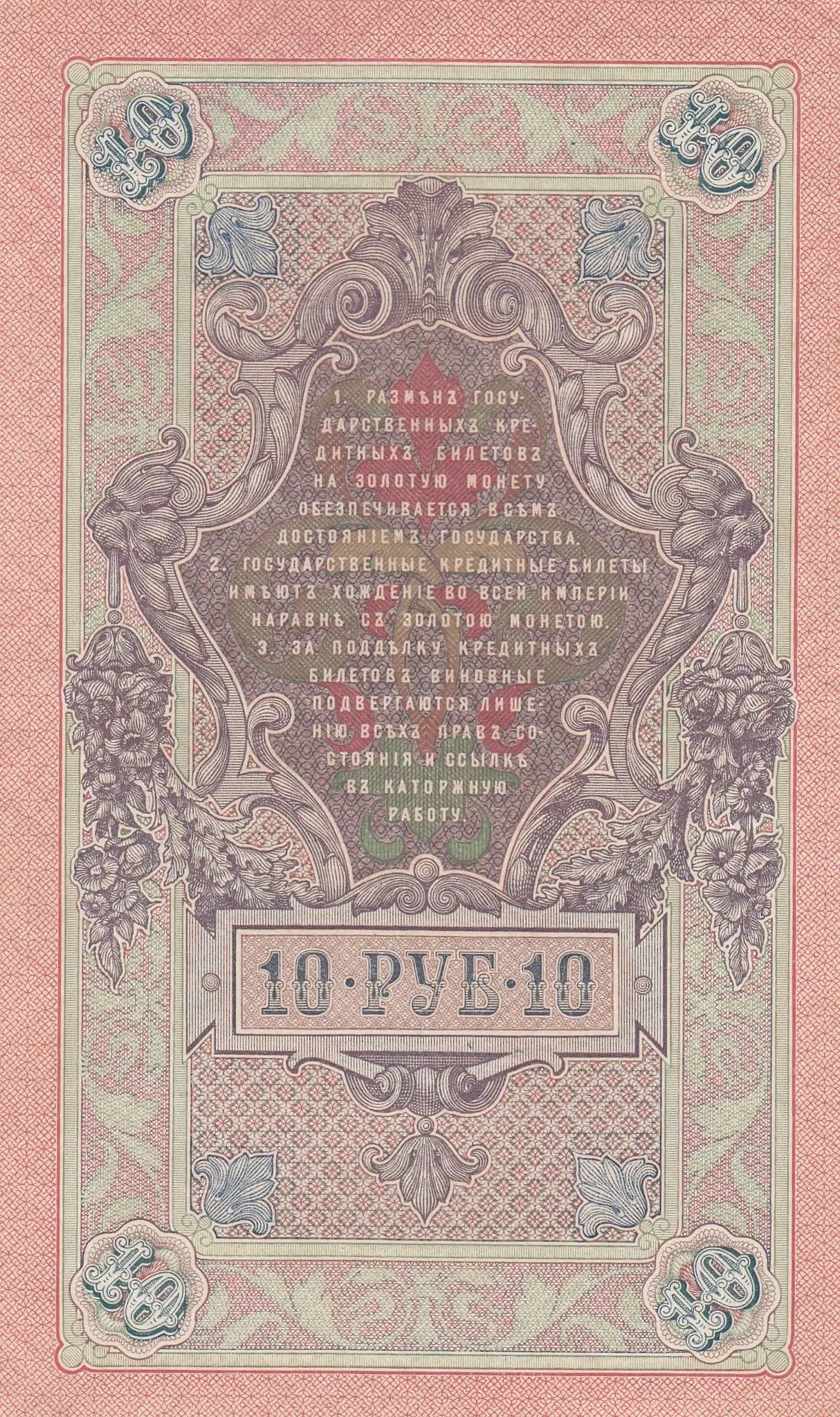
This 1909 Russian State Credit Note exemplifies the ornate Art Nouveau aesthetic favored by Imperial Russian security printers. The front features a vertically-oriented symmetrical design dominated by the Russian Imperial coat of arms (double-headed eagle with shield and heraldic symbols) positioned centrally in an ornamental cartouche at the top. Flanking this are winged cherub or angel figures in the upper corners, representing prosperity or divine sanction. Below the coat of arms hang decorative cornucopias overflowing with grapes and agricultural produce, symbolizing national wealth and abundance. The denomination '10' appears in elegant circular medallion frames on either side of the central axis. The entire composition is bounded by an ornate border incorporating scrollwork, flourishes, and geometric patterns in pink/rose coloring against a cream background. The back side displays a more text-focused design with the three legal clauses governing the note's status as legal tender and gold convertibility, surrounded by elaborate corner ornaments featuring grape vine and leaf motifs within circular emblems. The consistent color scheme and fine linework across both sides creates visual harmony and serves as an anti-counterfeiting measure.
FRONT SIDE: Top center: 'ГОСУДАРСТВЕННЫЙ КРЕДИТНЫЙ БИЛЕТ' (State Credit Note). Denomination areas: 'ДЕСЯТЬ РУБЛЕЙ' (Ten Rubles) with numeral '10' appearing in circular medallions. Serial number: 'ДЧ 060924' (Cyrillic prefix ДЧ with sequence number 060924). Officer designations: 'Справляющий' (Acting [Officer]) and 'Кассир' (Cashier) with signature lines. Central text: 'ГОСУДАРСТВЕННЫЙ БАНК РАЗМЕНИВАЕТЬ КРЕДИТНЫЕ БИЛЕТЫ НА ЗОЛОТУЮ МОНЕТУ БЕЗ ОГРАНИЧЕНИЯ СУММЫ (1 РУБЛЬ = 1/15 ИМПЕРИАЛИ СОДЕРЖИТЬ 17,424 ДОЛЕЙ ЧИСТАГО ЗОЛОТА)' (The State Bank exchanges credit notes for gold coins without limit of sum [1 ruble = 1/15 Imperial contains 17,424 parts of pure gold]). Date: '1909'. BACK SIDE: Central legal text in three numbered clauses: '1. РАЗМЕНА ГОСУДАРСТВЕННЫХ КРЕДИТНЫХ БИЛЕТОВ НА ЗОЛОТУЮ МОНЕТУ ОБЕСПЕЧИВАЕТСЯ ВСЕМИ ДОСТОЯНИЕМИ ГОСУДАРСТВА' (The exchange of State credit notes for gold coins is guaranteed by all the property of the State). '2. ГОСУДАРСТВЕННЫЕ КРЕДИТНЫЕ БИЛЕТЫ ИМЕЮТ ХОЖДЕНИЕ ВО ВСЕЙ ИМПЕРИИ НАРАВНЕ СО ЗОЛОТОЮ МОНЕТОЮ' (State credit notes have circulation throughout the entire Empire equal to gold coins). '3. ЗА ПОДДЕРЖКУ КРЕДИТНЫХ БИЛЕТОВ, ВИНОВНЫЕ ПОДВЕРГАЮТСЯ ЛИШЬ ЧЮ ВСЕМИ ПРАВАХ СО СТОРОНЯ И ССЫЛОК ВА КАТОРЖНУЮ РАБОТУ' (Those guilty of undermining credit notes are subject to penalties under all provisions including exile to hard labor). Denomination: '10 РУБ. 10' (10 Rubles).
Intaglio (line engraving and etching) printing method, evidenced by the fine detailed linework, complex ornamental patterns, and the characteristic sharp, crisp quality of the inscriptions and decorative elements. The multiple layers of detailed engraving, fine crosshatch background patterns, and the precision of the anti-counterfeiting geometric designs are hallmarks of high-quality steel plate intaglio production. For Russian Imperial notes of this period, production was handled by the State Printing Plant (Государственная Типография) or contracted security printers such as the Russian-German printing consortium. The exceptional quality observed in this specimen suggests first-class security printing standards of the Tsarist era.
This specimen is identified as Pick P-11c(17), indicating it belongs to the standard 1909 issue of the Russian 10 ruble State Credit Note. The serial number 'ДЧ 060924' with the Cyrillic prefix ДЧ is characteristic of this series. The Pick catalog notation (17) may indicate a specific signature or control number variety within the 1909 issue. No overprints, color variations, or emergency modifications are visible on this example. The note represents the regular production variety without the emergency overprints (such as 'ОБРАЗЕЦ' [Specimen] or Duma overprints) that appear on some restricted or sample examples from this period. The signature lines for 'Справляющий' (Acting Officer) and 'Кассир' (Cashier) are blank, consistent with many examples of this series where official signatures were not required for release.