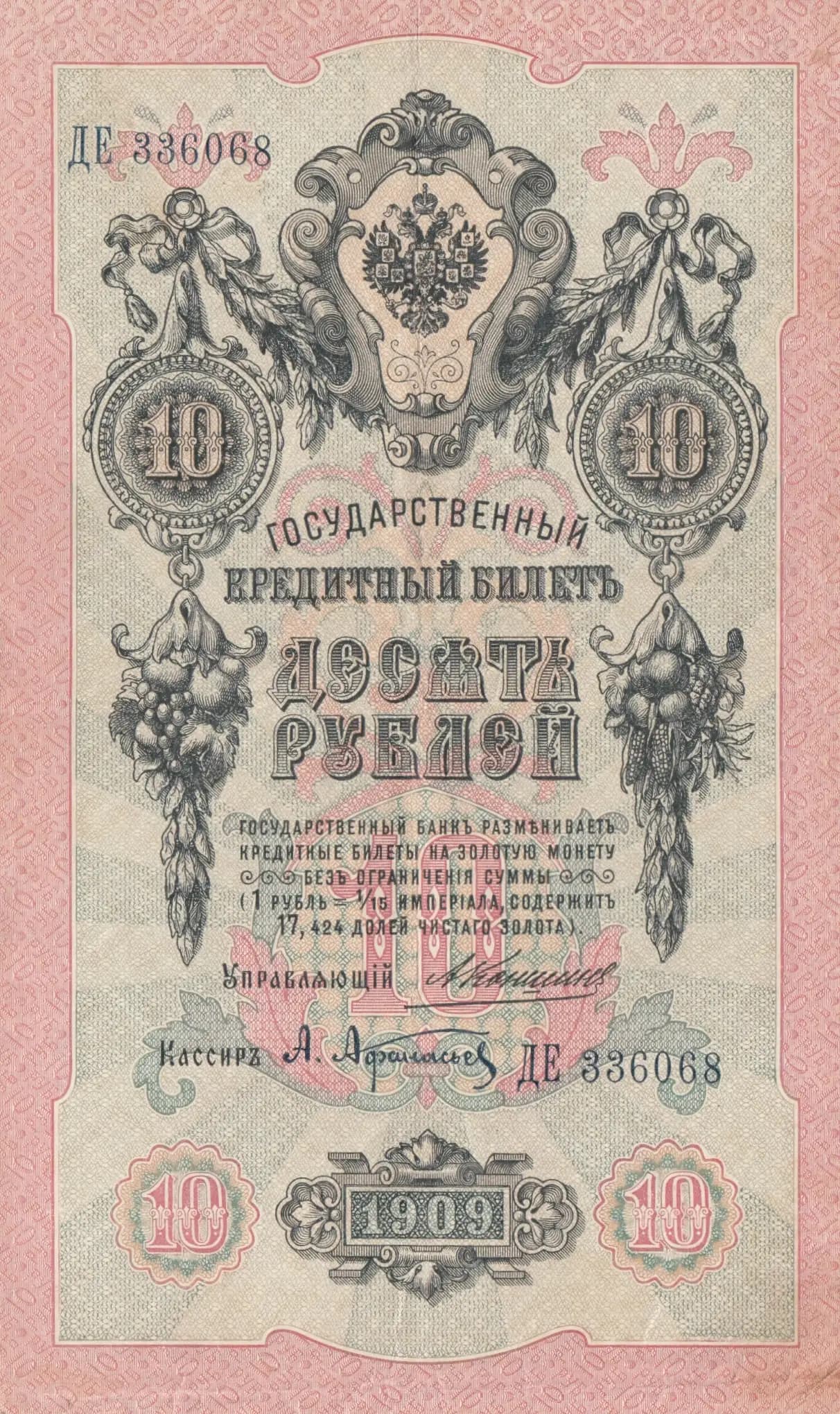
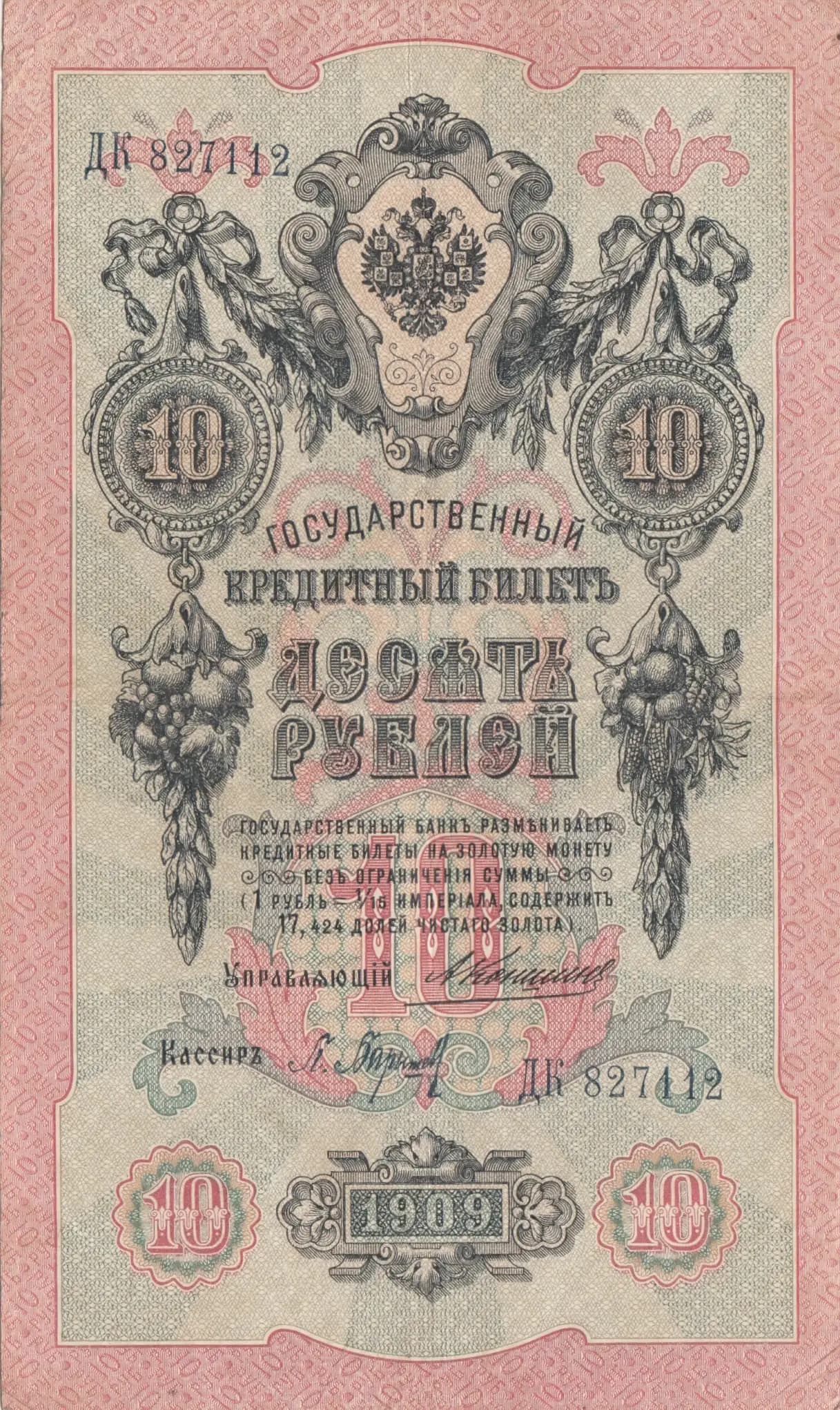
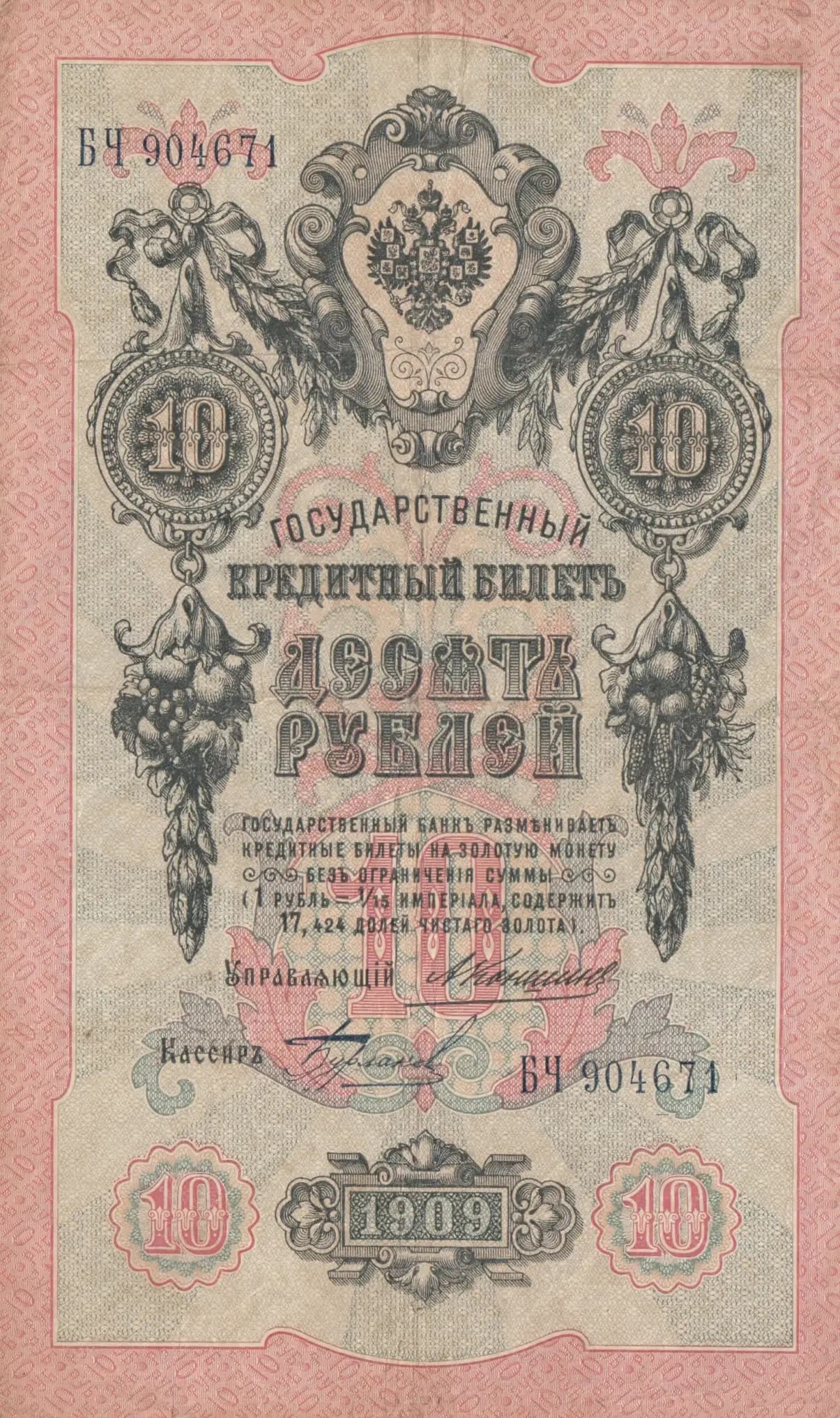
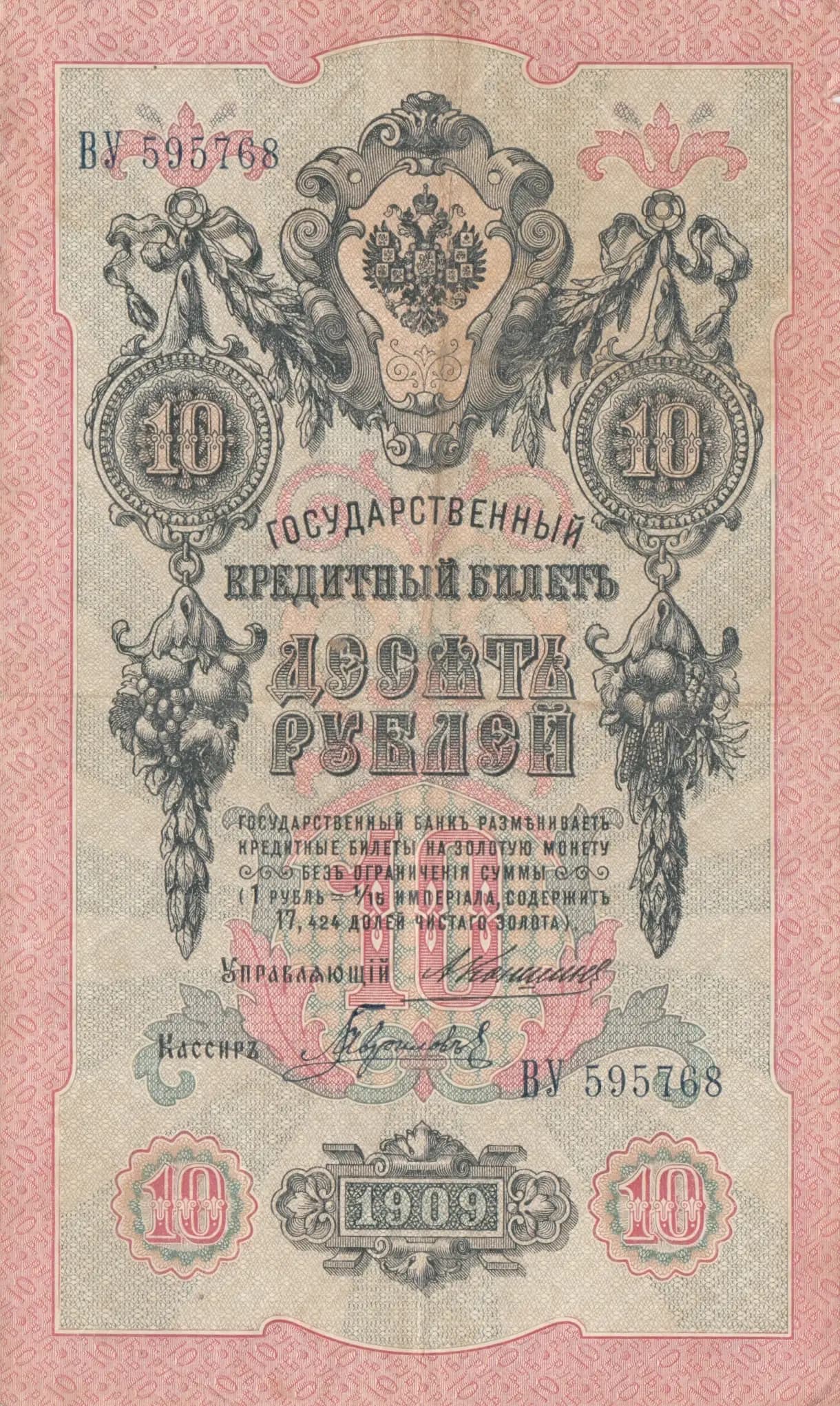
10 rublei 1909
“Sig.Rodionov”
About This Note
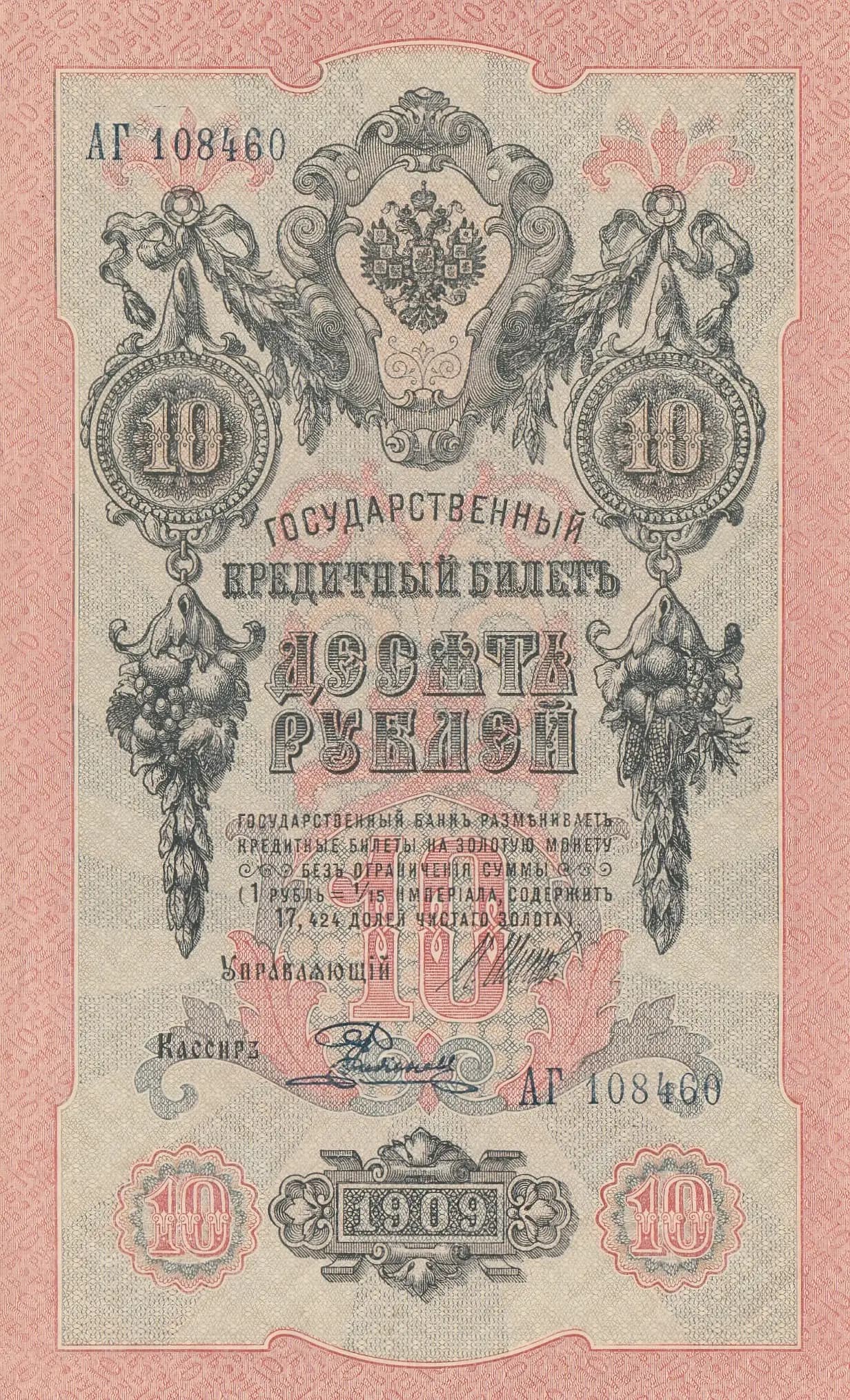
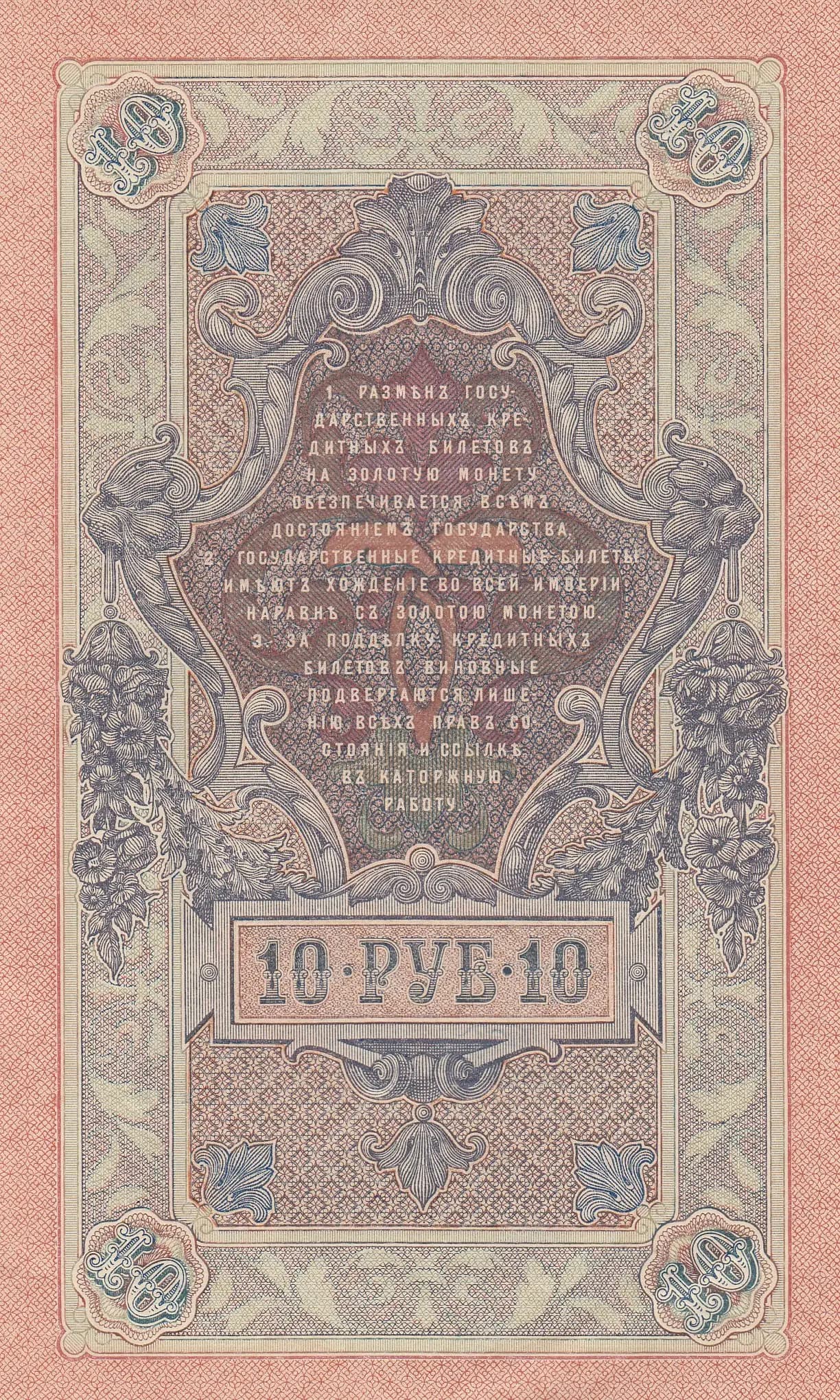
This is an exceptional example of the 1909 Russian Imperial 10 Rublei note (Pick 11c(12)), presented in pristine uncirculated condition with crisp printing throughout. The front features an elaborate symmetrical design anchored by the imperial double-headed eagle coat of arms flanked by allegorical female figures, while the reverse displays ornate baroque scrollwork enclosing the legal text guaranteeing exchange for gold coin. This signature variant (Rodionov) represents a significant piece of early 20th-century Russian monetary history, combining classical engraving artistry with the gold-standard backing that defined the Imperial currency system.
Common. The 10 Rublei denomination of 1909 was issued in substantial quantities throughout the Empire and circulated widely until the monetary disruptions of World War I and the Revolution. While uncirculated examples are less frequently encountered than circulated specimens, the 1909 10 Rublei remains a staple of Imperial Russian banknote collections and is readily available in the market at modest premiums. The specific signature variant (Rodionov) does not materially affect rarity, as multiple cashier signatures exist for this year and denomination.
Issued during the final years of Tsarist Russia, this 10 Rublei note represents the State Credit Note system established under the gold standard framework. The reverse inscription explicitly guarantees 'Exchange of State Credit Notes for Gold Coin without limitation,' reflecting the Witte financial reforms that stabilized the Imperial currency between 1897 and 1914. The double-headed eagle coat of arms and allegorical personifications of state authority underscore the autocratic nature of Imperial Russia's monetary system during this period of relative economic stability before the upheavals of World War I.
The front displays a masterpiece of Imperial-era security printing, with a pink/rose background dominating the composition. The central motif features the Imperial coat of arms—the double-headed eagle of Russia—positioned at the apex of an ornate baroque frame. Flanking this emblem on both left and right sides are allegorical female figures in classical dress (representing the virtues or personifications of State authority and Commerce), each positioned above circular medallions bearing the numeral '10'. Decorative grape or fruit bunches with leaves hang symmetrically below the central design. The reverse maintains the symmetrical baroque aesthetic with elaborate scrollwork, floral vine motifs in all four corners, and architectural ornamental elements creating an elegant frame around the central text panel bearing the legal exchange guarantee. The serial number 'АГ 108460' appears in both upper left and lower right positions on the front, typical of Russian Imperial notes.
FRONT: 'ГОСУДАРСТВЕННЫЙ КРЕДИТНЫЙ БИЛЕТ' (State Credit Note); 'ДЕСЯТЬ РУБЛЕЙ' (Ten Rubles); 'ГОСУДАРСТВЕННЫЙ БАНК РАЗМЕНИВАЕТ КРЕДИТНЫЕ БИЛЕТЫ НА ЗОЛОТУЮ МОНЕТУ БЕЗ ОГРАНИЧЕНИЯ СУММЫ' (The State Bank Exchanges Credit Notes for Gold Coin Without Limitation of Amount); Serial number 'АГ 108460' and denomination '10'. BACK: Lengthy legal text stating 'РАЗМЕНА ГОСУДАРСТВЕННЫХ КРЕДИТНЫХ БИЛЕТОВ НА ЗОЛОТУЮ МОНЕТУ БЕЗ ОГРАНИЧЕНИЯ...' (Exchange of State Credit Notes for Gold Coin without limitation; State Credit Notes circulate throughout the entire Empire on equal terms with gold coins and are recognized as legal tender throughout Russia); '10.РУБ.10' (10 Rubles).
Steel engraving (intaglio/copperplate printing), the standard security printing method for Imperial Russian State Credit Notes. The crisp line work, fine detail resolution in the baroque ornaments, the layered decorative elements, and the absence of printing defects all indicate masterful engraving by specialized Imperial Security Printers. The consistent ink impression and sharp serifs in the Cyrillic text are hallmarks of high-quality intaglio production used exclusively for Russian Imperial currency during this era.
This note is identified as Pick 11c(12), indicating it is from the third series (c) of the 1909 design with the 12th iteration or sub-variety, likely distinguished by signature variant. The signature 'Rodionov' (as noted in collector notes) indicates the cashier responsible for this particular printing state. Serial number 'АГ 108460' represents the standard serial prefix format for this period. The pink/rose background color and the specific baroque design layout are consistent with the mainline 1909 issue, with no evident overprints, color variations, or emergency markings that would indicate a scarce variety.