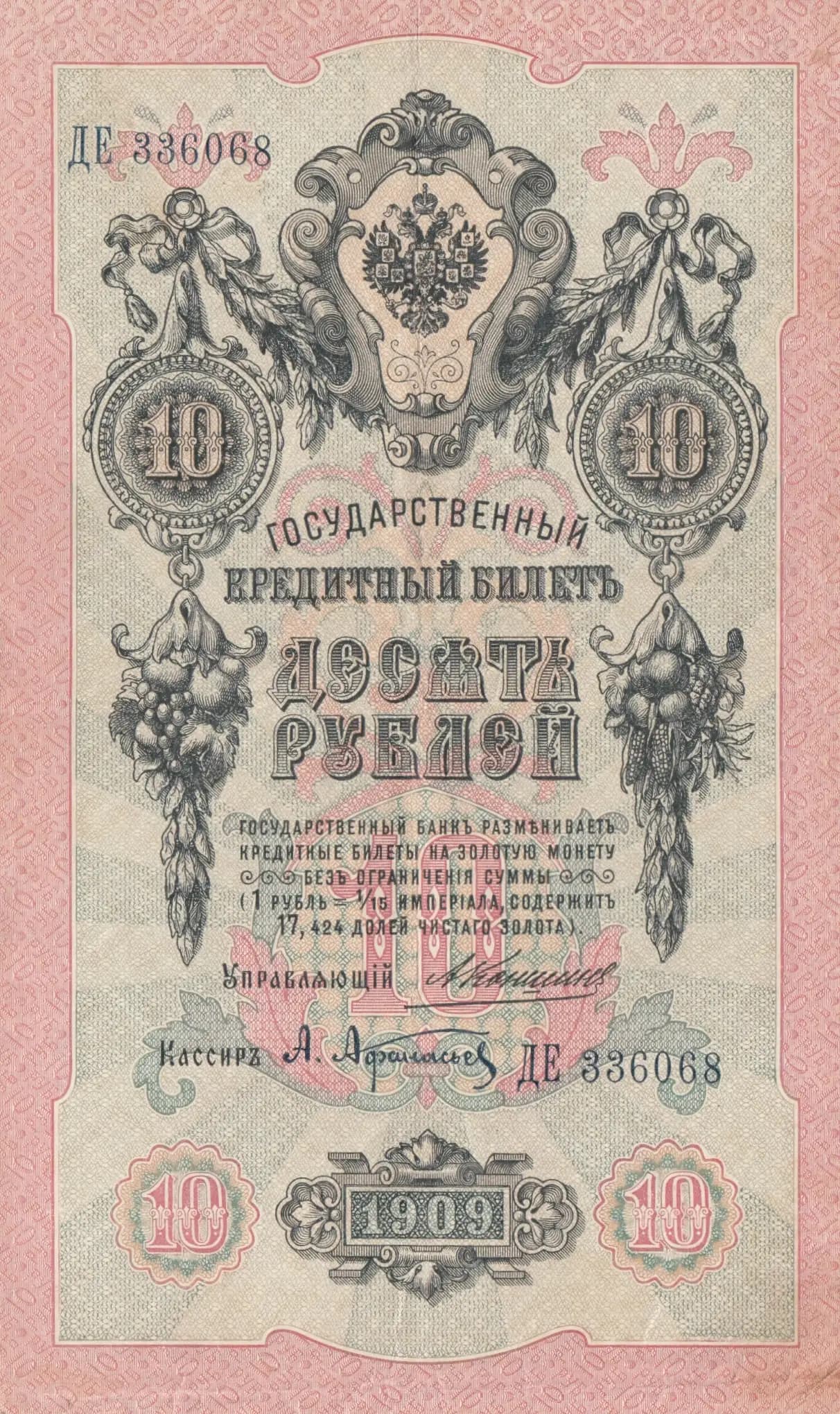
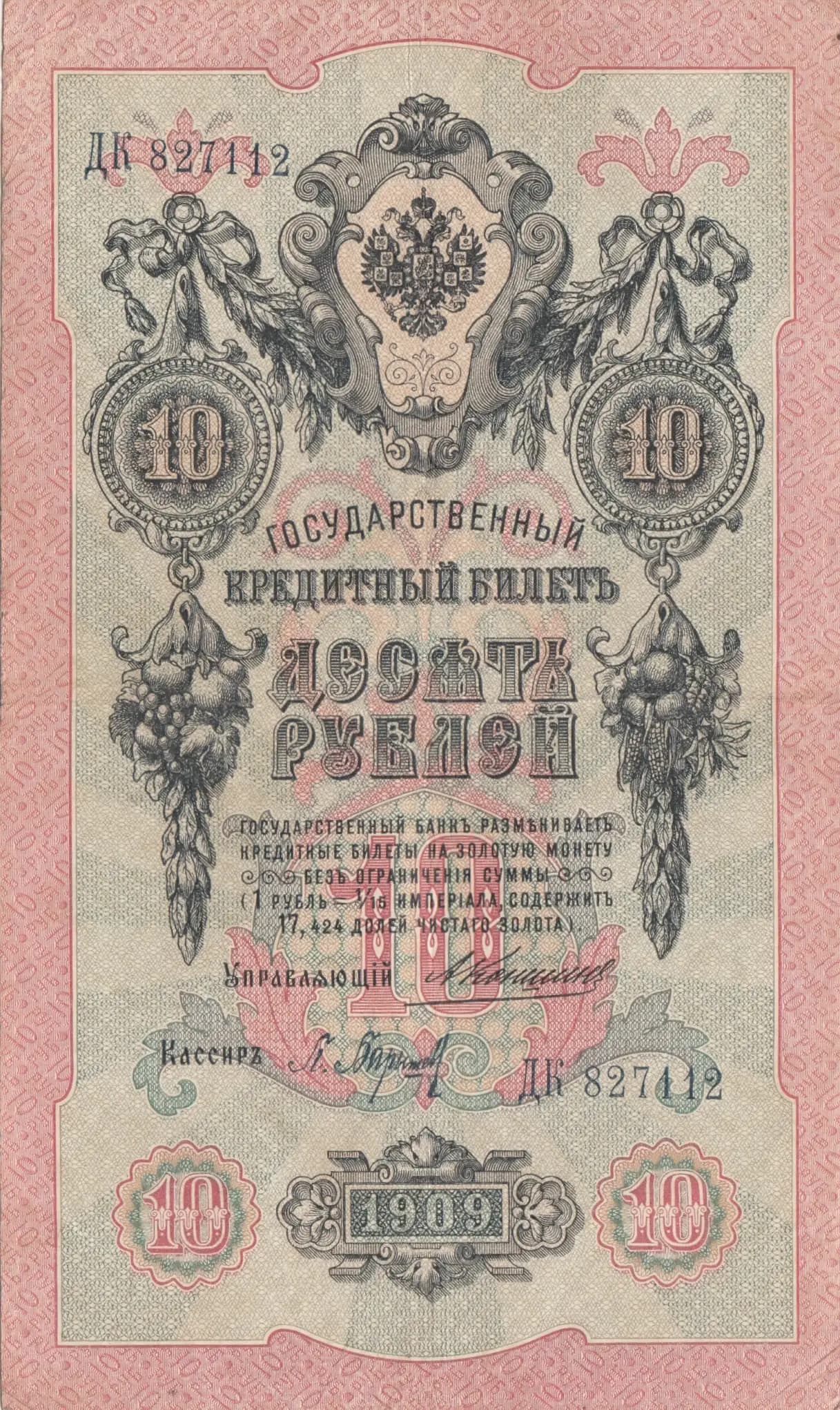
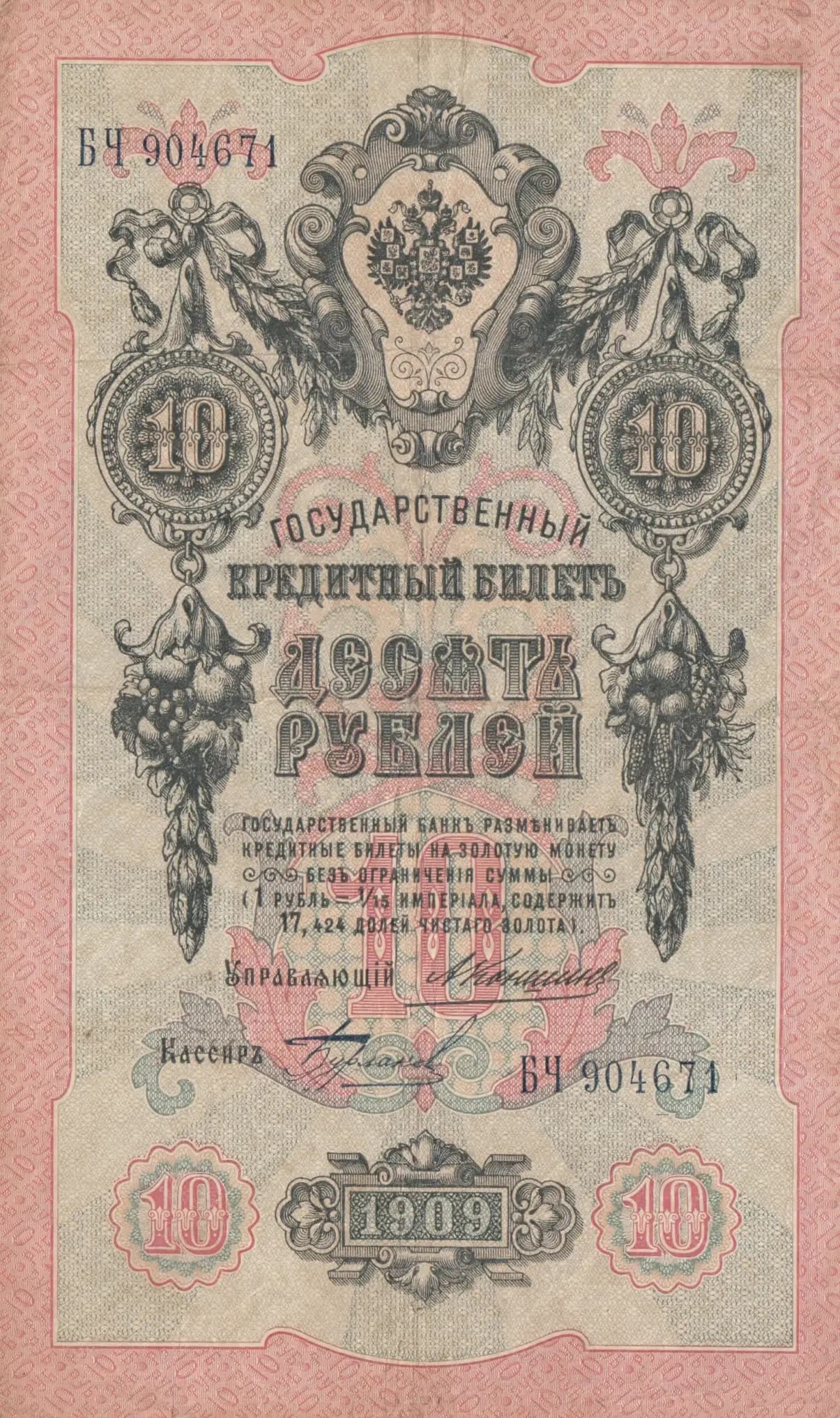
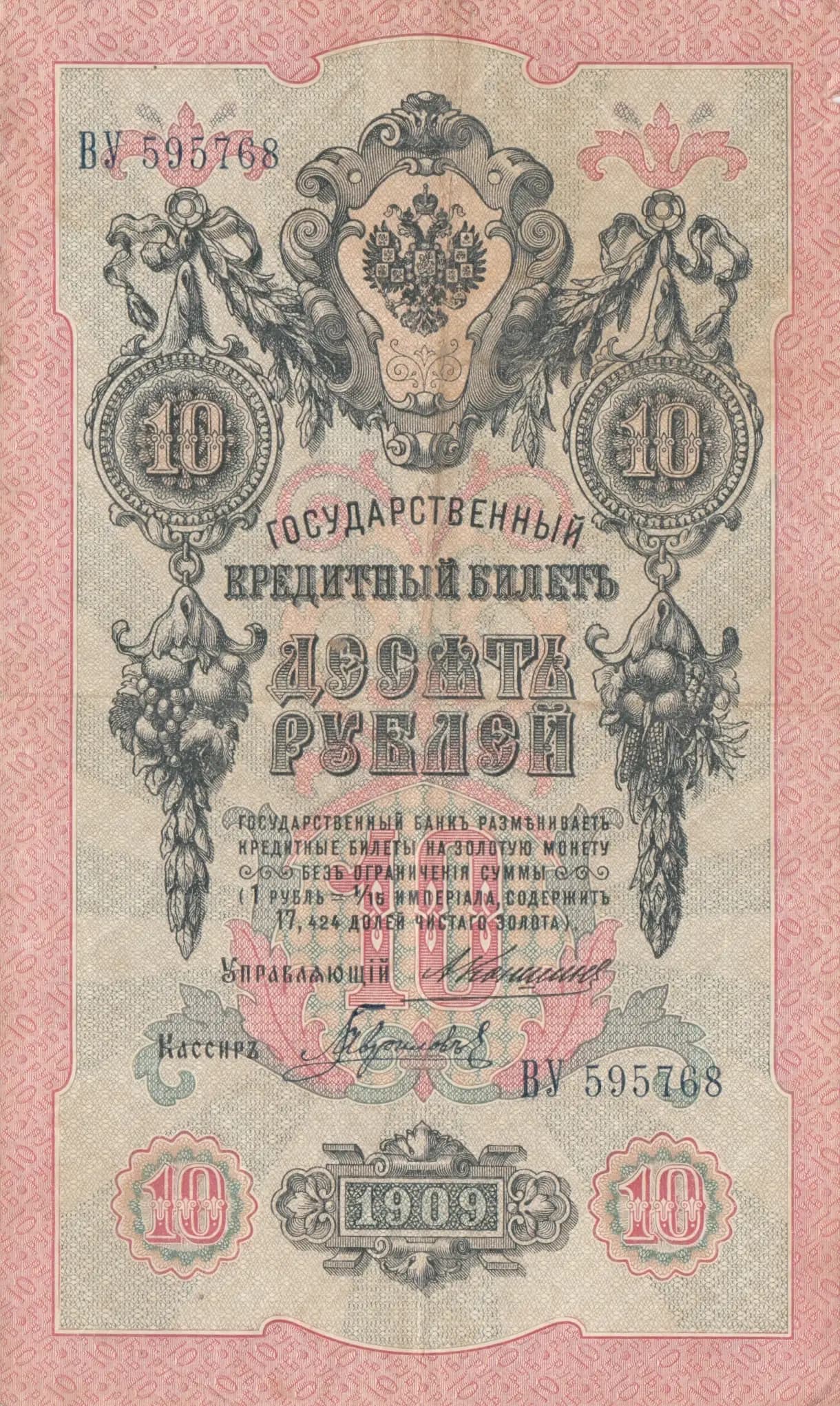
10 rublei 1909
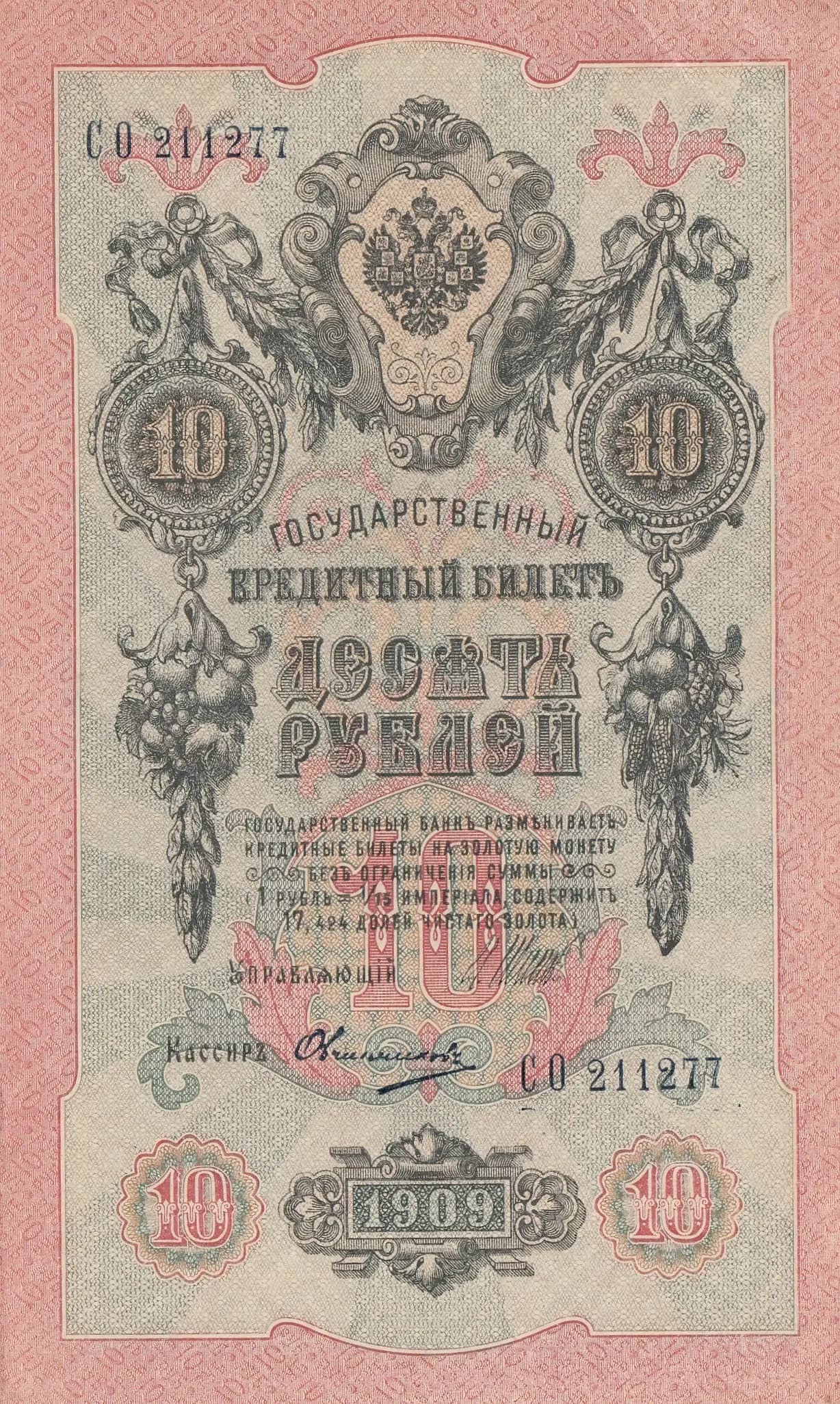
“Sig.Ovchinnikov”
About This Note
This is a splendid example of a Russian Imperial 10 Rublei from 1909, graded AU with exceptional preservation. The note displays the characteristic ornate baroque and rococo design work of late Imperial Russian currency, featuring a prominent double-headed eagle with imperial coat of arms on the obverse, flanked by cherub figures amid elaborate scrollwork and floral ornamentation. The crisp engraving, vibrant rose-pink and cream coloring, and complete absence of significant wear make this an outstanding specimen of pre-revolutionary Russian numismatic artistry.
Common. The 1909 10 Rublei was issued in substantial quantities during the final stable period of the Russian Imperial monetary system. No evidence exists of a limited print run, recall, or short-lived issuance. Notes from this series appear regularly in the collector market at modest valuations. Even in AU condition, specimens are available to collectors without significant premium pricing, indicating healthy supply. Unless this specific serial number or signature combination (Ovchinnikov) represents a documented rare variety, this remains a common date and denomination.
Issued during the final years of Tsar Nicholas II's reign, this 1909 credit note represents the Russian Empire's monetary system at its peak of ornamental sophistication. The inscription 'ГОСУДАРСТВЕННЫЙ КРЕДИТНЫЙ БИЛЕТ' (State Credit Note) and the guarantee text referencing gold backing reflect Russia's commitment to the gold standard during this period. The prominent display of the Imperial double-headed eagle symbolizes the autocratic authority underpinning the currency, issued mere years before the revolutionary upheavals of 1917 would render such notes obsolete.
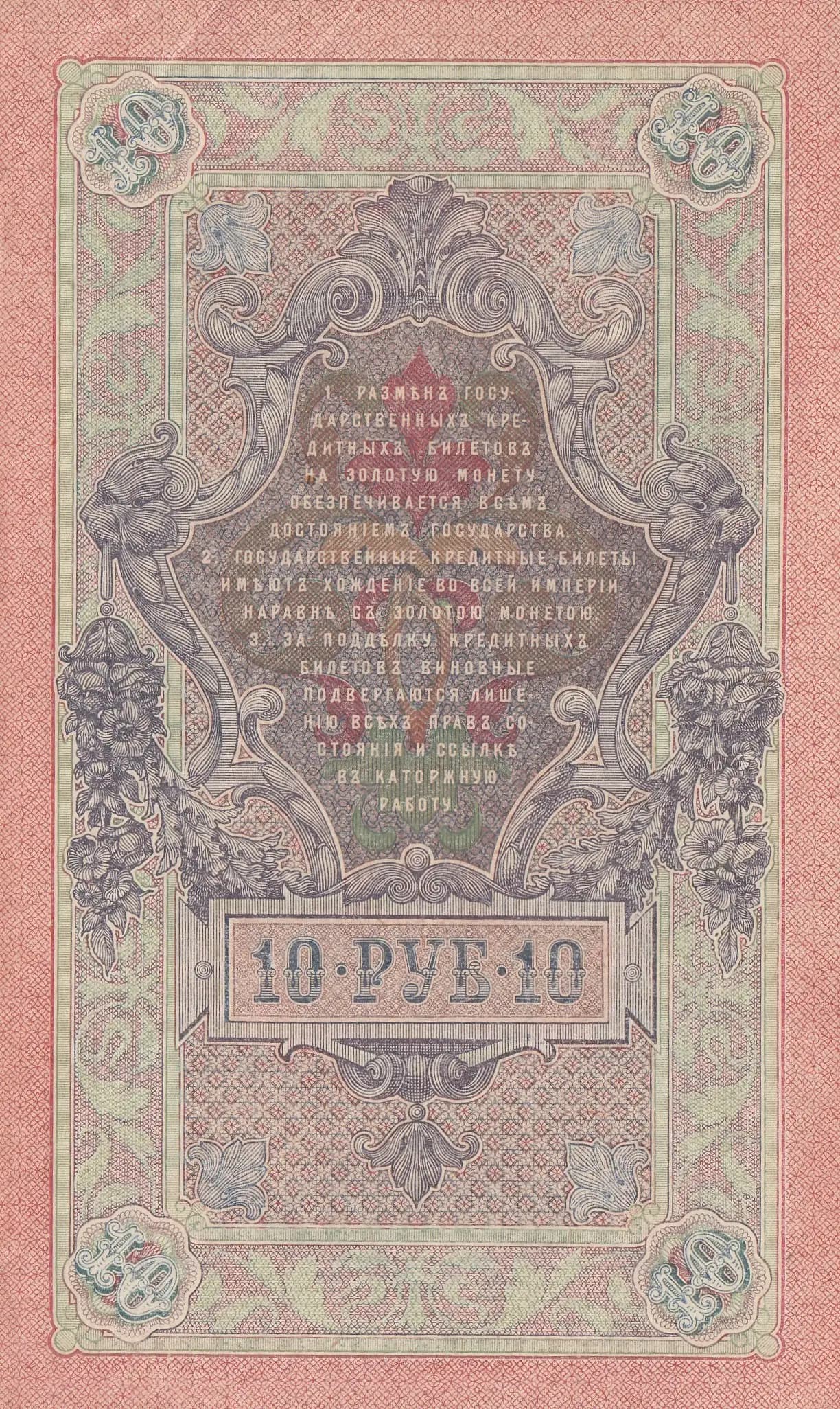
The obverse features a masterwork of Imperial Russian engraving with a central heraldic composition dominated by the double-headed eagle of the Russian Empire, crowned and bearing a shield with the imperial coat of arms at its breast. Flanking this central emblem are two cherub or putto figures—allegorical representations of commerce or state authority—each positioned within ornate scrollwork frames and holding symbolic objects. Circular denomination medallions containing '10' are positioned in the upper left and right corners, framed in baroque cartouches. The entire composition is surrounded by elaborate rococo flourishes, floral garlands, and guilloche pattern work in teal-green and black engraving against a cream and rose-pink ground. The reverse presents a symmetrical rococo design dominated by an ornamental cartouche containing extensive legal text guaranteeing the note's exchangeability for gold, surrounded by corner medallions and bilateral floral decorative elements. The denomination '10 РУБЛЕЙ' appears in a formal rectangular frame at the bottom of the reverse.
FRONT SIDE: 'ГОСУДАРСТВЕННЫЙ КРЕДИТНЫЙ БИЛЕТ' (State Credit Note); '10' and 'ДЕВЯТЬ РУБЛЕЙ' (Nine Rubles - note the discrepancy with the denomination numeral, likely a cataloging or transcription issue); '1909' (year of issue); 'Кассир' (Cashier); 'Казначейский' (Treasury); 'ЦО 2112П' (Serial number). BACK SIDE: '10 РУБЛЕЙ' (10 Rubles); Extended text in central cartouche reading approximately 'Разменная государственная кредитная билета на золотую монету, обеспеченность всеми состояниям государства...' (Exchangeable state credit note for gold coin, guaranteed by all resources and assets of the state...).
This note was produced using fine line steel engraving (intaglio printing), the standard security printing method for Imperial Russian currency of this period. The complex guilloche patterns, precise line work, and elaborate rococo ornamentation visible throughout both sides are characteristic of master engraver work executed on steel plates. The printer for Russian Imperial notes of this series was the State Printing House (Государственный Печатный Двор), located in St. Petersburg. The multi-color printing effect (rose-pink and cream) was achieved through sequential printing passes of different inks from the same or coordinated plates.
The notation 'Sig.Ovchinnikov' in the collector notes indicates this specimen bears the signature of Ovchinnikov, likely one of the authorized signatories (Cashier or Treasury official) whose signature appears on this issue. Russian Imperial notes of 1909 exist with several signature combinations, which constitute catalog varieties. The serial number 'ЦО 2112П' should be examined for prefix variations (ЦО being the observed prefix); different prefix combinations may indicate different printings or series. The Pick catalog number P-11c(11) notation suggests this is cataloged as a specific variety within the 1909 10 Rublei issue, possibly distinguished by signature or serial number characteristics.