10 rublei 1909
“Sig.Afanasev”
About This Note
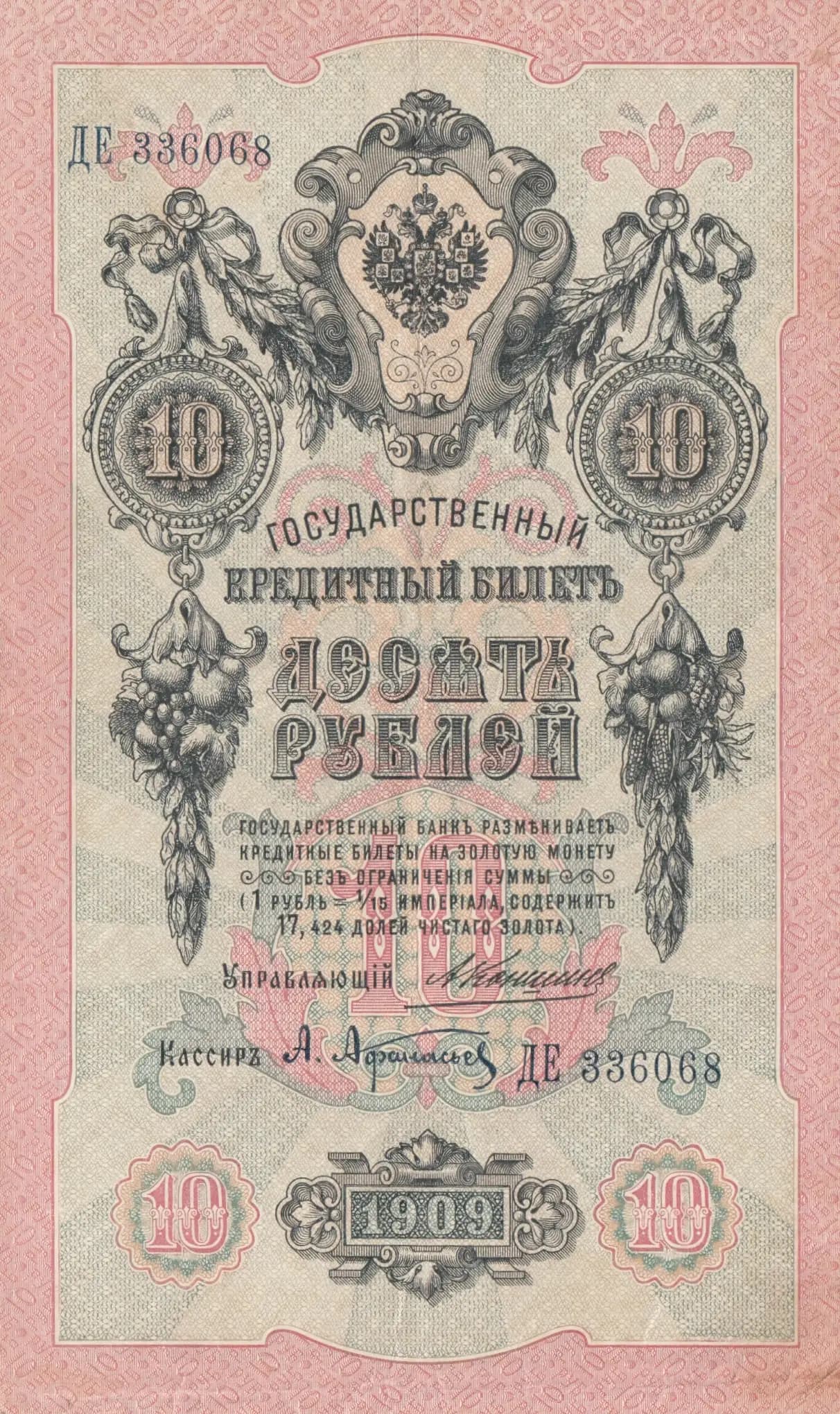
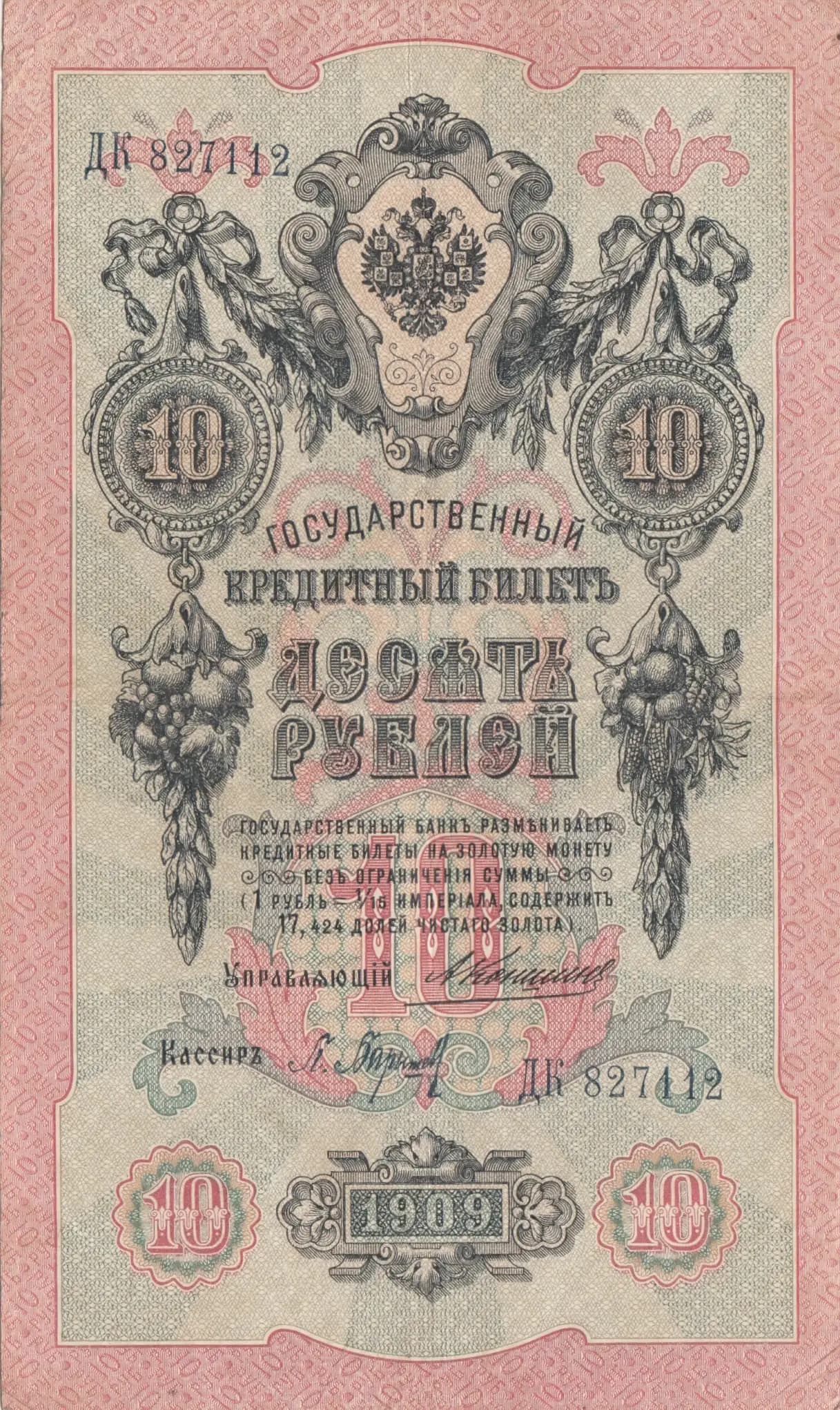
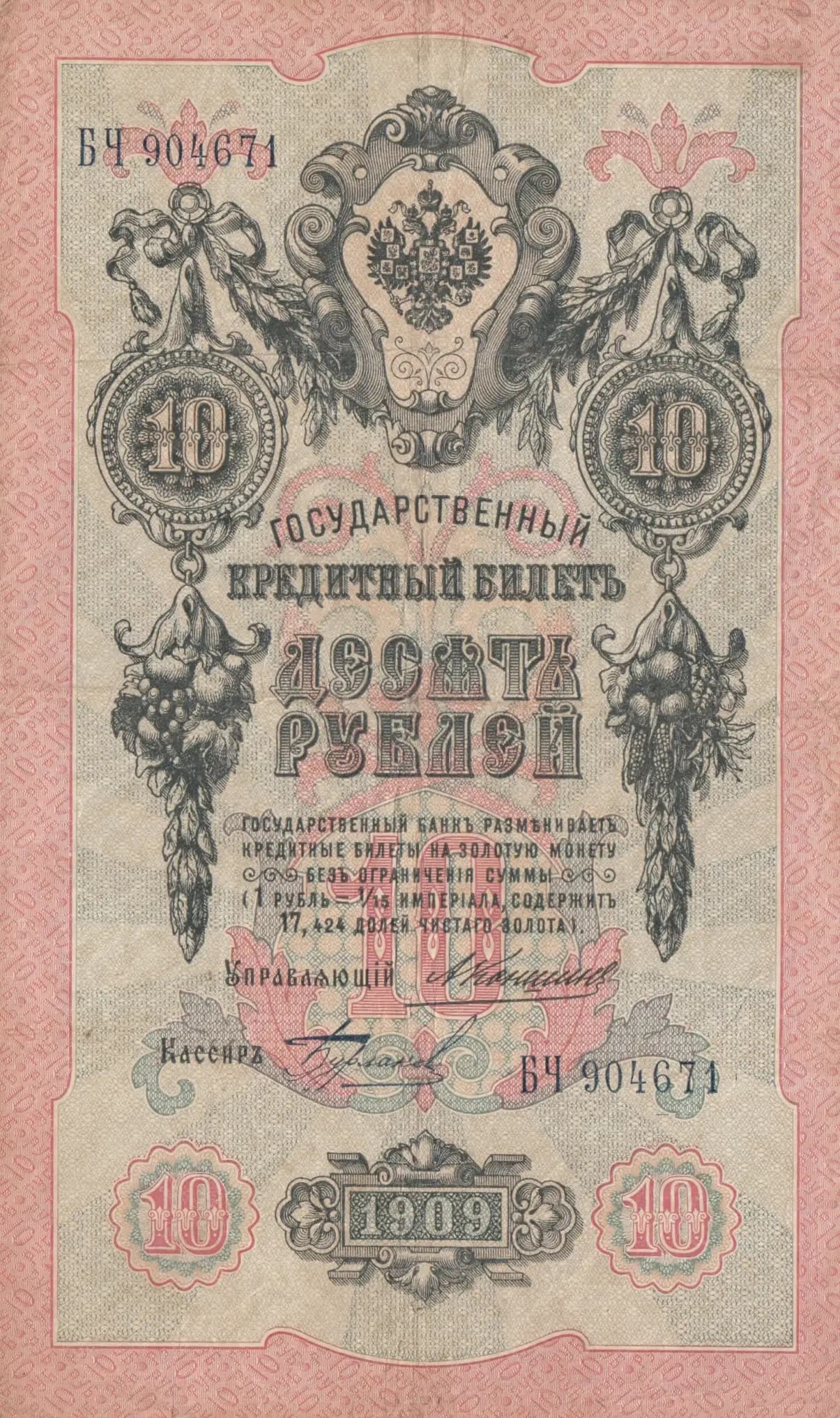
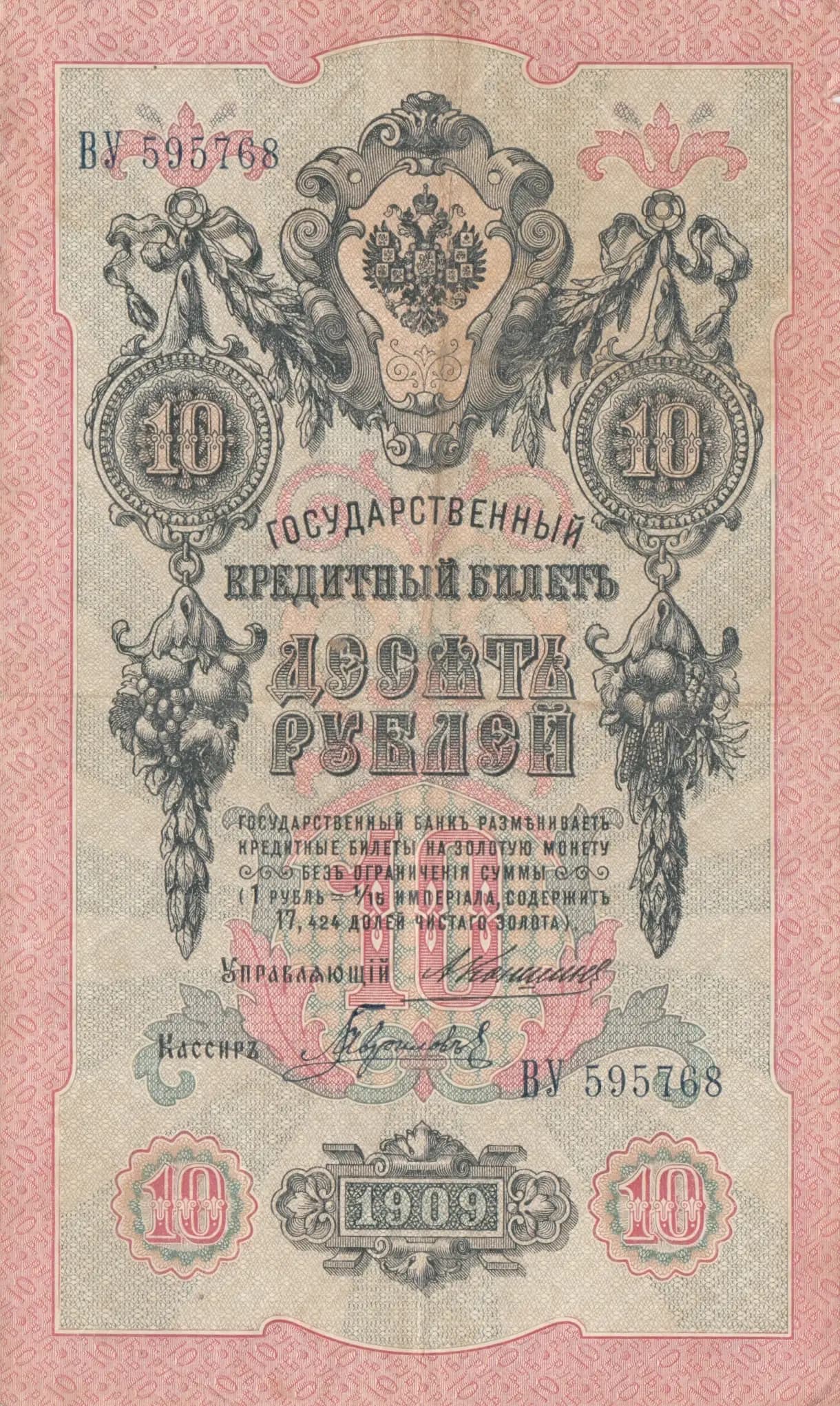
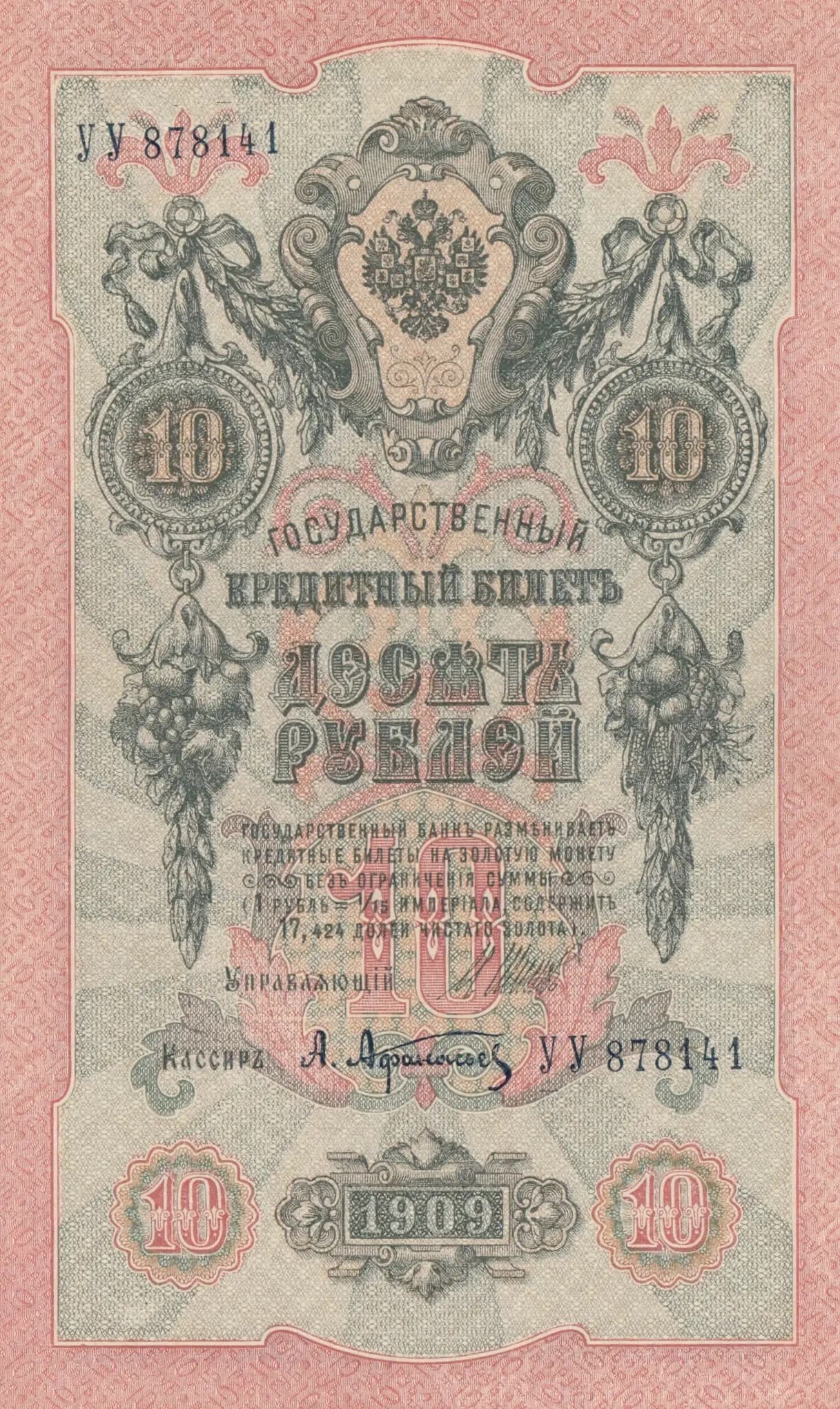
A striking example of the 1909 Russian Imperial 10 rublei note in UNC condition, featuring the iconic double-headed eagle coat of arms flanked by allegorical winged figures on a pink and pale green background. The note displays the characteristic ornate baroque engraving of early 20th-century Russian State Credit Notes, with the signature of cashier A. Afanasyev and serial number UU878141. This particular note represents a well-preserved specimen of Russia's gold-backed currency system during the final years of the Tsarist regime.
Common. The 1909 10 rublei (Pick 11c) was part of a large, long-running series of Imperial Russian State Credit Notes that remained in circulation for several years before the 1917 Revolution. Print runs for this denomination and design were substantial, and many examples survive in various conditions. While UNC specimens are more desirable than circulated notes, the P-11c(1) variety itself is not scarce. The signature of A. Afanasyev does not appear to be a particularly rare cashier signature variant for this series. Availability and market prices (typically modest for Imperial Russian banknotes in collector markets unless exceptional varieties) confirm this is a standard, common issue.
Issued during the reign of Tsar Nicholas II, this 10 rublei note was part of the Russian Imperial State Credit Note system, which maintained backing by the State's gold reserves as explicitly stated in the legal text engraved on both sides. The double-headed eagle symbolizes the Russian Empire's sovereignty and power, while the allegorical female figures represent concepts such as commerce, industry, or state prosperity. The note's gold-backed guarantee and circulation alongside gold coins reflects the late imperial period's adherence to the gold standard before the financial upheaval of World War I and the subsequent Russian Revolution.
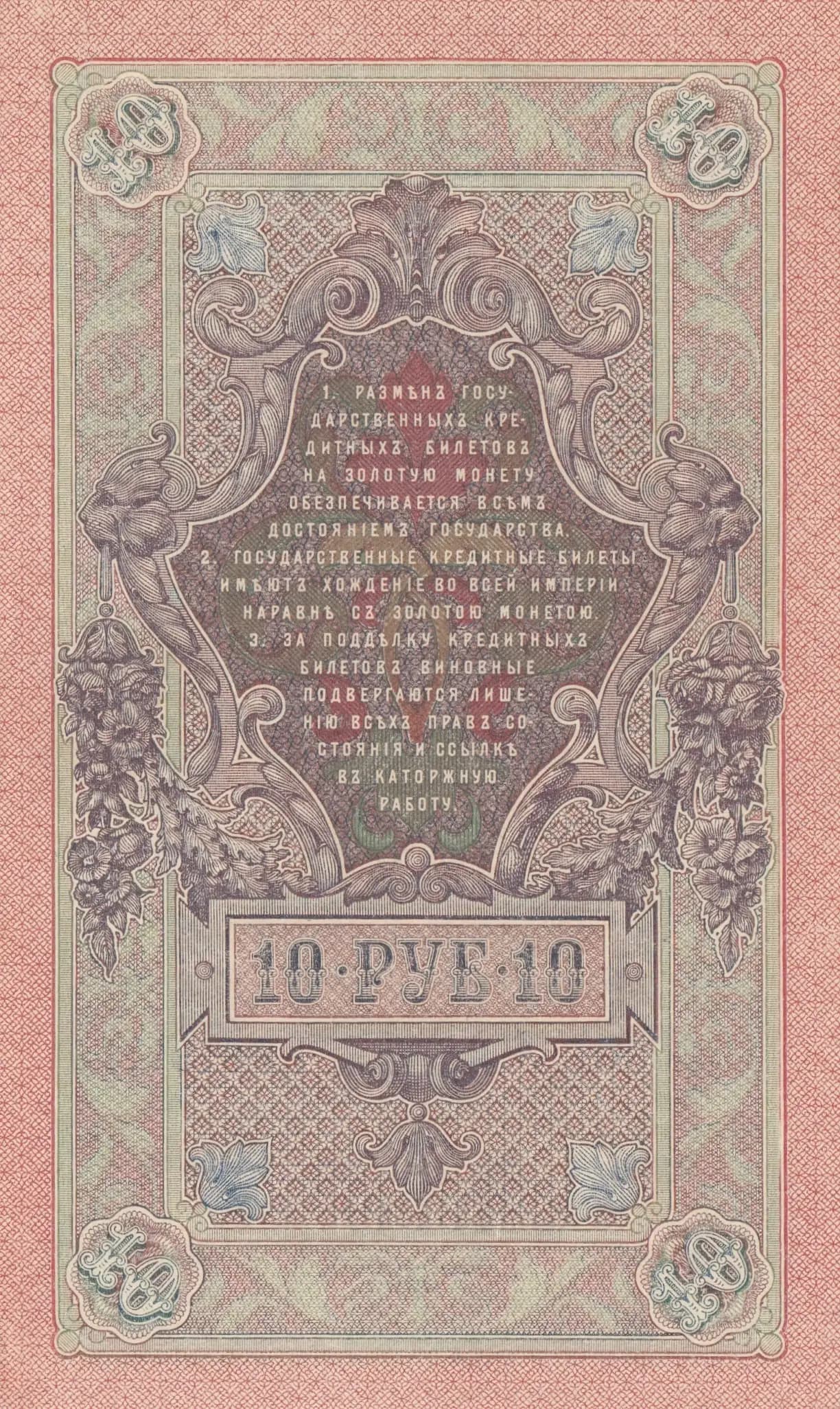
The front of this banknote showcases a sophisticated neo-baroque design centered on the Imperial Russian coat of arms—the double-headed eagle within an ornate cartouche—which serves as the primary symbol of state authority and legitimacy. This eagle is flanked by two allegorical female figures with wings, likely representing attributes of the state such as commerce, prosperity, justice, or industry, rendered in the classical allegorical style favored by imperial iconography. The composition is framed by elaborate scrollwork, baroque flourishes, and ornamental borders in dark green and gray against a pink background, with pale green geometric panels creating visual depth. Denomination medallions marked '10' appear in circular cartouches on both sides of the central design. The reverse maintains the ornamental security aesthetic with baroque scrollwork and floral motifs in all four corners, an elaborate rectangular frame, and the legal text prominently displayed in a central decorative cartouche. The color scheme of pink, green, and cream creates strong visual contrast and aids in authentication. The signature of A. Afanasyev (the Cashier responsible for the issue) appears on the front, adding individual accountability to the note.
FRONT SIDE: Serial number: УУ878141 (UU878141) | Heading: ГОСУДАРСТВЕННЫЙ КРЕДИТНЫЙ БИЛЕТ (State Credit Note) | Denomination: ДЕСЯТЬ РУБЛЕЙ (Ten Rubles) | Main legal text: ГОСУДАРСТВЕННЫЙ БАНК РАЗМЕНИВАЕТ КРЕДИТНЫЕ БИЛЕТЫ НА ЗОЛОТУЮ МОНЕТУ С ОБЕСПЕЧЕНИЕМ СУММОЮ ГОСУДАРСТВЕННОГО ЗОЛОТОГО ЗАПАСА. ГОСУДАРСТВЕННЫЕ КРЕДИТНЫЕ БИЛЕТЫ ИМЕЮТ ХОЖДЕНИЕ ВО ВСЕЙ ИМПЕРИИ НАРАВНЕ С ЗОЛОТОЮ МОНЕТОЮ. ЗА ПОДДЕЛКУ КРЕДИТНЫХ БИЛЕТОВ ПОДВЕРГАЮТСЯ ПОВИННОСТИ УСТАНОВЛЕННЫЕ ЗАКОНОМ И ССЫЛКЕ НА КАТОРЖНУЮ РАБОТУ (The State Bank exchanges credit notes for gold coins secured by the amount of the State gold reserve. State credit notes circulate throughout the entire Empire on equal terms with gold coins. For counterfeiting credit notes, penalties are imposed as established by law and exile to hard labor.) | Title: КАССИР (Cashier) | Signature: А.Афанасьев (A. Afanasyev) | Year: 1909 | BACK SIDE: Legal text: 1. РАЗМЕНЫ ГОСУДАРСТВЕННЫХ КРЕДИТНЫХ БИЛЕТОВ НА ЗОЛОТУЮ МОНЕТУ ОБЕСПЕЧИВАЕТСЯ ВСЕЙ ДОСТОЯНИЕМ ГОСУДАРСТВА. ГОСУДАРСТВЕННЫЕ КРЕДИТНЫЕ БИЛЕТЫ ИМЕЮТ ХОЖДЕНИЕ ВО ВСЕЙ ИМПЕРИИ НАРАВНЕ С ЗОЛОТОЮ МОНЕТОЮ. ЗА ПОДДЕЛКУ КРЕДИТНЫХ БИЛЕТОВ ПОДВЕРГАЮТСЯ ПОВИННОСТИ УСТАНОВЛЕННЫЕ ЗАКОНОМ И ССЫЛКЕ НА КАТОРЖНУЮ РАБОТУ (1. The exchange of State credit notes for gold coins is secured by the entire wealth of the State. State credit notes circulate throughout the entire Empire on equal terms with gold coins. For counterfeiting credit notes, penalties are imposed as established by law and exile to hard labor.) | Denomination: 10 РУБЛЕЙ (10 Rubles)
This note was produced using the steel engraving and multi-color letterpress printing method standard for Russian Imperial banknotes of the period. The complex baroque engraving visible throughout—including fine line work, intricate scrollwork, and the detailed coat of arms—is characteristic of security engraving by specialized imperial printers. Multiple color printing plates (pink, green, gray, and cream) were applied in succession to create the layered, security-enhanced design. Russian Imperial notes of this denomination and period were typically produced by the Imperial Printing Works in St. Petersburg or by licensed security printers under strict government oversight. The fine registration and clarity of the engraved patterns observed in both the front and back sides indicate high-quality intaglio printing.
This specific note is identified as P-11c(1), indicating it belongs to the 1909 issue with the standard design and numbering system. The serial number UU878141 indicates the Cyrillic letter prefix 'УУ' which is consistent with the 1909 emissions. The signature A. Afanasyev (А.Афанасьев) identifies the responsible cashier; multiple signature variants exist across the 1909 series as different officials cycled through the position. No visible overprints, date variations, or emergency modifications are evident. This appears to be a standard, unremarkable variety of the main 1909 issue without notable distinguishing characteristics that would separate it as a scarce sub-variety.