10 rublei 1909
“Sig.Schmidt”
About This Note
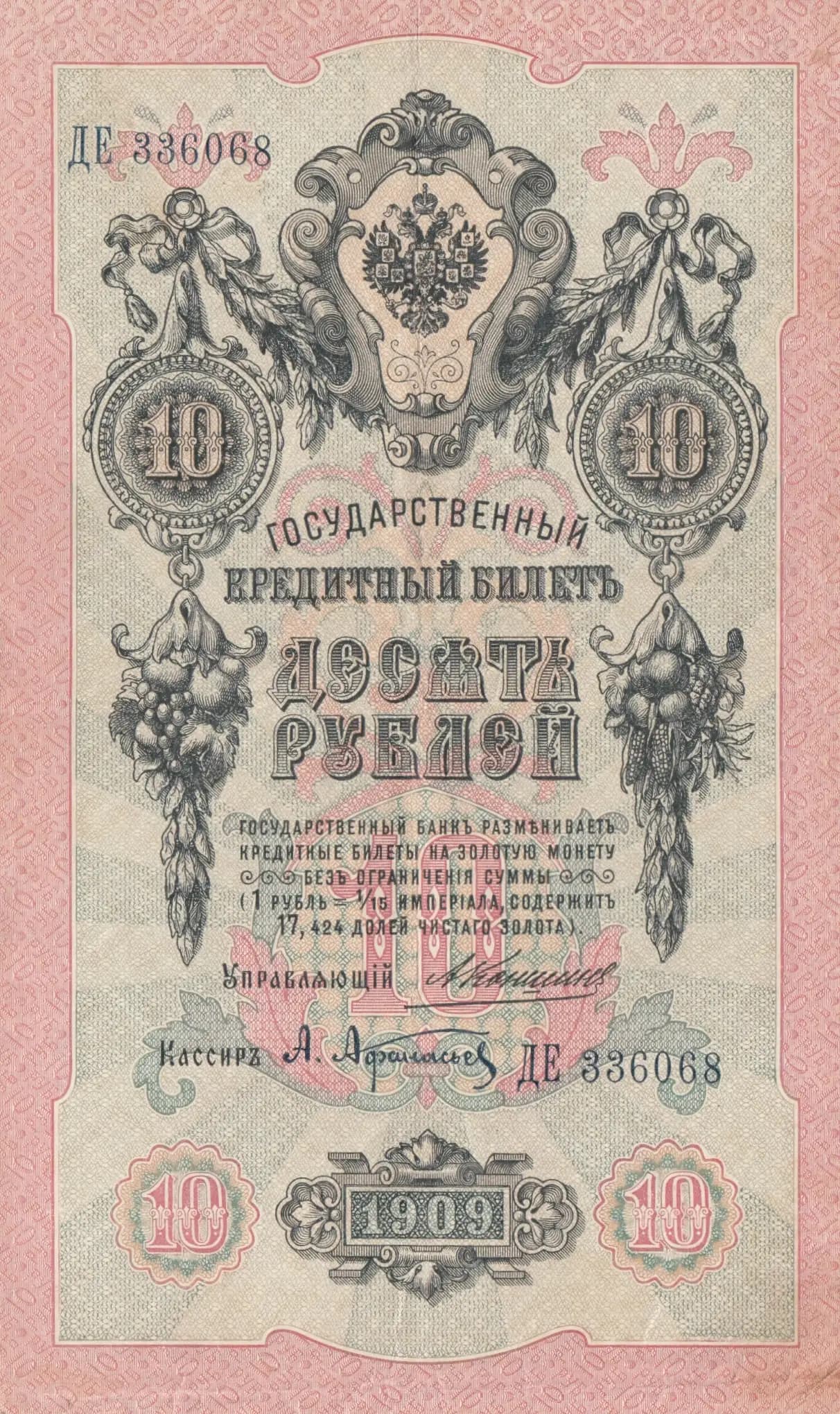
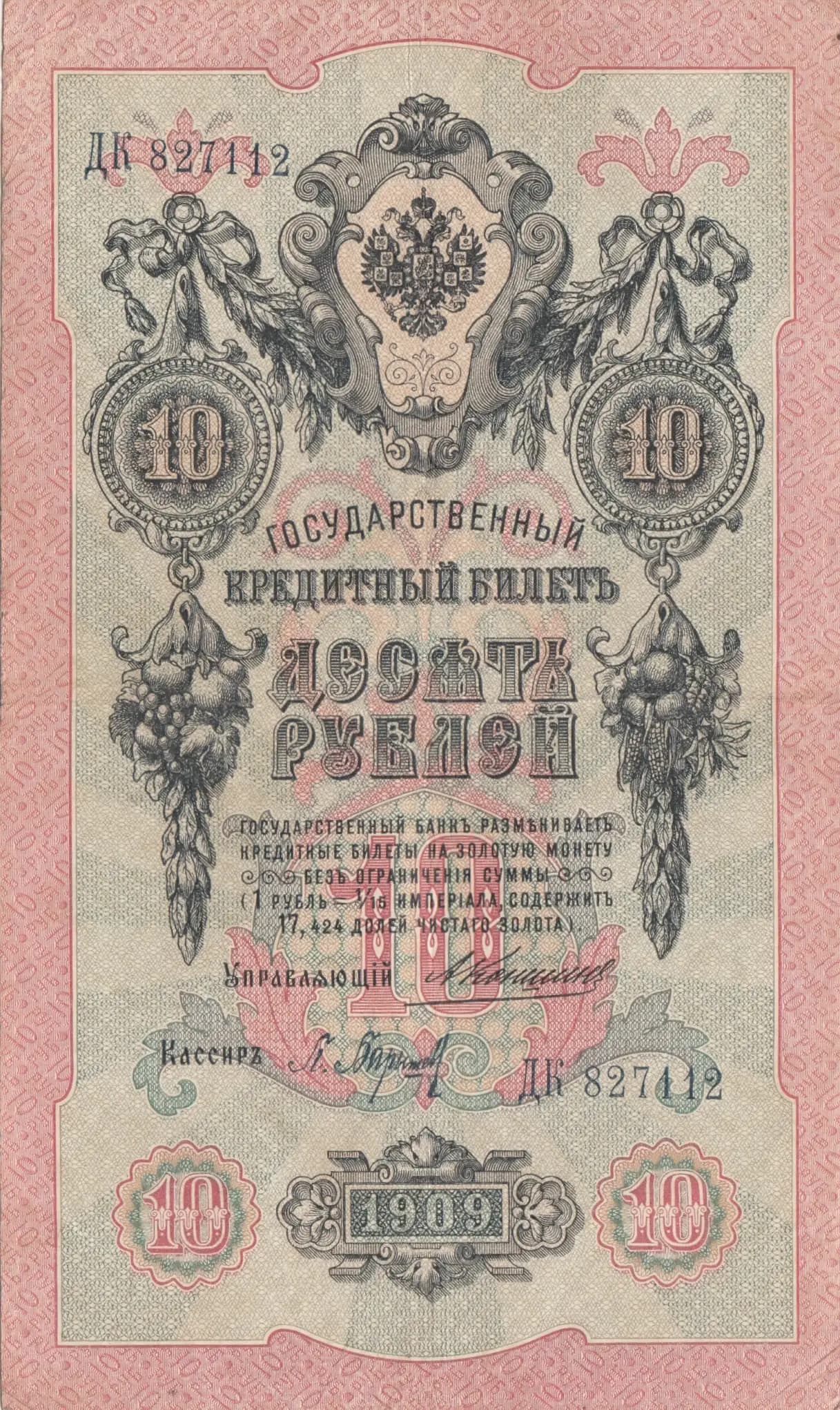
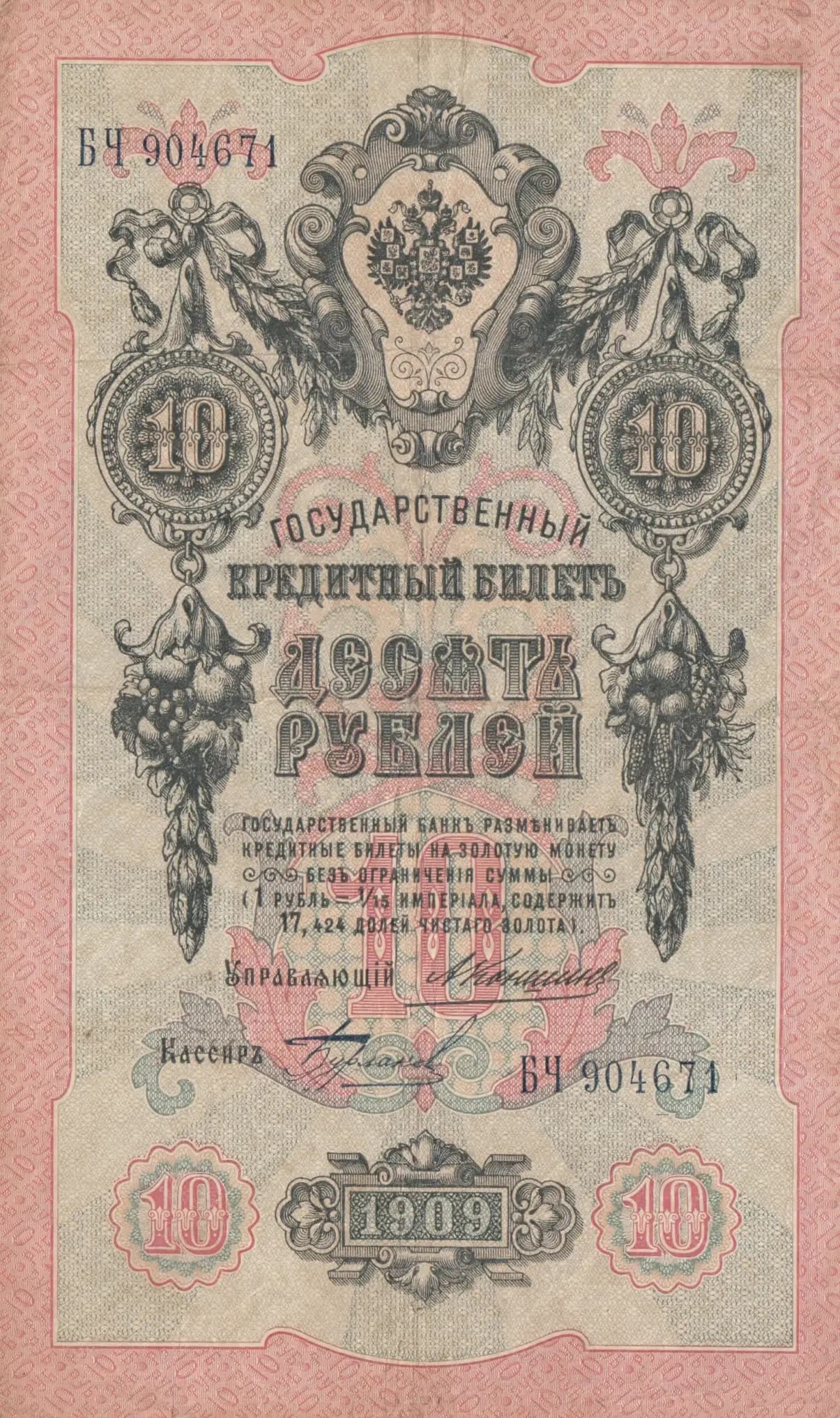
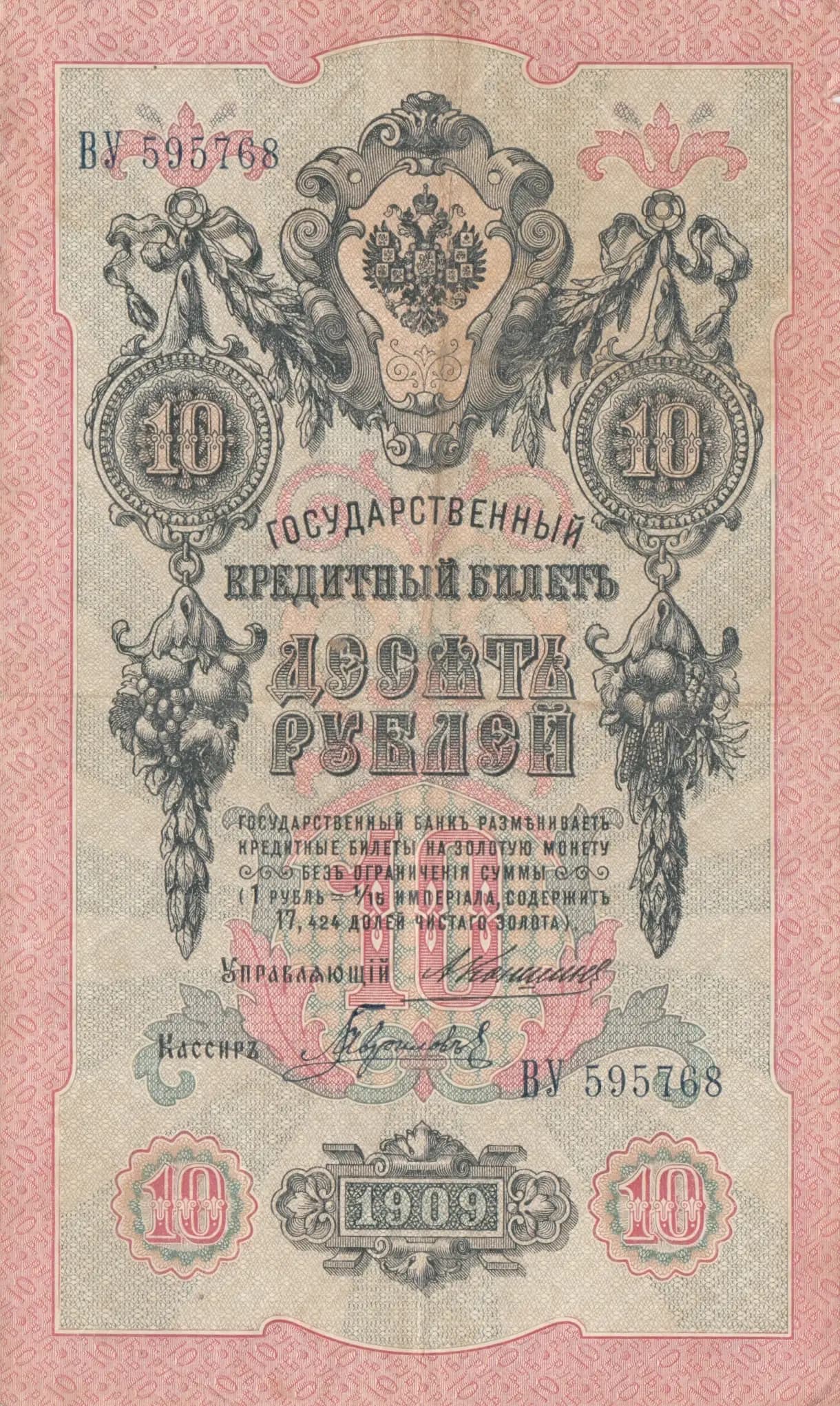
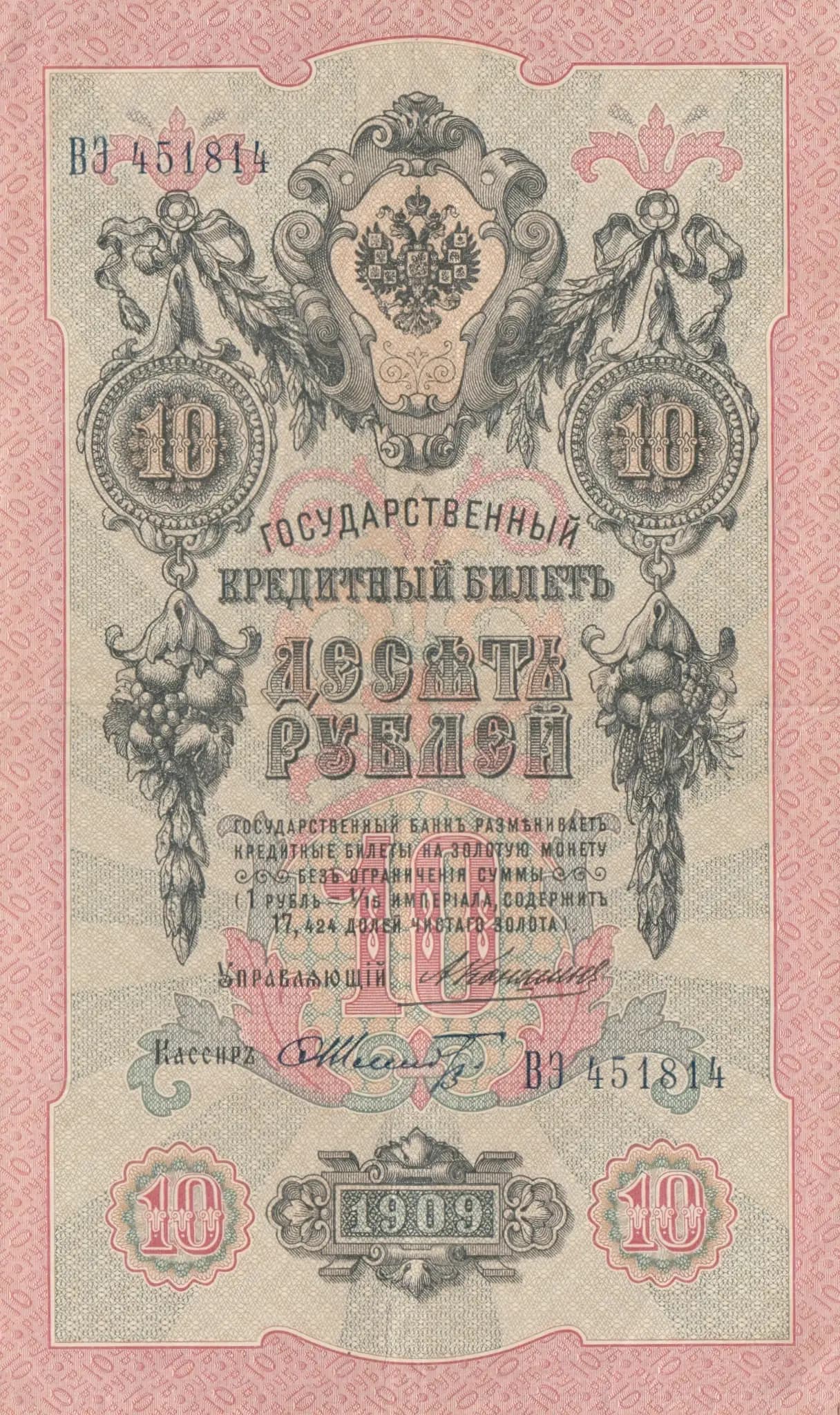
This is an exceptional example of a Russian Imperial 10 Rublei note from 1909, graded VF with remarkable visual crispness suggesting minimal circulation. The note displays the characteristic Art Nouveau design of the Shipov-Schmidt signature series, featuring a striking pink/rose palette with the Imperial double-headed eagle prominently displayed in an ornamental cartouche flanked by allegorical female figures holding grape garlands. The intricate engraving and ornamental baroque scrollwork throughout both sides demonstrate the high security standards of Imperial Russian currency during the Romanov era's final decade.
Common. The 1909 10 Rublei Shipov-Schmidt signature variety (P-11b) was issued in substantial quantities as a standard denomination of the Russian Empire's circulation currency. While individual notes in VF condition command moderate collector interest and value (typically $30-75 USD depending on serial number prefixes and specific variety), the series was widely circulated and produced in large print runs. The VF grade is relatively common for this note type, as many examples survived in better condition due to the note's relatively recent historical period and the care taken by collectors. No known print run restrictions, recalls, or short-lived issuing periods apply to this standard circulation note.
This 10 Rublei note was issued during the final years of the Russian Empire under the gold standard system, as evidenced by the prominent inscriptions guaranteeing exchange for gold at a fixed rate (1 Ruble = 1/15 Imperial containing 17.424 grams of gold). The allegorical figures and Imperial double-headed eagle symbolize the state authority and stability of Tsarist Russia's financial system, while the explicit warning against counterfeiting reflects the security concerns of a major imperial power managing a substantial currency circulation.
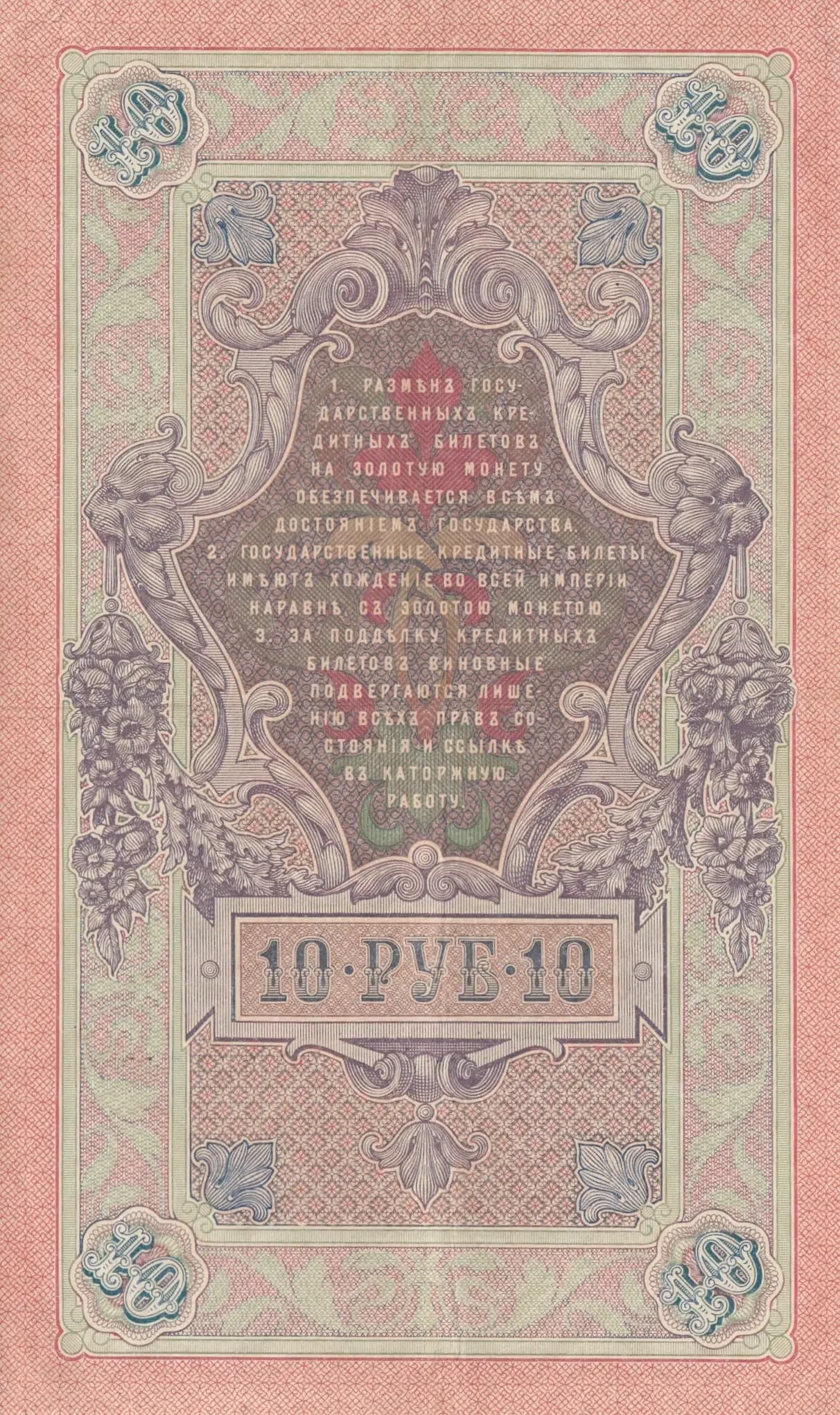
The front features a centrally positioned Imperial Russian double-headed eagle coat of arms within an elaborate ornamental cartouche, the traditional symbol of Tsarist state authority. Flanking the eagle on both sides are allegorical female figures representing Commerce and Industry (common in Imperial Russian note designs of this period), depicted as winged allegorical maidens associated with grape and fruit garlands symbolizing prosperity and agricultural abundance. The denomination '10' appears in circular medallions with ornamental frames on both the left and right sides of the note. The back side presents a symmetrical baroque design with elaborate scrollwork, decorative rosettes in the four corners containing circular emblems, and the denomination prominently displayed as '10 РУБ 10' within an ornamental rectangular frame. The overall design scheme employs Art Nouveau stylistic elements characteristic of early 20th-century Imperial Russian currency design, with fine engraved line work creating depth and security through visual complexity.
FRONT SIDE: (Top left and bottom right) Serial number: БД 451814 (Registration BD 451814). Central cartouche inscriptions: ГОСУДАРСТВЕННЫЙ КРЕДИТНЫЙ БИЛЕТ (State Credit Note); ДЕСЯТЬ РУБЛЕЙ (Ten Rubles); Date: 1909. Lower text block: ГОСУДАРСТВЕННЫЙ БАНК РАЗМЕНИВАЕТ КРЕДИТНЫЕ БИЛЕТЫ НА ЗОЛОТУЮ МОНЕТУ БЕЗ ОГРАНИЧЕНИЯ СУММЫ. 1 РУБЛЬ = 1/15 ИМПЕРИАЛА СОДЕРЖИТ 17,424 ДОЛЕЙ ЗОЛОТА (The State Bank exchanges credit notes for gold coins without limitation on amount. 1 Ruble = 1/15 Imperial containing 17.424 grams of gold). Signature lines: УПРАВЛЯЮЩИЙ (Managing Director); Кассир (Cashier). BACK SIDE: Central text block: РАЗРЕША ГОСУДАРСТВЕННЫМ КРЕДИТНЫМИ БИЛЕТОВ НА ЗОЛОТУЮ МОНЕТУ ЦЕНИВАЕТСЯ ВСЕГДА ПОСТОЯНИЕМ ГОСУДАРСТВА. 2. ГОСУДАРСТВЕННЫЕ КРЕДИТНЫЕ БИЛЕТЫ ИМЕЮТ ХОЖДЕНИЕ ВО ВСЕЙ ИМПЕРИИ НАРАВНЕ СЪ ЗОЛОТОЮ МОНЕТОЮ. 3. ЗА ПОДДЕЛКУ КРЕДИТНЫХ БИЛЕТОВ ВИНОВНЫЕ ПОДВЕРГАЮТСЯ ЛИШЬ НИО ВСЕХ ПРАВ СО ОТЧИЗНИ И ССЫЛКЕ В КАТОРНИЧНУ РАБОТУ. (Authorization for State Credit Notes on gold coin, valued permanently by the State. 2. State Credit Notes circulate throughout the entire Empire equal to gold coin. 3. For counterfeiting credit notes, guilty parties are subject to loss of all rights from the fatherland and exile to hard labor). Bottom center: 10 РУБ 10 (10 Rubles 10).
Intaglio engraving (steel plate engraving), the primary security printing method for Imperial Russian banknotes of this era. The fine line patterns, cross-hatching visible in the background, intricate scrollwork, and complex decorative elements are characteristic of high-security engraved currency production. The printer for the Shipov-Schmidt series notes (Pick-11b) was the Russian State Printing Works (Государственная Типография) in St. Petersburg, though American Bank Note Company also produced some Imperial Russian notes during this period. The crisp detail and fine engraving throughout indicate professional security printing standards of the highest caliber.
This specific example exhibits the Shipov-Schmidt signature combination, indicating it belongs to the P-11b(19) variety as specified in the catalog data. The serial number prefix БД (BD) is consistent with Imperial Russian serial numbering schemes of the period. The note represents the mature gold-standard era of Imperial Russian currency (1909, late in the Romanov period). Known varieties of this Pick number include different signature combinations and serial number prefixes; the Shipov-Schmidt combination (with Shipov as Managing Director and Schmidt as Cashier) represents one of the standard signature varieties issued during the 1909 period. The specific serial number БД 451814 may indicate relative position within the printing batch, though without complete cataloging of all known serial ranges, individual serial number significance cannot be definitively established.