10 rublei 1909
“Sig.Sofronov”
About This Note
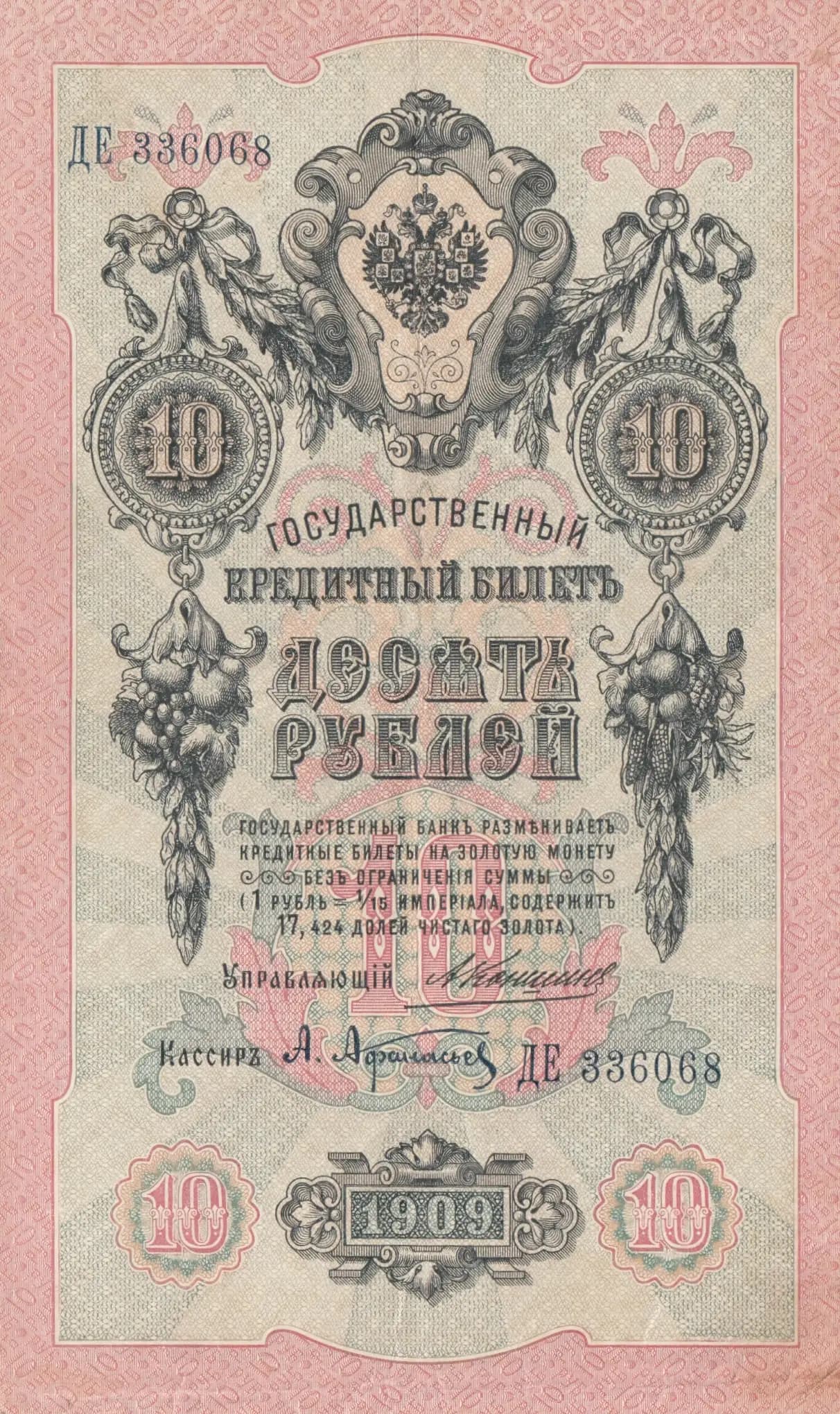
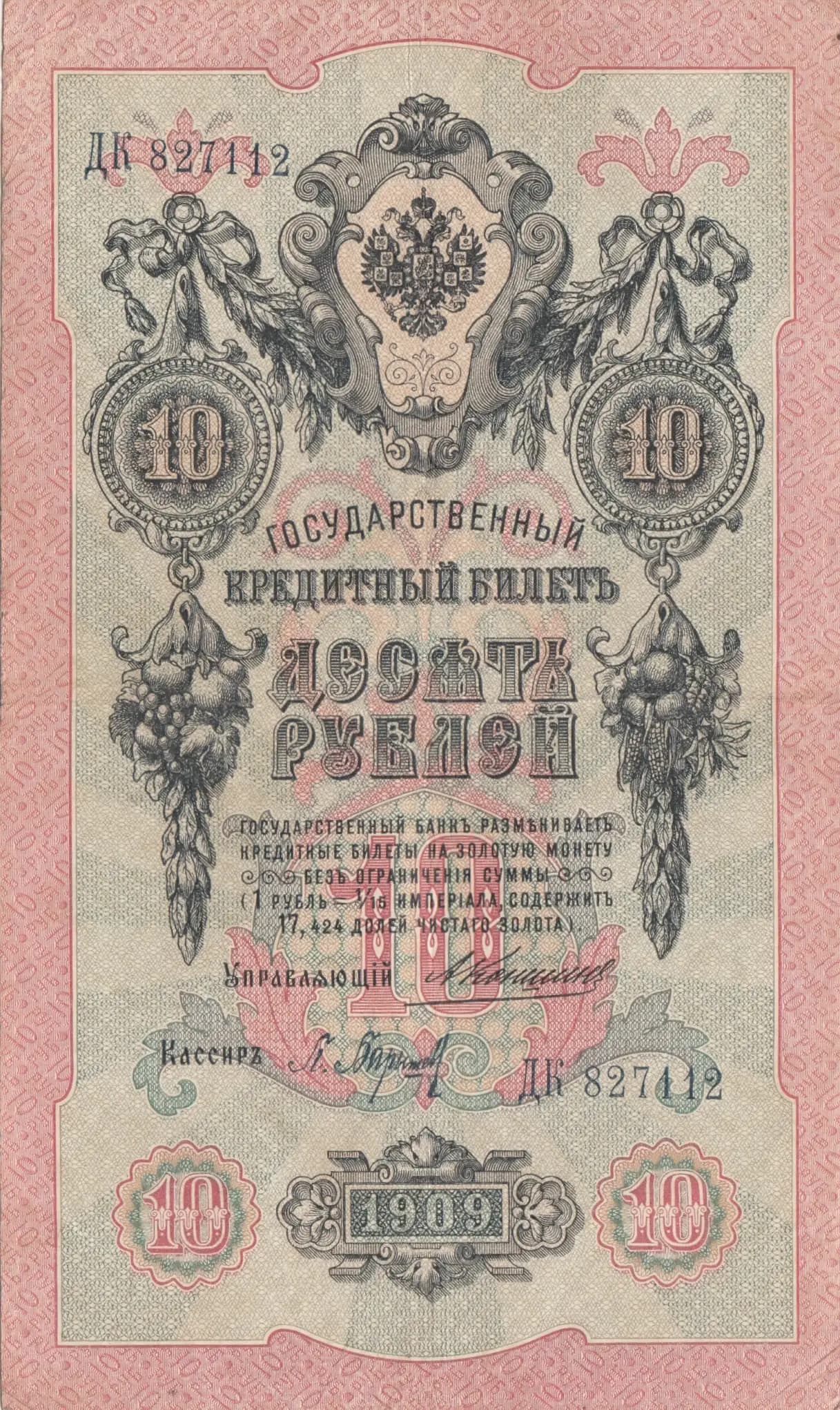
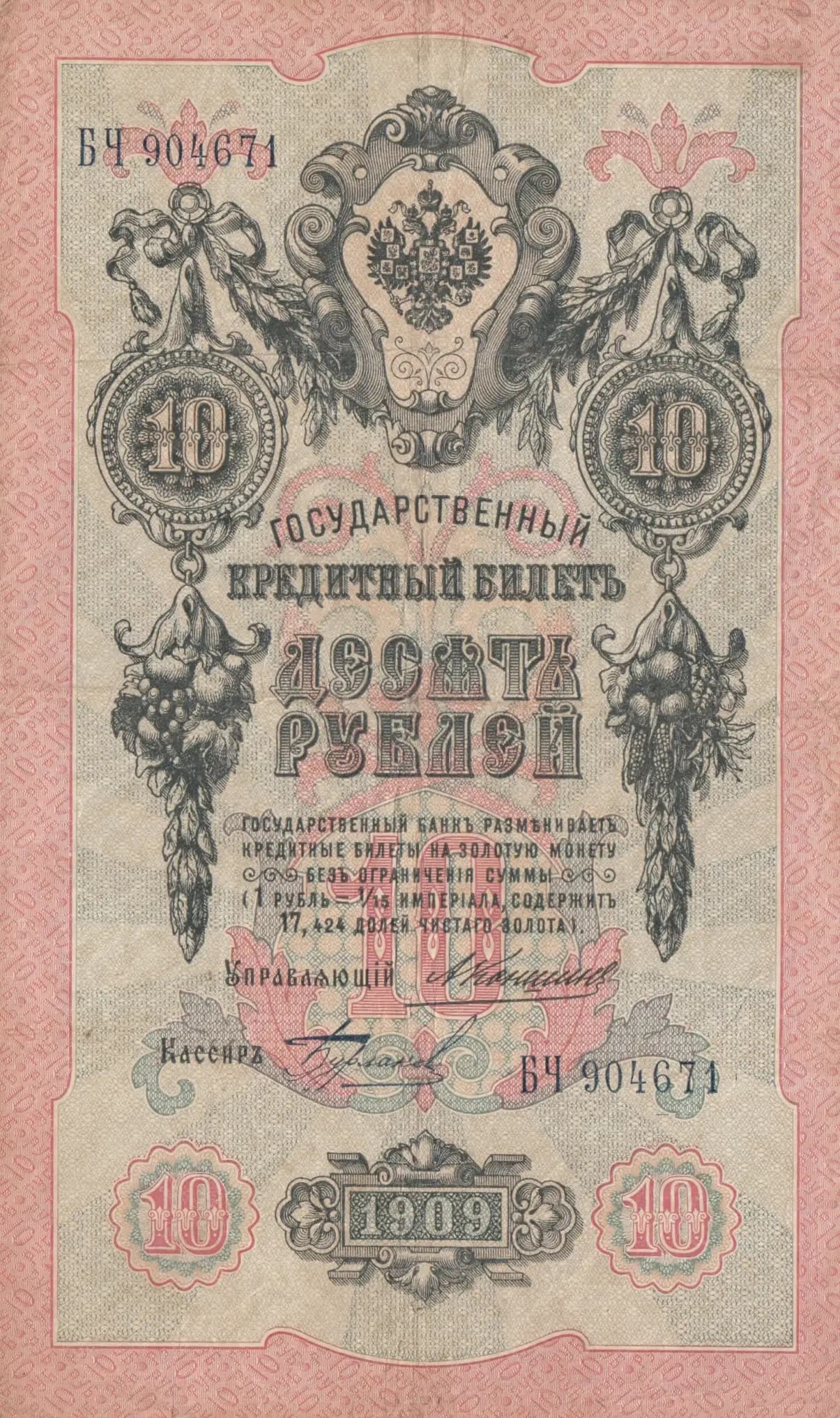
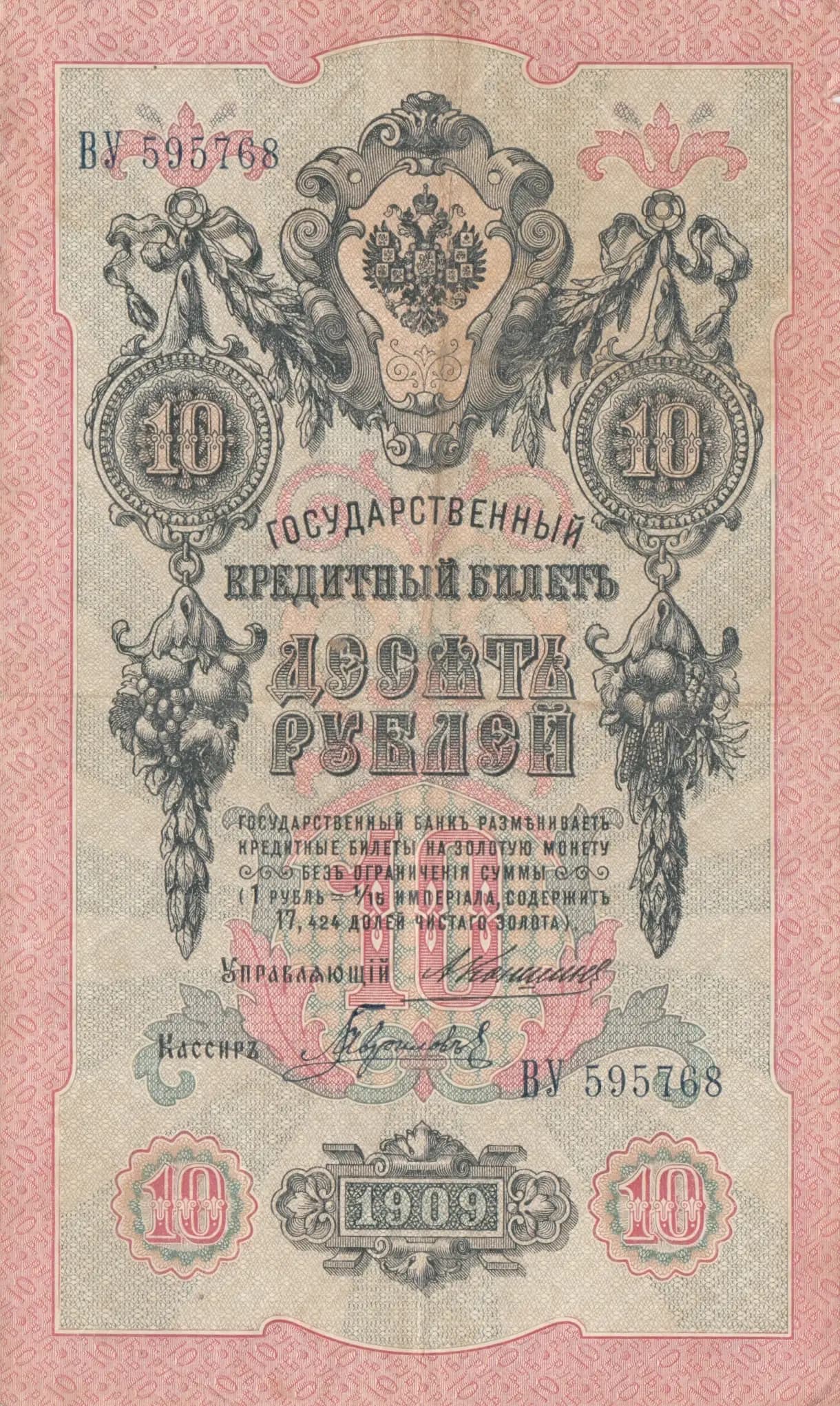
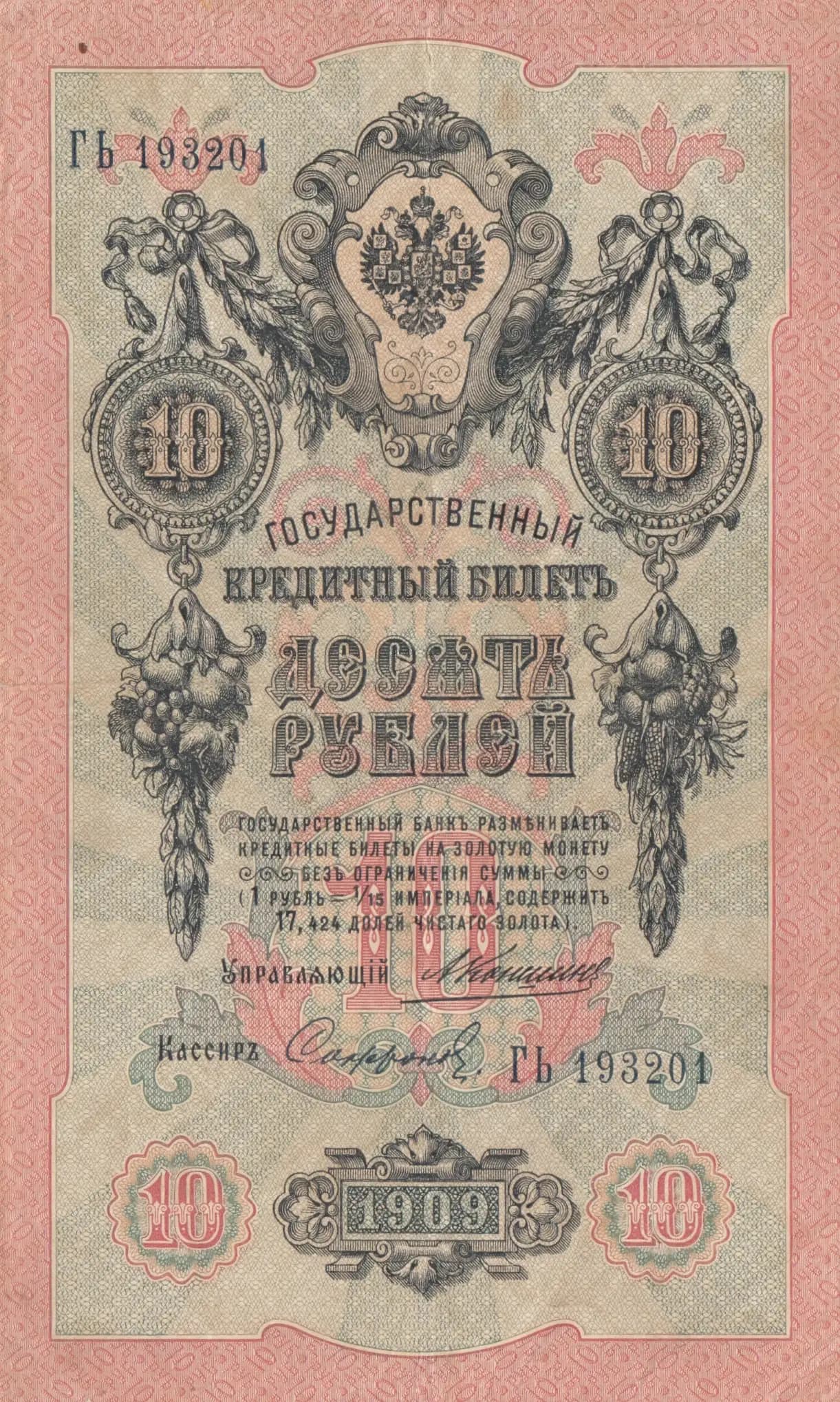
A splendid example of a 10 Rublei State Credit Note from 1909, Imperial Russia, presenting in VF condition with exceptional visual preservation. The note displays the characteristic pink/salmon borders and cream central panel with intricate baroque ornamentation, flanked by allegorical female figures and centered on the Imperial double-headed eagle. The vivid coloring, sharp printing detail, and absence of significant wear make this an attractive specimen of pre-revolutionary Russian monetary design.
Common. The 10 Rublei denomination from the 1909 series was produced in substantial quantities throughout the final years of the Russian Empire and represents one of the most frequently encountered denominations from this period in the numismatic market. While condition grades vary significantly among surviving examples, notes in VF condition are not scarce. Pick 11b(16) variants are regularly available to collectors, and market pricing reflects common-note status.
Issued during the final years of Tsarist Russia, this note represents the gold-backed currency system of the Russian Empire under the reformed monetary standard. The inscriptions prominently display the state guarantee of gold convertibility (1 Ruble = 1/15 Imperiala; 17.424 parts pure gold) and assert that these notes circulated throughout the Empire equal to gold coin itself. The elaborate baroque design with state heraldry and the stern warning against counterfeiting reflect both the sophistication of imperial finances and the security concerns of the era.
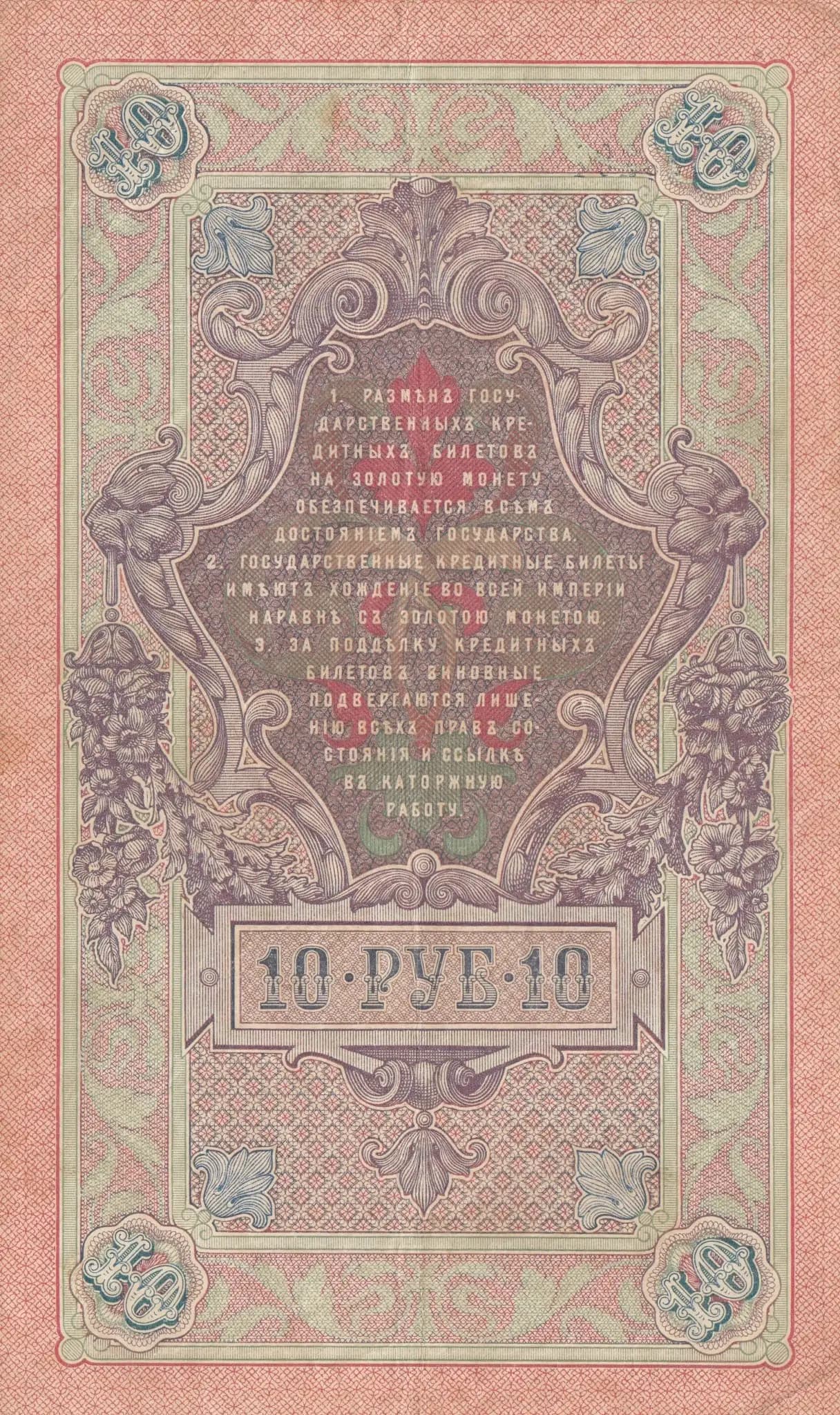
The front of this note features two classical allegorical female figures in flowing robes positioned symmetrically on either side of the central Imperial coat of arms (the Russian double-headed eagle crowned and bearing shield). The figures represent virtue and state authority—common motifs in 19th-century imperial Russian currency design. Ornamental circular medallions bearing the numeral '10' in elaborate frames are positioned on the left and right sides. Decorative grape bunches hang from ornamental elements at the bottom, a classical motif symbolizing prosperity and fertility. The back presents a heavily symmetrical baroque composition with an ornate rectangular frame containing the legal terms of the note's gold backing guarantee, surrounded by elaborate corner ornaments and four corner grape bunch arrangements. The consistent use of pink/salmon borders and beige/cream central panels across both sides unifies the design while the intricate guilloché patterns and fine-line engraving throughout demonstrate the security measures of imperial monetary design.
FRONT SIDE: 'ГОСУДАРСТВЕННЫЙ КРЕДИТНЫЙ БИЛЕТ' (State Credit Ticket/Note); 'ДЕСЯТЬ РУБЛЕЙ' (Ten Rubles); Serial number: Гб.193201; 'ГОСУДАРСТВЕННЫЙ БАНК РАЗМЕНИВАЕТ КРЕДИТНЫЕ БИЛЕТЫ НА ЗОЛОТУЮ МОНЕТУ БЕЗ ОГРАНИЧЕНИЯ СУММЫ. 1 РУБЛЬ = 1/15 ИМПЕРИАЛА; СОДЕРЖИТ 17.424 ДОЛЕЙ ЧИСТОГО ЗОЛОТА.' (The State Bank exchanges credit notes for gold coin without limitation. 1 Ruble = 1/15 Imperiala; contains 17.424 parts of pure gold.); Signature titles: 'СПРАВЛЯЮЩИЙ' (Acting) and 'Кассир' (Cashier). BACK SIDE: 'РАЗМЕНЪ ГОСУДАРСТВЕННЫХ КРЕДИТНЫХ БИЛЕТОВ НА ЗОЛОТУЮ МОНЕТУ ОБЕСПЕЧИВАЕТСЯ ВСЕМ ДОСТОЯНИЕМЪ ГОСУДАРСТВА.' (The exchange of State Credit Notes for gold coin is guaranteed by all the wealth of the State.); '2. ГОСУДАРСТВЕННЫЕ КРЕДИТНЫЕ БИЛЕТЫ ИМЕЮТ ХОЖДЕНIЕ ВО ВСЕЙ ИМПЕРИИ НАРАВНЕ СЪ ЗОЛОТОЙ МОНЕТОЙ.' (2. State Credit Notes have circulation throughout the entire Empire equal to gold coin.); '3. ЗА ПОДДЕЛКУ КРЕДИТНОГО БИЛЕТА ВИНОВНЫЕ ПОДВЕРГАЮТСЯ ЛИШЬ НИО ВСЕМ ПРАВОМ ДО СТОЯНIЯ И ССЫЛКЕ НА КАТОРНУЮ РАБОТУ.' (3. For counterfeiting credit notes, those found guilty are subjected to punishment according to all laws regarding deprivation of status and exile to hard labor.); Denomination cartouche: '10·РУБ·10' (10 Rubles).
This note was produced using intaglio engraving (recess printing), a technique standard for high-security banknote production of the period. Multiple color printing was employed, utilizing pink/salmon, black, and gray inks applied sequentially. The complex guilloché patterns, fine-line work in the ornamental elements, and the intricate baroque scrollwork are characteristic of steel engraving techniques used by the Imperial Russian printing authorities. The printer was the State Security Printing Works of the Russian Empire, which produced all official state credit notes of this denomination and period.
This specific example exhibits signature Sofronov in the official capacity positions. The note carries serial number Гб.193201 (Gb.193201), with the 'Гб' (Gb) prefix indicating one of the standard serial number varieties for this series. The 1909 date and P-11b(16) designation indicate this is from the later series of State Credit Notes issued under the gold standard monetary reform. Variations in this Pick number include different signature combinations and serial number prefixes, with Sofronov signatures being documented variants of the final imperial issue.