10 rublei 1909
“Sig.Ovchinnikov”
About This Note
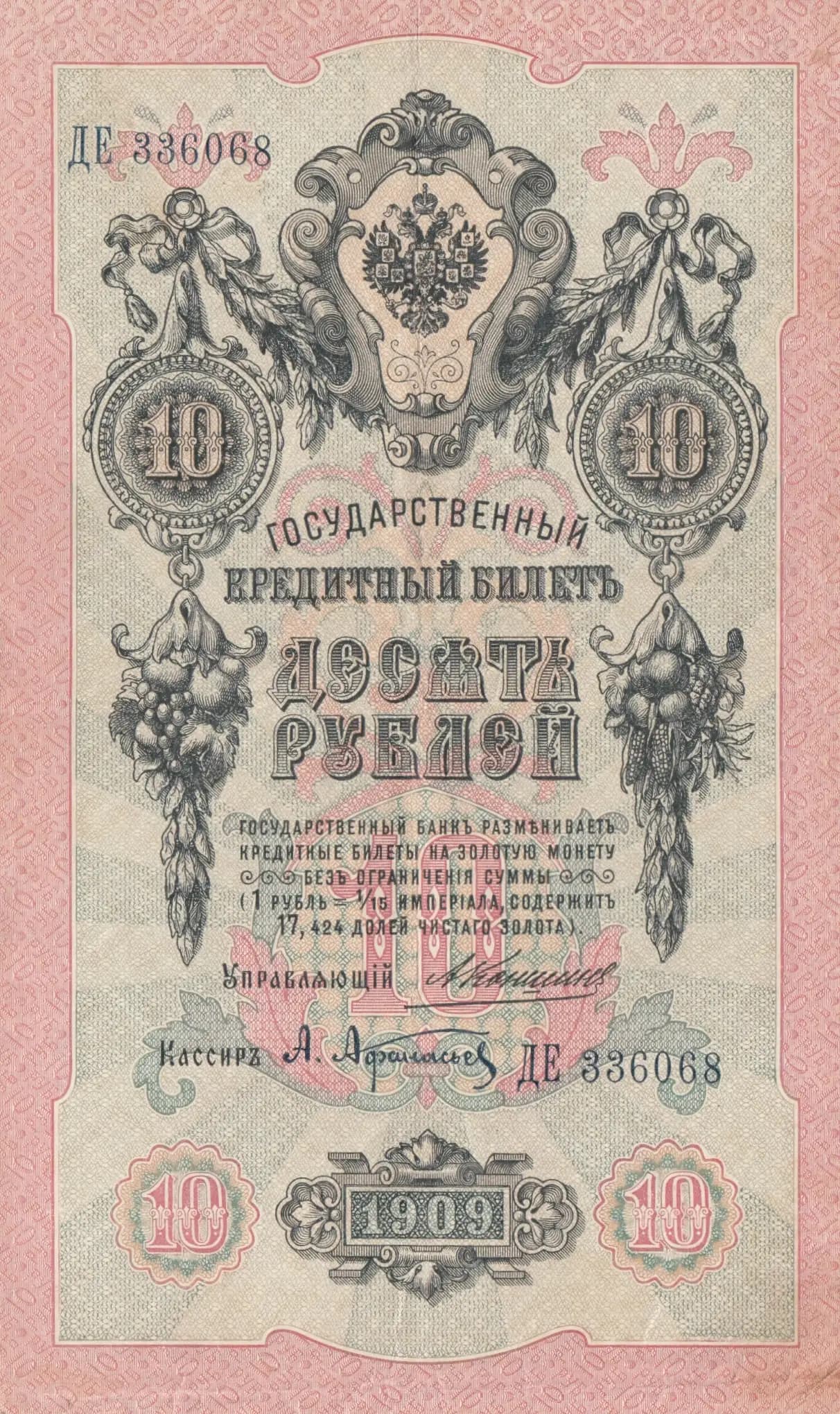
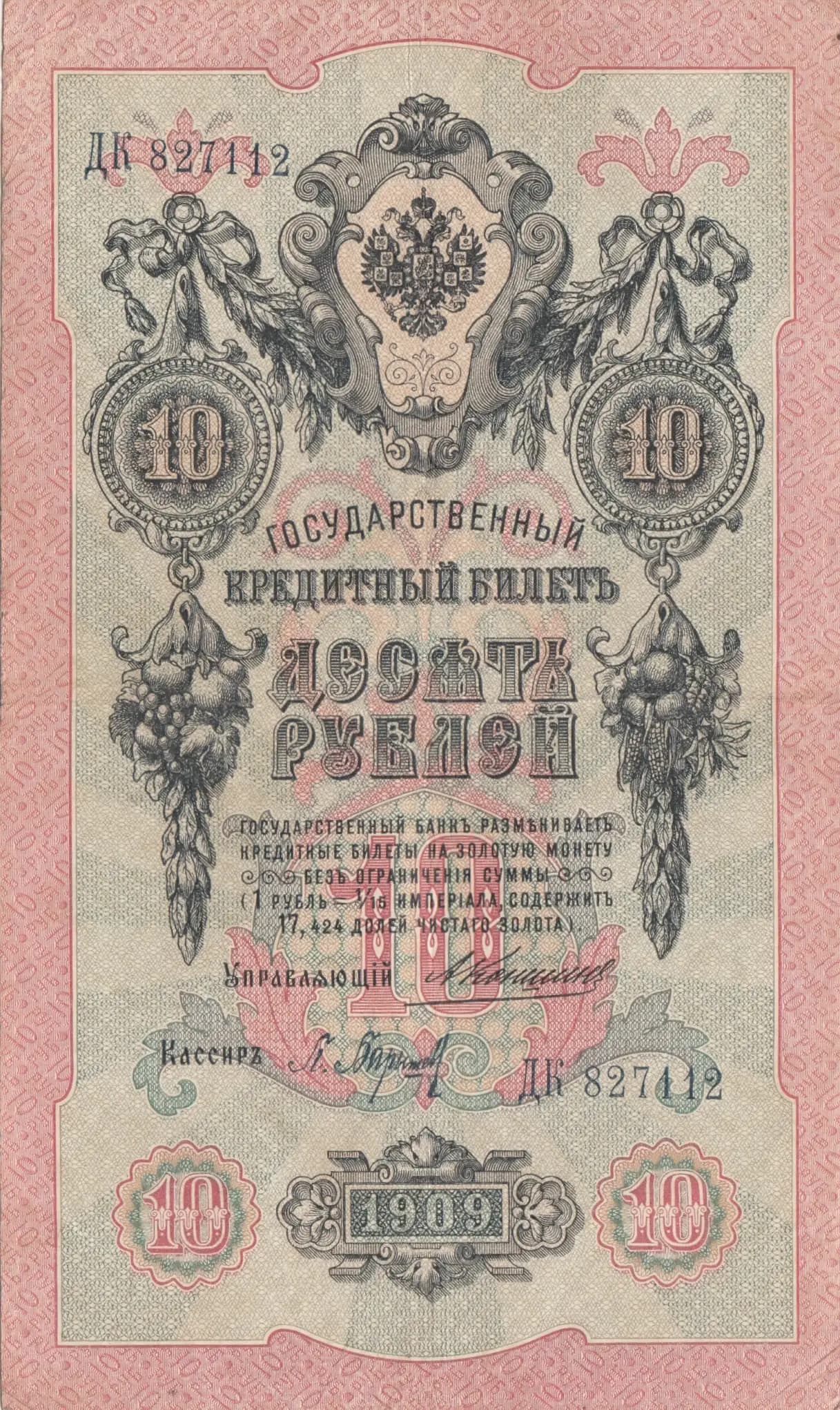
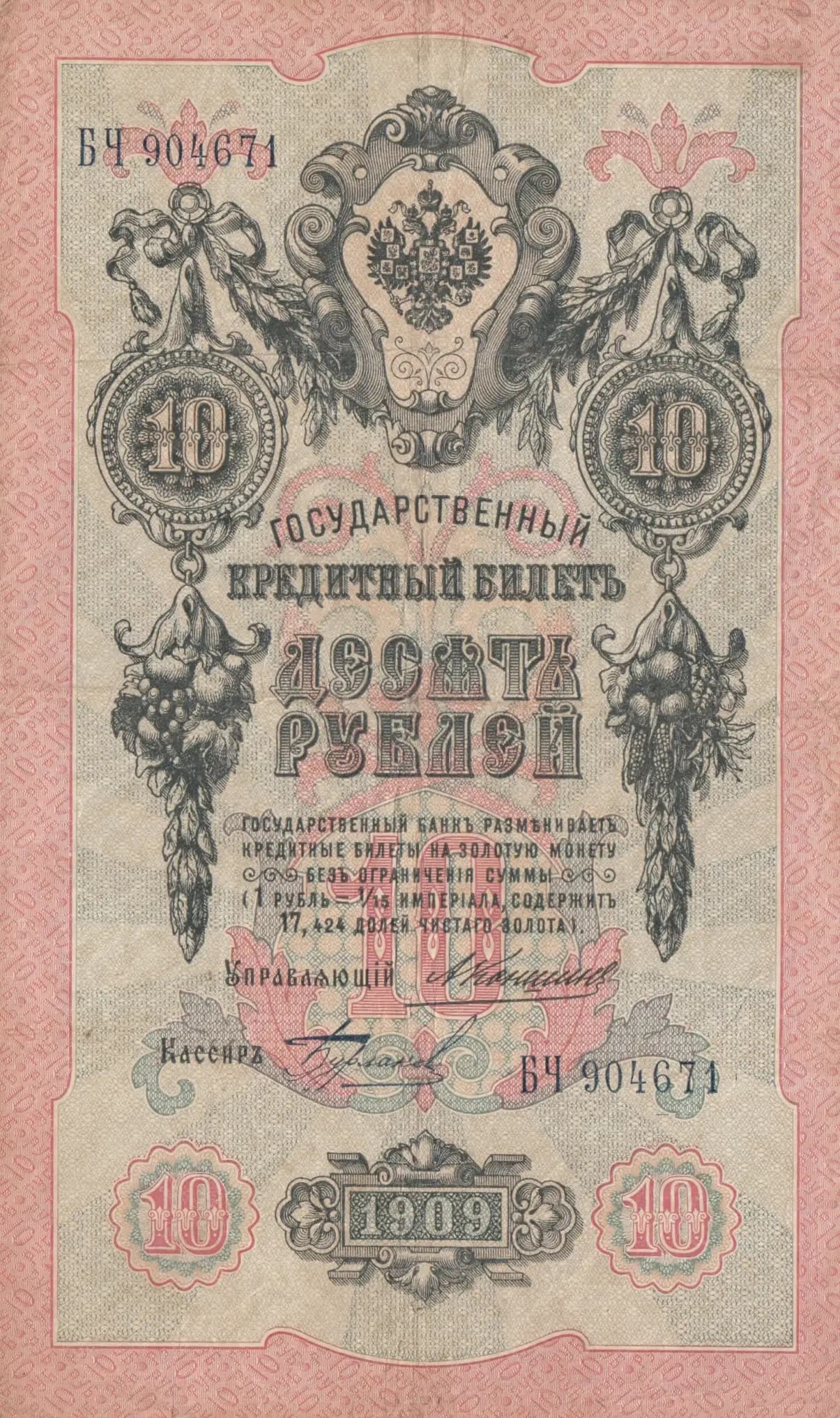
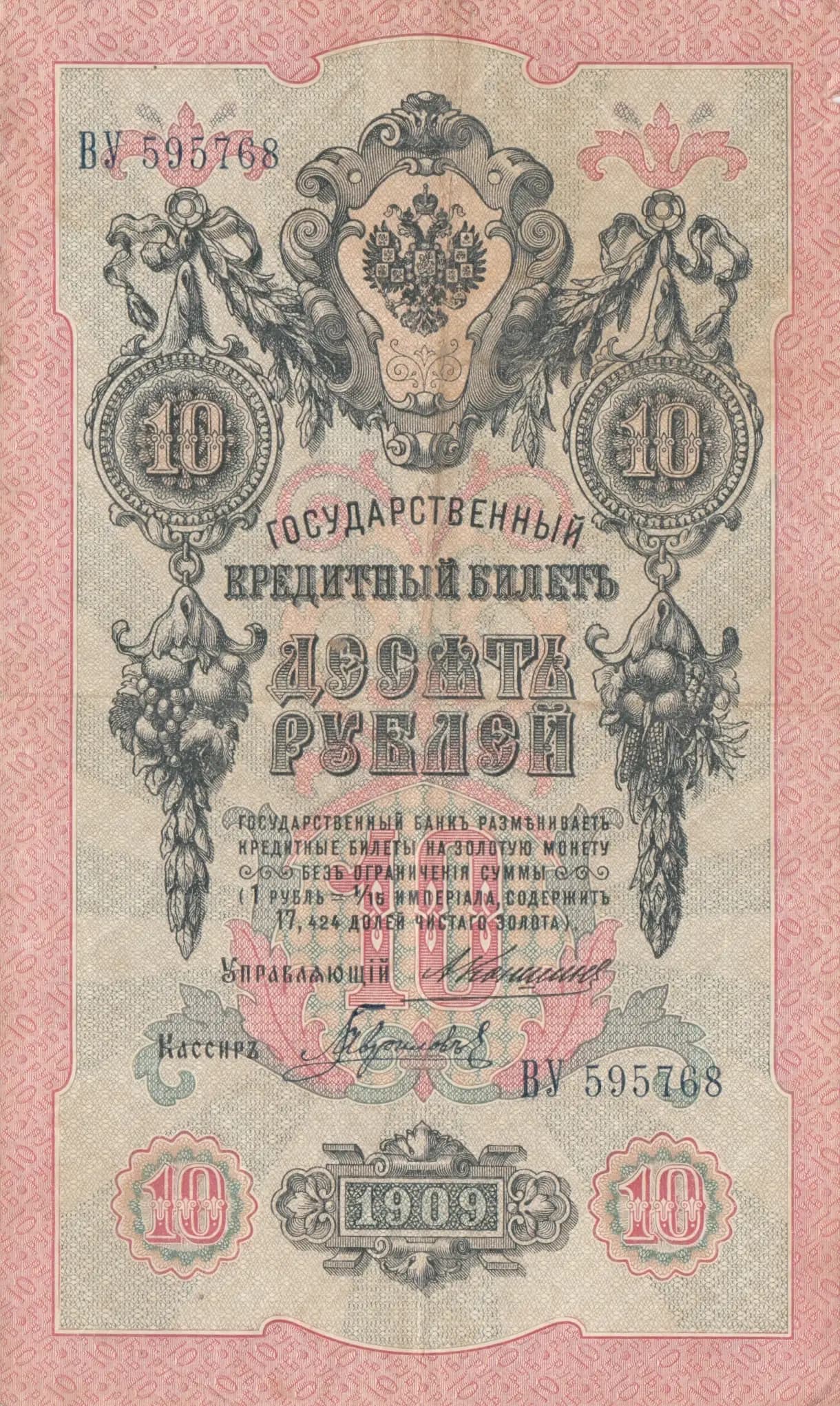
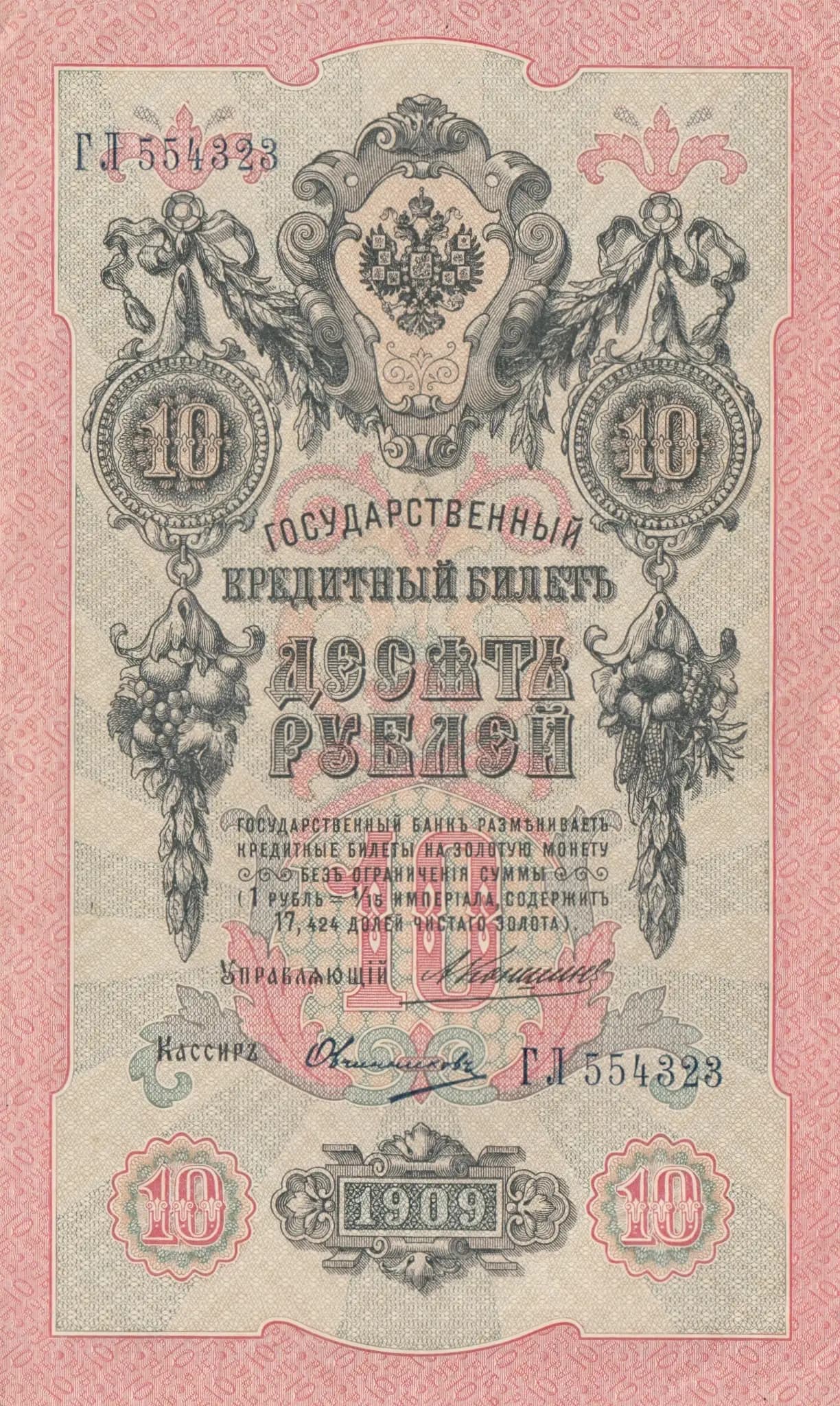
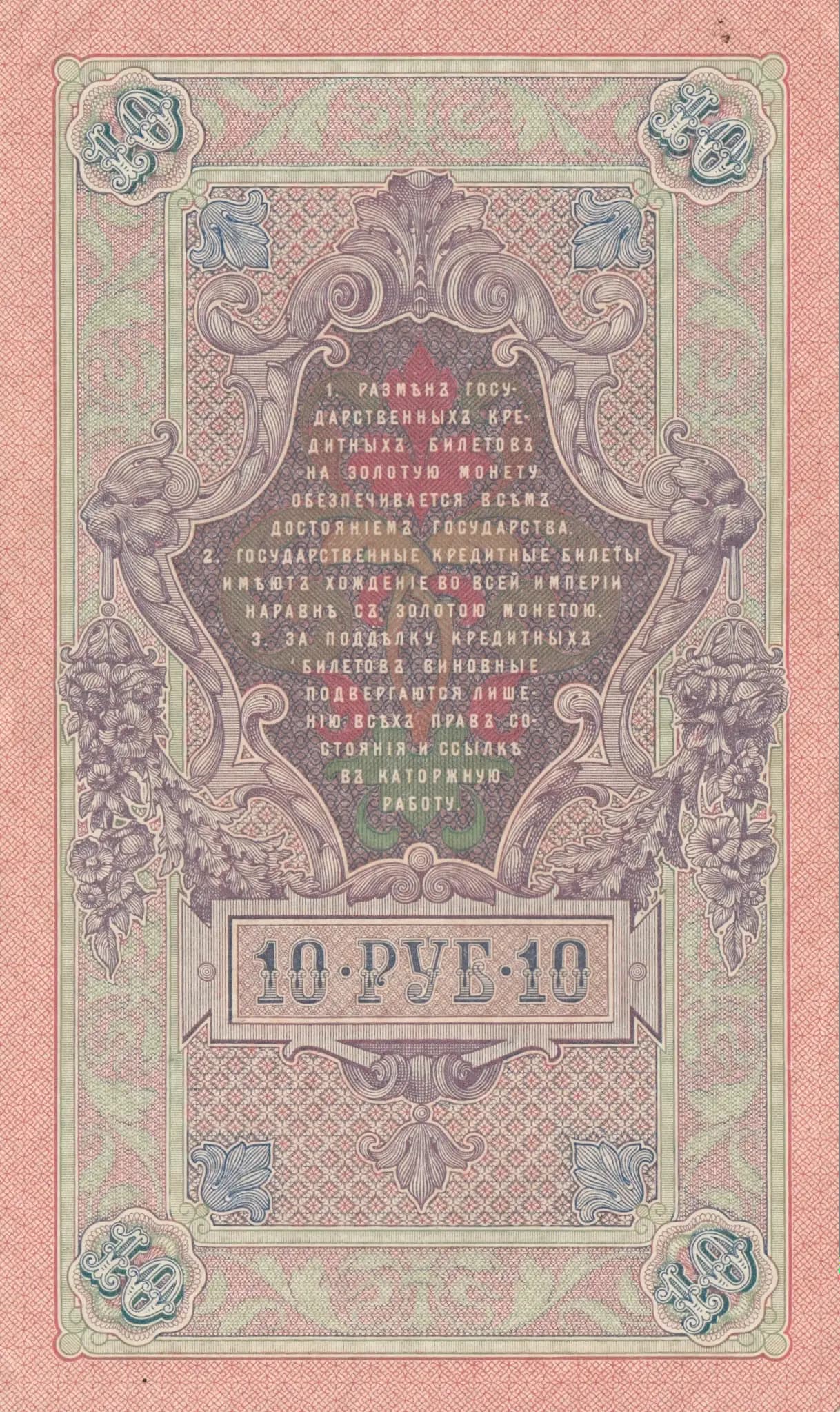
This is a VF-grade 1909 Russian 10 Rublei note (Pick P-11b(14)) featuring the classic Imperial design with allegorical winged victories flanking the double-headed eagle coat of arms. The note displays typical circulation wear with creasing and foxing, yet maintains sharp printing clarity throughout the intricate engraved design. The ornate pink and cream color scheme, coupled with the detailed security printing and gold-backing guarantee text, exemplifies the high-quality craftsmanship of late Imperial Russian currency.
Common. The 1909 10 Rublei notes in the Pick P-11b series were issued in substantial quantities by the Russian State Bank and remain relatively available in the collector market today, particularly in VF condition. Millions of these notes circulated during the final years of the Imperial period and the early Soviet era. Unless this specific serial number or signature variety is documented as exceptionally scarce, notes of this type typically sell in modest price ranges ($15-40 USD depending on exact variety and market conditions), indicating healthy supply among collectors. The presence of circulation wear consistent with this grade confirms typical market availability.
Issued during the reign of Tsar Nicholas II, this 10 Rublei note represents the Russian Empire's state credit system under the gold standard established by Finance Minister Sergei Witte. The prominent inscriptions guaranteeing exchange for gold coins and specifying the gold content (17.424 parts pure gold per ruble) reflect Russia's commitment to the gold standard in 1909, while the allegorical figures symbolize the strength and legitimacy of the Imperial state. The severe penalties for counterfeiting noted on the reverse demonstrate the government's determination to maintain currency integrity during this period of industrial and economic development.
The obverse features two allegorical winged female figures (representing Victory or Imperial virtues) in classical drapery flanking a central ornamental shield bearing the Imperial double-headed eagle coat of arms. Decorative cherub heads appear in the corners, while elaborate grape vine bunches hang from scrollwork below the shield, symbolizing prosperity and abundance. The design is framed by an intricate ornamental border with fine guilloche patterns. Large circular denomination markers showing '10' occupy the left and right edges. The reverse displays an elaborate ornamental frame with coat of arms emblems in all four corners and extensive scrollwork with floral botanical elements. The central section contains the full legal text concerning the note's gold backing and penalties for counterfeiting, enclosed within a dark rectangular cartouche. The bottom ornamental cartouche displays '10 РУБ 10' in period script. The color scheme of pink and cream with black text and accents creates strong visual hierarchy.
FRONT SIDE: 'ГОСУДАРСТВЕННЫЙ КРЕДИТНЫЙ БИЛЕТ' (State Credit Note); 'ДЕСЯТЬ РУБЛЕЙ' (Ten Rubles); 'ГОСУДАРСТВЕННЫЙ БАНК РАЗМЕНИВАЕТ КРЕДИТНЫЕ БИЛЕТЫ НА ЗОЛОТУЮ МОНЕТУ' (The State Bank Exchanges Credit Notes for Gold Coins); 'ОБЕСПЕЧЕНИЯ СУММЫ' (Providing the Sum); '1 РУБЛЬ = 1/3 ИМПЕРИАЛА' (1 Ruble = 1/3 Imperial); 'СОДЕРЖИТ 17,424 ДОЛЯ ЧИСТОГО ЗОЛОТА' (Contains 17.424 parts pure gold); 'Кассир' (Cashier); Serial number 'ГД554328'; Date '1909'. BACK SIDE: 'РАЗМЕННЫЙ ГОСУДАРСТВЕННЫХ КРЕДИТНЫХ БИЛЕТОВ НА ЗОЛОТУЮ МОНЕТУ' (Exchange of State Credit Notes for Gold Coins); 'ОБЕСПЕЧИВАЕТСЯ ВСЕЮ СОСТОЯНИЕИ ГОСУДАРСТВА' (Is Guaranteed by All the Condition and State); '2. ГОСУДАРСТВЕННЫЕ КРЕДИТНЫЕ БИЛЕТЫ ИМЕЮТ ХОЖДЕНИЕ НАРАВНЕ С ЗОЛОТОЮ И ЗОЛОТОЮ МОНЕТОЙ' (2. State Credit Notes Have Circulation Equal to Gold and Gold Coins); '3. ЗА ПОДДЕЛКУ КРЕДИТНЫХ БИЛЕТОВ УСТАНОВЛЕНЫ ПОВЕРГАЮТСЯ ЛИШЕ ПО ВСЕХ ПРАВ СО СТОЯНИЯ И ССЫЛКА ВЛ КАТОРЖНУЮ РАБОТУ' (3. For Counterfeiting Credit Notes Are Established [penalties] Subject To Hard Labor); '10 РУБ 10' (10 Rubles 10).
This note was produced using steel plate engraving with hand-colored lithographic elements, typical of Imperial Russian banknote production of the period. The fine line work, intricate guilloche patterns, and detailed allegorical figures are characteristic of intaglio printing by a security printer. Based on the Pick catalogue designation and the known production history of 1909-dated Imperial 10 Rublei notes, this was likely printed by the State Printing Works (Государственный Печатный Завод) in St. Petersburg or a contracted security printer authorized by the Russian State Bank. The multi-color printing technique combining engraved elements with tinted background work was standard for high-value notes of this era.
This note bears serial number ГД554328, which should be cross-referenced against known serial number ranges for the 1909 10 Rublei P-11b(14) variety to determine if it represents a scarce block. The signature on the 'Кассир' (Cashier) line requires closer examination to identify the specific authorized official, as different cashier signatures exist and some may command premiums. The Pick designation P-11b(14) indicates this is the fourteenth catalogued state or printing variation of the 1909 issue; collectors should verify this specific variety designation and any documented signature or overprint peculiarities. No obvious overprints or security markings beyond standard production details are evident in the visual analysis.