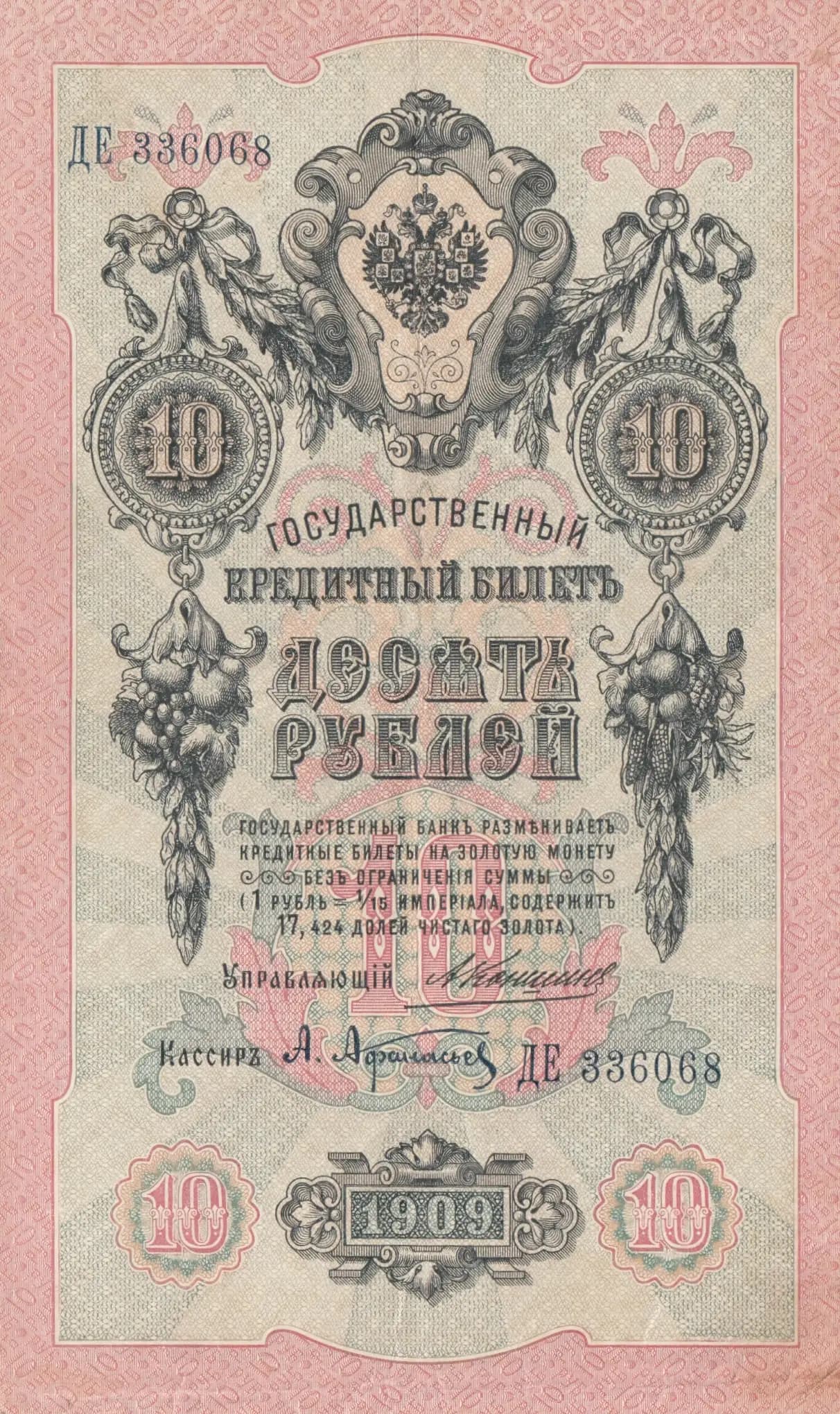
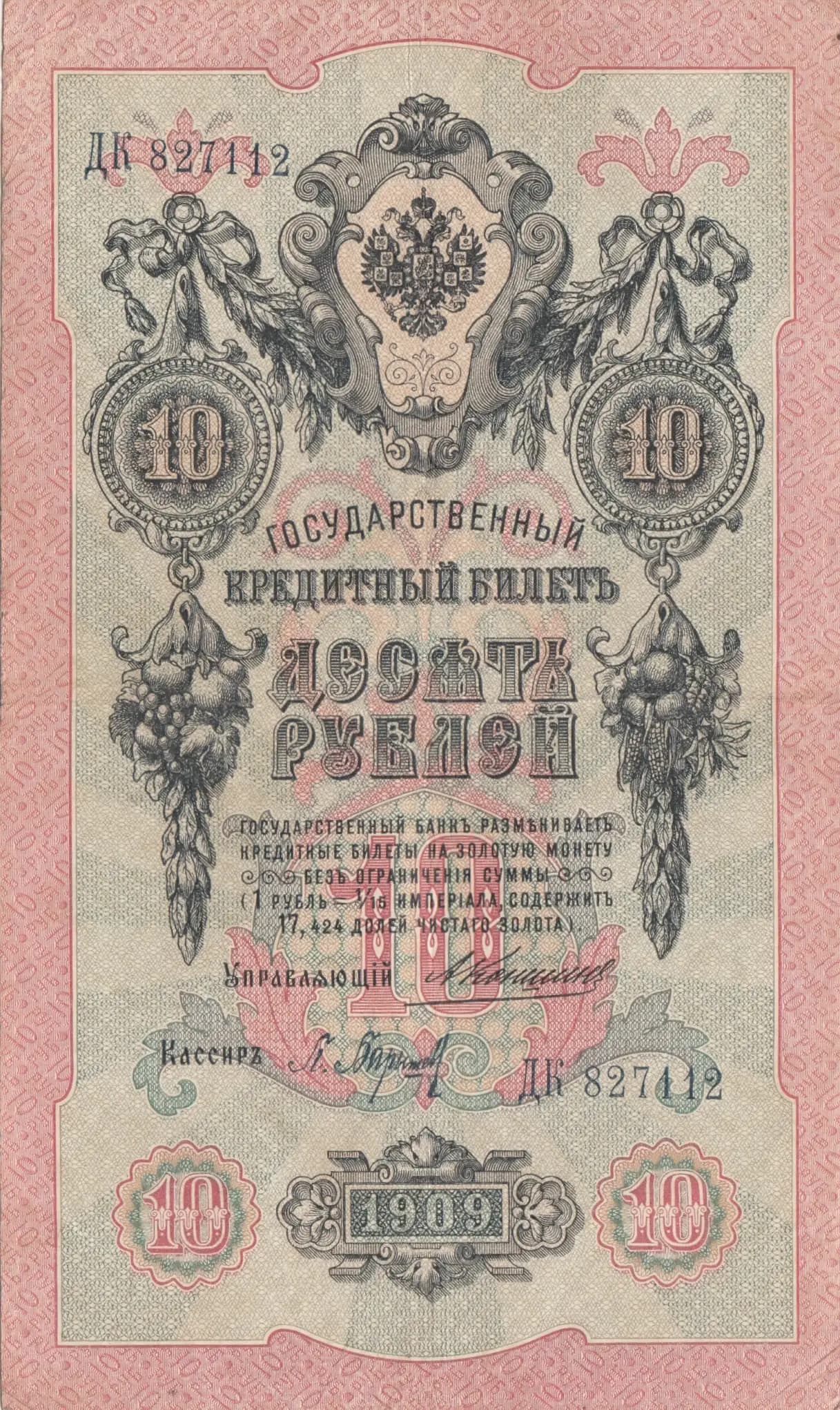
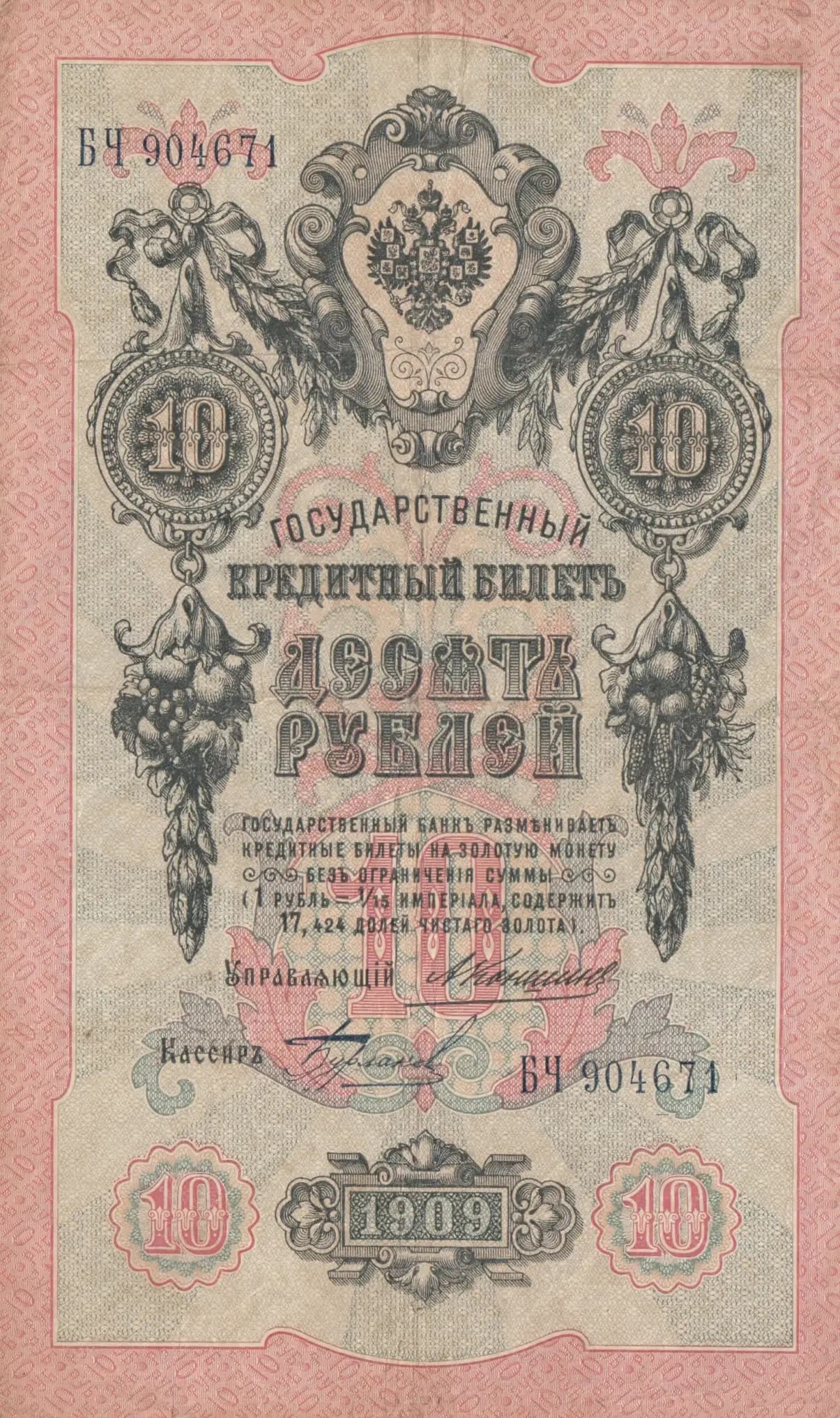
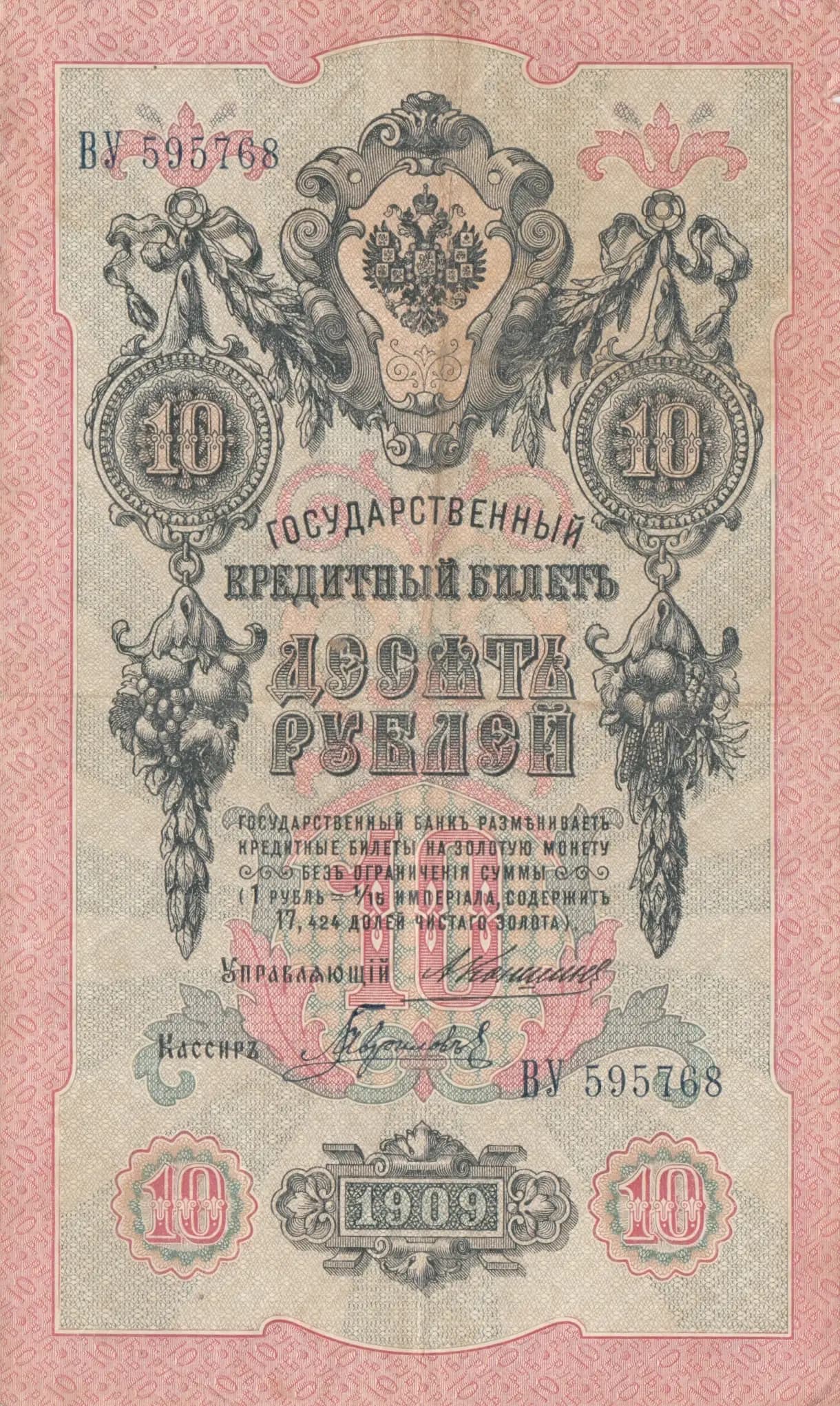
10 rublei 1909
“Sig.Morozov”
About This Note
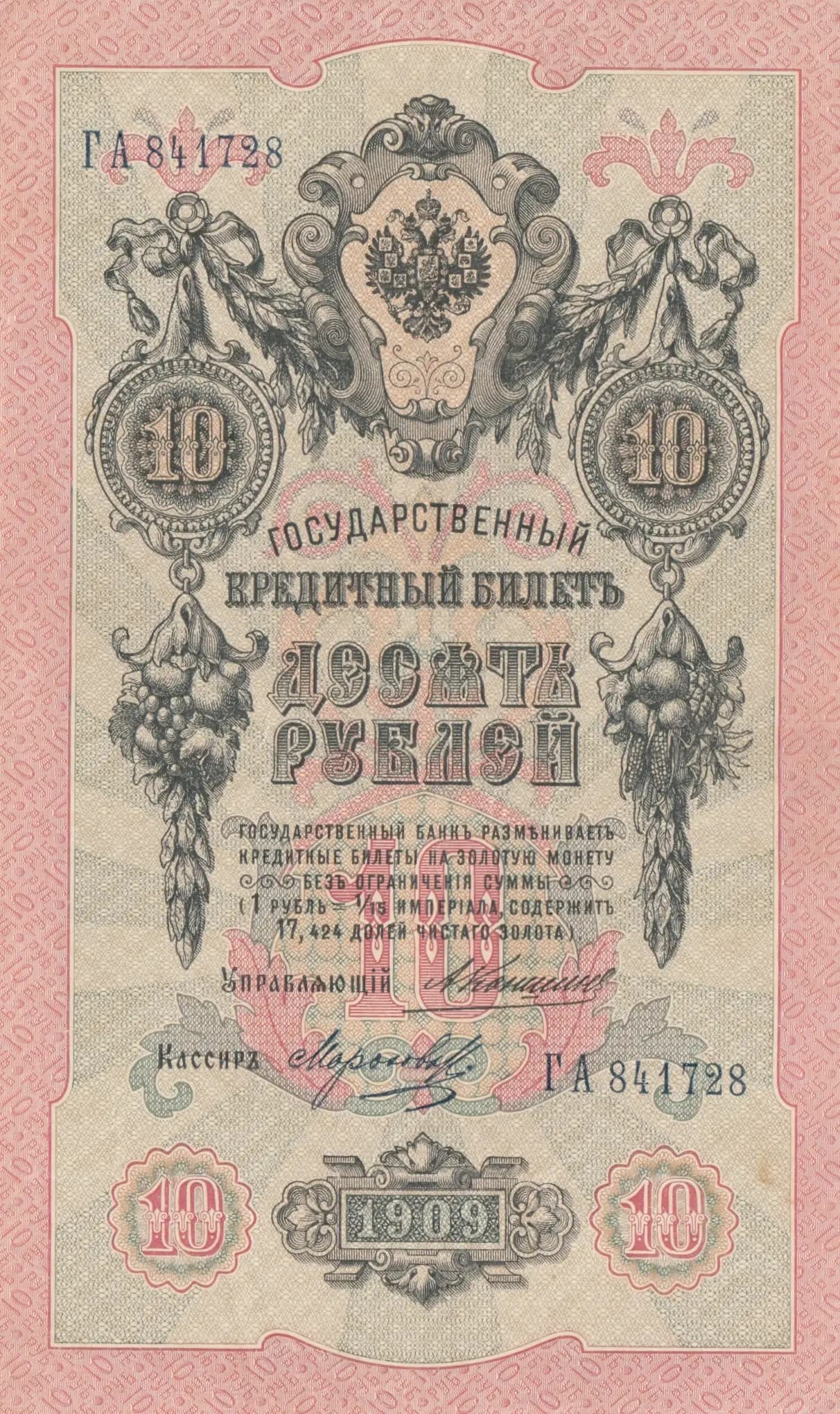
A stunning example of a Russian Imperial 10 Rublei from 1909, presented in VF condition with vibrant pink and cream coloring and exceptionally sharp, well-preserved engraving throughout. The note displays the classic allegorical design of the Imperial era, featuring the double-headed eagle coat of arms flanked by classical female figures representing Commerce or Plenty, with ornate baroque framing and intricate security engraving that remains crisp and distinct. This specimen shows minimal wear, excellent color retention, and appears to have been carefully maintained, making it a desirable example of pre-revolutionary Russian monetary design.
Common. The 1909 10 Rublei (Pick 11b) was issued in substantial quantities throughout the Russian Empire as part of the standard circulation currency under the gold standard system. While Imperial Russian banknotes have become less common in high-grade condition due to historical events (revolution, civil war, currency reforms) and normal wear from circulation, the denomination itself and this particular year were not subject to limited print runs or early recall. The Pick 11b designation with signature variety Morozov represents a standard variant from routine production runs. Notes of this type typically appear with moderate frequency in collector markets and international auctions, and VF condition examples are not particularly scarce, making this a relatively common collectible despite its age and historical significance.
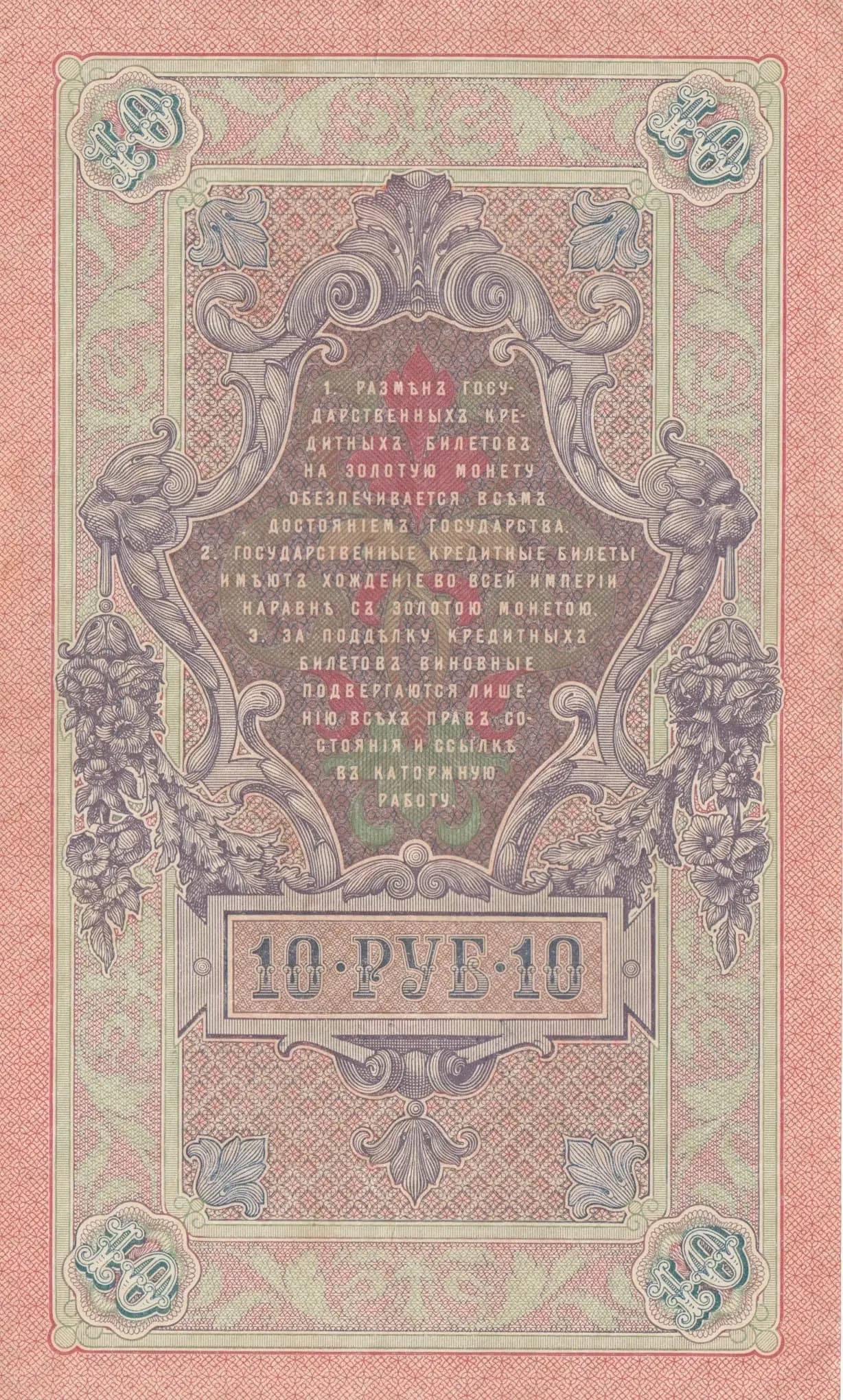
Issued by the Russian Empire's State Bank under the gold standard system established in 1897 (Witte Reforms), this 10 Rublei note represents the pinnacle of Imperial Russian currency design before the revolutionary upheavals of 1917. The note's prominently displayed text guaranteeing exchange for gold coins without limit, and stating that one Ruble equals 1/3 Imperial with specific gold content (17.424 parts pure gold), reflects Russia's commitment to maintaining convertibility during the final decades of the Romanov dynasty. The allegorical imagery emphasizing prosperity and state wealth, combined with legal warnings against counterfeiting printed on the reverse, exemplifies the sophisticated monetary infrastructure of late Imperial Russia.
This Imperial Russian 10 Rublei features a symmetrical, highly ornamental design characteristic of late 19th-century European state banknotes. The front is dominated by the Imperial Russian coat of arms—a crowned double-headed eagle holding an orb and scepter, with a shield bearing smaller Imperial symbols at its center—positioned at the apex of the composition. Flanking this central heraldic element on each side are allegorical female figures in classical drapery representing Prosperity (or Commerce), each holding bundles of grapes and wreaths symbolizing abundance and imperial wealth. Large circular medallions containing the numeral '10' in ornate frames occupy the left and right margins. The entire composition is enclosed within an elaborate scalloped decorative border with baroque flourishes and corner ornaments including fleur-de-lis elements. The reverse continues the baroque aesthetic with an ornate oval cartouche containing the lengthy legal text regarding gold convertibility and counterfeiting penalties, surrounded by symmetrical corner ornaments featuring grape bunches and scrollwork. The denomination '10·РУБ·10' is centered in a rectangular panel at the base. Throughout both sides, fine line engraving, cross-hatching, and intricate scrollwork create the security printing characteristic of Imperial Russian monetary design.
{"front":{"denominationText":"ДЕС(ЯТЬ) РУБЛЕЙ = Ten Rubles","issuerText":"ГОСУДАРСТВЕННЫЙ КРЕДИТНЫЙ БИЛЕТ = State Credit Note","goldConvertibilityText":"ГОСУДАРСТВЕННЫЙ БАНК РАЗМЕНИВАЕТ КРЕДИТНЫЕ БИЛЕТЫ НА ЗОЛОТУЮ МОНЕТУ БЕЗ ОГРАНИЧЕНИЯ СУММЫ (1 РУБЛЬ = 1/3 ИМПЕРИАЛИ СОДЕРЖИТ 17,424 ДОЛЕЙ ЧИСТОГО ЗОЛОТА) = The State Bank exchanges credit notes for gold coins without limitation of sum (1 Ruble = 1/3 Imperial contains 17,424 parts of pure gold)","officialSignatories":"Управляющий = Director; Кассир = Cashier","serialNumber":"ГА 8441728 = Serial number ГА 8441728"},"back":{"legalAndCirculationText":"РАЗМЕН ГОСУДАРСТВЕННЫХ КРЕДИТНЫХ БИЛЕТОВ НА ЗОЛОТУЮ МОНЕТУ ОБЕСПЕЧИВАЕТСЯ ДОСТОЯНИЕМ ГОСУДАРСТВА. 2. ГОСУДАРСТВЕННЫЕ КРЕДИТНЫЕ БИЛЕТЫ ИМЕЮТ ХОЖДЕНИЕ ВО ВСЕЙ ИМПЕРИИ НАРАВНЕ СЪ ЗОЛОТОЮ МОНЕТОЮ. 3. ЗА ПОДДАЛКУ КРЕДИТНЫХ БИЛЕТОВ БИНОВЫЕ ПОДВЕРГАЮТСЯ ЛИШЕННЮ ВСЕХ ПРАВ СО-СТОЯНИЯ И ССЫЛКЕ БЕЗ КАТОРЖНАГО РАБОТУ = Exchange of State Credit Notes for gold coins is ensured by the wealth of the State. 2. State Credit Notes have currency throughout the entire Empire equal to gold coins. 3. For counterfeiting credit notes, counterfeiters are subject to loss of all civil rights and exile without penal labor.","denominationPanel":"10·РУБ·10 = 10 Rubles 10"}}
Intaglio (line engraving) printing, the standard security printing method for Russian Imperial banknotes of this era. The technique is evident from the crisp, fine detail work visible in the ornamental elements, the sharp edges of the lettering, and the complex cross-hatching in background areas. Russian Imperial banknotes of the 1909 period were typically produced by the State Printing Works (Государственная экспедиция заготовления государственных бумаг) in St. Petersburg, which employed the finest engravers of the era to produce these intricate designs. The precision and clarity of the engraving visible on this specimen indicates production using traditional copperplate intaglio methods with multiple color passes.
Pick 11b(11) designation indicates signature variety with Morozov as one of the authorized signatories (likely the Director/Управляющий or Cashier/Кассир position based on the signature line formatting visible in the design). Russian Imperial banknotes of this period commonly exhibit variations based on which official signatures appear on each note, as different bank officials rotated through these positions. The serial number prefix 'ГА' (GA in Cyrillic) may indicate a specific printing series or batch. Without additional comparative examples or specialized catalogs detailing all signature combinations for the 1909 10 Rublei, the specific distinguishing characteristics of this particular variety cannot be definitively stated beyond the Morozov signature variant already catalogued.