1 rubel 1915
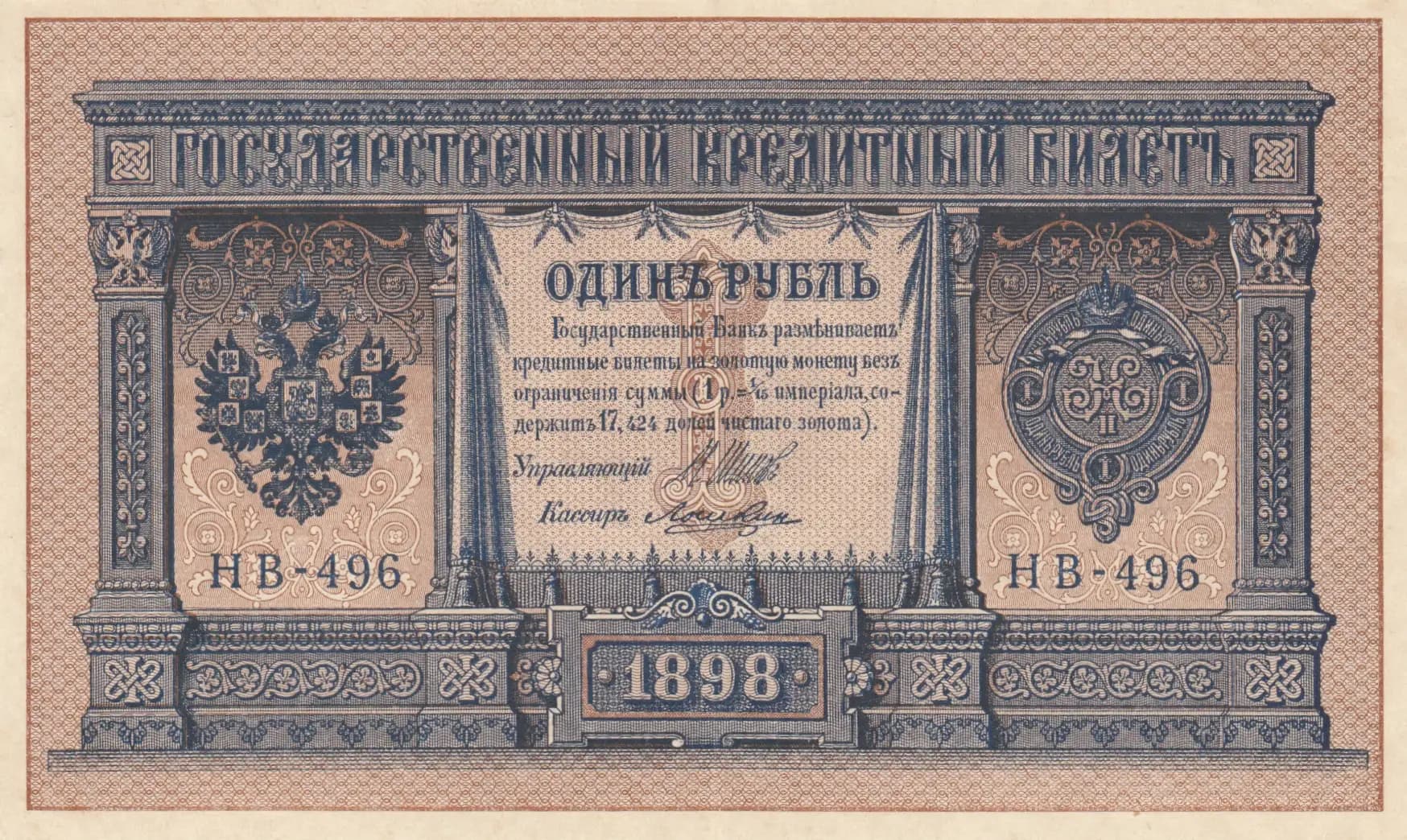
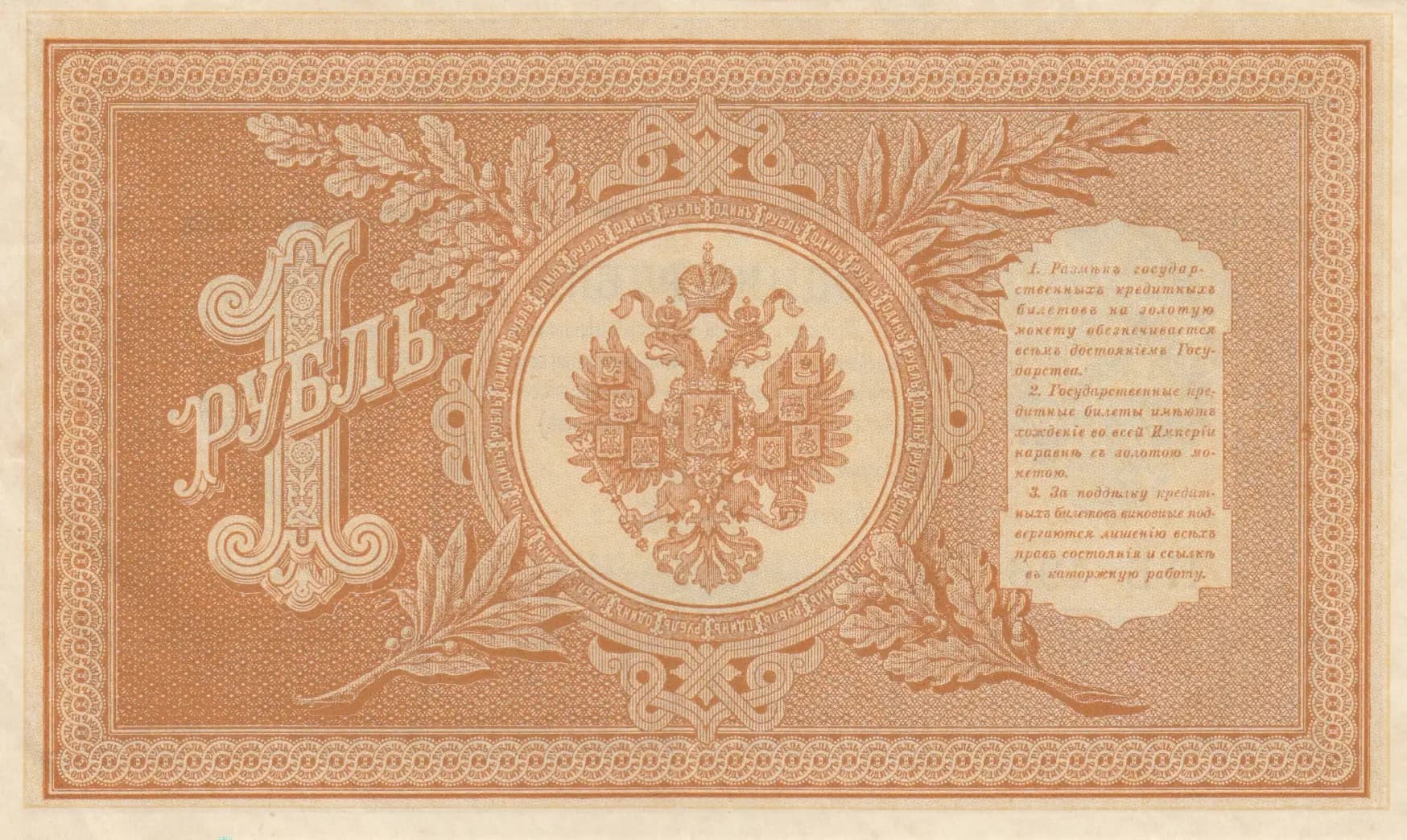
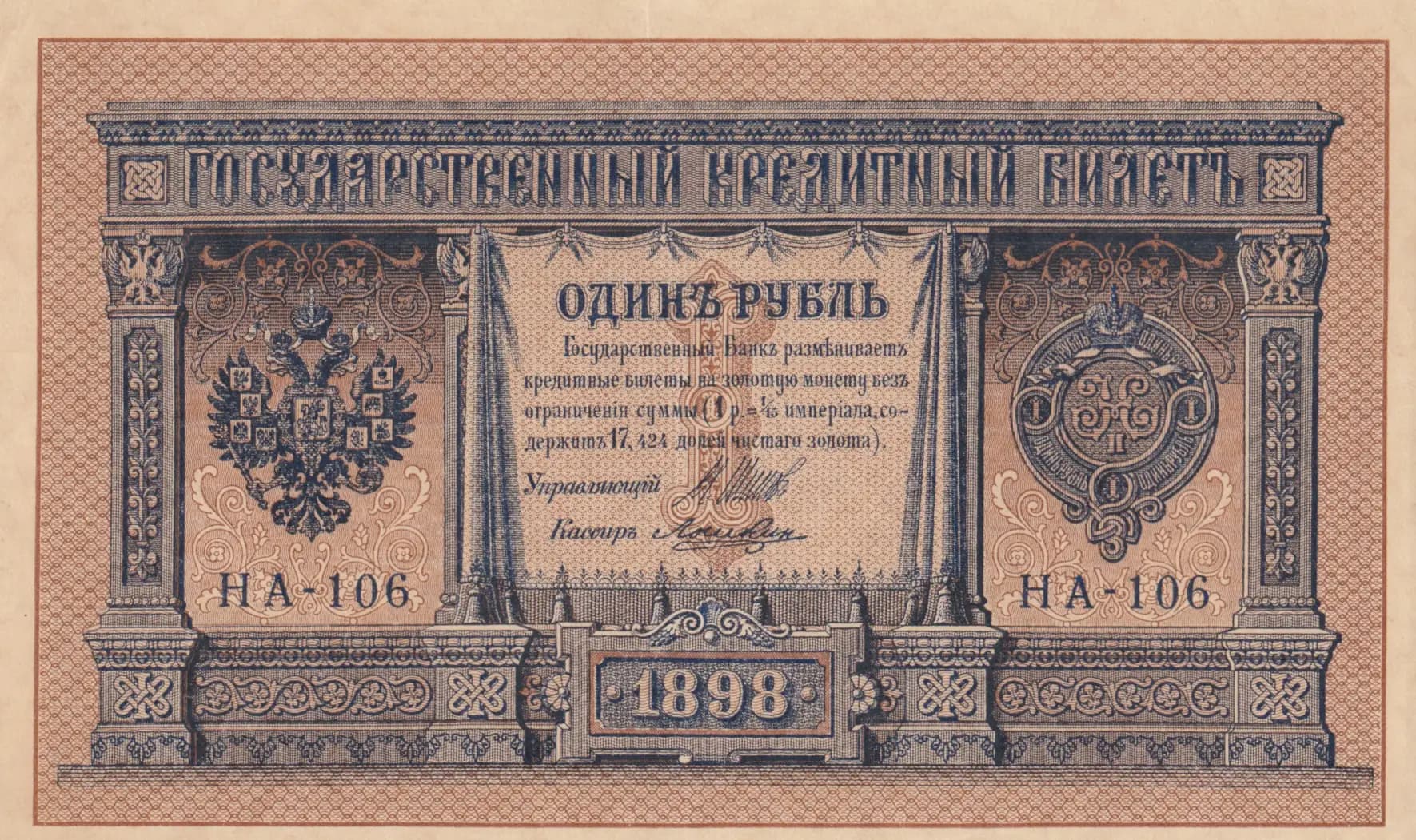
“Sig.Loshkin”
About This Note
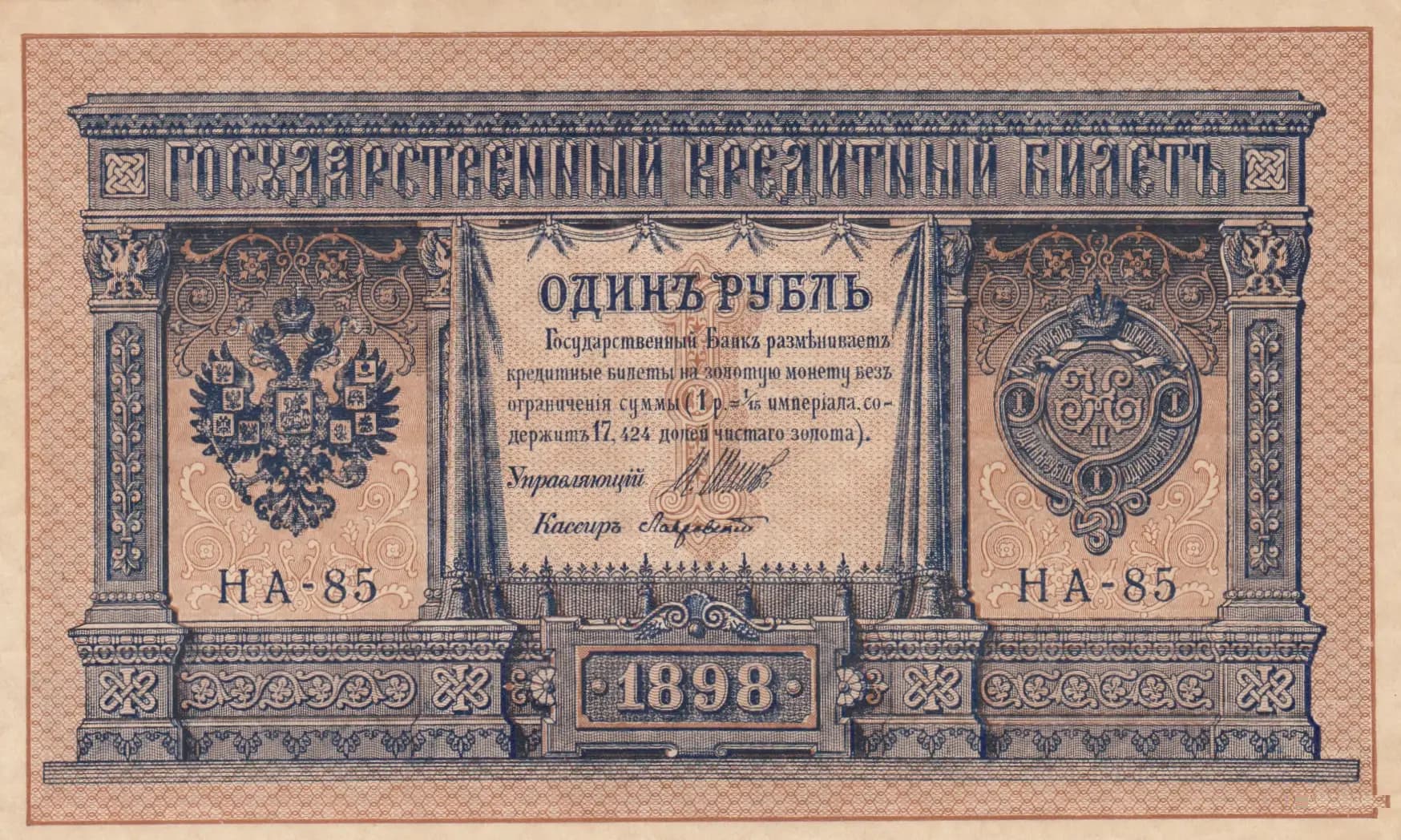
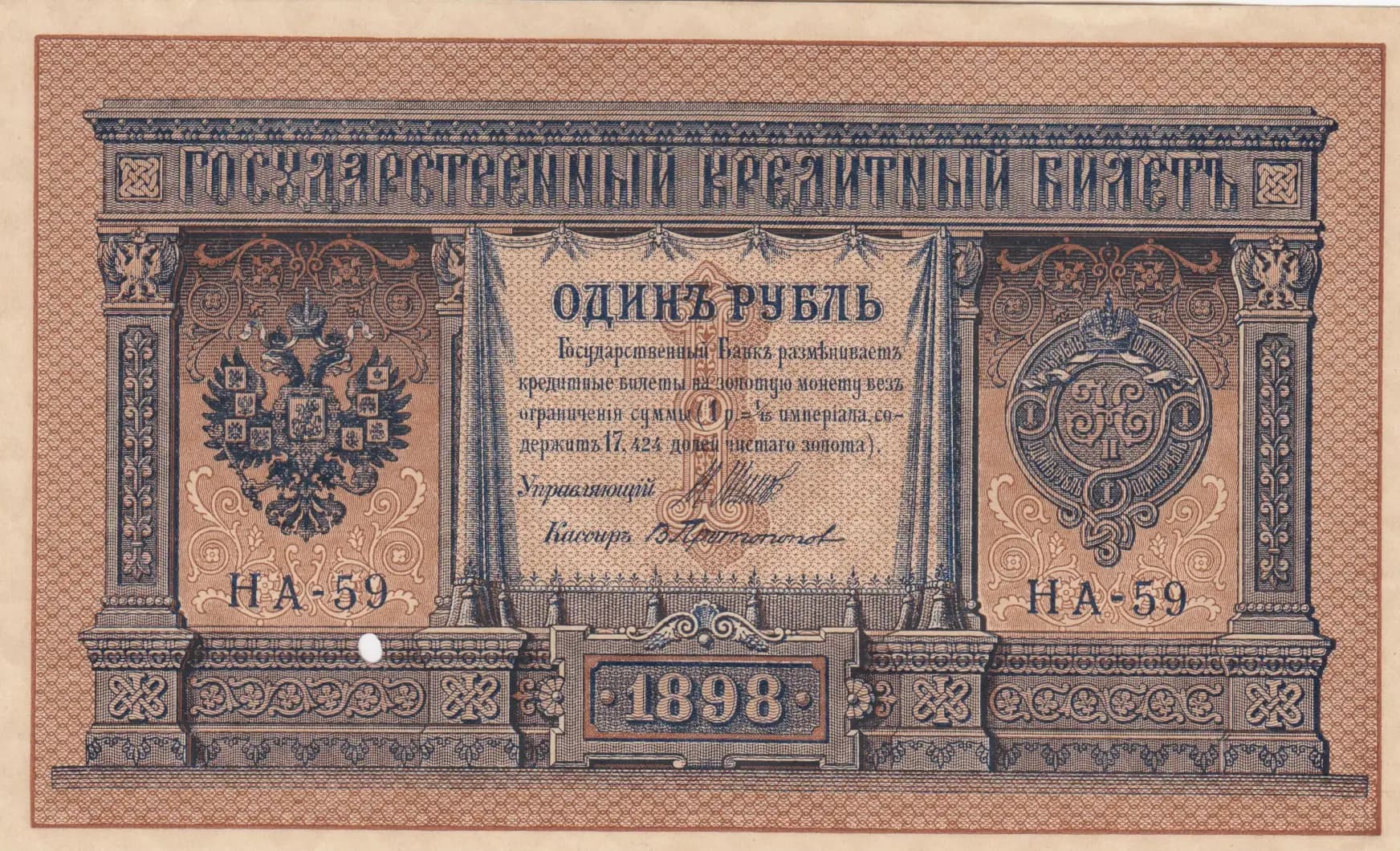
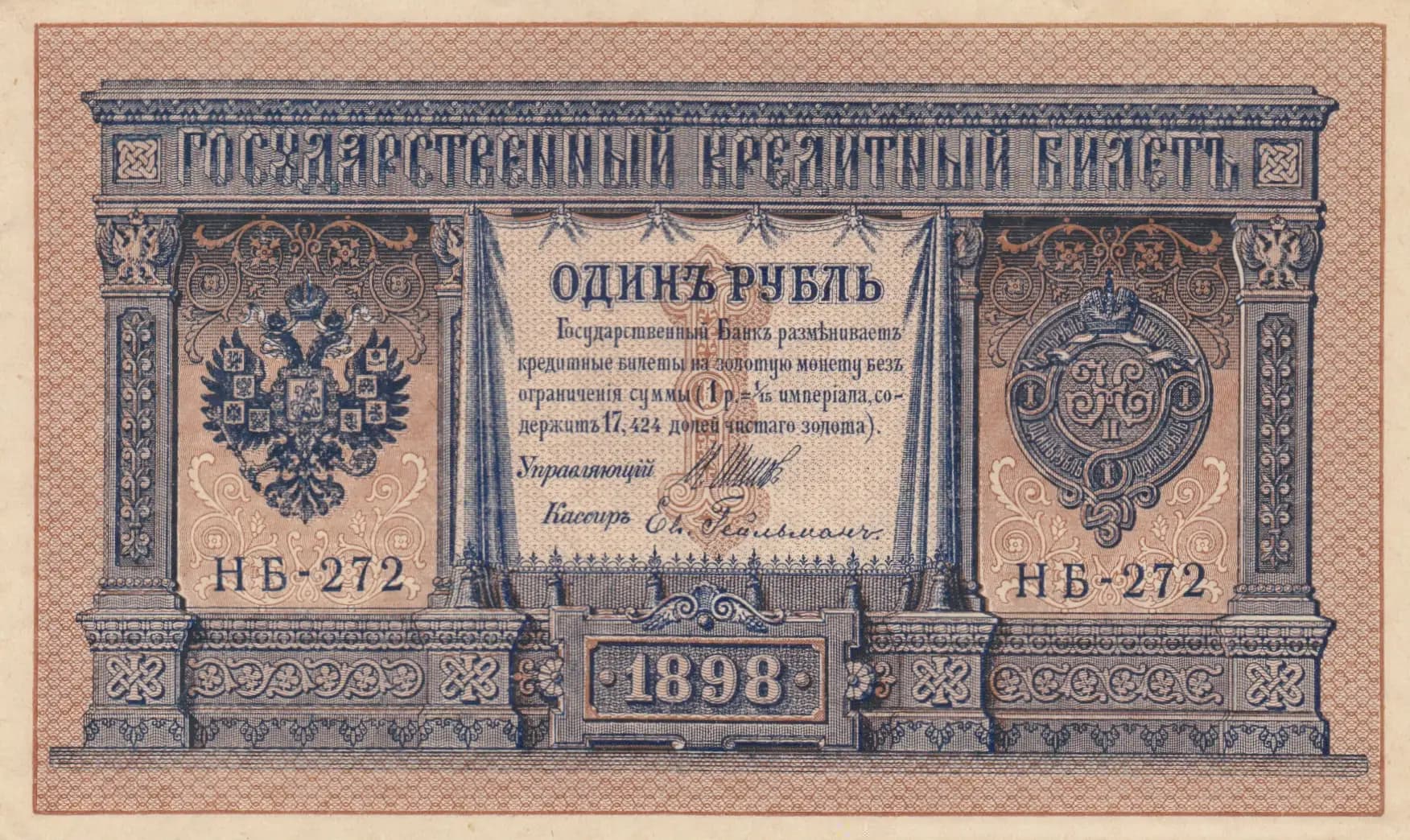
An AU-grade Russian Imperial 1 Ruble credit note from 1915 (R.S.F.S.R. issue), featuring the classic theatrical stage curtain design with ornate blue and tan coloration on the obverse and symmetrical orange-tan reverse with central Imperial double-headed eagle medallion. This note exhibits crisp engraving, sharp detail throughout, and no visible wear—characteristics of a note that has seen minimal circulation, making it a desirable example for collectors of Russian Imperial currency.
Common. The 1915 Russian Imperial 1 Ruble notes, though historical, were issued in large quantities during the final years of Tsarist circulation. This denomination and Pick number remain readily available to collectors. The AU condition grade elevates its appeal relative to worn examples, but the note itself is not scarce by Russian Imperial standards.
Issued during the final years of Tsarist Russia, this State Credit Note (Государственный кредитный билет) represents the Imperial banking system's attempt to maintain gold-backed currency stability during World War I. The prominent Imperial double-headed eagle symbols and formal architectural framing reflect the authority and legitimacy the State Bank sought to project, while the 1898 date visible on the obverse indicates this design's origins in an earlier, more stable pre-war period—reissued in 1915 as confidence in the ruble continued to erode.
The obverse features a theatrical stage with draped curtains as its central motif, flanked by classical architectural columns and ornate decorative borders in blue-gray and tan. The Imperial double-headed eagle appears in decorative panels on both left and right sides, with a crowned double-headed eagle seal positioned on the right. The reverse employs a symmetrical design with elaborate floral and scrollwork patterns in orange and tan, centering on a circular medallion containing the Imperial coat of arms—the double-headed eagle crowned and bearing orb and scepter. This design vocabulary—the theatrical curtain, architectural framing, and heraldic symbols—projects imperial authority and cultural refinement.
OBVERSE: 'Государственный кредитный билет' (State Credit Note); 'Один рубль' (One Ruble); 'Государственный Банк разрешает кредитные билеты на золото монету без ограничений суммы, в империала сю держит 1 1/2 доля чистого золота' (The State Bank permits credit notes on gold coin without limit of sum, holding 1 1/2 share of pure gold per imperial); 'Управляющий' (Managing Director); 'Кассир' (Cashier—with signature); Serial number 'НВ-496' (НВ-496); Date '1898'. REVERSE: 'Рубль' (Ruble); Legal text regarding the credit notes being equivalent to gold coin throughout the Empire and maintaining state backing for credit benefits.
Steel engraving (intaglio) with fine line engraving background patterns. The intricate decorative borders, sharp serial number definition, and crisp reproduction of ornamental details are consistent with high-security engraved banknote production by the Imperial Russian State Printing Works (Экспедиция заготовления государственных бумаг). The color separation between blue-tan obverse and orange-tan reverse indicates multi-plate printing typical of Imperial Russian credit notes.
Serial number НВ-496 with 1898 date imprint. The Pick catalog designation P-15(3-6) indicates this note falls within a range of varieties distinguished by signature combinations and printing characteristics. The signature 'Loshkin' noted by the collector may represent one of several authorized signatories used on 1915-era reissues. Specific variety identification would require comparison of signature block variations across the Pick range.