1 rubel 1915
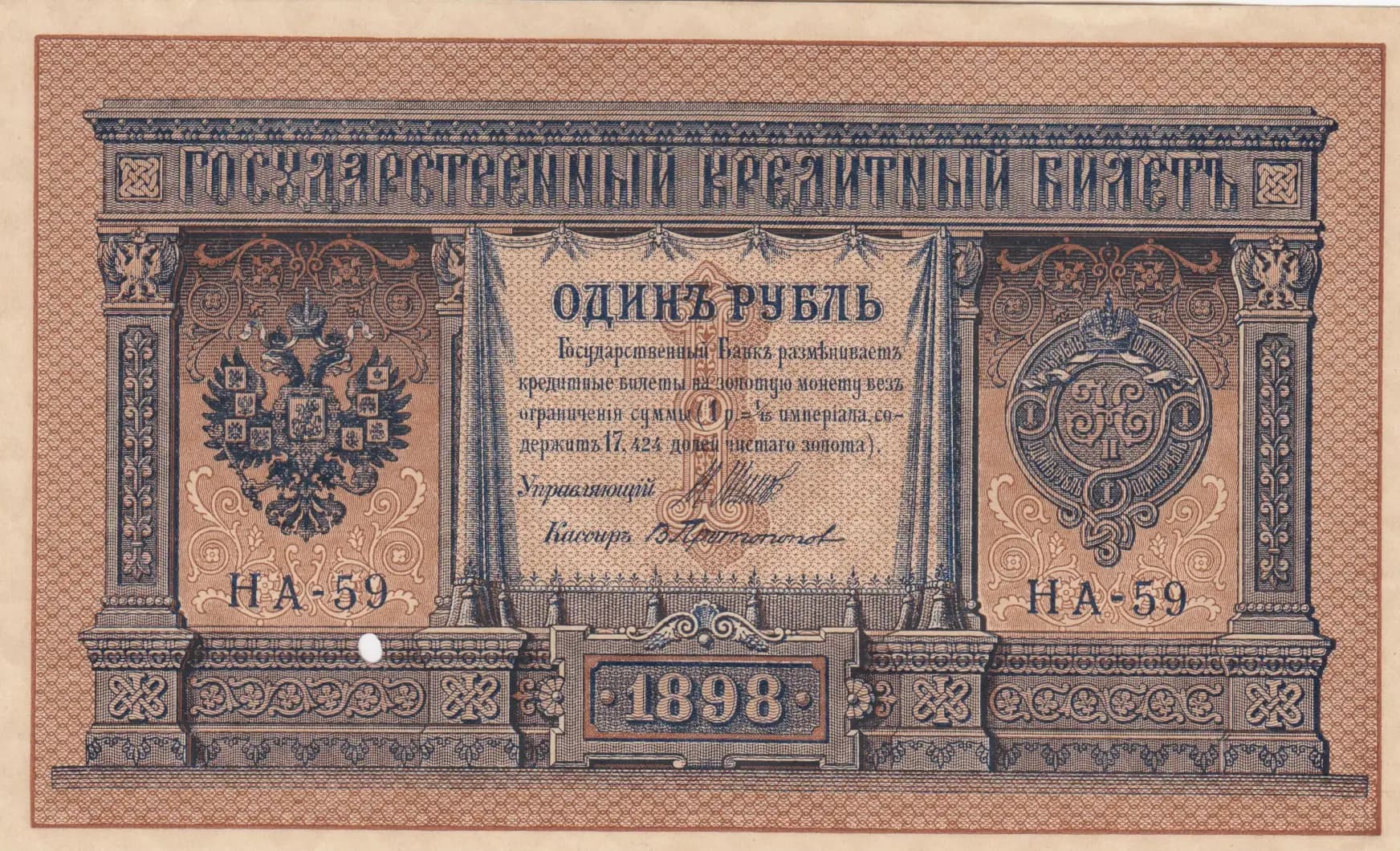
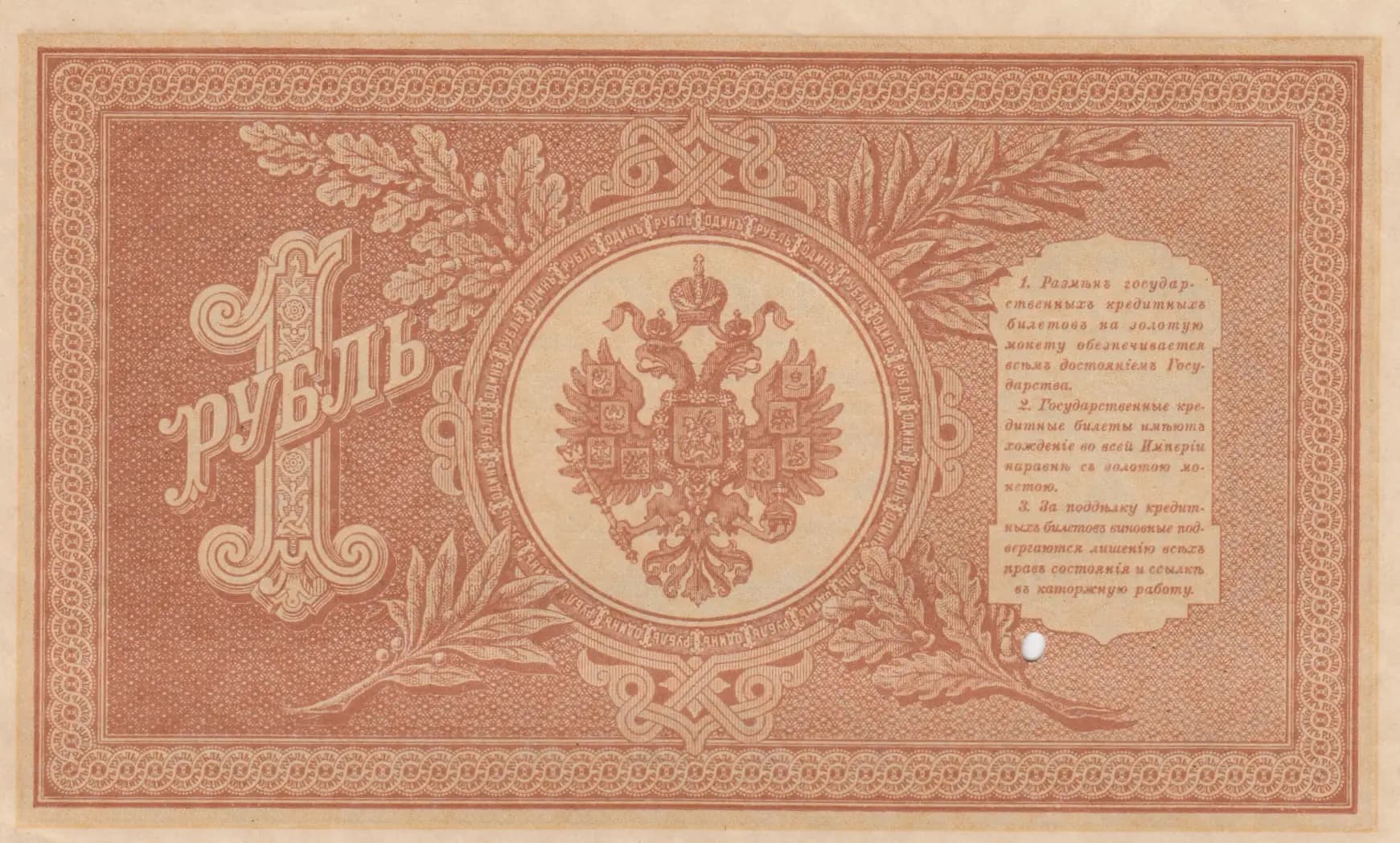
“Sig.Protopopov”
About This Note
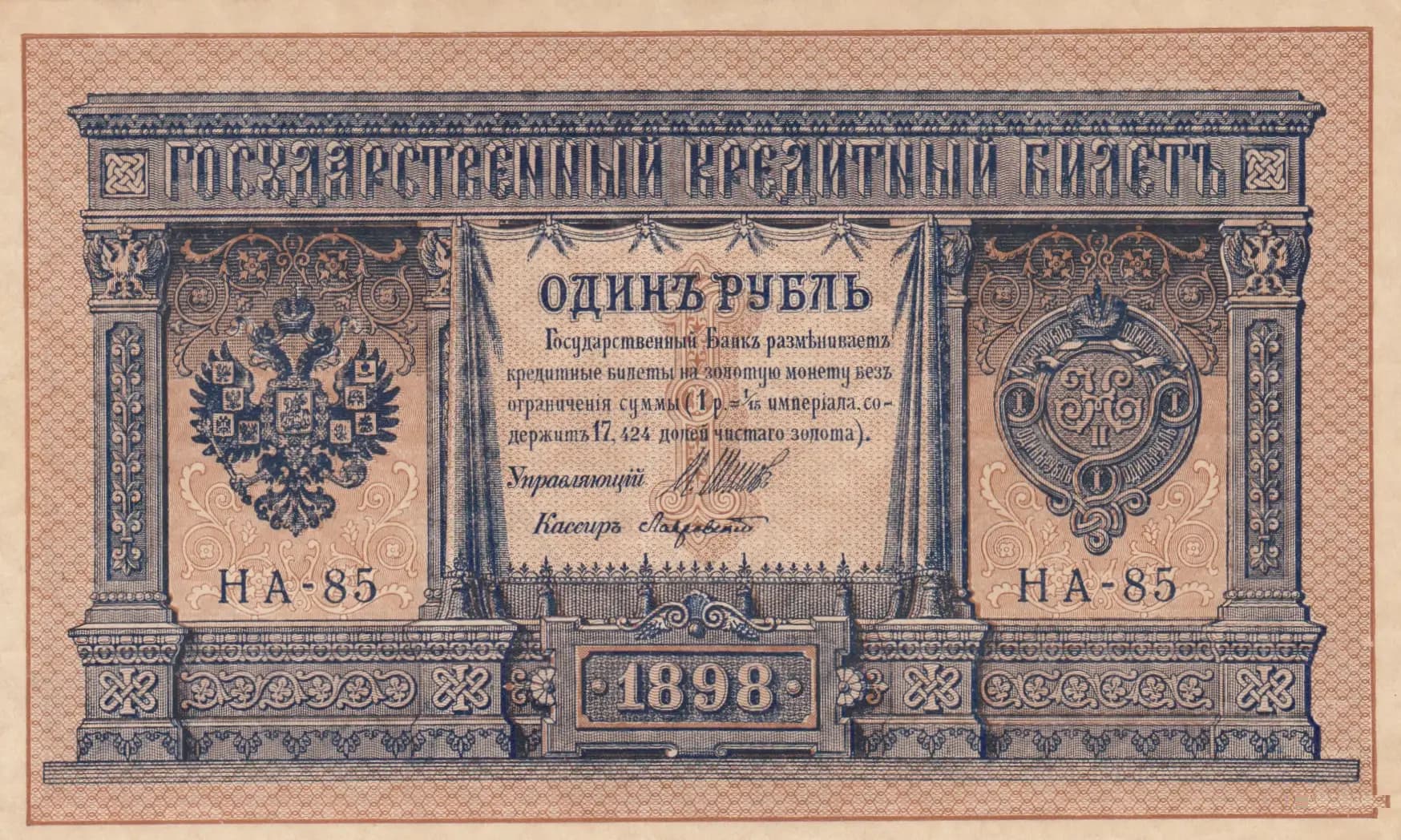
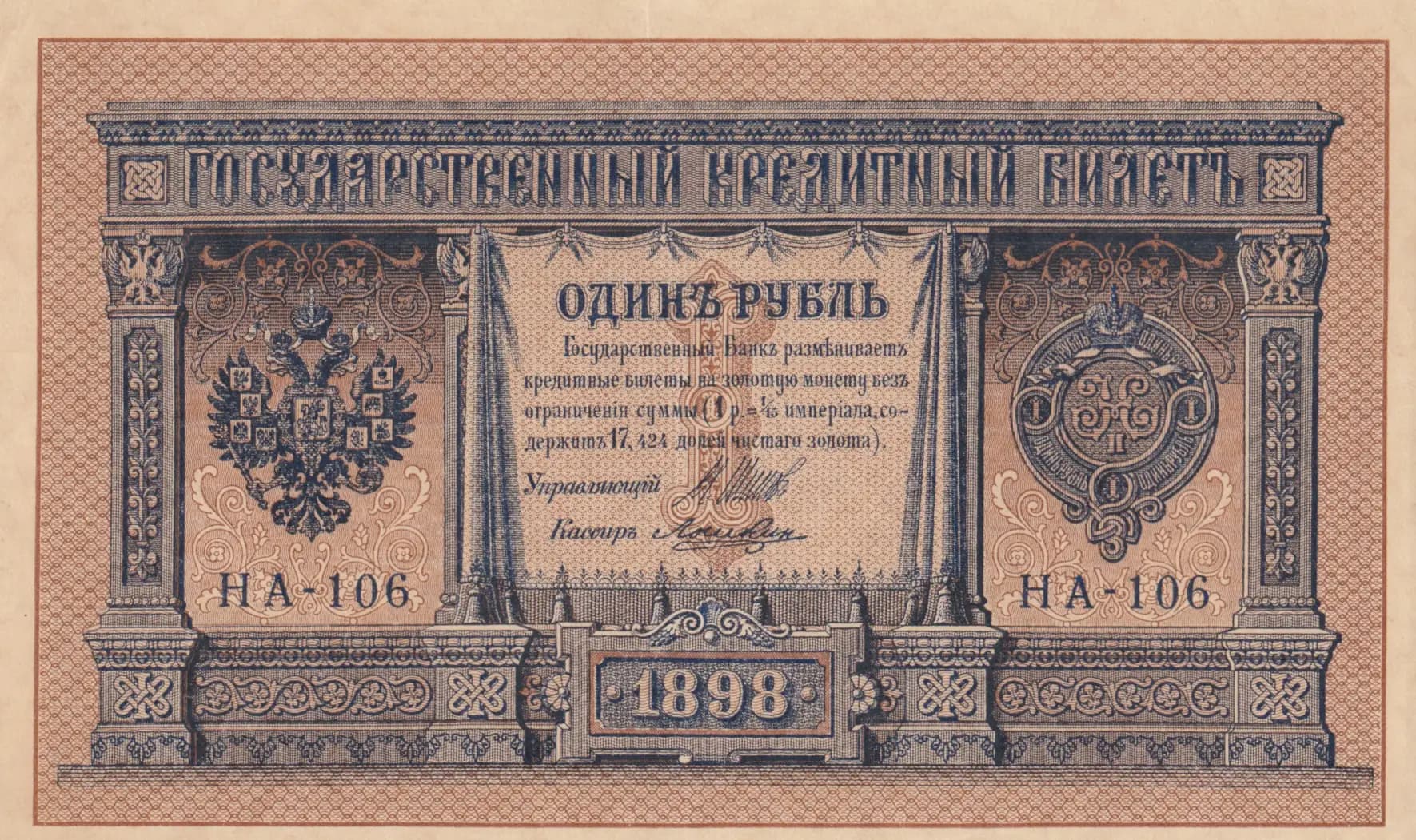
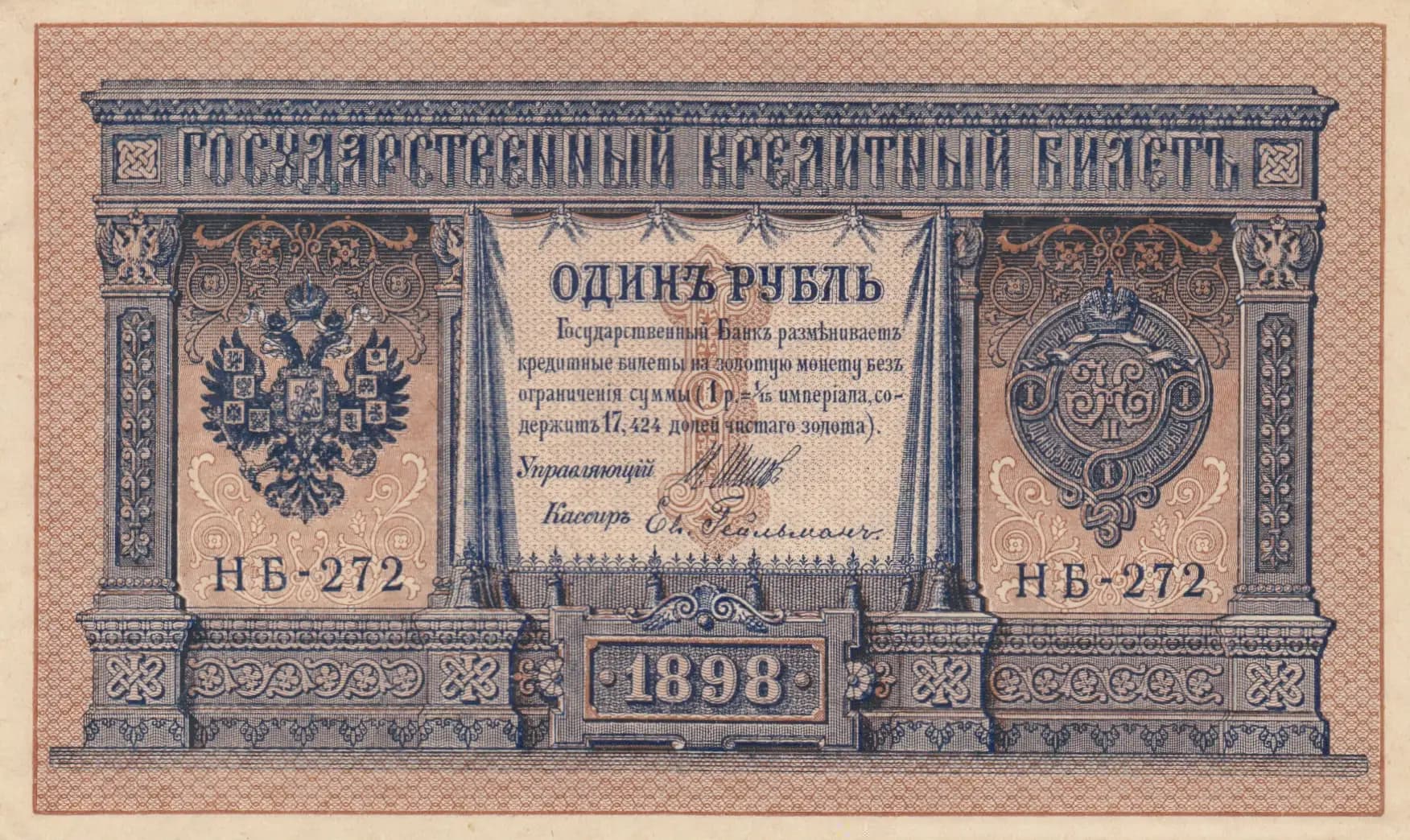
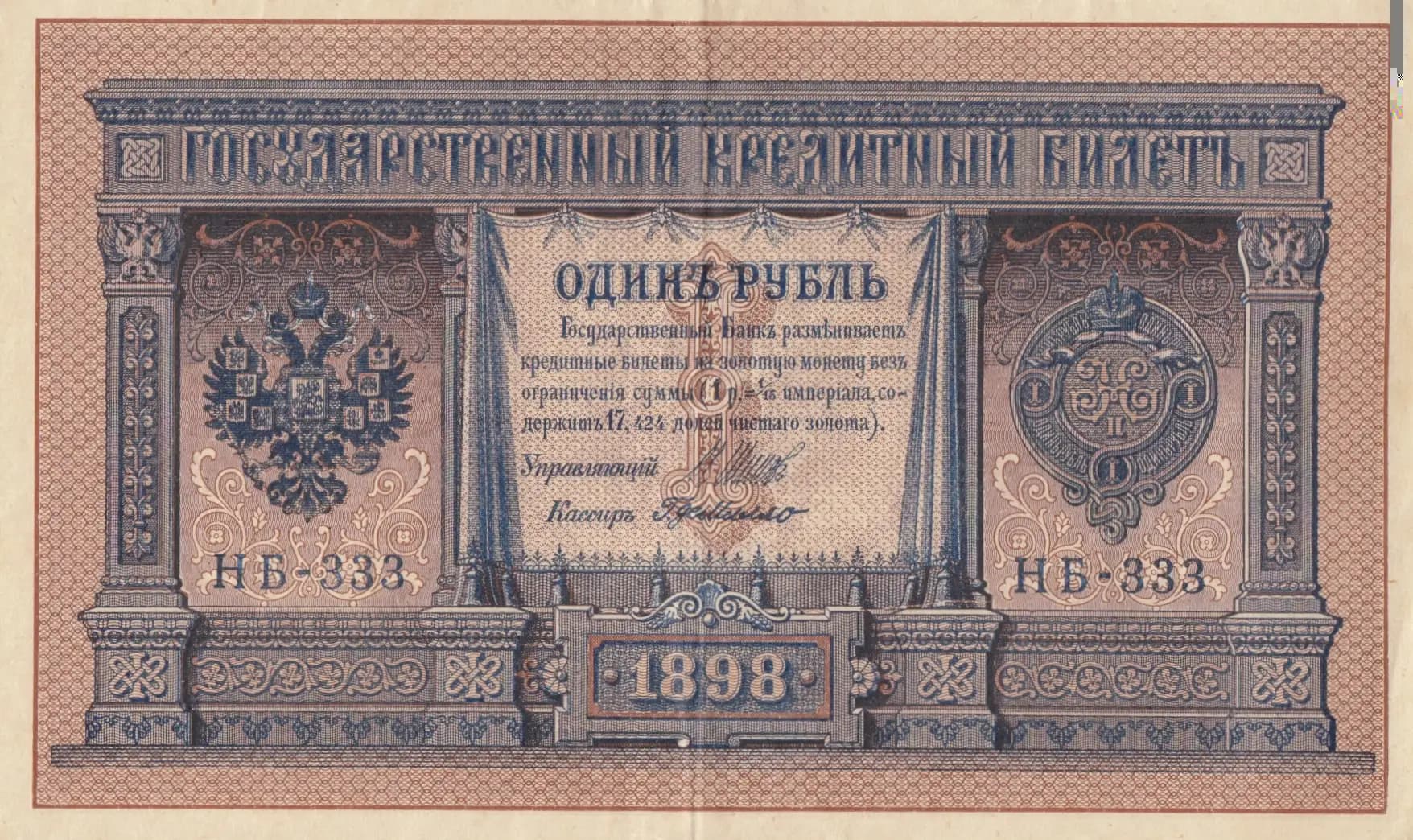
This is a Russian Imperial 1 Ruble banknote from the 1898-1915 series, displaying the classical design characteristic of late Tsarist currency. The note exhibits an AU (About Uncirculated) condition grade with some minor foxing and age-related discoloration, but retains excellent legibility and sharp detail in the intricate engraving work. A notable feature is the small binding hole visible on both sides, indicating this specimen was once part of a bound collection or bank bundle, adding to its historical provenance and appeal to collectors of Russian Imperial currency.
Common. The 1898-1915 Imperial Russian 1 Ruble notes in the Pick P-15 series were produced in substantial quantities for circulation throughout the vast Russian Empire. While this particular specimen has notable provenance (the binding hole indicating institutional collection/handling) and attractive AU condition, the denomination and series remain among the most commonly encountered Russian Imperial banknotes in the secondary market. Thousands of examples survive in various conditions, and AU specimens are regularly available to collectors at modest prices. The signature of Protopopov (Manager during 1905-1916) does not indicate rarity, as he oversaw an extended period of high-volume note production.
This note was issued during the final decades of the Russian Empire under the Tsarist monetary system, with the design dated 1898 reflecting the gold standard era of Imperial Russia. The elaborate symbolism—featuring the double-headed eagle coat of arms and ornamental imperial imagery—served to legitimize the currency and assert state authority during a period of significant political and economic transition. The inscriptions regarding gold backing and state guarantees reflect the monetary policies of the Russian Imperial Bank in maintaining confidence in the ruble during the early 20th century, shortly before the revolutionary upheavals that would fundamentally alter Russian currency and governance.
The obverse features an elaborate classical architectural composition with ornamental columns flanking a central decorative frame containing the denomination and legal text. The Russian Imperial double-headed eagle coat of arms appears symmetrically on both left and right sides within ornamental shields, serving as the primary heraldic symbol and security device. The reverse maintains the same ornamental aesthetic but centers on a larger circular medallion containing the double-headed eagle surrounded by laurel wreaths, symbolizing state authority and imperial grandeur. The word 'РУБЛЬ' appears in large, decorative Cyrillic letters on the left side of the reverse. The entire design relies on intricate engraved detail, repeating geometric border patterns, and multiple decorative frames—hallmarks of the Russian Imperial Bank's security printing standards. The color scheme of beige/tan with rust and dark brown ink creates a sophisticated, authoritative appearance reflecting the Tsarist government's commitment to monetary stability through elaborate security measures.
{"front":{"primary_inscription":"ГОСУДАРСТВЕННЫЙ КРЕДИТНЫЙ БИЛЕТ - 'State Credit Ticket' (official banknote designation)","denomination":"ОДИН РУБЛЬ - 'One Ruble'","backing_statement":"Государственный Банк размещает кредитные билеты в обращению монету всех ограничен сумма (11) - с императала со держать 17,424 долей писчего золота - 'The State Bank puts credit tickets into circulation as money in a limited sum (11) - with imperial content of 17.424 parts fine gold'","signatures":"Управляющий - 'Manager/Director'; Кассир - 'Cashier'","series_designation":"НА-59 - 'Series NA-59'","date":"1898"},"back":{"primary_word":"РУБЛЬ - 'Ruble' (prominently displayed)","guarantee_and_legal_text":"1. Размен государственного кредитного билета на золотую монету обеспечивается всеми достояниями государства - '1. The exchange of state credit tickets for gold coin is guaranteed by all the resources of the state'; 2. Государственные кредитные билеты имеют хождение по всей Империи наравне со золотою монетою - '2. State credit tickets circulate throughout the Empire on equal footing with gold coins'; 3. За подобную кредитными билетами операции остаются лишь все права состояния и семьи со канторском работу - '3. For operations with such credit tickets, all rights of the state and authorized office personnel remain intact'"}}
This note was produced using intaglio (engraved) printing methods, characteristic of high-security banknote production of the Russian Imperial era. The fine line work, intricate scrollwork, and detailed border patterns visible throughout both sides demonstrate the precision engraving techniques employed by the Russian State Printing House. The complex layering of decorative elements—from the architectural columns and draped fabrics to the ornamental shields and laurel wreaths—were achieved through multiple engraved plates, each contributing different levels of detail and security features. This multi-plate intaglio process was the industry standard for Imperial Russian currency and provided significant anti-counterfeiting protection through the difficulty in reproducing such intricate detail.
This specimen represents the standard design type of the Pick P-15 series, identified as variety (1-9) indicating it falls within the nine documented signature and serial number combinations for this denomination and date. The series designation 'НА-59' visible on the front helps identify the specific production batch. The presence of Protopopov's signature places this note within the 1905-1916 period of issue. The binding hole is a collecting peculiarity rather than a printing variety, indicating this note was retained in institutional archives or bound collections rather than circulating freely, which explains its preserved AU condition despite being over a century old.