1 rubel 1915
“Sig.Loshkin”
About This Note
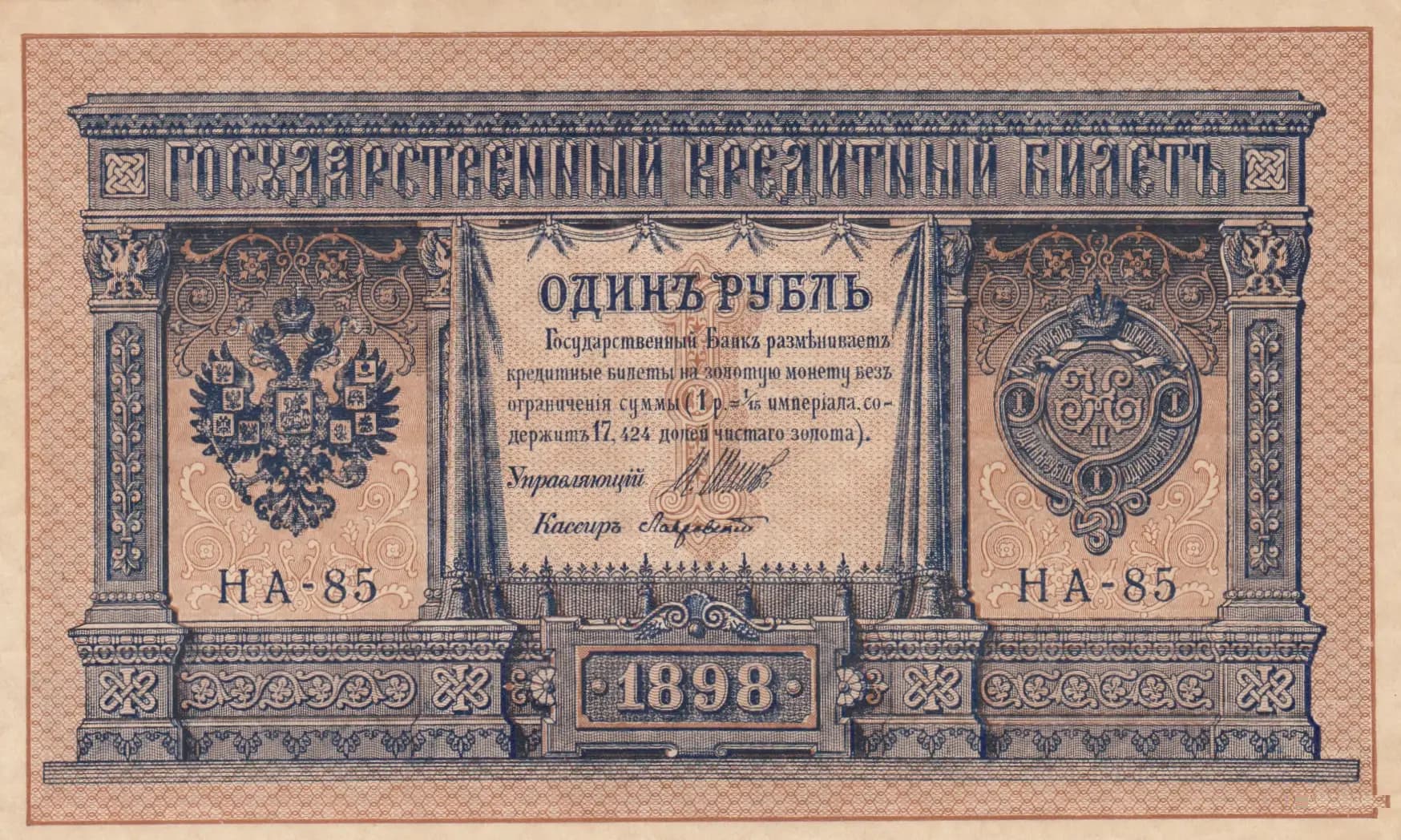
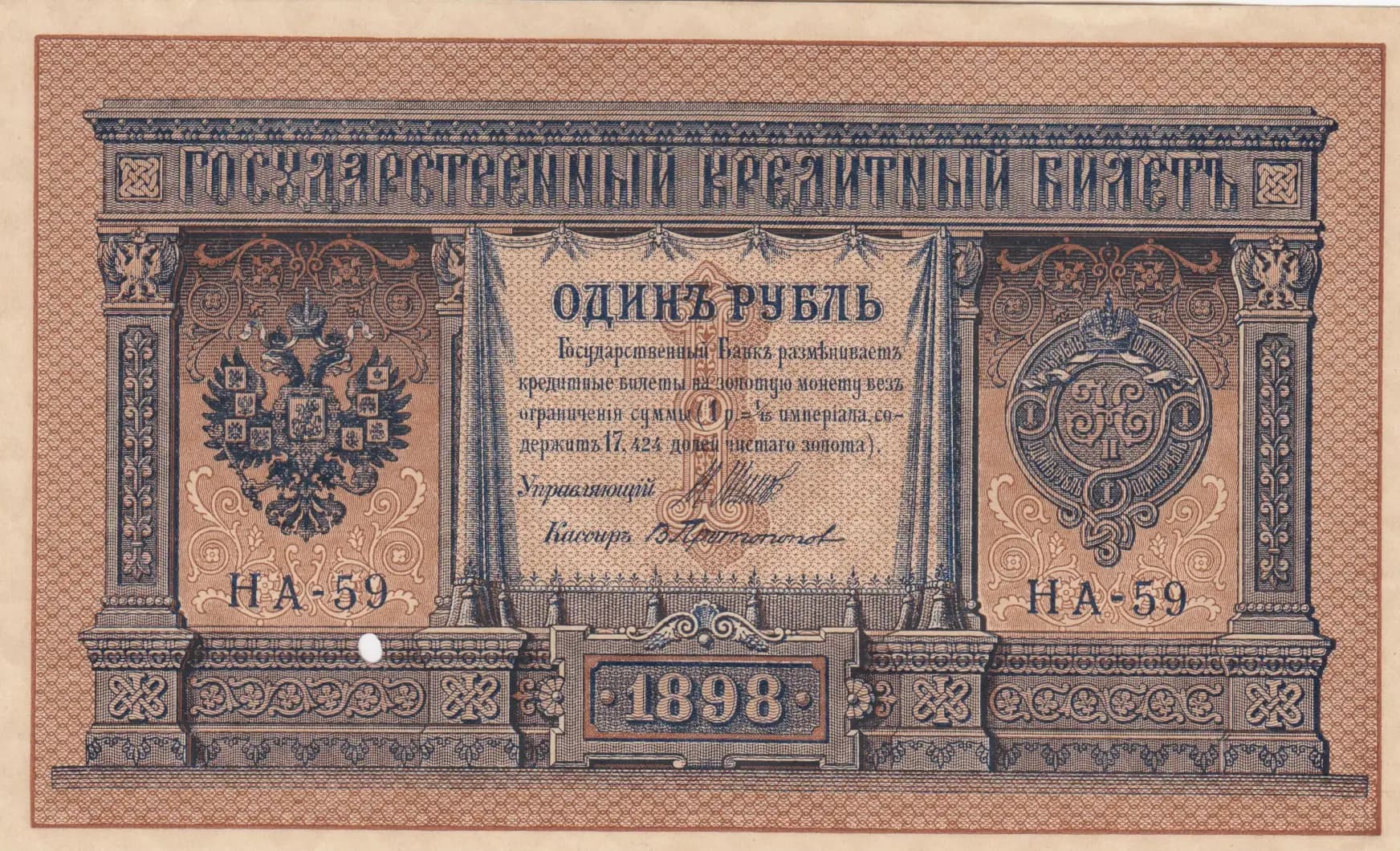
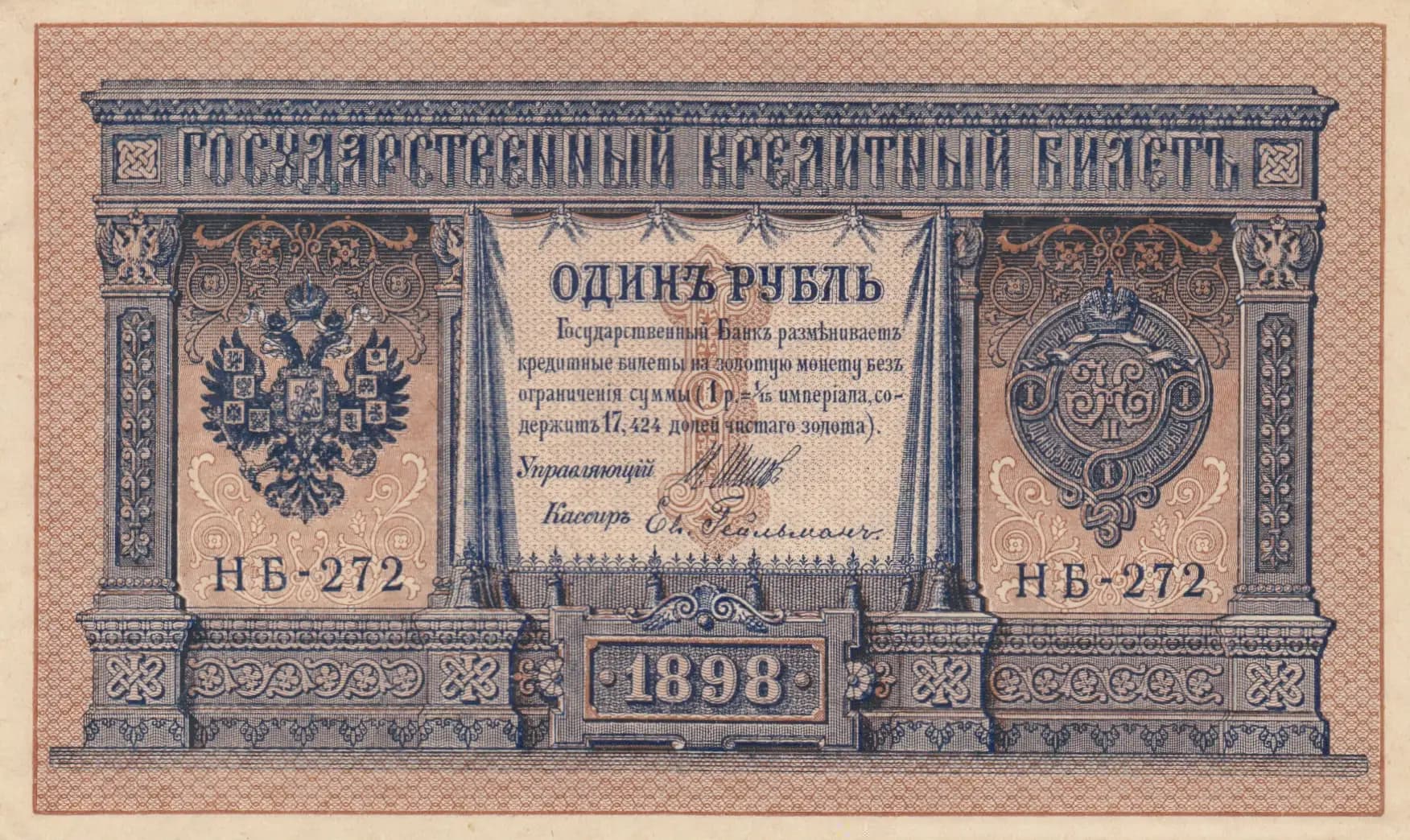
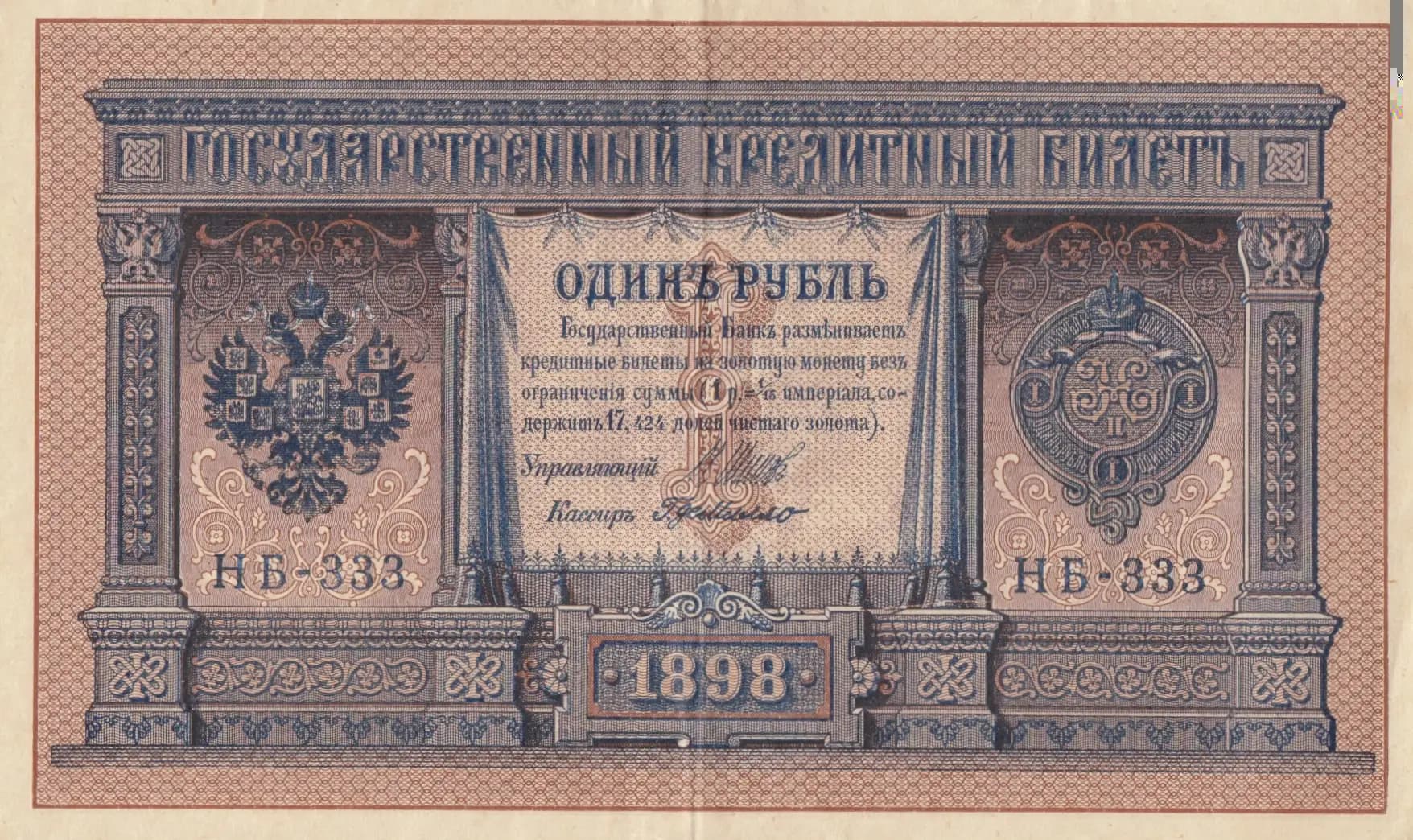
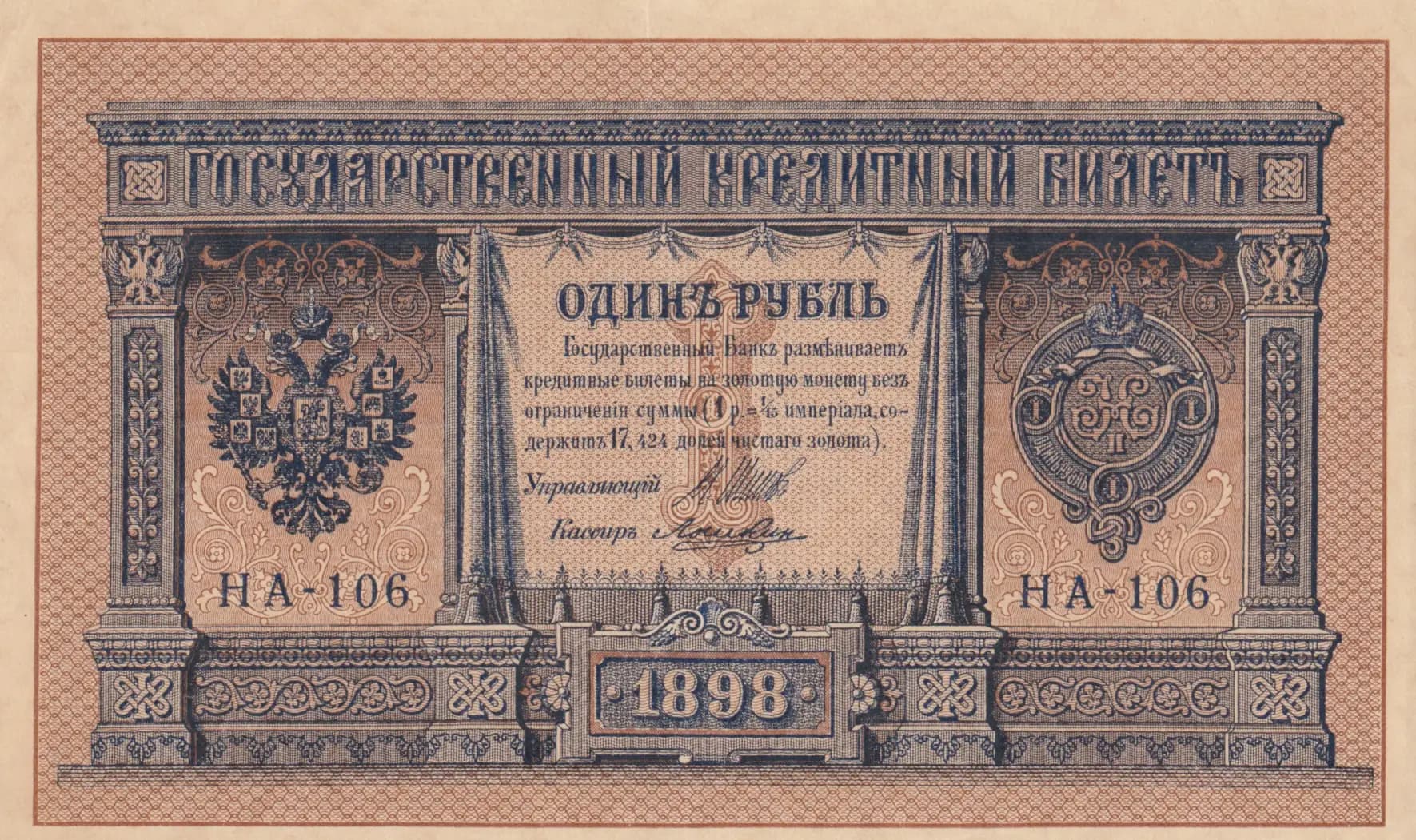
This is an AU-graded Russian Imperial 1 rubel from the 1915 issue (Pick P-15), displaying exceptional preservation with no visible wear, creases, or stains. The note features the classic ornate design characteristic of late Imperial Russian currency, with dual Imperial double-headed eagles and intricate decorative borders in tan, beige, and dark blue tones. The exceptional condition and detailed engraving make this an attractive example for collectors of Russian Imperial numismatics, particularly those focused on pre-Revolutionary state credit tickets.
Common. The 1 rubel denomination was one of the most frequently issued and widely circulated notes of the Imperial Russian currency system, with substantial print runs throughout its period of circulation. The Pick P-15 designation encompasses multiple issues and varieties from 1898-1917, and examples in AU condition regularly appear in the numismatic market at modest valuations (typically under $50), indicating robust supply despite the note's age.
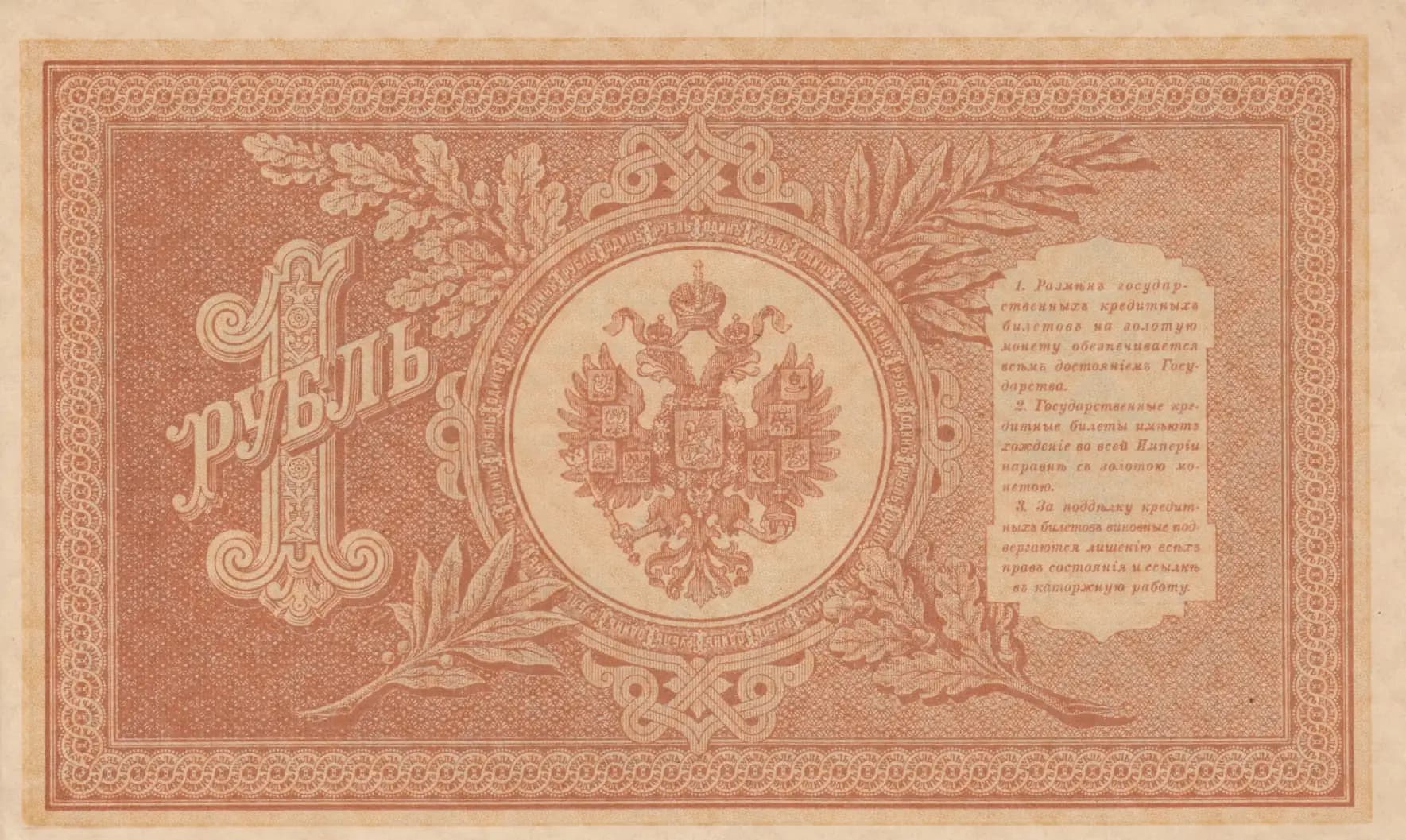
Issued during the final years of the Russian Empire, this 1 rubel state credit ticket reflects the Imperial government's gold-backed monetary system of the early 20th century. The prominent Imperial double-headed eagle symbols and references to gold redemption (visible in the inscriptions stating the State Bank's obligation to exchange these notes for gold coins) underscore the stability and authority the Romanov regime attempted to project during this tumultuous period. The severe penalties for counterfeiting, as detailed on the reverse, demonstrate the importance placed on maintaining confidence in the currency as Russia approached the revolutionary upheaval of 1917.
The obverse features a classical ornate frame composed of decorative columns with ornamental capitals flanking a central rectangular panel. The Russian Imperial double-headed eagle coat of arms appears in the upper left quadrant, with a second depiction in a circular medallion on the right side. The denomination 'Одинъ Рубль' (One Ruble) is centrally positioned and prominently displayed. Elaborate geometric and scrollwork borders in tan and dark blue frame the entire composition. The reverse centers on a large circular medallion containing the Imperial double-headed eagle, surrounded by naturalistic framing elements including oak leaves and laurel branches, symbolizing strength and honor. The denomination 'Рубль' appears in large decorative text on the left. Both sides employ a sophisticated color palette of tan, beige, cream, and brown with navy blue accents. The design exemplifies the high aesthetic standards of Imperial Russian currency production, with the Imperial eagle serving as the primary symbolic element affirming state authority and legitimacy.
FRONT SIDE: 'Государственный кредитный билет' (State Credit Ticket) — The primary identification of the note's status as official government currency. 'Одинъ рубль' (One Ruble) — Denomination marking. 'Государственный Банкъ размѣнивает кредитные билеты на золото монету без ограничения суммы (1) = ½ империала, содержащ 17,424 долей чистаго золота' (The State Bank exchanges credit tickets for gold coins without limitation of sum; 1 = ½ imperial, containing 17.424 parts of pure gold) — Statement of gold backing and redemption terms. 'Управляющий' (Manager) and 'Кассир' (Cashier) — Signature lines for authorization. 'НА-106' (Serial number indicator). '1898' (Year, though catalog indicates 1915 issue). BACK SIDE: 'Рубль' (Ruble) — Denomination confirmation. 'I. Раздачи государственного кредитного билета на золотую конету обеспечивается всяка достаточная гарантия' (I. The issuance of state credit tickets for gold coin is ensured by every sufficient guarantee). 'II. Государственные кредитные билеты имеют хождение по всей Империи наравнѣ со золотою монетою' (II. State credit tickets are in circulation throughout the Empire on equal terms with gold coin). 'III. За подделку кредитных билетов виновные подвергаются лишению всѣхъ прав состояния и ссылкѣ на каторжную работу' (III. For counterfeiting credit tickets, the guilty parties are subject to deprivation of all civil rights and exile to hard labor).
This note was produced using engraved intaglio printing, evidenced by the fine line work, intricate decorative patterns, and detailed rendering of the Imperial symbols visible throughout both sides. The security features incorporate multiple ornamental borders and complex geometric patterns typical of high-security currency production of the period. Russian Imperial banknotes of this era were generally produced by the State Printing Works (Государственный печатный двор) in St. Petersburg, utilizing the finest engraving techniques available to prevent counterfeiting.
The catalog designation Pick P-15(1-6) indicates this note is part of a series with multiple known varieties distinguished by signature combinations, serial number prefixes, and subtle design variations. The observed serial number prefix 'НА-106' and the notation of signature line for both 'Управляющий' (Manager) and 'Кассир' (Cashier) help identify the specific variety within this range. The collector notation 'Sig. Loshkin' may refer to one of the authorized signatories on this particular example. Further variety identification would require comparison of signature combinations and serial number ranges against specialized Russian Imperial currency catalogs.