1 rubel 1915
“Sig.Starikov”
About This Note
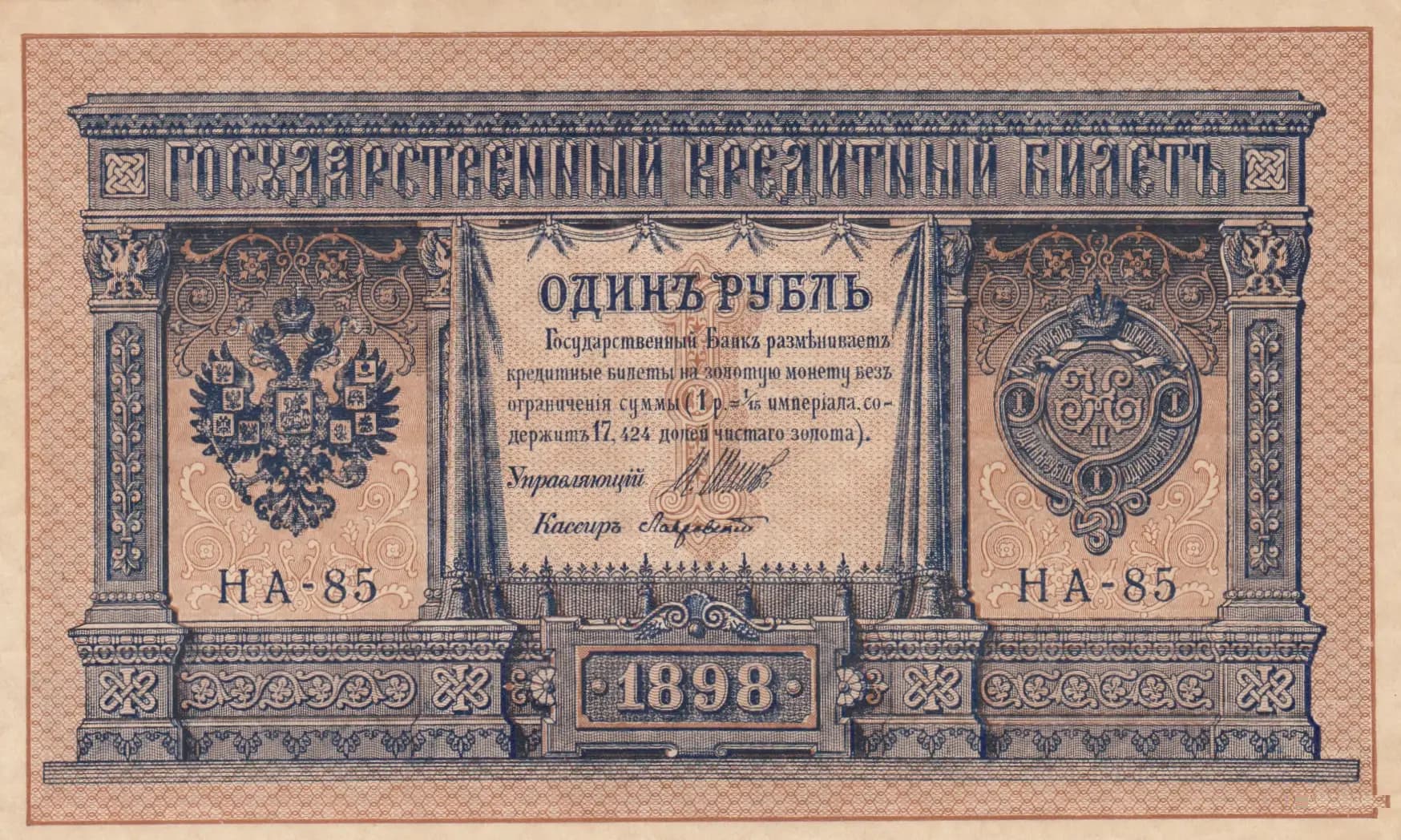
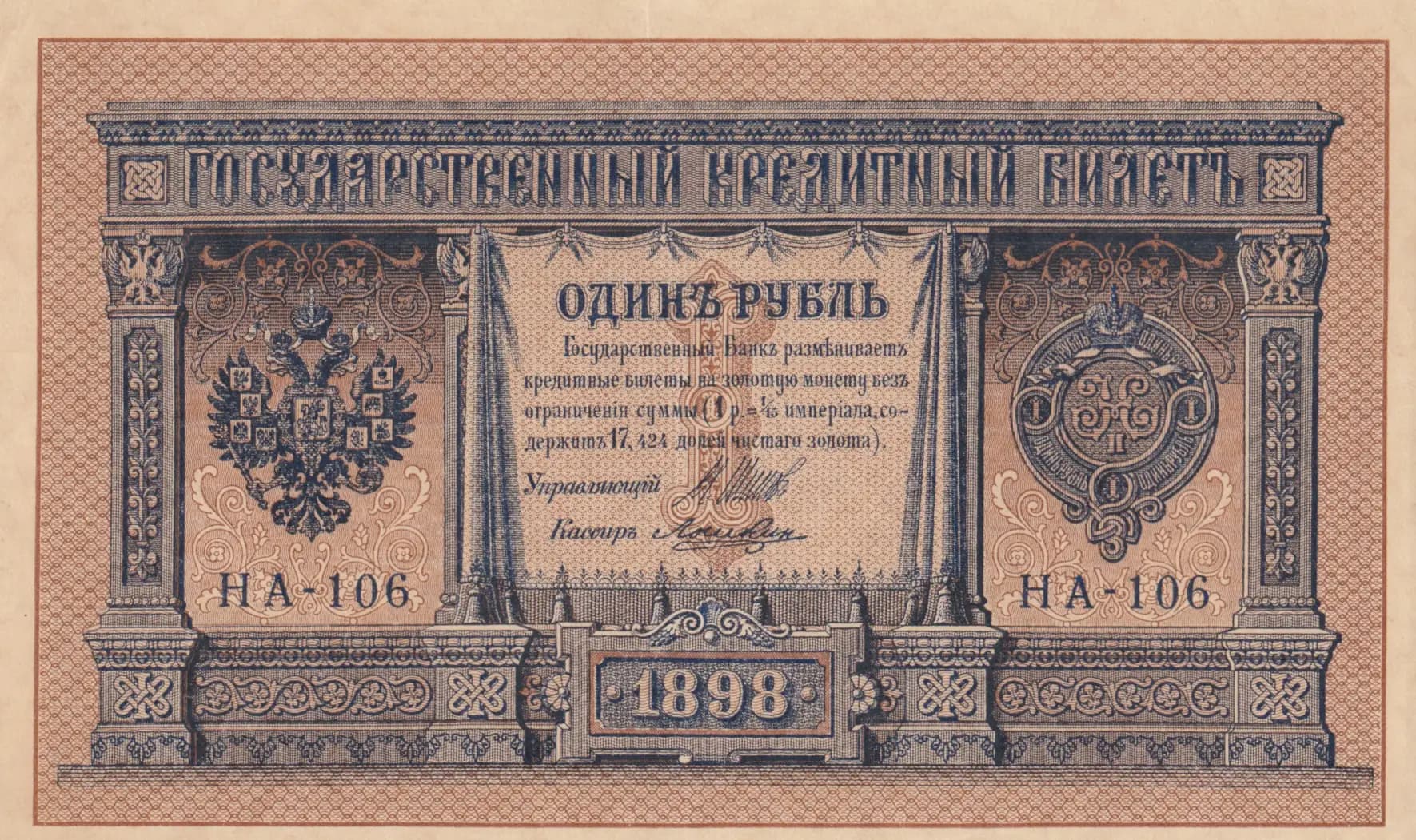
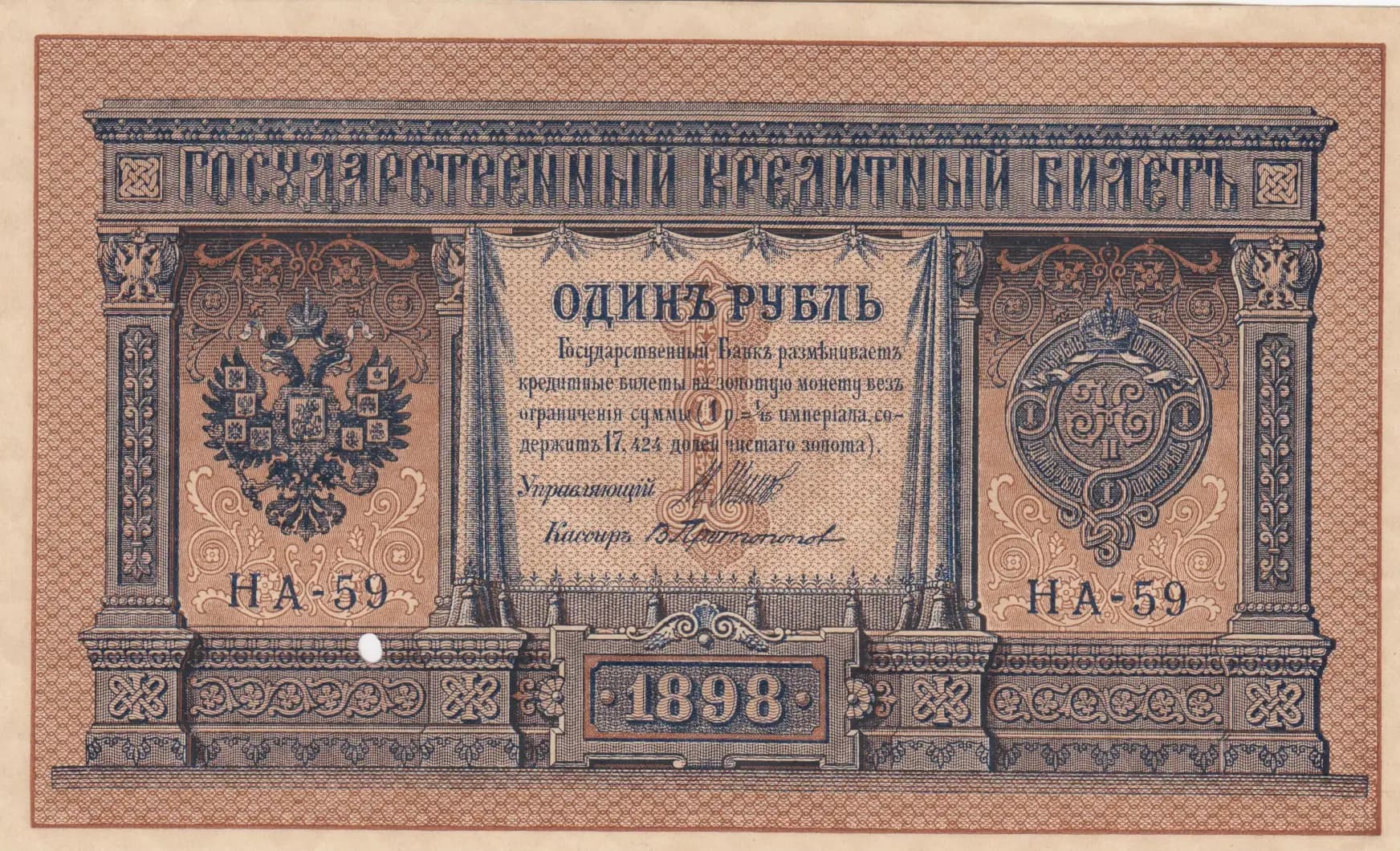
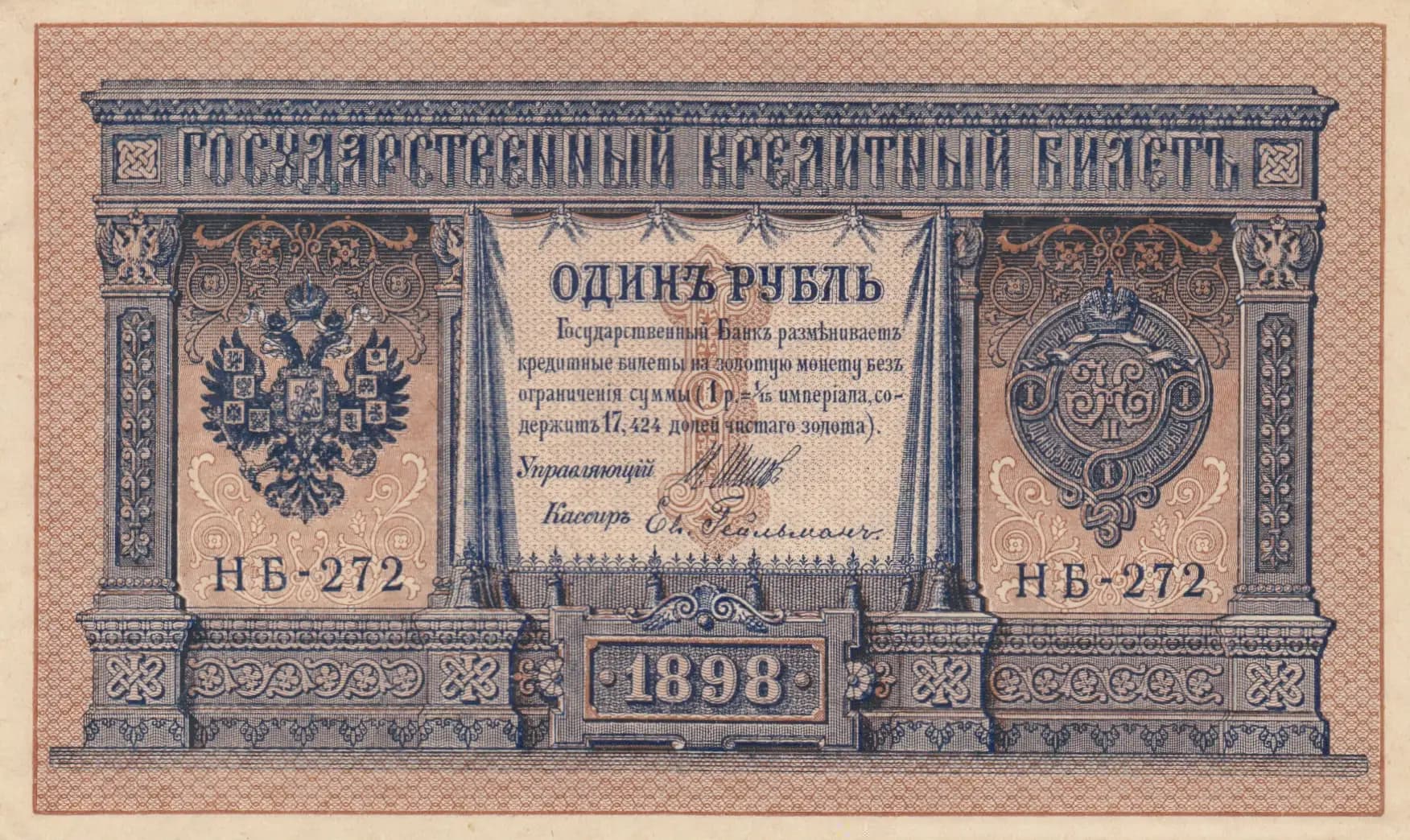
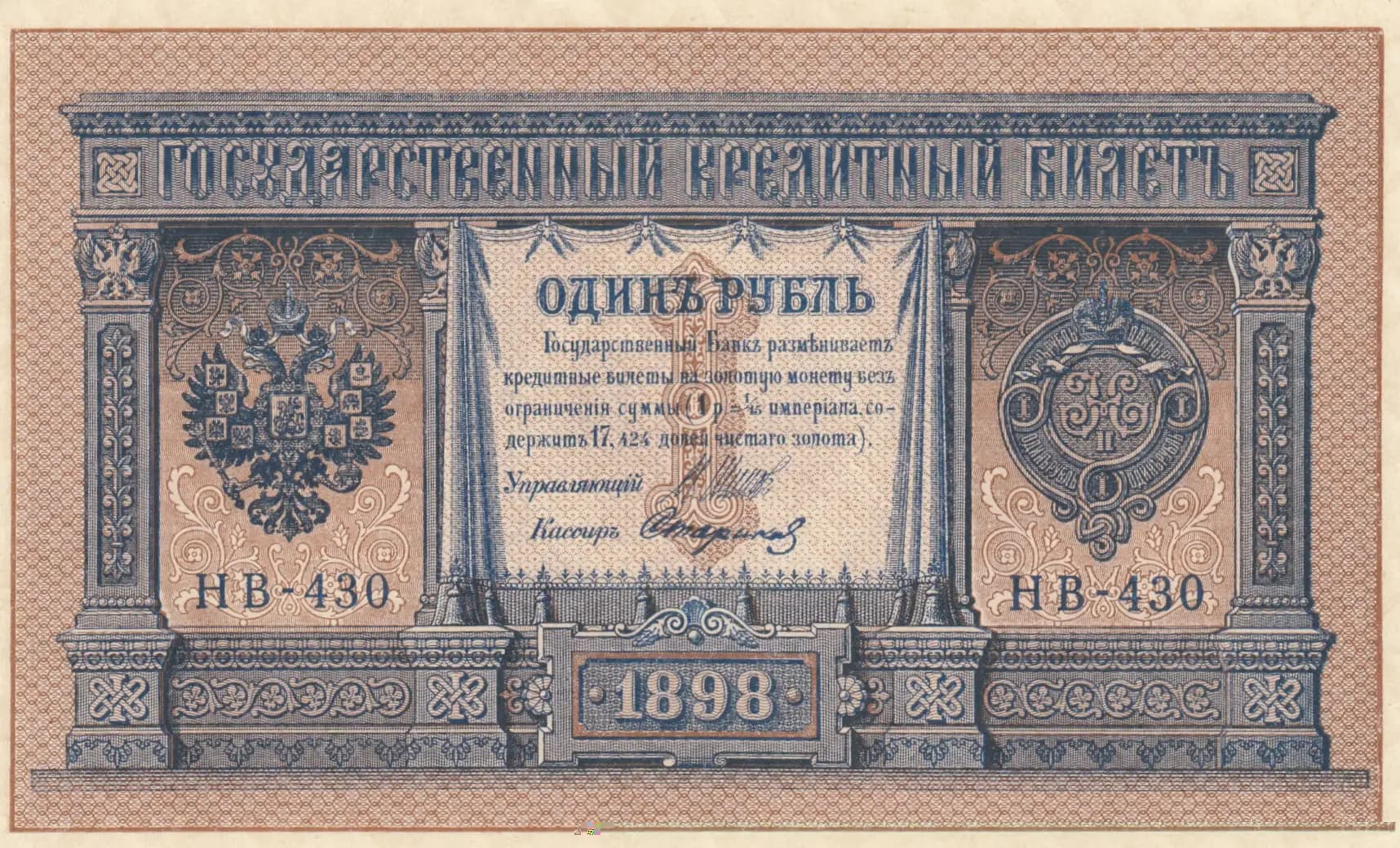
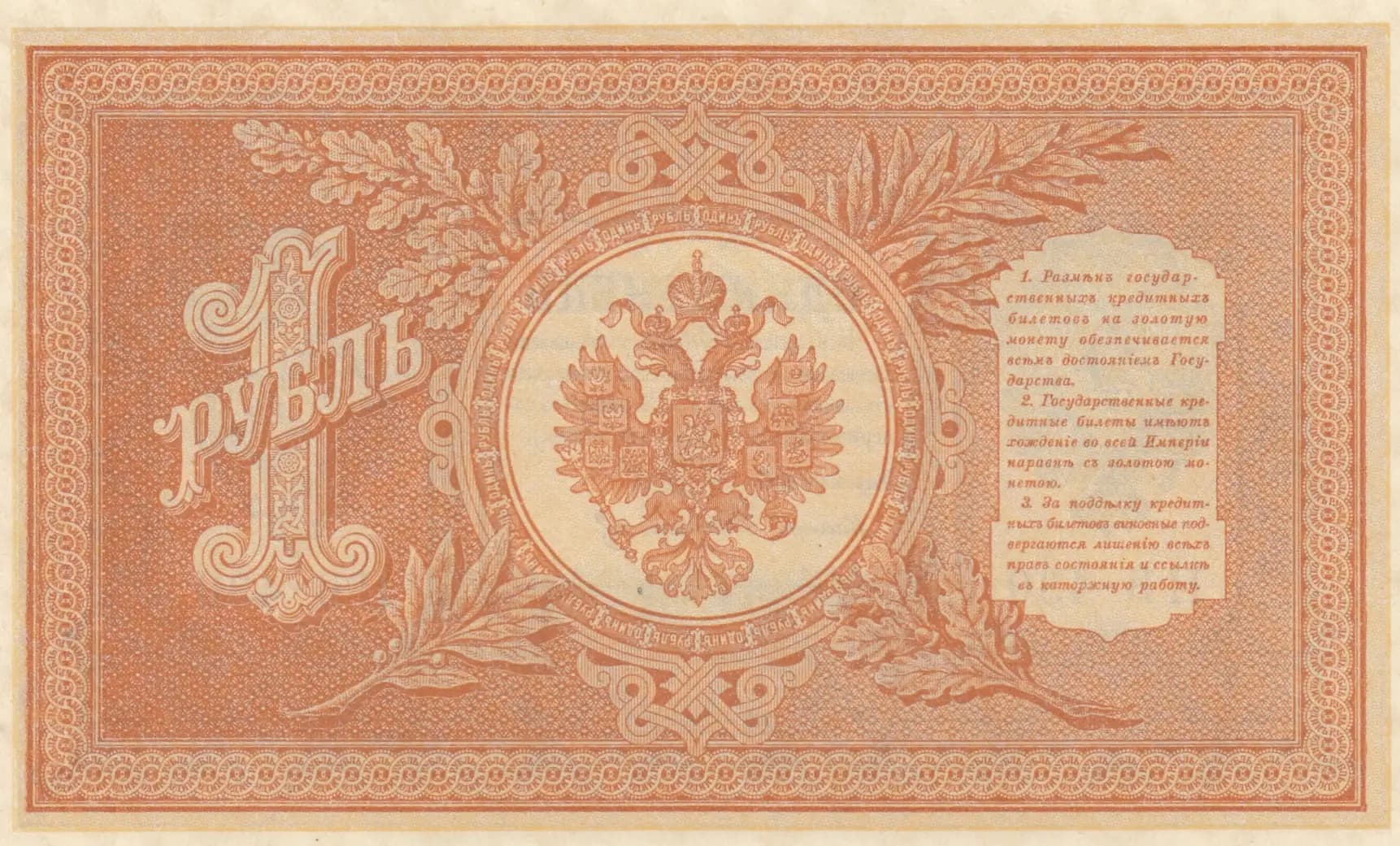
An exceptionally well-preserved example of the Russian 1 Ruble State Credit Note from 1915 (Pick P-15(3-10)), graded AU with no visible wear, creases, or circulation marks. The note features the iconic Imperial Russian Double-Headed Eagle prominently displayed on both sides within ornate heraldic frames, surrounded by elaborate decorative engraving in blue, cream, and orange-brown tones. This signature Starikov example represents a key piece of Imperial Russian monetary history, showcasing the sophisticated security engraving and artistic design standards of pre-Revolutionary Russian banknotes.
Common. The 1 Ruble denomination from this 1898-design series (Pick P-15) was issued in substantial quantities throughout its circulation period extending into 1915 and beyond. While the note is from the Imperial period and predates the Soviet era, the large print runs and extended circulation window ensure ready availability in the numismatic market. AU-condition examples, while more desirable than circulated specimens, do not command premium prices indicative of rarity; most comparable examples trade modestly.
This 1915 banknote was issued during the final years of Tsarist Russia, when the State Bank maintained the gold standard backing for all credit notes as prominently declared on the reverse. The elaborate Imperial Double-Headed Eagle and heraldic symbolism underscored the authority and legitimacy of the Romanov state's currency system, even as Russia faced mounting fiscal pressure from World War I. The note's design reflects the 1898 design series, demonstrating continuity in Russian monetary iconography through the final Imperial period before the 1917 revolution.
Both sides of this note prominently feature the Imperial Russian Double-Headed Eagle (Орел), the heraldic symbol of the Russian Empire, rendered in classical heraldic style with crowned heads and elaborate ornamentation. The front displays two eagles flanking a theatrical curtain design, positioned within ornamental circular medallions and heraldic shield frames, suggesting both state authority and artistic refinement. The back presents a single, larger eagle at center within an ornate circular wreath bordered by chain-link patterns, surrounded by elaborate foliate and acanthus leaf scrollwork. The decorative elements throughout employ fine engraving with crosshatching and geometric borders, while ornamental cartouches frame the denomination text. No portrait appears on this note, consistent with Russian currency practice of the period which favored symbolic rather than personal representation. The color scheme of blue, cream, and orange-brown creates visual hierarchy and aids in denomination recognition.
FRONT SIDE: 'ГОСУДАРСТВЕННЫЙ КРЕДИТНЫЙ БИЛЕТ' (State Credit Note); 'ОДИН РУБЛЬ' (One Ruble); 'Государственный Банк разрешивает кредитные билеты на подобную монету без ограничения суммы' (The State Bank authorizes credit notes for similar coin without limitation of sum); 'Управляющий' (Director); 'Кассир' (Cashier); Series designation 'НВ-430'; Date '1898' (design year). BACK SIDE: 'РУБЛЬ' (Ruble); Primary regulation text: '1. Размен государственных кредитных билетов на золотую монету обеспечивается всеми достоликами Государства' (1. The exchange of state credit notes for gold coin is guaranteed by all assets of the State); '2. Государственные кредитные билеты наравне с золотою монетою хождение по всей Империи' (2. State credit notes circulate throughout the entire Empire equally with gold coin); '3. За подделку кредитного билета виновные подвергаются лишению всех прав состояния и ссылке на каторжную работу' (3. Counterfeiting of credit notes subjects offenders to deprivation of all rights and exile to hard labor).
Intaglio engraving (steel engraving) executed with exceptional precision, evidenced by the fine line work, intricate crosshatching in background areas, and complex ornamental borders observed throughout both sides. The security printer for Russian Imperial banknotes of this series was the State Printing Works (Государственный печатный двор) in St. Petersburg, which maintained the highest standards of engraved security printing. The technique produced the characteristic deep, tactile relief visible in well-preserved specimens such as this AU example.
This specimen is identified as Pick P-15(3-10), indicating it falls within the documented variety range for this denomination and design. The series designation 'НВ-430' and the 1898 design year are consistent with the cataloging system. The signature 'Starikov' noted by the collector likely refers to one of the authorized signatories (Director or Cashier) whose facsimile appears on the note; however, multiple officials used these titles during the production run, making individual signature identification a specialized area of Imperial Russian numismatics. Serial numbers visible in bottom corners should be examined for prefix patterns that may further refine variety classification within the Pick P-15(3-10) designation.