1 rubel 1915
“Sig.Alekseyev”
About This Note
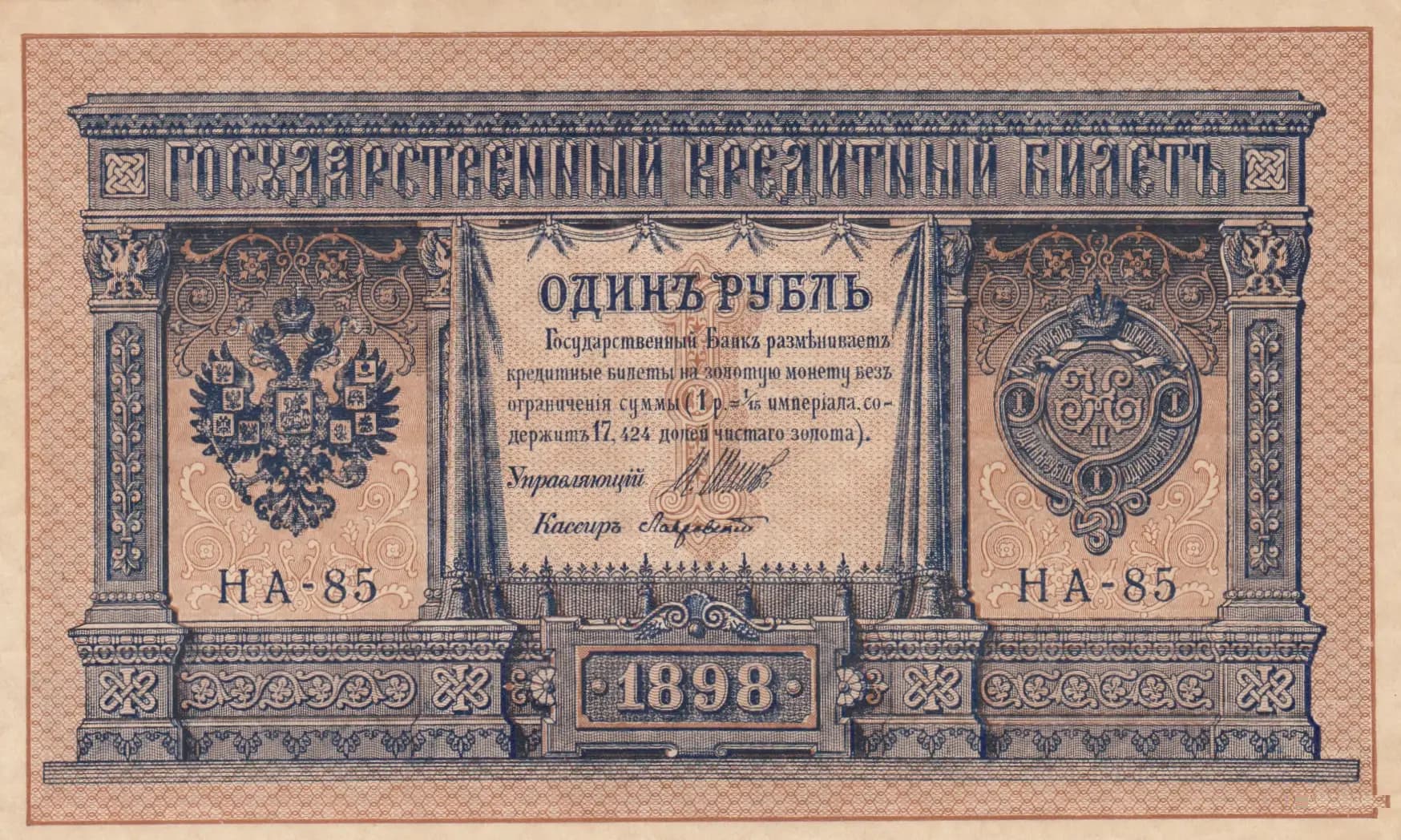
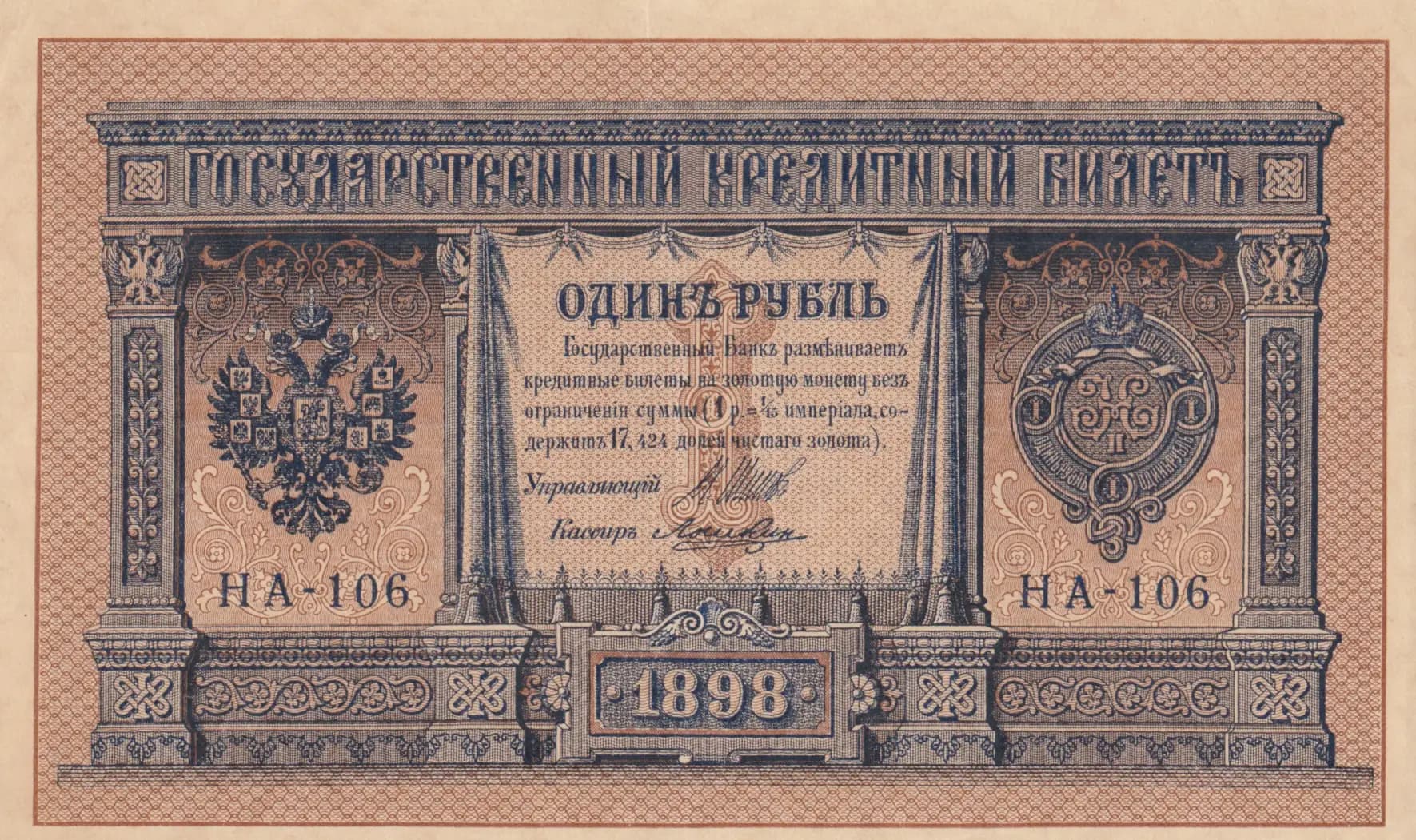
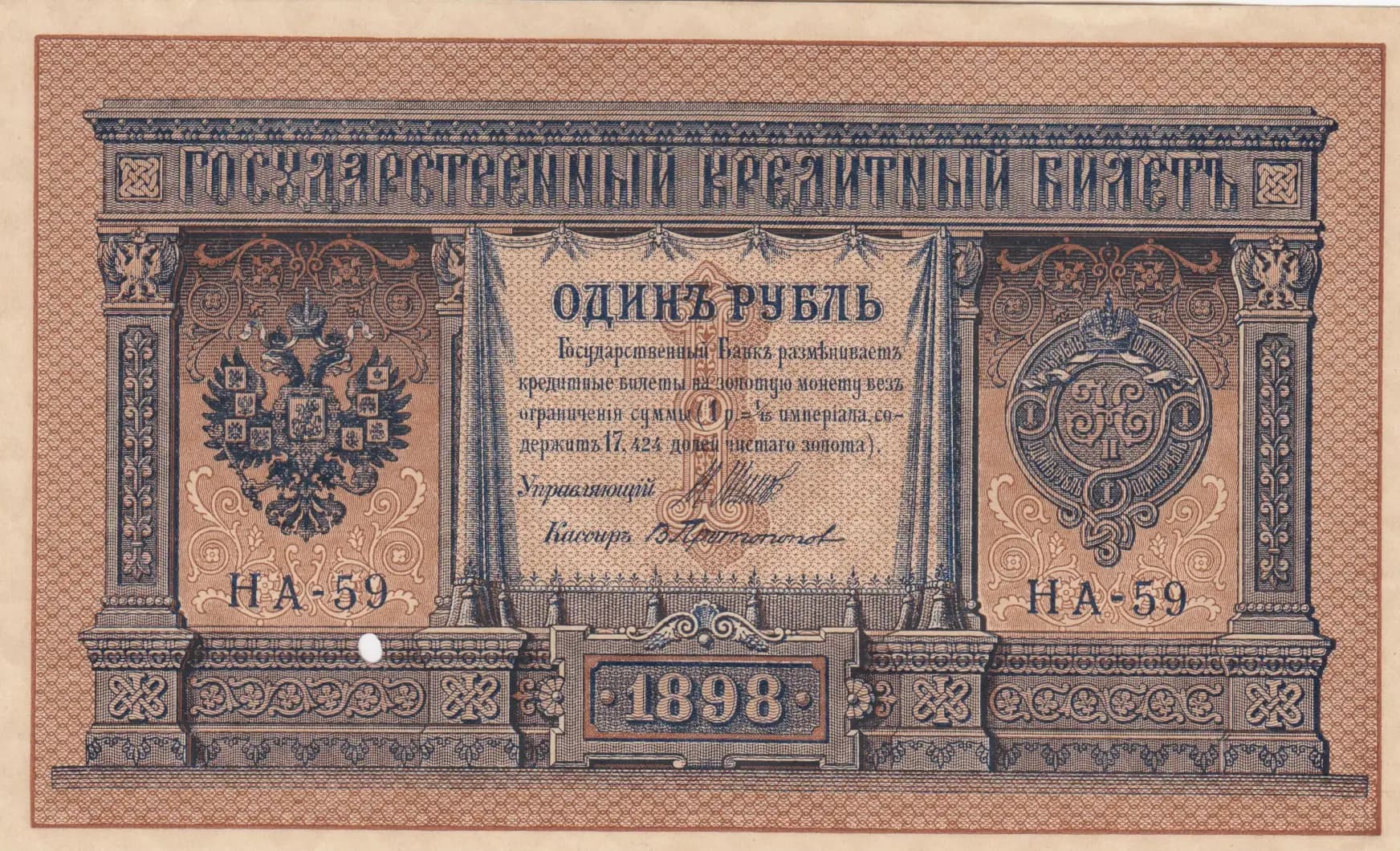
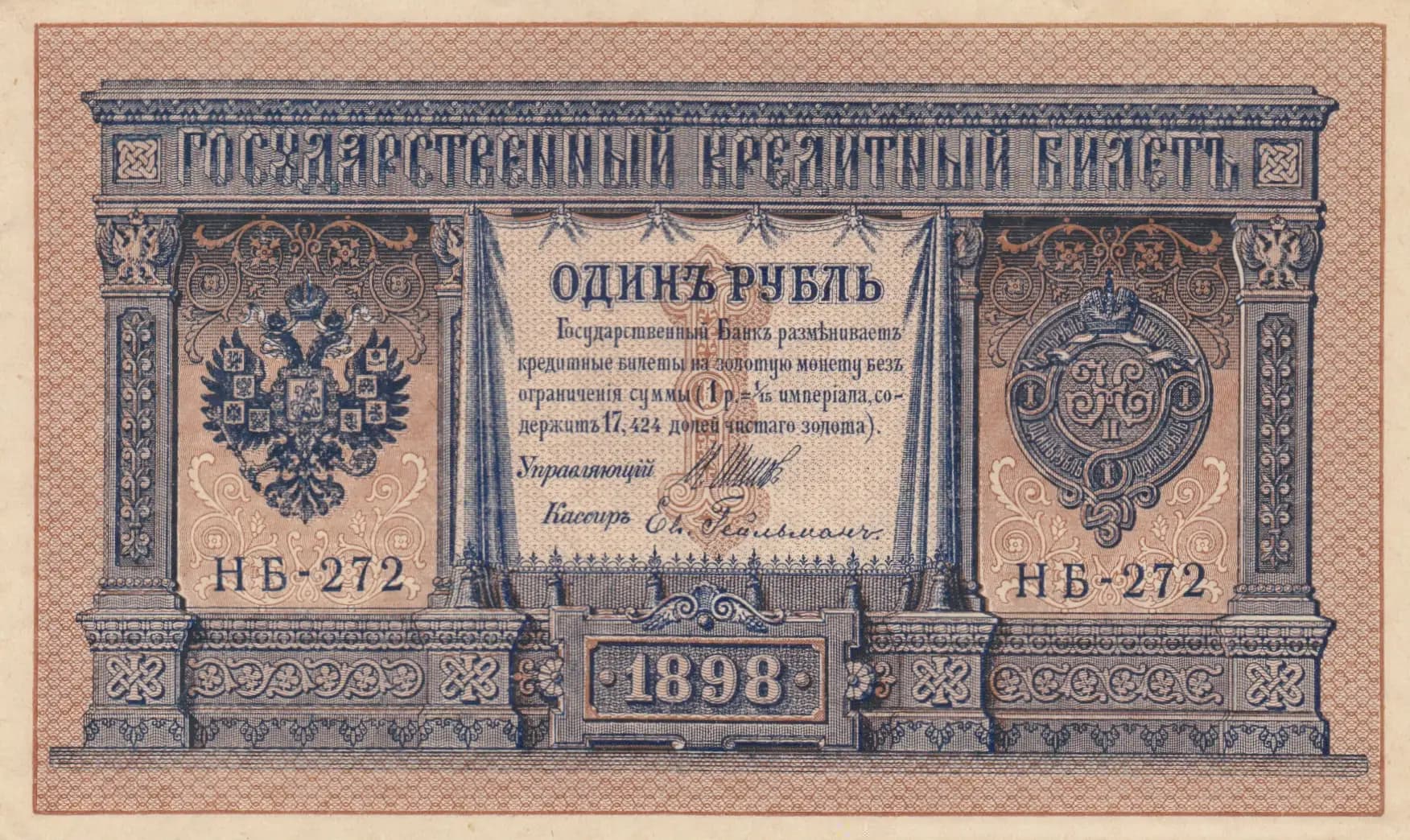
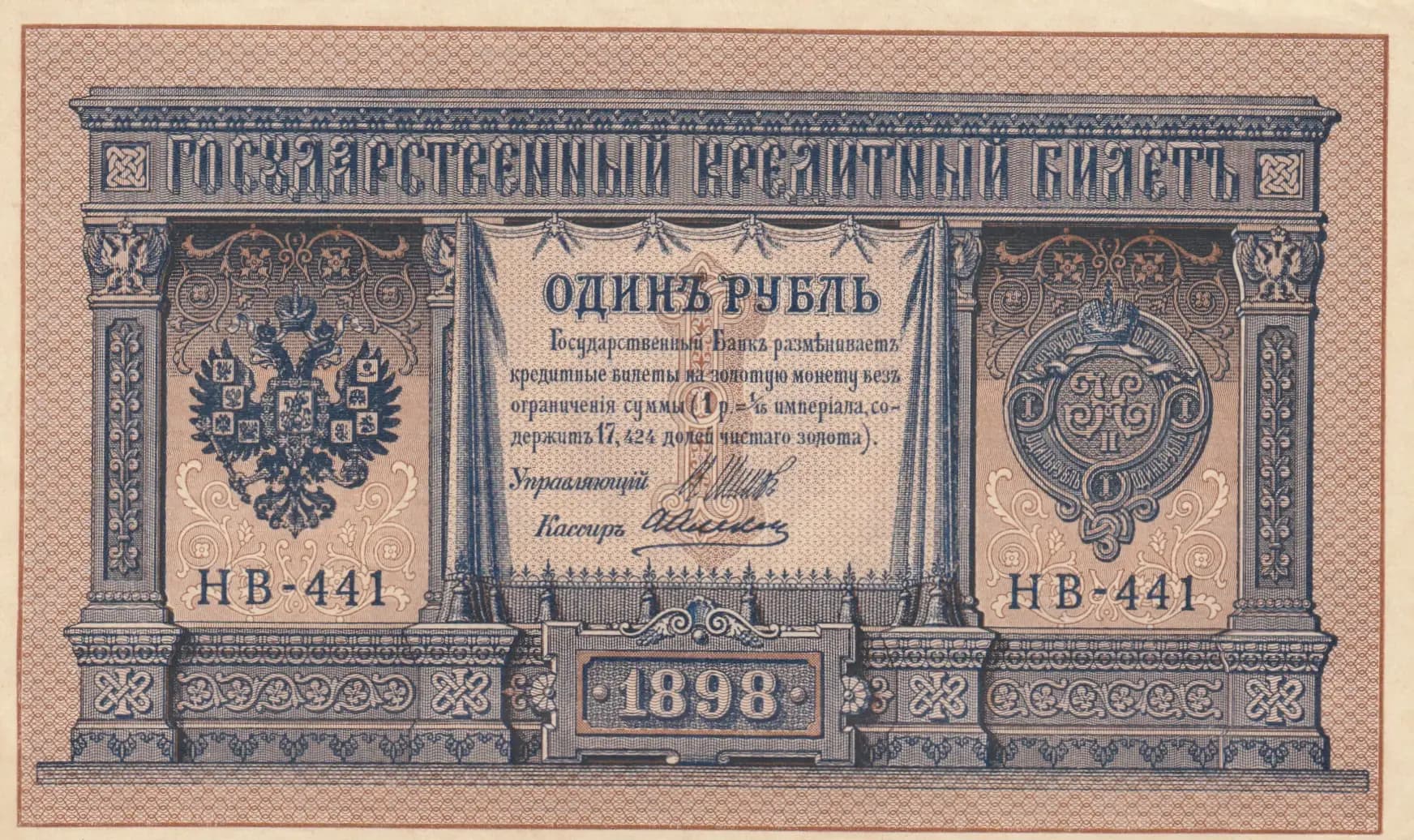
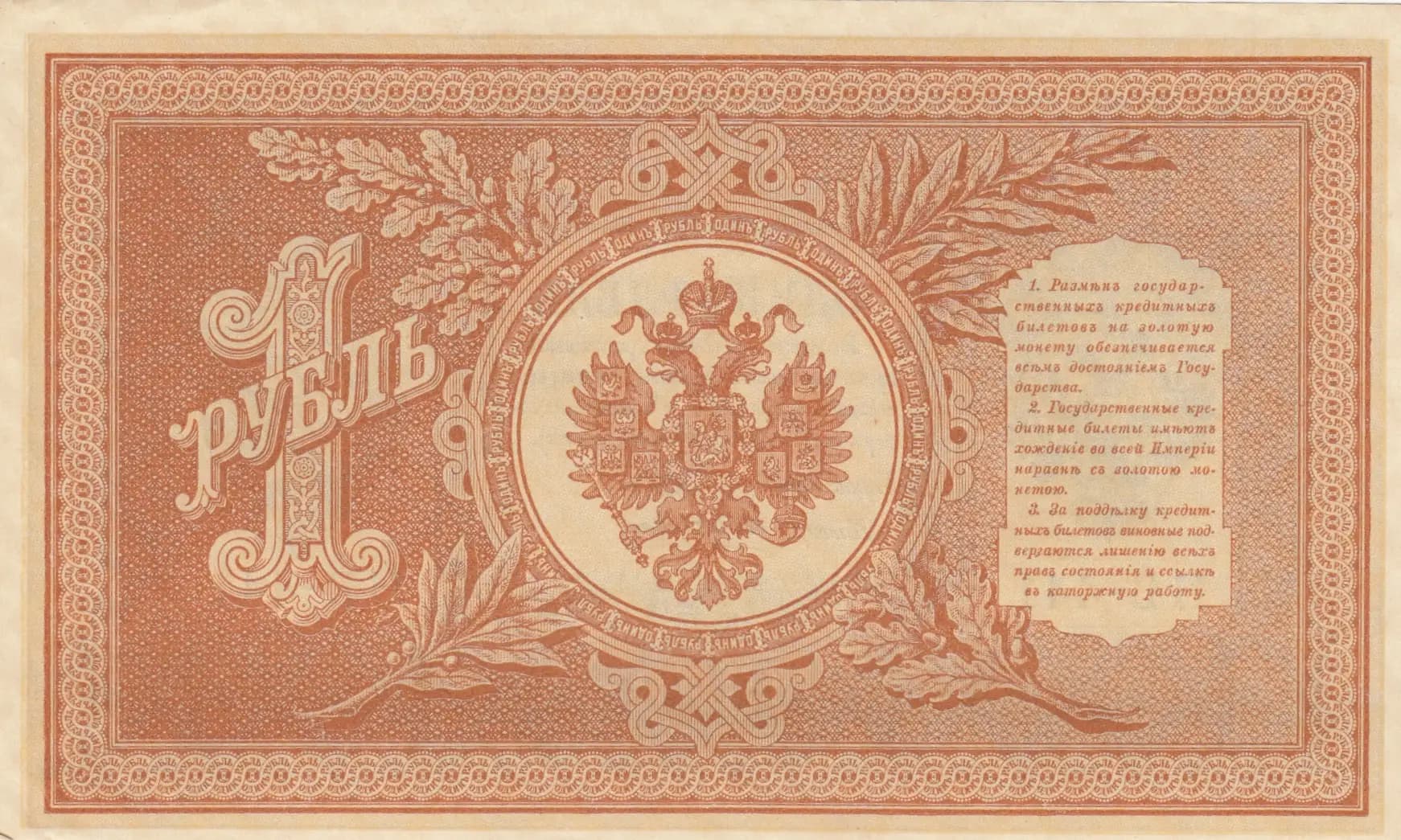
This is a Russian Imperial 1 Ruble State Credit Note from 1898, graded AU (About Uncirculated) and notable for its exceptional condition with no visible wear, creases, or stains. The note features an ornate neoclassical design with double-headed imperial eagles in ornamental shields and elaborate decorative engraving throughout, rendered in blue on the obverse and red/rust tones on the reverse against cream backgrounds. The vibrant coloration and crisp printing quality are characteristic of high-grade specimens of this denomination.
Common. The 1 Ruble note from this 1898 series (Pick P-15 for the Imperial period) was produced in large quantities as the standard circulating denomination of the Russian Imperial State Bank. Despite its age and the historical disruptions of the 20th century, many examples survive in various conditions. AU-graded specimens are uncommon but not rare, as the ornate design and robust printing quality allowed many notes to survive with good condition retention.
This note was issued during the later Imperial Russian period under the State Bank system, when 1 Ruble notes served as State Credit Tickets fully backed by gold reserves. The dual inscription guaranteeing gold conversion (visible on the front: '1 ruble = imperial, contains 17.424 parts of pure gold') and the three-point legal declaration on the reverse underscore the financial confidence of the Russian Empire in this era, before the monetary upheaval of the 1917 Revolution. The double-headed eagle with crown adorning both sides represents the Romanov imperial authority and the unified Russian state.
The obverse features a formal neoclassical architectural frame with classical columns and ornamental elements in blue engraving on cream stock. Centered at the top is the title panel 'ГОСУДАРСТВЕННЫЙ КРЕДИТНЫЙ БИЛЕТ' (State Credit Ticket). The Russian Imperial double-headed eagle with crown (the national coat of arms) appears in two ornamental shields flanking the central design on both left and right sides. Serial number 'НВ-441' is positioned symmetrically on left and right margins, with the date 1898 at bottom center. The reverse presents a dominant circular medallion containing a larger rendition of the double-headed eagle with crown, rendered in red/rust engraving. The word 'РУБЛЬ' (Ruble) appears prominently to the left of the medallion, with a rectangular legal text panel to the right containing three numbered points of constitutional guarantee. Both sides employ elaborate ornamental floral, scroll, and geometric patterns as borders and decorative fill, typical of high-security banknote design of the Imperial Russian period.
{"front":{"header":"ГОСУДАРСТВЕННЫЙ КРЕДИТНЫЙ БИЛЕТ = State Credit Ticket","denomination":"ОДИН РУБЛЬ = One Ruble","goldClause":"Государственный Банк размывает кредитные билеты на золото монету без ограничения суммы (1 р. = к империала, содержит 17,424 доли чистаго золота). = The State Bank exchanges credit notes for gold coins without limit of sum (1 ruble = imperial, contains 17.424 parts of pure gold).","officialTitles":"Управляющий = Managing Director; Кассир = Cashier","serialNumber":"НВ-441 = Serial number HB-441","year":"1898"},"reverse":{"denomination":"РУБЛЬ = Ruble","legalClause1":"Размена государственных кредитных билетов на золото монету обеспечивается всем достоянием Государства. = The exchange of state credit notes for gold coins is guaranteed by all the property of the State.","legalClause2":"Государственные кредитные билеты пользуются хождением во всей Империи наравне с золотою монетою. = State credit notes circulate throughout the entire Empire as legal tender equal to gold coins.","legalClause3":"Да поддержку кредитных билетов сионные подчиняются имущественно всех прав состояния и семьи во которую работу. = To support credit notes, all property rights of the state and family are subject to work for this purpose."}}
Steel engraving and intaglio printing. The crisp detail of the ornamental borders, the precisely rendered double-headed eagles, and the fine line work visible in the decorative patterns are characteristic of high-quality intaglio production. The separation of color zones (blue on obverse, red on reverse) suggests multi-plate printing or sequential passes. This was standard practice for Russian Imperial State Bank notes of the 1890s-1900s period, produced under strict security protocols by the State Bank's official printing facilities.
The catalog designation Pick P-15(3-1) indicates this is variety 3-1 of the 1 Ruble Imperial issue. The serial number 'НВ-441' (HB-441) is specific to this individual note. Collector notation 'Sig.Alekseyev' may refer to a signature variety or collection provenance. 1898-dated examples represent the later state of the Imperial 1 Ruble design; earlier dates and signature variations exist but are not apparent from the provided images.