1 rubel 1915
“Sig.Lavronsky”
About This Note
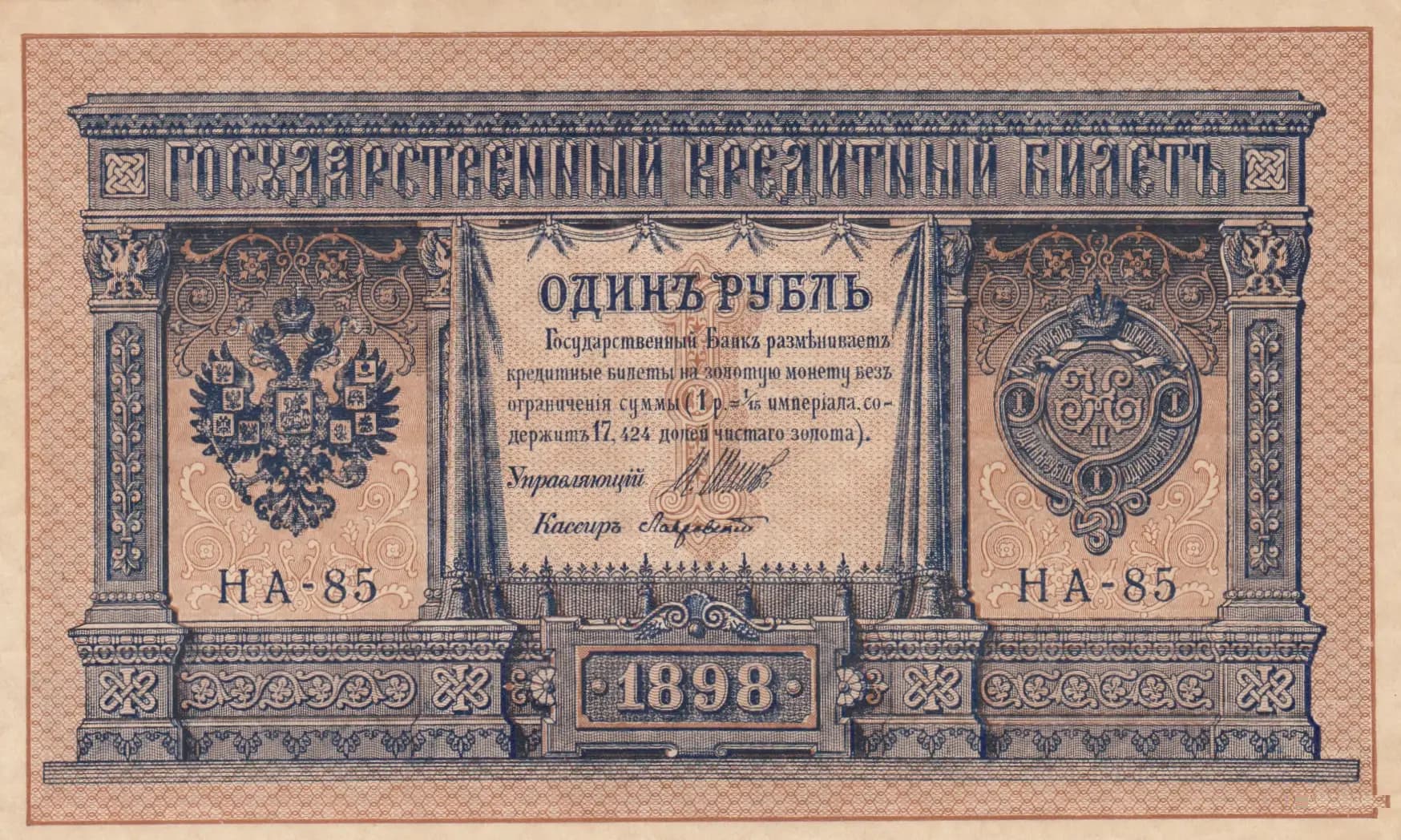
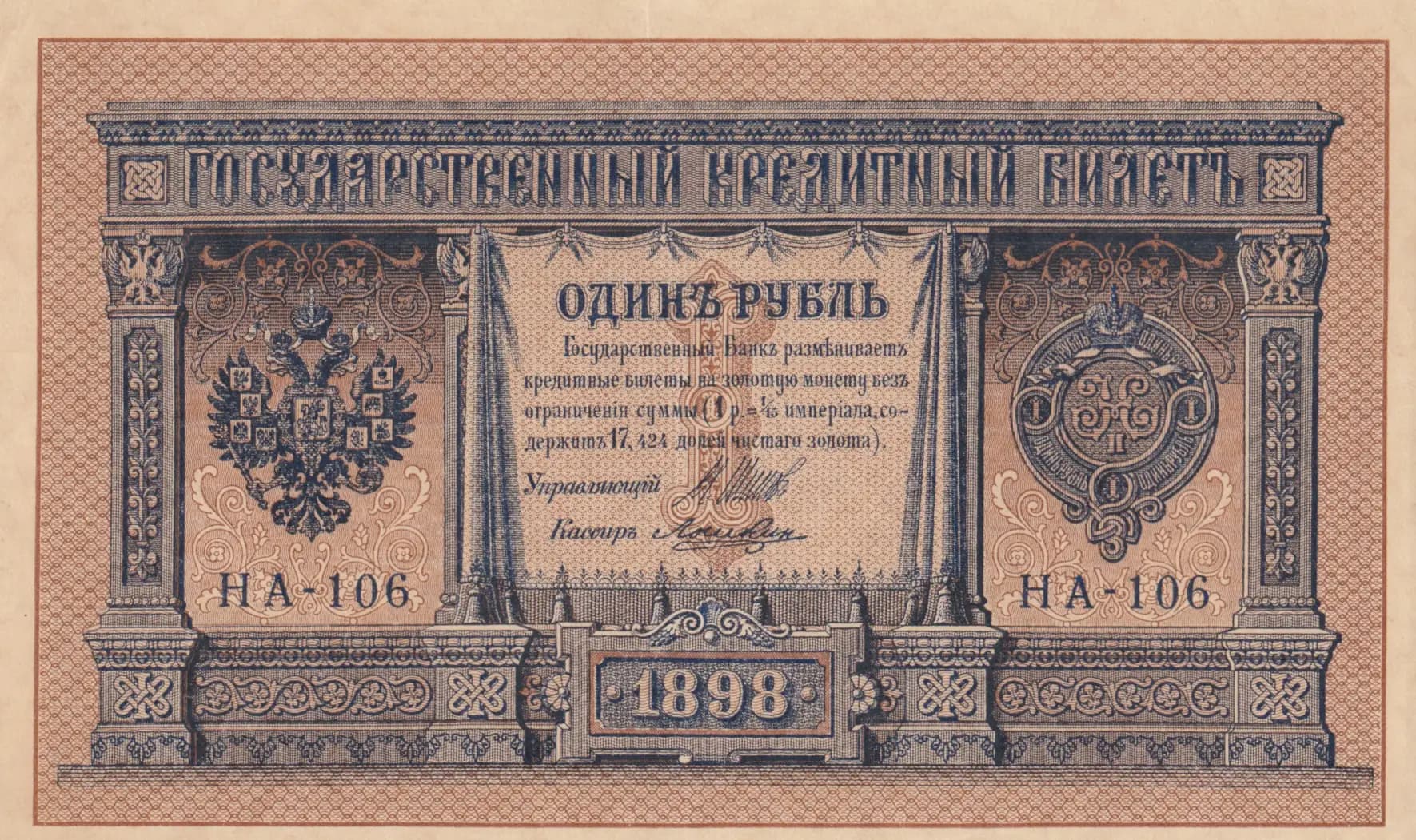
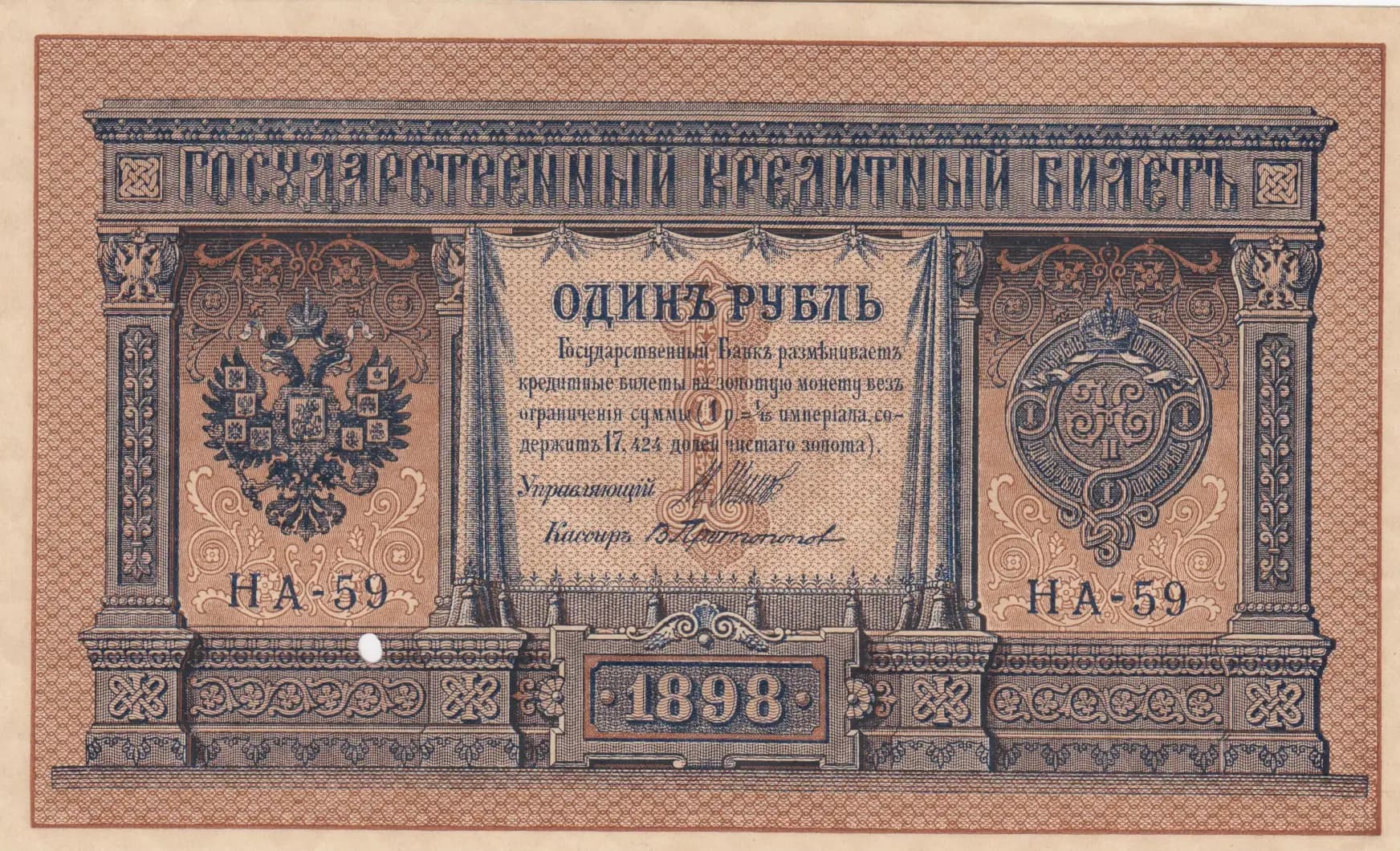
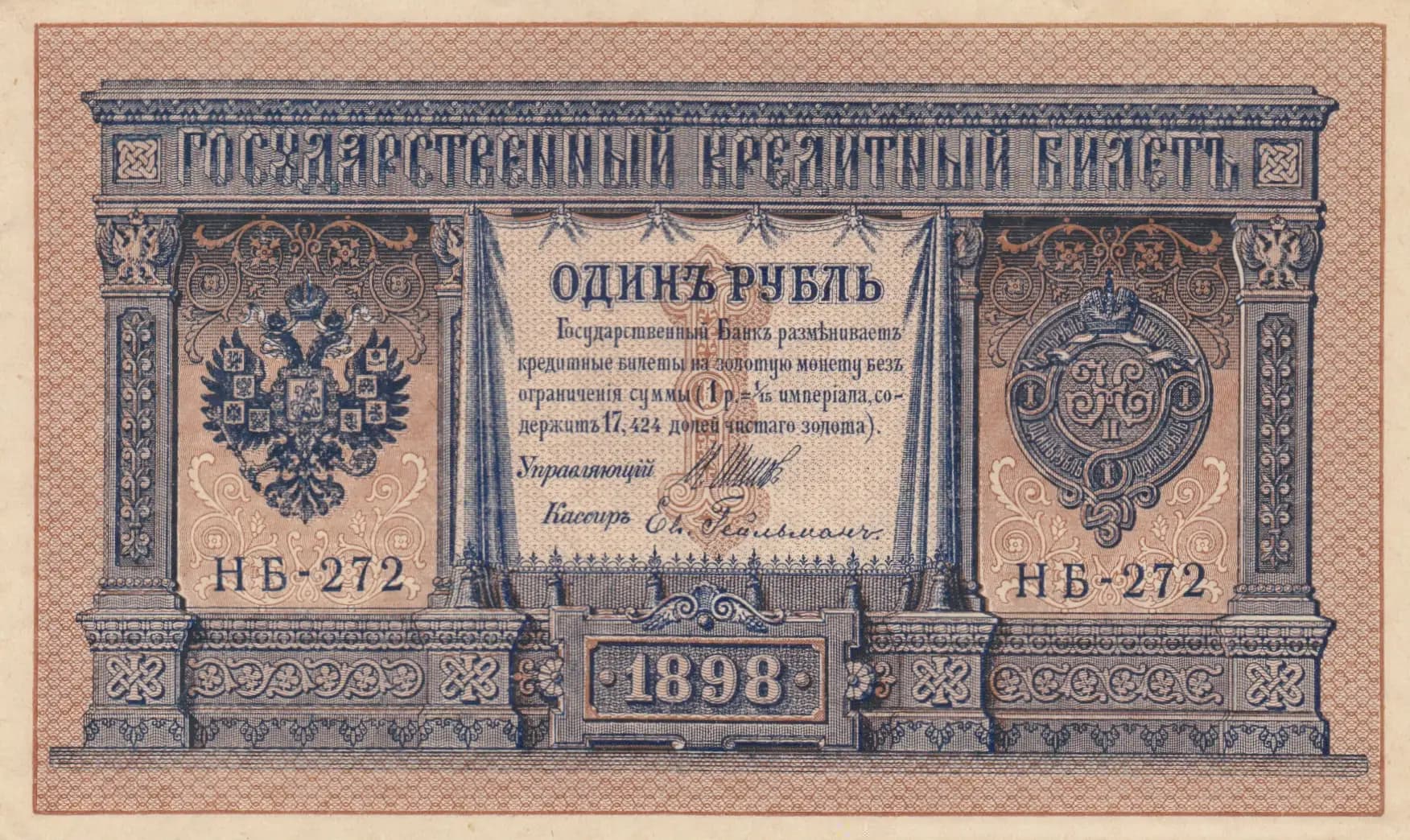
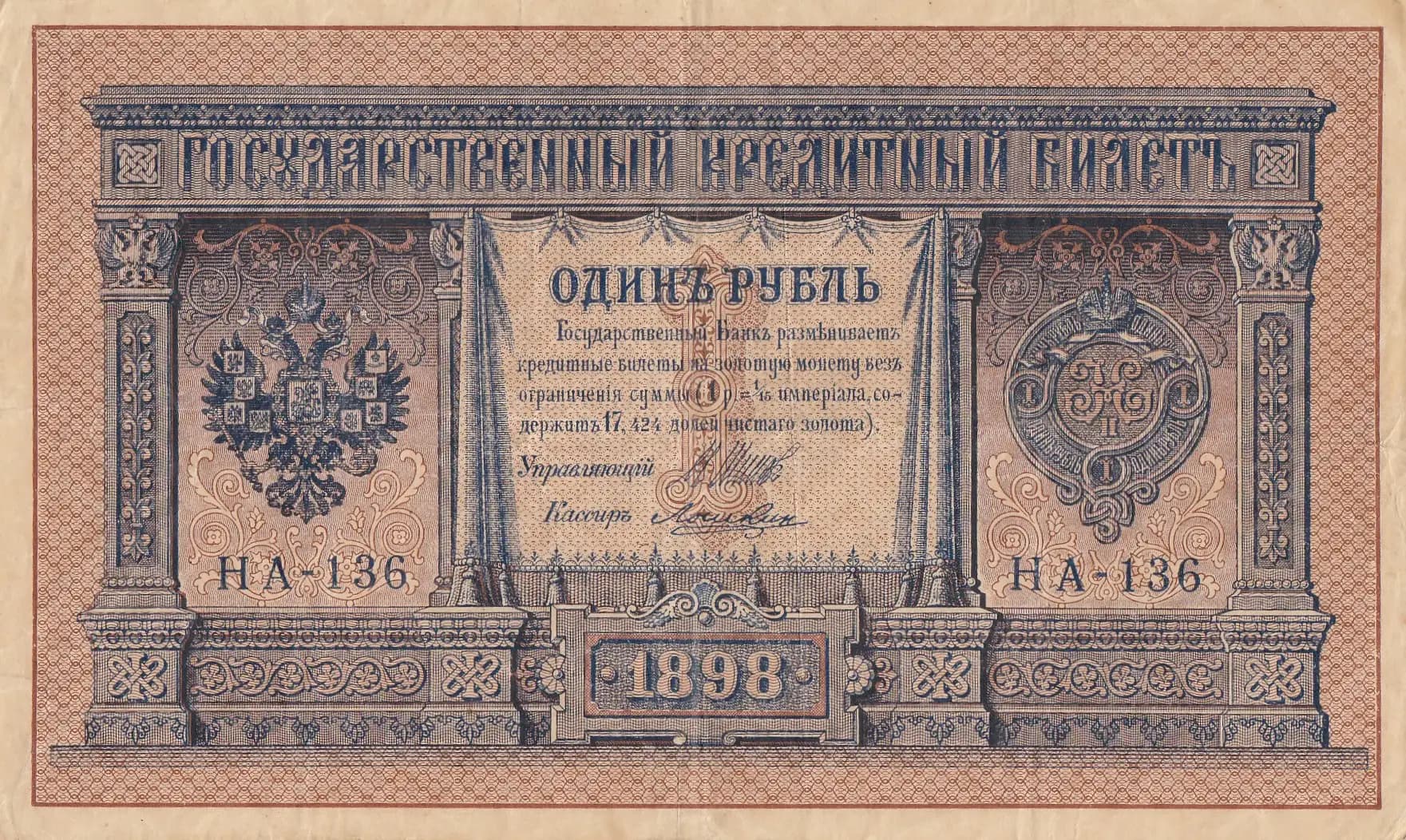
This 1 Ruble note from 1915 represents a fascinating transitional piece of Russian numismatic history, issued during the final years of Imperial rule before the Provisional Government takeover. The note displays exceptional condition grading as VF, with pristine paper showing only natural aging to warm cream and tan tones, crisp impressions throughout, and no visible tears, folds, or creases. The elaborate engraved design featuring the double-headed eagle and ornate architectural framing exemplifies the sophisticated security printing standards of Imperial Russian currency.
Common. The 1 Ruble notes from the 1915 Imperial series were issued in substantial quantities as they represented the standard circulating denomination of the Russian Empire during World War I. These notes remained in circulation for a considerable period despite subsequent political upheaval, and large numbers survive today in collections worldwide. The Pick catalog designation P-15(2-6) encompasses multiple varieties from a large print run, confirming widespread production. Notes of this type and denomination typically trade at modest prices on the numismatic market, reflecting their availability to collectors.
This note was issued during a period of significant monetary instability in Russia—1915 marked the third year of World War I, when Russia's gold reserves were being depleted and confidence in paper currency was wavering. The inscriptions prominently reference the State Bank's obligation to exchange these credit notes for gold coins and specify the gold content (11.424 parts of pure gold), reflecting the government's attempt to maintain confidence in the currency despite wartime fiscal pressures. The use of both Old Church Slavonic and modern Cyrillic scripts underscores the Imperial government's assertion of traditional authority during a time of unprecedented social and political upheaval.
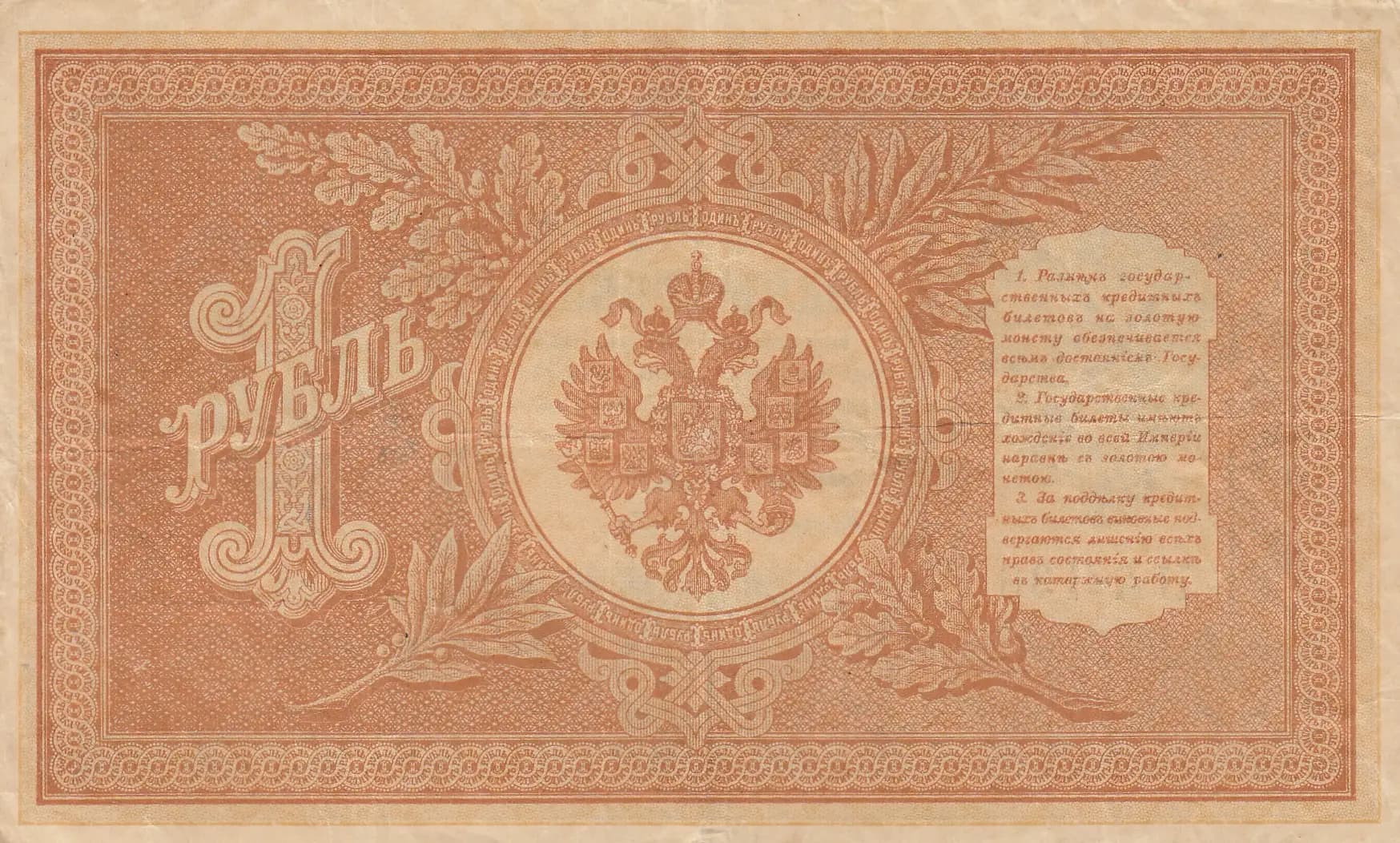
This 1 Ruble note exemplifies the Imperial Russian State Credit Note series with its symmetrical, highly formal design emphasizing governmental authority and monetary security. The obverse features the Russian Imperial coat of arms—the double-headed eagle with crown—positioned within circular emblems on both the left and right sides, flanked by an elaborate architectural frame with draped curtains suggesting palatial grandeur. The reverse presents a central circular medallion containing the double-headed eagle surrounded by ornate floral and foliate patterns, with the denomination 'РУБЛЬ' displayed prominently in large decorative Cyrillic letters. The entire design is enclosed in geometric borders with scrollwork, employing the classical symmetry and heraldic imagery that defined late Imperial Russian currency. The color scheme of brown, tan, beige, and dark blue-gray creates a formal, conservative aesthetic appropriate to state-issued tender.
FRONT SIDE: 'ГОСУДАРСТВЕННЫЙ КРЕДИТНЫЙ БИЛЕТ' (State Credit Note); 'ОДИНЪ РУБЛЬ' (One Ruble, in Old Orthography); 'Государственный Банк размѣнивает кредитные билеты на золотую монету всѣ ограничения суммы (если вѣ-ть до сего числа не было) отмѣнены. Содержит 11,424 доли метаго золота.' (The State Bank exchanges credit notes for gold coins without sum limitations (if any existed prior to this date). Contains 11.424 parts of pure gold.); 'Управляющій' (Manager/Director); 'Кассиръ' (Cashier); 'НА·136' (Series identifier); '1898' (date reference). BACK SIDE: 'РУБЛЬ' (Ruble); 'Разрѣшаю выдать государственный кредитный билетов на золотую монету в соответствіи усл остановленных Законом Государственным кредитным билетам и монетами и запасом по остающемуся работе' (I authorize the issuance of state credit notes for gold coins in accordance with the conditions established by Law on State Credit Notes and coins and reserves for remaining work).
This note was produced using fine-line engraving and intaglio printing methods, as evidenced by the detailed line work, intricate border patterns, and dimensional quality of the impressions visible in both the front and back designs. The multiple security printing layers and the crisp, well-defined character of decorative elements indicate production by the Imperial Russian State Printing Works (Экспедиция Заготовления Государственных Бумаг), which employed state-of-the-art security engraving techniques. The precision of the circular medallions and the uniformity of the fine geometric patterns demonstrate the high standards of Imperial currency production during this period.
This note carries the series identifier 'НА·136' and displays the signature lines for both 'Управляющій' (Manager/Director) and 'Кассиръ' (Cashier), indicating it represents a signed variety typical of the 1915 Imperial issue. The catalog reference P-15(2-6) suggests this note falls within the broader categorization of 1915 one-ruble denominations; specific variety identification would require comparison of signature varieties and serial number characteristics. The collector notation 'Sig.Lavronsky' may refer to signature identification or a known collector who documented this particular specimen, though verification of specific signature variants would require consultation of detailed Imperial Russian currency references.