1 rubel 1915
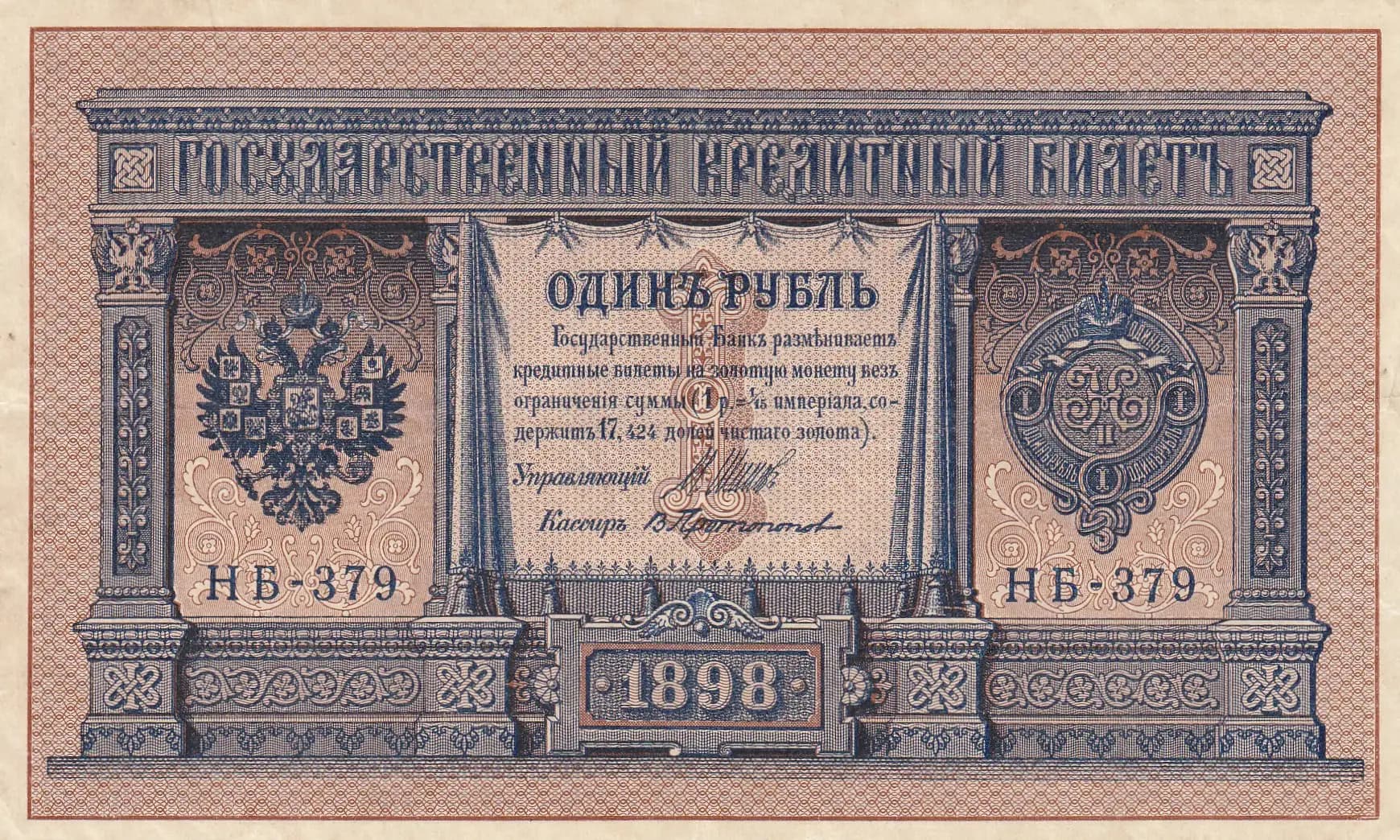
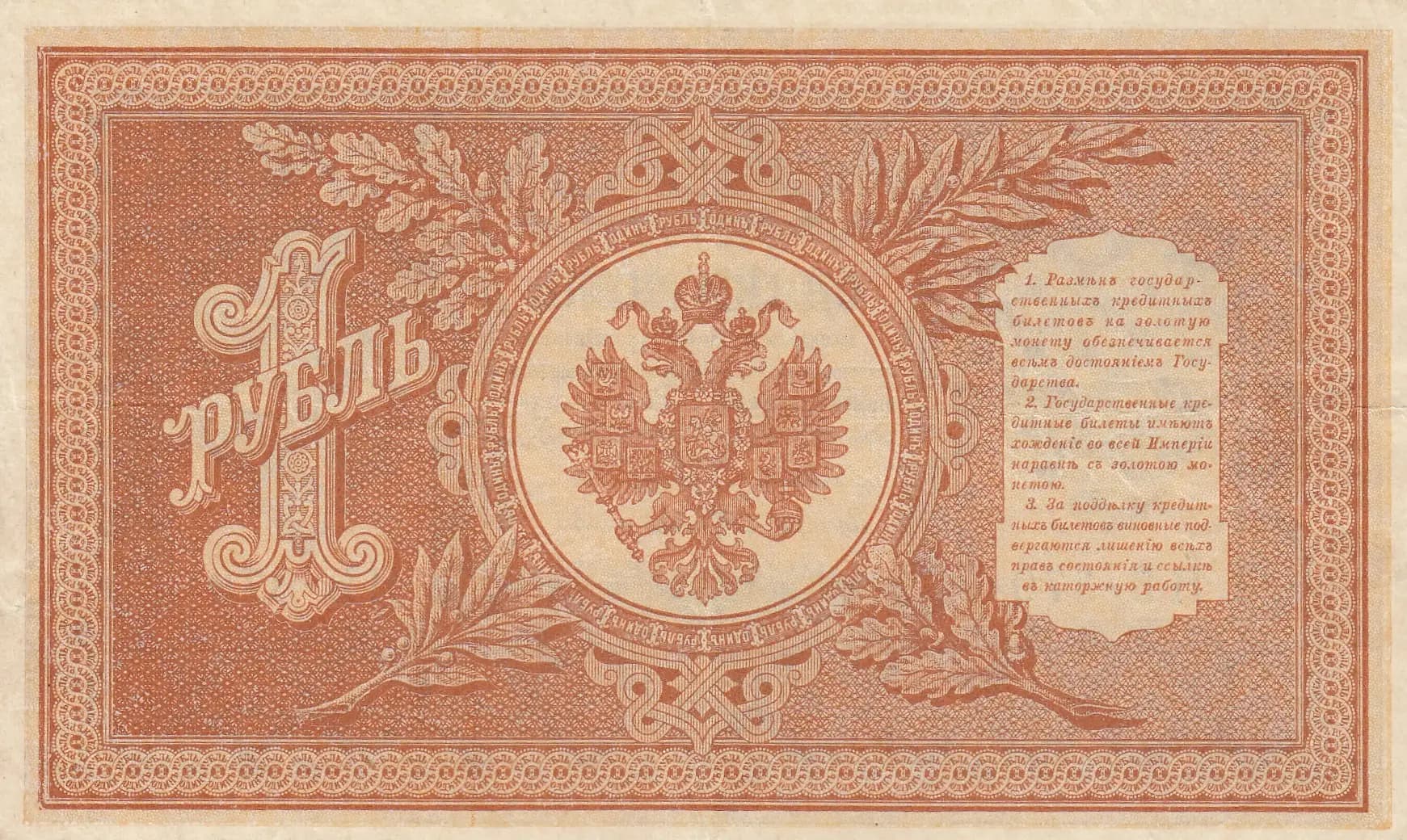
“Sig.Protopopov”
About This Note
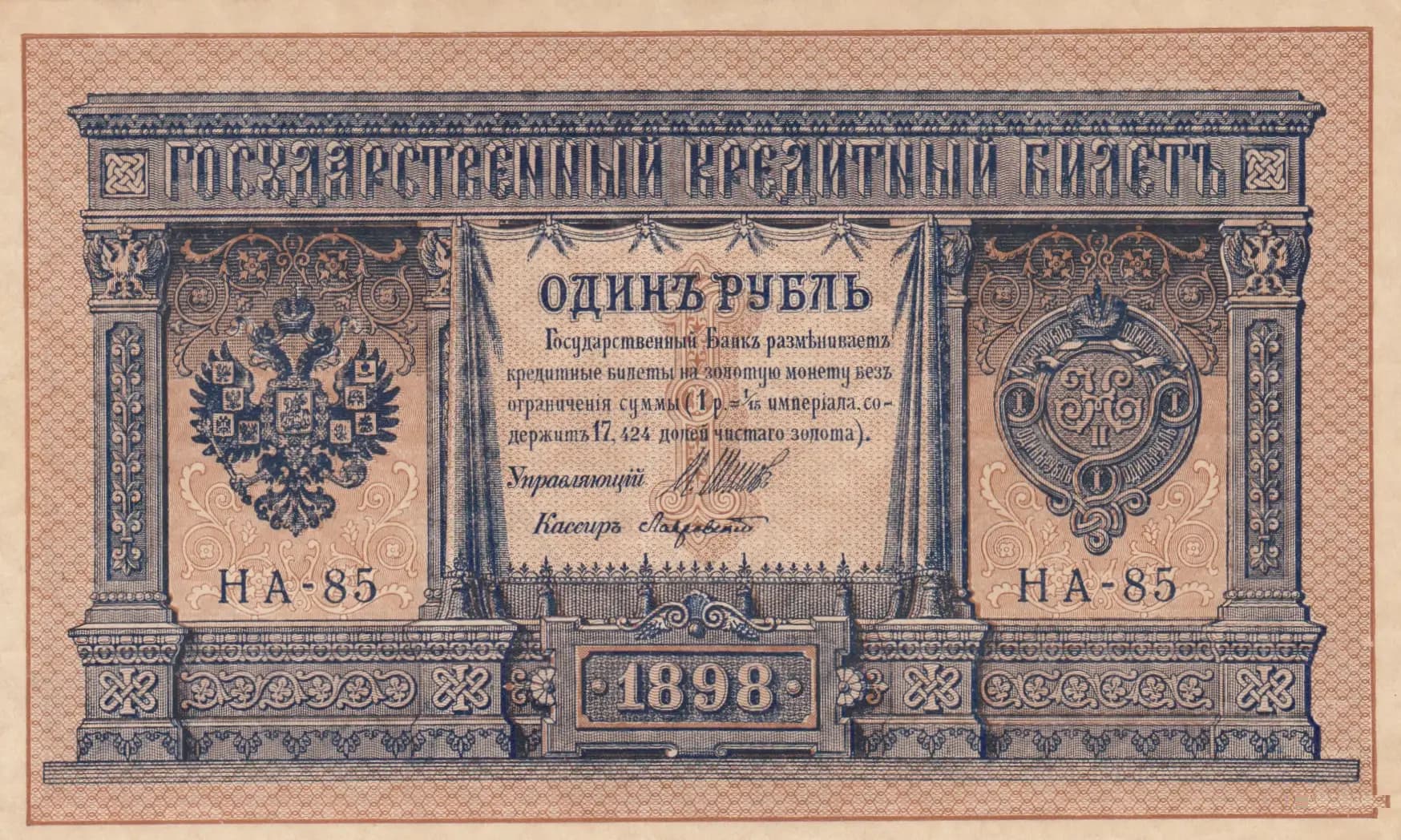
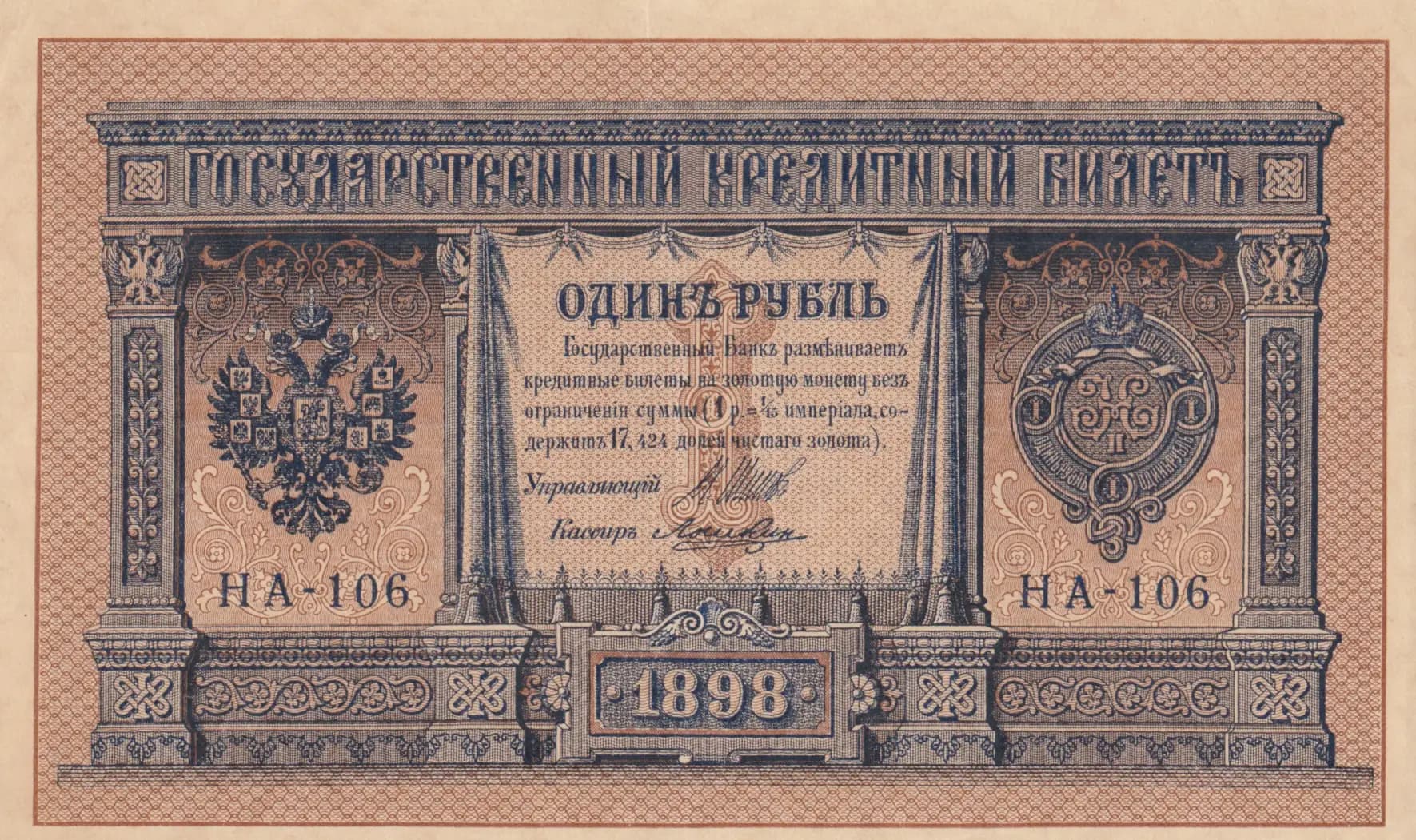
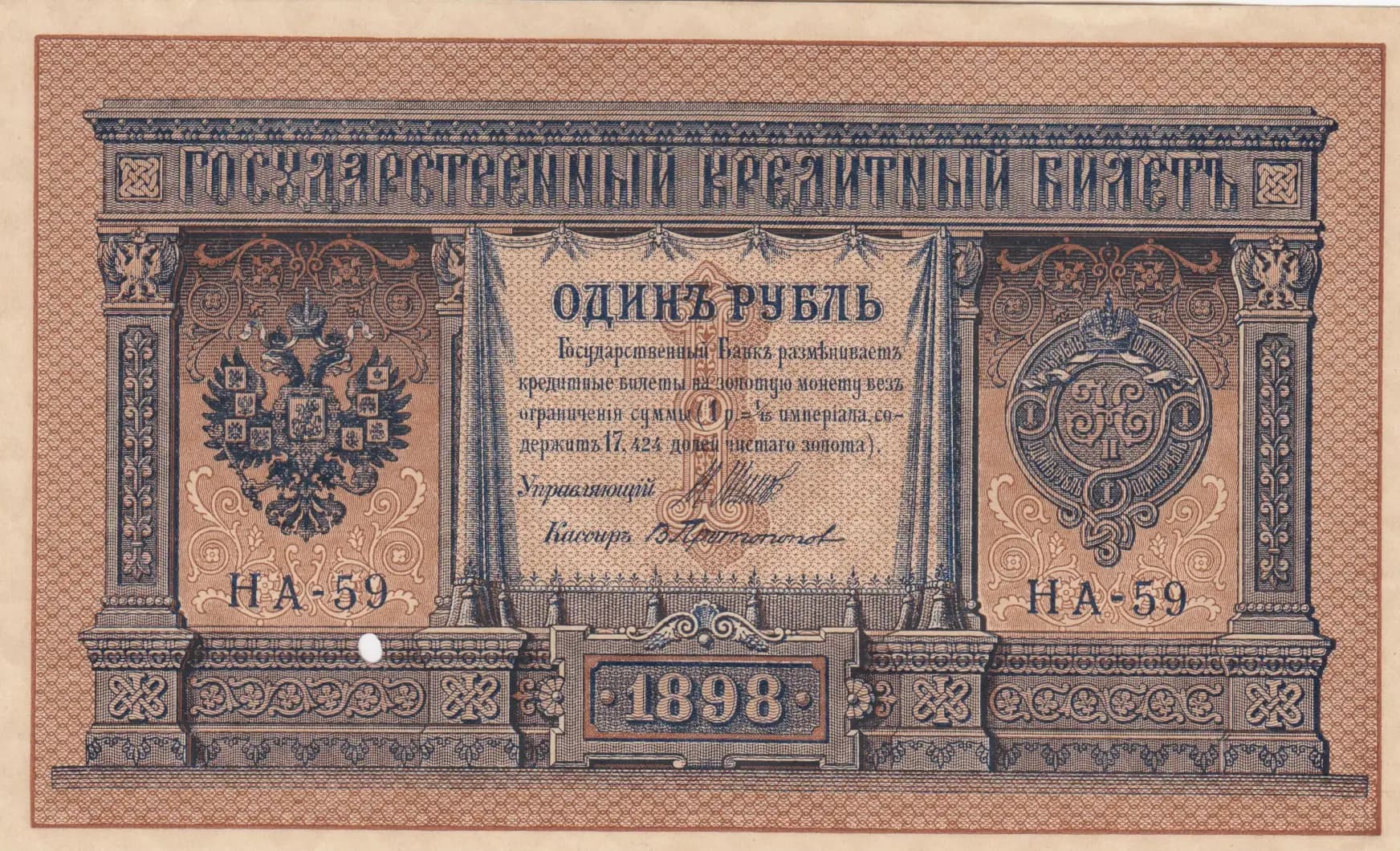
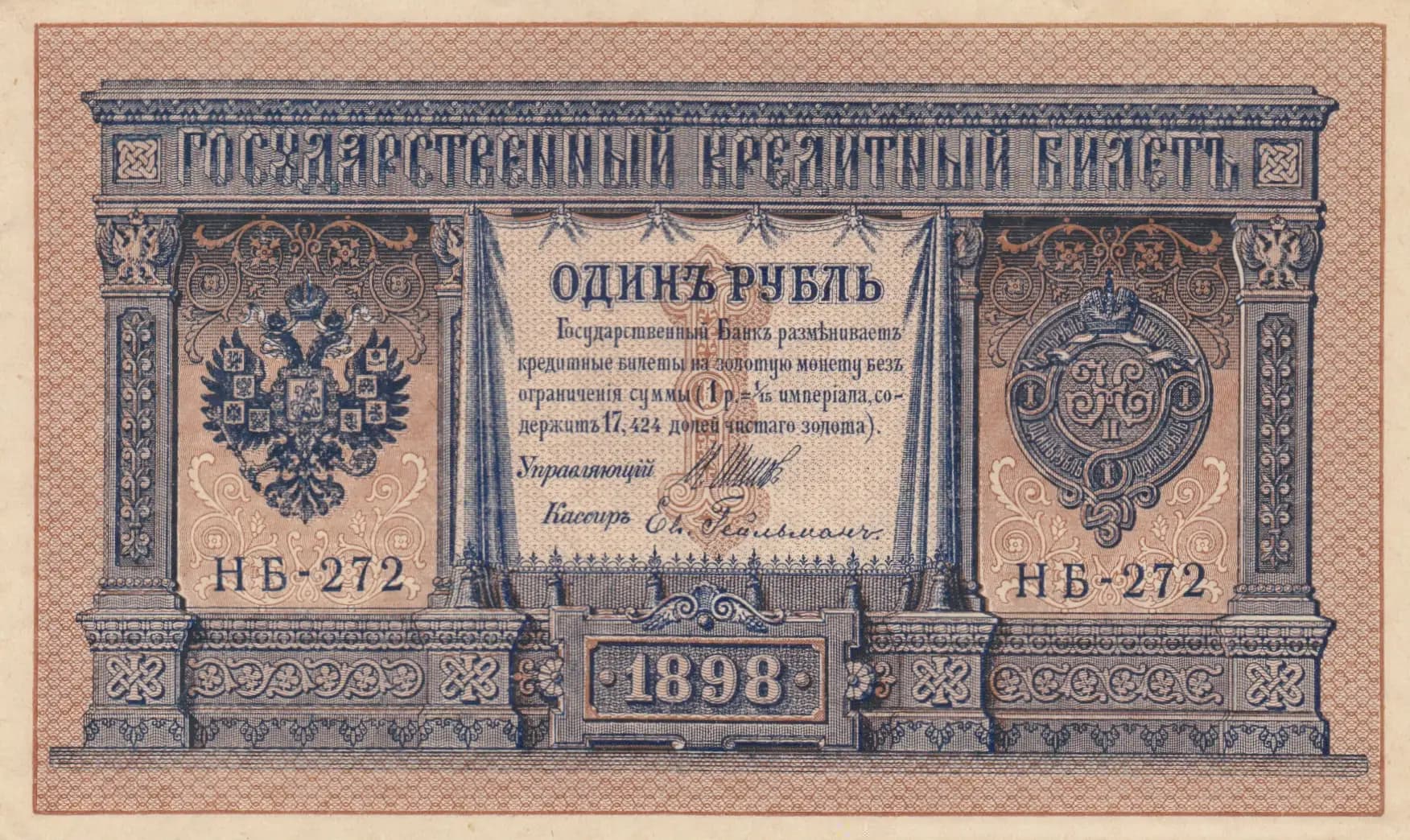
This is an elegant Russian 1 ruble State Credit Note from 1915, presented in exceptional VF condition with no visible wear, creasing, or discoloration. The note features the classic imperial design with dual-sided presentation: the front displays ornate architectural framing with the State Credit Note inscription and imperial eagles, while the back showcases a prominent circular medallion containing the Russian Imperial double-headed eagle surrounded by laurel ornaments. This example bears the signature of Protopopov, a historically significant figure as manager during the turbulent final years of Tsarist Russia.
Common. The 1 ruble denomination was the most heavily printed Russian imperial banknote denomination, with enormous circulation throughout the empire during the 1898-1917 period. While this specific Provisional Government issue from 1915 with Protopopov's signature is somewhat more specific, 1 ruble notes from this series remain readily available to collectors. Notes in VF condition are not exceptional for this denomination. The Pick catalog listing as P-15(2-12) indicates this is a standard variety within a commonly encountered series.
This note was issued during the final years of the Russian Empire under Tsarist rule, specifically by the Provisional Government in 1915, representing the State Bank's gold-backed credit system. The imperial double-headed eagle with crown and the repeated emphasis on gold exchange guarantees reflect the Empire's commitment to maintaining confidence in its currency during World War I. The inscriptions underscore the state's promise that these notes were exchangeable for gold coin without limitation and circulated with equal status to physical gold currency throughout the empire.
This banknote exemplifies the refined aesthetic of Russian Imperial currency. The front features a symmetrical composition dominated by classical architectural elements—ornate columns and elaborate geometric borders framing a central rectangular text panel. The Russian Imperial double-headed eagle (Герб Российской Империи), rendered with a crown and imperial regalia, appears within decorative frames on both left and right margins, serving as the primary heraldic symbol. Serial numbers are positioned on both sides of the front. The back presents a more elaborate composition with the denomination 'Рубль' in decorative Cyrillic lettering on the left, while a large circular medallion centered on the note contains a detailed engraving of the Russian Imperial double-headed eagle with crown, surrounded by ornamental laurel branches and wheat bundles symbolizing prosperity and imperial authority. Three numbered guarantee statements occupy a rectangular text block on the right side. The entire design is framed by intricate geometric security borders characteristic of high-security currency of the period.
FRONT SIDE: 'Государственный кредитный билет' (State Credit Note); 'Один рубль' (One Ruble); 'Государственный банк размещающий кредитные билеты на золото монету без ограничения суммы (в империале содержит П. 424 доля чистого золота)' (The State Bank placing credit notes on gold coin without limit to amount - contains 424 portions of pure gold in imperial weight); 'Управляющий' (Manager/Director); 'Кассир' (Cashier); Serial number 'НБ-379'; Year '1898' (date of original authorization). BACK SIDE: 'Рубль' (Ruble); '1. Размена государственных кредитных билетов на золотую монету без ограничения суммы обеспечивается всею достоинством государя' (1. The exchange of State credit notes for gold coin without limit as to sum is guaranteed by the entire credit of the state); '2. Государственные кредитные билеты имеют хождение во всей империи наравне с золотою монетою' (2. State credit notes circulate throughout the entire empire on equal footing with gold coin); '3. За поддержку кредитных билетов вынесение под гарантией лицевого права состоялась в соответствии с установленным работою' (3. For the support of credit notes issued under guarantee of the imperial prerogative, provision has been made in accordance with established procedure).
Steel engraving (intaglio printing), the standard security printing method for Russian imperial banknotes of this era. The visual characteristics—fine line work, detailed crosshatching, intricate geometric patterns, ornamental scrollwork, and the three-dimensional embossed appearance typical of intaglio—confirm this technique. The complex medallion work and security borders indicate work by master engravers, likely produced at the State Printing House (Государственный печатный двор) in St. Petersburg, which handled Russian imperial currency production.
This note is catalogued as Pick P-15(2-12), indicating it is variety 2-12 within the 1 ruble State Credit Note series. The specific variety is determined by the signature of Protopopov (Протопопов) as 'Управляющий' (Manager/Director). Protopopov served as Director of the State Bank from 1914-1917, making this note datable to that administrative period. The serial number prefix 'НБ-379' suggests this is from a documented batch. The date '1898' visible on the note refers to the original year of authorization for this design, not the year of issue (1915), a common feature of Russian imperial notes which retained older designs throughout their circulation period.