1 rubel 1915
“Sig.Titov”
About This Note
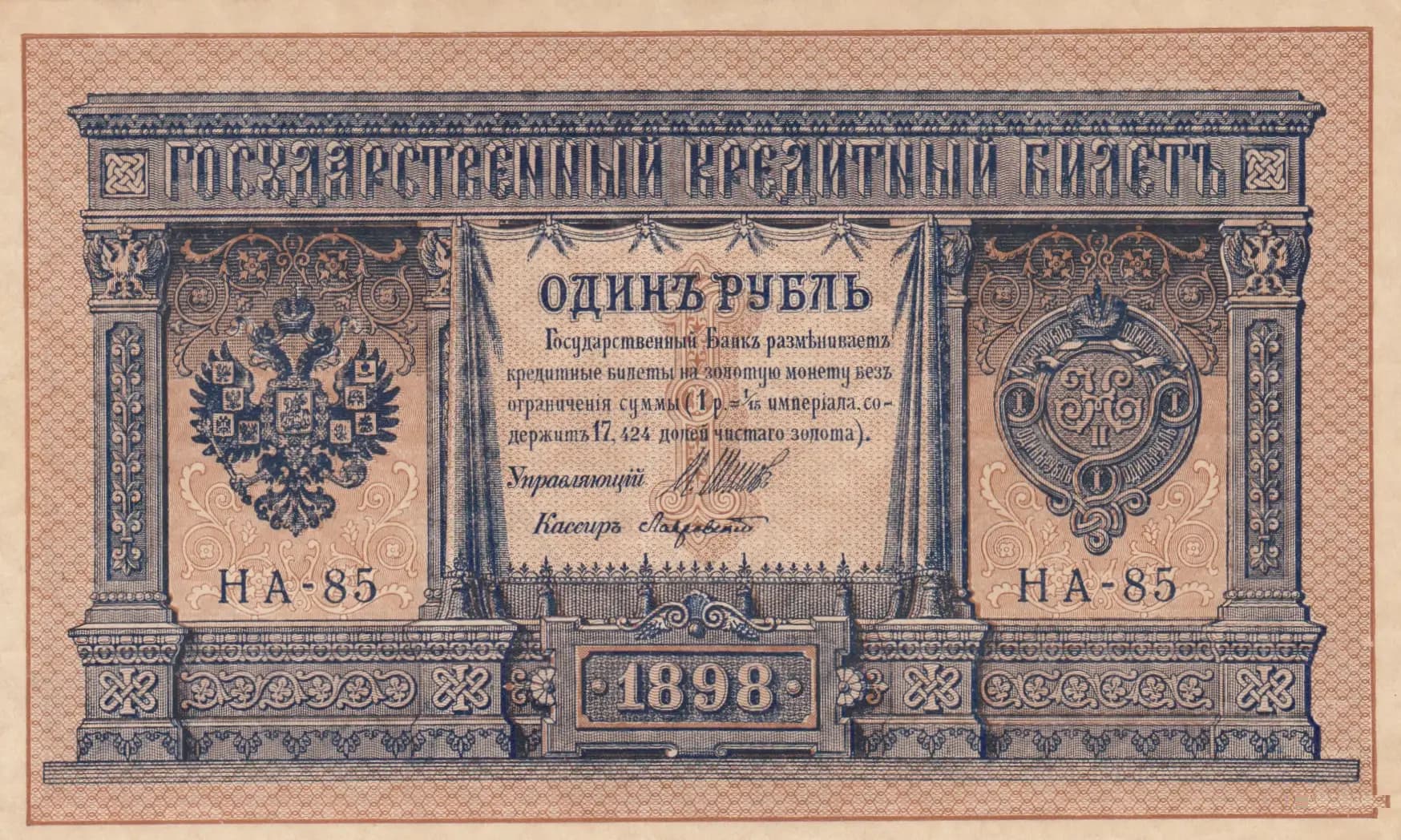
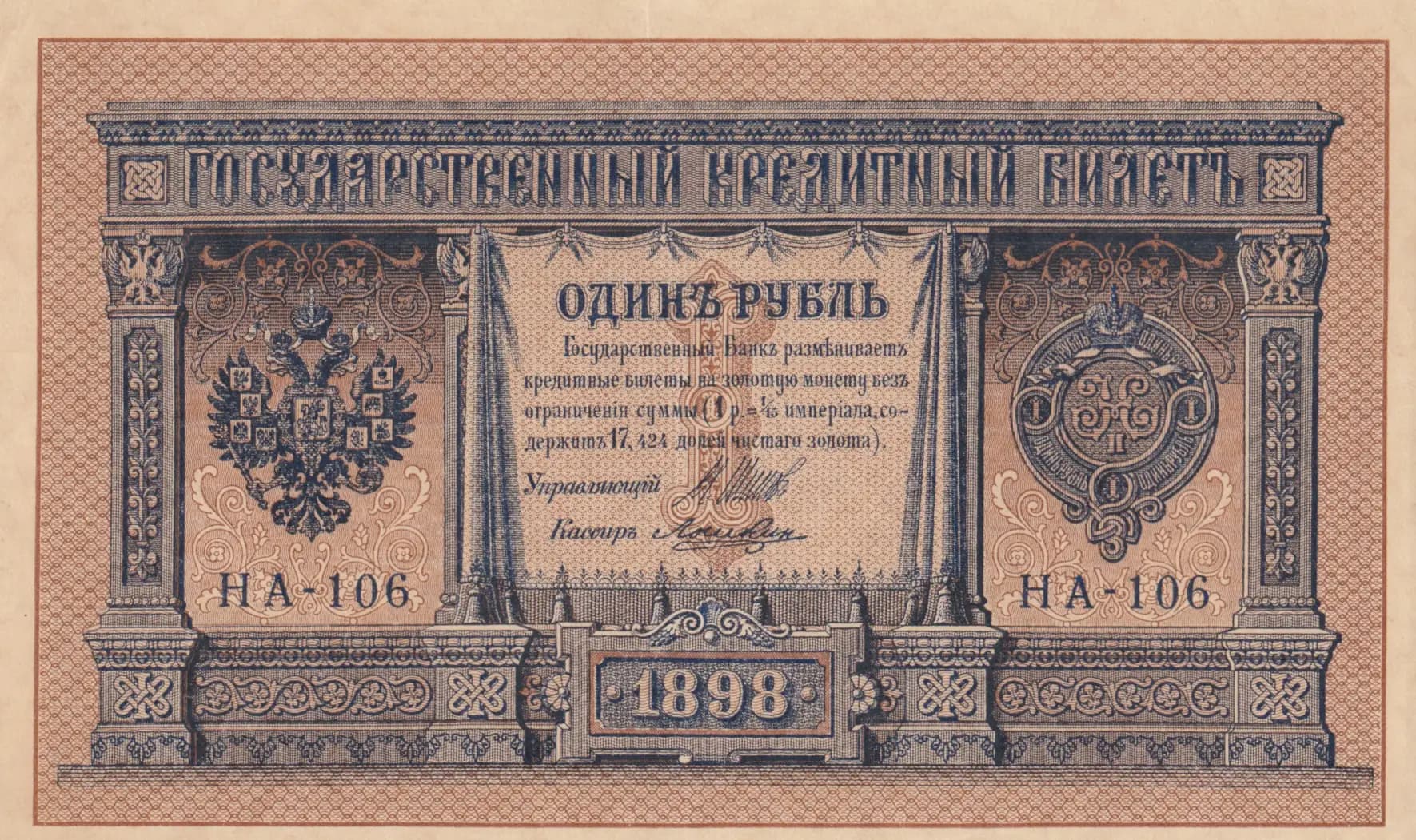
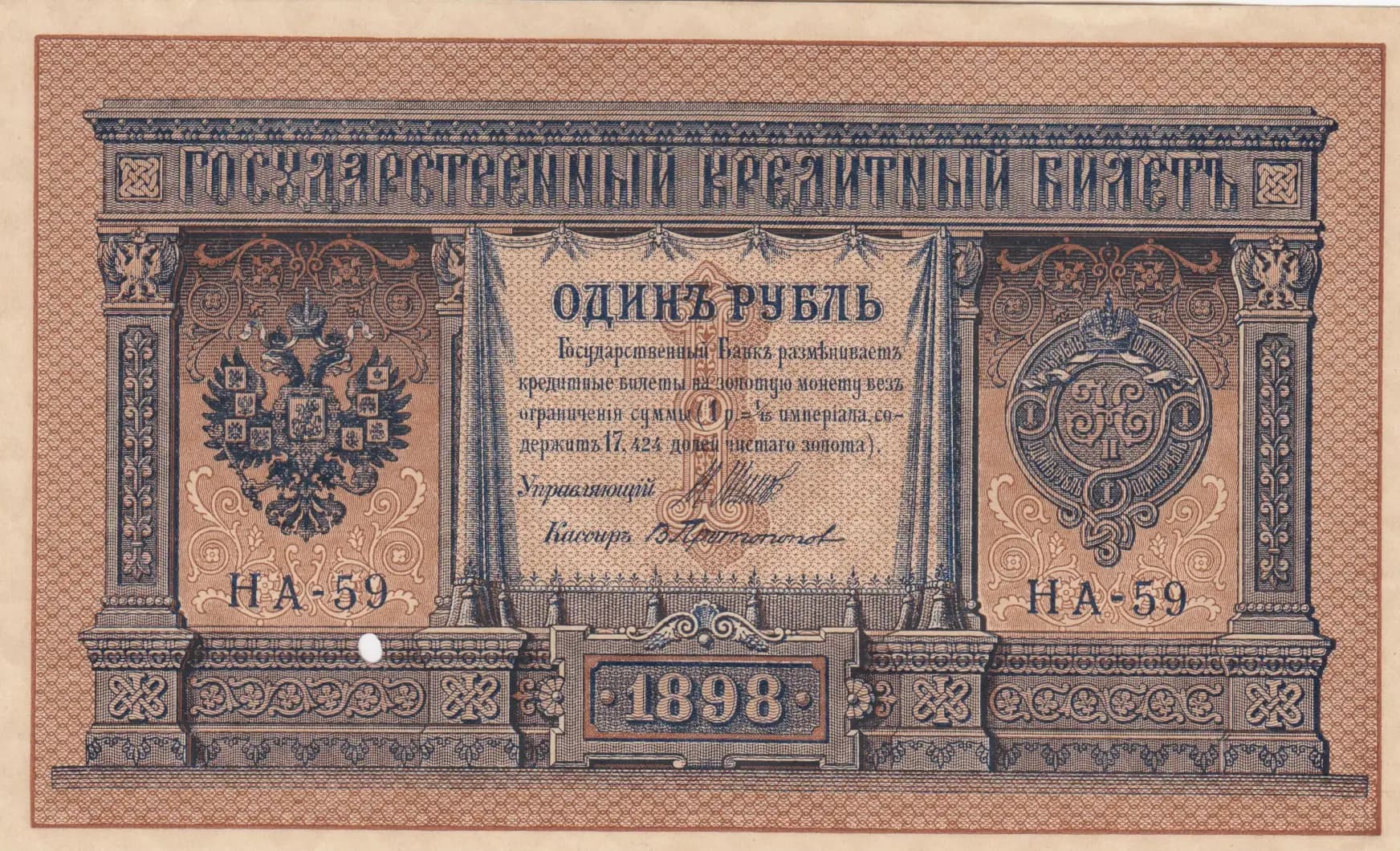
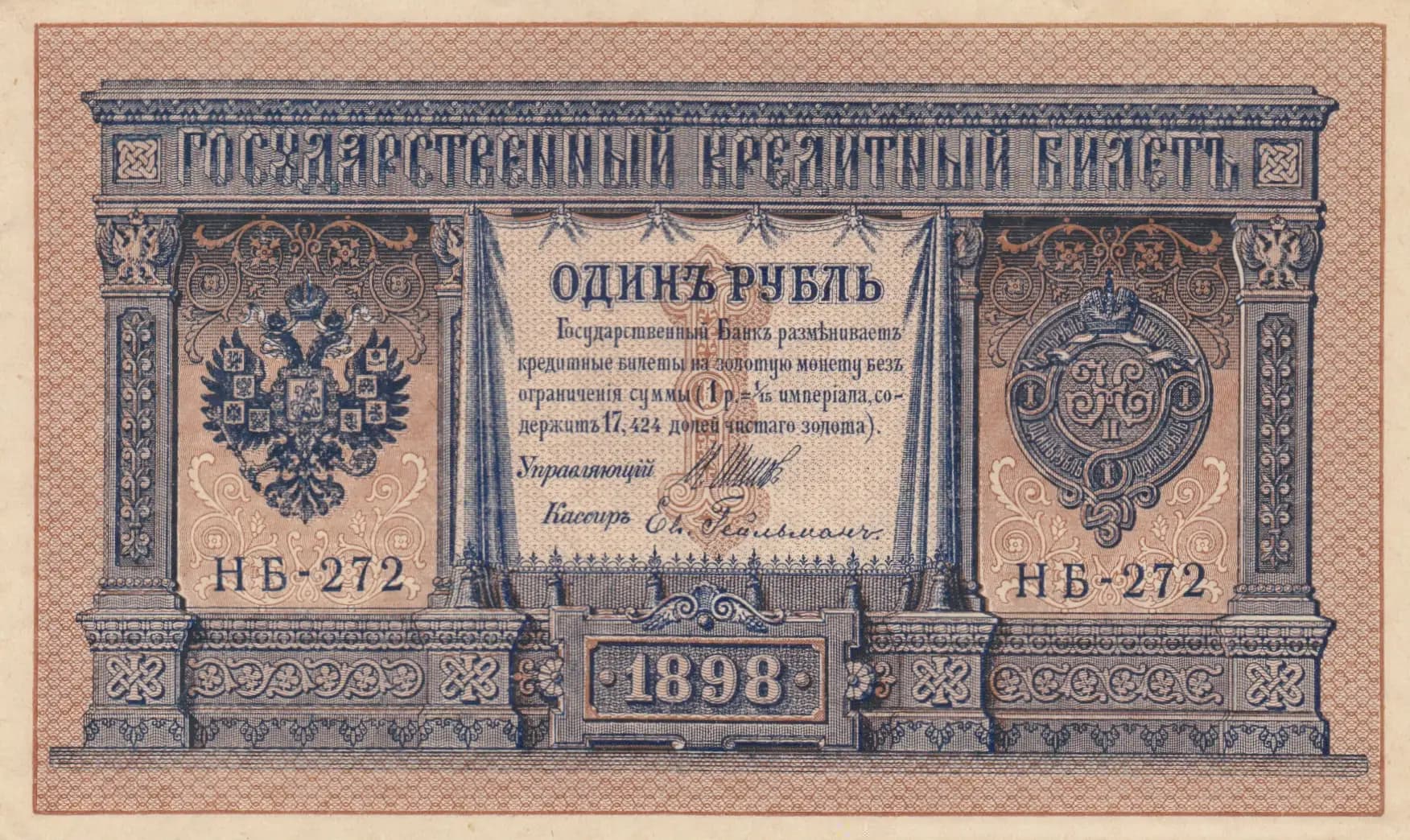
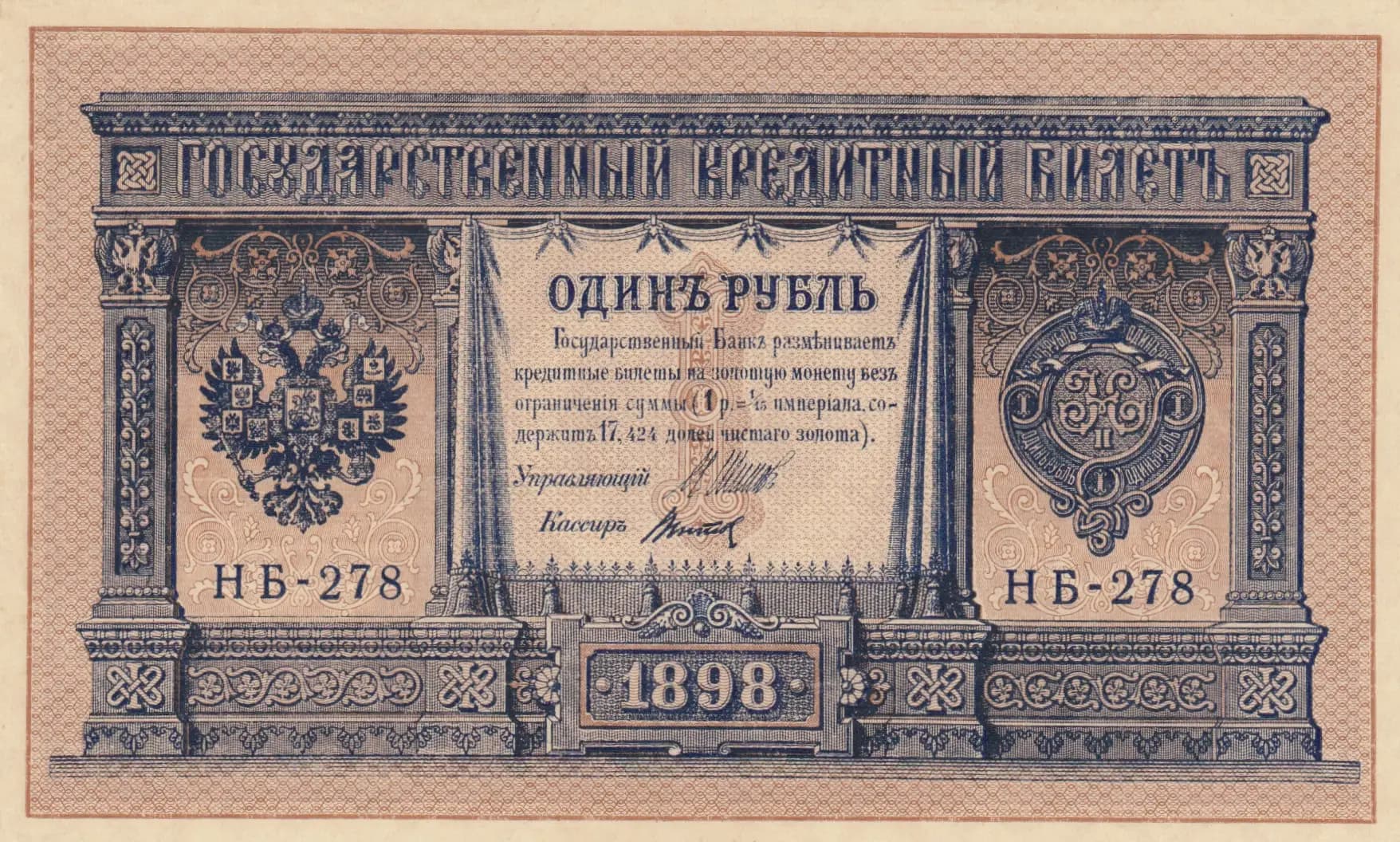
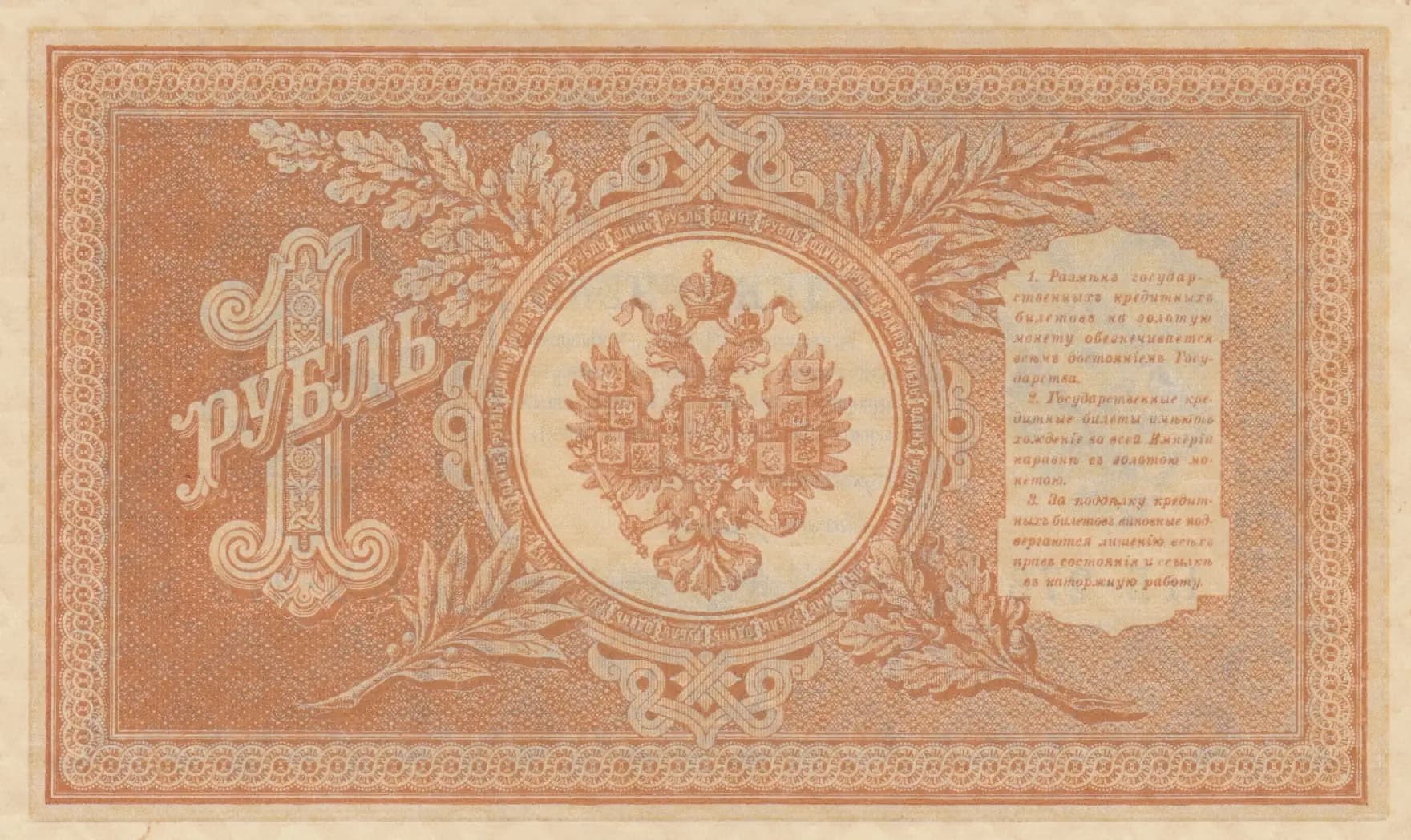
An exceptional uncirculated example of the Russian Imperial 1 Ruble credit note from 1898, featuring the characteristic navy blue and beige color scheme with ornate double-headed eagle Imperial coat of arms prominently displayed on both sides. This State Credit Ticket exhibits pristine condition with crisp, sharp engraving detail throughout and no visible signs of circulation, wear, or handling. The note represents the height of Imperial Russian banknote artistry with its complex decorative botanical elements, geometric borders, and intricate line work.
Common. Russian Imperial 1 Ruble notes from this series were issued in substantial quantities during the 1898-1915 period as the primary circulating currency of the Russian Empire. The 1898 date visible on this note indicates it is from the foundational issue of this design series. While the Provisional Government period (1917) notes are noted as scarce due to the chaos of the Revolution, notes from the stable Imperial period like this example were produced in high volumes. The uncirculated condition is desirable but does not significantly increase rarity, as many of these notes were preserved in institutional holdings. No specific print run restrictions or recall history are documented that would elevate this Pick number to rare status.
Issued under the Russian Imperial State Bank system, this 1898 credit note predates the 1915 catalog listing and represents the stable monetary period before the revolutionary upheaval of 1917. The note's inscriptions emphasize the gold standard backing and equivalence to Imperial coins, reflecting Russia's adherence to the gold standard during this era. The double-headed eagle and ornamental design elements symbolize the strength and permanence of the Imperial Russian financial system, though these notes would soon become historical artifacts following the collapse of the Romanov dynasty.
This Imperial Russian credit note features a symmetrical, highly ornate design dominated by the double-headed Imperial eagle coat of arms, which appears as a prominent circular medallion on the reverse and in smaller form on the obverse within ornamental vertical panels. The obverse displays the formal heading 'ГОСУДАРСТВЕННЫЙ КРЕДИТНЫЙ БИЛЕТ' in an ornate banner, with the denomination clearly marked as 'ОДИНЬ РУБЛЬ' in the central area. Both sides are framed with elaborate geometric and floral borders featuring oak leaves, laurel wreaths, and decorative scrollwork in the corner elements. The color palette of navy blue and tan/beige on the front contrasts with the predominantly tan and cream tones of the back, creating visual hierarchy. Serial numbers appear on both left and right margins of the obverse. The design reflects the classical European aesthetic typical of late 19th-century Imperial Russian state securities, emphasizing permanence, authority, and gold-backed legitimacy.
FRONT SIDE: 'ГОСУДАРСТВЕННЫЙ КРЕДИТНЫЙ БИЛЕТ' (State Credit Ticket) - 'ОДИНЬ РУБЛЬ' (One Ruble) - 'Государственный Банк размышляется кредитные билеты из золотую монету без ограничения суммы (1) = ⅛ империала, содержать П, 424 доля чистого золота' (The State Bank exchanges credit notes for gold coins without limit to the sum (1) = 1/8 of an imperial, containing 11,424 parts pure gold) - 'Управляющий' (Manager/Director) - 'Кассир' (Cashier). BACK SIDE: 'РУБЛЬ' (Ruble) - 'Государственные кредитные билеты имеют хождение во всей Империи наровню с золотою монетою' (State credit bills are in circulation throughout the Empire equal to gold coin) - Text regarding the exchange of credit bills for gold coins and the Ministry's organization of this function.
Intaglio engraving (copperplate printing), the standard security printing method for Russian Imperial banknotes of this period. The fine line work, cross-hatching in background areas, and intricate detail visible in the ornamental patterns are characteristic of high-quality intaglio production. The State Bank of Russia employed skilled engravers to produce these notes, with printing likely executed at the Imperial Printing Works (Государственная типография) or contracted to specialized security printers such as the Russian engraving firms that specialized in financial documents during the 1890s-1900s.
The visual analysis indicates this note bears the date 1898 and includes signature lines for both Manager (Управляющий) and Cashier (Кассир), though specific signatories are not clearly resolved in the image. The noted collector reference 'Sig.Titov' suggests this example may be signed by Ivan Titov or another notable signer of the period. Serial number prefix 'НБ-278' is visible. This appears to be from the standard circulation issue rather than a special variety, though collectors sometimes seek notes with the signatures of particularly notable State Bank officials. The Pick catalog designation P-15(2-11) indicates this is a specific cataloged variety; without access to full Pick reference materials, individual variety distinctions within this designation (relating to signature combinations or printing variations) cannot be definitively determined from the visual evidence alone.