10 shillings 1966
About This Note
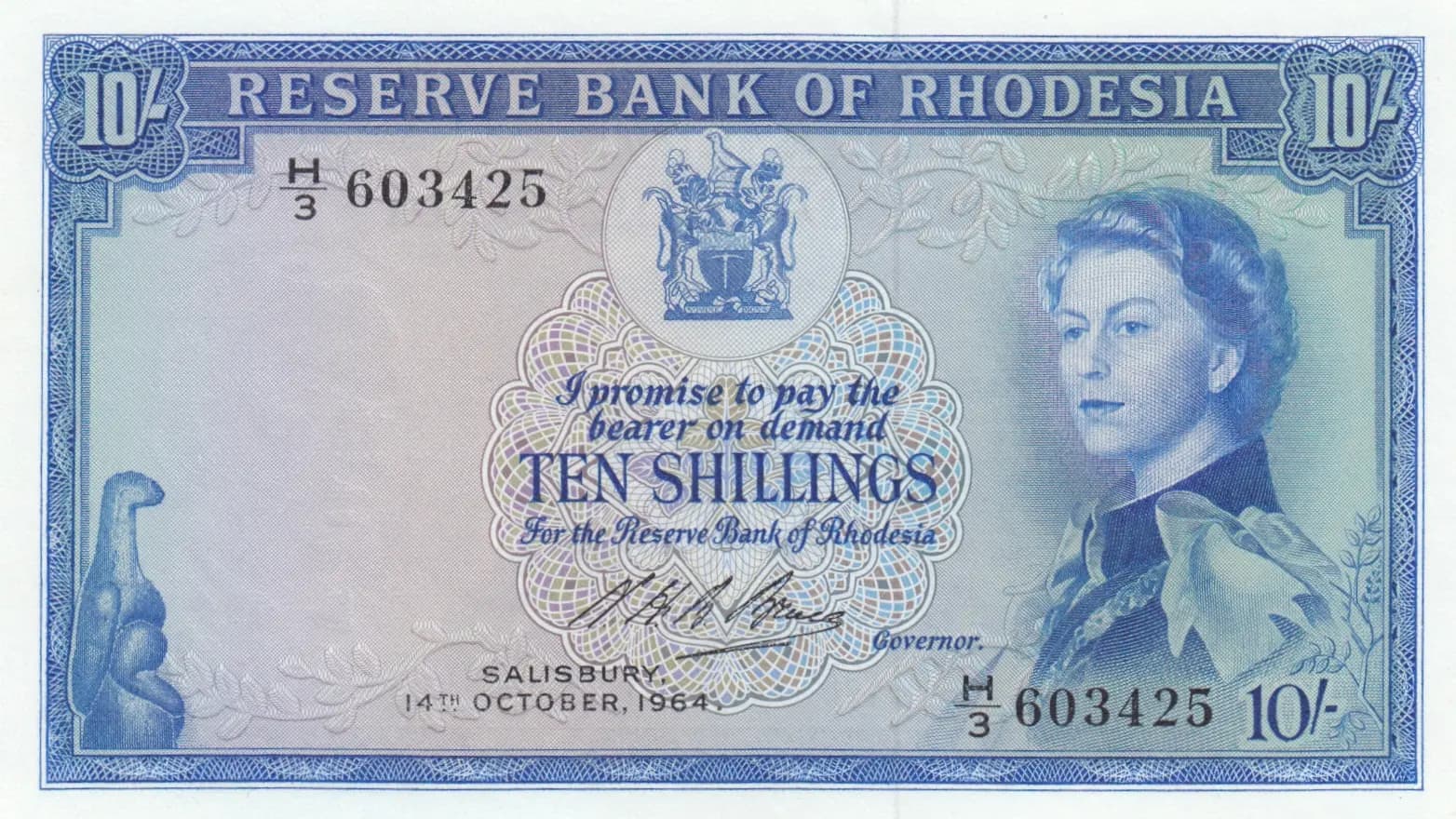
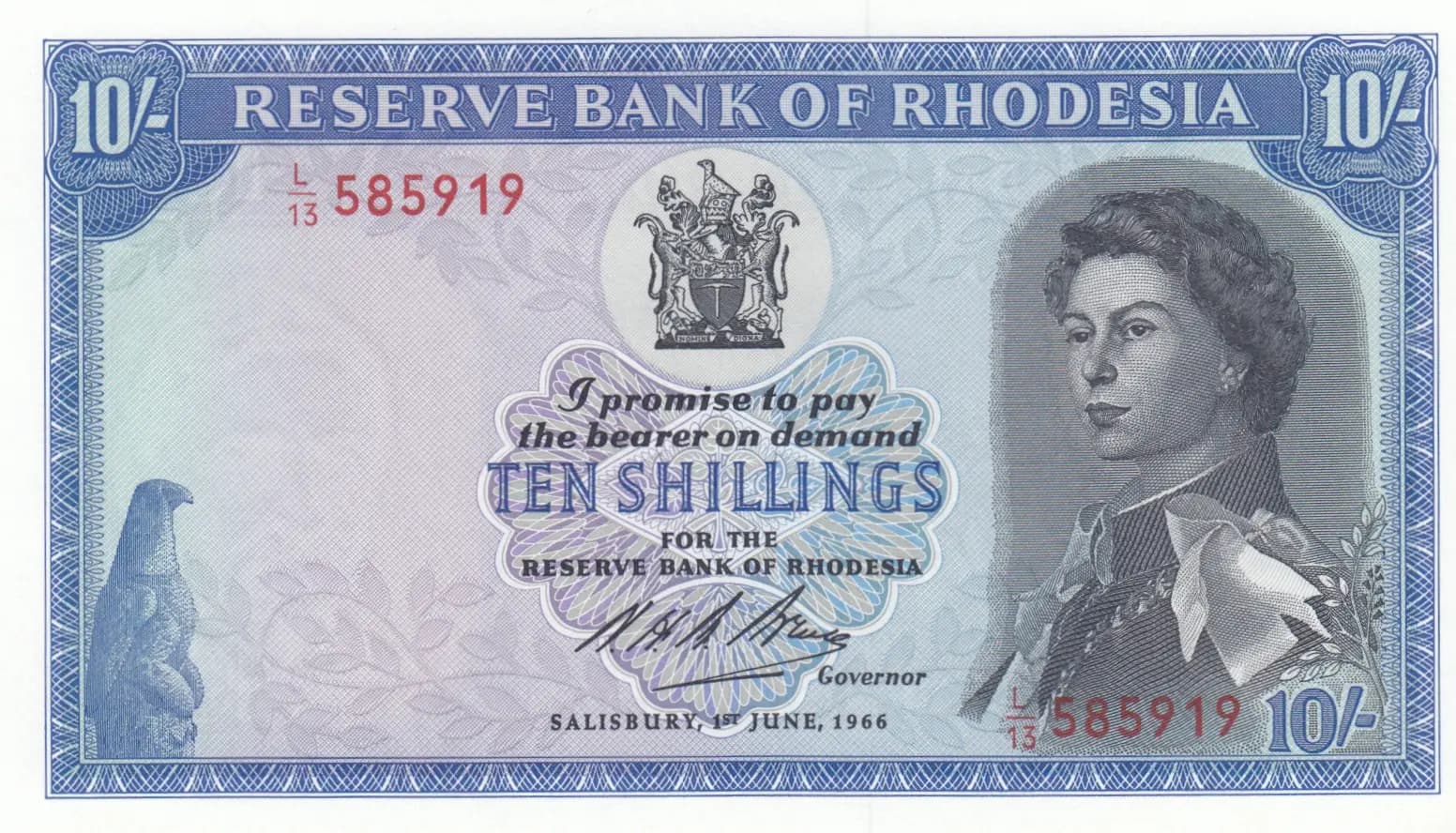
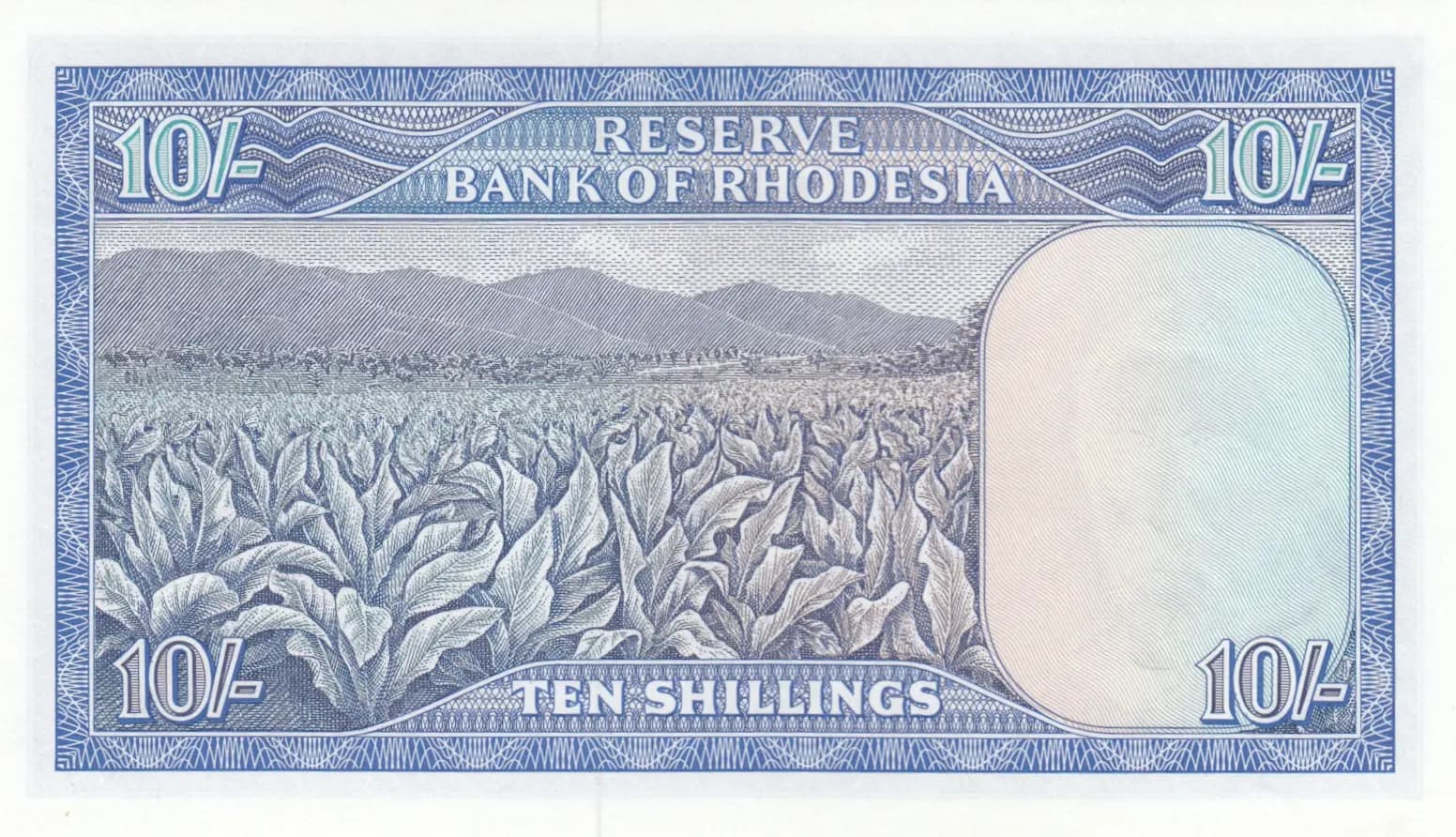
A stunning Uncirculated example of the Reserve Bank of Rhodesia's 10 shillings banknote from 1966, featuring an elegant blue and lavender color scheme with exceptional engraving quality. The obverse displays a portrait of a woman and the Rhodesian coat of arms, while the reverse depicts agricultural prosperity through a detailed tobacco field landscape—reflecting the economic foundation of the newly independent nation. This is a pristine specimen with no signs of wear, circulation, or handling, representing an important currency from Rhodesia's brief period as an independent state.
Common. The 10 shillings denomination from the 1966 Reserve Bank of Rhodesia series was issued in significant quantities to meet the currency needs of the newly independent nation. While Rhodesian currency has become scarcer due to the country's political dissolution in 1980 and subsequent currency replacement, the 1966 banknotes remain readily available to collectors in both circulated and uncirculated grades. UNC examples appear regularly in the collector market at modest valuations typical of common Commonwealth banknotes.
Issued on June 1, 1966, this banknote commemorates Rhodesia's declaration of independence and marks the early currency production of the Reserve Bank of Rhodesia. The agricultural imagery on the reverse—depicting tobacco cultivation with mountainous Rhodesian countryside—reflects the nation's economic reliance on agriculture and export crops during the brief period of independence (1966-1980). The formal design with the Rhodesian coat of arms and currency language affirmed the nation's sovereignty during a historically turbulent period in southern African politics.
The obverse features a formal right-facing portrait of a woman in dignified formal attire positioned on the right side of the note, identified as representing the British Commonwealth connection typical of Rhodesian currency design. The Rhodesian coat of arms—featuring a shield with heraldic elements—occupies the center-upper portion, flanked by decorative ornamental elements and geometric border patterns in blue. A fish eagle (a national symbol of Rhodesia) appears on the left side, representing the nation's wildlife and natural heritage. The reverse depicts a bucolic landscape scene showing rows of tobacco plants in the foreground with distant mountains, illustrating Rhodesia's primary agricultural export and the country's economic foundation. Fine cross-hatching and intricate engraving work throughout creates sophisticated security features.
FRONT: 'Reserve Bank of Rhodesia' (issuing authority); '10/-' and 'TEN SHILLINGS' (denomination); 'I promise to pay the bearer on demand' (promise clause); 'FOR THE RESERVE BANK OF RHODESIA' (authorization statement); 'Governor' (signature line); 'SALISBURY, 1st JUNE, 1966' (place and date of issue); Serial number 'L 13 585919' (appears twice). BACK: 'RESERVE BANK OF RHODESIA' (issuing authority repeated); '10/-' (denomination in all four corners); 'TEN SHILLINGS' (denomination text).
Intaglio engraving (recess printing), the standard security printing method for Commonwealth banknotes of this era. The detailed line work, cross-hatching, and fine geometric patterns visible throughout the note—particularly evident in the border designs and landscape rendering on the reverse—are characteristic of high-security intaglio production. This note was likely produced by a specialist Commonwealth currency printer, possibly De La Rue or Bradbury Wilkinson, companies that regularly handled Rhodesian currency production.
Pick P-27a designation confirms this as the standard variety of the 1966 10 shillings issue. The serial number prefix 'L 13' and the specific signature block indicate this note falls within the early production run from the June 1, 1966 issuance date. Known variations in this series relate primarily to signature changes (different Governors) and serial number prefixes across the relatively brief production period. No significant overprints or emergency variants are known for this denomination.