1 pound 1966
About This Note
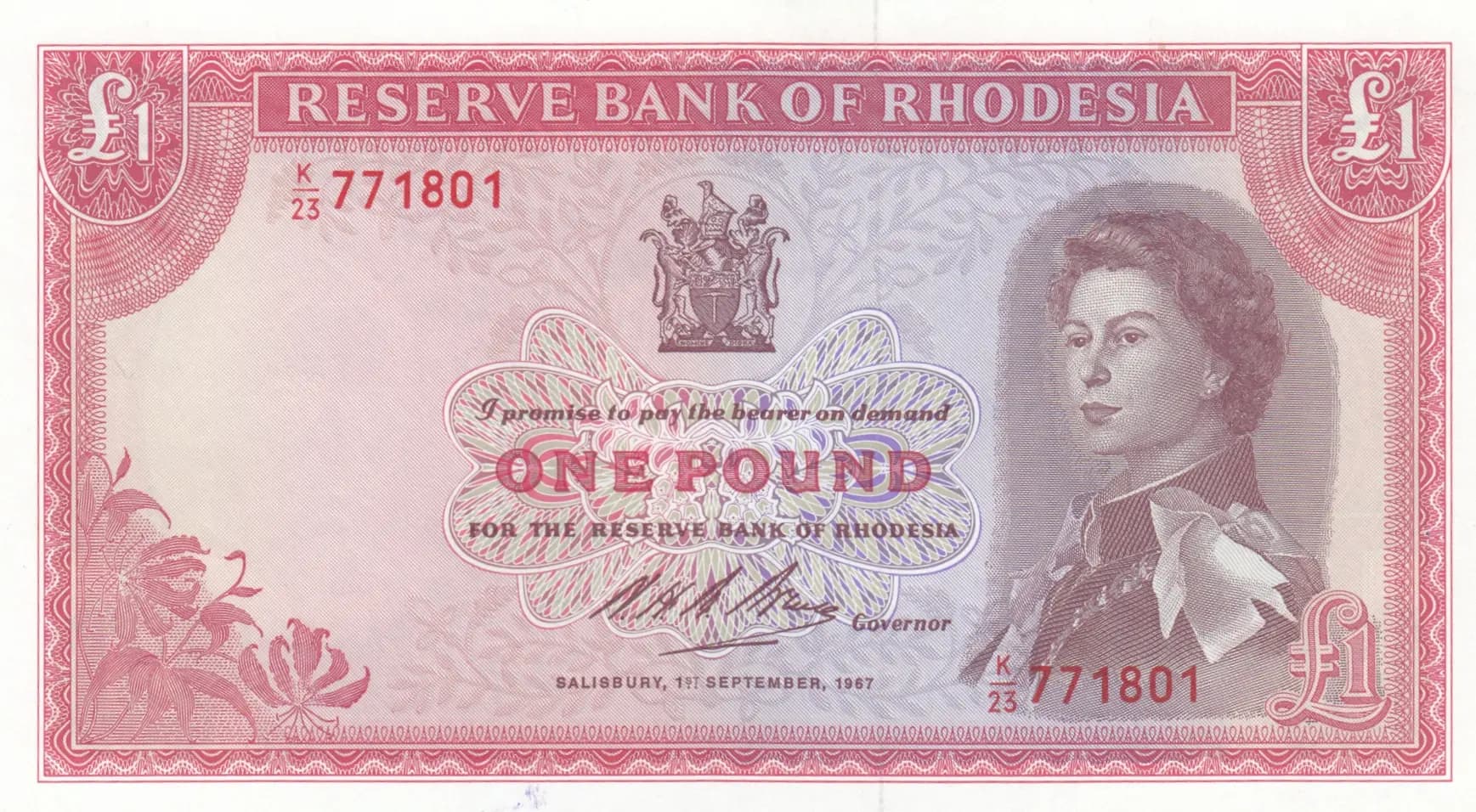
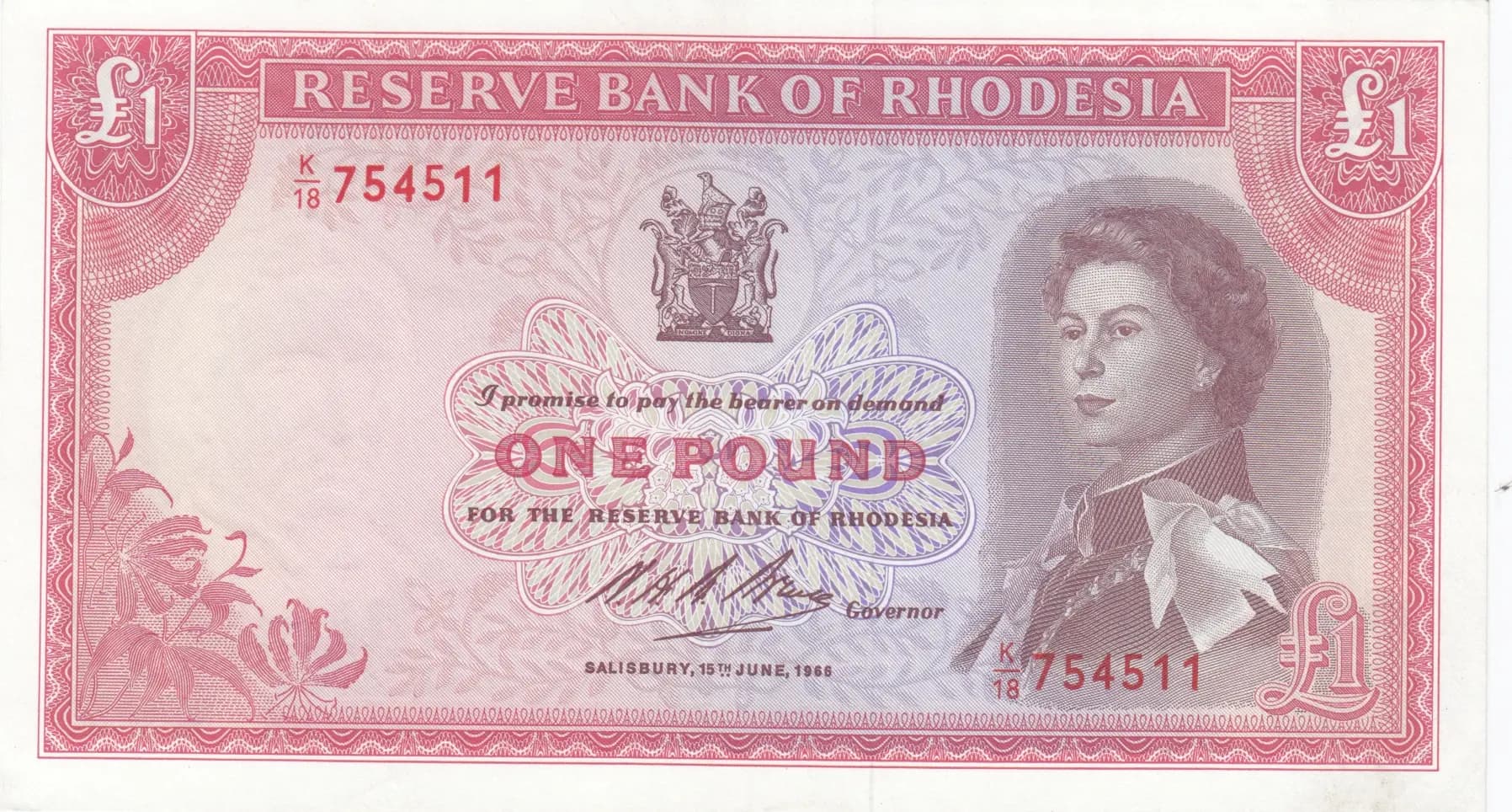
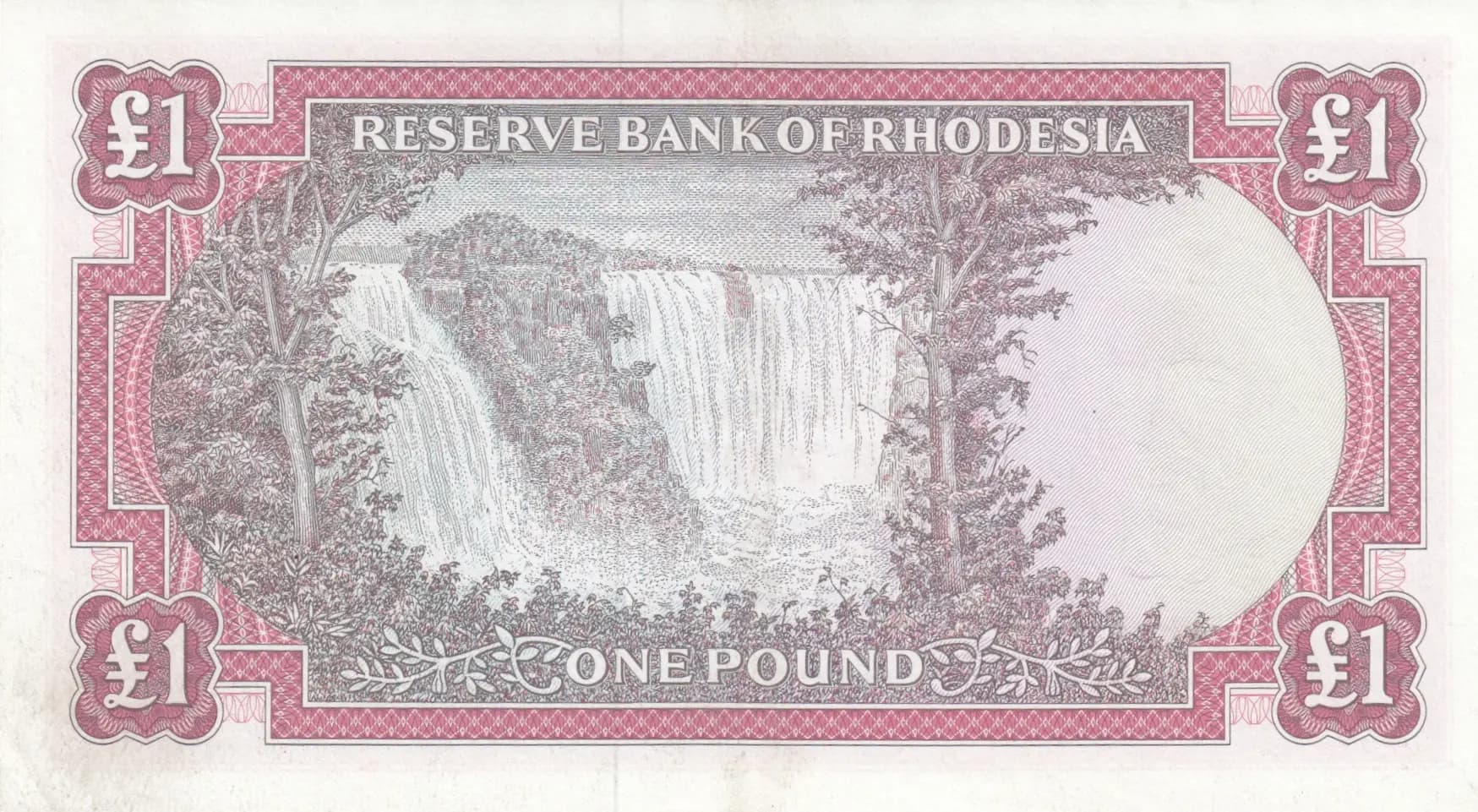
An exceptionally well-preserved example of the Reserve Bank of Rhodesia's 1966 One Pound note (Pick 28a), displaying the characteristic pink/magenta color scheme and ornate Victorian-influenced design typical of the early Rhodesian currency series. The note exhibits uncirculated condition with sharp detail throughout, featuring fine engraved portraiture on the obverse and a dramatic waterfall landscape on the reverse. This inaugural issue from June 15, 1966, represents a significant piece of Rhodesian numismatic history, issued during the period immediately following Rhodesia's declaration of independence.
Common. The 1966 £1 note from the Reserve Bank of Rhodesia (Pick 28a) was part of the initial currency series issued for Rhodesia's monetary independence and would have entered general circulation. While these notes are now several decades old and many specimens have been removed from circulation or damaged, this particular Pick number does not have a notably restricted print run based on available numismatic records. AU grade examples like this one are more desirable than circulated specimens but remain obtainable in the collector market. No evidence suggests this was a short-lived issue, recalled note, or extremely limited printing.
This note was issued by the Reserve Bank of Rhodesia on June 15, 1966, following Rhodesia's initial move toward independence from British colonial rule (full UDI would be declared later in November 1965, though this note's June 1966 date suggests post-UDI currency). The waterfall depicted on the reverse is Victoria Falls, a natural landmark of immense national significance to Zimbabwe/Rhodesia, symbolizing the nation's natural wealth and identity. The portrait on the obverse and heraldic coat of arms reflect the formal, Commonwealth-style currency designs of the era, representing Rhodesia's attempt to establish sovereign monetary authority.
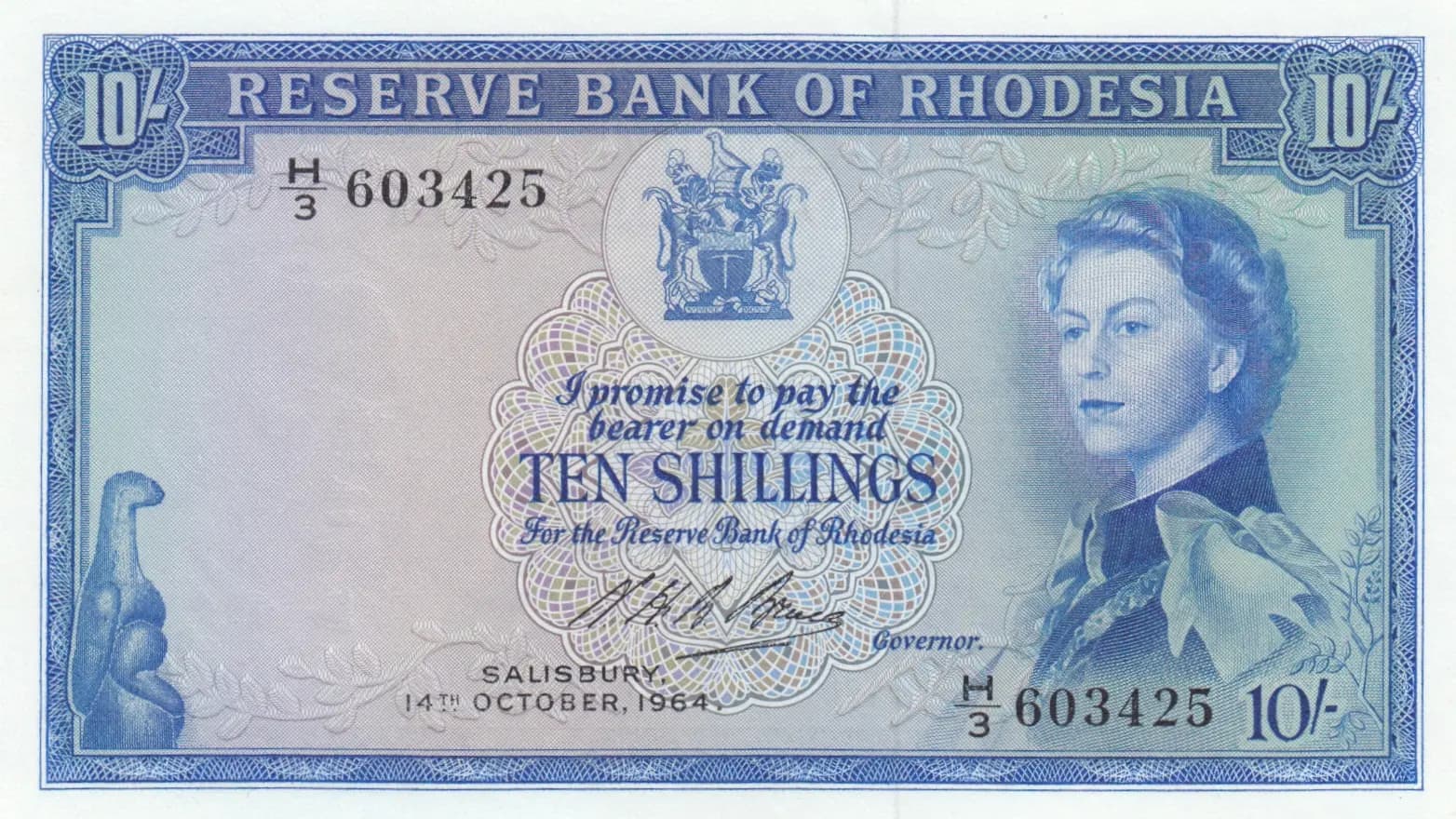
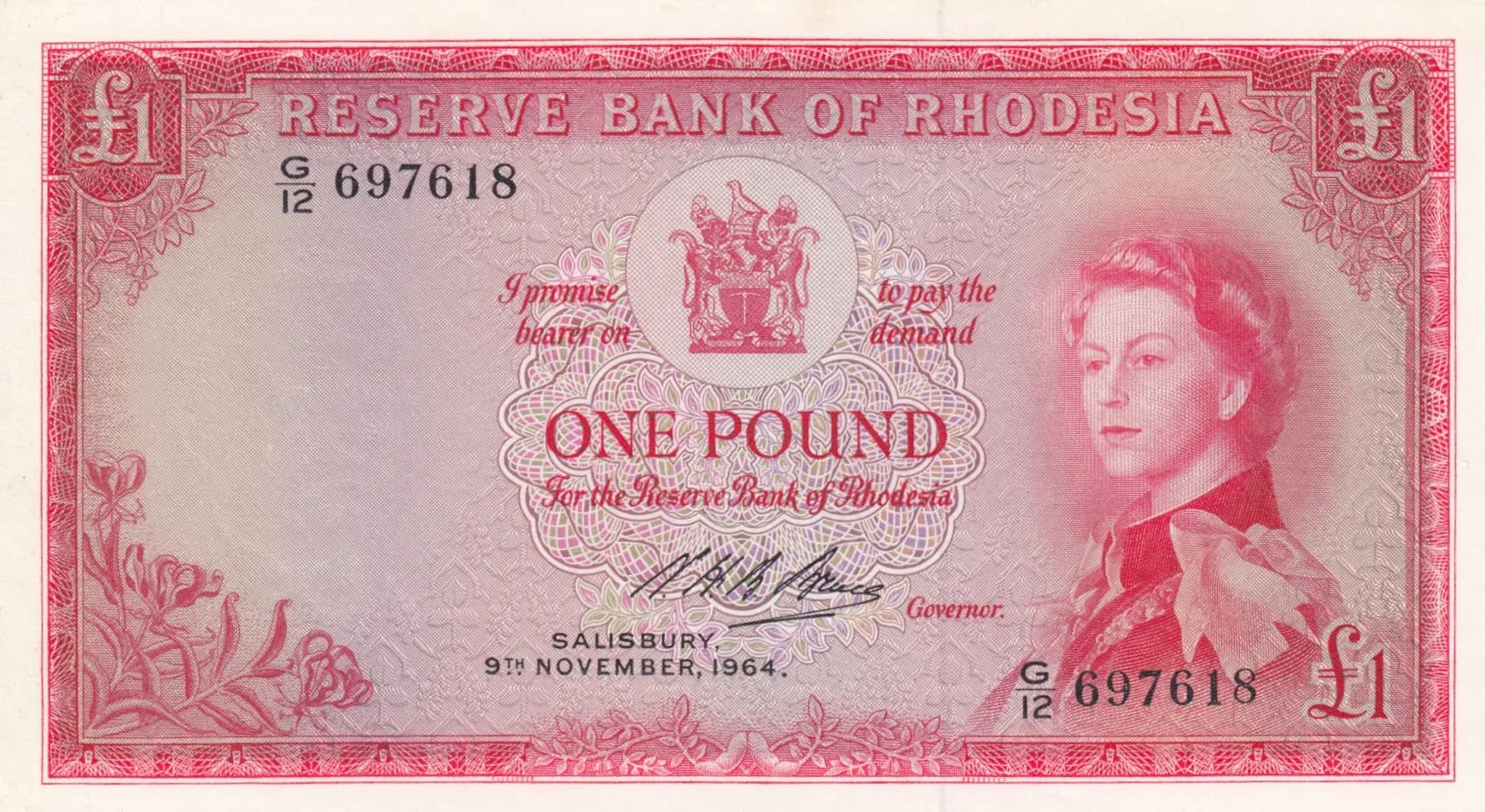
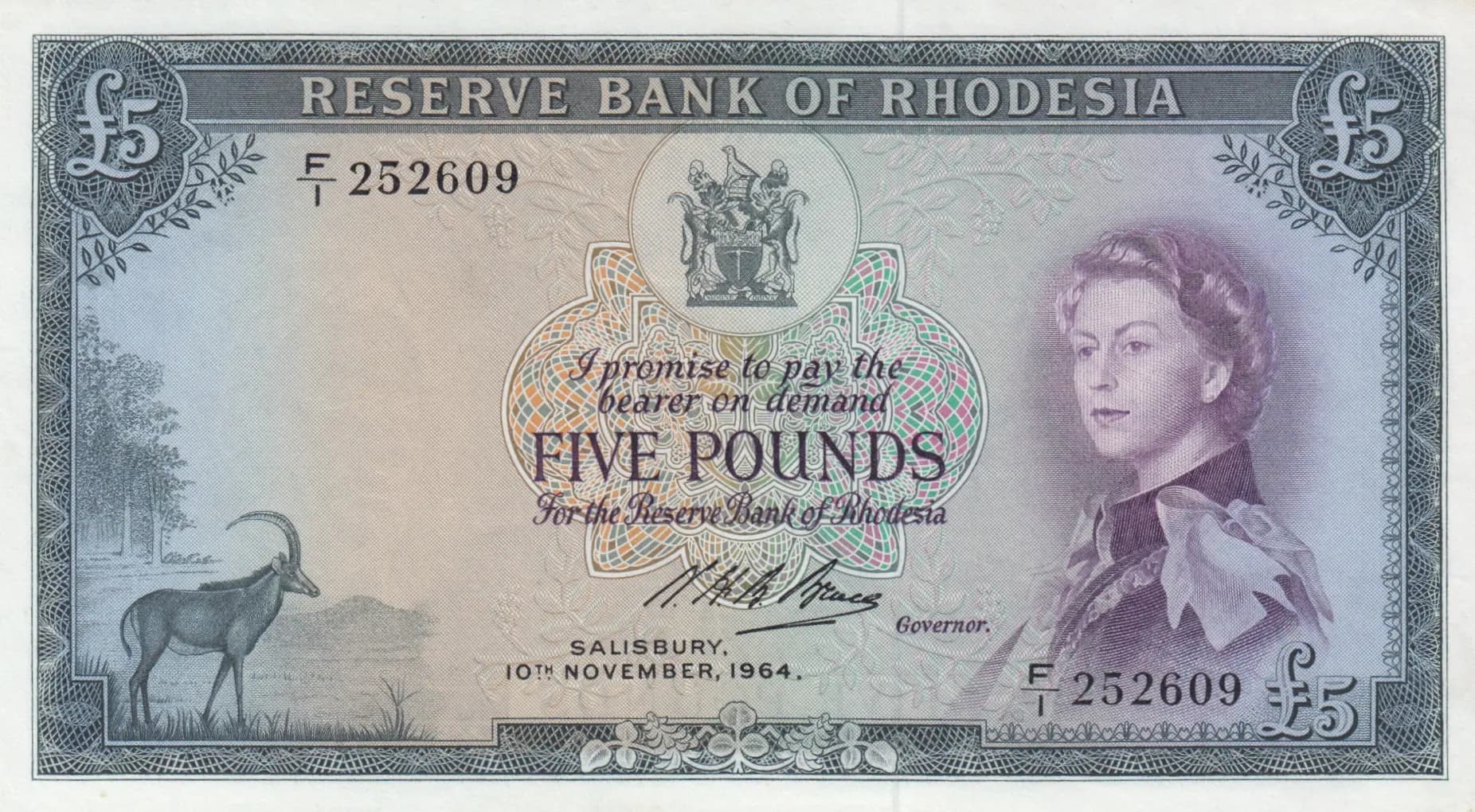
The obverse features a formal portrait of a woman in three-quarter profile facing left, rendered in fine engraved style—this portrait represents national or Commonwealth symbolism typical of Rhodesian currency of the period. The composition is anchored by the Rhodesian coat of arms centered at the top, displaying heraldic supporters and shield work. The denomination is displayed within an ornamental cloud-like cartouche at center. Decorative floral scrollwork and geometric borders frame all edges, executed in the pink/magenta and purple/mauve palette. The reverse showcases Victoria Falls as the primary vignette, depicted as a grand cascade of water surrounded by dense forest vegetation, rendered with exceptional detail in fine line engraving. Four corner ornaments frame the composition, each containing the pound denomination symbol within decorative panels. The overall design reflects late-Victorian banknote aesthetics adapted for mid-20th century Commonwealth currency.
FRONT SIDE: 'RESERVE BANK OF RHODESIA' (issuing authority); '£1' and 'ONE POUND' (denomination); 'I promise to pay the bearer on demand' (standard currency promise); 'FOR THE RESERVE BANK OF RHODESIA' (issuer authorization); 'Governor' (signature line); 'SALISBURY, 15TH JUNE, 1966' (place and date of issue); 'K 18 754511' (serial number, repeated). BACK SIDE: 'RESERVE BANK OF RHODESIA' (issuing authority); '£1' and 'ONE POUND' (denomination repeated in corners).
Intaglio engraving (copperplate printing), which is evidenced by the fine line detail, sharp portrait rendering, and complex decorative elements visible throughout both sides. This was the standard security printing technique for Commonwealth currency of this era. The note was likely produced by a major British or Commonwealth security printer, though specific printer attribution would require verification against Reserve Bank of Rhodesia records. The multi-color printing effect (pink/magenta, white, gray/taupe, and purple accents) suggests the use of sequential or multi-pass intaglio printing.
Serial number prefix 'K 18' is visible on the observed specimen (K 18 754511). Rhodesian notes of this period employed alphabetic-numeric serial numbering systems; different letter prefixes may indicate different print batches or series variations. The date 'SALISBURY, 15TH JUNE, 1966' is fixed to this issue. Signature varieties may exist depending on which Reserve Bank Governor signed the notes during the initial printing run, though specific signature variations would require comparison with additional specimens. No overprints or modifications are evident on this example.