10 shillings 1964
About This Note
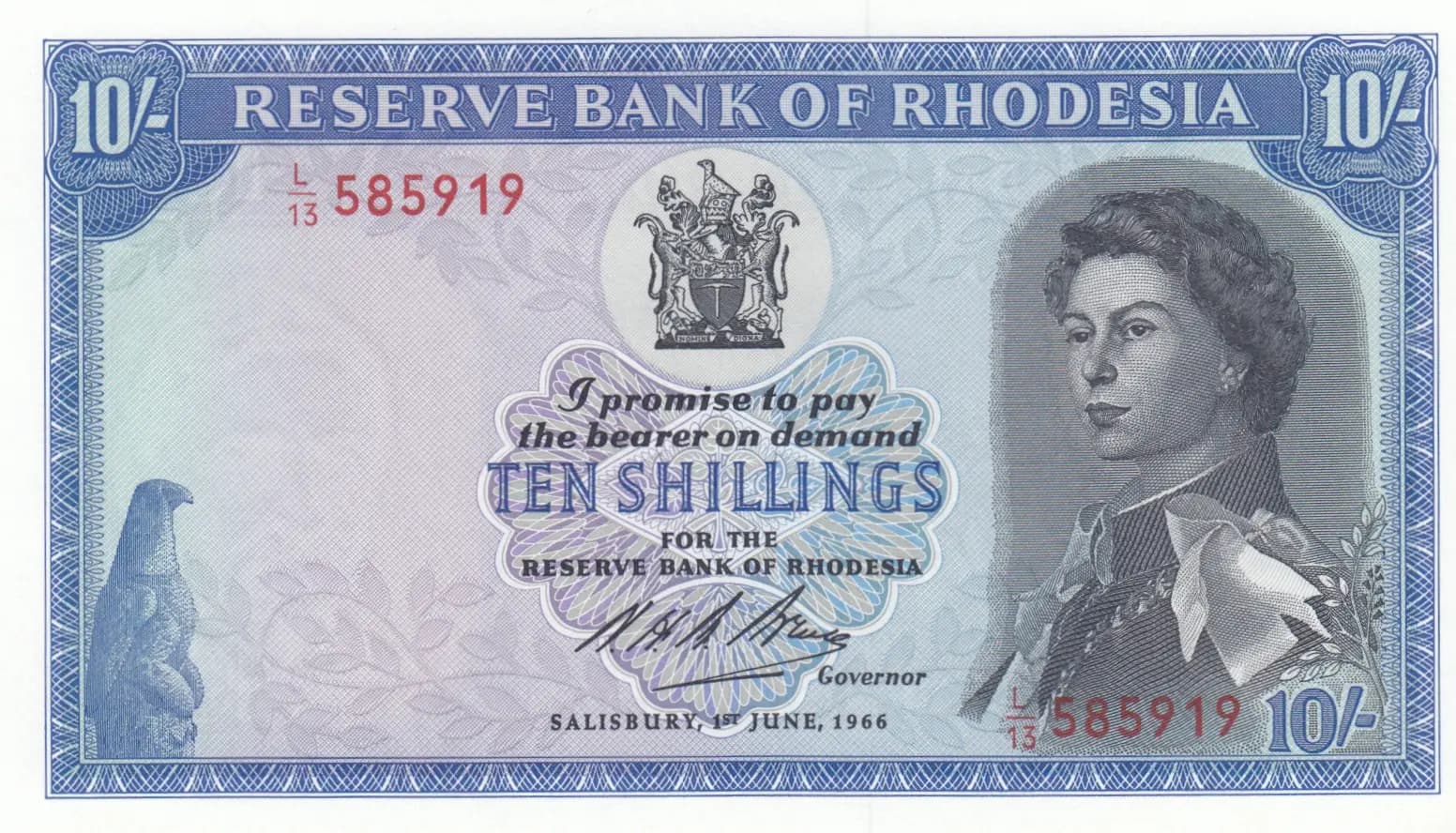
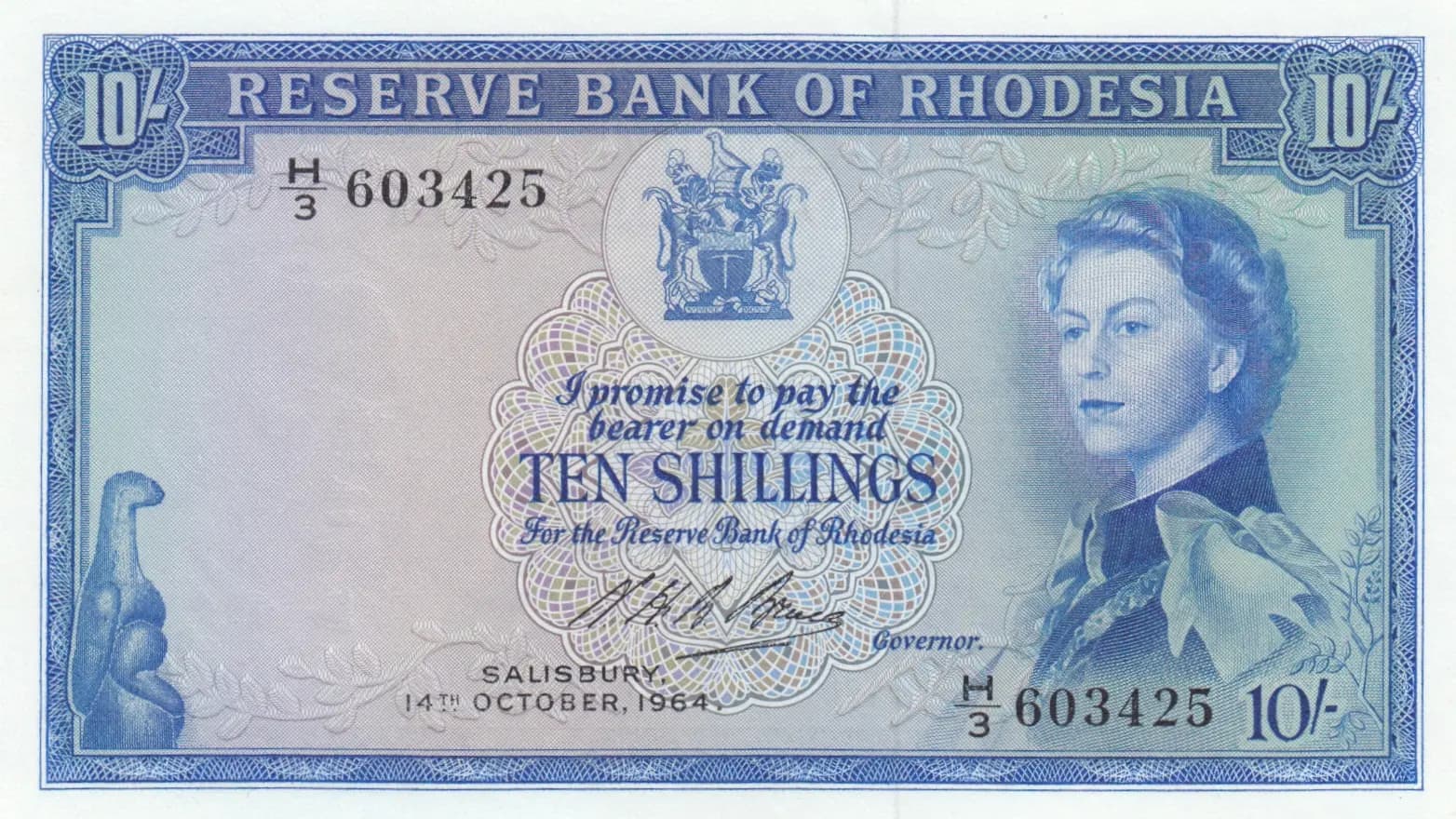
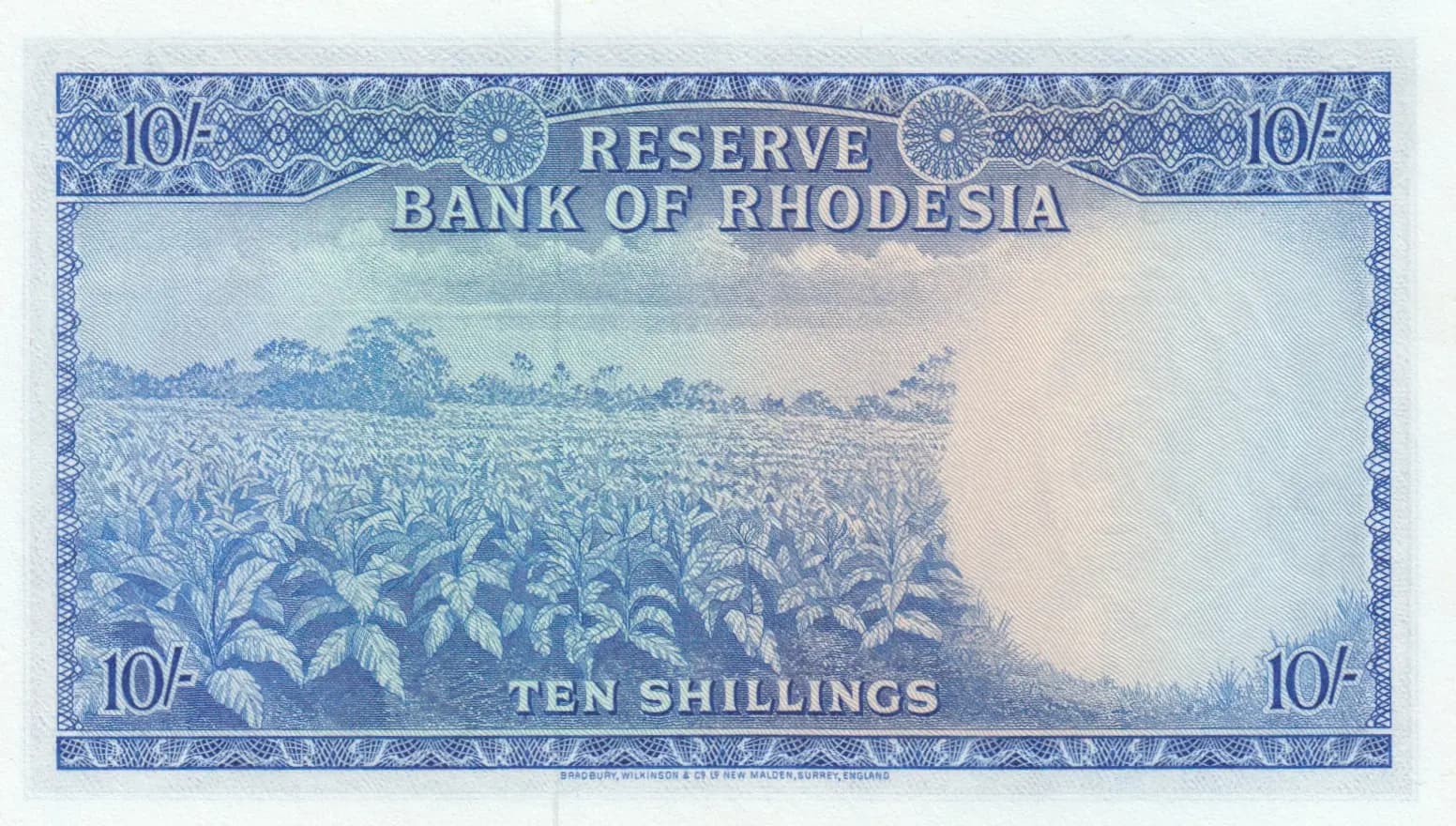
This is an exceptional example of Rhodesia's first banknote issue, the 10 shillings note from 1964, presented in pristine uncirculated condition. The note features elegant classical design elements including a female portrait in profile on the obverse and an evocative agricultural landscape on the reverse, both rendered in fine-line engraving with crisp, sharp printing throughout. As a foundational piece of Rhodesian currency history from the year of the country's independence, this note represents an important numismatic artifact with no visible wear, creases, or imperfections.
Common. The 10 shillings P-24 from 1964 was a standard circulation issue of the Reserve Bank of Rhodesia with substantial print runs. While the 1964 date marks Rhodesia's independence and gives it historical significance, the note itself remains readily available in the collector market. Uncirculated examples, though more desirable than circulated specimens, are regularly encountered and do not command premium prices that would indicate scarcity.
This note was issued on October 14, 1964, by the Reserve Bank of Rhodesia, established just as the country moved toward independence from British rule. The agricultural landscape depicted on the reverse symbolizes the economic foundation of Rhodesia, with cultivated fields representing the nation's primary agricultural wealth and identity. The note's classical design and British printer attribution reflect Rhodesia's Commonwealth ties at this pivotal moment in the country's political history.
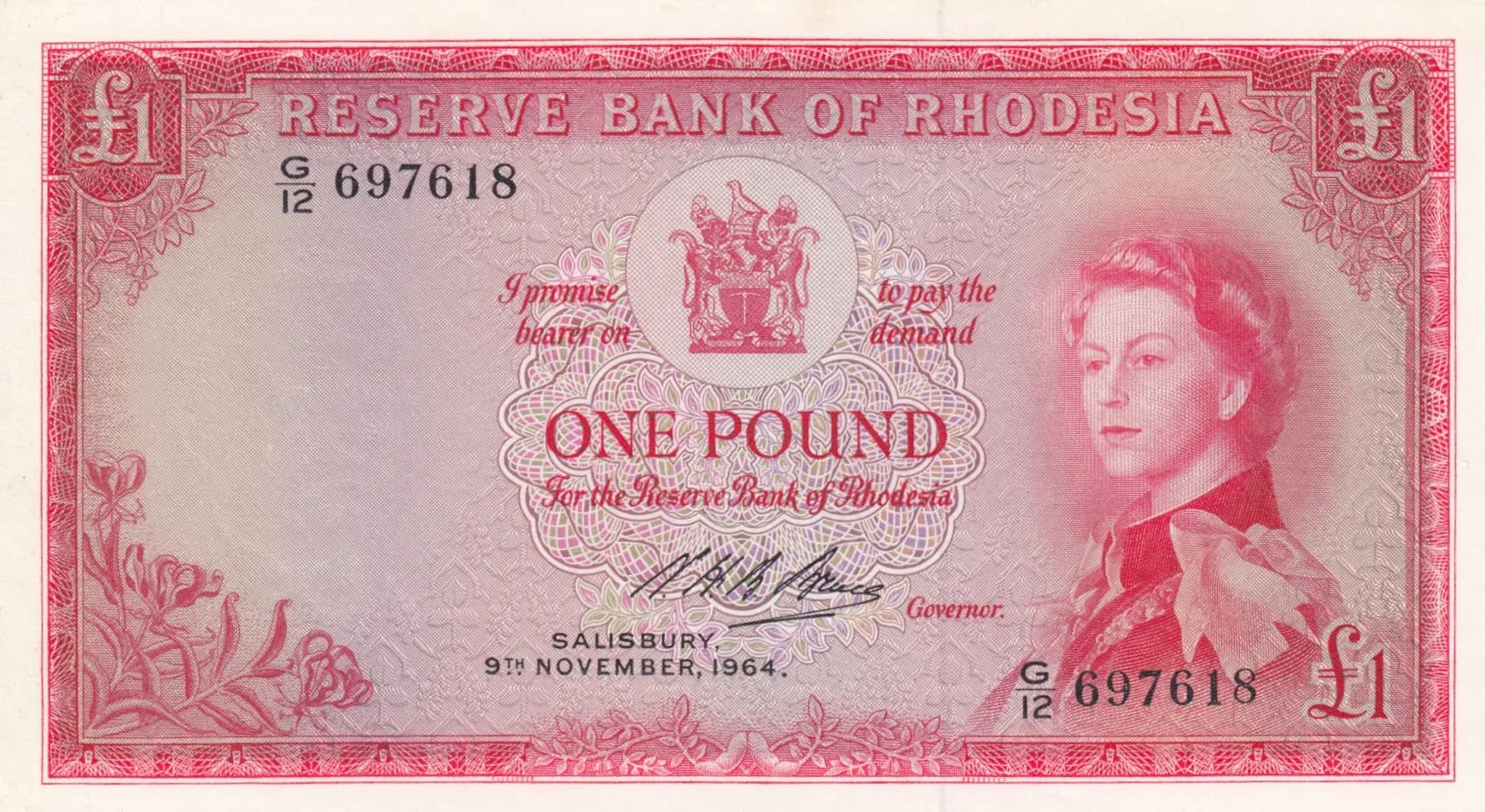
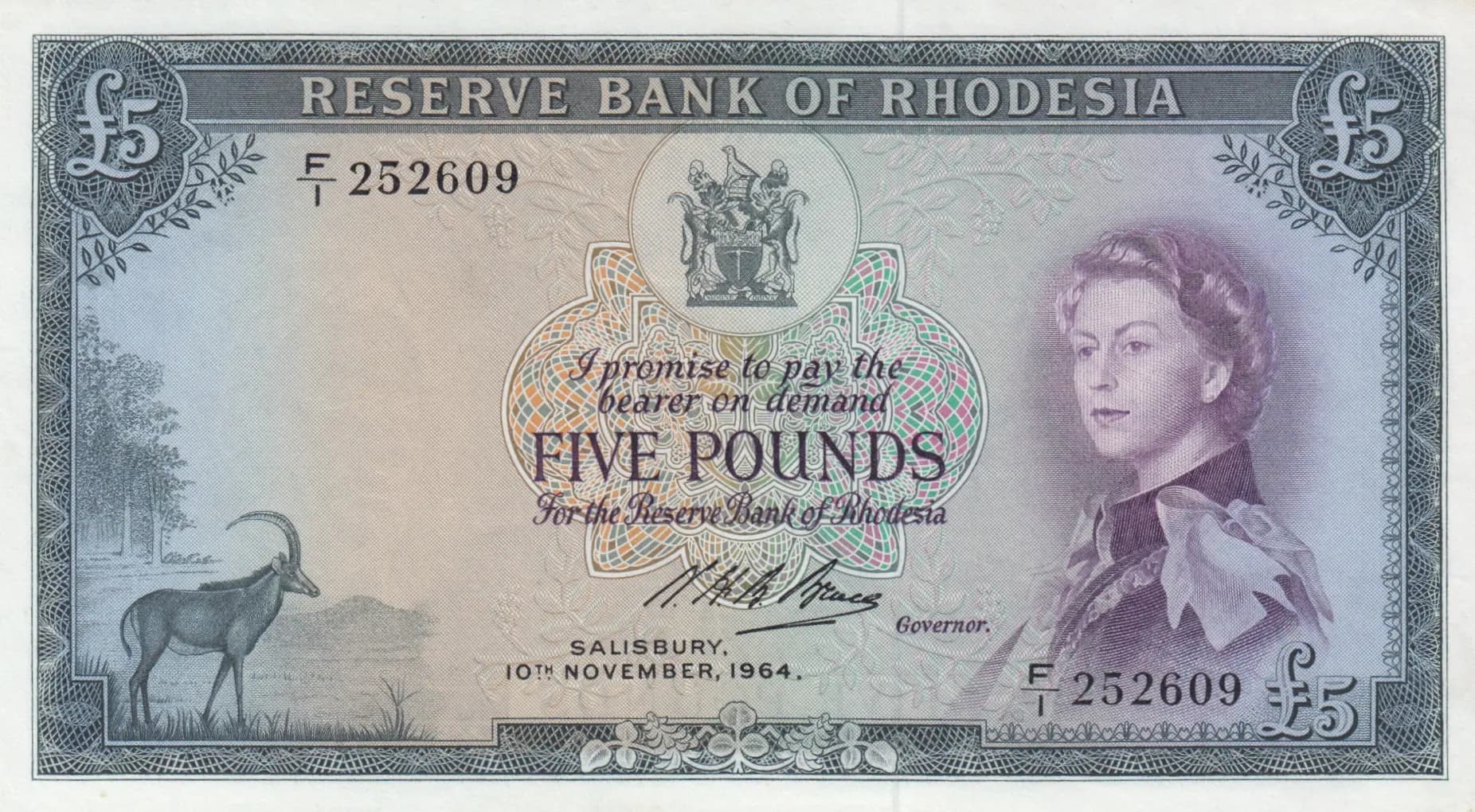
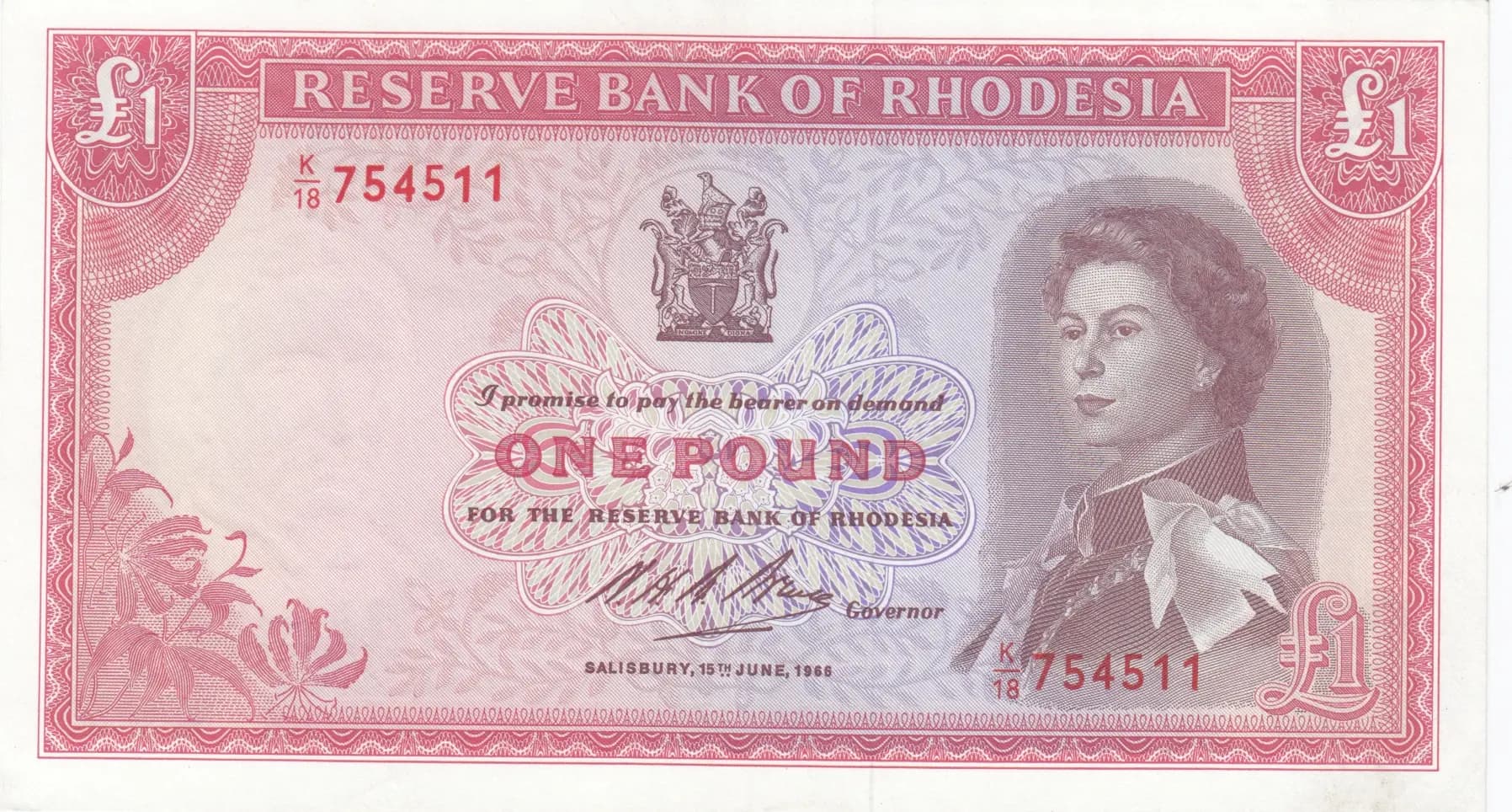
The obverse features a formal portrait of a woman in three-quarter profile facing right, rendered in classical engraving style, positioned prominently on the right side of the note. The central design element is an ornate coat of arms with heraldic shield featuring lions and elaborate decorative elements, surrounded by an ornamental cartouche containing the denomination. Elaborate rosette and floral patterns occupy the corners, with complex geometric borders framing the entire design. The reverse depicts a representational landscape of Rhodesian agricultural fields showing rows of cultivated crops (likely maize), with distant trees and rolling terrain visible on the horizon beneath a clear sky. The entire design demonstrates the high-quality intaglio engraving characteristic of professional banknote production.
FRONT: 'Reserve Bank of Rhodesia' (issuing authority), 'I promise to pay the bearer on demand' (standard currency promise), 'TEN SHILLINGS' and '10/-' (denomination), 'For the Reserve Bank of Rhodesia' (issuing statement), 'Governor' (signature line), 'Salisbury, 14th October, 1964' (issue date and location), 'H/3 603425' (serial number). BACK: 'Reserve Bank of Rhodesia' (issuing authority), 'TEN SHILLINGS' and '10/-' in all four corners (denomination), 'Bradbury, Wilkinson & Co Ltd, New Malden, Surrey, England' (printer attribution).
Intaglio (recess/engraved) printing, evidenced by the fine-line engraving details, intricate border work, and the crisp, sharp impression visible throughout both sides. The note was printed by Bradbury, Wilkinson & Co Ltd of New Malden, Surrey, England, a prestigious British banknote security printer known for high-quality intaglio work. The complex geometric patterns, ornate rosettes, and detailed landscape engraving are all characteristic of intaglio production methods.
The observed serial number is H/3 603425. This note is from the standard first issue of 1964 dated 14th October. Varieties for this Pick number may include different serial number prefixes and signature variations of the Governor, though the visual analysis confirms this as a standard variety of the inaugural Reserve Bank of Rhodesia 10 shillings issue.