10 dollars 1970
About This Note
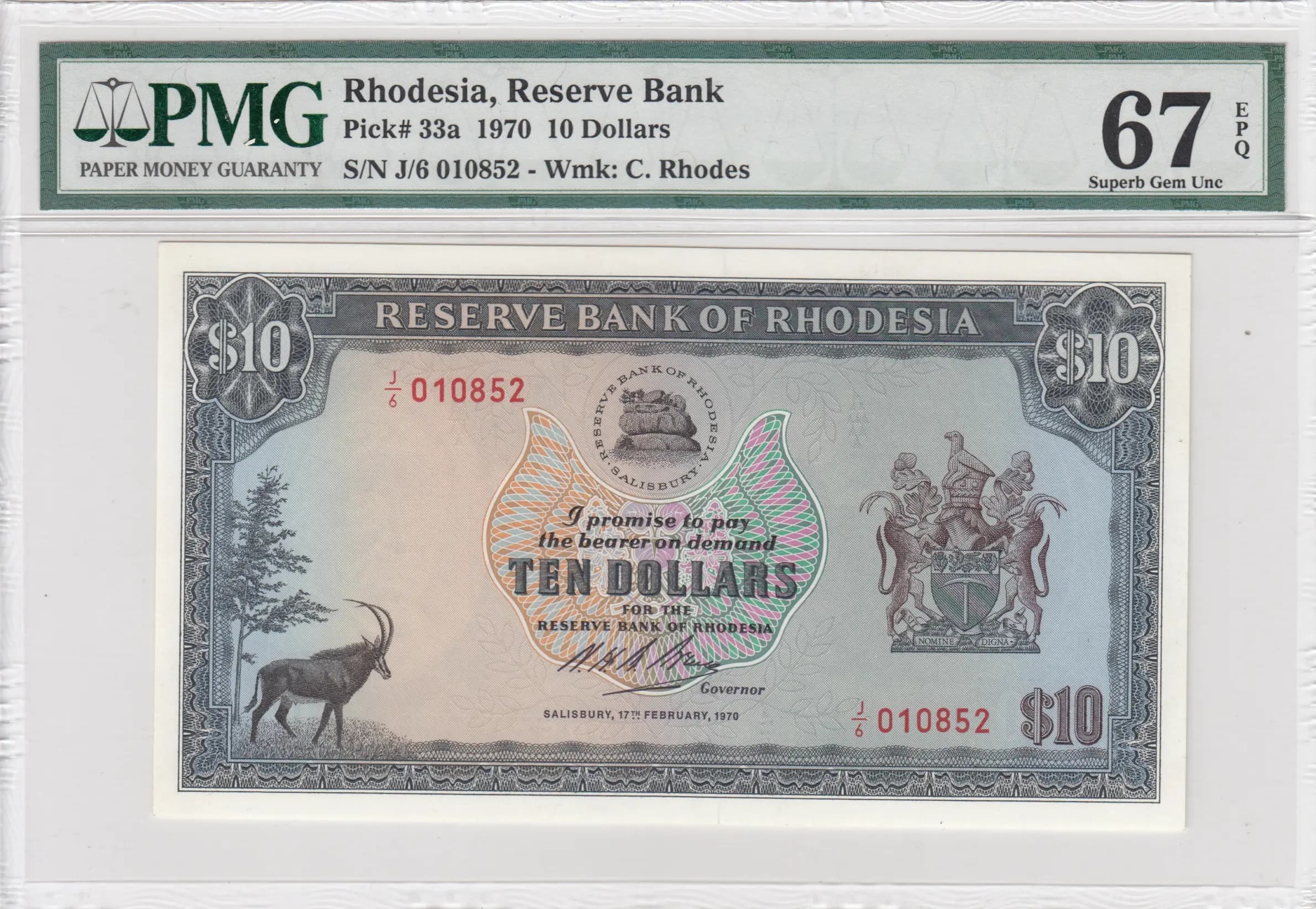
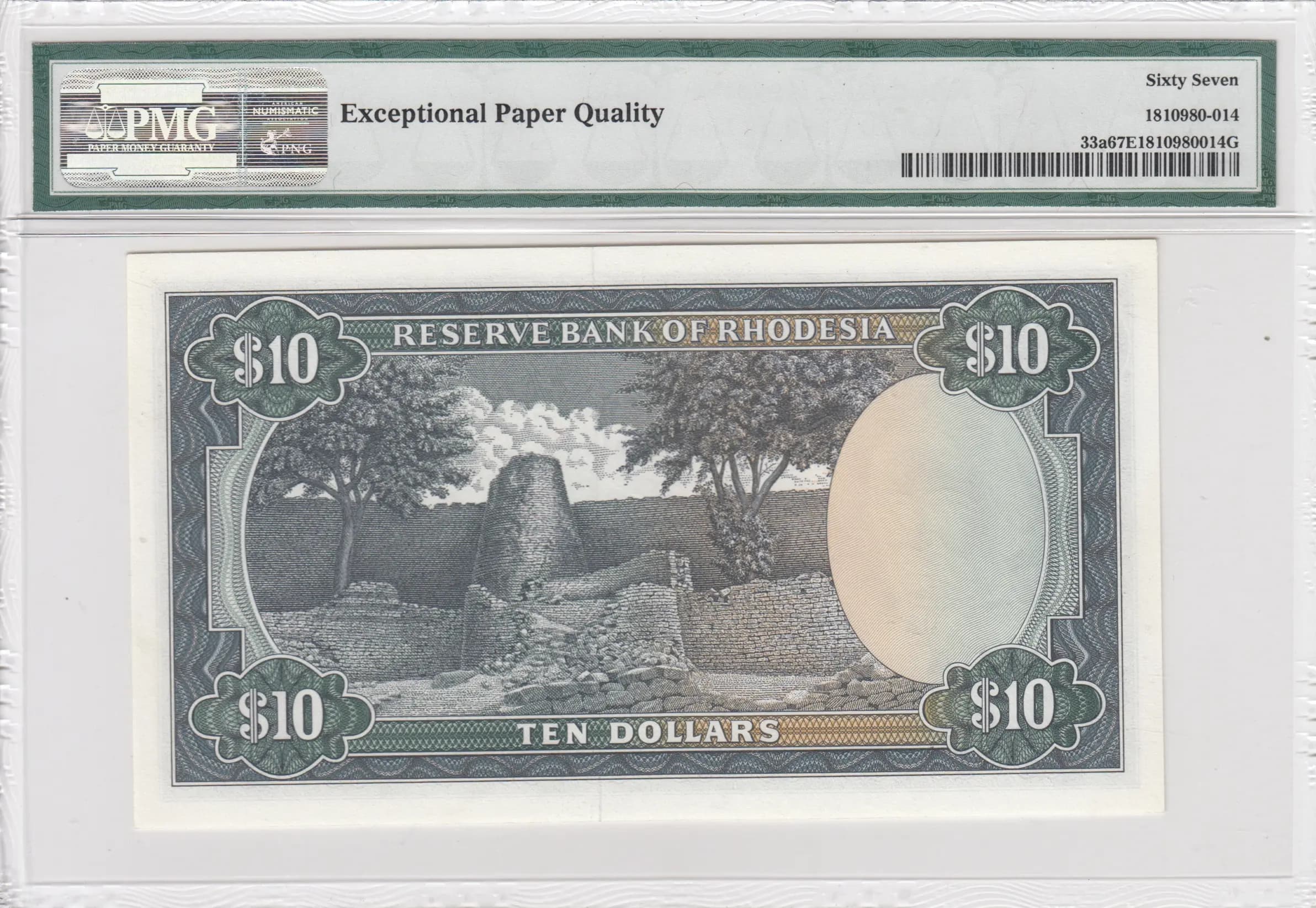
A pristine example of the 1970 Rhodesian Reserve Bank 10 dollar note (Pick P-33a) in PMG 67 EPQ condition, displaying exceptional eye appeal with sharp printing and no visible wear. The note features distinctive wildlife imagery with a sable antelope on the obverse and what appears to be Great Zimbabwe ruins on the reverse, reflecting Rhodesia's natural and cultural heritage during this politically significant period. The crisp paper stock, vibrant color palette including orange and green vignettes, and detailed engraved security elements confirm this as a well-preserved specimen of mid-20th century Rhodesian currency.
Common. The 1970 Reserve Bank of Rhodesia 10 dollar note (Pick P-33a) was part of standard circulation currency with substantial print runs typical of mid-range denominations during this period. No historical evidence indicates this was a short-lived issue, low-mintage variety, or subject to recall. In the current market, examples of this note in various grades remain readily available to collectors, with PMG 67 specimens representing premium-grade examples but not exceptionally scarce. The denomination and issuing year do not correspond to known key dates or special circumstances that would restrict supply.
Issued on 17th February 1970 by the Reserve Bank of Rhodesia during a period of significant political transition in southern Africa, this note represents the post-UDI currency era when Rhodesia maintained its own independent monetary system. The reverse depicts the Great Zimbabwe ruins—an iconic symbol of the region's pre-colonial African heritage—while the obverse features the sable antelope, reflecting Rhodesia's abundant wildlife and natural resources that defined its national identity. The formal heraldic imagery and promise-to-pay text reflect the Reserve Bank's commitment to maintaining confidence in Rhodesian currency during this turbulent historical period.
The obverse features the Reserve Bank of Rhodesia emblem at top center with the national coat of arms (displaying lions and a heraldic shield) prominently positioned on the right side. A sable antelope, native to the region and symbolizing Rhodesian wildlife, appears in the lower left against a background landscape with trees. The denomination is contained within an ornate cross-hatched vignette in orange and green, surrounded by an elaborate decorative border with corner ornaments rendered in fine engraving. The reverse depicts the iconic Great Zimbabwe ruins—a cylindrical stone tower or beacon structure characteristic of the historical site—positioned centrally within a landscape vignette showing fortification walls, vegetation, and sky elements. Corner medallions bearing '$10' denominations frame all four corners in decorative designs. Both sides employ fine-line engraving throughout the borders and security elements.
FRONT SIDE: 'Reserve Bank of Rhodesia' (institution name); '$10' (denomination); 'I promise to pay the bearer on demand' (standard promise clause); 'TEN DOLLARS' (denomination in words); 'FOR THE RESERVE BANK OF RHODESIA' (issuing authority); 'Governor' (signatory title); 'SALISBURY, 17TH FEBRUARY, 1970' (place and date of issue); Serial number 'J/6 010852'. BACK SIDE: 'Reserve Bank of Rhodesia' (institution name); '$10' (denomination in corner medallions); 'TEN DOLLARS' (denomination in words).
Intaglio engraving (line engraving and steel plate engraving), which is evidenced by the fine detailed line work visible in the decorative borders, corner ornaments, and landscape vignettes. The sharp, crisp impression and multi-layered engraved patterns are characteristic of high-security currency production. For Rhodesian notes of this period, the Reserve Bank of Rhodesia typically engaged established security printers such as Bradbury, Wilkinson & Co. or similar British currency printers, though specific printer attribution for Pick P-33a would require archival confirmation.
The observed specimen exhibits the prefix 'J/6' on the serial number, which may correspond to a specific printing batch or series designation used by the Reserve Bank of Rhodesia. The date of 17th February 1970 is consistent with the primary issuance of this design. No overprints, color variants, or signature varieties are evident in this example. Further detailed study of serial number prefixes and batch designations would be required to definitively classify all known varieties of Pick P-33a, though the 'J/6' prefix likely represents one of several authorized printing batches from this issue.