1 riyal 1960
About This Note
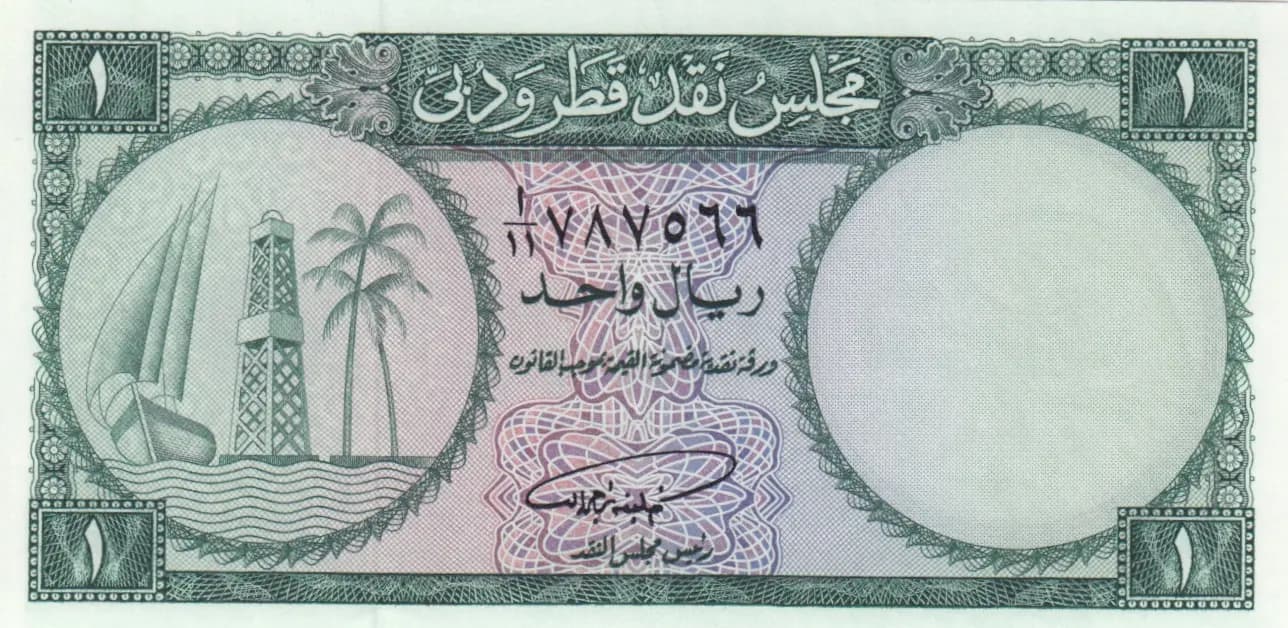
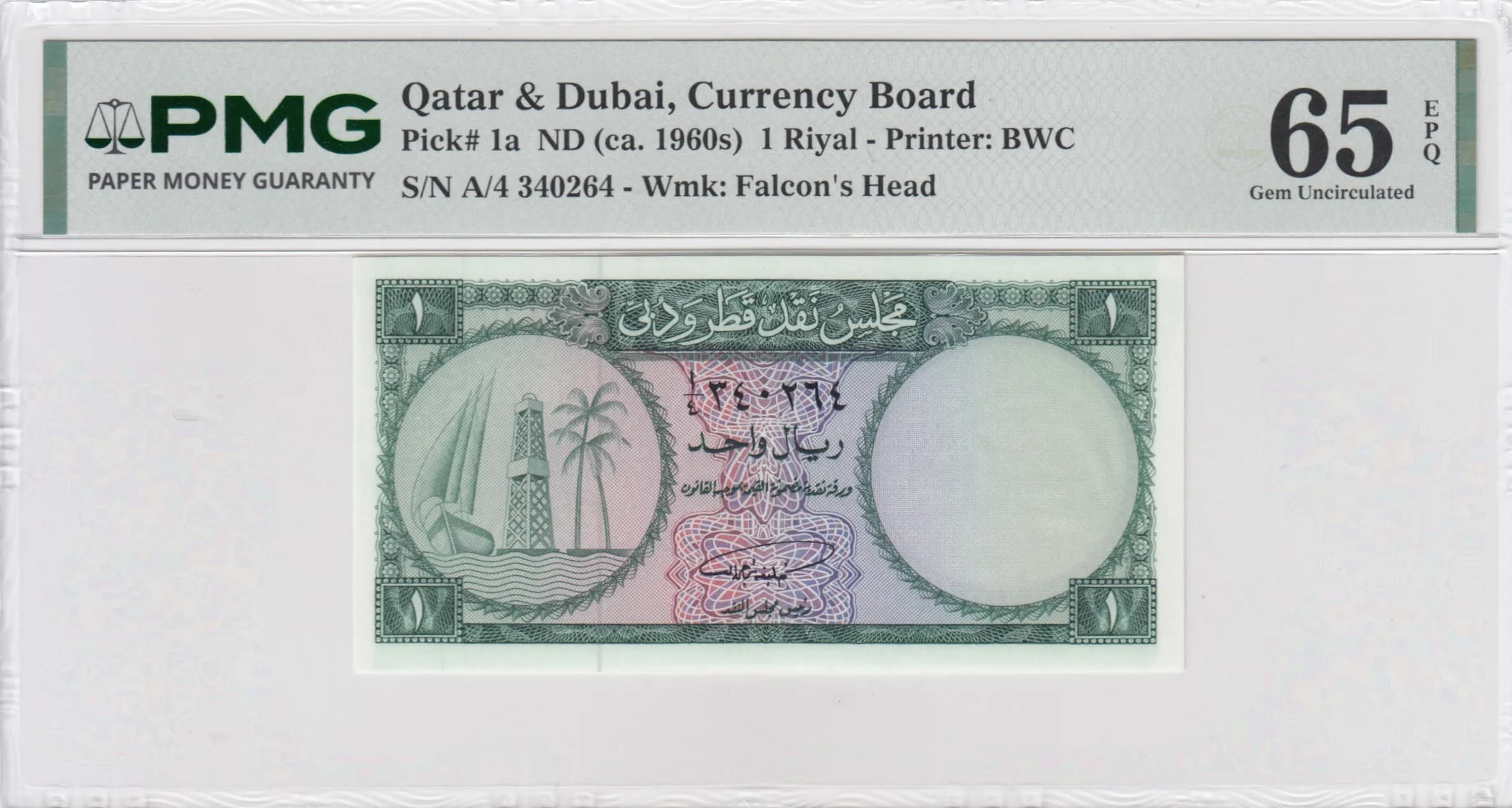
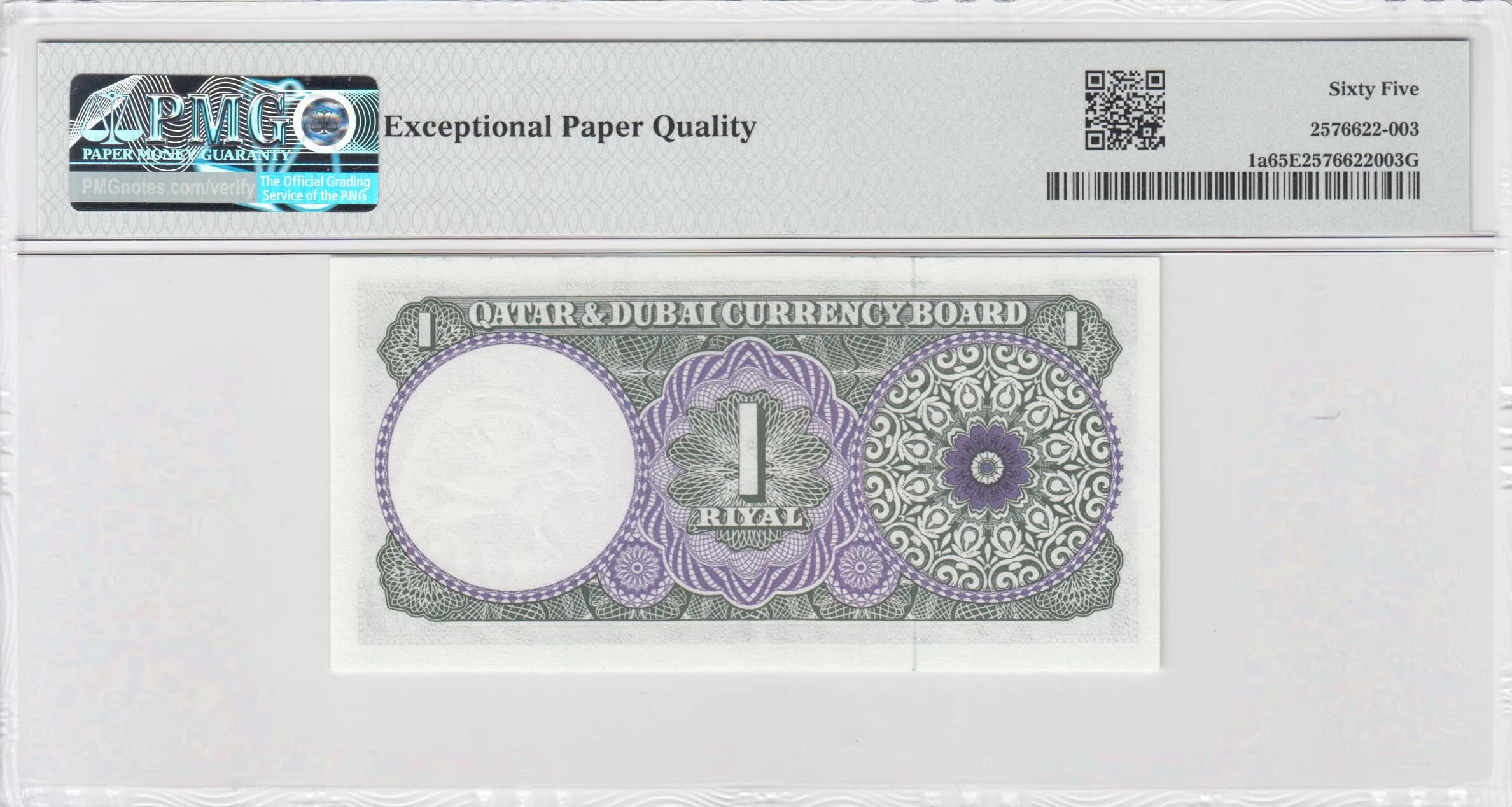
This is an exceptional example of the historically significant 1 Riyal banknote issued by the Qatar & Dubai Currency Board in 1960, graded PMG 65 EPQ. The note exhibits pristine condition with striking green-gray and pink-red coloration on the obverse, featuring a traditional dhow sailing vessel and palm tree, while the reverse displays elegant purple and gray geometric patterns. As one of the earliest banknotes from the unified Qatar & Dubai currency system, this Gem Uncirculated specimen represents an important piece of Gulf monetary history in remarkable preservation.
Common. The Qatar & Dubai Currency Board issue of 1960 represents the first official banknotes of the unified currency system, with substantial print runs to meet circulation demands across both emirates. While the Pick P-1 designation indicates its status as the first catalogued note from this issuer, the denomination and historical significance do not indicate a limited print run. High-grade examples such as this PMG 65 EPQ specimen command modest premiums over lower grades, but the note itself remains readily available in the collector market, typically valued between $25-75 depending on condition and market demand.
The Qatar & Dubai Currency Board was established to serve the monetary needs of the two emirates during a period of early economic development in the Persian Gulf. The prominent depiction of the traditional dhow sailing vessel reflects the maritime heritage and pearl-diving economy that defined the region's historical prosperity. The inclusion of Arabic and English inscriptions and the falcon watermark symbolize the cultural identity and sovereignty of the nascent Gulf states during the early 1960s, a transitional period before the formation of the UAE in 1971.
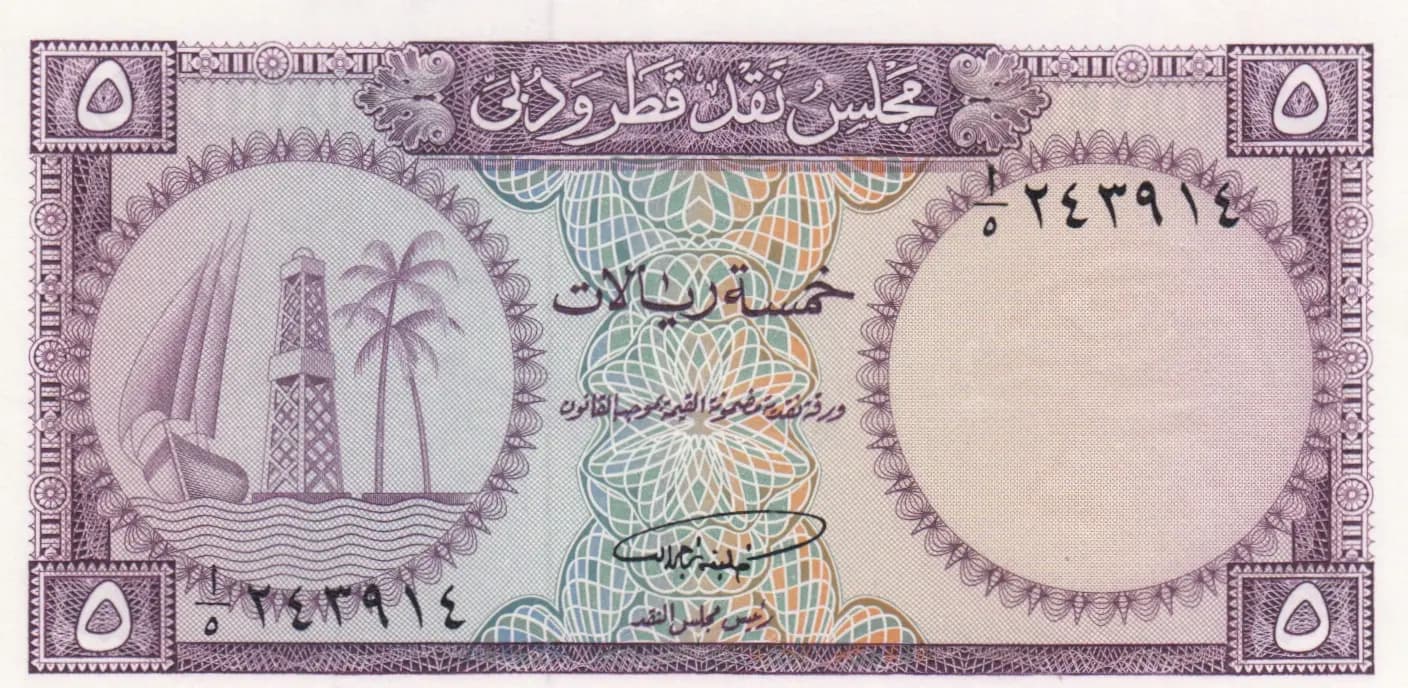
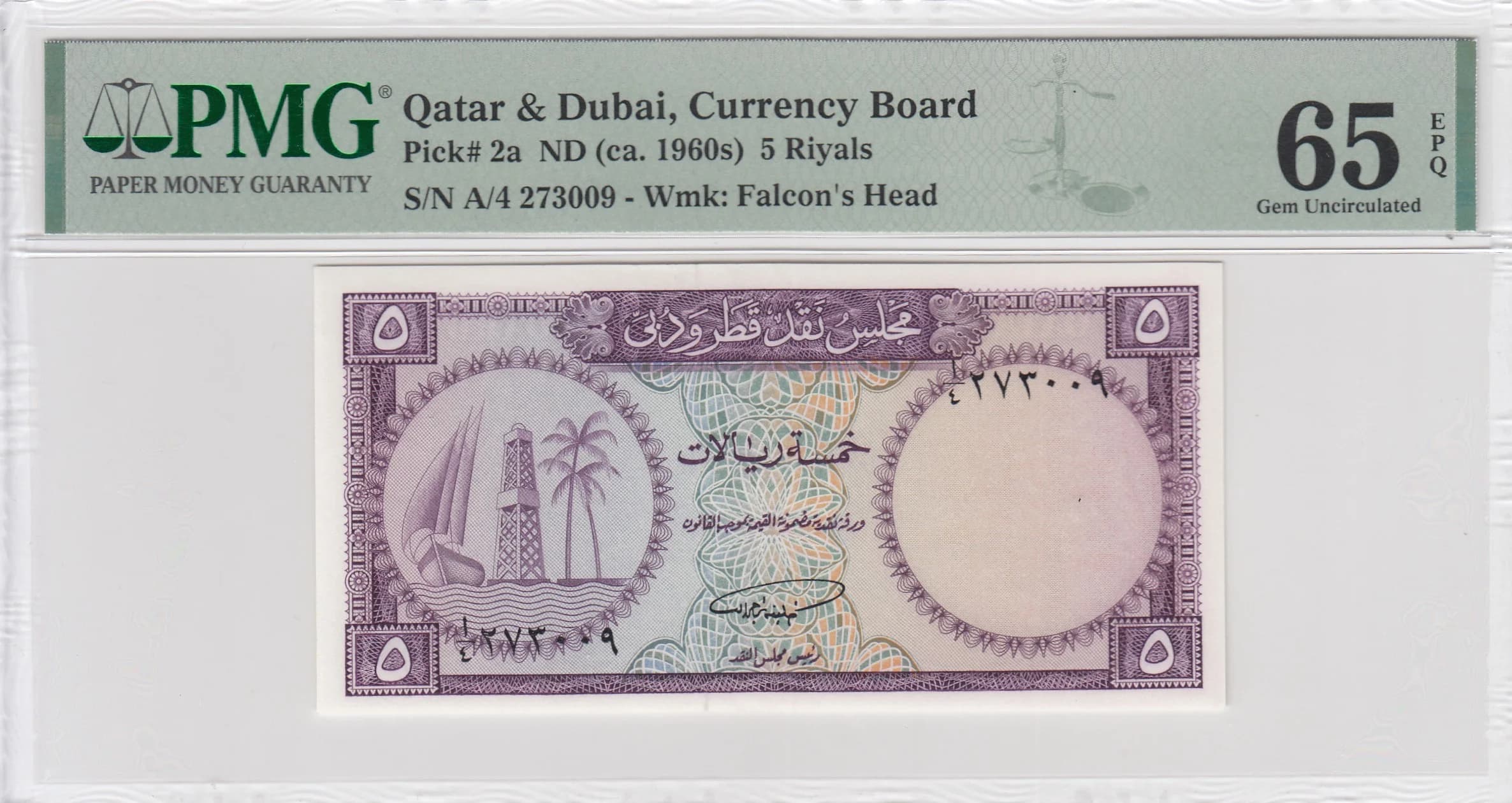
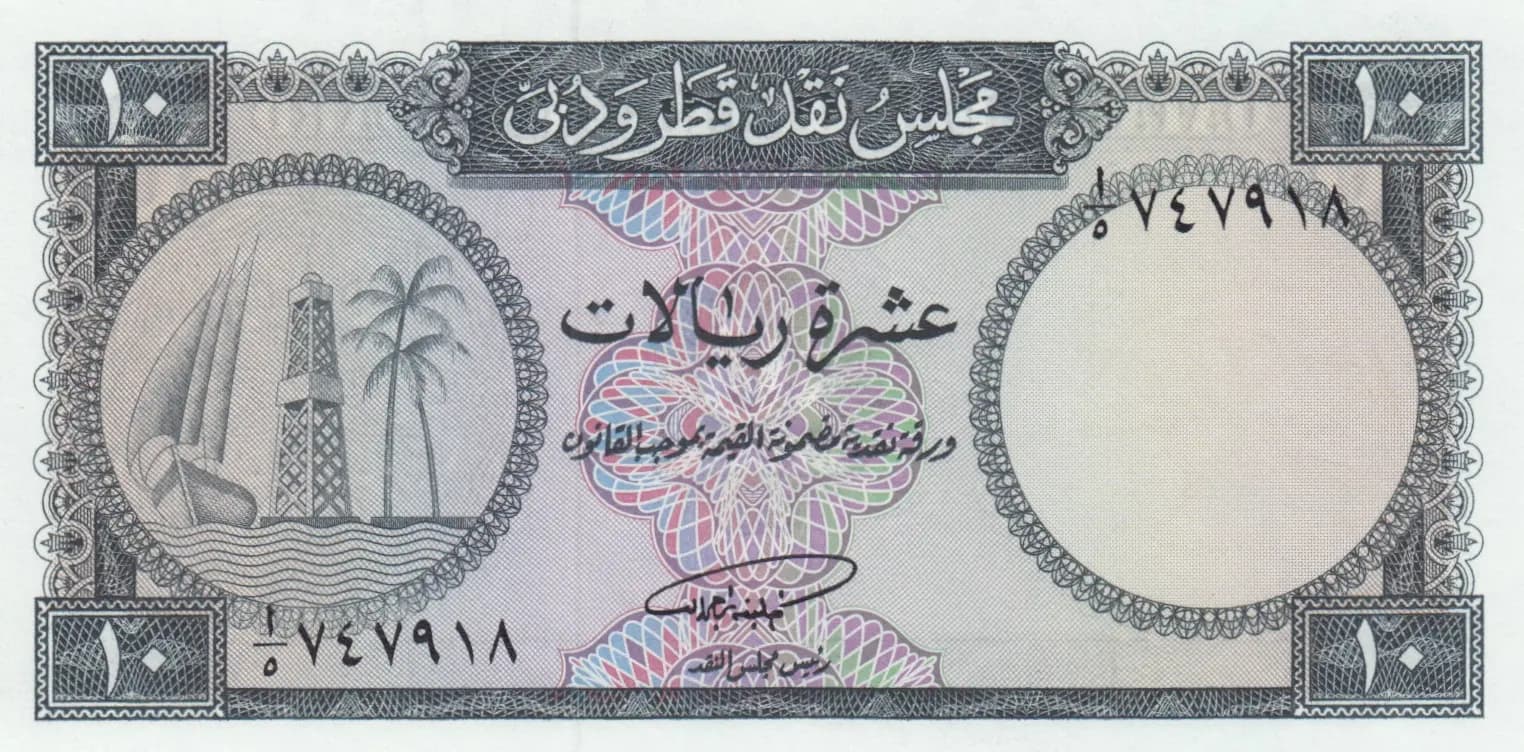
The obverse features a classical two-medallion layout with the left oval containing a detailed engraving of a traditional Arabian dhow under sail with an accompanying palm tree, symbolizing the maritime and agricultural heritage of the region. The right medallion space is left blank, a design choice common in early Gulf currency issues. The center panel displays elaborate Arabic calligraphy and ornamental patterns in pink-red against the green-gray background. The reverse presents a symmetrical design with three medallion spaces (two blank ovals flanking a central ornate frame containing '1'), complemented by intricate purple and gray geometric and floral mandala-like patterns. Corner numerals in decorative frames appear on both sides, maintaining visual balance and denomination clarity.
Front side: 'Qatar & Dubai' appears in both English and Arabic (قطر و دبي). The numeral '1' appears in decorative corner frames. Reverse side: 'QATAR & DUBAI CURRENCY BOARD' and '1 RIYAL' appear in English across the top portion, with the numeral '1' featured prominently in an ornate central frame. All inscriptions identify the issuing authority and denomination.
The note was produced using intaglio (recess) engraving, evidenced by the deep, detailed line work visible in the ornamental borders, geometric patterns, and the fine engraving of the dhow vessel. The exceptional clarity of the floral and geometric designs, combined with the precise registration of multiple colors (green-gray, pink-red, purple, and black), indicates professional security printing characteristic of established currency printers of the era. The fine detail work and security features such as the falcon watermark suggest printing by a major international security printer, likely De La Rue or a comparable institution specializing in currency production.
This is the standard issue of the Qatar & Dubai Currency Board 1 Riyal from 1960 (Pick P-1). The PMG 65 EPQ grade indicates no visible printing varieties, such as color shifts or registration errors. Signature varieties exist on notes from this series, though specific signature identification would require examination of the actual signatures present on this specimen. The consistent green-gray and pink-red color scheme with purple reverse represents the standard printing for this issue, with no reported major varieties in the catalogued literature for this particular denomination and year.