10 riyals 1960
About This Note
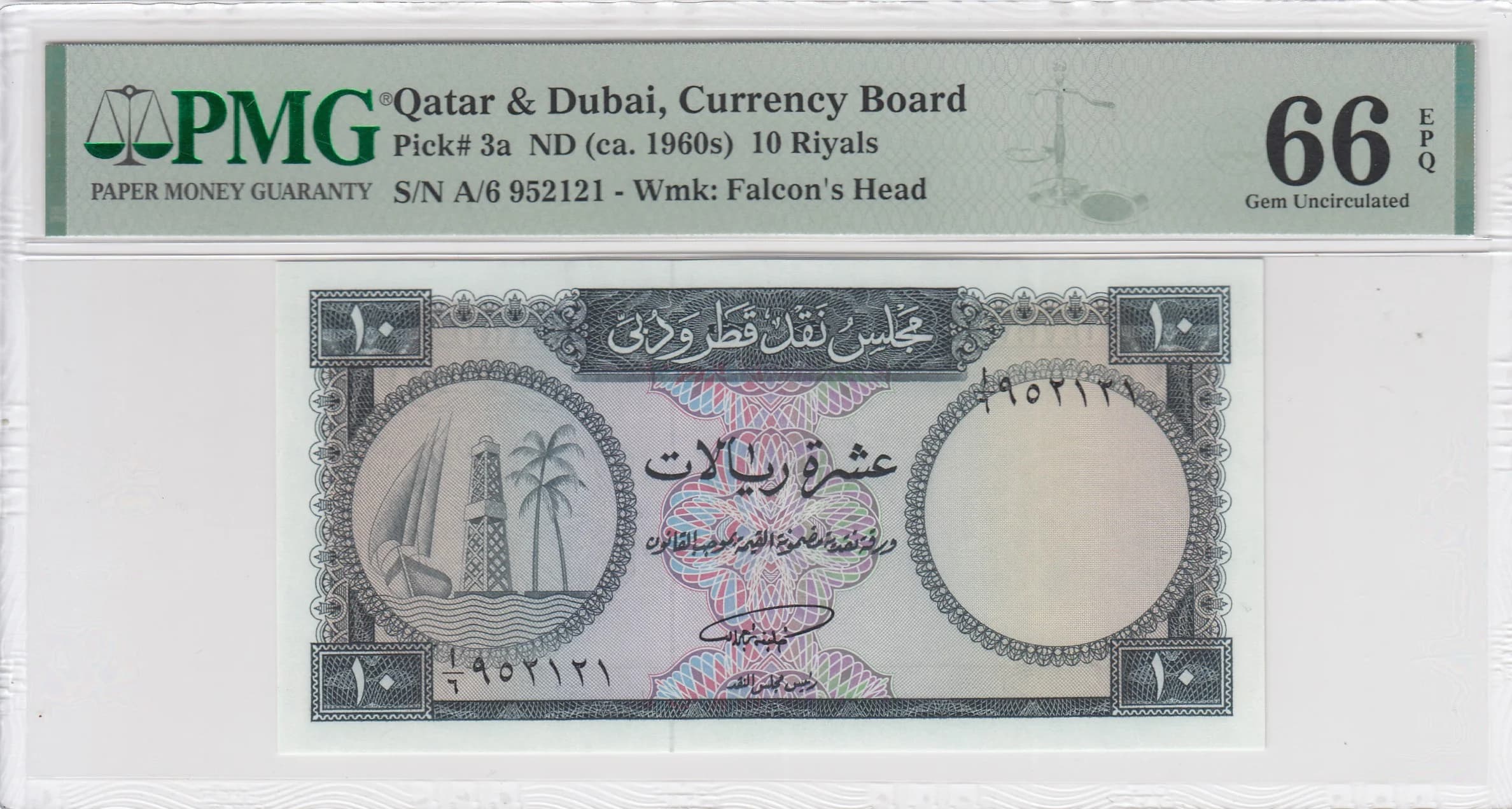
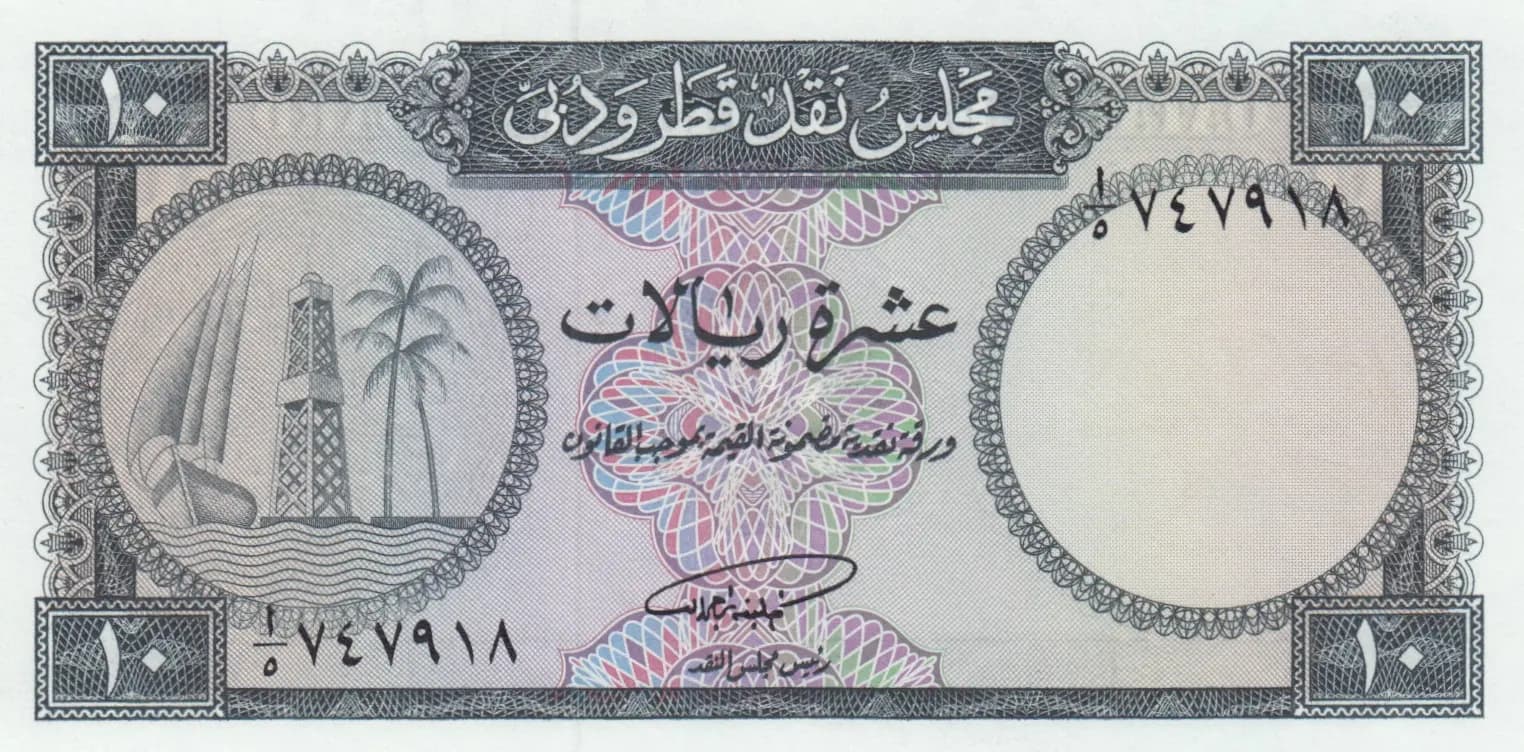
This is a pristine example of the Qatar & Dubai Currency Board's 10 Riyals note from 1960 (Pick-3), presented in uncirculated condition with no visible wear, creases, or damage. The note showcases elegant Islamic geometric design elements combined with early 20th-century engraving techniques, featuring an oil derrick vignette on the obverse—a symbolic representation of the region's petroleum wealth during this formative period. The bilateral English and Arabic inscriptions, along with the symmetrical ornamental borders and fine-line security work, make this an important early example of Gulf currency design.
Common. The Qatar & Dubai Currency Board issues from 1960 were produced in substantial quantities to serve the monetary needs of both emirates during this period. While early Gulf currency notes have become collectible, this denomination and issue remain readily available in the numismatic market. The note's condition (UNC) is desirable but does not significantly impact rarity assessment, as multiple examples in similar grades are known to exist.
Issued during 1960 by the Qatar & Dubai Currency Board, this note reflects the pre-unification period when Qatar and Dubai shared a common monetary authority before the UAE's formation in 1971. The prominent oil derrick imagery directly references the petroleum industry that was transforming the Gulf economy during the post-war era, while the formal issuer designation emphasizes the administrative structure of these developing emirates. The note's design predates the Qatar Monetary Agency issues by over a decade, making it historically significant as an early example of Gulf state currency.
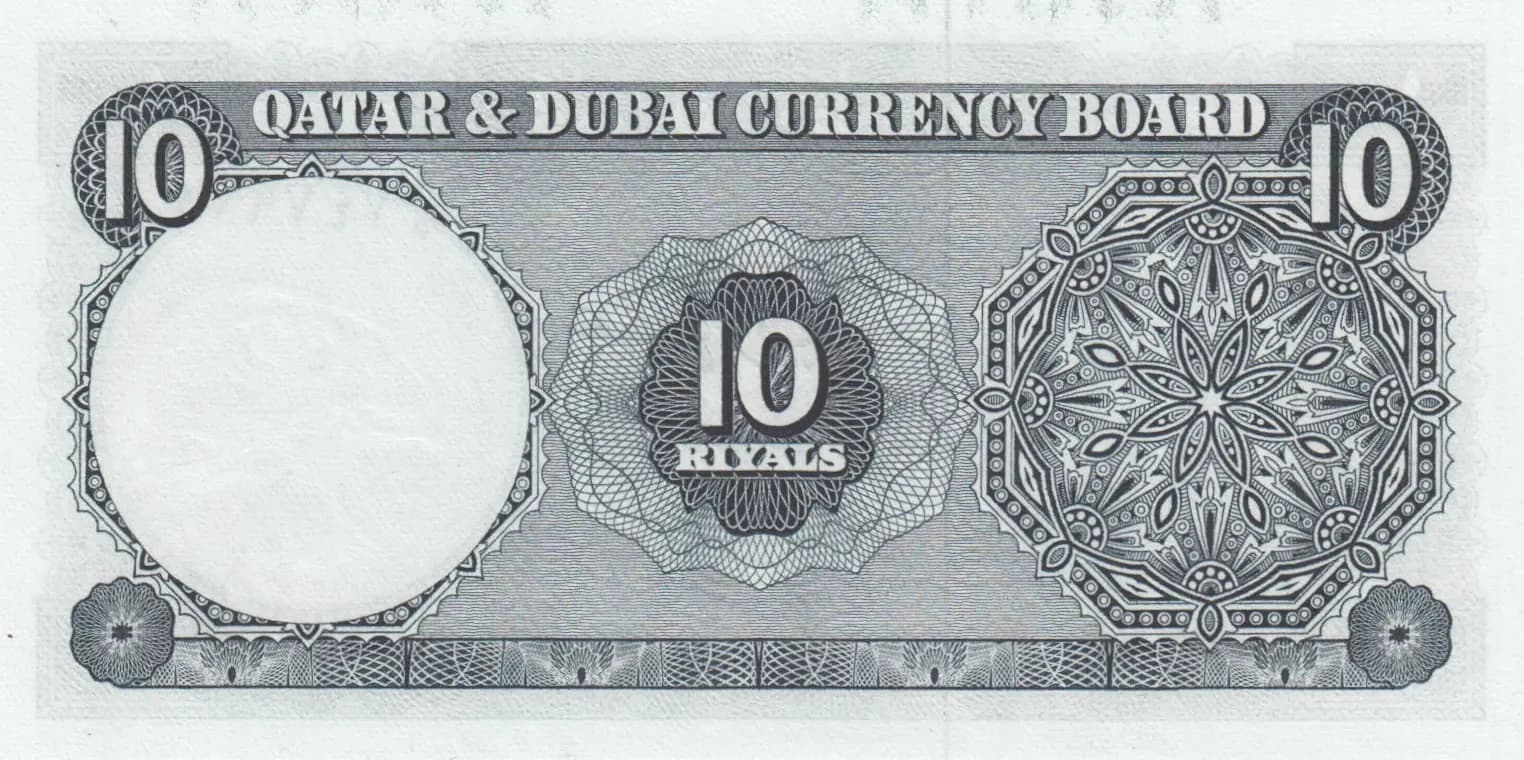
The obverse features a light beige/cream field with predominantly black and gray line work executed in fine engraving style. A circular vignette on the left depicts an oil derrick with a palm tree, symbolizing the region's dual economic foundations of hydrocarbon resources and traditional agriculture. The top center displays Arabic text within a decorative geometric panel rendered in polychrome (pink/red, blue, and purple), while corner rectangles contain the denomination '10'. An empty circular space on the right side (presumably reserved for a portrait or heraldic emblem) remains blank. The reverse presents a highly symmetrical design in black on a light gray/white background, with ornamental borders framing the composition. Two large empty circular spaces flank the center medallion, which contains the denomination '10' within an intricate geometric floral design. Fine-line crosshatching and detailed geometric patterns provide security characteristics throughout both sides.
Front side: 'مجلس نقد قطر ودبي' (Qatar and Dubai Currency Board) in Arabic; 'عشرة' (Ten) in Arabic text; '١٠' (10) in Arabic numerals; '١٩١٨' (1918) in Arabic numerals. Back side: 'QATAR & DUBAI CURRENCY BOARD' in English; '10' in English numerals; 'RIYALS' in English text.
Intaglio (engraved line) printing with black and polychrome color separation on the obverse. The fine crosshatching, detailed geometric borders, and sharp line definition are characteristic of high-security banknote engraving from this era. The bilateral design execution (English and Arabic) suggests production by an established European security printer, likely with experience in Middle Eastern currency production. The consistency of fine-line work and ornamental detail indicates professional banknote production rather than standard currency printing.
Pick-3 for the 10 Riyals denomination from 1960 (Qatar & Dubai Currency Board). The PMG population report indicates multiple cataloged variants (P-3a, P-3s, P-3cts) suggesting different states or printings of this issue. The visual analysis shows no obvious overprints, special markings, or signature variations that would definitively identify this as a specific sub-variety, though the blank portrait/emblem spaces on both sides are consistent with the standard P-3 design. Further examination of serial numbers and precise printing characteristics would be required to determine the exact variety designation.