10 rupias 1945
About This Note
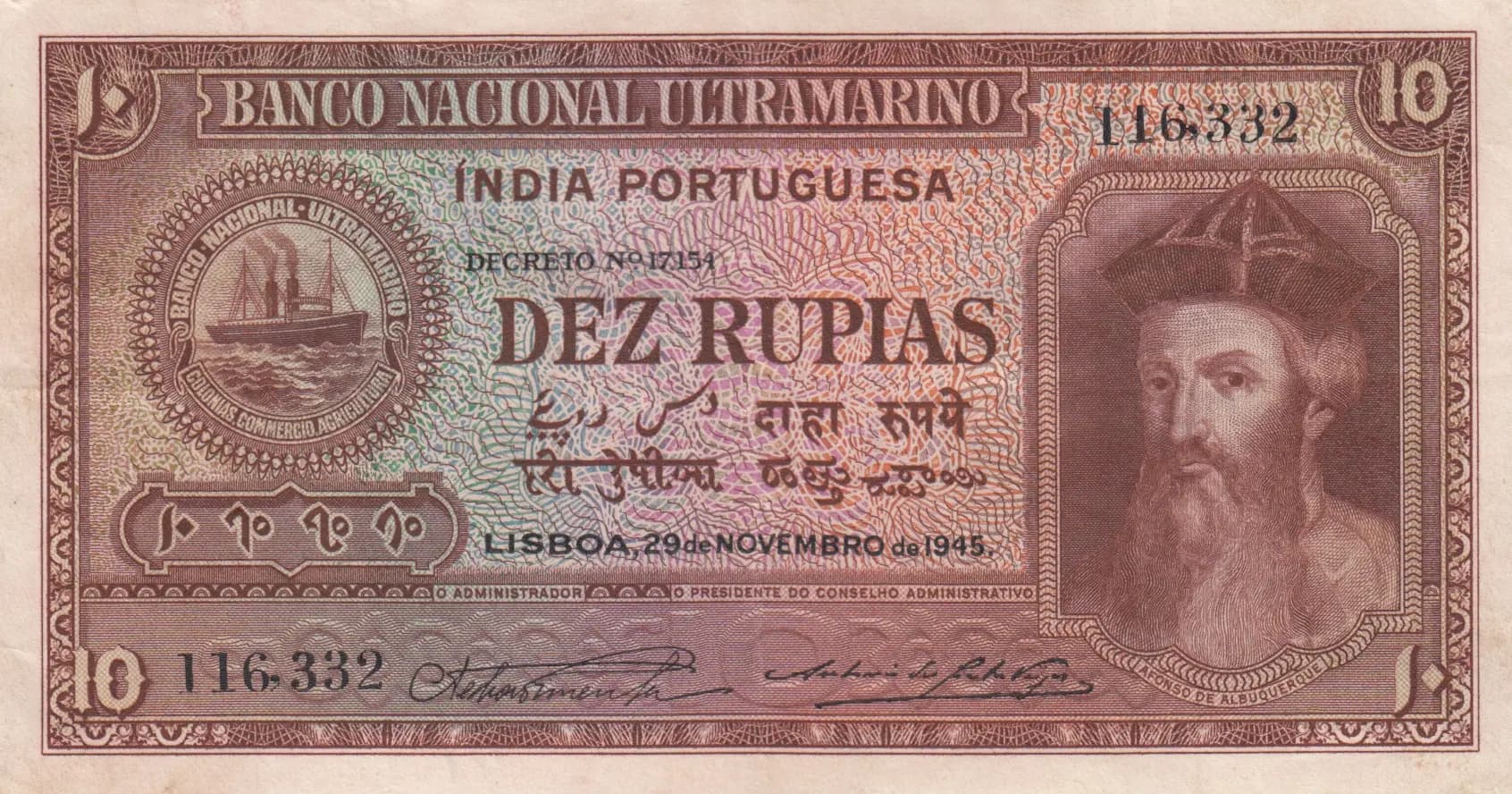
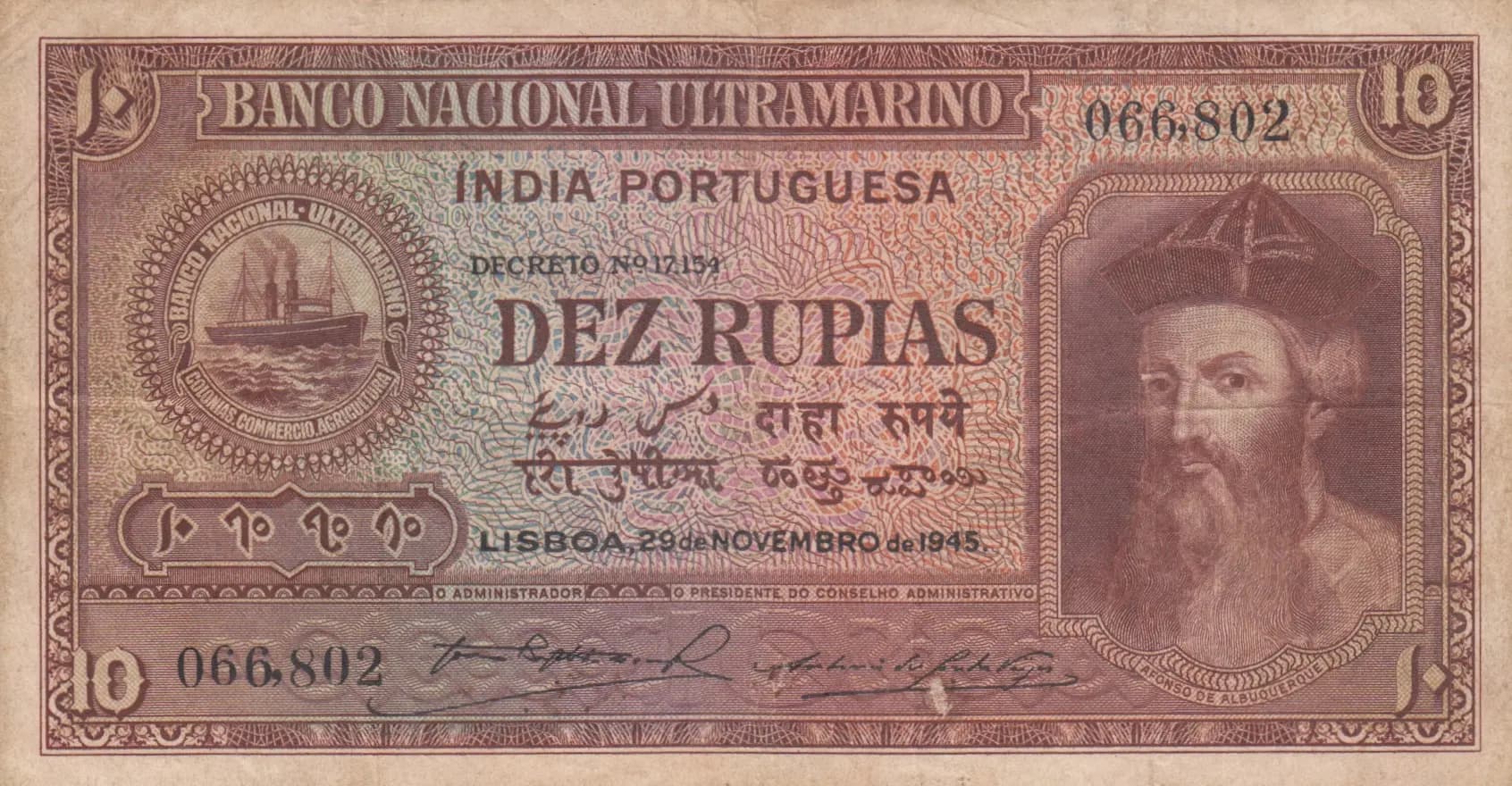
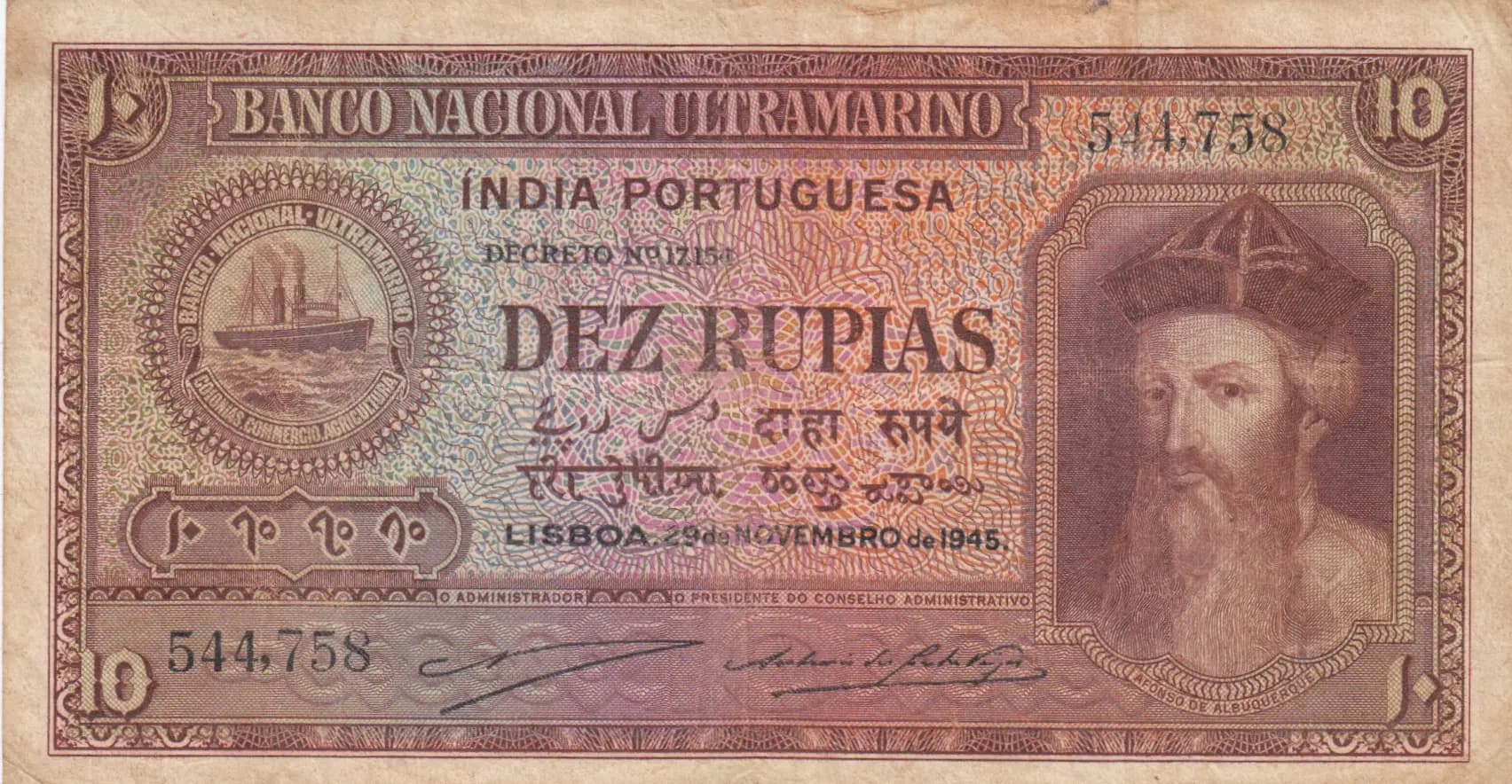
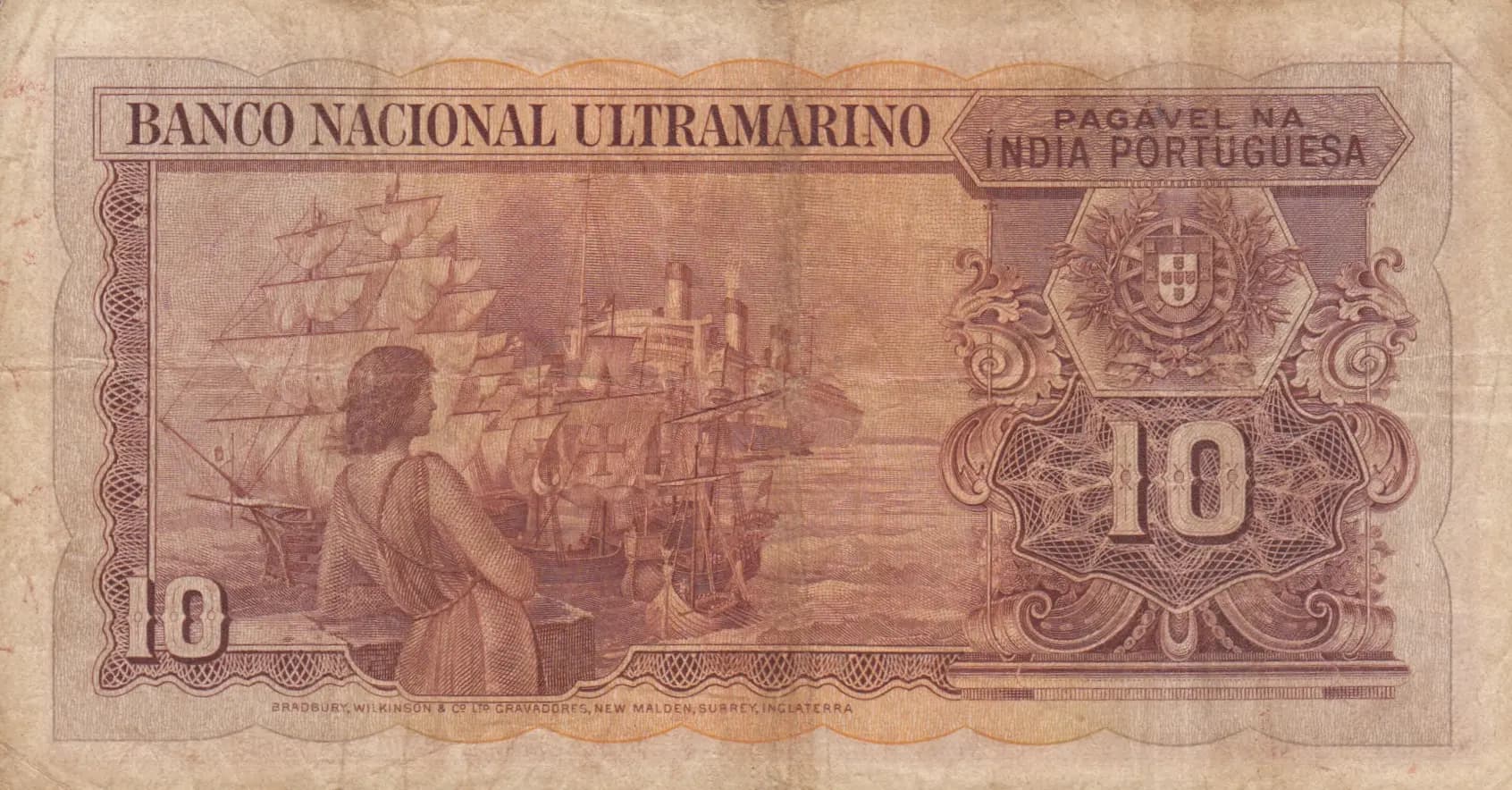
This is a 1945 Portuguese India 10 rupias banknote (Pick P-36) issued by the Banco Nacional Ultramarino, graded in Fine condition. The note displays characteristic colonial-era design with a bearded male portrait on the obverse and an allegorical female figure before a harbor scene on the reverse, both executed in fine intaglio engraving. Despite visible foxing, yellowing, and age-related wear consistent with decades of circulation, the intricate ornamental borders and detailed maritime imagery remain legible, making this a notable example of Portuguese India's currency during the final years of colonial rule.
Common. The 10 rupias denomination from Portuguese India's 1945 issue by Banco Nacional Ultramarino represents a standard circulation note from the final decade of Portuguese rule. While Portuguese India notes have some collector interest, this Pick number was produced in sufficient quantities for regular circulation, and examples remain available in the market at modest prices. The Fine condition grade and age-related wear are typical for notes from this era, and rarity is not a significant value driver for this particular issue.
This note was issued in November 1945, mere months after Portugal's declaration of Indian independence aspirations following World War II, representing the Banco Nacional Ultramarino's continued financial authority over Portuguese India until 1961. The maritime and harbor imagery on the reverse reflects Portugal's historical identity as a sea-faring colonial power, with the sailing ships and fortified harbor symbolizing the nation's overseas trading empire that had dominated Asian commerce since the 16th century. The inclusion of both Portuguese and Devanagari script inscriptions reflects the colonial administration's need to communicate with the local Indian population while maintaining Portuguese governmental authority.
The obverse features a bearded male portrait in profile facing right, rendered in classical style, positioned on the right side of the note. A circular seal containing a sailing ship appears on the left, symbolizing Portugal's maritime heritage. The reverse displays an allegorical female figure in classical draped clothing, positioned in profile facing left, standing before an elaborate harbor scene with multiple sailing vessels and distant coastal fortifications. The Portuguese coat of arms and heraldic shield appear on the right side of the reverse. Both sides are framed with intricate geometric and floral ornamental borders typical of early 20th-century Portuguese banknote design. The color scheme combines brown, purple-brown, orange, and green highlights, creating a warm, aged aesthetic characteristic of the period.
FRONT SIDE: 'BANCO NACIONAL ULTRAMARINO' (National Overseas Bank), 'INDIA PORTUGUESA' (Portuguese India), 'DECRETO Nº 1215' (Decree No. 1215), 'DEZ RUPIAS' (Ten Rupias), 'LISBOA 23 de NOVEMBRE de 1945' (Lisbon, November 23, 1945), 'O ADMINISTRADOR' (The Administrator), 'O PRESIDENTE DO CONSELHO ADMINISTRATIVO' (The President of the Administrative Council), 'दस' in Devanagari (Ten), 'रु' (Rupee symbol). BACK SIDE: 'BANCO NACIONAL ULTRAMARINO' (National Overseas Bank), 'PAGAVEL NA INDIA PORTUGUESA' (Payable in Portuguese India), 'BRADBURY WILKINSON & CO LTD GRAVADORES, NEW MALDEN, SURREY, INGLATERRA' (Bradbury Wilkinson & Co Ltd Engravers, New Malden, Surrey, England).
This note was produced using intaglio engraving, a security printing technique that creates fine, deeply impressed lines resistant to counterfeiting. The printer, Bradbury Wilkinson & Co Ltd of New Malden, Surrey, England—identified in the lower portion of the reverse—was one of the premier banknote security printers of the era. The intricate decorative patterns, fine-line borders, and detailed portraiture visible throughout the note are characteristic signatures of high-quality intaglio production, offering both aesthetic appeal and anti-counterfeiting protection through complex background patterns and fine engraved details.
This note can be identified as the standard 1945 issue (Pick P-36) dated 'LISBOA 23 de NOVEMBRE de 1945' with the decree reference 'DECRETO Nº 1215'. The serial number visible on this example is '544.758'. Varieties for this Pick number may include different signature combinations representing different administrators or presidents of the Administrative Council, though the visual analysis does not provide sufficient detail to identify the specific signatures used. The inclusion of Devanagari script text confirms this is a later-period Portuguese India issue intended for circulation among the local population.