20 escudos 1971
Market Prices
40 salesAbout This Note
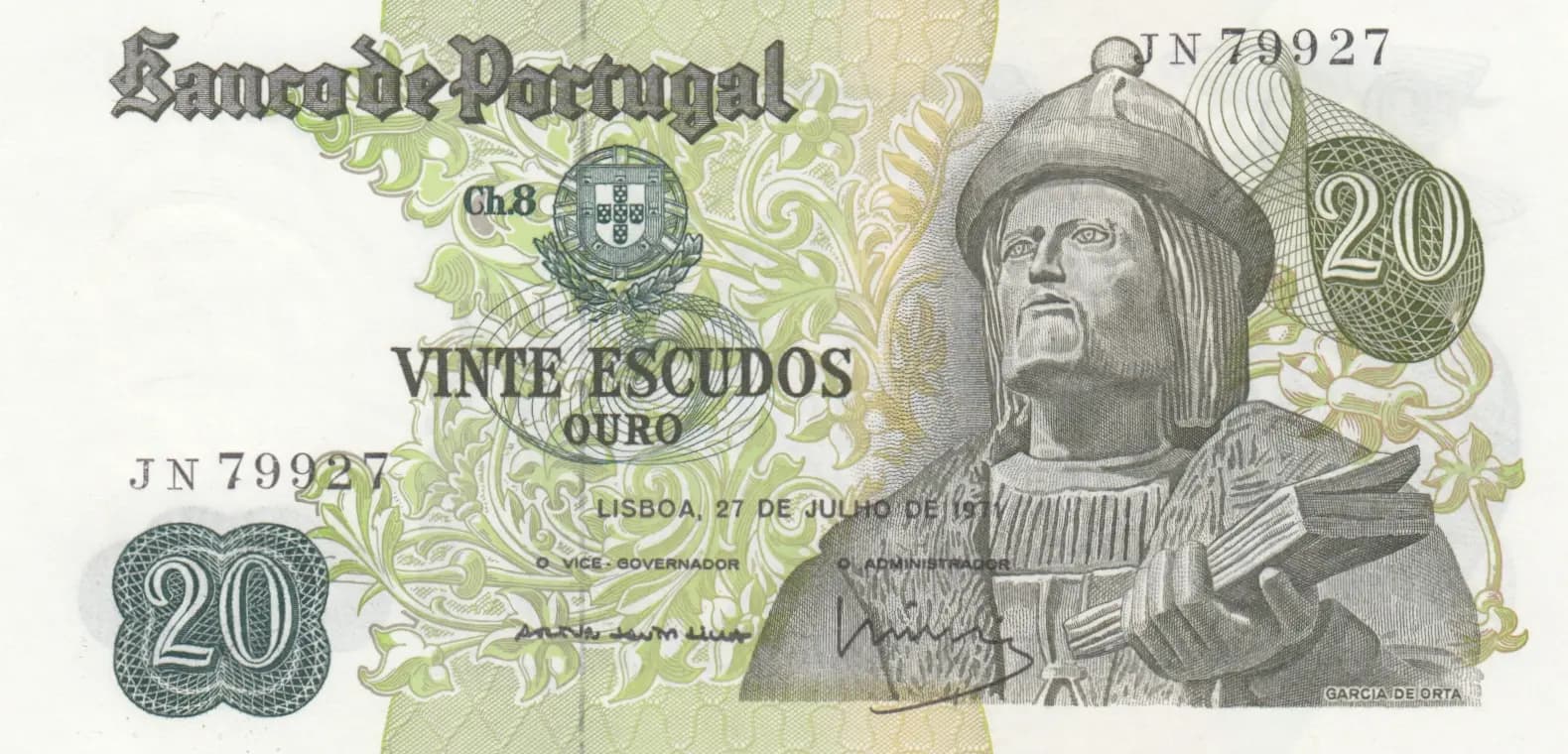
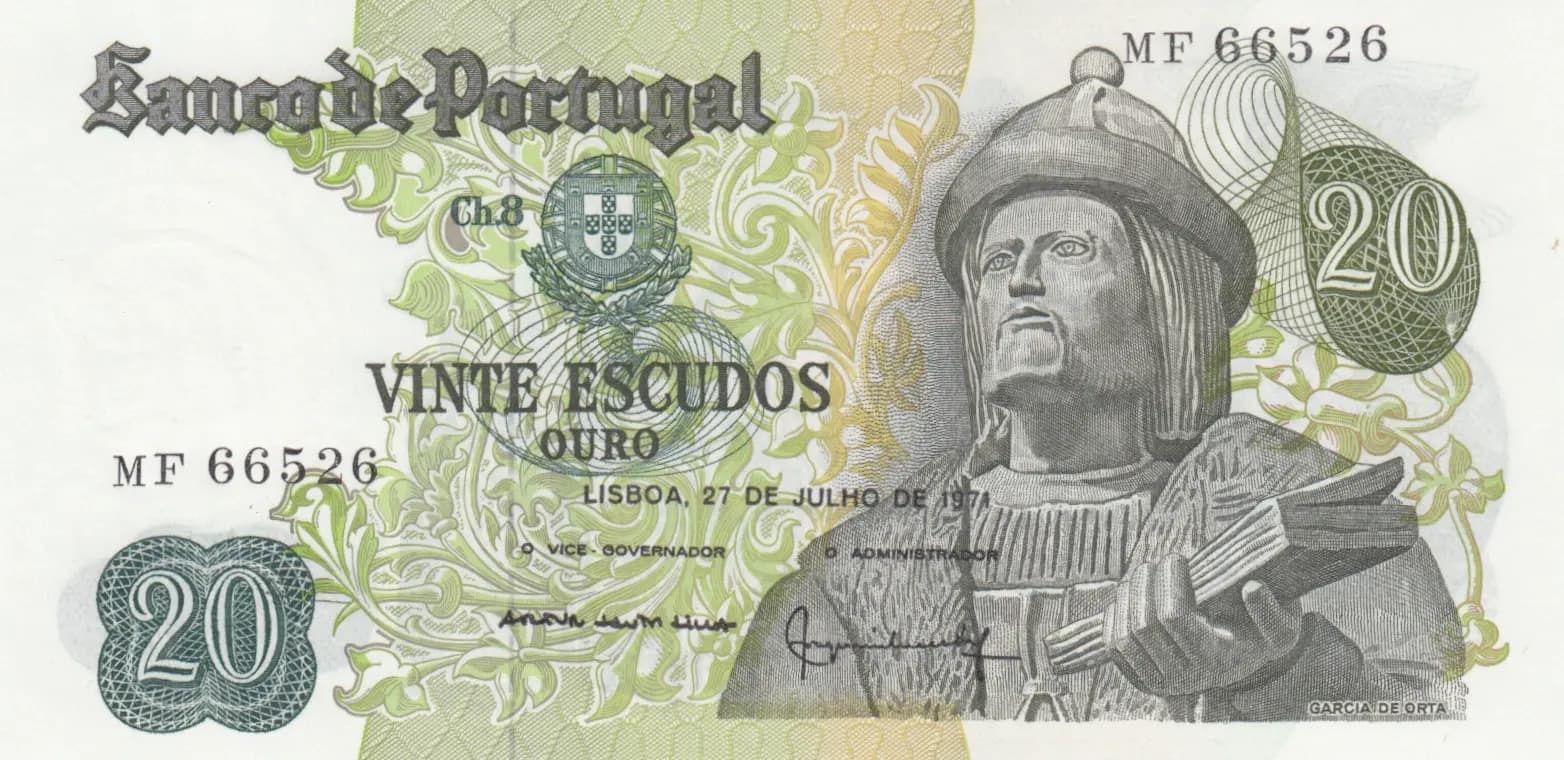
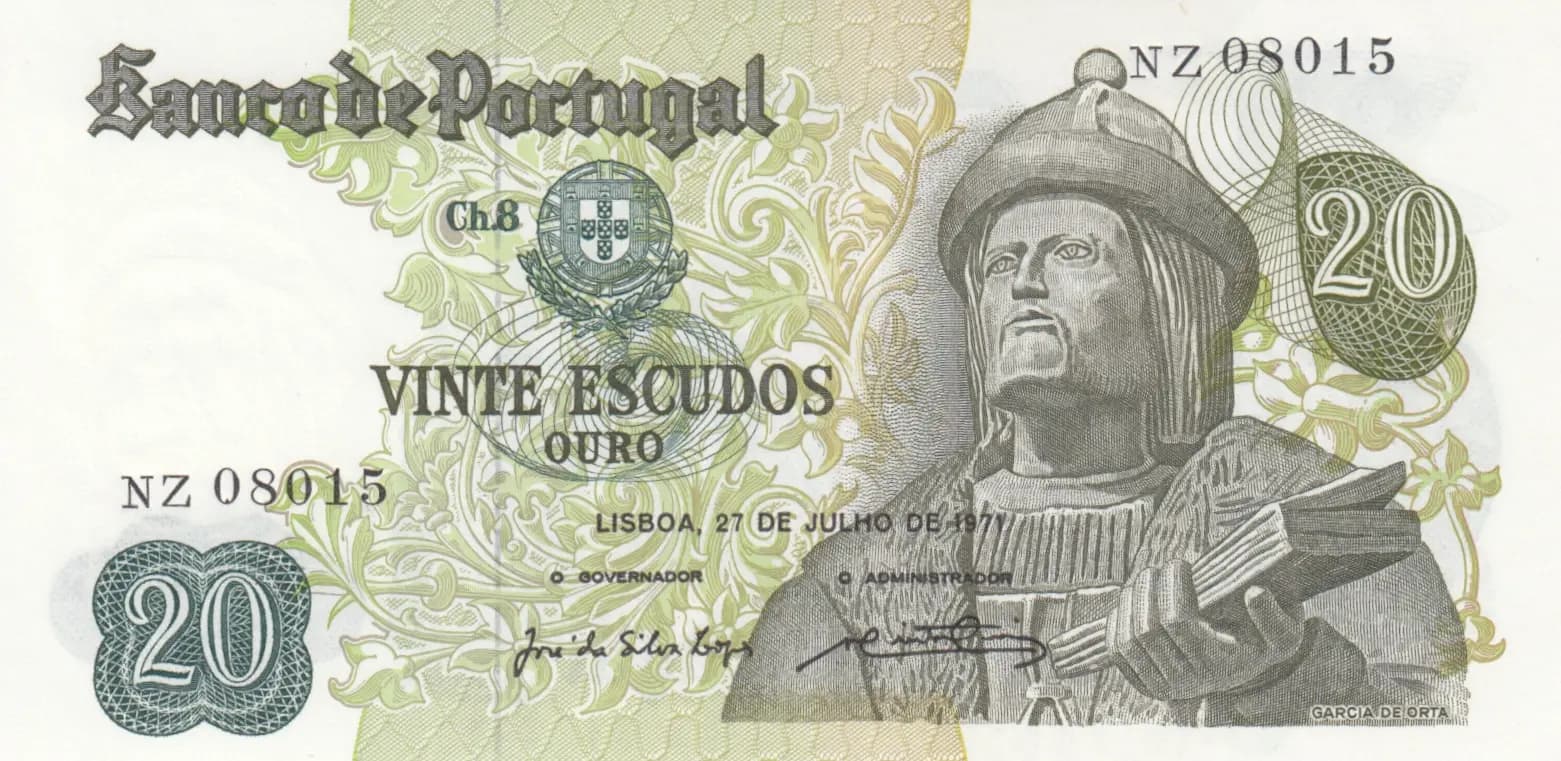
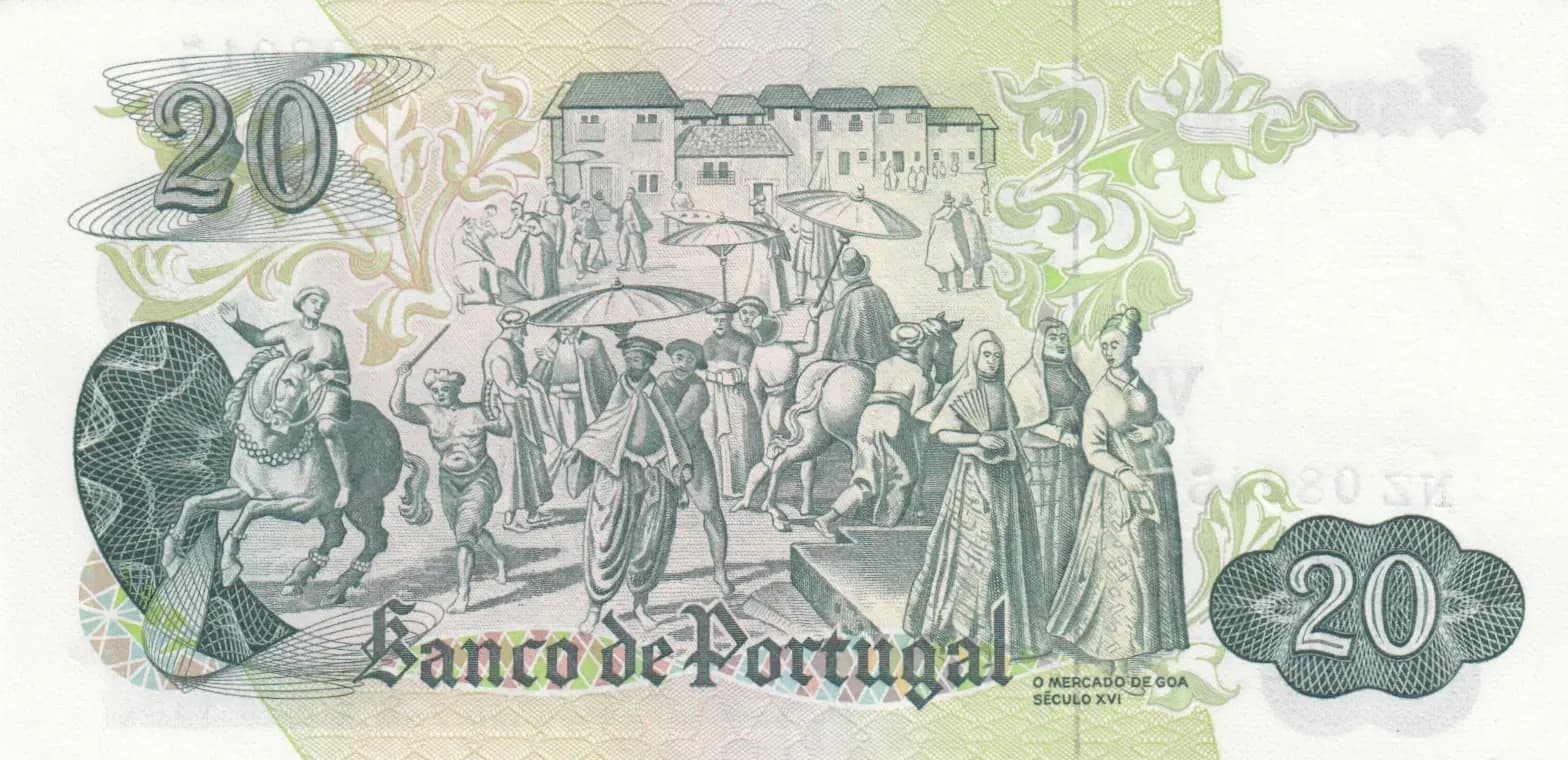
This is a stunning uncirculated example of Portugal's 1971 20 escudos note (Pick P-173), featuring a vibrant green and cream color scheme with exceptional intaglio engraving throughout. The obverse displays a finely detailed portrait of Garcia de Orta facing left in profile, while the reverse showcases an elaborate historical scene of the 16th-century Market of Goa with intricate architectural details and period figures. In UNC condition, this note exhibits no visible wear, creases, or damage, representing an excellent example of Portuguese mid-20th century currency design.
Common. The 20 escudos 1971 note remains abundant in the numismatic market, with extensive eBay price history showing consistent sales across all condition grades. UNC examples regularly sell for $2–$10, and even certified high-grade specimens (PMG 67) average $15–$35, well below thresholds that would indicate scarcity. The catalog value of $8 in UNC condition and the high frequency of sales at modest prices confirm this is a standard, widely circulated issue with no documented scarcity or recall status.
Issued on July 27, 1971, this banknote commemorates Garcia de Orta, the renowned 16th-century Portuguese physician and naturalist who served in Goa during the Portuguese colonial period. The reverse's depiction of the Market of Goa reflects Portugal's significant historical role in colonial trade and exploration, specifically highlighting the importance of Goa as a major Portuguese trading post in Asia during the height of maritime expansion. The note's date of issue falls during the Estado Novo regime, a period when Portugal was still maintaining its overseas territories before the Carnation Revolution of 1974.
The obverse features a distinguished portrait of Garcia de Orta (1501-1568), the celebrated Portuguese physician, naturalist, and author, rendered in fine intaglio engraving in profile facing left. He is depicted wearing period-appropriate 16th-century attire including a wide-brimmed hat and draped clothing. Above the portrait sits the Portuguese coat of arms featuring a shield with the characteristic Portuguese cross pattern. The note is bordered by ornamental scrollwork and flourishes in green and gold tones, with denomination numerals '20' presented in rounded square cartouches on both the left and right sides. The reverse depicts 'O Mercado de Goa' (The Market of Goa), an elaborate historical engraving showing a bustling 16th-century marketplace with multi-story stone buildings exhibiting colonial Portuguese architecture, numerous period-clothed figures engaged in trade, horses, and various commercial activities. The scene is framed by identical ornamental borders matching the obverse design, emphasizing the historical significance of Goa as a major Portuguese trading center during the age of exploration.
Front side: 'Banco de Portugal' (Bank of Portugal), 'VINTE ESCUDOS' (Twenty Escudos), 'OURO' (Gold), 'LISBOA, 27 DE JULHO DE [1971]' (Lisbon, 27 July [1971]), 'VICE-GOVERNADOR' (Vice-Governor), 'GARCIA DE ORTA' (Garcia de Orta), 'Ch. 8' (Chapter/Classification 8), serial number 'MF 66526'. Back side: 'Banco de Portugal' (Bank of Portugal), 'O MERCADO DE GOA' (The Market of Goa), 'SÉCULO XVI' (16th Century).
Intaglio engraving (copperplate/steel engraving), the primary security printing method for Portuguese banknotes of this era. The fine line work visible throughout both sides, the exceptional detail in the marketplace scene, and the intricate background patterns are characteristic of high-quality intaglio production. This note was produced by Banco de Portugal's designated security printer, consistent with Portuguese currency standards of the 1970s.
This note exhibits Chapter 8 (Ch. 8) classification and displays 15 known signature varieties according to catalog references. The serial number prefix 'MF' is visible on this example. Varieties primarily concern signature combinations of Banco de Portugal officials rather than design variations. Collectors should note the specific signature combination and serial number prefix when cataloging examples, as these distinguish individual varieties within the Pick P-173 designation, though all remain common in the marketplace.