2 zlote 1936 uncut pair
Market Prices
21 salesAbout This Note
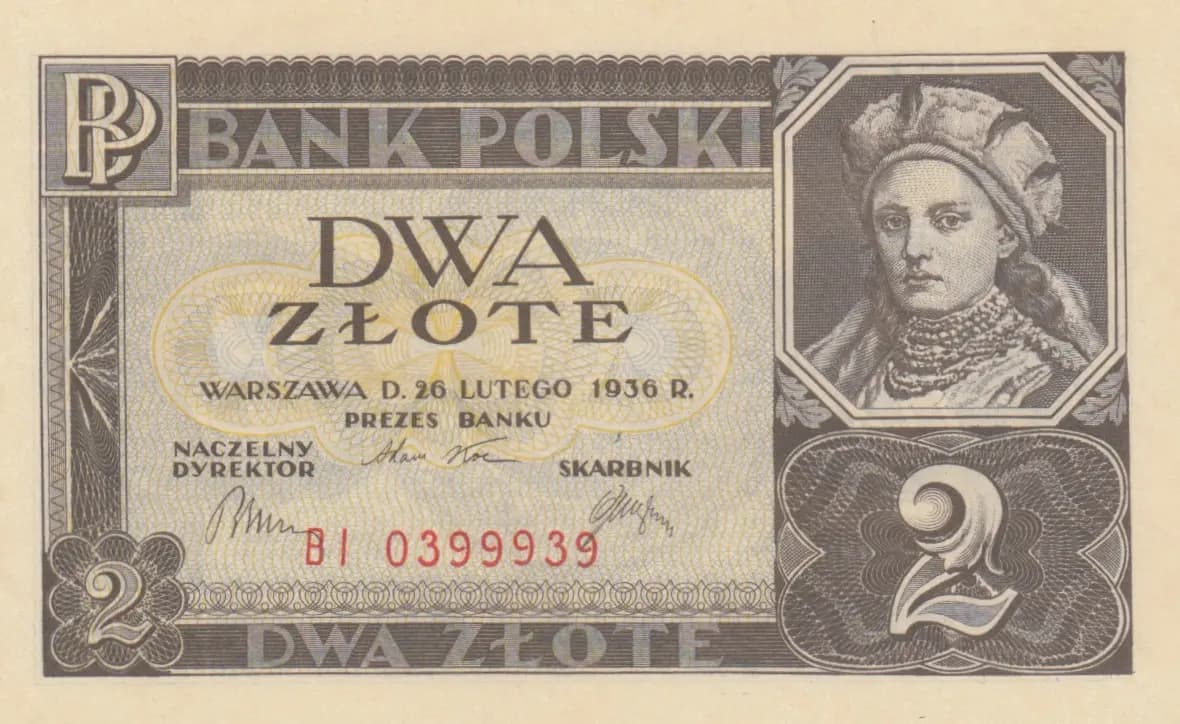
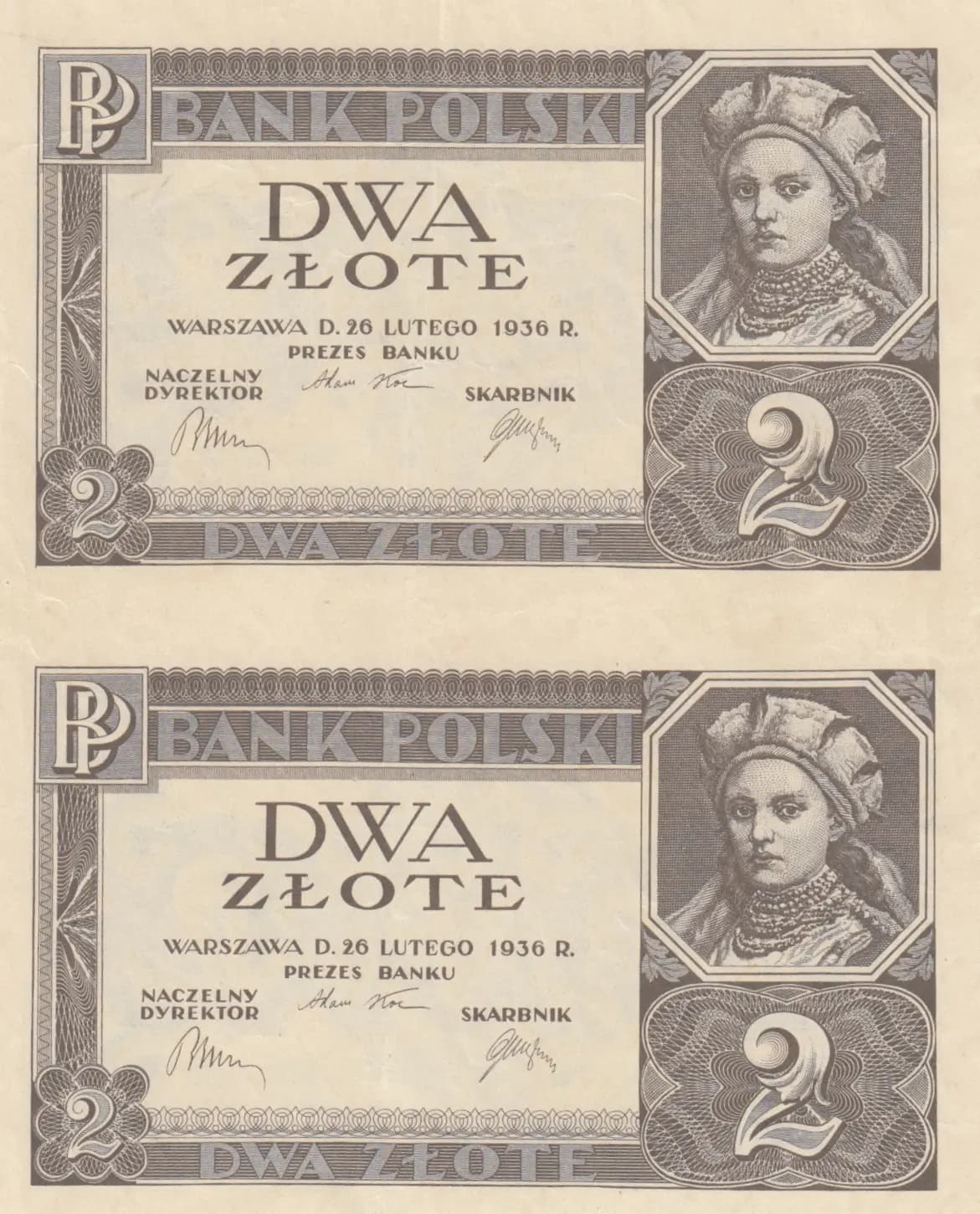
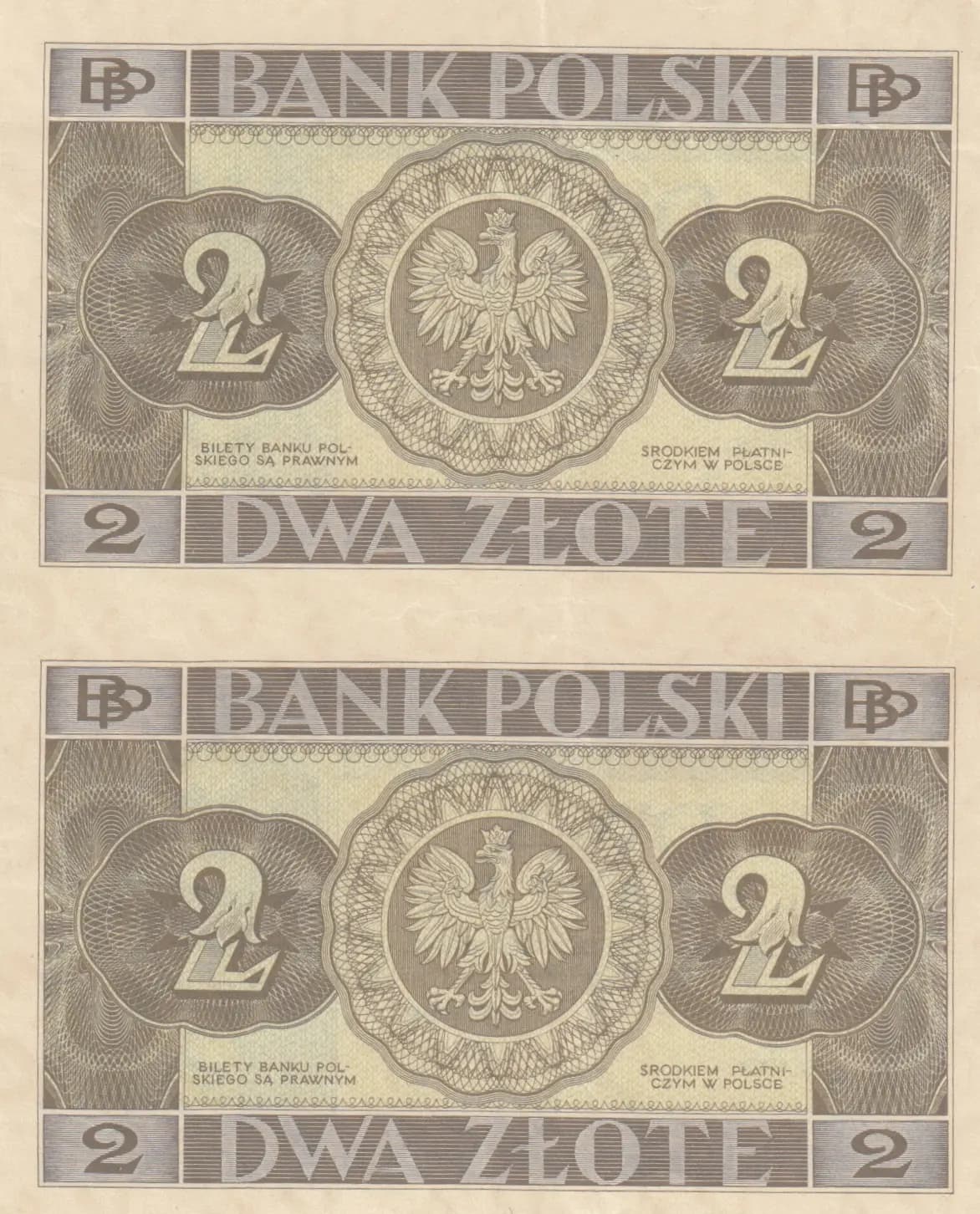
This is an exceptional uncut pair of Polish 2 Złote notes from 1936, presented in pristine uncirculated condition. The sheet displays two identical impressions featuring the iconic portrait of a woman in traditional Dąbrowski regional costume with ornate embroidered headdress on the obverse, and the crowned Polish eagle (national coat of arms) on the reverse. The fine line engraving is sharp and detailed throughout, with no visible wear, creases, or discoloration—a remarkable survivor from the interwar period.
Common. The 2 Złote 1936 is a regular issue with substantial print run and widespread circulation. eBay market data shows consistent sales across multiple condition grades from 2009 to 2023, with UNC examples regularly selling in the $11–$12.50 range and VF examples at $6–$21.50 depending on market conditions and bidder interest. The pricing is stable and modest, consistent with a common note type. Uncut pairs are somewhat more unusual than individual notes but do not command premium pricing that would indicate scarcity.
Issued by Bank Polski on February 26, 1936, this note represents the final years of the Second Polish Republic before World War II. The prominent display of the crowned eagle emphasizes Polish national sovereignty during this period, while the woman in traditional Dąbrowski costume reflects the government's promotion of regional folk identity as part of national cultural policy. The legal tender declaration on the reverse underscores the stabilization of Polish currency following the hyperinflation of the early 1920s.
The obverse features a portrait of a woman wearing the traditional costume of the Dąbrowski region, positioned at right, characterized by an ornate embroidered headdress and beaded necklace rendered in fine detail. The denomination '2' appears in elaborate decorative cartouches on both left and right margins, framed by ornamental scrollwork and geometric borders typical of interwar Polish banknote design. The reverse displays the crowned Polish Eagle (Orzeł Biały) centered within a circular heraldic medallion, surrounded by concentric decorative bands and rosette patterns. The Bank Polski monogram (BP) appears prominently at top center. Both sides employ sophisticated ornamental borders and fine engraved linework throughout, reflecting the high standard of Polish banknote production in the 1930s.
OBVERSE: 'BP BANK POLSKI' (BP Polish Bank); 'DWA ZŁOTE' (Two Zlote); 'WARSZAWA D. 26 LUTEGO 1936 R.' (Warsaw, February 26, 1936); 'PREZES BANKU' (Bank President); 'NACZELNY DYREKTOR' (Chief Director); 'SKARBNIK' (Treasurer). REVERSE: 'BP BANK POLSKI BP' (BP Polish Bank BP); 'DWA ZŁOTE' (Two Zlote); '2' (numeric denomination); 'BILETY BANKU POLSKIEGO SĄ PRAWNYM ŚRODKIEM PŁATNICZYM W POLSCE' (Banknotes of the Polish Bank are legal tender in Poland).
Intaglio (engraved) printing on paper, executed with fine line work characteristic of security printing practices. The sharp detail in the portrait, geometric patterns, and heraldic imagery indicates professional engraving plates and high-quality intaglio production. This printing technique was standard for Bank Polski notes of this period and provided inherent security features through the difficulty of replicating fine engraved linework.
This is an uncut pair (sheet format) of Pick 76, which is a notable presentation form but not a separately cataloged variety. The specific signatures (Prezes Banku, Naczelny Dyrektor, Skarbnik) would be consistent with the February 26, 1936 issue date. Individual notes of this type may exist with varying serial number prefixes, but Pick 76 does not document major signature or overprint varieties. The uncut pair format represents a specialty collector item within the broader P-76 issue.