2 zlote 1948
About This Note
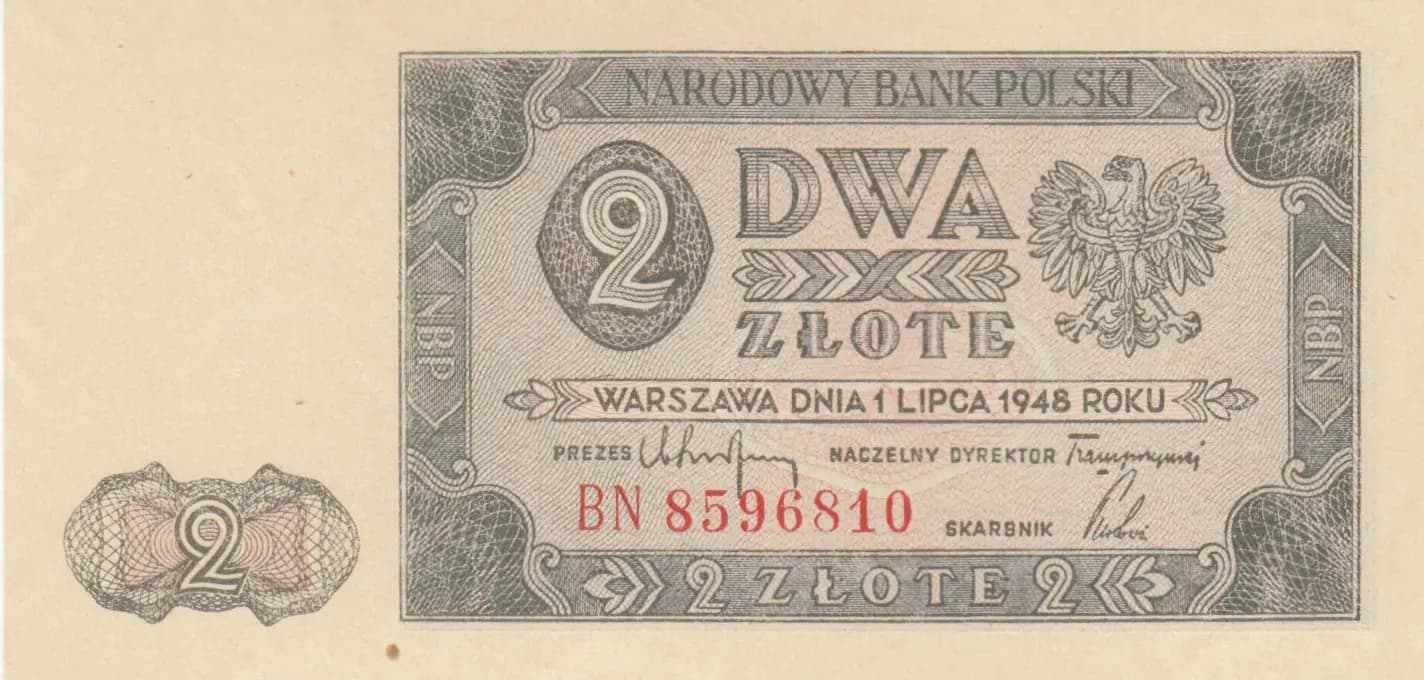
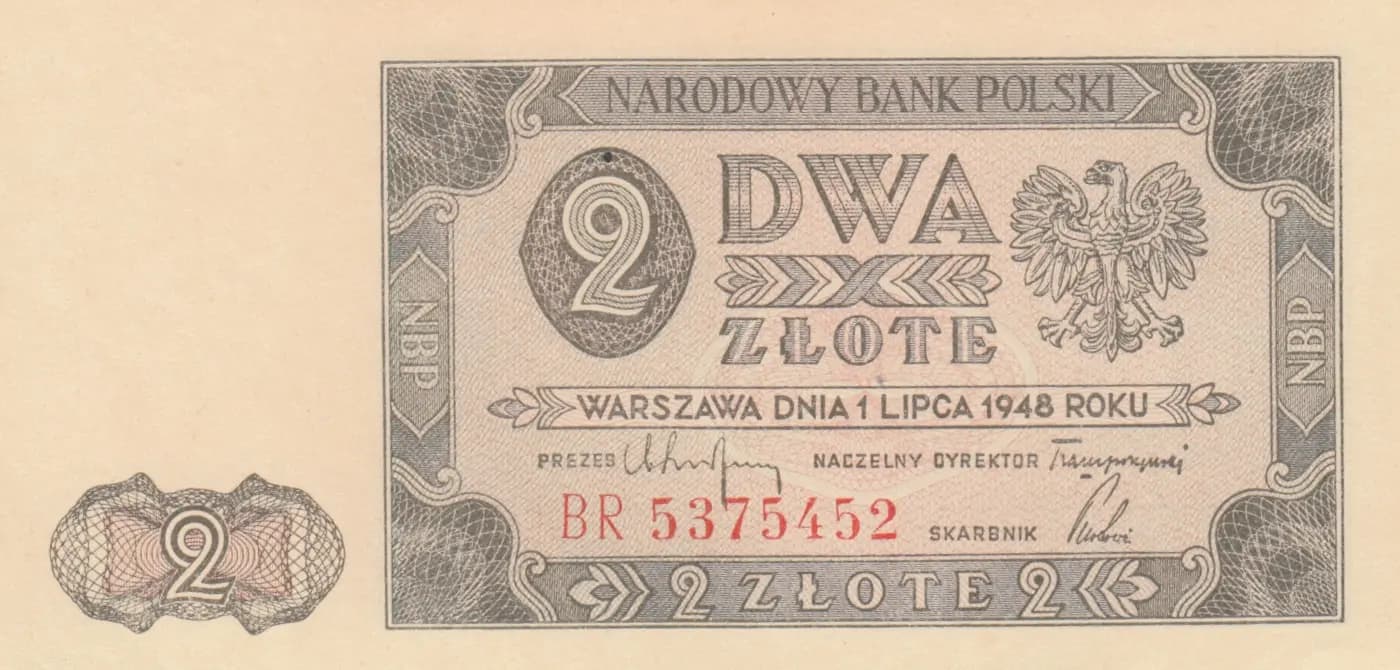
This is a well-preserved example of Poland's 2 Złote banknote from 1948, issued by Narodowy Bank Polski on July 1st in the immediate post-WWII period. The note displays exceptional clarity in its gray and black intaglio printing, with sharp detail throughout the ornamental borders, guilloche work, and the prominent Polish eagle emblem. In uncirculated condition, this note represents an important early emission from the reconstructed Polish state during a critical period of national recovery.
Common. The 1948 2 Złote note (Pick 134) was issued in substantial quantities as part of standard post-war currency circulation. No significant print run restrictions, recalls, or short-lived issuing circumstances are documented for this denomination and date. While early post-WWII Polish currency has numismatic interest, this specific note remains readily available in the collector market, particularly in lower grades. UNC examples command modest premiums but are not scarce.
This 2 Złote note was issued on July 1, 1948, by the National Bank of Poland as part of the early post-World War II monetary stabilization efforts. The prominent Polish eagle (Orzeł Białego Narodu) featured on the front symbolized the restoration of Polish sovereignty and national identity following the devastation of occupation. The formal governmental inscriptions and the deliberate design restraint reflect the serious economic conditions and the re-establishment of legitimate state financial authority during the reconstruction period.
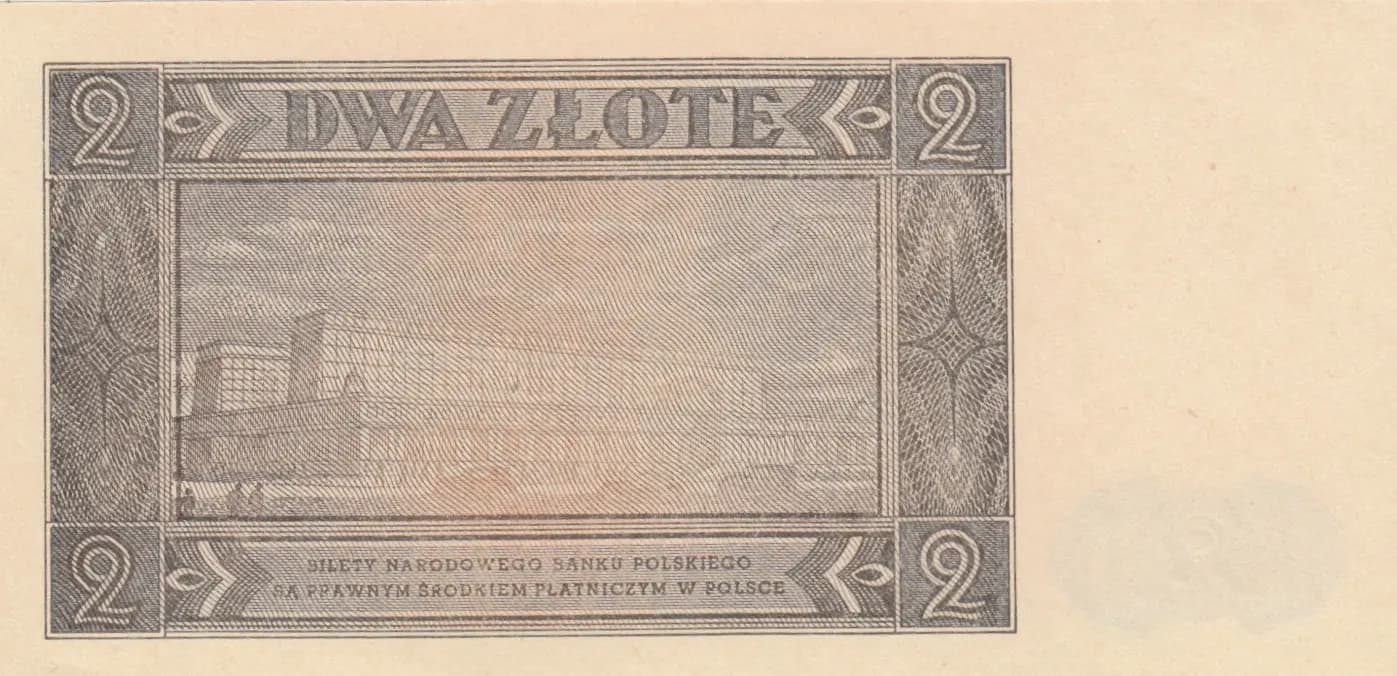
The front features a classical design centered on a large oval medallion containing the numeral '2', flanked by the Polish eagle emblem in the upper right corner. The composition employs symmetrical ornamental borders with fine scrollwork and corner ornaments typical of post-war European banknote design. The reverse side presents a deliberate minimalist approach with an empty rectangular central frame bordered by decorative elements, with the numeral '2' positioned in all four corners. This design choice reflects the austere aesthetic common to immediate post-WWII currency issues. The overall design vocabulary emphasizes state authority and legitimacy through formal heraldic symbolism rather than portraiture.
FRONT SIDE: 'NARODOWY BANK POLSKI' (National Bank of Poland) | 'DWA ZŁOTE' (Two Zlote) | 'WARSZAWA DNIA 1 LIPCA 1948 ROKU' (Warsaw, July 1, 1948) | 'PREZES' (President) | 'NACZELNY DYREKTOR' (Chief Director) | 'SKARBNIK' (Treasurer) | 'NBP' (National Bank of Poland acronym) | Serial number: 'BR 5375452' | BACK SIDE: 'DWA ZŁOTE' (Two Zlote) | 'SKARBU NARODOWEGO SANKU POLSKIEGO' (Polish National Treasury Bank) | 'A PRAWNYM ŚRODKIEM PŁATNICZYM W POLSCE' (and legal tender in Poland)
Intaglio printing (engraving and steel plate printing), evidenced by the fine line work, complex guilloche patterns, and the sharp, deeply impressed detail visible throughout. The consistent quality and technical sophistication indicate production by a professional security printing establishment, likely the Polish State Printing Works (Państwowa Drukarnia Papierów Wartościowych) or a similar government-controlled facility capable of producing currency-grade materials.
The observed serial number 'BR 5375452' indicates a standard issue note. Known varieties for Pick 134 (2 Złote 1948) include variations in signatures of officials (President, Chief Director, and Treasurer positions changed periodically) and serial number prefixes. The 'BR' prefix observed on this example represents one of several letter combinations used. No major overprints, color variations, or printing errors have been documented as standard varieties for this Pick number, though individual examples may show minor printing characteristics typical of the era.