100 zlotych 1946
Market Prices
19 salesAbout This Note
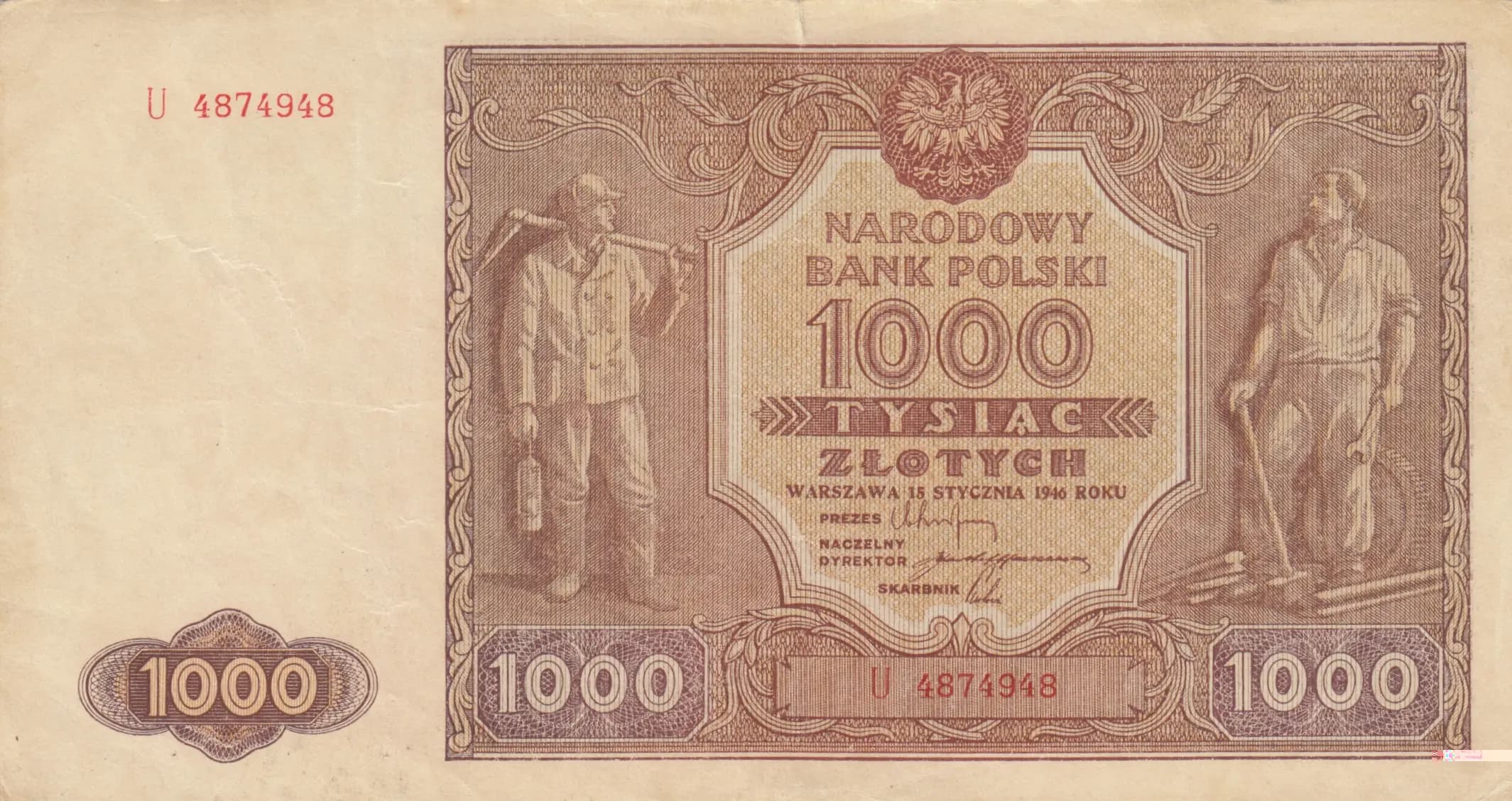
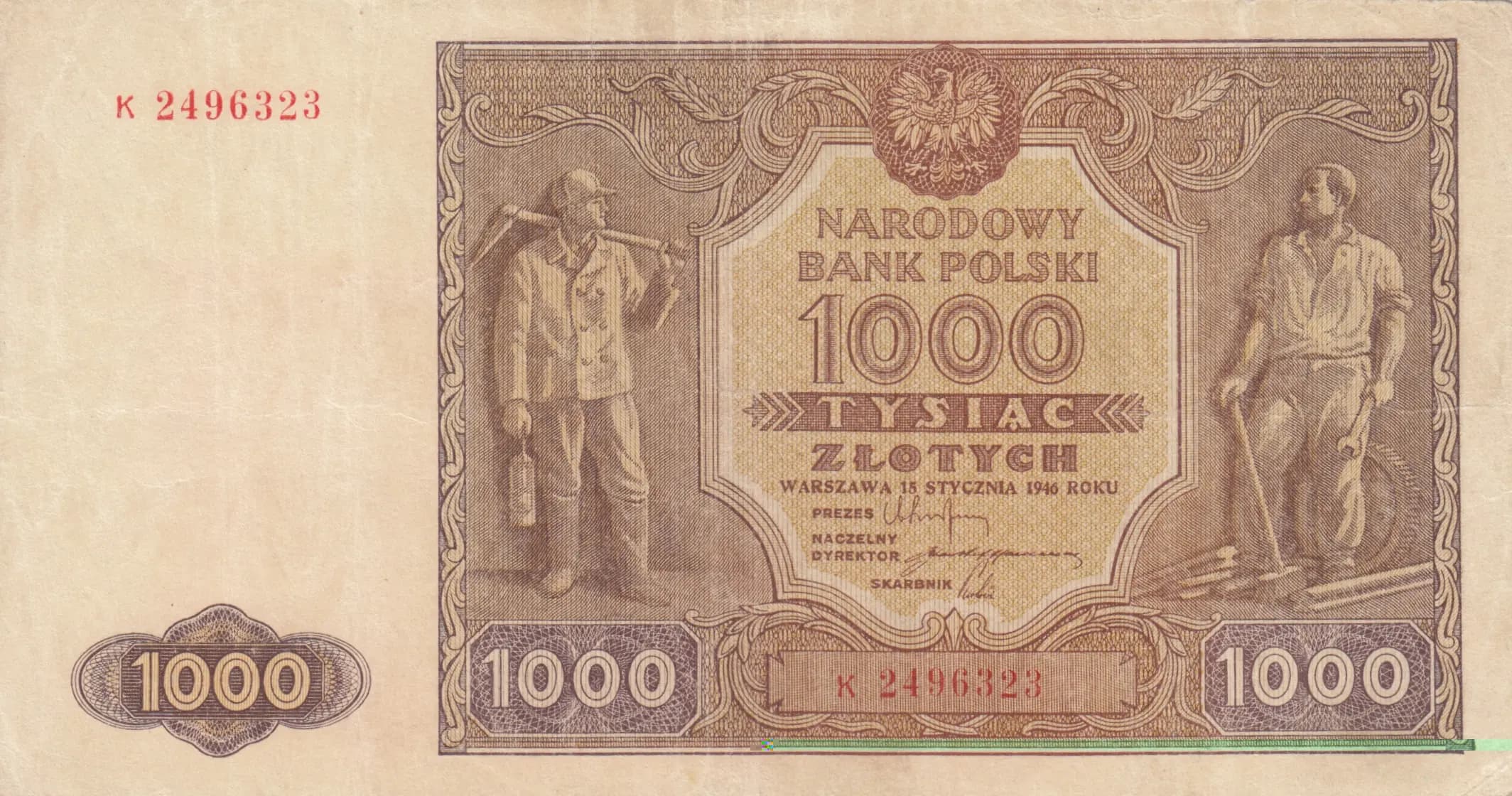
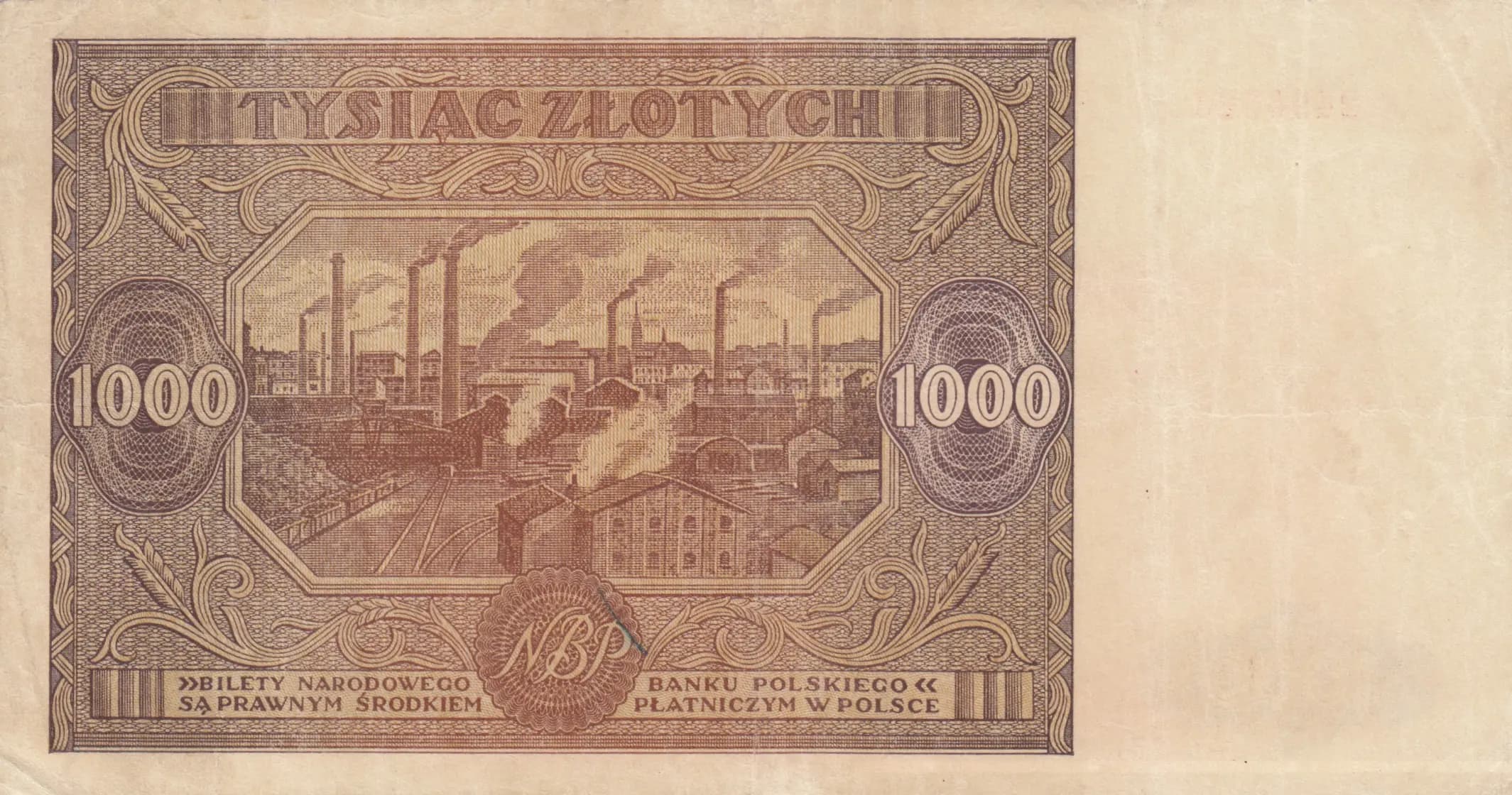
This is a Polish 1000 zlotych banknote from January 15, 1946, issued by Narodowy Bank Polski during the immediate post-WWII reconstruction period. The note presents in VF condition with excellent preservation, featuring allegorical figures flanking ornate decorative borders on the obverse and an impressive industrial landscape on the reverse. The pristine state and fine engraving details make this an attractive example of early post-war Polish currency.
Common. The eBay market data provided shows consistent sales in the F-VF range between $8-$50 across multiple decades (2013-2022), with VF examples regularly selling in the $12-$43 range. The 2016 catalogue value of $50 for VF condition aligns with observed market activity. The large print runs typical of 1946 post-war currency, combined with the steady but modest secondary market prices, indicate this is a commonly available note in circulated and VF grades. No evidence of scarcity or premium rarity.
Issued just months after Poland's liberation, this 1946 banknote reflects the nation's focus on industrial reconstruction and modernization following World War II. The reverse's prominent depiction of factory buildings, smokestacks, and industrial infrastructure symbolizes Poland's commitment to rebuilding its manufacturing capacity and economic independence under the newly established communist-aligned government. The allegorical female and male figures on the obverse represent Polish national ideals of labor, progress, and artistic culture during this pivotal reconstruction era.
The obverse features a symmetrical classical design with an allegorical female figure on the left (representing arts, culture, or progress, holding artistic implements) and a male figure on the right in classical contrapposto pose. These flank the central denomination and issuer information. The Polish state eagle (coat of arms) appears prominently at the top center. Ornamental rosettes and elaborate scrollwork frame the composition in all corners. The reverse showcases a detailed engraved panorama of an industrial complex with multiple factory smokestacks, manufacturing buildings, and urban infrastructure—a deliberate iconographic choice emphasizing Poland's industrial recovery. Decorative circular medallions and ornamental flourishes complete the border design throughout. The color palette is predominantly brown and tan on cream paper, typical of 1946-era intaglio printing.
FRONT: 'NARODOWY BANK POLSKI' (National Bank of Poland); '1000' and 'TYSIAC ZLOTYCH' (One Thousand Zlotych); 'WARSZAWA 15 STYCZNIA 1946 ROKU' (Warsaw, January 15, 1946); 'PREZES' (President); 'NACZELNY DIREKTOR' (Chief Director); 'SKARBNIK' (Treasurer); Serial number 'U 4874948'. BACK: 'TYSIACZLOTYCH' (One Thousand Zlotych); '1000'; 'BILETY NARODOWEGO BANKU POLSKIEGO SA SPRAWNYM SRODKIEM PLATNICZYM W POLSCE' (Banknotes of the National Bank of Poland are legal means of payment in Poland); 'BANKU POLSKIEGO' (Bank of Poland).
Intaglio engraving (copperplate) on cream-colored paper. The intricate line work, fine hatching in the industrial scene, and detailed border ornamentation are characteristic of high-quality intaglio production. The security features, while minimal by modern standards, include the complexity of the engraved design itself. The printer for Polish Narodowy Bank Polski notes of this period was typically PWN (Państwowa Wytwórnia Papierów Wartościowych), the state security printing works.
This note is catalogued as P-122 (1000 zlotych) by Pick. The serial number observed is 'U 4874948,' with the 'U' prefix being a standard letter designation for this issue. The date is fixed as January 15, 1946 (15 STYCZNIA 1946 ROKU). Standard varieties for this Pick number relate to serial number prefixes (typically single letter designations A-Z) and minor variations in signature blocks, though no major varieties have been documented for P-122. The specimen presented appears to be from the standard circulation printing.