50 centavos 1942
“Cagayan”
Market Prices
About This Note
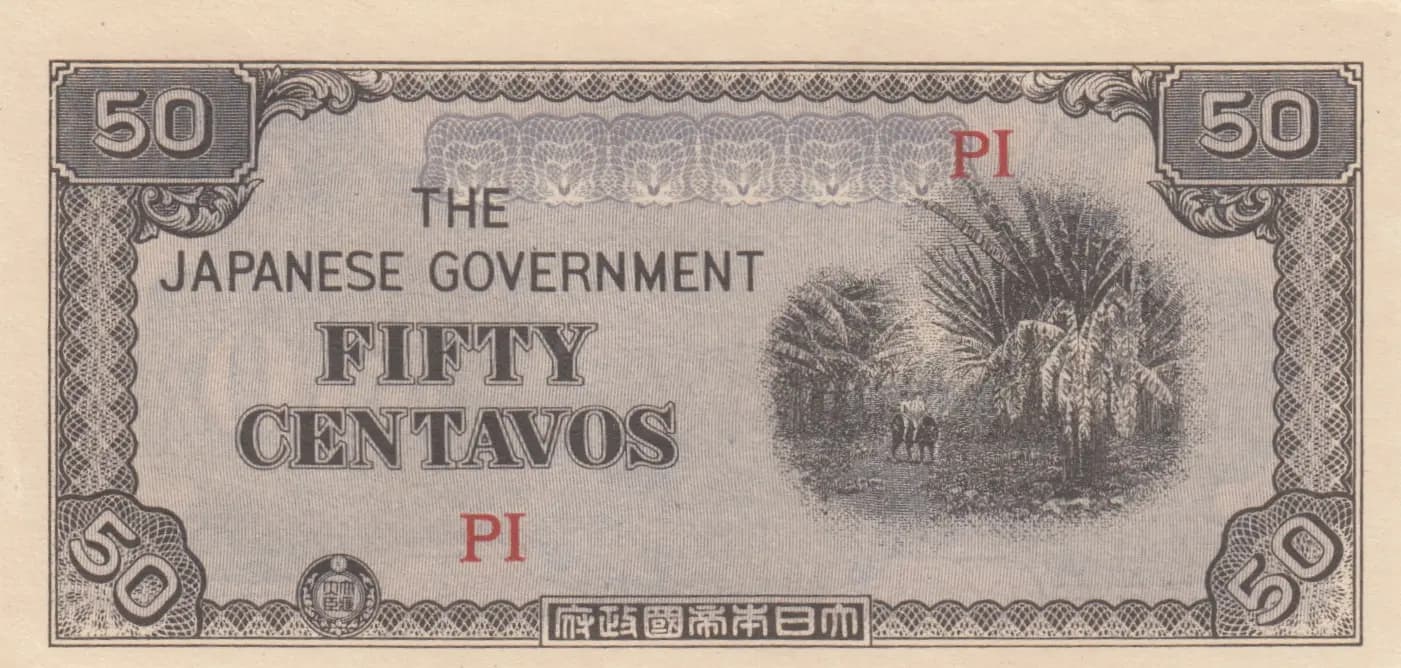
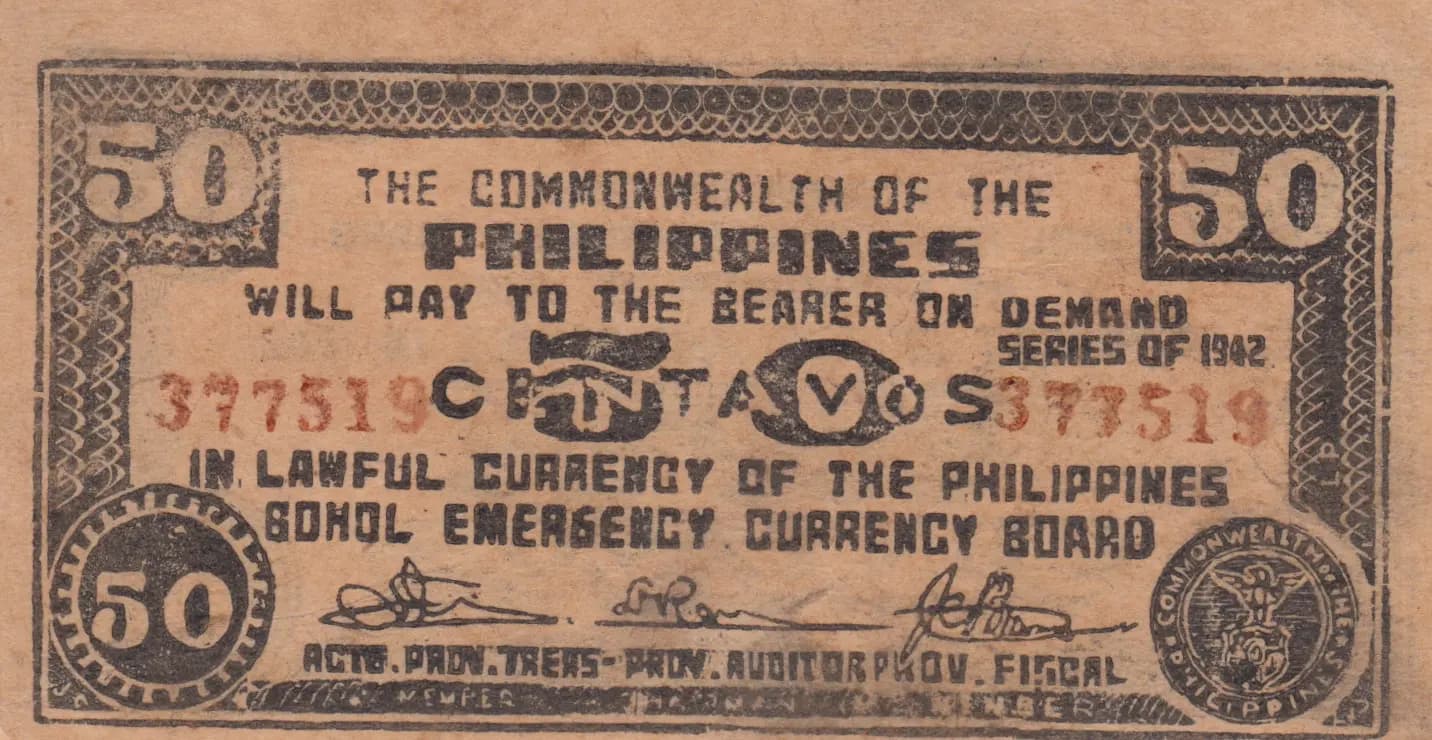
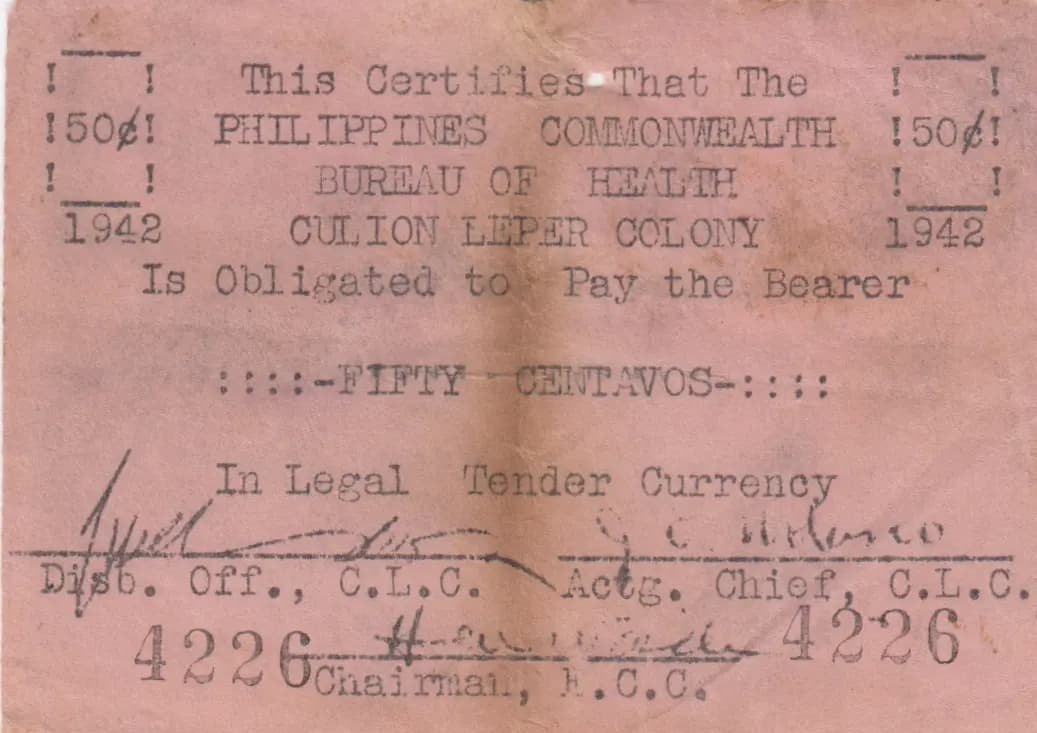
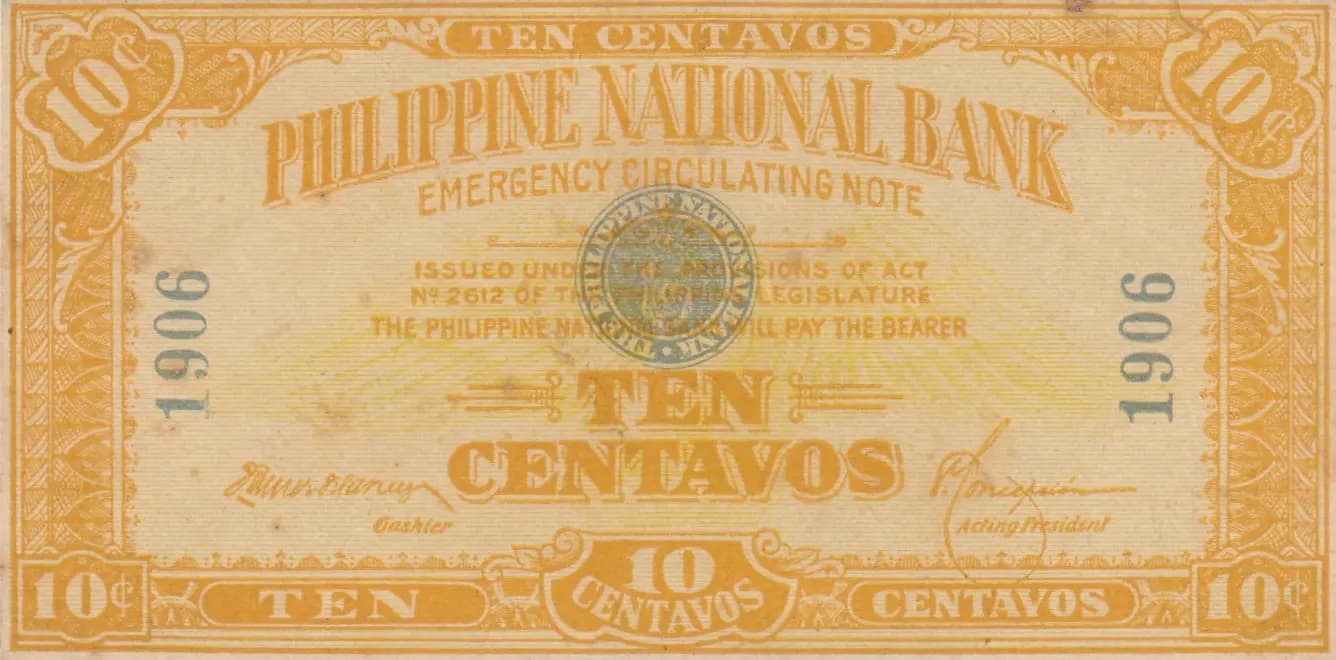
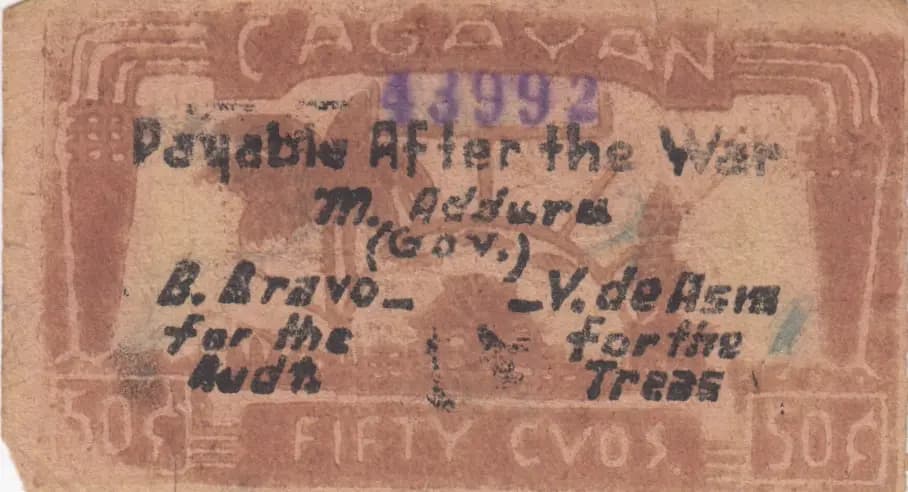
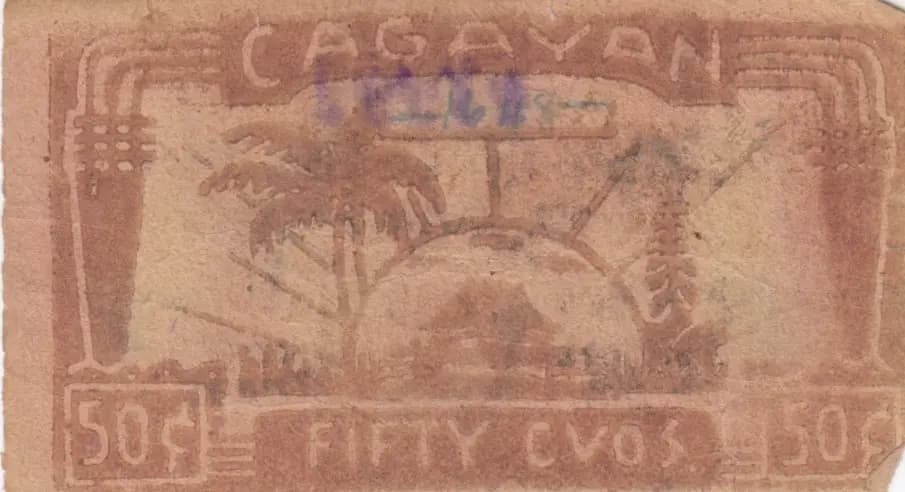
This is a Philippines 50 centavos banknote from 1942, issued by the Commonwealth of the Philippines during a critical period of the nation's history. The note exhibits Fair condition with significant aging, foxing, and creasing throughout, along with collector annotations and blue/purple stamp markings that obscure much of the original design. The reverse displays an eagle with spread wings in a central oval motif, a patriotic symbol characteristic of Philippine currency from this era, making it a historically significant example of wartime Philippine numismatics.
Common. eBay market data shows Fair-condition examples of this note selling for approximately $20.00 USD, with other condition grades trading between $0.99 and $30.00 USD. The wide range of listings and consistent availability across multiple condition grades indicates this is a regularly encountered note in the collector market. The 1942 50 centavos was part of a standard issue with substantial print runs during the Commonwealth period, and many examples survive in various conditions.
The 1942 50 centavos note was issued during the final year of Commonwealth administration before the Japanese occupation of the Philippines in World War II. The eagle symbolism on the reverse reflects the Commonwealth period's embrace of American-influenced iconography and Filipino national identity. This note represents a transitional period in Philippine numismatic history, as currency production would soon be disrupted by wartime circumstances.
The reverse features a central circular or oval medallion containing an eagle with spread wings, a traditional symbol of authority and national pride used throughout Philippine banknotes of the Commonwealth period. The eagle design serves as the primary decorative element, surrounded by ornamental border patterns and geometric designs in the corners. The denomination is marked in the lower corners with '50' and 'FIFTY CVOS.' The obverse (front) displays similar decorative corner patterns with geometric border elements typical of early 20th-century Philippine currency design. The overall design aesthetic reflects the influence of American currency design conventions combined with Filipino numismatic traditions.
Front side: Reference number '14942' (catalog or collection marking); Handwritten collector annotations reading 'Parable After the War,' 'm. Osborne (ca.),' 'B. Atavo__V. de Buen,' 'for the,' 'such,' and 'Trees' (these appear to be collector notes or provenance documentation rather than original note inscriptions). Back side: Denomination '50' and 'FIFTY CVOS' (Fifty Centavos in English/Spanish hybrid format); Geographic designation 'CAGAYAN' (referring to the Cagayan region of the Philippines).
The note exhibits characteristics consistent with intaglio printing (engraved/relief printing), evidenced by the embossed appearance of the central eagle motif and the dimensional quality of the border designs visible on the reverse. The decorative corner patterns and denomination markings show the precision typical of intaglio processes used by international security printers for Commonwealth Philippine currency during this period. The faded but still-discernible raised imagery confirms relief printing methodology.
This specific example is identified as Cagayan variety based on the 'CAGAYAN' inscription visible on the reverse, which may indicate either a regional issue or a collector designation related to provenance. The Pick catalog number P-S185 suggests this is a standard Commonwealth issue. No evidence of date variations, signature varieties, or serial number prefixes that would indicate distinct subtypes is clearly visible in the images, though collector annotations obscure potential diagnostic features on the obverse.