5 pesos 1943
Market Prices
10 salesAbout This Note
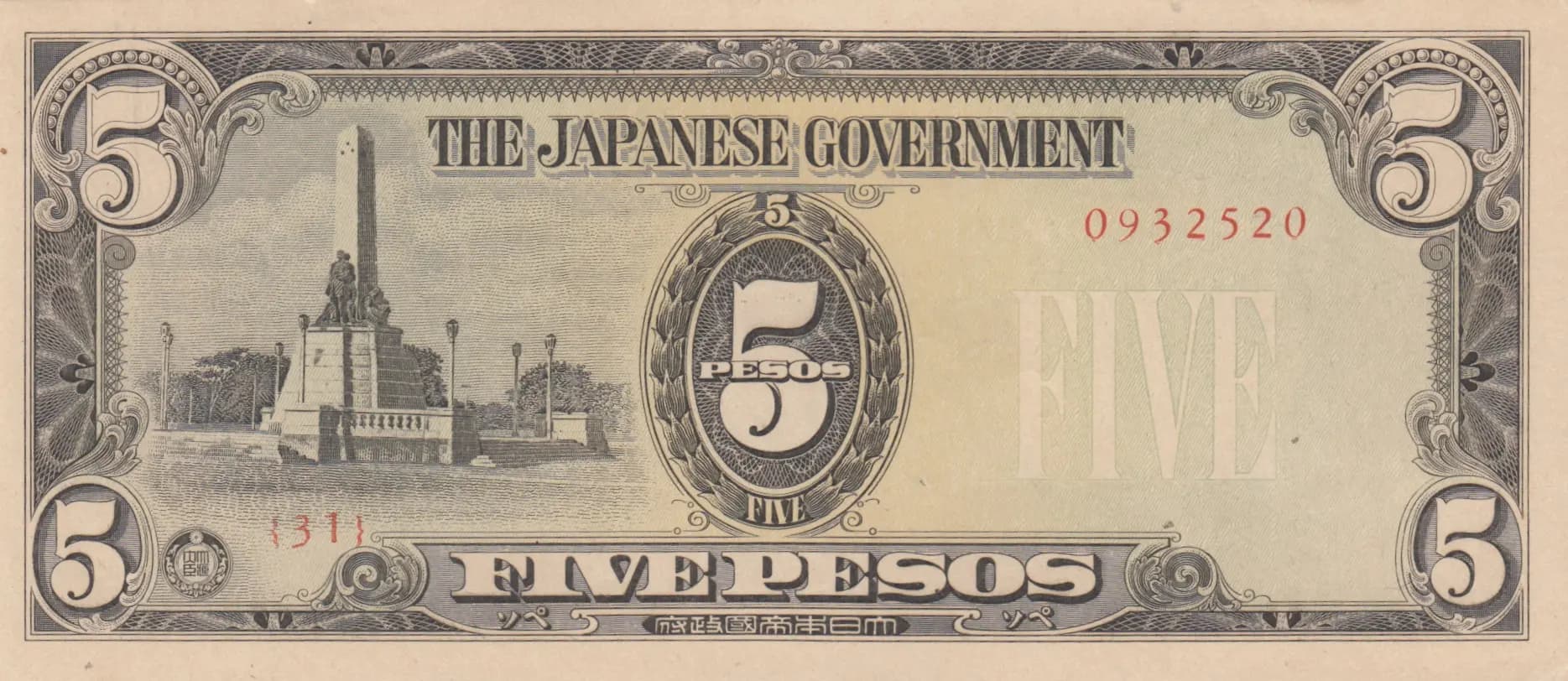
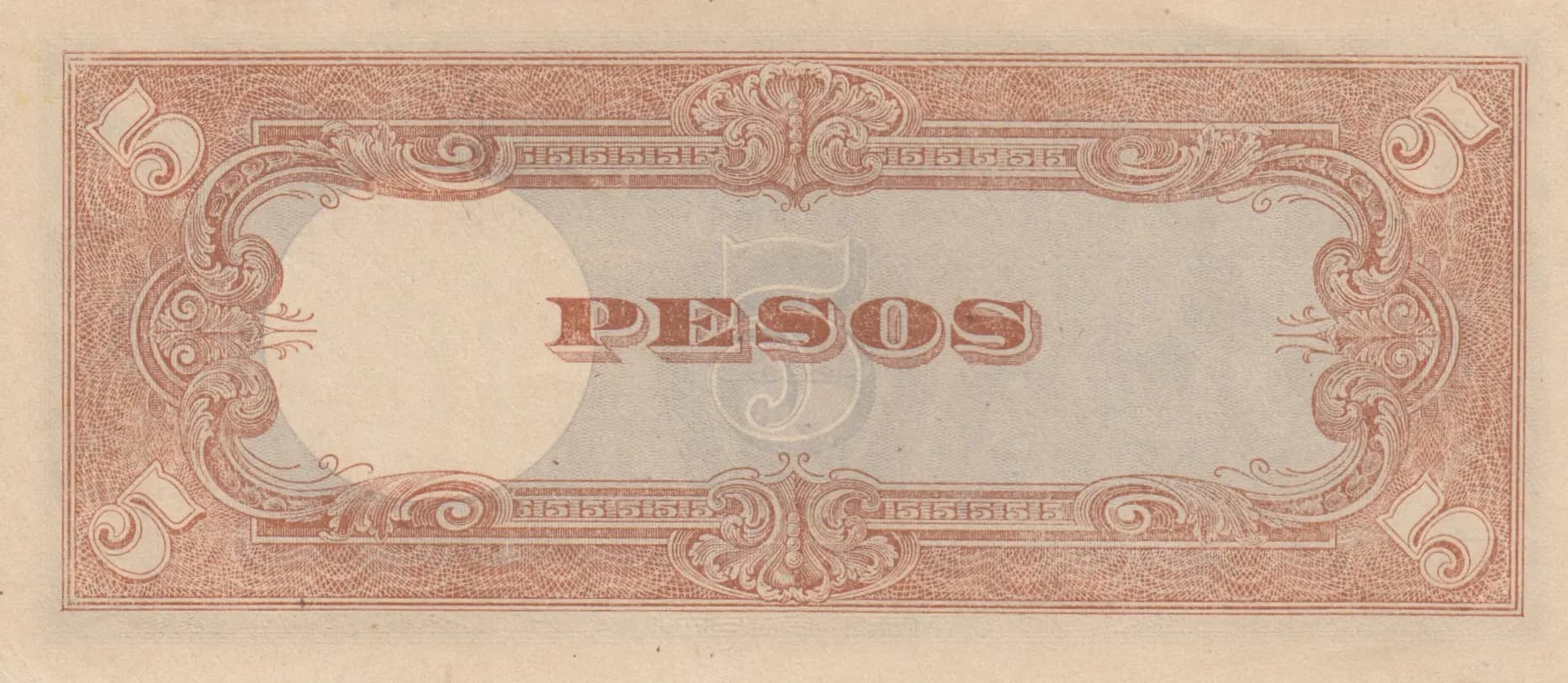
This is a Philippine 5 pesos note issued by the Japanese Government in 1943, graded AU (About Uncirculated), representing a fascinating monetary artifact from the Japanese occupation period. The note features a striking obverse design with the iconic Rizal Monument in Manila rendered in fine engraving, bordered by elaborate ornamental scrollwork, while the reverse maintains the decorative theme with minimal central design. Despite its historical significance and the occupation-era context, this note remains common in the collector market, with recent eBay sales in fine condition averaging under $1, though AU specimens command slightly higher premiums reflecting their superior preservation.
Common. The eBay market data shows consistent sales of this note in Fine condition at $0.50-$0.99, with VF specimens reaching approximately $0.75-$1.55, and catalog values (2016) listing UNC at only $2.75. The substantial print run of Japanese occupation currency and the large surviving quantities in collector hands indicate this was a high-volume issue. AU specimens command slight premiums over circulated grades but remain affordable and readily available in the secondary market, confirming common status.
Issued during Japan's occupation of the Philippines (1942-1945), this note represents the Japanese Government's attempt to establish administrative control through monetary issuance in occupied territories. The inclusion of the Rizal Monument—honoring Filipino national hero Jose Rizal—on the obverse demonstrates an effort to co-opt Philippine national symbolism, while the bilingual inscriptions (English and Japanese) reflect the occupation regime's dual messaging. These notes, produced in substantial quantities for circulation in the occupied islands, have survived in notable quantities, making them common historical artifacts rather than scarce military occupation currency.
The obverse features a classically composed design with 'THE JAPANESE GOVERNMENT' prominently displayed at the top in large capital letters. The central focal point is a large numeral '5' enclosed within an ornate oval frame containing a laurel wreath—a symbol of achievement and authority. To the left is an engraved illustration of the Rizal Monument in Manila, depicted as a tall obelisk on a plaza surrounded by architectural structures, rendered in fine detail characteristic of high-security currency engraving. Decorative scrollwork and floral patterns dominate all four corners. The reverse presents a minimalist design with the word 'PESOS' centered prominently, maintaining the elaborate decorative border style of the obverse without additional pictorial elements. The color scheme consists primarily of tan/beige, black, and red inks on a cream-colored base stock.
Front side: 'THE JAPANESE GOVERNMENT' (English, top); 'FIVE' and 'PESOS' (English, denominations); '日本国政府' (Japanese: 'Japanese Government'); Serial number '0932520' in red; Mark '+311'. Back side: 'PESOS' (English, center); '5' (numeric denomination).
This note was produced using intaglio (engraved) printing, evidenced by the fine line engraving visible throughout the note, particularly in the detailed rendering of the Rizal Monument, the ornate oval frame, and the elaborate corner scrollwork and floral patterns. The precision of the line work and the depth of impression characteristic of intaglio printing are consistent with security currency production standards of the period. The Japanese occupation currency issues were typically produced by the Japanese Government Printing Bureau or contracted security printers, utilizing high-quality engraved plates to prevent counterfeiting.
The serial number observed (0932520) indicates this specimen is from a standard printing. Known varieties for Pick 110 include different serial number ranges and printing batches. The red serial number and '+311' marking are consistent with standard issuance characteristics. No overprints or special markings that would indicate a rare variety are evident on this specimen. Detailed variety information for this Pick number would require comparison of serial number ranges across multiple specimens, which is not indicated in the provided catalogs.