2 pesos 1942
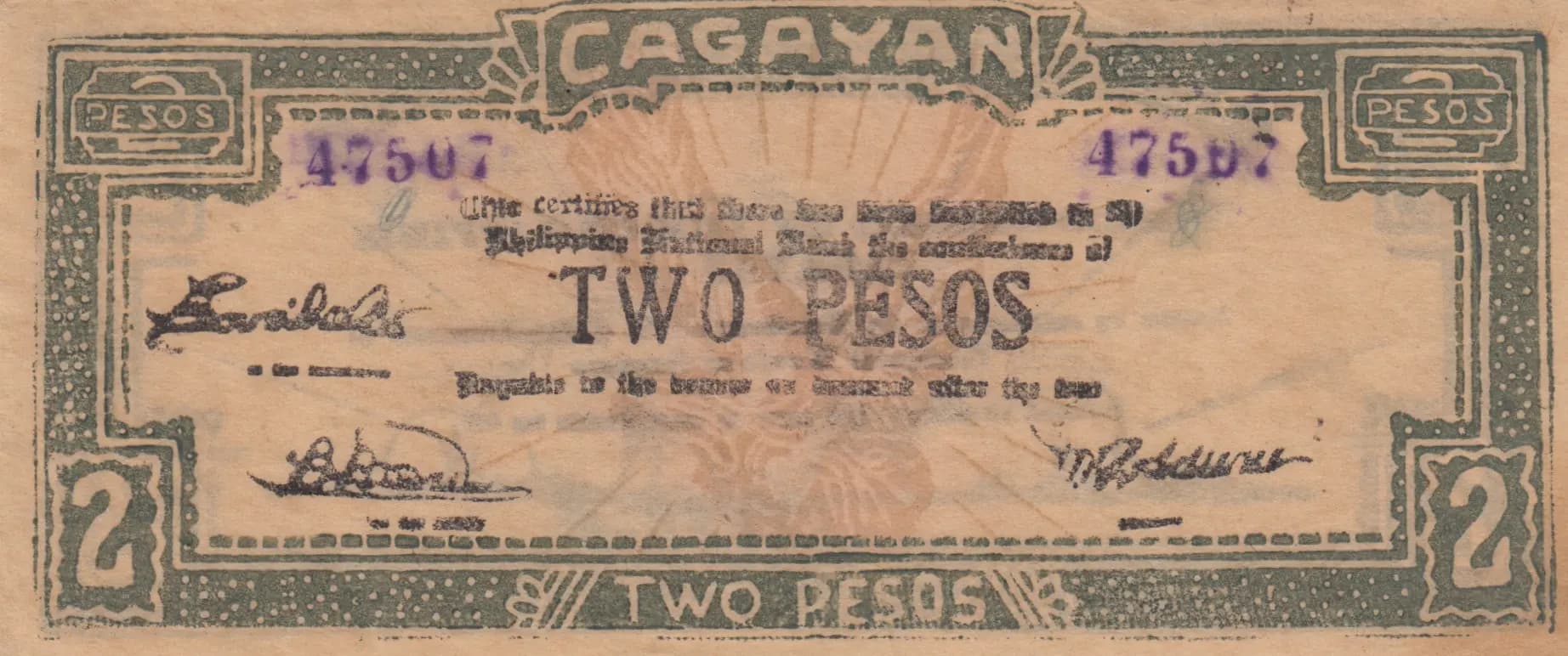
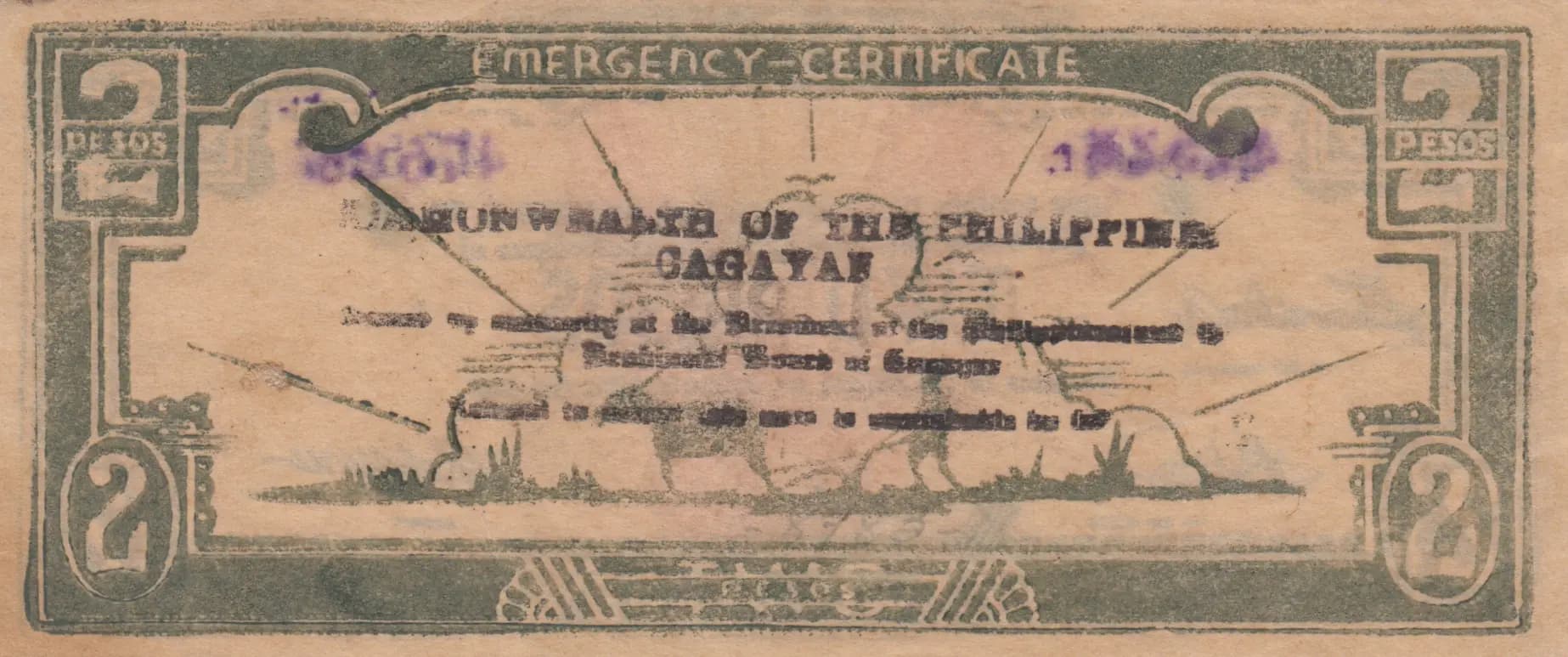
“Cagayan”
Market Prices
About This Note
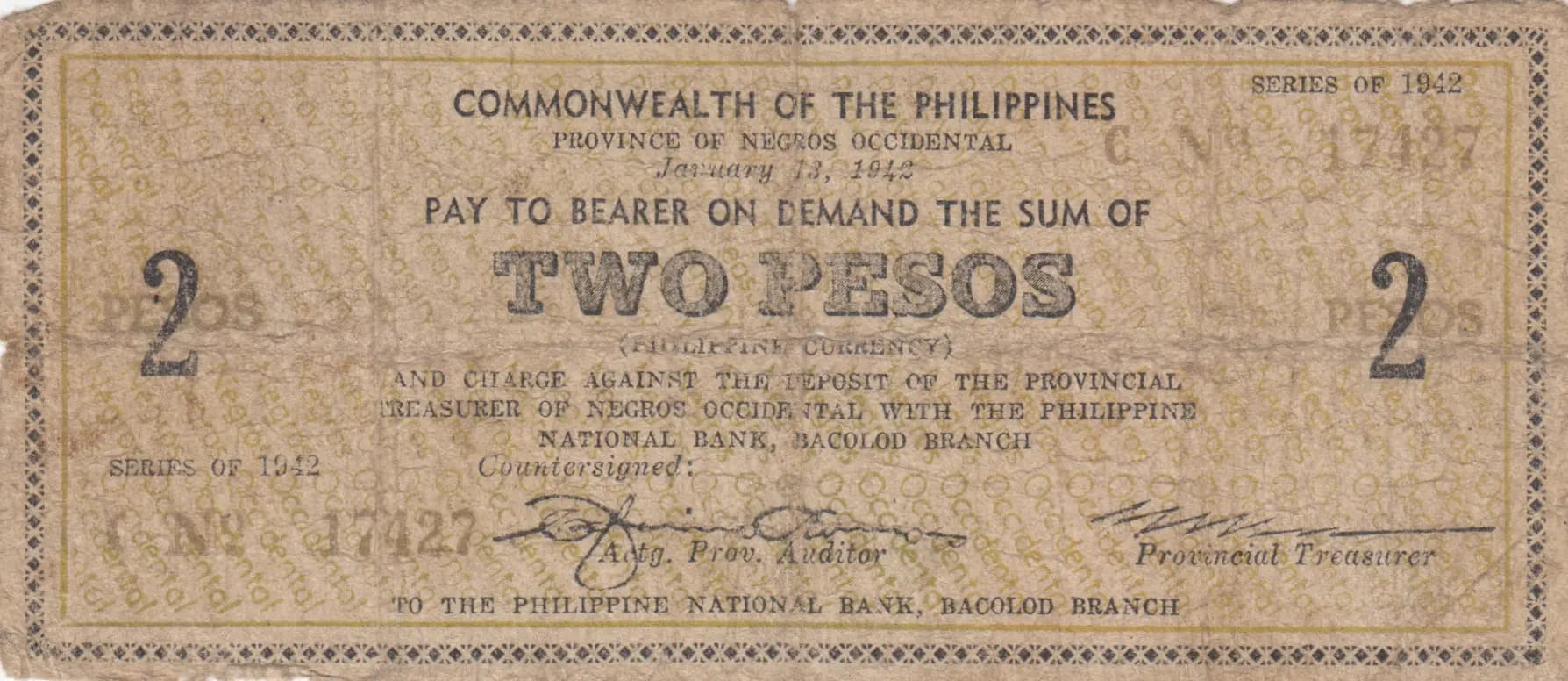
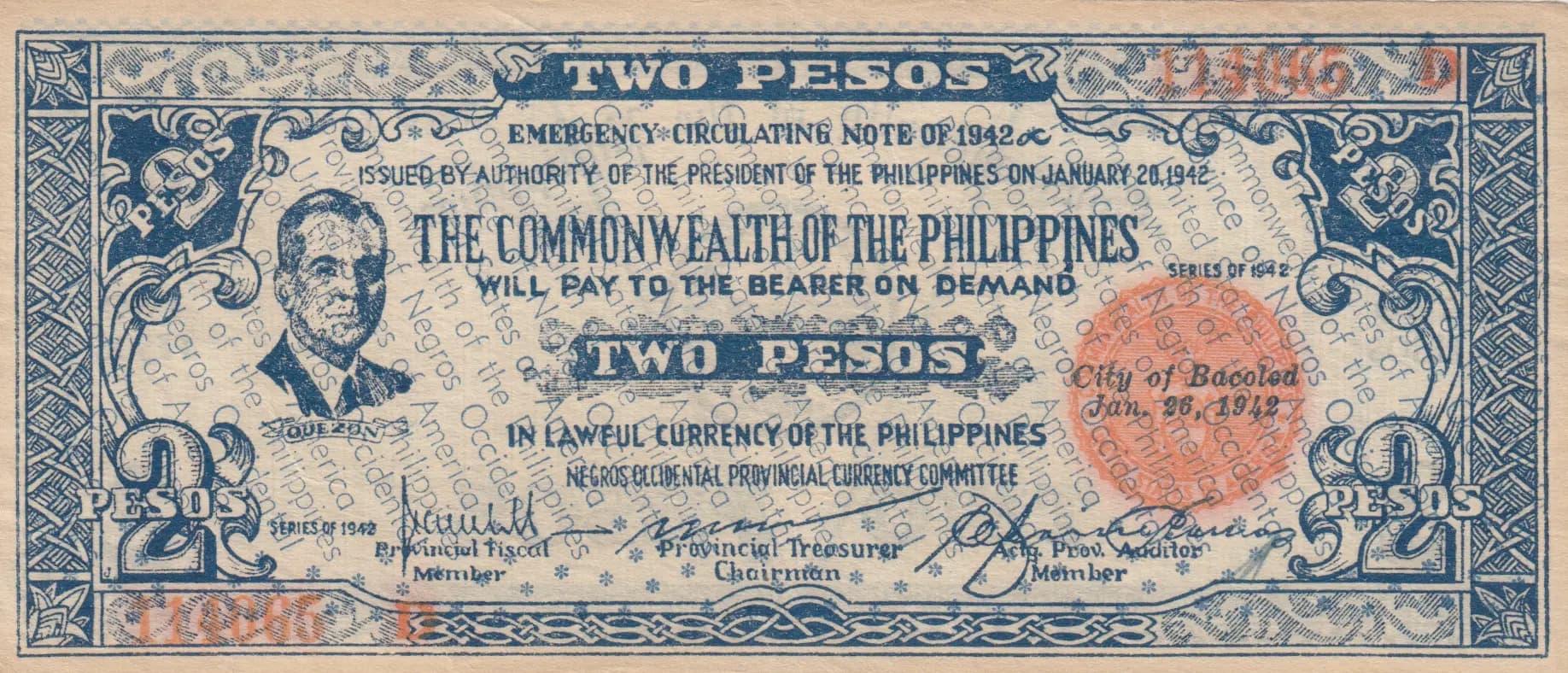
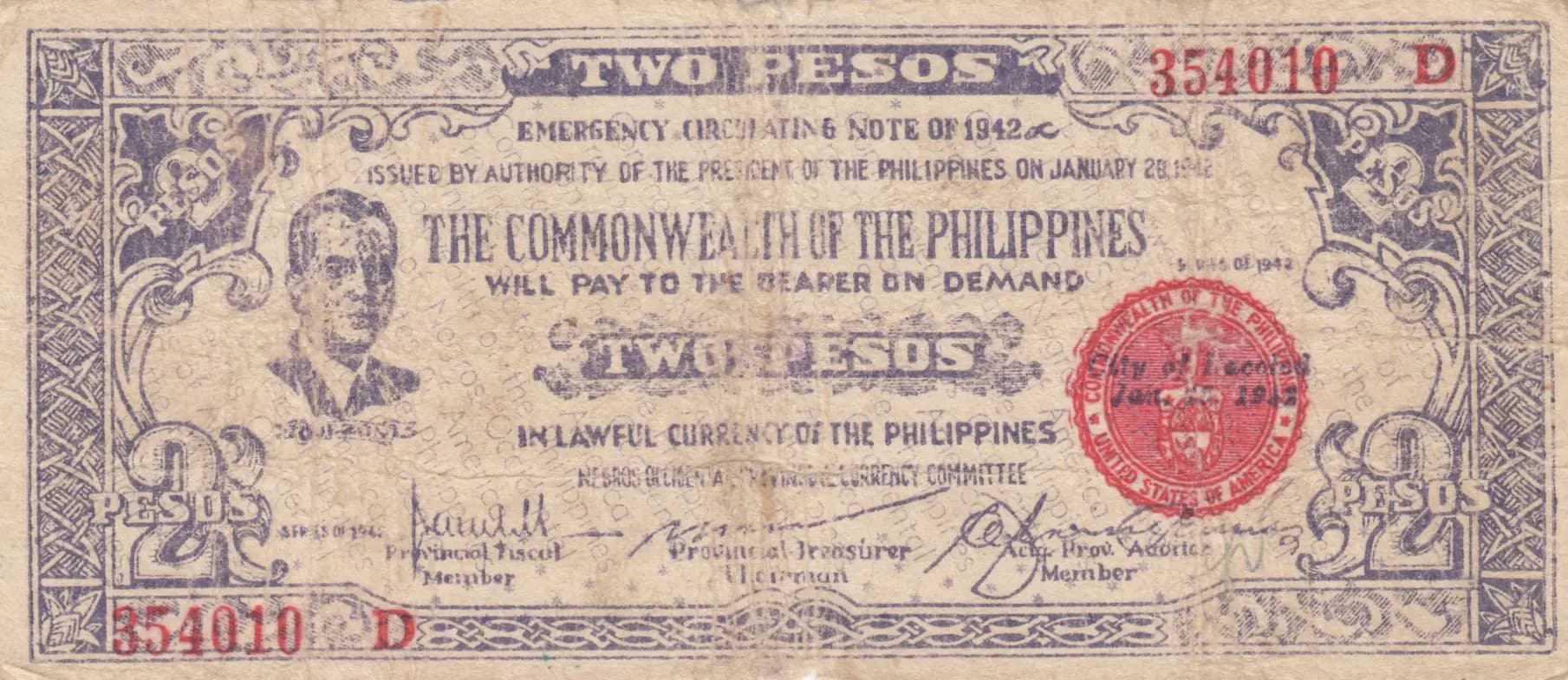
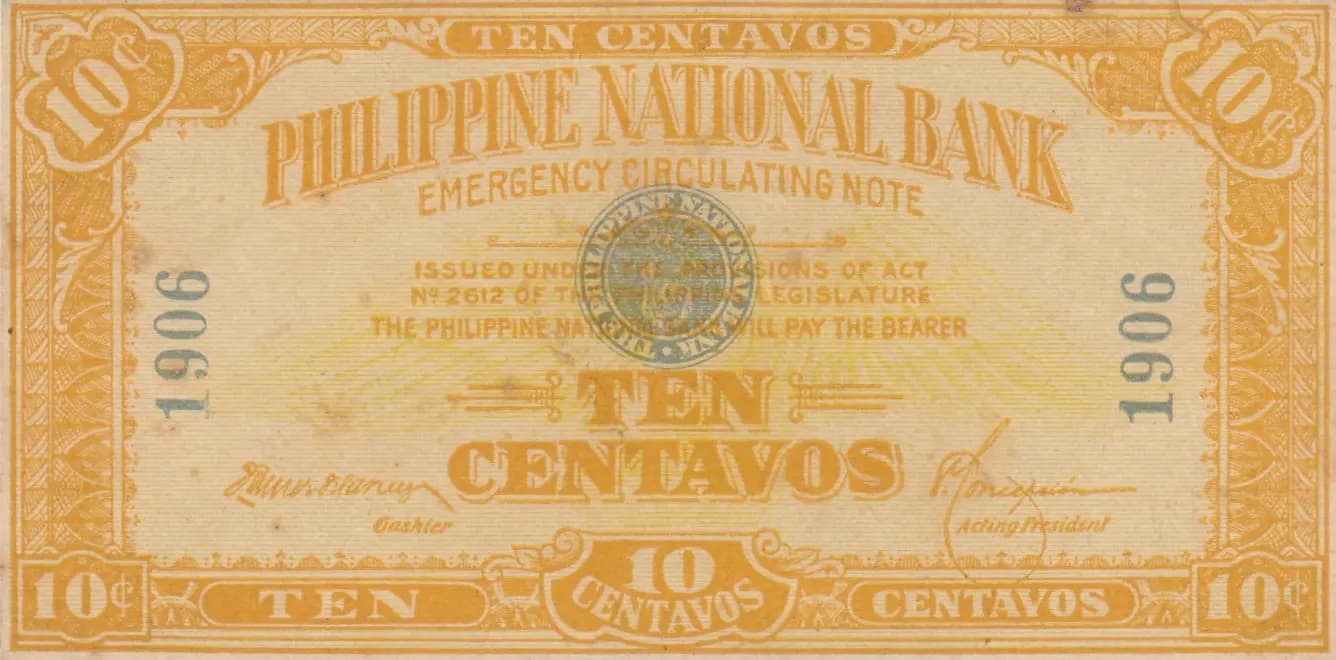
This is a 1942 Philippine 2 Pesos Emergency Certificate from Cagayan, graded AU, representing a fascinating piece of World War II-era Philippine monetary history. The note features distinctive purple hand-applied serial number stamps and a charming carabao (water buffalo) illustration on the reverse, reflecting the agrarian economy of the region. Despite significant aging with yellowing paper, creases, and faded text, the note remains collectible for its historical significance and regional emergency issue status.
Common. The eBay price data shows listings predominantly under $20 USD (with numerous examples at $3.99-$17.00 range), with only a few exceptional UNC examples reaching $70 and higher. This pricing pattern, combined with the existence of multiple examples in the secondary market and the relatively large emergency issue run typical of wartime Philippine certificates, indicates this is a common date and denomination. While historically significant, 1942 Philippine emergency certificates from Cagayan were produced in sufficient quantity that examples remain readily available to collectors.
This Emergency Certificate was issued by the Commonwealth of the Philippines during 1942, a critical period when the Philippine Islands were under Japanese occupation during World War II. The carabao depicted on the reverse symbolizes the agricultural foundation of Philippine society and the Cagayan region's economy. These emergency certificates were authorized substitutes for regular currency when conventional monetary systems were disrupted by wartime conditions, making them important artifacts of the Philippines' wartime experience and the establishment of the Commonwealth government.
The note features a symmetrical design with decorative geometric borders and corner ornaments containing the numeral '2' in each corner. The front displays an authorization and certificate text in the central field, with signature marks visible on the left side, all rendered in green/teal coloring on a cream-tan paper base. The reverse showcases a central vignette depicting a carabao (Asian water buffalo, Bubalus arnee/bubalus) in a landscape setting with vegetation, a common motif on Philippine currency representing the nation's agricultural heritage. The design reflects early 20th-century emergency currency aesthetics with hand-applied purple ink serial number stamps, indicating local or field-applied authentication rather than centralized security printing.
Front Side: 'CAGAYAN' (regional issuer), 'TWO PESOS' (denomination), 'PESOS' (currency designation), Serial number '475b7' (purple stamp), 'This certifies this note being issued in all Philippine Territory Fund is mandatory at' (authority statement). Back Side: 'COMMONWEALTH OF THE PHILIPPINE CAGAYAN' (issuing authority), 'EMERGENCY CERTIFICATE' (note type classification), '2 PESOS' (denomination designation), Serial number '476b7' (purple stamp), 'Issued by authority at the President of the Government to [from Cagayan] issued to circulate its [currency]' (authorization text, partially obscured by wear).
The note appears to have been produced using letterpress printing for the main design elements, with hand-stamped or locally-applied purple serial numbers and authentication marks. The consistent geometric borders, text clarity (though now faded), and the carabao vignette are characteristic of letterpress production typical of wartime emergency currency printing. The purple stamps appear to be applied post-printing, likely by regional authorities in Cagayan, which was a common practice for emergency certificates to ensure local control and authentication. No centralized security printer can be definitively identified for this regional emergency issue.
This specific example is identifiable by its Cagayan regional designation and the serial number stamps (475b7 on front, 476b7 on back), suggesting sequential numbering. Known varieties of 1942 Philippine Emergency Certificates typically differentiate by region of issue (Cagayan being one of several), with possible minor variations in text placement, stamp application, or paper composition. The hand-applied nature of the serial stamps means individual examples may show variation in stamp clarity, placement, and ink intensity. Without access to comprehensive variety catalogs specific to Philippine emergency certificates, precise variety classification beyond the regional and serial identification cannot be definitively stated, though the AU condition and visible wear patterns are consistent with circulated field-issue examples.