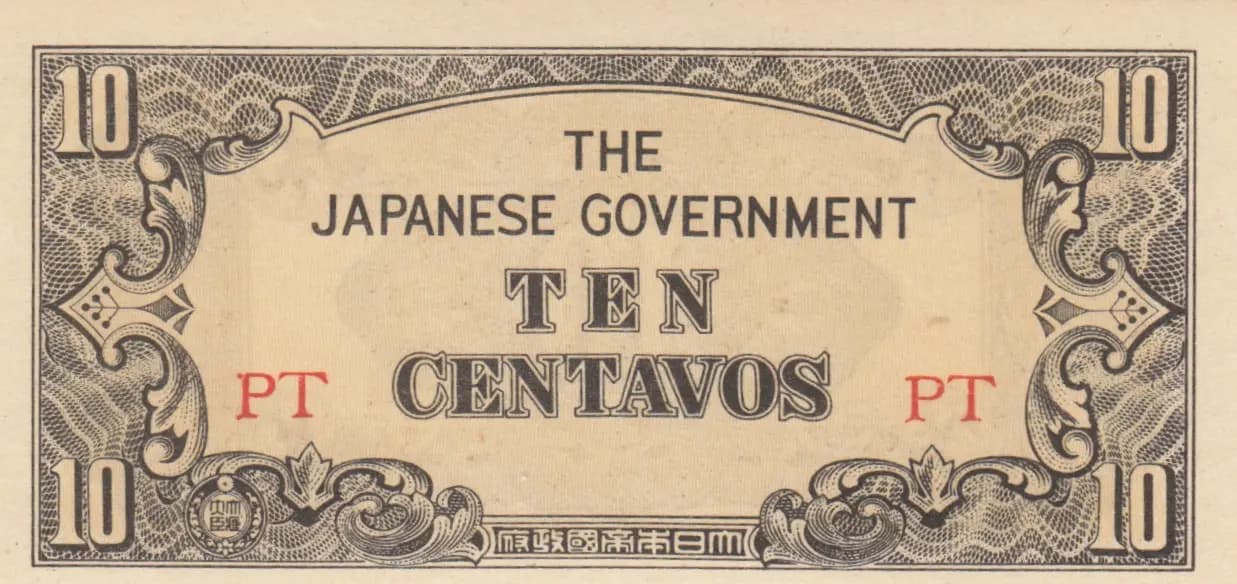
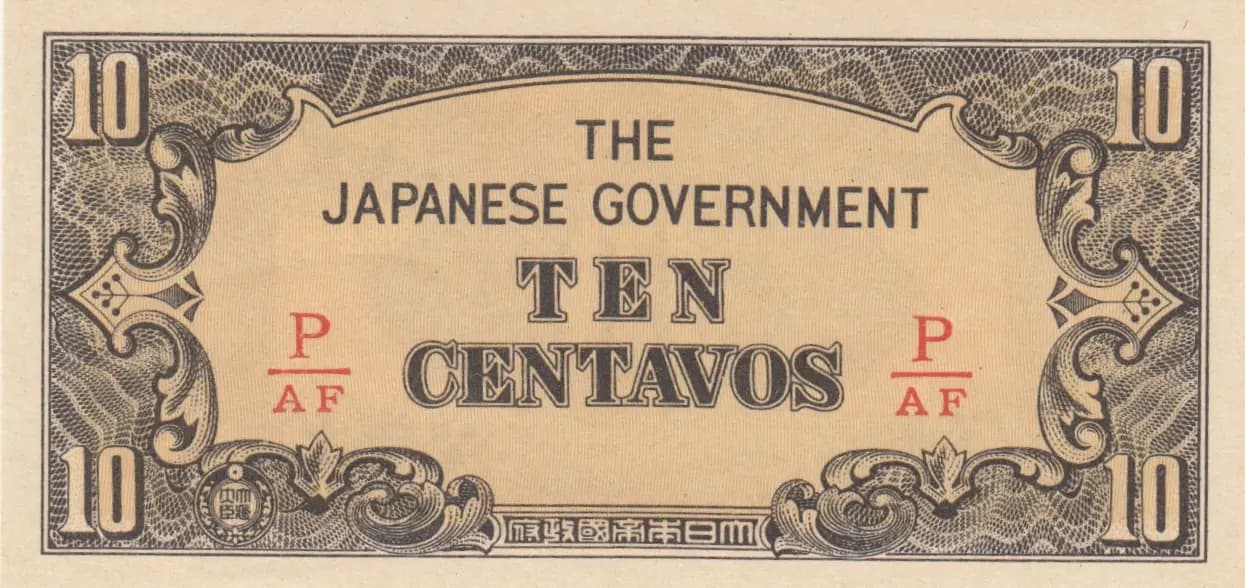
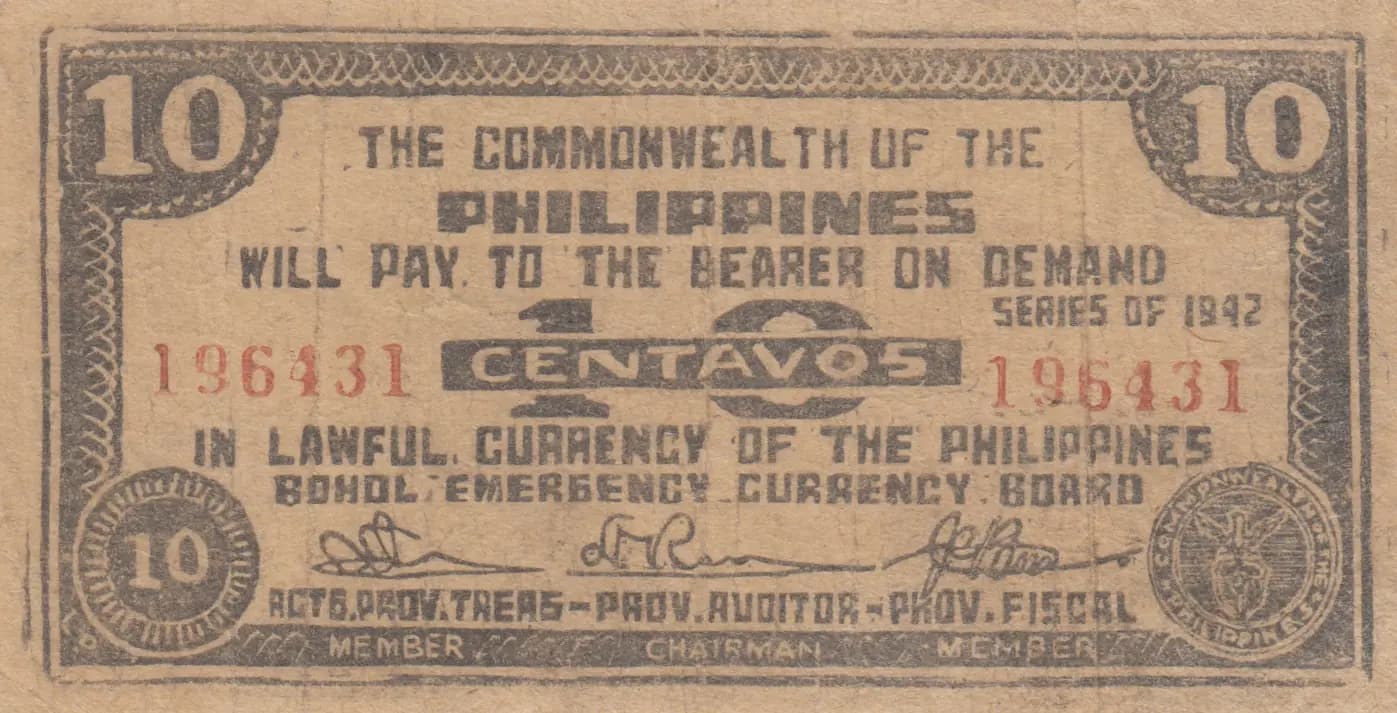
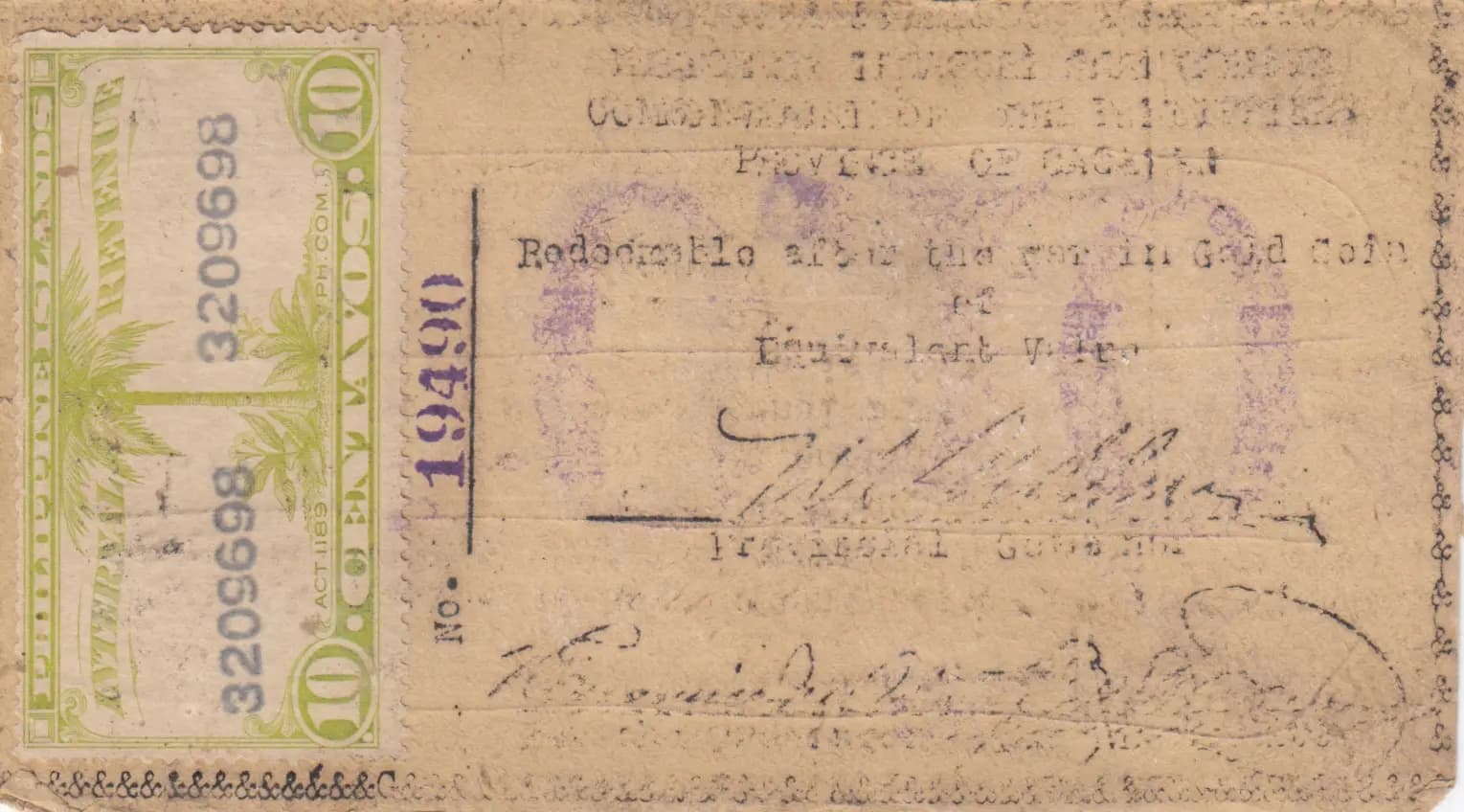
10 centavos 1942
“Cagayan”
Market Prices
About This Note
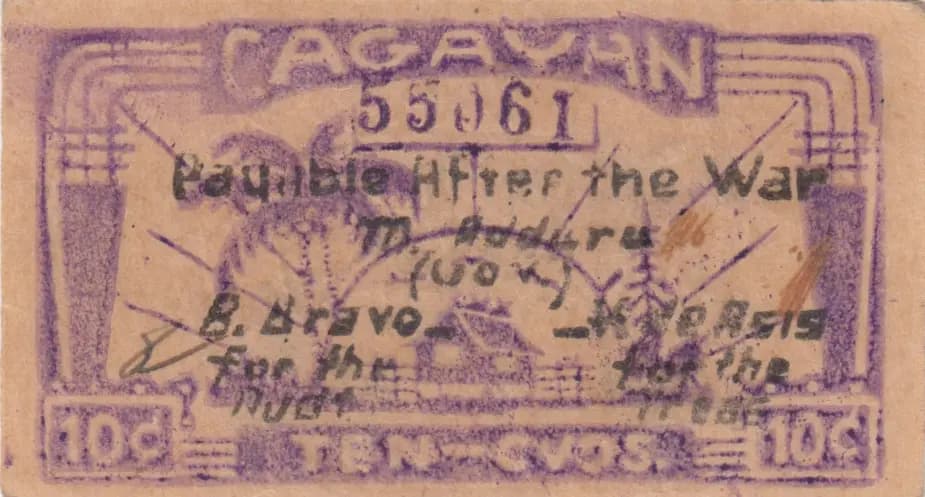
This AU-graded 10 centavos note from the 1942 Commonwealth of the Philippines issue displays the characteristic purple coloration and ornamental border designs typical of this period. The note depicts a rural landscape with radiating lines suggesting light effects, identified with the place name 'Guayan,' and features geometric corner flourishes with fine line patterns. Despite AU grading, the note exhibits moderate circulation wear with foxing, discoloration, and some handwritten markings, consistent with notes from this era that saw extensive use during the turbulent 1940s Philippine period.
Common. The eBay market data shows AU-graded examples trading at $9.49 USD, well within the standard range for circulated Commonwealth-era Philippine centavos. Multiple listings at various grades and prices indicate steady supply. The 1942 10 centavos is a regular issue with no known short print run, recall status, or scarcity factors. Print runs for Commonwealth centavos were substantial to meet everyday circulation needs during the 1940s.
Issued during 1942 by the Commonwealth of the Philippines—a transitional period marked by Japanese occupation during World War II—this banknote represents an intermediate stage between the American colonial era and full Philippine independence (achieved in 1946). The rural landscape imagery with architectural elements reflects the agrarian economy of the Philippines, while the denomination and design reflect Commonwealth-era currency standards. Notes bearing the 'Guayan' designation and this series are historically significant artifacts of wartime Philippine monetary circulation.
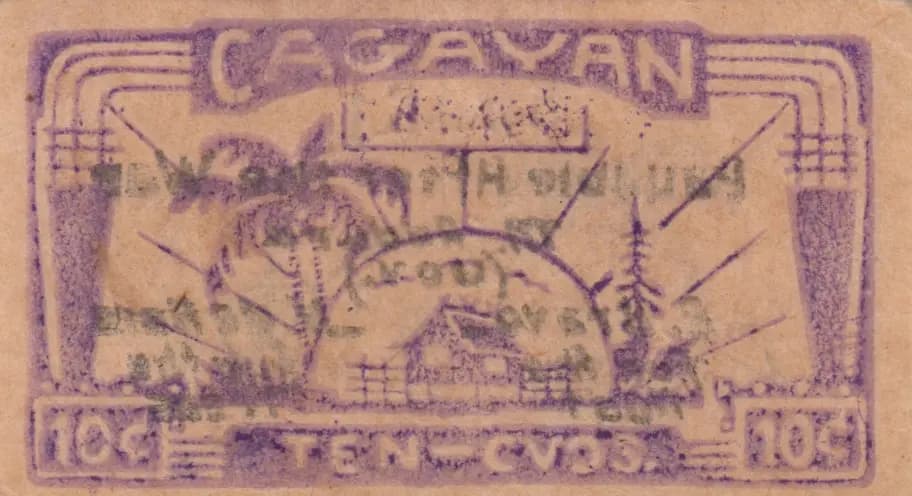
The obverse and reverse feature identical or near-identical compositions dominated by a rural or semi-rural landscape scene depicting buildings or agricultural structures with trees, rendered with radiating lines emanating from a central point to suggest sunburst or light ray effects. The design is framed by ornamental borders with geometric interlocking patterns and decorative corner flourishes. The purple-tinted background with tan/beige and light brown accents creates the characteristic color palette of this 1942 Philippine centavos issue. No portraits are depicted; rather, the design emphasizes landscape and architectural elements associated with the Cagayan region or 'Guayan' locality.
Front: 'GUAYAN' (place name/location designation); Serial number '550161'; Text reading 'Ramble After the War' (descriptive phrase); Denomination '10¢' (10 centavos). Back: 'GUAYAN' (place name); Denomination '10¢' (10 centavos) appears twice on reverse. All inscriptions are in English, reflecting Commonwealth-era currency conventions.
This note was produced using intaglio (steel engraving) printing, evidenced by the fine line border patterns, geometric precision, and ornamental flourishes visible in both the images and typical of Philippine Commonwealth currency security features. The detailed radiating line work and sharp definition of architectural elements are characteristic of intaglio production. This series was typically printed by the American Bank Note Company, the primary security printer for Commonwealth of the Philippines issues.
Serial number 550161 observed on this example. The 'Guayan' designation appears to be a consistent feature of this particular variety or series. No overprints, date variations, or signature varieties are evident from the visual analysis. Pick catalog P-S180 represents a defined variety within the 1942 Commonwealth centavos issue; additional collector research would be needed to identify whether alternative serial number ranges or printer's marks define sub-varieties within this Pick number.