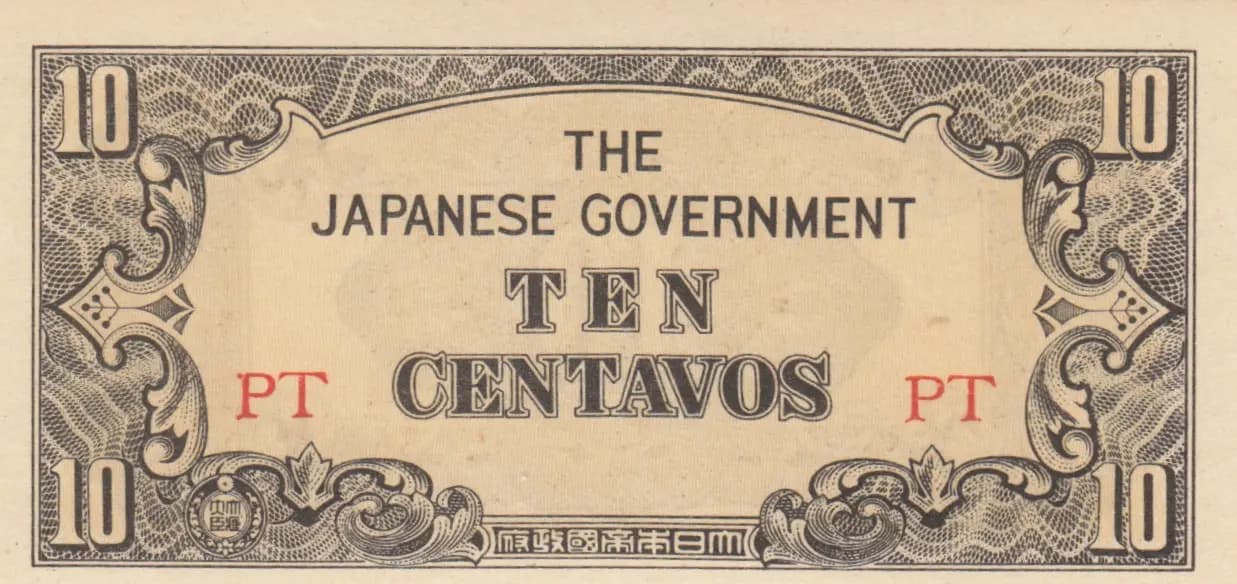
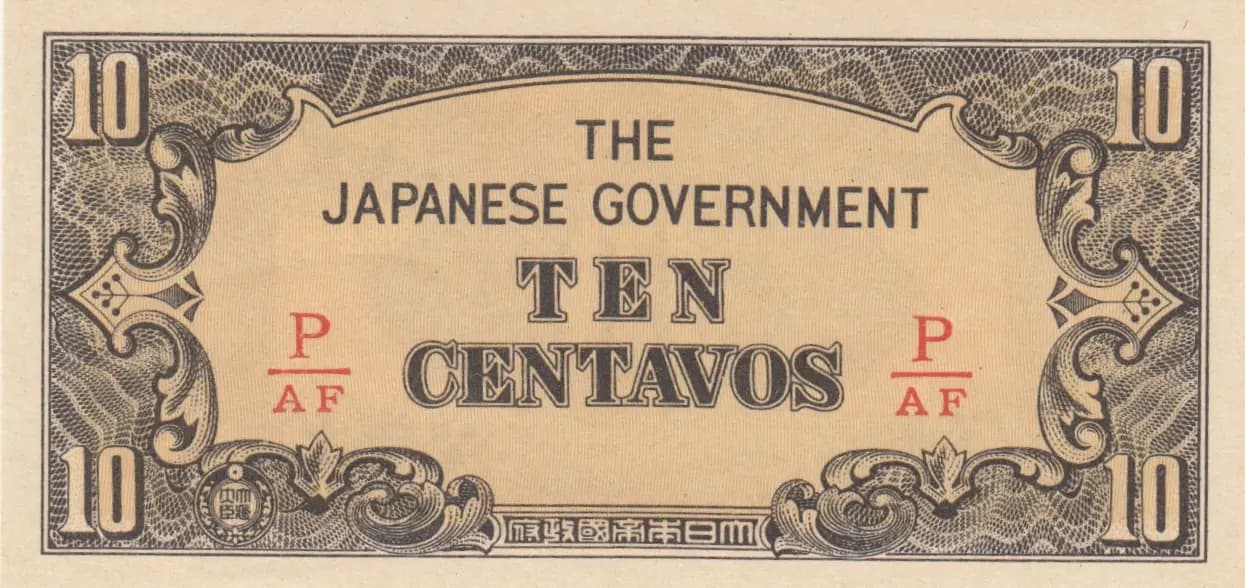
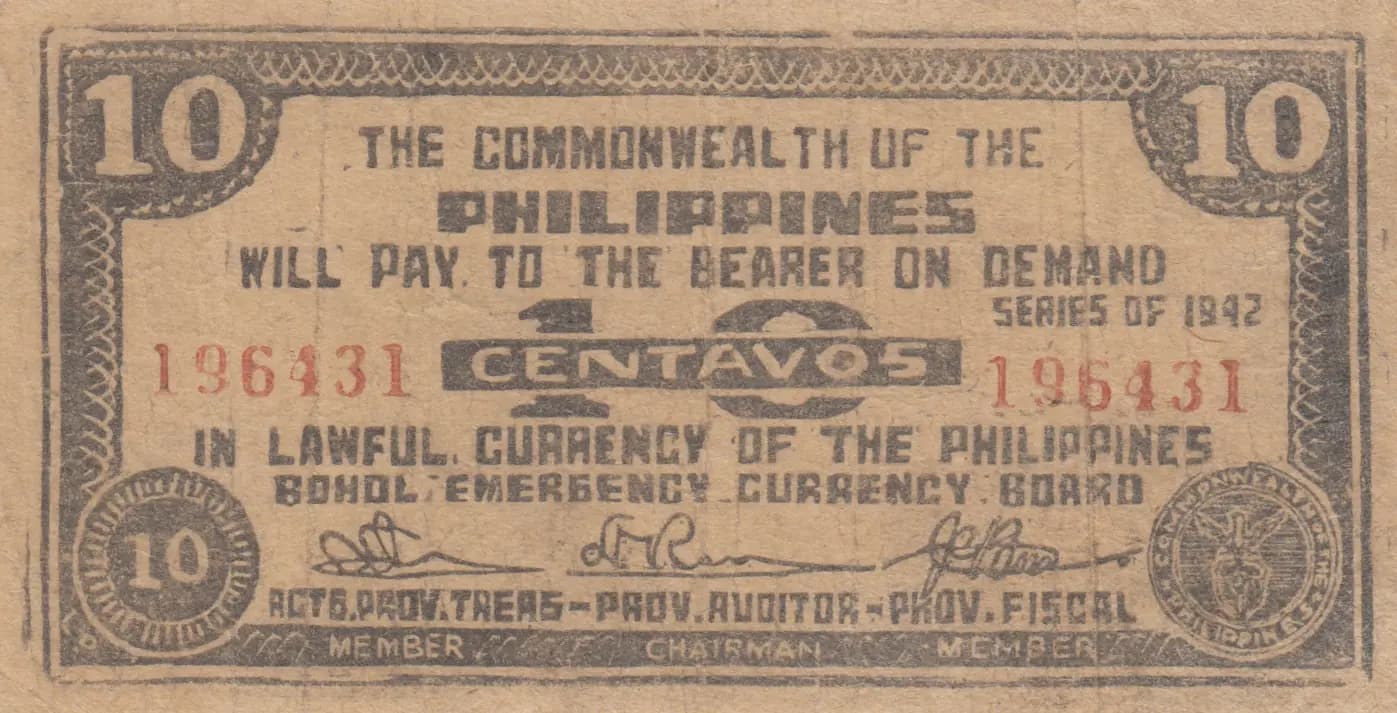
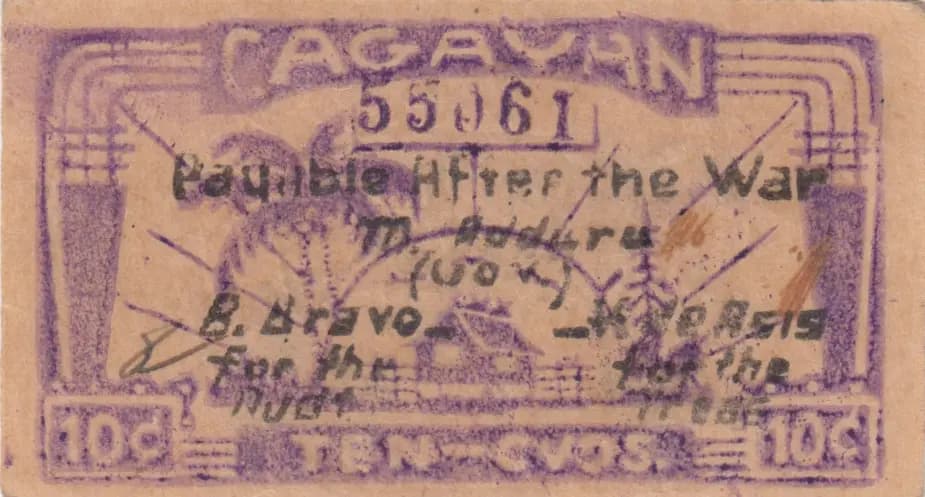
10 centavos 1942
“Cagayan”
About This Note
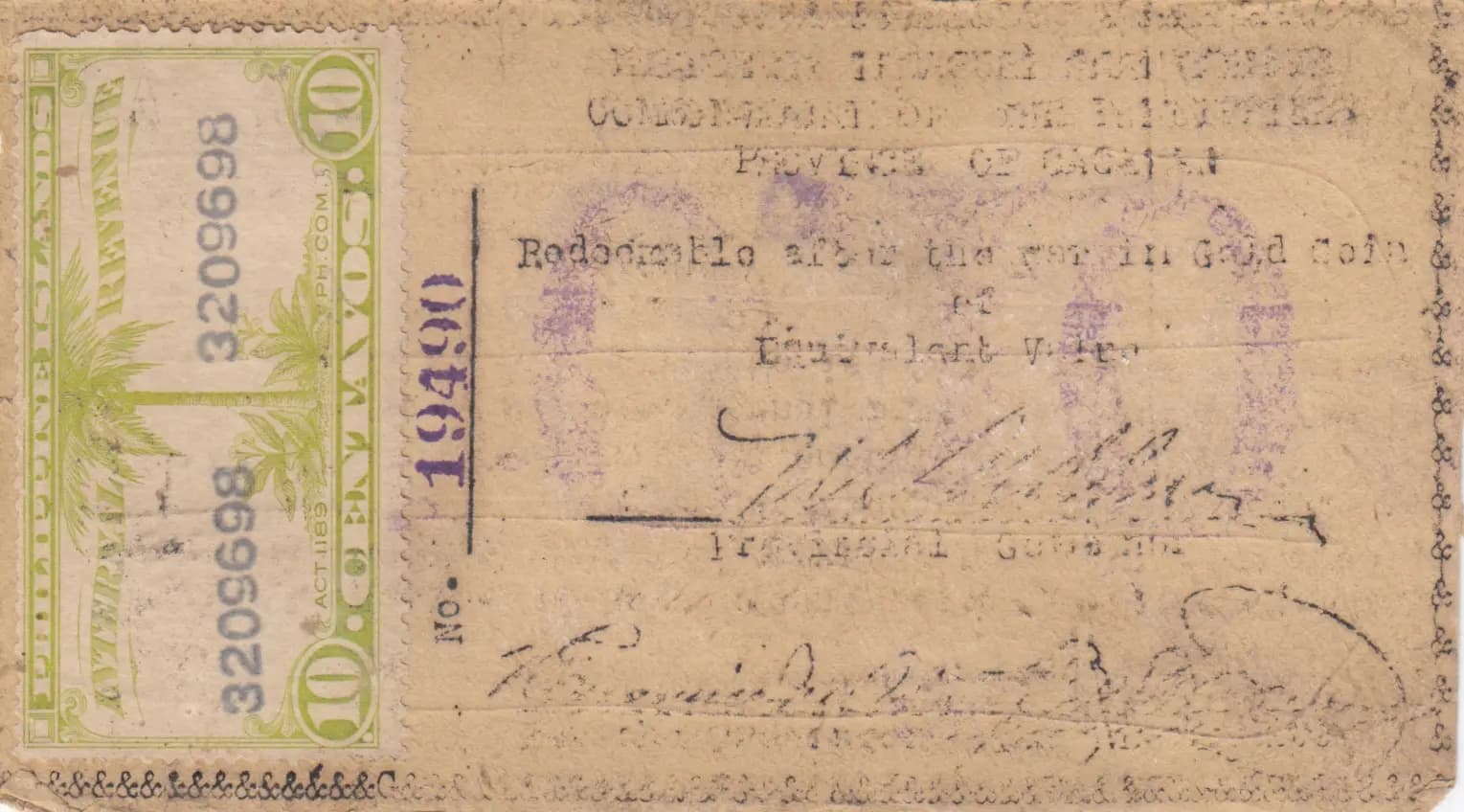
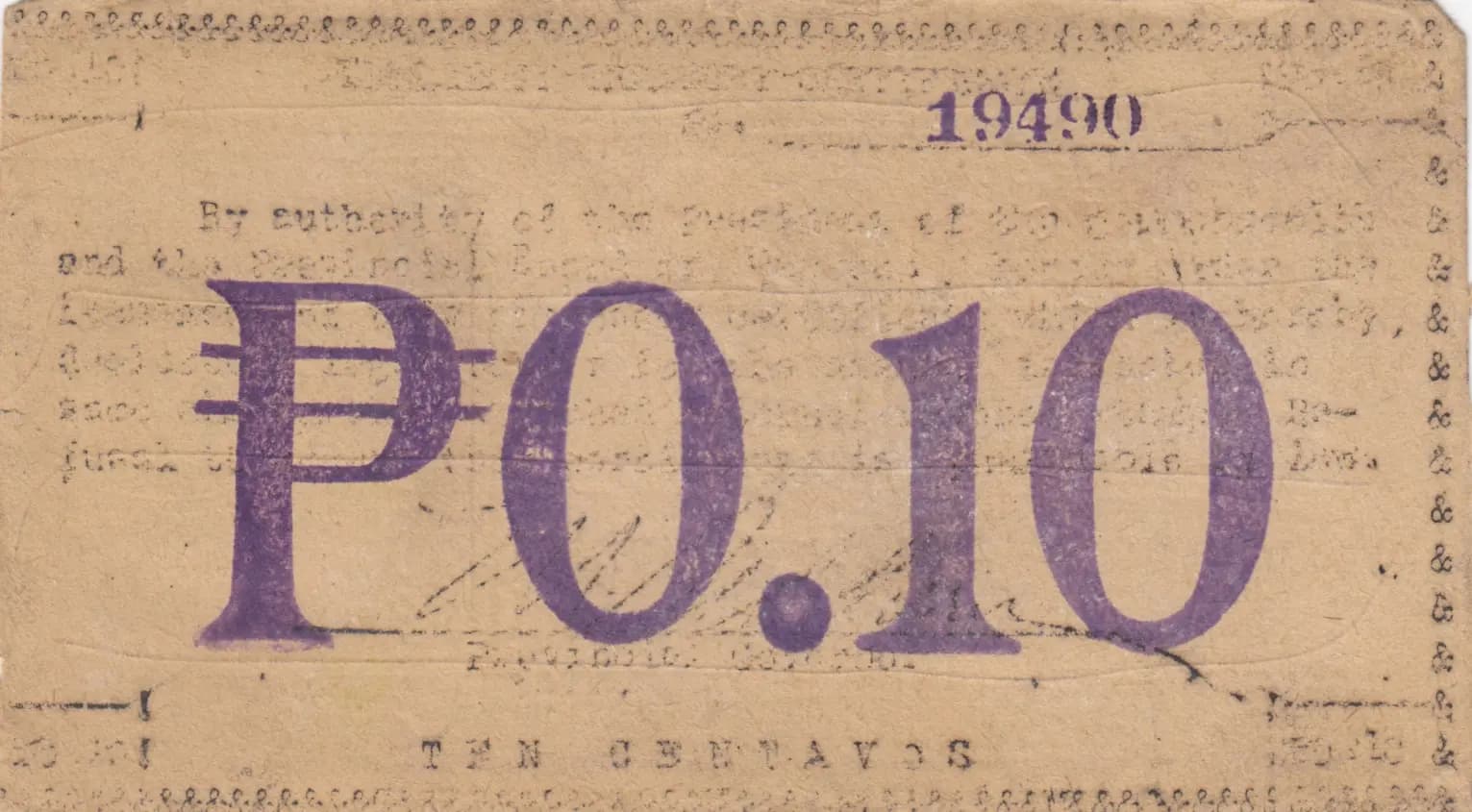
This is a 10 centavos banknote issued by the Commonwealth of the Philippines in 1942, observed here in Fair (F) condition with significant aging and wear consistent with its era. The note features a distinctive palm tree design on the reverse and large purple denomination numerals on the obverse, with cream-colored paper showing extensive foxing, discoloration, and purple stamp markings throughout. The heavy patina of age and documented Cagayan provenance make this a historically interesting Philippine emergency currency issue from the World War II period.
Common. The 10 centavos denomination from 1942 Commonwealth issues is widely available to collectors. The visual analysis indicates serial number 320698, suggesting substantial print runs typical of low-denomination emergency currency widely circulated throughout the islands. Notes from this period and denomination regularly appear in dealer stocks and auction sales at modest valuations. The Fair condition grade and heavy wear pattern further indicate this was part of an actively circulated batch rather than a preserved rarity. Collector interest exists primarily for historical significance rather than numismatic scarcity.
This 10 centavos note was issued during the Japanese occupation of the Philippines (1942-1945) under the nominal Commonwealth administration, representing a transitional period between pre-war currency and post-war Philippine peso introduction. The note's redeemability clause mentioning gold coin standards and the 'Province of Laguna' reference reflect the pre-war monetary framework, while the palm tree motif symbolizes Philippine natural resources and identity. The purple stamp markings visible throughout suggest wartime circulation, banking use, or post-war processing, typical of currency that survived the tumultuous 1940s transition.
This banknote features a minimalist but purposeful design typical of emergency Philippine currency issues of the early 1940s. The obverse is dominated by large purple denomination numerals 'P0.10' positioned centrally, with 'TEN CENTAVOS' spelled out beneath, meeting dual literacy requirements of the era. The reverse displays a botanical illustration of a palm tree on the left side, rendered in green, which served both decorative and symbolic purposes—representing Philippine tropical identity and natural wealth. Both sides employ ornamental perforated border patterns and security frame elements running along all four edges. The cream-colored paper base, while now aged and discolored, would have provided adequate contrast for the blue-gray and purple printing. No portraits are present, consistent with many Commonwealth-era Philippine low-denomination notes which focused on symbolic imagery rather than portraiture.
{"obverse":[{"original":"P0.10 / TEN CENTAVOS","translation":"10 centavos Philippine currency, denomination in both numeral and word form"},{"original":"By authority of the President of the Commonwealth","translation":"Issued under the legal authority of the Commonwealth of the Philippines President"}],"reverse":[{"original":"COMMONWEALTH OF THE PHILIPPINES","translation":"The issuing authority of the banknote"},{"original":"PROVINCE OF LAGUNA","translation":"Regional designation, possibly indicating a regional branch or issue control"},{"original":"Redeemable at par with Gold coin & at [Enumclabit Value]","translation":"This note is redeemable at equal value with gold coinage and at face value (text partially degraded)"},{"original":"Serial number: 320698 1949","translation":"Individual note identification and later processing/verification date"}]}
This note was produced using letterpress and offset lithography printing techniques, standard for Philippine banknote production of the early 1940s. The distinct color separation visible between the green palm tree design and the purple denomination numerals, combined with the clean perforated border pattern, indicates multiple passes through the press using separate metal or stone plates for each color. The ornamental frame and security border elements show the characteristic crispness of letterpress work before aging and extensive circulation wear. While specific printer attribution requires further research, this production method was typical of notes produced by the Bureau of Printing and the American Bank Note Company for Philippine Commonwealth currency during this period.
The observed specimen shows characteristics consistent with Pick catalog P-S161 or P-S162 (Commonwealth emergency currency issues). The specific variety cannot be definitively determined without examination of signature blocks and additional serial number range data, which are not clearly legible in the visual analysis due to condition. The purple stamp markings and '1949' notation on the reverse suggest post-war handling, possibly by financial institutions verifying authenticity or processing returned currency. The 'Province of Laguna' designation on the reverse may indicate a regional control variety, though this requires confirmation against comprehensive pick catalog documentation for 1942 Philippine low-denomination notes.